
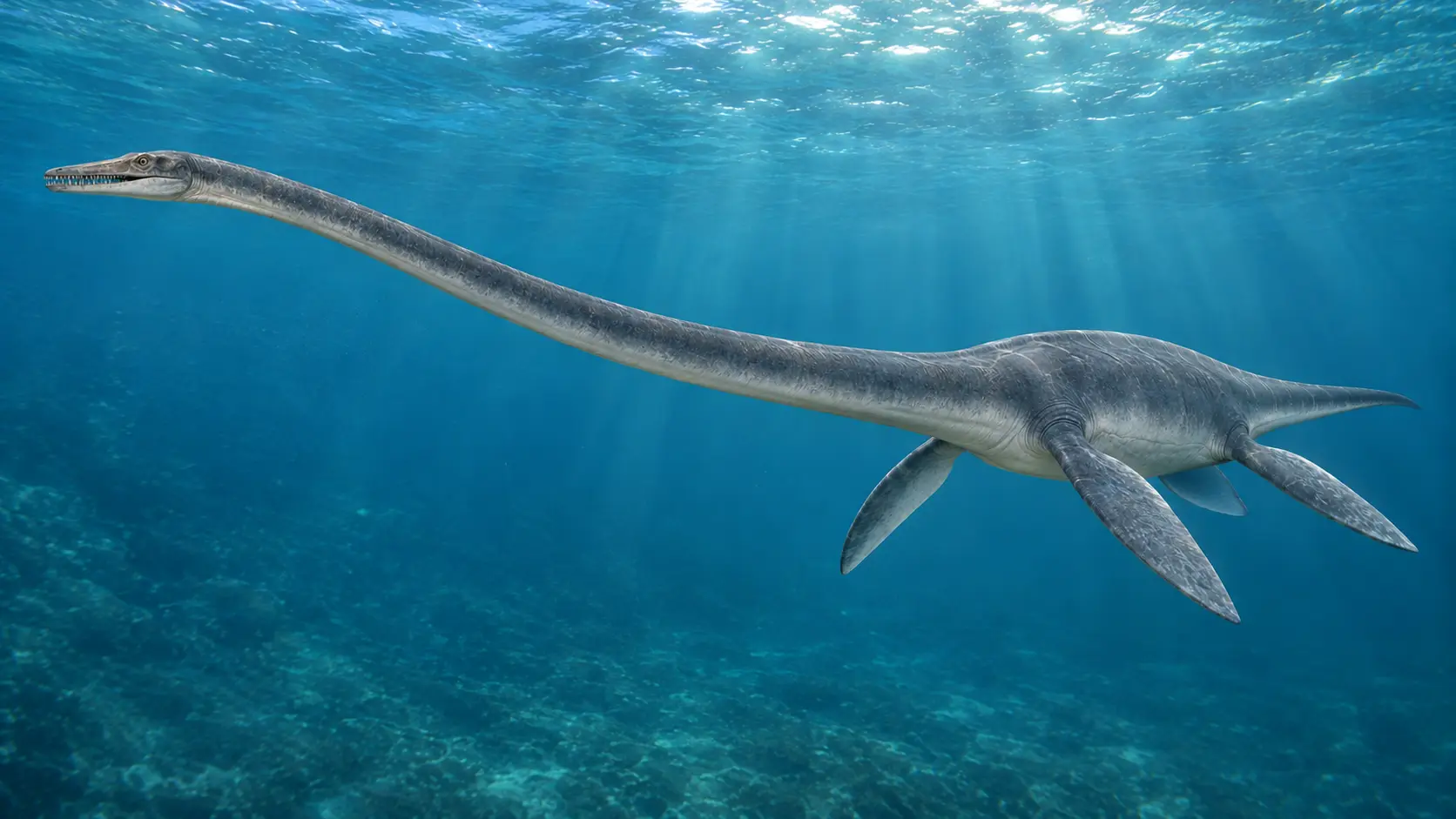
Elasmosaurus is a genus of long-necked marine reptiles belonging to Plesiosauria and the family Elasmosauridae. Its best-known and type species, Elasmosaurus platyurus, was named by Edward Drinker Cope in 1868 from an incomplete skeleton discovered in Cretaceous marine deposits in Kansas, United States. The type specimen preserves parts of the skull, a substantial vertebral series, ribs, and other skeletal elements; some material historically associated with it, including the pectoral and pelvic girdles, is now missing.
The specimen is notable for its exceptionally high cervical vertebral count. A modern anatomical reassessment identified 72 preserved cervical vertebrae, revising the earlier count of 71. The exact total body length, body mass, complete original neck length, and full range of neck movements cannot be established confidently from the available specimen.
At a Glance
| Feature | Information |
|---|---|
| Scientific name | Elasmosaurus |
| Type species | Elasmosaurus platyurus Cope, 1868 |
| Named by | Edward Drinker Cope, 1868 |
| Major group | Plesiosauria |
| Family | Elasmosauridae |
| Geological period | Cretaceous |
| Geological age commonly assigned to the type specimen | Late Cretaceous, Lower Campanian |
| Type locality | Logan County, Kansas, United States |
| Commonly cited geological unit | Sharon Springs Shale Member, Pierre Shale |
| Type specimen | ANSP 10081 |
| Preserved cervical vertebrae | 72 under the revised anatomical interpretation |
| Preservation | Incomplete skeleton; some historically reported elements are now missing |
| Exact body length and mass | Not securely established |
The geological assignment above follows the published redescription of the type specimen. It should not be interpreted as a precisely documented bed-level provenance: the specimen’s exact stratigraphic position is not known with complete precision.
Classification and Taxonomy
Elasmosaurus is a genus of plesiosaurian marine reptiles in the family Elasmosauridae. Plesiosaurs were aquatic reptiles, not dinosaurs. Elasmosaurids are especially recognized for their elongated necks and numerous cervical vertebrae.
The type species is Elasmosaurus platyurus, described by Cope in 1868. The principal reference specimen is ANSP 10081, an incomplete skeleton that has been redescribed and reinterpreted in later palaeontological studies.
Elasmosaurus platyurus is the type species of Elasmosaurus. Its name and association with type specimen ANSP 10081 are documented in the palaeontological literature and taxonomic records. The classification presented here follows the conventional placement used in specialist palaeontological literature: Reptilia, Plesiosauria, and Elasmosauridae. The cited Paleobiology Database record is used for the taxon and specimen information it provides, not as the authority for this full classification hierarchy; its displayed nested taxonomy includes broader groupings that should not be read as a simple, linear classification. Higher-level ranks can differ among taxonomic systems.
| Rank | Classification |
|---|---|
| Kingdom | Animalia |
| Phylum | Chordata |
| Class | Reptilia |
| Order | Plesiosauria |
| Family | Elasmosauridae |
| Genus | Elasmosaurus |
| Type species | Elasmosaurus platyurus |
The classification shown here follows the conventional palaeontological placement used in the cited literature. Higher-level classifications can vary between taxonomic systems; such variation does not alter the placement of Elasmosaurus within Plesiosauria and Elasmosauridae.
Geological Age and Palaeoenvironment
The type specimen of Elasmosaurus platyurus is conventionally assigned to the Lower Campanian of the Late Cretaceous. Its reported geological context is the Sharon Springs Shale Member of the Pierre Shale in Kansas.
During the Late Cretaceous, much of central North America was occupied by the Western Interior Seaway, a broad marine system that divided the continent into eastern and western landmasses at different times. Marine deposits from this region preserve a diverse record of aquatic vertebrates and invertebrates.
The Kansas provenance places the type specimen within this broader marine setting. However, the locality of a fossil does not by itself establish the complete geographical range of the living animal. Nor should a conventional formation or member assignment be treated as a precisely measured age for the specimen when its exact stratigraphic position is uncertain.
The evidence therefore supports describing Elasmosaurus as a Late Cretaceous marine reptile known from Kansas, while retaining appropriate qualification around the precise stratigraphic provenance of its type specimen.
Discovery and Fossil History
The early history of Elasmosaurus platyurus includes a significant error in skeletal reconstruction. In his initial reconstruction, Edward Drinker Cope placed the skull at the wrong end of the vertebral column, producing an arrangement inconsistent with the specimen’s anatomy.
Joseph Leidy identified the reversed arrangement at a meeting of the Academy of Natural Sciences of Philadelphia in March 1870 and subsequently published an account of the error. The later scientific literature cautions against the familiar story that Othniel Charles Marsh was the first to identify the mistake. Marsh became associated with the episode through the subsequent Cope–Marsh controversy, but that later notoriety should not replace the documented chronology.
The episode demonstrates the importance of interpreting vertebral anatomy and articulations together rather than relying on the initial arrangement of a disarticulated fossil. It was an error in reconstructing the specimen, not evidence of an unusual body plan in the living animal.
Fossil Evidence and Preservation
The type specimen, ANSP 10081, is incomplete. Published descriptions identify portions of the skull, an extensive vertebral series, and rib fragments, among other remains. The skeleton is not an entirely complete record of the animal’s original anatomy.
The pectoral and pelvic girdles were historically reported as part of the specimen, but the 2005 redescription records them as now lost. Consequently, their original association with the type specimen should not be confused with their current availability for direct examination.
Three categories of information should be distinguished:
- Preserved material: skeletal elements documented as present in the specimen or described in published anatomical studies.
- Historically reported material: elements previously associated with the specimen but no longer available for direct examination.
- Reconstructed anatomy: features restored in skeletal mounts, illustrations, or life reconstructions using the preserved remains and comparative anatomical evidence.
A reconstruction may be scientifically useful, but it is not equivalent to a complete fossil record. Claims about missing bones, the exact proportions of the living animal, or soft-tissue anatomy require evidence beyond the mere presence of a reconstructed feature in an illustration.
Evidence Strength and Assessment
| Claim or topic | Evidence type | Evidence strength | Assessment | Main limitation |
|---|---|---|---|---|
| Type species is Elasmosaurus platyurus. | Historical taxonomic and specimen evidence | Strong | The type-species relationship is established in the palaeontological literature and reflected in taxonomic records. | Higher-level classification may vary among taxonomic systems. |
| Type specimen is ANSP 10081. | Specimen documentation and published redescription | Strong | ANSP 10081 is the principal reference specimen for the species. | The skeleton is incomplete, and some historically reported elements are missing. |
| The preserved cervical series comprises 72 vertebrae. | Anatomical examination and published reassessment | Strong | A 2013 reassessment recognizes 72 preserved cervical vertebrae under its stated anatomical criteria. | The preserved count does not establish that the complete original cervical series survives. |
| The premaxillae have six tooth positions per side. | Anatomical evidence from preserved cranial material | Strong | Six premaxillary tooth positions per side are reported as a diagnostic feature. | Tooth positions do not establish that every individual tooth is preserved. |
| The type specimen is conventionally assigned to the Lower Campanian and the Sharon Springs unit. | Geological and historical locality evidence | Moderate to strong | The conventional Lower Campanian assignment can be retained with qualification. | The specimen’s precise stratigraphic position is uncertain. |
| Elasmosaurus was an aquatic marine reptile. | Skeletal anatomy and geological context | Strong | Its anatomy and marine geological context support this interpretation. | The type locality does not establish the animal’s complete geographical range. |
| Elasmosaurus was a marine predator. | Anatomical and comparative inference | Moderate | A predatory feeding role is consistent with the available anatomical evidence and comparative interpretation. | The available evidence does not establish a precise prey list or feeding sequence. |
| Fish and other marine animals were prey. | Ecological and comparative inference | Limited to moderate | Fish and other marine animals are plausible prey categories. | A species-specific prey list has not been established by the evidence considered here. |
| Exact total body length or body mass. | Reconstruction-dependent inference | Insufficient for a definitive value | No single definitive total length or body mass is assigned. | Estimates require a traceable reconstruction or estimation method and explicit treatment of uncertainty. |
| Exact neck mobility and swimming performance. | Biomechanical inference | Limited | Aquatic locomotor adaptation is supported, but detailed movement and performance remain uncertain. | Fossils do not preserve all relevant soft tissues or directly document movement. |
| Original colour, vocalization and social behaviour. | No direct evidence established | Insufficient | These attributes cannot be described as established facts from the evidence considered here. | The available specimen evidence does not establish these characteristics. |
Anatomy and Body Structure
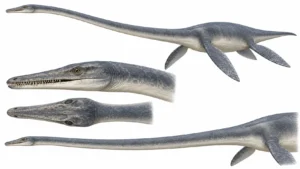
Elasmosaurus had the characteristic body plan of an elasmosaurid plesiosaur: a compact trunk, four paddle-shaped limbs, and a greatly elongated neck. Its skull was relatively small in relation to the long neck, although precise proportions in a complete living individual cannot be established from the incomplete type specimen alone.
Skull and dentition
The preserved cranial material includes both premaxillae and parts of other skull bones. The premaxillae are reported to bear six tooth positions per side, a feature used in the diagnosis of Elasmosaurus platyurus. This refers to the anatomical arrangement of the tooth-bearing bones; it should not be interpreted as a claim that every tooth is preserved in the fossil.
The available skull material provides important taxonomic evidence, but the incomplete condition of the specimen limits reconstruction of every cranial feature.
Neck and vertebral column
The exceptionally long neck is the most distinctive feature associated with Elasmosaurus. Its length was supported by a high number of cervical vertebrae rather than by a few unusually elongated bones alone.
A vertebral count depends on how the transition between cervical, pectoral, and dorsal regions is identified. These regions are distinguished using anatomical features, including the position and structure of rib articulations. Reassessing those features changed the accepted count for the preserved cervical series.
The neck’s overall appearance in a reconstruction is therefore influenced by both the preserved vertebrae and the method used to restore the missing or incomplete portions of the skeleton.
Limbs and trunk
Like other plesiosaurs, Elasmosaurus possessed four broad, paddle-shaped limbs adapted to aquatic locomotion. The trunk was shorter and more compact than the neck. The limbs and trunk formed part of a swimming system whose performance depended on the coordinated movement of the body and paddles.
The missing girdle material limits direct assessment of some aspects of the type specimen’s shoulder and pelvic anatomy. Comparisons with other plesiosaurs can inform reconstruction, but comparative anatomy should not be presented as if every feature had been directly preserved in ANSP 10081.
Size and Proportions
The exceptionally long neck of Elasmosaurus is well supported by its preserved vertebral series. However, a reliable exact value for the complete animal’s total length or body mass cannot be derived from the available evidence presented here.
Several factors limit precise size estimates:
- The type specimen is incomplete.
- Some elements historically associated with it are now missing.
- A count of preserved cervical vertebrae does not independently establish the complete neck’s length.
- Reconstructed body proportions depend on how missing parts are restored and on the comparative specimens used.
For these reasons, this profile does not assign a single definitive total body length or body mass. Numerical estimates should be included only when their source, specimen basis, reconstruction method, and uncertainty can be documented adequately.
Neck Anatomy and Vertebral Count
The cervical vertebral count is one of the best-studied quantitative features of Elasmosaurus platyurus.
Earlier literature commonly reported 71 cervical vertebrae. In 2013, Sachs, Kear, and Everhart reassessed the type specimen and identified a previously unaccounted-for cervical centrum. They also clarified how the cervical-to-pectoral transition should be recognized using vertebral morphology.
Their study concluded that the maximum number of cervical vertebrae preserved in ANSP 10081 is 72. The revised count reflects the authors’ anatomical criteria; it is not simply a change in terminology without reference to the bones themselves.
The count also needs to be interpreted within the limits of preservation. The study notes that the cervical series is probably incomplete because its cranial portion became disarticulated and dispersed, and some vertebrae were lost after the original excavation. Thus, 72 is the maximum preserved count identified under the revised interpretation, not a demonstration that all cervical vertebrae originally present in the living animal are represented.
Vertebral count and neck length are related but distinct measurements. The number of preserved cervical vertebrae does not, on its own, determine the complete neck’s length. Any specific neck-length estimate requires an independently documented method for reconstructing the missing portions and summing or estimating the relevant dimensions.
Quantitative Evidence Register
| Quantity or measurement | Reported value | Basis and method | Evidence strength | Assessment |
|---|---|---|---|---|
| Preserved cervical vertebrae | 72 | Published reassessment of ANSP 10081 using vertebral morphology and rib-articulation positions to distinguish cervical, pectoral, and dorsal regions | Strong | The 2013 reassessment recognizes 72 preserved cervical vertebrae under its stated anatomical criteria. |
| Earlier cervical count | 71 | Earlier published interpretations of the specimen | Strong as a historical report | The earlier count reflects a previous anatomical interpretation; the 2013 reassessment identifies 72 preserved cervical vertebrae under its revised criteria. |
| Complete original cervical series | Not established | Incomplete specimen and published discussion of missing or previously unaccounted-for material | Limited | The available evidence does not establish that the complete original cervical series is preserved. |
| Total body length | No definitive value assigned | Would require a documented reconstruction of missing skeletal portions and a defined measurement method | Insufficient for a definitive value here | A defensible value would require a traceable reconstruction, measurement method, and uncertainty statement. |
| Body mass | No definitive value assigned | Would require a documented estimation method, reconstructed body volume, and explicit uncertainty | Insufficient for a definitive value here | A defensible estimate would require a stated method and uncertainty assessment. |
| Reconstructed neck length | No value assigned | Requires a documented reconstruction and measurement method | Not verified for publication in this draft | The evidence assembled for this profile does not support assigning a specific reconstructed neck length. |
Diet and Feeding
Elasmosaurus was a marine reptile and a member of a group of plesiosaurs generally interpreted as aquatic predators. Its skull and teeth are consistent with a predatory feeding role, but the incomplete type specimen does not by itself establish a detailed list of prey species or a precise feeding strategy.
Fish and other marine animals are plausible components of the diet, given the animal’s anatomy and marine setting. Nevertheless, the available evidence summarized here does not justify presenting a specific prey list as directly demonstrated for Elasmosaurus platyurus.
The distinction is important: a broad inference that an animal was predatory is not equivalent to direct evidence identifying the exact organisms it consumed. More specific dietary claims require suitable evidence, such as diagnostic stomach contents, direct feeding traces, or other taxon-relevant material.
Locomotion and Neck Function
The four paddle-shaped limbs indicate that Elasmosaurus was adapted for swimming. The exact mechanics of its swimming and the degree of movement available to its long neck are more difficult to establish.
A long neck does not automatically imply extreme flexibility in every direction. Neck mobility would have depended on the geometry of the vertebrae, their articulations, associated soft tissues, and the mechanical limits of the entire neck. Fossils preserve only part of this information.
Accordingly, the profile does not assign a precise swimming speed or claim that Elasmosaurus could perform a particular extreme neck posture. Reconstructions of posture and movement should be treated as hypotheses whose credibility depends on anatomical and biomechanical evidence.
The available evidence supports a long-necked, paddle-propelled marine reptile. It does not establish a single definitive pattern of neck movement or a complete behavioural account.
Habitat and Distribution
The type specimen of Elasmosaurus platyurus comes from Cretaceous marine deposits in Kansas, within the region influenced by the Western Interior Seaway. This provides direct evidence for its occurrence in a marine environment at that locality.
The fossil locality should not be treated as a complete map of the genus’s geographical distribution. A known specimen establishes an occurrence; it does not establish the full range of a species or genus. Any broader distribution map would require additional reliably identified specimens and locality records.
The marine setting is consistent with the animal’s aquatic anatomy, including its paddle-shaped limbs. However, the precise habitats used throughout its life, its movement between particular environments, and its full ecological range cannot be reconstructed from the type locality alone.
Scientific Significance and Unresolved Questions
Elasmosaurus is significant for the study of plesiosaur anatomy, especially the evolution and classification of exceptionally elongated necks. Its type specimen has also played a role in improving methods for identifying the boundaries between vertebral regions.
| Topic | What the evidence supports | What remains unresolved |
|---|---|---|
| Taxonomic identity | Elasmosaurus platyurus is the type species of the genus | Some details of higher-level classification may vary by taxonomic system |
| Cervical count | A revised maximum of 72 cervical vertebrae is preserved in ANSP 10081 under published anatomical criteria | The complete original cervical series is not preserved |
| Total body size | The animal had an exceptionally long neck and a compact trunk | Exact total length and body mass are not securely established here |
| Geological age | The type specimen is conventionally assigned to the Lower Campanian | Exact bed-level stratigraphic provenance is uncertain |
| Skull anatomy | Parts of the skull are preserved, including both premaxillae | The skull is incomplete, and not every reconstructed detail is directly preserved |
| Girdles | Pectoral and pelvic girdles were historically reported with the specimen | These elements are recorded as now missing |
| Diet | A predatory feeding role is a reasonable broad interpretation | A precise prey list or feeding behaviour is not established by the type specimen alone |
| Neck function | The neck’s extraordinary length is supported by the vertebral evidence | Exact range of motion and preferred posture remain uncertain |
| Locomotion | Four paddle-shaped limbs indicate aquatic locomotor adaptation | Precise speed and detailed swimming mechanics are not established here |
| Colour and social behaviour | No direct evidence is supplied by the type specimen | Specific coloration, vocalization, and social behaviour cannot be stated as established facts |
The central lesson of the Elasmosaurus record is that a distinctive anatomical feature can be well supported even when many aspects of the animal’s complete appearance and behaviour remain uncertain. The preserved vertebral series provides strong evidence for an unusually long neck, while exact body dimensions, movement, and behaviour require additional evidence and explicit reconstruction methods.
Frequently Asked Questions
Was Elasmosaurus a dinosaur?
No. Elasmosaurus was a plesiosaur, an extinct marine reptile. Dinosaurs and plesiosaurs belong to different major branches of reptiles.
How many neck vertebrae did Elasmosaurus have?
The type specimen preserves a maximum of 72 cervical vertebrae under the revised anatomical interpretation published by Sachs, Kear, and Everhart in 2013. The original complete cervical series is not known to be fully preserved.
How large was Elasmosaurus?
Its exceptionally long neck is well established, but the available evidence does not justify a single definitive total body length or body mass in this profile. Such estimates depend on reconstructing portions of an incomplete skeleton.
What did Elasmosaurus eat?
It is generally interpreted as a marine predator. Fish and other marine animals are plausible prey, but the evidence summarized here does not establish a definitive list of prey species.
Where was Elasmosaurus found?
The type specimen was discovered in Kansas, United States, in deposits conventionally assigned to the Sharon Springs Shale Member of the Pierre Shale. The precise stratigraphic position of the specimen is not known with complete precision.
Why was Elasmosaurus once reconstructed incorrectly?
Cope’s early reconstruction placed the skull at the wrong end of the vertebral column. The error was later recognized and the reconstruction corrected. The episode reflects a historical mistake in interpreting the disarticulated fossil, not an unusual anatomical arrangement in the living animal.
Could Elasmosaurus bend its neck like a swan?
The fossil evidence does not establish one definitive extreme posture. Neck movement depended on vertebral anatomy and soft tissues that are not completely preserved. A particular illustrated pose should therefore be treated as a reconstruction hypothesis rather than a directly observed fact.
Do scientists know its colour or social behaviour?
The type specimen does not establish its original colour, vocalizations, or social behaviour. Specific claims about these features would require evidence beyond the skeletal remains described here.
References
Primary literature and anatomical reassessments
1. Cope, E. D. (1868). “Remarks on a New Large Enaliosaur.” Proceedings of the Academy of Natural Sciences of Philadelphia, 20, 92–93. Original publication record.
2. Sachs, S. (2005). “Redescription of Elasmosaurus platyurus Cope 1868 (Plesiosauria: Elasmosauridae) from the Upper Cretaceous (Lower Campanian) of Kansas, U.S.A.” Paludicola, 5(3), 92–106. Article and full text.
3. Sachs, S., Kear, B. P., & Everhart, M. J. (2013). “Revised Vertebral Count in the ‘Longest-Necked Vertebrate’ Elasmosaurus platyurus Cope 1868, and Clarification of the Cervical-Dorsal Transition in Plesiosauria.” PLOS ONE, 8(8), e70877. https://doi.org/10.1371/journal.pone.0070877.
4. Noé, L. F., & Gómez-Pérez, M. (2007). “Postscript to Everhart, M. J. 2005. ‘Elasmosaurid remains from the Pierre Shale (Upper Cretaceous) of western Kansas. Possible missing elements of the type specimen of Elasmosaurus platyurus Cope 1868?’” PalArch’s Journal of Vertebrate Palaeontology, 2(1), 1–9. https://www.leatherandshoes.nl/wp-content/uploads/2020/12/noe_and_gomezperez_2007_2_1.pdf
Historical analysis
5. Davidson, J. P. (2002). “Bonehead Mistakes: The Background in Scientific Literature and Illustrations for Edward Drinker Cope’s First Restoration of Elasmosaurus platyurus.” Proceedings of the Academy of Natural Sciences of Philadelphia, 152, 215–240. https://doi.org/10.1635/0097-3157%282002%29152%5B0215%3AHPOVBM%5D2.0.CO%3B2.
Recommended Paleontology & Natural History Books
As an Amazon Associate, Extinct Atlas may earn from qualifying purchases.
The Rise and Fall of the Dinosaurs
A compelling history of dinosaurs, tracing their origins, diversification, 200-million-year reign, extinction, and enduring legacy.
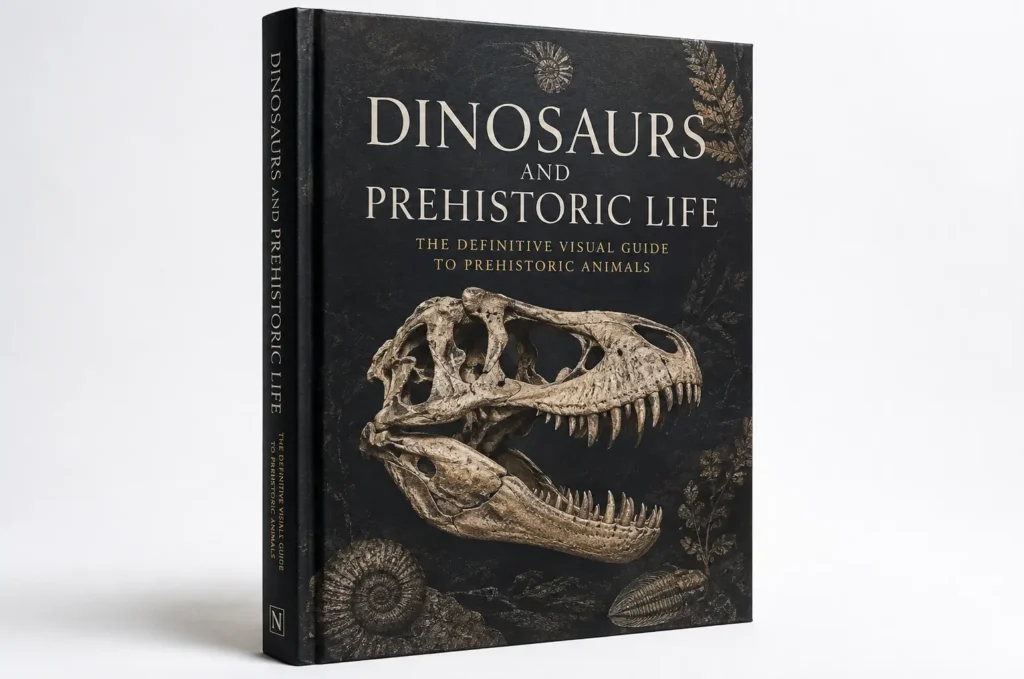
Dinosaurs and Prehistoric Life
A richly illustrated visual reference exploring dinosaurs, fossils, evolution, and prehistoric life across geological time.
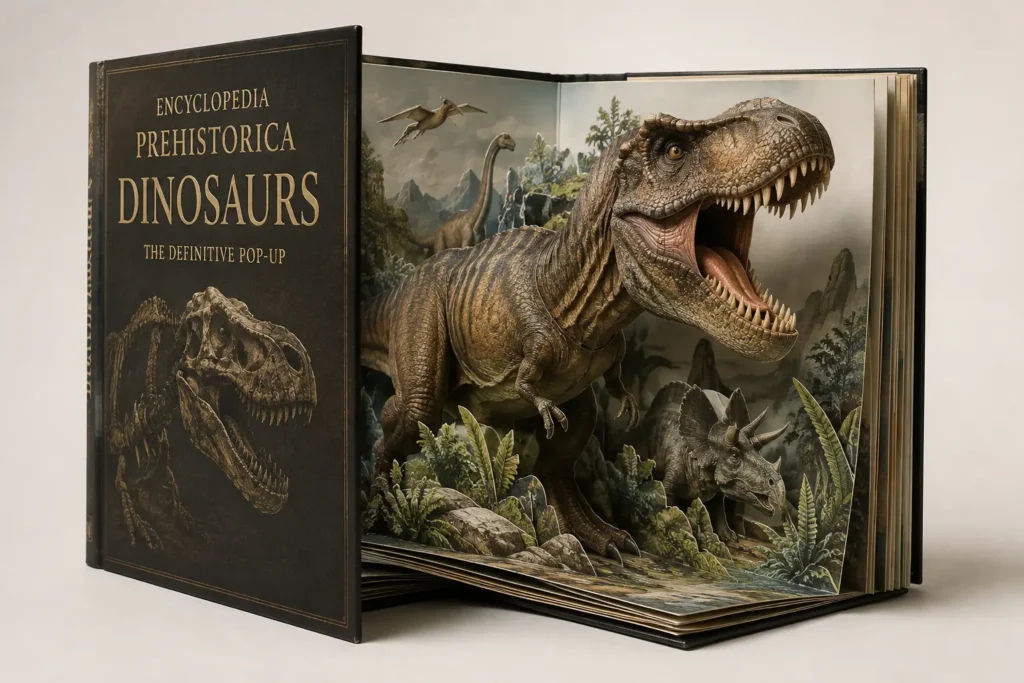
Encyclopedia Prehistorica: Dinosaurs
An interactive dinosaur book featuring spectacular three-dimensional pop-ups, particularly suited to young readers and families.
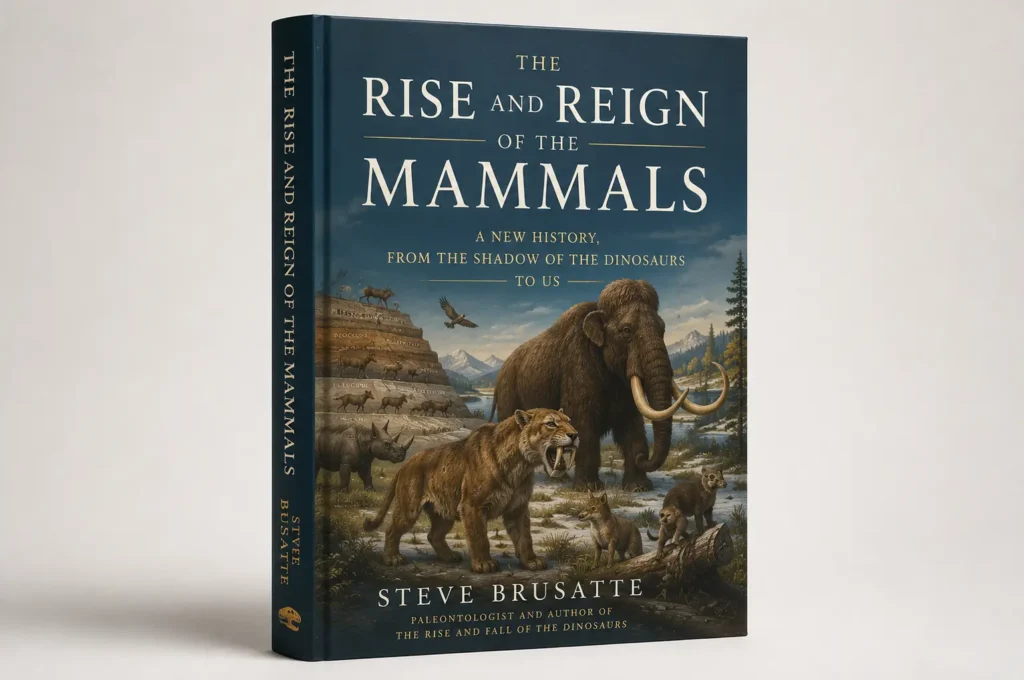
The Rise and Reign of the Mammals
A sweeping history of mammalian evolution, from their origins alongside dinosaurs through the Cenozoic and the emergence of humans.