

Quick Facts
| Attribute | Detail |
|---|---|
| Scientific name | Mammuthus primigenius |
| Pronunciation | mam-OO-thus prim-ih-JEE-nee-us |
| Name meaning | Mammuthus: mammoth; primigenius: primeval or first-born |
| Classification | Animalia > Chordata > Mammalia > Proboscidea > Elephantidae > Mammuthus > M. primigenius |
| Period | Middle Pleistocene–Holocene, approximately 400,000–4,000 years ago |
| Found in | Northern Eurasia, Beringia, North America; frozen specimens concentrated in Siberia |
| Diet | Herbivore — grasses, sedges, and herbaceous plants; seasonal browse supplement |
| Shoulder height | 2.7–3.4 m (8.9–11.2 ft) — adult males |
| Weight | 5,500–8,000 kg (12,100–17,600 lb) — adult males |
| Status | Extinct |
Quick Answer: Woolly mammoth facts reveal a large Ice Age mammal that lived from approximately 400,000 to 4,000 years ago across northern Eurasia and North America. Closely related to modern elephants, it stood up to 3.4 metres (11.2 ft) tall, ate cold-steppe grasses, and went extinct due to a combination of climate change and human hunting pressure.
Woolly mammoth facts place this species firmly in the age of humans, not the age of dinosaurs. The last mammoths died approximately 4,000 years ago — when the pyramids of Giza were already standing — making them among the most recent large mammals to go extinct. Every aspect of the woolly mammoth, from its grass-grinding teeth to its freeze-preserved carcasses to the gene-editing programmes now targeting its DNA, rewards a closer look. The posts in this cluster go deeper on each topic.
Woolly Mammoth Overview
The woolly mammoth (Mammuthus primigenius) was a cold-adapted proboscidean that inhabited the mammoth steppe of northern Eurasia and North America during the Pleistocene. It survived multiple glacial-interglacial cycles before disappearing near the end of the Holocene as climatic warming, habitat change, and human pressures affected remaining populations.
| Feature | Detail |
|---|---|
| Closest living relative | Asian elephant (Elephas maximus) |
| Evolutionary origin | Evolved from the steppe mammoth (Mammuthus trogontherii) during the Middle Pleistocene |
| Key cold adaptations | Dense fur coat, thick subcutaneous fat layer, reduced ears, and a domed skull with a fat-rich shoulder hump |
| Cultural significance | Depicted in Palaeolithic cave art and known to have coexisted with prehistoric human populations |
| Formal description | Described by Johann Friedrich Blumenbach in 1799 |
Woolly Mammoth Size and Anatomy
| Feature | Detail |
|---|---|
| Shoulder height — males | Approximately 2.7–3.4 m (8.9–11.2 ft) |
| Shoulder height — females | Generally smaller than males, typically 2.0–2.6 m (6.6–8.5 ft) |
| Body mass — males | Commonly estimated at 5,500–8,000 kg (12,100–17,600 lb) |
| Maximum tusk length | Large individuals could develop tusks exceeding 4 m (13 ft) in length |
| Coat | Dense underwool beneath long guard hairs, combined with a substantial insulating fat layer |
Woolly mammoths were broadly comparable in size to modern elephants but possessed several distinctive adaptations for cold environments. Their compact ears, thick fur, extensive fat deposits, and characteristic shoulder hump helped conserve heat and store energy during long Ice Age winters.
For more details, see our full post on woolly mammoth size and anatomy.
What Did Woolly Mammoths Eat?
| Feature | Detail |
|---|---|
| Primary diet | Grasses and sedges (Poaceae and Cyperaceae) |
| Secondary diet | Herbaceous plants, shrubs, and seasonal browse |
| Evidence types | Gut contents, dental microwear, stable isotope studies, and coprolites |
| Feeding ecology | Large grazing herbivore adapted to open grass-dominated environments |
Woolly mammoths were primarily grazers that fed on the vegetation of the mammoth steppe. Fossil evidence from stomach contents, preserved dung, and tooth wear patterns indicates a diet dominated by grasses and sedges, supplemented by other plants when available.
For more details, see our full post on what woolly mammoths ate.
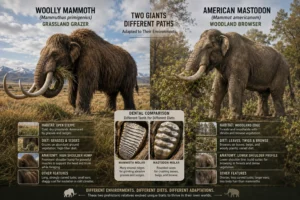
Woolly Mammoth vs Mastodon
| Feature | Woolly Mammoth | American Mastodon |
|---|---|---|
| Family | Elephantidae | Mammutidae |
| Relationship | More closely related to modern elephants | More distantly related proboscidean lineage |
| Size | Up to approximately 3.4 m (11.2 ft) at the shoulder | Typically smaller, reaching about 2.3–2.8 m (7.5–9.2 ft) |
| Teeth | Broad ridged molars adapted for grazing | Cusped molars adapted for browsing |
| Habitat | Open grasslands and mammoth steppe | Forests, woodlands, and mixed habitats |
| Primary diet | Grasses and sedges | Leaves, twigs, shrubs, and other woody vegetation |
Although mammoths and mastodons coexisted in parts of North America during the Late Pleistocene, they occupied different ecological niches. Mammoths were primarily grazers of open landscapes, whereas mastodons were woodland browsers adapted to feeding on trees and shrubs.
For more details, see our full post on woolly mammoth vs mastodon.
Woolly Mammoth Discovery and Fossil Record
| Feature | Detail |
|---|---|
| Scientific description | Described by Johann Friedrich Blumenbach in 1799 |
| Most productive region | Siberian permafrost, particularly northern Russia |
| Notable specimens | Adams Mammoth, Berezovka Mammoth, Dima, Lyuba, and Nun cho ga |
| Preservation type | Frozen soft-tissue remains, articulated skeletons, isolated teeth, tusks, and other fossil material |
| Ongoing discoveries | New specimens continue to be recovered as Arctic erosion and permafrost thaw expose previously buried remains |
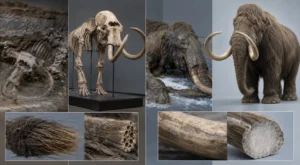
The woolly mammoth possesses one of the richest fossil records of any extinct large mammal. Exceptionally preserved specimens recovered from Siberian permafrost have provided rare insights into soft tissues, hair, stomach contents, genetics, growth, and behaviour, making the species one of the best-studied members of the Ice Age megafauna.
For more details, see our full post on woolly mammoth discovery and fossil finds.
Why Did the Woolly Mammoth Go Extinct?
| Driver | Evidence |
|---|---|
| Climate warming | Reduction and fragmentation of mammoth steppe habitat during the transition from the Pleistocene to the Holocene |
| Human hunting | Archaeological evidence including butchered remains and associations with human hunting sites |
| Population fragmentation | Increasing isolation of remnant populations as suitable habitat contracted |
| Genetic decline | Evidence of reduced genetic diversity and inbreeding in some late-surviving populations |
| Mainland extinction | Approximately 10,000 years ago in most regions |
Most researchers view woolly mammoth extinction as the result of multiple interacting factors rather than a single cause. Climate-driven habitat loss likely reduced available range and population size, while human hunting pressure may have contributed to the decline of already vulnerable populations. Small isolated populations that survived on islands persisted for thousands of years after mainland extinction before eventually disappearing.
For more details, see our full post on woolly mammoth extinction.
Woolly Mammoth Habitat and Geographic Range
| Feature | Detail |
|---|---|
| Primary ecosystem | Mammoth steppe — a cold, dry, grass-dominated biome |
| Core range | Northern Eurasia, including much of Siberia |
| Extended range | Beringia and large areas of North America |
| Western range limit | Western Europe, including parts of the British Isles during suitable climatic periods |
| Last known habitat | Wrangel Island in the Arctic Ocean, where a relict population survived until approximately 4,000 years ago |
The mammoth steppe was one of the largest terrestrial ecosystems of the Pleistocene, stretching across northern Eurasia and North America. Unlike modern Arctic tundra, it supported extensive grasslands capable of sustaining large populations of grazing mammals, including woolly mammoths.
For more details, see our full post on woolly mammoth habitat and geographic range.
When Did Woolly Mammoths Live?
| Milestone | Date |
|---|---|
| First appearance | Approximately 400,000 years ago |
| Peak geographic range | During the Late Pleistocene, particularly around the Last Glacial Maximum (approximately 26,000–19,000 years ago) |
| Mainland extinction | Approximately 10,000 years ago |
| St. Paul Island population extinction | Approximately 5,600 years ago |
| Final known extinction (Wrangel Island) | Approximately 4,000 years ago |
Woolly mammoths survived for hundreds of thousands of years and endured multiple glacial cycles. Small isolated populations persisted on Arctic islands long after mainland populations disappeared. The final known woolly mammoths on Wrangel Island lived during the Bronze Age, making them among the most recently extinct members of the Ice Age megafauna.
For more details, see our full post on when woolly mammoths lived.
Is a Woolly Mammoth a Dinosaur?
| Feature | Detail |
|---|---|
| Class | Mammalia |
| Dinosaur extinction | Approximately 66 million years ago |
| Woolly mammoth first appearance | Approximately 400,000 years ago |
| Time separating them | More than 65 million years |
| Defining mammalian traits | Fur, milk production, warm-blooded metabolism, and live birth |
A woolly mammoth was not a dinosaur. Mammoths were mammals belonging to the elephant family, whereas non-avian dinosaurs disappeared approximately 66 million years before the first woolly mammoths evolved. Although both are extinct groups familiar from prehistoric life, they lived during vastly different periods of Earth’s history.
For more details, see our full post on whether a woolly mammoth is a dinosaur.
Can We Bring the Woolly Mammoth Back to Life?
| Feature | Detail |
|---|---|
| True cloning | Not currently possible because no viable living mammoth cells have been recovered |
| Current approach | Genetic engineering aimed at introducing mammoth-like traits into the genome of the Asian elephant |
| Research focus | Recovery and analysis of ancient DNA and other biomolecules from exceptionally preserved specimens |
| Scientific goal | Development of cold-adapted elephant-like animals possessing selected mammoth characteristics |
| Current status | No living woolly mammoth or mammoth-like animal has yet been produced |
Although woolly mammoth remains have yielded exceptionally well-preserved DNA, true de-extinction remains a significant scientific challenge. Most current research focuses on identifying genes associated with cold adaptation and investigating whether some of those traits could be introduced into the Asian elephant, the mammoth’s closest living relative.
Any future animal produced through these methods would not be a true woolly mammoth. Instead, it would represent an elephant with selected mammoth-derived characteristics designed to function in cold environments.
For more details, see our full post on woolly mammoth de-extinction.
Related and Contemporary Species
- Elephas maximus (Asian elephant) — the woolly mammoth’s closest living relative and the species most frequently referenced in mammoth genetics and de-extinction research.
- Mammuthus trogontherii (Steppe mammoth) — a large Eurasian mammoth widely regarded as the ancestral species from which the woolly mammoth evolved.
- Mammuthus columbi (Columbian mammoth) — a larger North American mammoth that coexisted with woolly mammoths and is known from genetic evidence to have interbred with some mammoth populations.
- Mammut americanum (American mastodon) — a contemporaneous but more distantly related proboscidean belonging to a separate family and adapted primarily to forested habitats.
- Coelodonta antiquitatis (Woolly rhinoceros) — a cold-adapted herbivore of the mammoth steppe that shared much of the woolly mammoth’s Eurasian range during the Late Pleistocene.
Common Questions About Woolly Mammoths
Why is it called a woolly mammoth?
The woolly mammoth takes its common name from the dense coat of long hair and insulating underfur that helped it survive cold Pleistocene environments. Its scientific name, Mammuthus primigenius, is commonly translated as “primeval mammoth.” The word “mammoth” entered European languages through Russian, ultimately deriving from terms used by Indigenous Siberian peoples for the giant fossil remains frequently discovered in permafrost.
How long did woolly mammoths live?
Woolly mammoths likely lived for approximately 60–80 years, similar to modern elephants. Scientists estimate lifespan using growth layers preserved within tusks, which record annual development and provide information about age, growth patterns, and aspects of an individual’s life history.
Did humans hunt woolly mammoths?
Yes. Archaeological evidence shows that humans hunted woolly mammoths in parts of Eurasia and North America. Evidence includes cut marks on bones, hunting sites associated with stone tools, and the use of mammoth bones and ivory in the construction of shelters and other structures. Most researchers consider hunting to have contributed to the mammoth decline, although climate-driven habitat change also played a major role in their extinction.
What did a woolly mammoth sound like?
No direct evidence preserves the vocalisations of woolly mammoths. Based on their close relationship to modern elephants, researchers infer that woolly mammoths likely communicated using a range of low-frequency calls, including deep rumbles that may have travelled long distances across open landscapes.
How do we know what woolly mammoths looked like?
Woolly mammoths are among the best-documented extinct mammals. Scientists have reconstructed their appearance using exceptionally preserved frozen carcasses, fossil skeletons, preserved skin and hair, and prehistoric cave art created by people who lived alongside them. Together, these sources provide a detailed picture of the species’ anatomy, coat, and overall appearance.
Note: Body mass and dimensional estimates, the precise first-appearance date of Mammuthus primigenius, the relative weighting of extinction drivers, de-extinction programme timelines, and genomic similarity figures with living elephants are active areas of research. Details reflect current scientific consensus but may be revised as new evidence emerges.
References
B. Peer-Reviewed Literature
- Graham, R.W., Belmecheri, S., Choy, K. et al. (2016). Timing and causes of mid-Holocene mammoth extinction on St. Paul Island, Alaska. Proceedings of the National Academy of Sciences, 113(33), 9310–9314. https://doi.org/10.1073/pnas.1604903113
- Nogués-Bravo, D., Rodríguez, J., Hortal, J., Batra, P. & Araújo, M.B. (2008). Climate change, humans, and the extinction of the woolly mammoth. PLOS Biology, 6(4), e79. https://doi.org/10.1371/journal.pbio.0060079
- Palkopoulou, E., Lipson, M., Mallick, S. et al. (2018). A comprehensive genomic history of extinct and living elephants. Proceedings of the National Academy of Sciences, 115(11), E2566–E2574. https://doi.org/10.1073/pnas.1720554115
- Rogers, R.L. & Slatkin, M. (2017). Excess of genomic defects in a woolly mammoth on Wrangel Island. PLOS Genetics, 13(3), e1006601. https://doi.org/10.1371/journal.pgen.1006601
C. Monographs, Books and Technical Works
- Lister, A.M. & Bahn, P. (2007). Mammoths: Giants of the Ice Age. Revised Edition. University of California Press.
D. Databases and Institutional Resources
- Smithsonian National Museum of Natural History. Woolly Mammoth (Mammuthus primigenius). Smithsonian Institution. Available at: https://naturalhistory.si.edu
- Paleobiology Database. Mammuthus primigenius. Available at: https://paleobiodb.org
- Encyclopaedia Britannica. Woolly Mammoth. Available at: https://www.britannica.com
⚖️ Comparison

🦴 Fossil History



Recommended Paleontology & Natural History Books
As an Amazon Associate, Extinct Atlas may earn from qualifying purchases.
The Rise and Fall of the Dinosaurs
A compelling history of dinosaurs, tracing their origins, diversification, 200-million-year reign, extinction, and enduring legacy.
Dinosaurs and Prehistoric Life
A richly illustrated visual reference exploring dinosaurs, fossils, evolution, and prehistoric life across geological time.
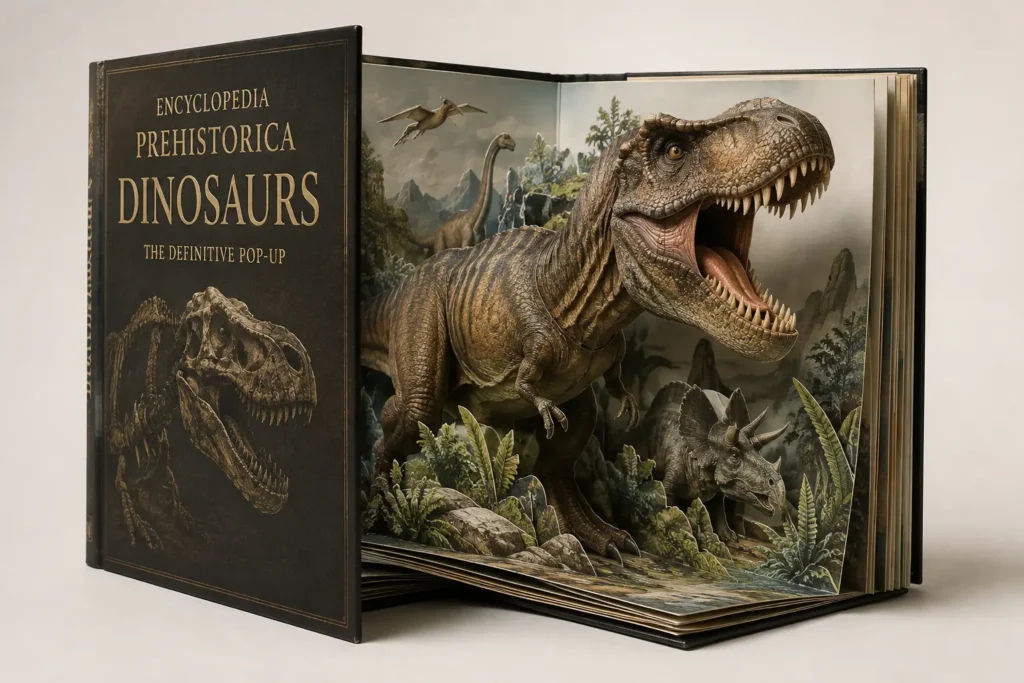
Encyclopedia Prehistorica: Dinosaurs
An interactive dinosaur book featuring spectacular three-dimensional pop-ups, particularly suited to young readers and families.
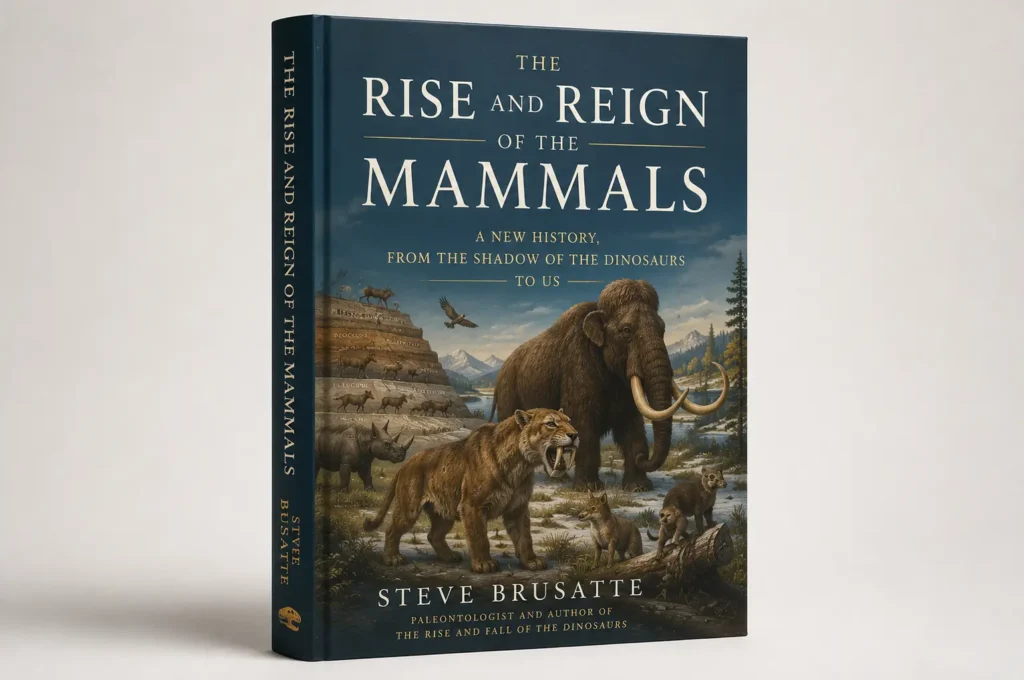
The Rise and Reign of the Mammals
A sweeping history of mammalian evolution, from their origins alongside dinosaurs through the Cenozoic and the emergence of humans.