
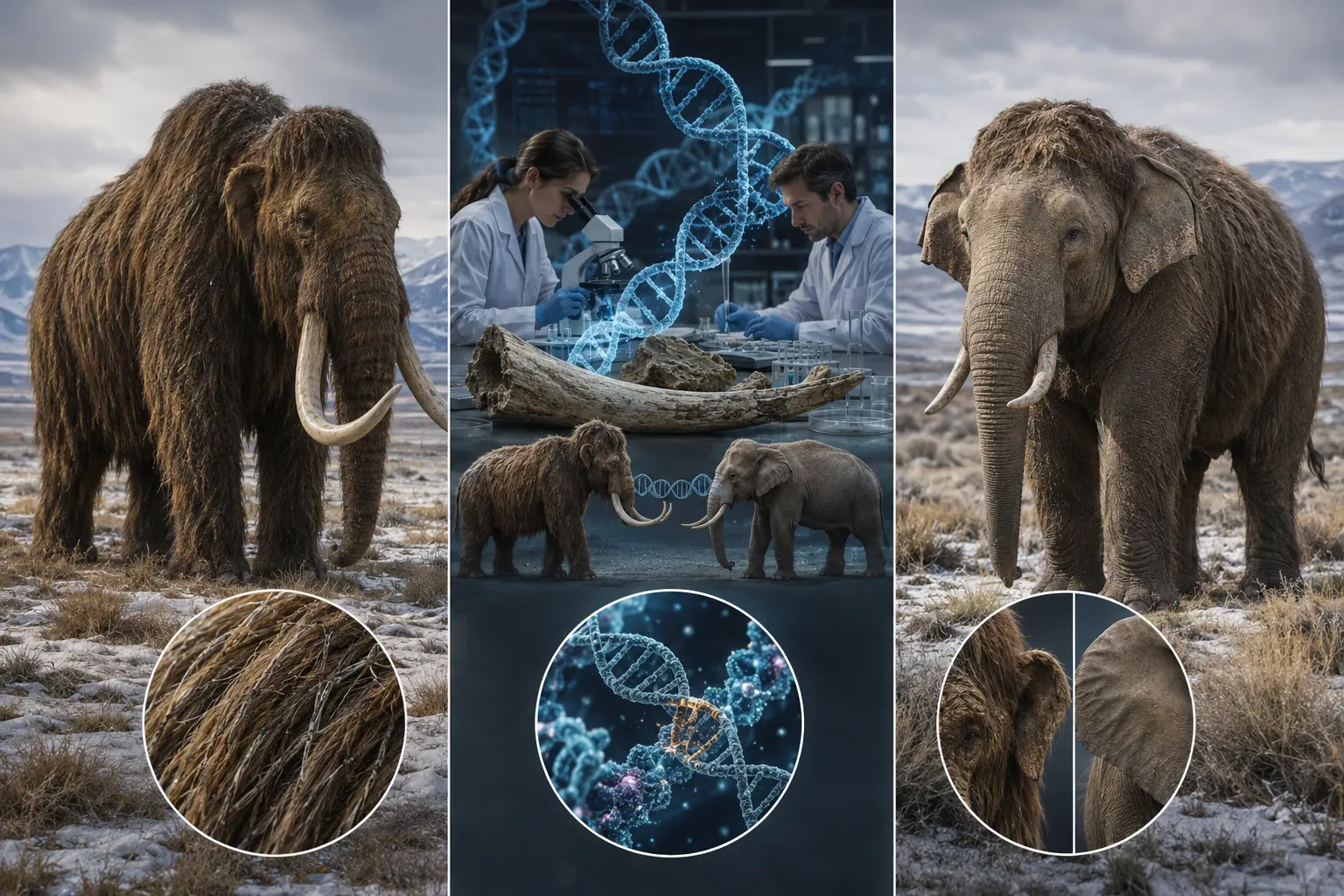
| Field | Information |
|---|---|
| Species | Mammuthus primigenius |
| Classification | Proboscidea, Elephantidae |
| Time Range | Middle Pleistocene–Late Holocene (c. 400,000–4,000 years ago) |
| Genome Status | Multiple high-quality genomes sequenced from permafrost-preserved remains |
| Closest Living Relative | Asian elephant (Elephas maximus) |
| Principal De-extinction Programme | Colossal Biosciences (established 2021) |
Quick Answer
No. A true woolly mammoth cannot currently be brought back to life because no intact living cells have survived from the species. Modern de-extinction efforts instead focus on using gene-editing technologies to introduce selected mammoth traits into the genome of the Asian elephant. The intended result is not a resurrected

Mammuthus primigenius, but a cold-adapted elephant that resembles the extinct species in some biological characteristics.
The woolly mammoth became extinct approximately 4,000 years ago, yet fragments of its DNA remain preserved within Arctic permafrost. These genetic remains have made the species the most prominent target of modern de-extinction research and a focal point in debates about the future of genetic conservation.
Why True Mammoth Cloning Is Not Possible
Cloning requires intact living cells containing undamaged nuclei from which a complete genome can be transferred into an egg cell. Despite the discovery of exceptionally well-preserved mammoth carcasses, no viable cells have been recovered. Freezing, thawing, radiation exposure, microbial activity, and chemical degradation progressively damage DNA and cellular structures after death.
As a result, researchers are not attempting to clone woolly mammoths directly. Instead, current projects rely on genetic engineering approaches that modify the genome of living elephants.
The Mammoth-Proxy Approach
The leading strategy uses CRISPR-Cas9 gene-editing technology to identify genetic variants associated with mammoth adaptations and introduce selected versions of those genes into Asian elephant cells.
The proposed animal would not be a woolly mammoth in a biological or taxonomic sense. Rather, it would be a genetically modified elephant possessing some mammoth-derived characteristics. Researchers commonly describe such an organism as a mammoth proxy, functional analogue, or cold-adapted elephant.
What Genes Are Being Studied?
Genomic research has identified numerous genetic differences between woolly mammoths and living elephants. Scientists have focused particular attention on genes associated with:
- Cold-temperature perception and sensory adaptation.
- Fat metabolism and thermal insulation.
- Oxygen transport under low-temperature conditions.
- Hair growth and coat structure.
- Skin and glandular adaptations to Arctic environments.
One widely studied example is TRPM8, a gene involved in temperature sensing that appears to have functioned differently in mammoths than in modern elephants.
Comparative genomic analyses have identified well over one million genetic differences between woolly mammoths and Asian elephants. Determining which of these differences were biologically important remains a major scientific challenge.
The Role of Ancient DNA and RNA Recovery
The woolly mammoth possesses one of the best-studied ancient genomes of any extinct animal. Advances in paleogenomics have allowed scientists to recover and sequence large portions of mammoth DNA from exceptionally well-preserved remains recovered from Arctic permafrost. These genomic datasets provide the foundation for comparisons between mammoths and their closest living relatives, the Asian elephants.
Ancient DNA does not survive intact. After death, DNA gradually fragments into shorter pieces and undergoes chemical modification, making recovery increasingly difficult with age. Researchers reconstruct ancient genomes by sequencing millions of fragments and assembling them computationally, a process that requires extensive quality control to distinguish authentic genetic signals from contamination and degradation.
In addition to DNA, researchers have investigated the preservation of ancient RNA. Because RNA molecules are generally less stable than DNA, they were long considered unlikely to survive for extended geological periods. However, advances in molecular techniques have demonstrated that RNA can occasionally persist in exceptionally well-preserved specimens under rare conditions.
Ancient RNA has the potential to provide information unavailable from DNA alone. Whereas DNA records the genetic instructions of an organism, RNA can reveal which genes were actively expressed in particular tissues at the time of preservation. Such information may help researchers better understand the physiology, development, and environmental adaptations of extinct species.
Together, ancient DNA and RNA research continue to improve scientific understanding of woolly mammoth biology and provide important data for ongoing discussions surrounding de-extinction technologies.
What Has Actually Been Achieved?
Research into mammoth de-extinction has progressed primarily through advances in ancient DNA analysis, comparative genomics, and gene-editing technology. Scientists have sequenced multiple woolly mammoth genomes from permafrost-preserved remains and identified numerous genetic differences between mammoths and their closest living relatives, the Asian elephants.
Researchers have also developed methods for culturing and genetically modifying elephant cells, an important prerequisite for any future attempt to produce a mammoth-like animal. Experimental work has focused on introducing mammoth-associated genetic variants linked to cold adaptation, hair growth, fat metabolism, and other Arctic traits into living elephant cells.
Despite these advances, no living woolly mammoth has been produced. No genetically engineered mammoth-proxy animal has yet been successfully gestated and brought to term. Significant challenges remain in reproductive biology, embryonic development, large-scale genome editing, and animal welfare.
The gap between modifying individual cells in a laboratory and producing a healthy, reproductively viable large mammal remains substantial.
Is It Actually a Woolly Mammoth?
No. Even if scientists successfully produce an elephant carrying selected mammoth-derived traits, the resulting animal would not be a true woolly mammoth.
A woolly mammoth was a member of the extinct species Mammuthus primigenius, possessing its own evolutionary history, complete genome, developmental biology, behaviour, and ecological adaptations. Current de-extinction proposals aim to modify the genome of the Asian elephant (Elephas maximus) by introducing selected mammoth-associated genetic variants.
The resulting organism would therefore be best described as a mammoth proxy, functional analogue, or genetically modified elephant rather than a resurrected woolly mammoth.
Some researchers have speculated that future technologies might eventually allow the construction of a genome more closely approximating that of Mammuthus primigenius. However, no existing technology can recreate an extinct mammoth from original living cells, and no demonstrated pathway currently exists for producing a genetically complete woolly mammoth.
The Ethics of Woolly Mammoth De-extinction
The prospect of mammoth de-extinction raises scientific, ethical, and conservation questions that extend beyond technical feasibility.
One concern involves animal welfare. Any attempt to produce mammoth-like offspring would require complex reproductive procedures, potentially involving elephant surrogates, laboratory embryos, or emerging artificial gestation technologies. Critics argue that such approaches may expose animals to significant risks during experimentation.
A second concern focuses on conservation priorities. Some biologists question whether resources devoted to de-extinction projects might be more effectively invested in protecting living species and ecosystems that are currently under threat.
A third debate concerns ecology. Modern Arctic environments differ substantially from those occupied by woolly mammoths thousands of years ago. Even if mammoth-proxy animals were successfully produced, their ecological effects would be difficult to predict.
Supporters of de-extinction research argue that large grazing herbivores could potentially help restore portions of the mammoth-steppe ecosystem that once dominated northern Eurasia. This idea has been explored through ecological experiments associated with the Pleistocene Park project in Siberia. Some models suggest that large herbivores may influence vegetation structure, snow cover, and ground temperatures. Whether mammoth-proxy animals could produce such effects at a meaningful ecological scale remains uncertain.
Conservation Concerns
The Asian elephant (Elephas maximus), the closest living relative of the woolly mammoth, is itself an endangered species. Because many proposed de-extinction strategies depend on elephant reproductive biology, some conservationists have raised concerns regarding animal welfare, the use of surrogate mothers, and the broader implications for elephant conservation.
These concerns have contributed to an ongoing debate over whether de-extinction should be viewed primarily as a conservation tool, a scientific experiment, or a technological demonstration. No consensus currently exists among researchers, conservation organisations, or ethicists.
The Role of Ancient DNA and RNA Recovery
The woolly mammoth possesses one of the best-studied ancient genomes of any extinct animal. Advances in paleogenomics have allowed scientists to recover and sequence large portions of mammoth DNA from exceptionally well-preserved remains recovered from Arctic permafrost. These genomic datasets provide the foundation for comparisons between mammoths and their closest living relatives, the Asian elephants.
Ancient DNA does not survive intact. After death, DNA gradually fragments into shorter pieces and undergoes chemical modification, making recovery increasingly difficult with age. Researchers reconstruct ancient genomes by sequencing millions of fragments and assembling them computationally, a process that requires extensive quality control to distinguish authentic genetic signals from contamination and degradation.
In addition to DNA, researchers have investigated the preservation of ancient RNA. Because RNA molecules are generally less stable than DNA, they were long considered unlikely to survive for extended geological periods. However, advances in molecular techniques have demonstrated that RNA can occasionally persist in exceptionally well-preserved specimens under rare conditions.
Ancient RNA has the potential to provide information unavailable from DNA alone. Whereas DNA records the genetic instructions of an organism, RNA can reveal which genes were actively expressed in particular tissues at the time of preservation. Such information may help researchers better understand the physiology, development, and environmental adaptations of extinct species.
Together, ancient DNA and RNA research continue to improve scientific understanding of woolly mammoth biology and provide important data for ongoing discussions surrounding de-extinction technologies.
Related and Contemporary Species
- Elephas maximus (Asian Elephant) — The closest living relative of the woolly mammoth and the principal species used in modern de-extinction research.
- Loxodonta africana (African Savanna Elephant) — A more distantly related living elephant whose genome provides additional comparative data for elephantid evolutionary studies.
- Mammuthus columbi (Columbian Mammoth) — A large North American mammoth species closely related to the woolly mammoth. Genetic evidence indicates periods of interbreeding between the two species.
- Mammut americanum (American Mastodon) — A contemporaneous proboscidean that occupied different habitats and belonged to a separate evolutionary lineage from mammoths and modern elephants.
- Mammuthus trogontherii (Steppe Mammoth) — Generally regarded as the ancestral species from which the woolly mammoth evolved during the Middle Pleistocene.
Frequently Asked Questions
Has the woolly mammoth been cloned?
No. A woolly mammoth has never been cloned. Cloning requires intact living cells containing viable nuclei, and no such cells have been recovered from any known mammoth specimen. Current de-extinction efforts instead focus on introducing selected mammoth-associated genetic variants into living elephant cells through gene-editing technologies.
Could scientists create a true woolly mammoth in the future?
Current technology cannot recreate a genetically complete woolly mammoth. Future advances in synthetic biology, genome engineering, and reproductive technology may expand what is technically possible, but no demonstrated method currently exists for resurrecting the original species.
When might a mammoth proxy animal be produced?
Several research groups and biotechnology companies have proposed timelines for producing mammoth-like animals. However, major scientific and technical challenges remain unresolved, including large-scale genome editing, embryonic development, and reproductive biology. As a result, no reliable prediction can currently be made regarding when, or whether, a viable mammoth proxy animal will be born.
Why is the woolly mammoth the primary focus of de-extinction research?
The woolly mammoth is considered one of the most suitable candidates for de-extinction because it became extinct relatively recently, numerous remains have been preserved in Arctic permafrost, substantial genomic data are available, and a closely related living species—the Asian elephant—still survives.
Current de-extinction research demonstrates the growing power of genomics and gene-editing technologies, but it does not represent the resurrection of the original woolly mammoth. Whether future technologies can narrow that gap remains uncertain. For now, mammoth de-extinction remains an active scientific endeavour rather than an accomplished reality.
References
Peer-Reviewed Literature
Lynch, V. J., Bedoya-Reina, O. C., Ratan, A., Sulak, M., Drautz-Moses, D. I., Perry, G. H., Miller, W., & Schuster, S. C. (2015). Elephantid genomes reveal the molecular bases of woolly mammoth adaptations to the Arctic. Cell Reports, 12(2), 217–228.
Palkopoulou, E., Lipson, M., Mallick, S., Nielsen, S., Rohland, N., Baleka, S., Karpinski, E., Ivancevic, A. M., To, T. H., Kortschak, R. D., Raison, J. M., Qu, Z., Chin, T. J., Alt, K. W., Claesson, S., Dalén, L., MacPhee, R. D. E., Meller, H., Roca, A. L., Ryder, O. A., Heiman, D., Young, S., Breen, M., Williams, C., Aken, B. L., Ruffier, M., Karlsson, E., Johnson, J., Di Palma, F., Alfoldi, J., Adelson, D. L., Mailund, T., Munch, K., Lindblad-Toh, K., Hofreiter, M., Andersson, L., & Reich, D. (2018). A comprehensive genomic history of extinct and living elephants. Proceedings of the National Academy of Sciences, 115(11), E2566–E2574.
Books and Monographs
Shapiro, B. (2015). How to Clone a Mammoth: The Science of De-Extinction. Princeton University Press.
Databases and Scientific Resources
NCBI GenBank. Genetic sequence repository containing mammoth genomic data and associated molecular records.
Project and Research Information
Colossal Biosciences – Woolly Mammoth Project. Public information describing current mammoth de-extinction research objectives and methodologies.
Recommended Paleontology & Natural History Books
As an Amazon Associate, Extinct Atlas may earn from qualifying purchases.
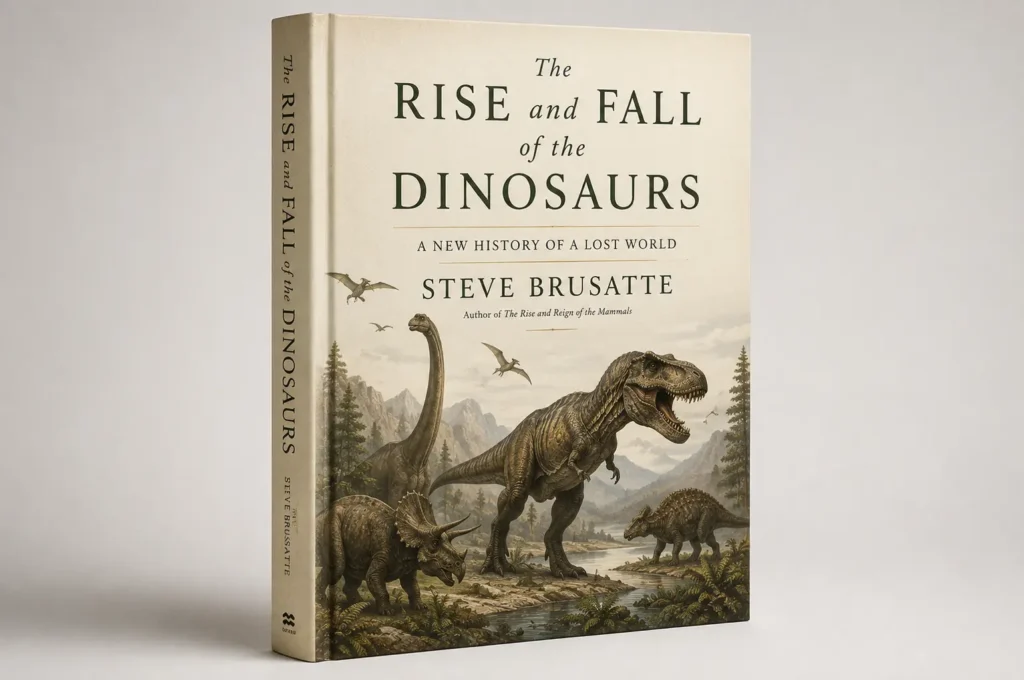
The Rise and Fall of the Dinosaurs
A compelling history of dinosaurs, tracing their origins, diversification, 200-million-year reign, extinction, and enduring legacy.
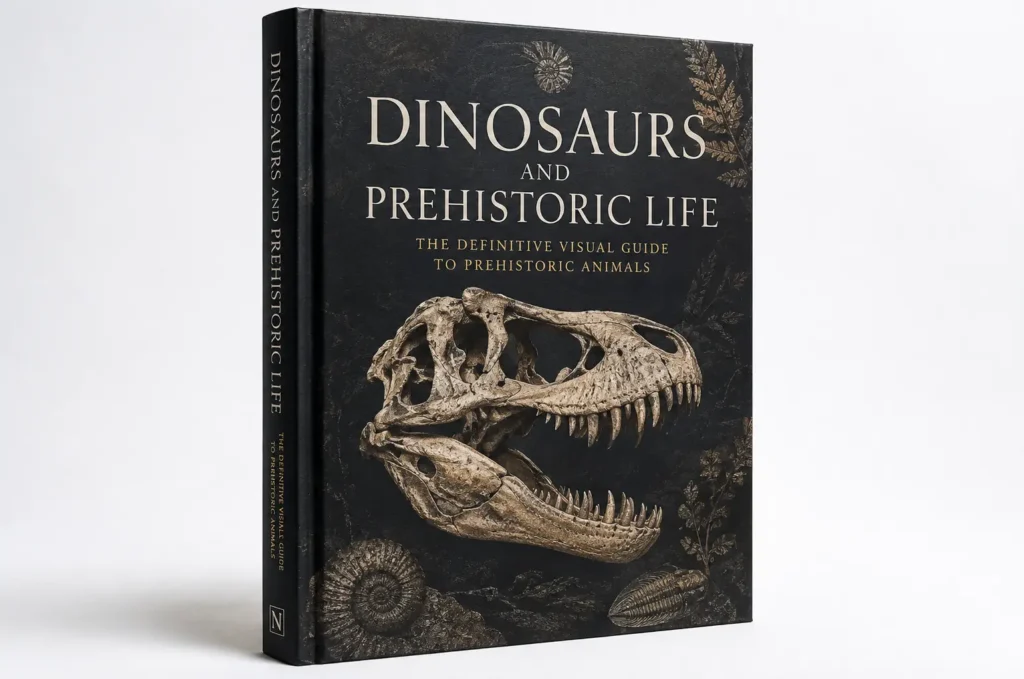
Dinosaurs and Prehistoric Life
A richly illustrated visual reference exploring dinosaurs, fossils, evolution, and prehistoric life across geological time.
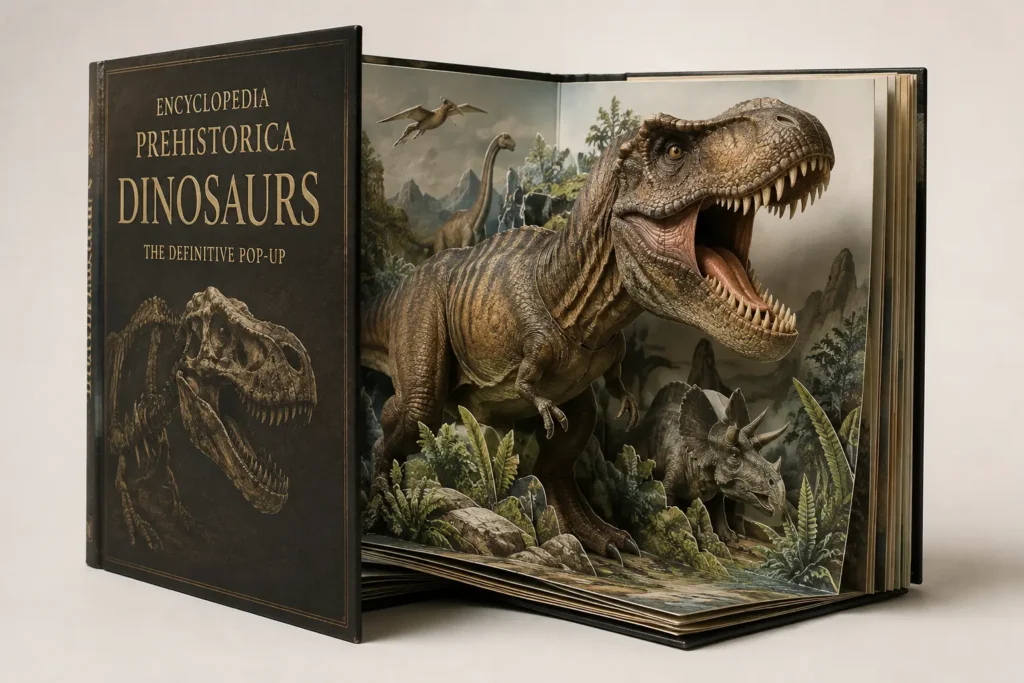
Encyclopedia Prehistorica: Dinosaurs
An interactive dinosaur book featuring spectacular three-dimensional pop-ups, particularly suited to young readers and families.
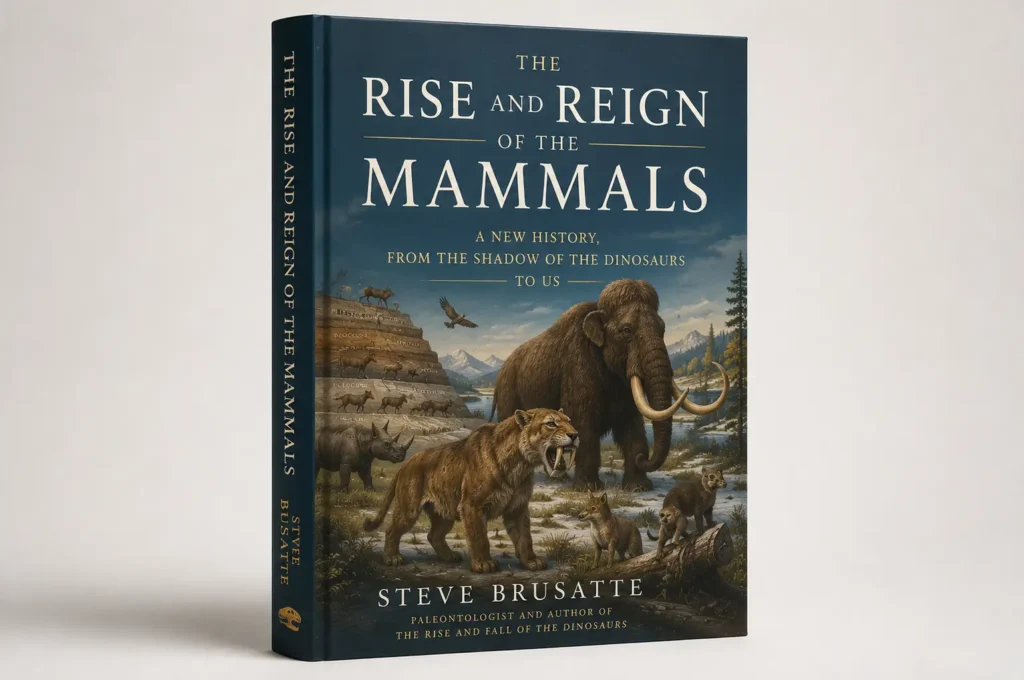
The Rise and Reign of the Mammals
A sweeping history of mammalian evolution, from their origins alongside dinosaurs through the Cenozoic and the emergence of humans.