
At a Glance
| Attribute | Detail |
|---|---|
| Scientific name | Tyrannosaurus rex |
| Pronunciation | tie-RAN-oh-SORE-us REX |
| Name meaning | Tyrant lizard king |
| Period | Late Cretaceous (68–66 Ma) |
| Found in | Western North America (Hell Creek Formation and equivalents) |
| Diet | Carnivore — large herbivorous dinosaurs |
| Length | 12–13 m (39–43 ft) |
| Weight | 8,000–14,000 kg (17,600–30,900 lb), est. |
| Classification | Dinosauria › Saurischia › Theropoda › Tyrannosauridae |
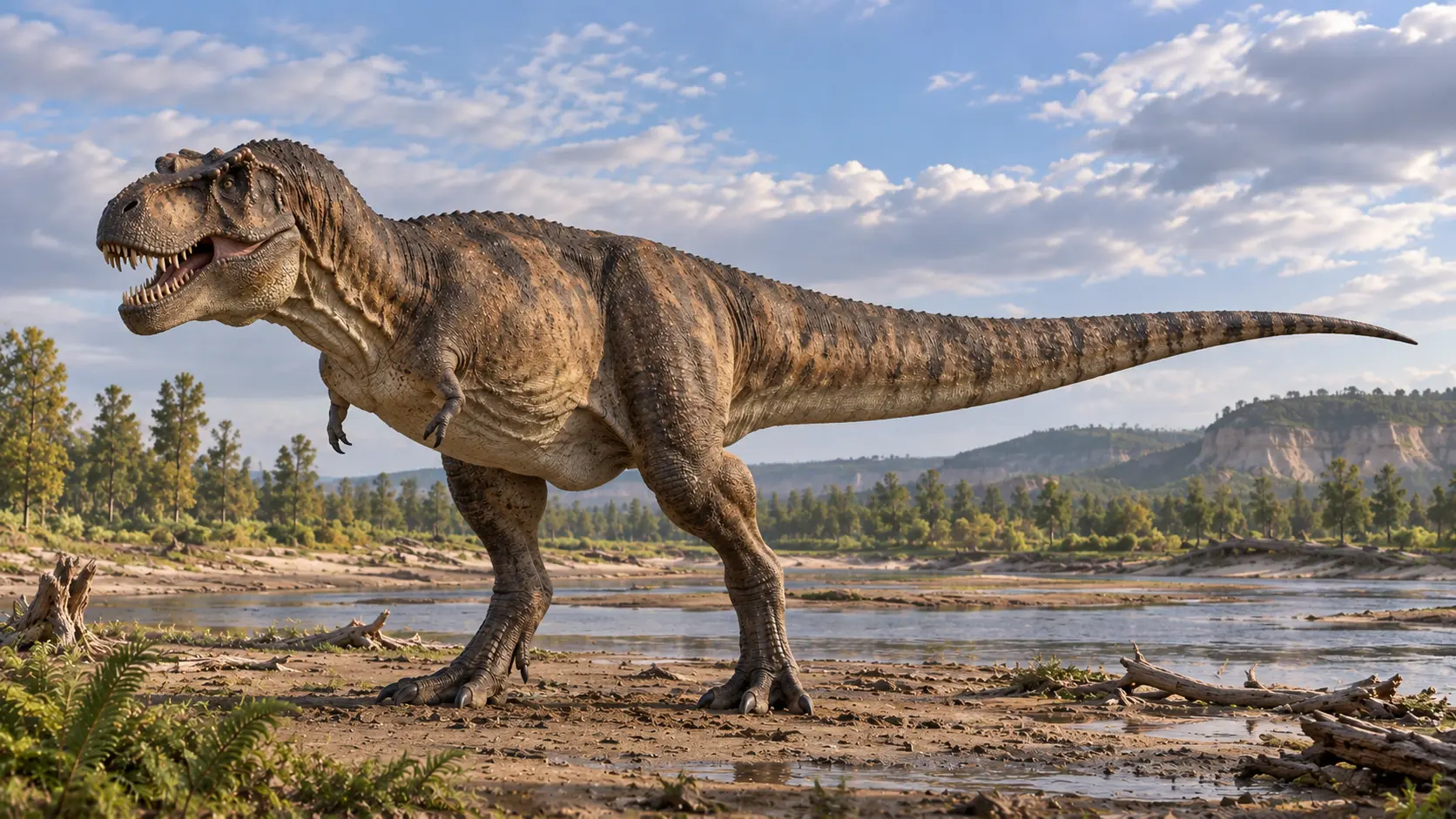
Quick Answer: Tyrannosaurus rex was a massive bipedal carnivore that lived in western North America approximately 68–66 million years ago. It was the apex predator of its ecosystem, hunting large plant-eating dinosaurs like Triceratops and Edmontosaurus using bone-crushing jaws capable of generating some of the highest bite forces of any terrestrial animal in the fossil record. It went extinct 66 million years ago at the Cretaceous–Palaeogene boundary.
Bone by bone, T. rex has been rebuilt from the earth more completely than almost any other extinct animal. More than fifty specimens are known — enough to track how it grew, how it moved, what it ate, and where it lived. The picture that emerges is more precise and more interesting than the cinema version. This page covers the essentials. The spokes go deeper.
How Big Was T. Rex?
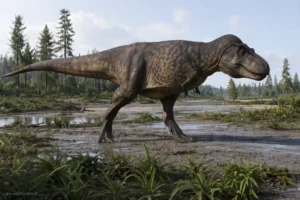
T. rex was one of the largest bipedal animals ever to have lived. Adults reached 12–13 metres (39–43 ft) in length and stood approximately 3.7–4 metres (12–13 ft) tall at the hip. Model-dependent weight estimates typically range from 8,000 to 14,000 kilograms (17,600–30,900 lb) — with well-studied individuals such as Scotty (RSM P2523.8) from Saskatchewan at the heavier end of that range.
Growth was dramatic in adolescence: T. rex could gain up to 600 kilograms (1,300 lb) per year between ages 14 and 18, reaching adult size around age 20. The oldest known specimens lived to approximately 28–30 years. For the full-size picture — including comparisons with other giants and the biomechanical limits of its body plan — see our guide to T. rex size and growth.
What Did T. Rex Eat?
T. rex was a carnivore whose diet centred on large herbivorous dinosaurs — principally Triceratops and Edmontosaurus, both of which shared its Hell Creek ecosystem. Fossil evidence, including tooth-marked bones, a preserved coprolite containing crushed bone, and a hadrosaur vertebra bearing healed T. rex bite marks, together confirm that T. rex both actively hunted living prey and scavenged opportunistically.
The predator-versus-scavenger debate — once prominent in palaeontology — is now largely resolved in favour of active predation, with scavenging as an opportunistic supplement rather than a primary strategy. For the full evidence base and feeding behaviour detail, see our guide to T. rex diet and feeding behaviour.
T. Rex Skull and Teeth
The skull alone reached up to 1.5 metres (5 ft) in length. T. rex had 50–60 teeth at any one time — robust, deeply rooted, and roughly banana-shaped, designed for puncturing, gripping, and crushing bone rather than slicing soft tissue. Individual teeth reached up to 20 centimetres (8 in) in total length, including the root. Biomechanical estimates place total bite force at approximately 35,000–57,000 newtons — the strongest confirmed bite force of any terrestrial animal in the fossil record. For a full treatment of skull architecture, teeth, and bite mechanics, see our guide to T. rex skull and teeth.
T. Rex vs Triceratops
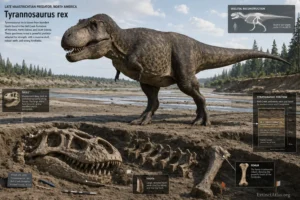
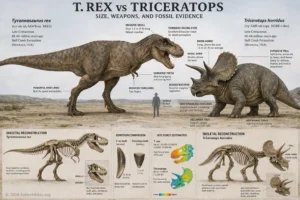
Triceratops was T. rex’s most frequently documented prey species and the most heavily evidenced predator-prey relationship in the Hell Creek fossil record. Multiple Triceratops specimens bear T. rex tooth marks, including a pelvis showing evidence of systematic feeding from multiple angles. Both species shared the same formation and went extinct at the same boundary, 66 million years ago. For a full examination of their physical comparison and the fossil interaction evidence, see our guide to T. rex vs Triceratops.
How Fast Was T. Rex?
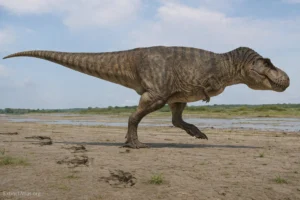
Biomechanical estimates vary considerably depending on the modelling method used, with figures typically ranging from approximately 17 to 29 kilometres per hour (10–18 mph) for sustained movement. T. rex was not built for sprinting — its mass and leg proportions suggest a powerful, efficient strider rather than a fast pursuit predator. For the full biomechanical picture, see our guide to T. rex speed and movement.
Did T. Rex Have Feathers?
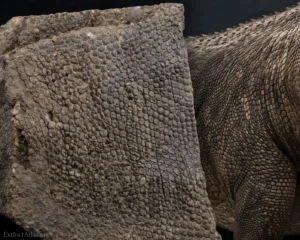
Current fossil evidence — skin impressions from multiple specimens — shows scaly skin on the neck, pelvis, and tail of adult T. rex. However, close relatives, including Yutyrannus from China, were extensively feathered, and juvenile T. rex may have carried some feathering for insulation. The honest answer is that the full extent of T. rex’s integument is not yet known. For the complete evidence and debate, see our guide to T. rex feathers.
Why Did T. Rex Have Small Arms?
Each arm measured roughly 1 metre (3 ft) on a 12-metre animal — but despite their proportional smallness, the arms were heavily muscled and bore two functional clawed digits. Their precise function remains genuinely debated among palaeontologists. For the full evolutionary history and current theories, see our guide to T. rex arms.
T. Rex Extinction
T. rex went extinct at the Cretaceous–Palaeogene boundary, approximately 66 million years ago, as part of the mass extinction triggered by the Chicxulub asteroid impact. Crucially, the Hell Creek fossil record shows T. rex was not already in decline — it remained the functioning apex predator of its ecosystem up to the boundary. What ended it was the collapse of the entire ecological system on which it depended. For the full extinction context, see our guide to T. rex extinction.
Where Did T. Rex Live?
T. rex lived on Laramidia — the western landmass of Late Cretaceous North America, separated from the east by a shallow inland seaway. Its fossils are concentrated in the Hell Creek Formation of Montana, North Dakota, South Dakota, and Wyoming. The Hell Creek environment was warm, humid, and heavily vegetated — river floodplains, oxbow lakes, and dense subtropical forests. For the full ecological picture, see our guide to T. rex habitat and the Hell Creek ecosystem.
When Was T. Rex Discovered?
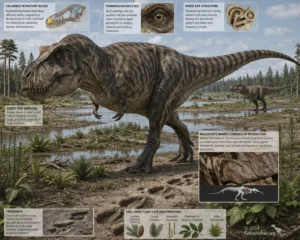
The first scientifically described T. rex specimen was named by Henry Fairfield Osborn of the American Museum of Natural History in 1905, based on material collected from the Hell Creek Formation. Earlier fragmentary material had been recovered in the 1890s by fossil hunter Barnum Brown. Since 1905, more than fifty specimens have been recovered, making T. rex one of the most completely known large theropods in the fossil record. For the full discovery history and a guide to the most important specimens, see our guide to T. rex discovery and fossils.
How Did T. Rex Behave?
T. rex almost certainly lived as a solitary apex predator — fossil evidence does not support coordinated pack hunting. Its sensory capabilities were sophisticated: forward-facing eyes providing binocular overlap comparable to a modern hawk, and olfactory bulbs proportionally larger than those of almost any other known dinosaur. Whether T. rex was primarily a pursuit predator, an ambush hunter, or a combination of both is inferred from anatomy rather than direct behavioural evidence. For what the fossil record and biomechanics can tell us about T. rex cognition and behaviour, see our guide to T. rex behaviour and intelligence.
Related and Contemporary Species
- Tarbosaurus bataar — the closest known relative of T. rex, from the Late Cretaceous of Mongolia; broadly similar in size and build but distinct in skull proportions.
- Albertosaurus sarcophagus — a smaller and earlier tyrannosaur from Canada; provides evolutionary context for the tyrannosaur lineage that produced T. rex.
- Daspletosaurus torosus — an earlier North American tyrannosaur; occupied a comparable apex predator role in an older ecosystem.
- Triceratops horridus — T. rex’s most documented prey species and the animal most closely associated with it in the fossil record.
- Edmontosaurus annectens — the other principal prey species; a large hadrosaur present in the Hell Creek ecosystem throughout T. rex’s tenure.
Common Questions About T. Rex
Was T. rex the biggest predatory dinosaur?
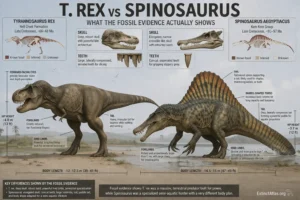
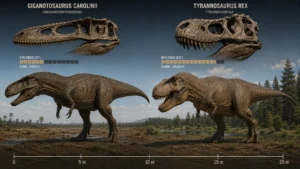
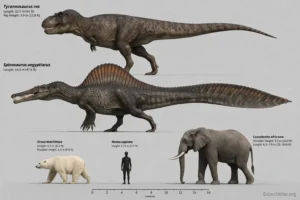
Not by length. Spinosaurus and Giganotosaurus reached comparable or greater lengths. By mass and bite force, T. rex was likely the most powerful terrestrial predator in the fossil record. Size comparisons depend on which metric is used — no single answer applies across all dimensions.
How long did T. rex live?
Bone growth ring analysis indicates the oldest known T. rex specimens lived approximately 28–30 years. Most individuals probably died younger due to injury, disease, or competition during the high-mortality juvenile phase.
Did T. rex hunt in packs?
Current fossil evidence does not support pack hunting. T. rex fossils are rarely found in groups, and there is no clear evidence of coordinated hunting behaviour. Most palaeontologists consider adult T. rex to have been solitary hunters.
How did T. rex reproduce?
Direct evidence for T. rex reproductive behaviour is extremely limited. Like other dinosaurs, T. rex almost certainly laid eggs. Medullary bone — a calcium-rich tissue associated with egg production in modern birds — has been identified in at least one T. rex specimen, confirming female sex for that individual.
Could a human outrun a T. rex?
Speculatively, a trained sprinter might briefly outpace T. rex in a straight sprint, as most biomechanical estimates place T. rex’s maximum speed at 17–24 km/h (10–15 mph). This is extrapolation, not direct evidence. In practice, T. rex’s enormous stride length and likely superior endurance would allow it to escape difficult terrain over any meaningful distance.
🦴 Fossil History

⚖️ Comparison


Recommended Paleontology & Natural History Books
As an Amazon Associate, Extinct Atlas may earn from qualifying purchases.
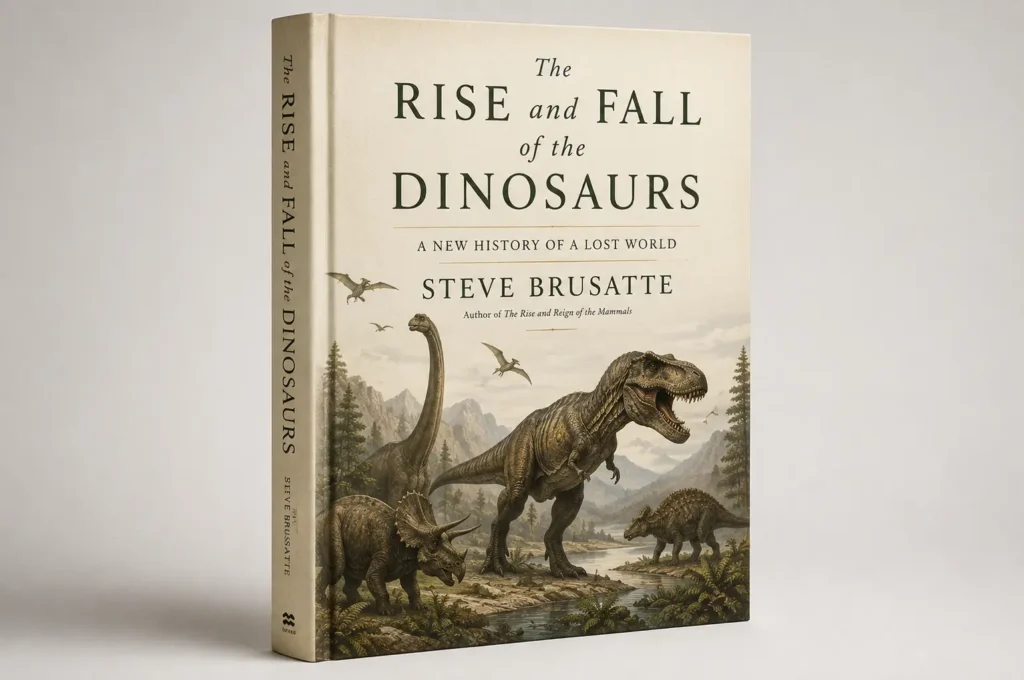
The Rise and Fall of the Dinosaurs
A compelling history of dinosaurs, tracing their origins, diversification, 200-million-year reign, extinction, and enduring legacy.
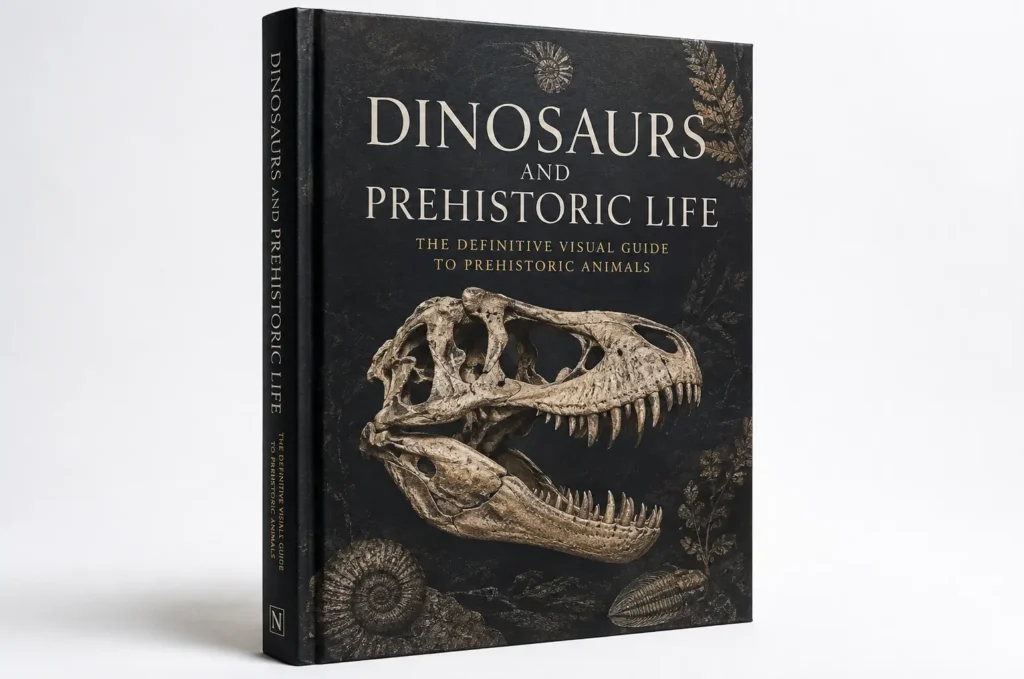
Dinosaurs and Prehistoric Life
A richly illustrated visual reference exploring dinosaurs, fossils, evolution, and prehistoric life across geological time.
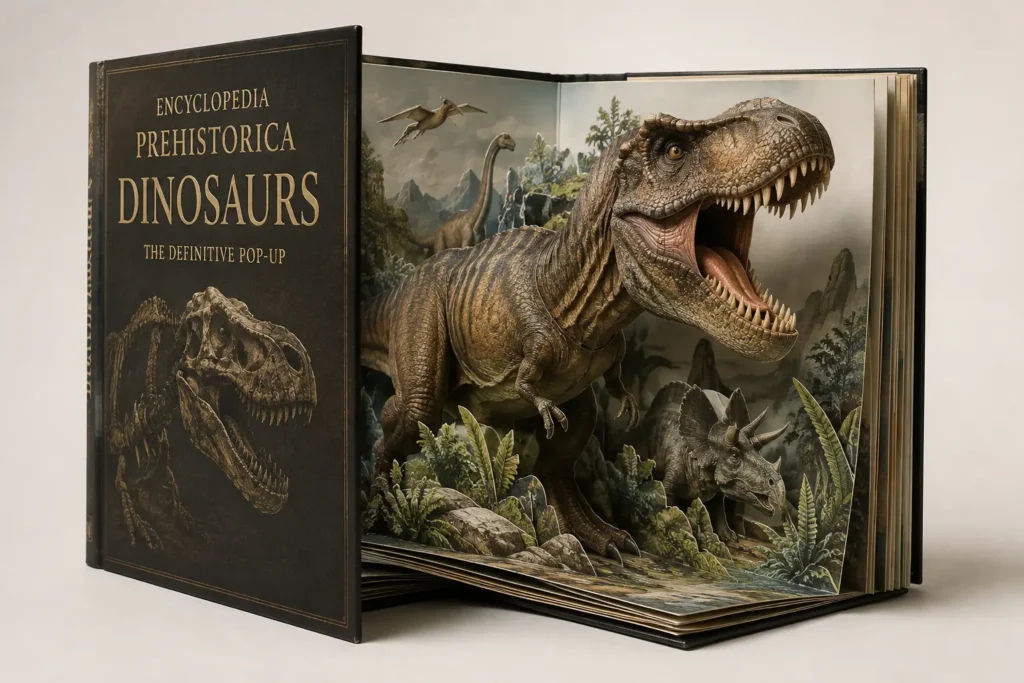
Encyclopedia Prehistorica: Dinosaurs
An interactive dinosaur book featuring spectacular three-dimensional pop-ups, particularly suited to young readers and families.
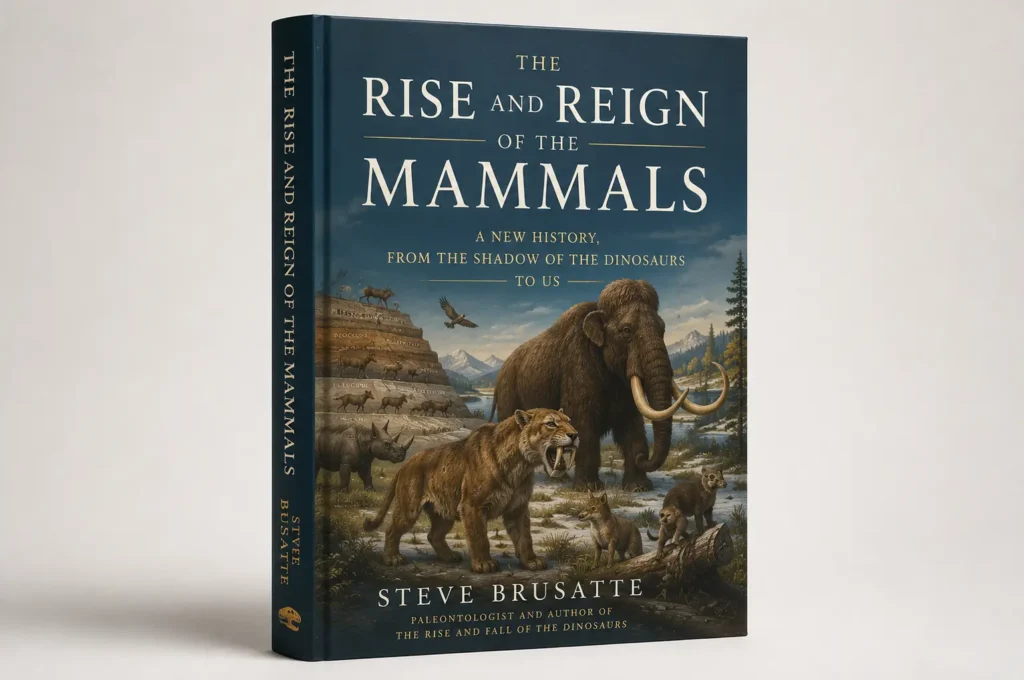
The Rise and Reign of the Mammals
A sweeping history of mammalian evolution, from their origins alongside dinosaurs through the Cenozoic and the emergence of humans.