

At a Glance
| Field | Information |
|---|---|
| Species | Tyrannosaurus rex |
| Period | Late Cretaceous (68–66 Ma) |
| Extinction event | Cretaceous–Palaeogene (K-Pg) boundary |
| Extinction date | Approximately 66.043 million years ago |
| Cause | Chicxulub asteroid impact and subsequent environmental collapse |
| Survivors | None — T. rex lineage ended completely; birds (avian dinosaurs) survived |
Quick Answer: T. rex went extinct approximately 66 million years ago at the Cretaceous–Palaeogene boundary, when the Chicxulub asteroid impact triggered a global environmental collapse that eliminated roughly three-quarters of all species on Earth. The Hell Creek fossil record shows T. rex was still present as a functioning apex predator — not already in decline — right up to the extinction boundary.

The last T. rex died in a world that had already ended. Sunlight was blocked by debris and sulphur aerosols. Global temperatures had collapsed. The large plant-eaters T. rex depended on were dying as their food supply failed. The Chicxulub impact did not single out T. rex — it dismantled the entire ecological system that made T. rex possible.
When Did T. Rex Go Extinct?
T. rex went extinct at the Cretaceous–Palaeogene (K-Pg) boundary, dated to approximately 66.043 million years ago. This boundary is one of the most precisely dated events in the geological record, identified worldwide by a thin layer of iridium-enriched clay — a global marker deposited by Chicxulub impact fallout. Iridium is rare in Earth’s crust but abundant in asteroidal material; its presence in a globally distributed layer at this precise stratigraphic horizon is among the most robust lines of evidence for the impact’s global scale.
T. rex fossils are found up to, but not above, this boundary layer. No confirmed T. rex specimen has been recovered from Palaeogene sediments. The species did not persist into the period that followed.
How Close to the Boundary Did T. Rex Survive?
High-resolution stratigraphic sampling of the Hell Creek Formation indicates that Tyrannosaurus rex persisted until very near the Cretaceous–Paleogene boundary. Fossil occurrences extend to the uppermost Maastrichtian strata, with no clear evidence of a long-term decline preceding extinction.
Based on current stratigraphic resolution and occurrence modeling, the final T. rex populations are typically inferred to have lived within tens of thousands to ~100,000 years of the boundary—effectively geologically instantaneous, though still beyond the precision needed to determine whether they survived to the exact moment of impact.
This proximity to the boundary is significant: T. rex was not fading out over millions of years before the impact. The fossil record places it in its ecosystem right up to the end.
Was T. Rex Already in Decline Before the Impact?
Current evidence does not support the idea that T. rex was declining before the Chicxulub impact. Fossil density and distribution data from the Hell Creek Formation indicate T. rex remained a viable, present apex predator up to the extinction boundary. The species was not on an independent extinction trajectory — it was cut off by a catastrophic external event.
This matters because popular accounts sometimes frame T. rex as already struggling before the asteroid arrived, or suggest that non-avian dinosaurs generally were in decline. The picture is more complex than either narrative. Some analyses have suggested non-avian dinosaur diversity was declining in the latest Cretaceous in some regions.
What Caused the Extinction?
The Chicxulub asteroid — approximately 10–15 kilometres (6–9 miles) in diameter — struck what is now the Yucatán Peninsula of Mexico approximately 66 million years ago. The Chicxulub impact as the primary cause of the end-Cretaceous mass extinction is the scientific consensus, supported by multiple independent lines of evidence, including the global iridium layer, shocked quartz, glass spherules from impact ejecta, and the coincidence of the boundary with global extinction signatures.
The cascading effects that ended T. rex’s world:
Ejecta winter and photosynthesis collapse
The impact ejected enormous quantities of material into the upper atmosphere, blocking sunlight globally for months to years. Photosynthesis collapsed. Plant life failed at a global scale.
Prey base collapse
T. rex depended on large herbivorous dinosaurs — Triceratops, Edmontosaurus, and others — which depended on plant life. As vegetation failed, herbivore populations collapsed. Without prey, apex predators like T. rex had no viable food source.
Temperature disruption
Sulfate aerosols released by the Chicxulub impact rapidly reduced incoming sunlight, triggering a severe global cooling phase (“impact winter”) that lasted for years to decades. This abrupt temperature drop further destabilized terrestrial ecosystems already under stress from light suppression, contributing to widespread collapse of food chains that supported large predators such as Tyrannosaurus rex.
As atmospheric aerosols cleared, longer-term warming driven by carbon dioxide released during the impact likely followed over extended timescales. The transition from short-term cooling to subsequent warming created additional environmental instability, hindering ecosystem recovery.
Acid rain
Sulphur and nitrogen compounds released by the impact formed acidic precipitation that damaged plant communities and freshwater systems.
No large-bodied terrestrial apex predator survived the K-Pg boundary. The ecological niche T. rex occupied did not transfer to another animal — it disappeared along with the prey base that sustained it.
Why Did Birds Survive When T. Rex Did Not?
Birds are avian dinosaurs — the only dinosaur lineage to survive the K-Pg extinction. Their survival while T. rex perished is not a paradox; it reflects the specific ecological filters of the extinction event.
Small body size was critical. Smaller animals require less food and can subsist on seeds, insects, and detritus that persisted after plant life collapsed. T. rex, at 8,000–14,000 kilograms (17,600–30,900 lb), required enormous caloric input from large prey that no longer existed.
Dietary flexibility was equally important. The birds that survived were generalists capable of eating seeds, insects, invertebrates, and small vertebrates — food sources that remained available through the ecological collapse. T. rex’s dietary specialisation — which made it extraordinarily effective in the Late Cretaceous ecosystem — made it completely non-viable once that ecosystem was destroyed.
Small-bodied dinosaurs did not universally survive the extinction event
Some small non-avian theropods present in Late Cretaceous ecosystems—such as troodontid-grade dinosaurs from the Hell Creek Formation—disappeared at or near the K–Pg boundary. While reduced body size may have conferred short-term advantages (e.g., lower absolute energy requirements), it was not sufficient for survival.
Instead, survivorship appears to have depended more strongly on ecological flexibility—particularly the ability to exploit detrital food webs, seeds, or other post-impact resources. This helps explain why only certain lineages, notably early crown-group birds, persisted while other small theropods did not.
Related and Contemporary Species
- Edmontosaurus annectens — one of T. rex’s primary prey species; also went extinct at the K-Pg boundary, its demise directly linked to the vegetation collapse following the impact.
- Triceratops horridus — the other principal prey species; likewise extinct at the K-Pg boundary, with fossil occurrences confirmed up to the boundary layer.
- Ankylosaurus magniventris — shared the Hell Creek ecosystem; also extinct at K-Pg, representing the end of ankylosaur diversity in North America.
- Vegavis iaai — a bird from the latest Cretaceous that survived the K-Pg extinction; its survival illustrates the ecological contrast between large specialised predators and small flexible feeders at the boundary. (Vegavis phylogenetic placement actively discussed and debated.)
Frequently Asked Questions
When exactly did T. rex go extinct?
T. rex went extinct at the Cretaceous–Palaeogene boundary, approximately 66.043 million years ago. This date is among the most precisely established in the geological record. No T. rex fossil has been confirmed from sediments above this boundary.
Was T. rex going extinct before the asteroid?
Current fossil evidence does not support this. T. rex appears in Hell Creek Formation sediments up to the K-Pg boundary with no indication of population decline. What ended it was the Chicxulub impact, not any pre-existing vulnerability.
Are T. rex and birds related?
Yes. Birds are avian dinosaurs — living descendants of small feathered theropods sharing a common ancestor with T. rex. Both T. rex and birds are theropods. The non-avian dinosaurs, including T. rex, went extinct at K-Pg; the avian lineage survived and diversified into approximately 10,000 bird species alive today.
References
Alvarez LW, Alvarez W, Asaro F, Michel HV. 1980. Extraterrestrial cause for the Cretaceous-Tertiary extinction. Science. 208(4448):1095–1108.
Schulte P, Alegret L, Arenillas I, Arz JA, Barton PJ, Bown PR, Bralower TJ, Christeson GL, Claeys P, Cockell CS, Collins GS, et al. 2010. The Chicxulub asteroid impact and mass extinction at the Cretaceous-Paleogene boundary. Science. 327(5970):1214–1218.
Chiarenza AA, Farnsworth A, Mannion PD, Lunt DJ, Valdes PJ, Morgan JV, Allison PA. 2019. Asteroid impact, not volcanism, caused the end-Cretaceous dinosaur extinction. Proceedings of the National Academy of Sciences. 116(17):8479–8484.
Fastovsky DE, Sheehan PM. 2005. The extinction of the dinosaurs in North America. GSA Today. 15(3):4–10.
Archibald JD. 1996. Dinosaur Extinction and the End of an Era: What the Fossils Say. New York: Columbia University Press.
Field DJ, Bercovici A, Berv JS, Dunn R, Fastovsky DE, Lyson TR, Vajda V, Gauthier JA. 2018. Early evolution of modern birds structured by global forest collapse at the end-Cretaceous mass extinction. Current Biology. 28(11):1825–1831.
Carr TD. 2020. A high-resolution growth series of Tyrannosaurus rex was obtained from multiple lines of evidence. PeerJ. 8:e9192.
Recommended Paleontology & Natural History Books
As an Amazon Associate, Extinct Atlas may earn from qualifying purchases.
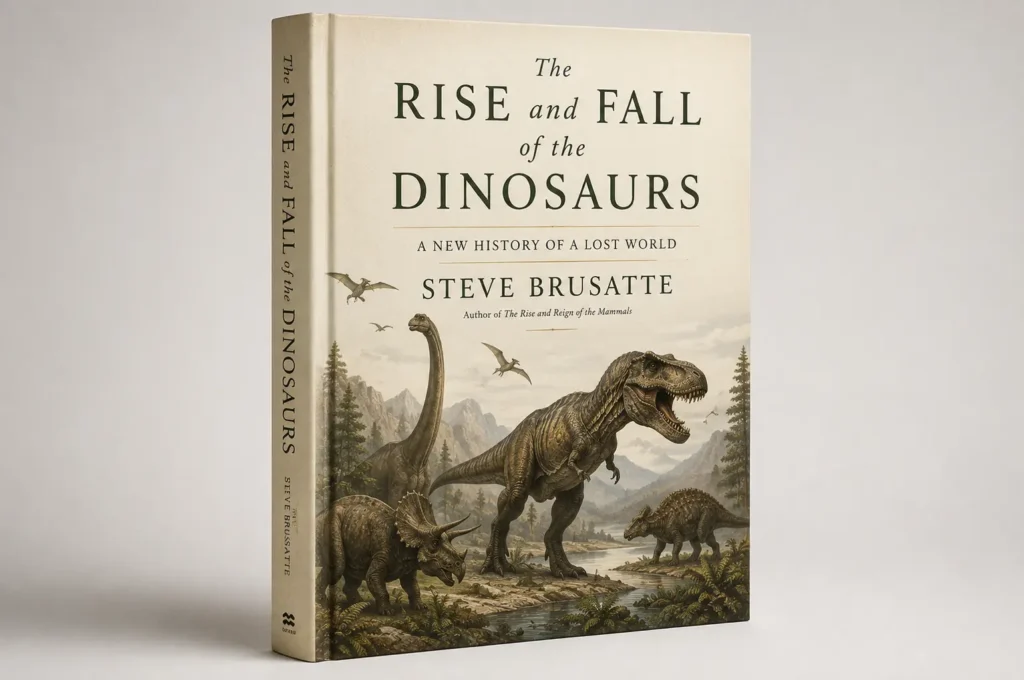
The Rise and Fall of the Dinosaurs
A compelling history of dinosaurs, tracing their origins, diversification, 200-million-year reign, extinction, and enduring legacy.
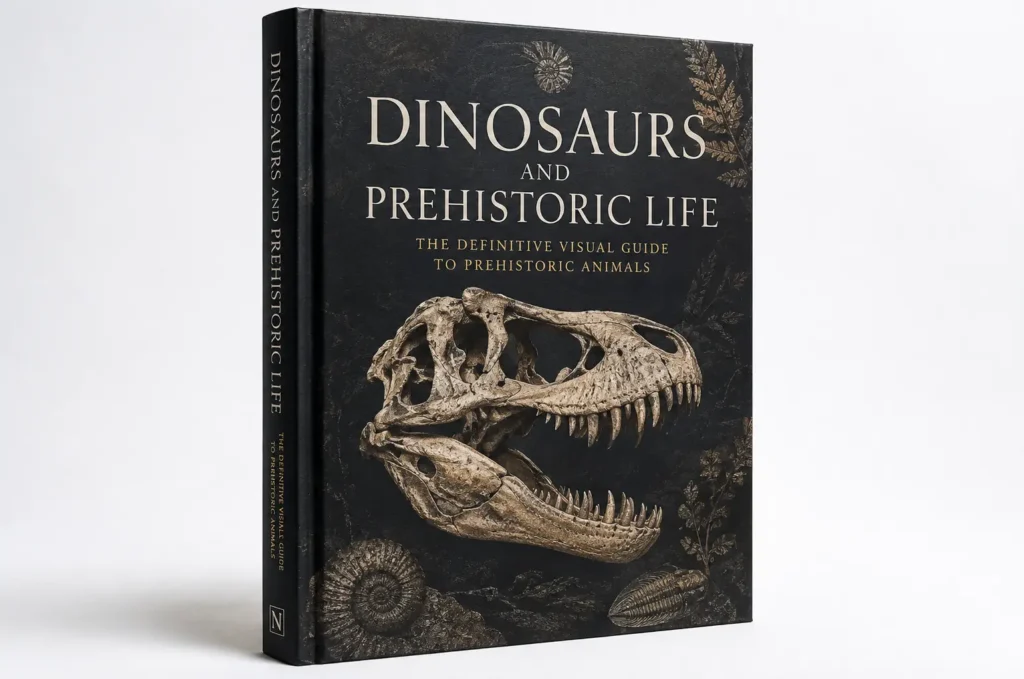
Dinosaurs and Prehistoric Life
A richly illustrated visual reference exploring dinosaurs, fossils, evolution, and prehistoric life across geological time.
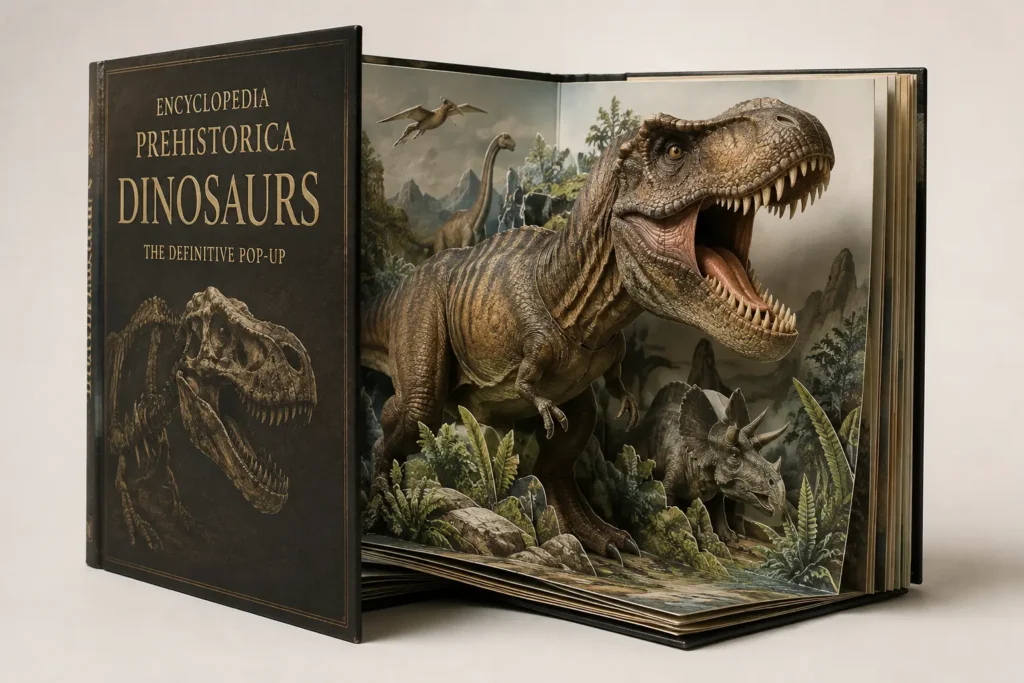
Encyclopedia Prehistorica: Dinosaurs
An interactive dinosaur book featuring spectacular three-dimensional pop-ups, particularly suited to young readers and families.
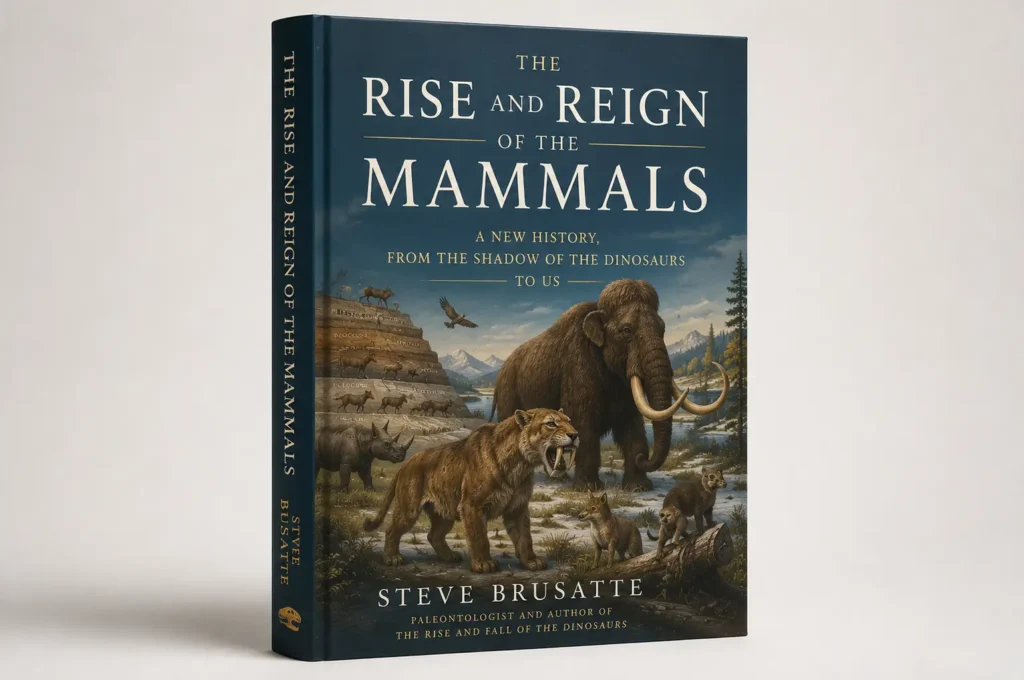
The Rise and Reign of the Mammals
A sweeping history of mammalian evolution, from their origins alongside dinosaurs through the Cenozoic and the emergence of humans.