

At a Glance
| Attribute | Detail |
|---|---|
| Scientific name | Quetzalcoatlus northropi Lawson, 1975 / Q. lawsoni Jacobs et al., 2021 |
| Pronunciation | ket-sal-KOH-at-lus |
| Name meaning | From Quetzalcóatl — Mesoamerican feathered serpent deity |
| Classification | Pterosauria > Pterodactyloidea > Azhdarchidae > Quetzalcoatlus |
| Period | Late Cretaceous, 68–66 Ma |
| Found in | Javelina Formation, Big Bend National Park, Texas, USA |
| Diet | Carnivorous — small vertebrates and invertebrates taken from the ground; terrestrial stalker model |
| Wingspan | 10–11 m (33–36 ft) — Q. northropi; 4.5–5.5 m (15–18 ft) — Q. lawsoni |
| Weight | 200–250 kg (440–550 lb) — Q. northropi; 20–35 kg (44–77 lb) — Q. lawsoni |
| Status | Extinct |
Quick Answer: Quetzalcoatlus facts begin with scale: Quetzalcoatlus northropi had an estimated wingspan of 10–11 m (33–36 ft) and mass of 200–250 kg (440–550 lb), making it the largest flying animal currently known. It was a pterosaur — not a dinosaur — a terrestrial stalker that hunted on foot across Late Cretaceous Texas and took to the air for long-distance travel.
Introduction
Quetzalcoatlus facts place this animal in a category of its own: a pterosaur so large that no living flying creature approaches it, with a wingspan comparable to a light aircraft and a standing head height matching a modern giraffe. It hunted on the ground, launched into the air without a running start, and shared its world with Tyrannosaurus rex.
Two species are now recognised — the giant Q. northropi and the smaller Q. lawsoni, formally separated in a 2021 taxonomic revision — and each has rewritten part of what scientists thought they knew.
How Did Quetzalcoatlus Take Off?
| Field | Detail |
|---|---|
| Launch method | Quadrupedal vault — all four limbs simultaneously |
| Forelimb build | More robust than hindlimbs — consistent with vault mechanics |
| Flight speed estimate | 100–130 km/h (62–81 mph) — biomechanical modelling only |
| Standing head height | ~5–6 m (16–20 ft) — Q. northropi |
| Walking gait | Quadrupedal; folded wing-knuckle contacts ground |
Biomechanical modelling indicates Quetzalcoatlus launched using a quadrupedal vault — all four limbs firing simultaneously — rather than a running take-off. Powered flight is supported by current modelling up to approximately 250 kg (550 lb), though exact mechanics remain an active area of research.
For more details, see our full flight mechanics and takeoff post.
What Did Quetzalcoatlus Eat?
| Field | Detail |
|---|---|
| Diet model | Terrestrial stalker — ground-level predator |
| Likely prey | Lizards, small mammals, invertebrates, possibly hatchling dinosaurs |
| Feeding evidence | Beak morphology + inland formation context — no gut content evidence |
| Key comparison | Marabou stork / secretary bird — large terrestrial predators |
| Fish-eating model | Not supported by beak geometry or formation context |
Quetzalcoatlus was almost certainly a ground predator — not the aerial fish-catcher of early reconstructions. Its long, toothless beak and inland fossil context both point toward a stalking strategy targeting small vertebrates. Diet is inferred from comparative evidence; no gut contents have been recovered.
For more details, see our full diet and feeding post.
Quetzalcoatlus vs Hatzegopteryx
| Feature | Quetzalcoatlus northropi | Hatzegopteryx thambema |
|---|---|---|
| Estimated wingspan | 10–11 m (33–36 ft) | 10–12 m (33–39 ft) |
| Skull build | Long, slender, pointed | Short, broad, heavily reinforced |
| Fossil location | Texas, USA | Hațeg Basin, Romania |
| Ecological role | Terrestrial stalker, large fauna ecosystem | Inferred island apex predator |
| Did they meet? | No — separated by the Tethys Sea |
Neither species can be definitively named the larger animal — wingspan estimates overlap, and both are known from incomplete material. Their skulls tell opposite ecological stories: precision versus power.
For more details, see our full Quetzalcoatlus vs Hatzegopteryx comparison post.
Where Was Quetzalcoatlus Found?
| Field | Detail |
|---|---|
| Discovery site | Big Bend National Park, Texas, USA |
| Formation | Javelina Formation — inland fluvial deposit |
| Discoverer | Douglas A. Lawson, 1971 |
| Formally named | Douglas A. Lawson, 1975 |
| Holotype material | Partial wing elements — no skull |
All known Quetzalcoatlus material comes from the Javelina Formation in Texas. The holotype of Q. northropi preserves only wing elements, which is why size estimates carry significant uncertainty. A second species, Q. lawsoni, was described from the same formation in 2021.
For more details, see our full discovery and fossil history post.
Quetzalcoatlus Classification
| Field | Detail |
|---|---|
| Order | Pterosauria |
| Clade | Pterodactyloidea |
| Family | Azhdarchidae |
| Genus | Quetzalcoatlus Lawson, 1975 |
| Species 1 | Q. northropi — the giant form |
| Species 2 | Q. lawsoni — formally described 2021 |
This is an active area of research. Details here reflect current scientific consensus but may be revised as new fossil evidence or analysis emerges.
Species count within Quetzalcoatlus is actively debated following the 2021 revision, and phylogenetic placement within Azhdarchidae varies between published studies. The classification string above reflects the current consensus.
For more details, see our full classification and taxonomy post.
Is Quetzalcoatlus a Dinosaur?
| Field | Detail |
|---|---|
| Is it a dinosaur? | No — it is a pterosaur |
| Order | Pterosauria — separate from Dinosauria |
| Shared heritage | Both archosaurs — common ancestor, separate lineages |
| Wing structure | Elongated fourth finger — not modified arm bones as in birds |
| Living relatives | None — pterosaurs are entirely extinct |
Quetzalcoatlus is a pterosaur, not a dinosaur. Both groups are archosaurs with a shared common ancestor, but pterosaurs diverged before Dinosauria emerged and are a separate lineage entirely. Birds are theropod dinosaurs; pterosaurs have no living descendants.
For more details, see our full pterosaur identity post.
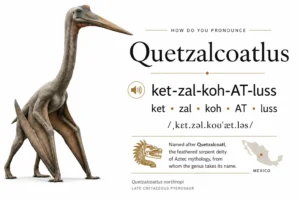
How Do You Pronounce Quetzalcoatlus?
| Field | Detail |
|---|---|
| Phonetic guide | ket-sal-KOH-at-lus |
| Syllable count | 5 |
| Stress | Third syllable — KOH |
| Common error | “kwet-za-KOH-at-lus” — inserting a “w” after the Q |
| Mnemonic | “Pretzel-coat-us” without the “pr” |
The Q produces a hard K sound — not “kw” — following the Nahuatl source word Quetzalcóatl. Once the opening is fixed, the remaining four syllables resolve naturally.
For more details, see our full pronunciation guide post.
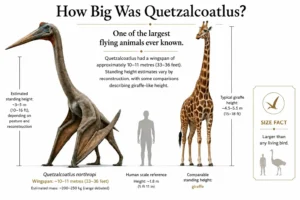
How Big Was Quetzalcoatlus?
| Measurement | Q. northropi | Q. lawsoni |
|---|---|---|
| Estimated wingspan | 10–11 m (33–36 ft) | 4.5–5.5 m (15–18 ft) |
| Estimated mass | 200–250 kg (440–550 lb) | 20–35 kg (44–77 lb) |
| Standing head height | ~5–6 m (16–20 ft) | ~2 m (6.5 ft) |
| Modern comparison | Wingspan ~ Cessna 172 light aircraft | Wingspan ~ large eagle |
| Largest living flying bird | Wandering albatross ~3.7 m (12 ft) — roughly one third of Q. northropi |
All size figures are biomechanical estimates derived from incomplete fossil material. The Q. northropi holotype preserves no skull, and estimates vary between studies — treat all figures as indicative ranges.
For more details, see our full size and wingspan post.
Extinction and Temporal Range
Quetzalcoatlus lived during the Maastrichtian stage of the Late Cretaceous — the final geological interval before the K-Pg mass extinction approximately 66 Ma. It was among the last of the pterosaurs, a lineage that had existed for over 160 million years by the time of the extinction event. No pterosaur lineage survived the K-Pg boundary; the cause of the extinction is conventionally attributed to the Chicxulub asteroid impact and associated environmental disruption, though the precise extinction dynamics for flying species remain an area of ongoing research.
| Field | Detail |
|---|---|
| Period | Maastrichtian, Late Cretaceous |
| Range | 68–66 Ma |
| Extinction event | K-Pg boundary, ~66 Ma |
| Pterosaur lineage duration | ~160 million years total |
| Survivors | None — all pterosaurs extinct at K-Pg |
Related and Contemporary Species
- Hatzegopteryx thambema — giant Romanian azhdarchid and the only pterosaur approaching Q. northropi in estimated size; inhabited a Cretaceous island ecosystem with no large theropod competition.
- Cryodrakon boreas — Canadian azhdarchid described in 2019; a close relative of Quetzalcoatlus, important for understanding North American azhdarchid diversity and biogeography.
- Alamosaurus sanjuanensis — large sauropod from the Javelina Formation; a direct faunal associate sharing the same Late Cretaceous Texas ecosystem.
- Tyrannosaurus rex — a large theropod present in contemporaneous North American formations; ecological context for the world Quetzalcoatlus inhabited.
- Pteranodon longiceps — an earlier and smaller North American pterosaur, frequently confused with Quetzalcoatlus in popular culture despite significant differences in size, period, and ecology.
Common Questions About Quetzalcoatlus
Is Quetzalcoatlus the biggest flying animal ever?
Based on current fossil evidence, Quetzalcoatlus northropi and Hatzegopteryx thambema are the largest flying animals yet described, with overlapping wingspan estimates of 10–12 m (33–39 ft). Neither can be named definitively larger than the other. The qualification “currently known” matters — the fossil record is incomplete, and future discoveries may revise this picture.
Why was Quetzalcoatlus so big?
The drivers of giant size in azhdarchid pterosaurs are not fully understood. Comparison with modern large soaring birds suggests that extreme wingspan provides energetic advantages for long-distance travel once the launch problem is solved. Biomechanical modelling indicates the quadrupedal vault mechanism made liftoff viable at large body masses — removing a ceiling that constrains size in running-launch fliers. This remains an area of active research.
Did Quetzalcoatlus live at the same time as T. rex?
Yes. Quetzalcoatlus is documented from the Maastrichtian stage of the Late Cretaceous, 68–66 Ma — the same geological interval in which Tyrannosaurus rex lived in North America. Both are found in contemporaneous or adjacent Late Cretaceous formations. They shared a world, though direct ecological interaction between them is not documented in the fossil record.
What did Quetzalcoatlus look like?
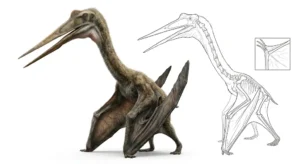
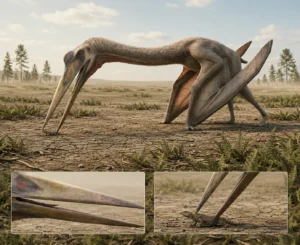
Quetzalcoatlus had a long, toothless beak, an elongated neck, and wings formed by a dramatically extended fourth finger supporting a membrane. Fossil evidence from related pterosaurs documents pycnofibres — hair-like body coverings — suggesting the body was not bare-skinned. At standing height, Q. northropi reached approximately 5–6 m (16–20 ft) at the head — comparable to a modern giraffe in profile, though with a very different body plan.
Conclusion
Quetzalcoatlus was the largest flying animal currently known to science — a pterosaur, not a dinosaur, that stalked prey on the ground, vaulted into the air without a running start, and cruised the skies of Late Cretaceous North America on wings spanning a full city bus length. Two species, a 2021 taxonomic revision, and decades of ongoing biomechanical research mean the story of Quetzalcoatlus is still being written.
Reference
Primary taxonomic authority
Lawson, D.A. 1975.
Pterosaur from the latest Cretaceous of West Texas: discovery of the largest flying creature. Science, 187(4180), 947–948.
https://doi.org/10.1126/science.187.4180.947 (Taylor & Francis Online)
Modern definitive peer-reviewed references
Andres, B. & Langston, W. Jr. 2021.
Morphology and taxonomy of Quetzalcoatlus Lawson 1975 (Pterodactyloidea: Azhdarchoidea). Journal of Vertebrate Paleontology, 41(sup1), 46–202.
https://doi.org/10.1080/02724634.2021.1907587 (Taylor & Francis Online)
Andres, B. 2021.
Phylogenetic systematics of Quetzalcoatlus Lawson 1975 (Pterodactyloidea: Azhdarchoidea). Journal of Vertebrate Paleontology, 41(sup1), 203–217.
https://doi.org/10.1080/02724634.2020.1801703 (Taylor & Francis Online)
Lehman, T.M. 2021.
Habitat of the giant pterosaur Quetzalcoatlus Lawson 1975 (Pterodactyloidea: Azhdarchoidea): a paleoenvironmental reconstruction of the Javelina Formation (Upper Cretaceous), Big Bend National Park, Texas. Journal of Vertebrate Paleontology, 41(sup1), 21–45.
https://doi.org/10.1080/02724634.2019.1593184 (Taylor & Francis Online)
🦷 Anatomy


🦴 Fossil History

⚖️ Comparison

Recommended Paleontology & Natural History Books
As an Amazon Associate, Extinct Atlas may earn from qualifying purchases.
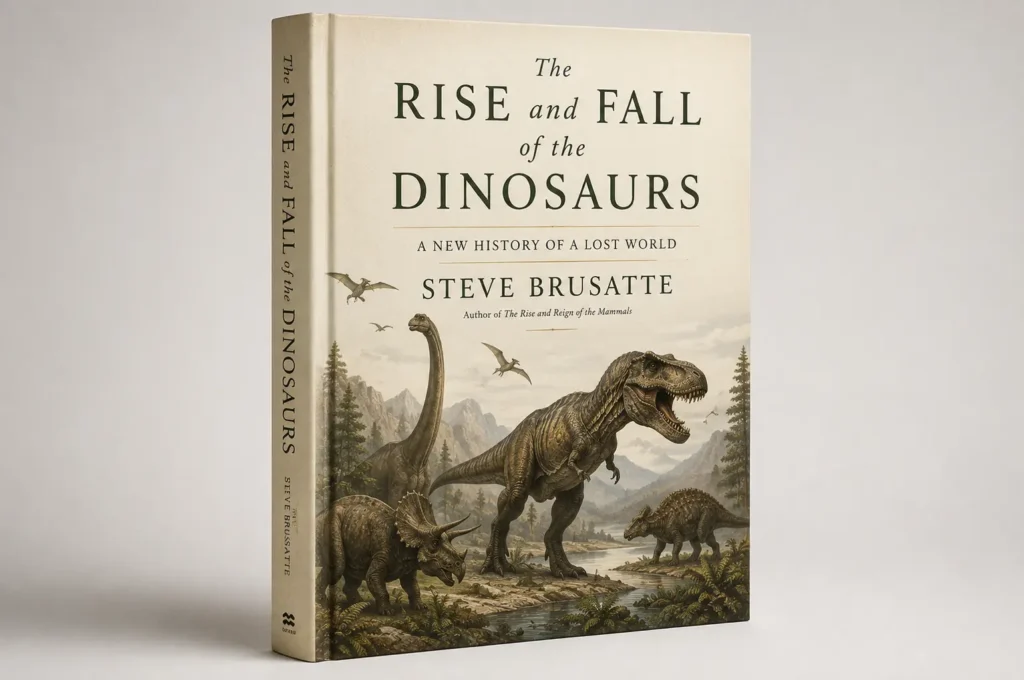
The Rise and Fall of the Dinosaurs
A compelling history of dinosaurs, tracing their origins, diversification, 200-million-year reign, extinction, and enduring legacy.
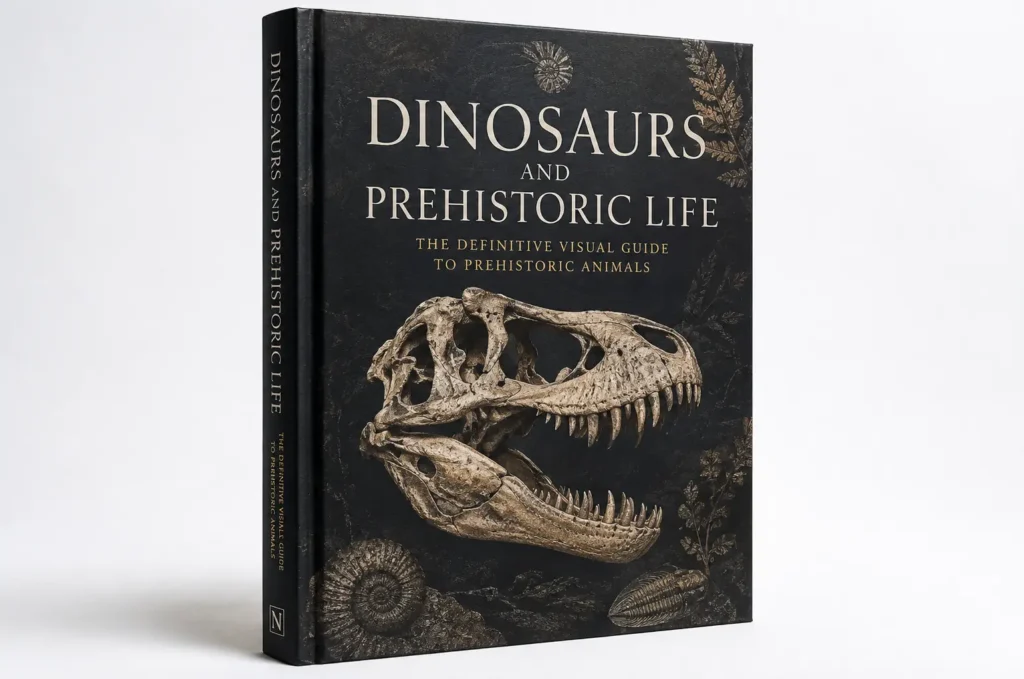
Dinosaurs and Prehistoric Life
A richly illustrated visual reference exploring dinosaurs, fossils, evolution, and prehistoric life across geological time.
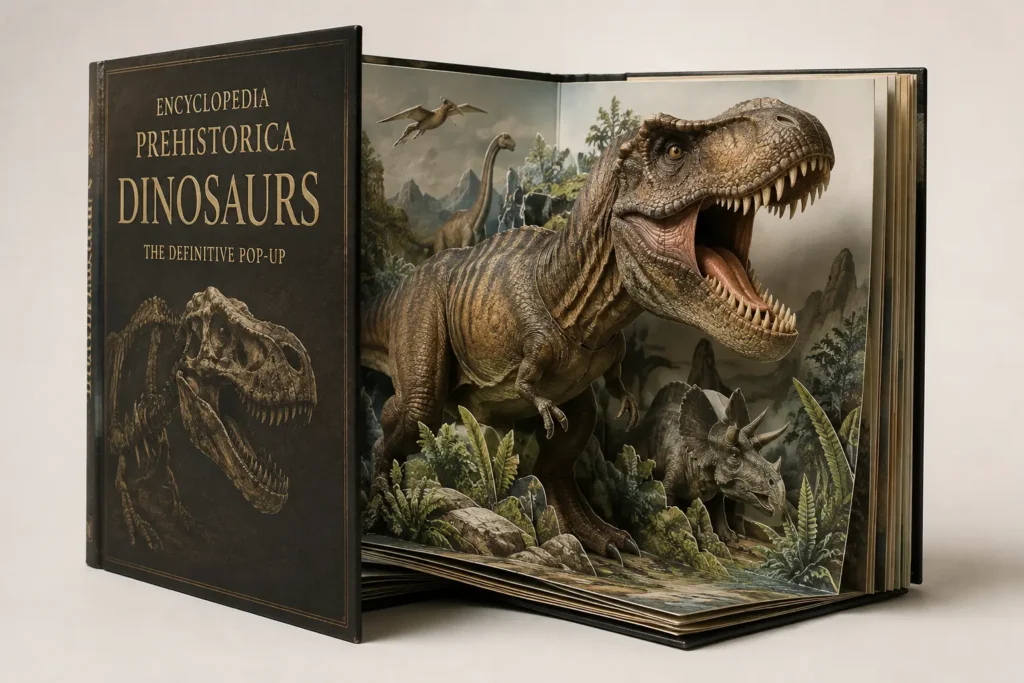
Encyclopedia Prehistorica: Dinosaurs
An interactive dinosaur book featuring spectacular three-dimensional pop-ups, particularly suited to young readers and families.
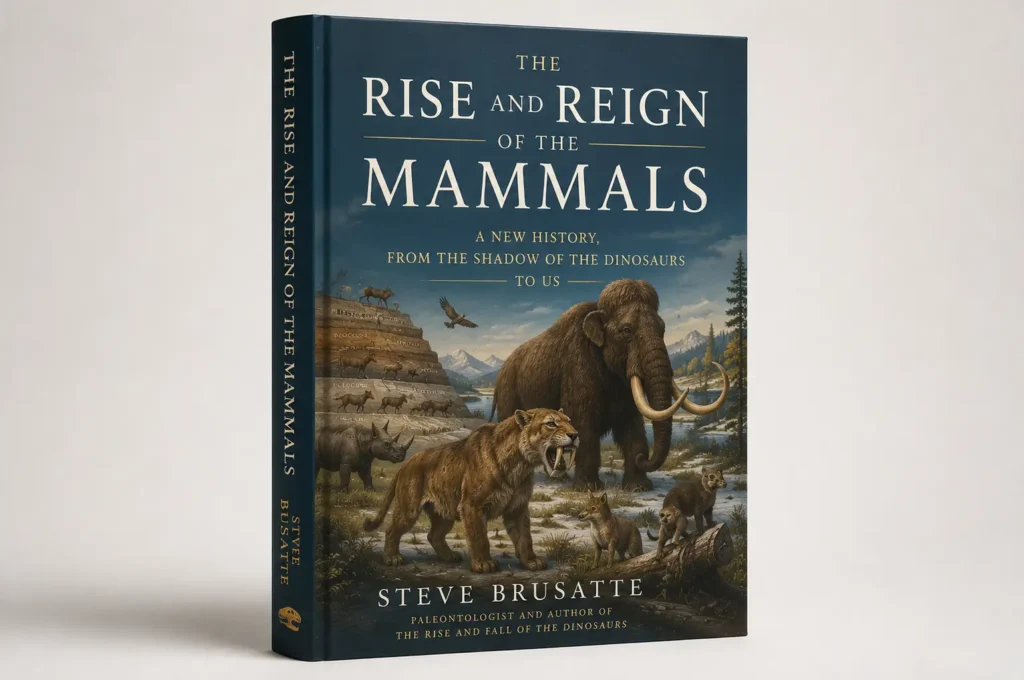
The Rise and Reign of the Mammals
A sweeping history of mammalian evolution, from their origins alongside dinosaurs through the Cenozoic and the emergence of humans.