
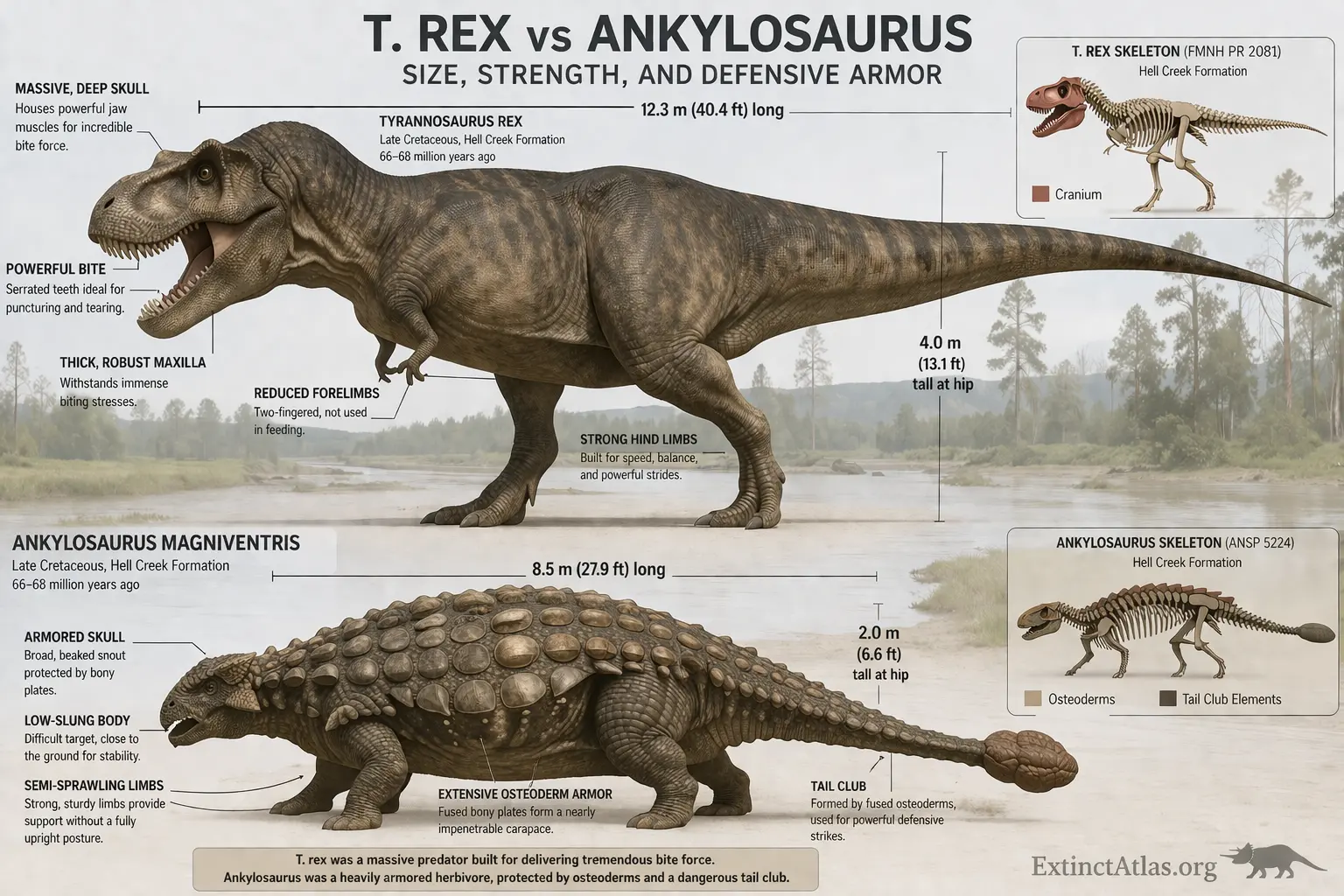
At a Glance
| Feature | T. rex | Ankylosaurus |
|---|---|---|
| Period | Late Cretaceous (68–66 Ma) | Late Cretaceous (70–66 Ma) |
| Weight | 8,000–14,000 kg (17,600–30,900 lb) | ~4,800–8,000 kg (10,600–17,600 lb) |
| Primary weapon | ~35,000–57,000 N bite force | Bone-crushing tail club |
| Shared formation | Hell Creek Formation | Hell Creek Formation |
| Confirmed predation evidence | None published | — |
T. rex and Ankylosaurus shared the Hell Creek ecosystem during the final stages of the Cretaceous, but no confirmed fossil evidence of direct predation — such as T. rex bite marks on Ankylosaurus bones — has been published. Ankylosaurus was rare in the Hell Creek fossil record, and its combination of dorsal armour and a bone-breaking tail club made it a high-risk, low-reward target. The evidence for their interaction is written in anatomy rather than trace fossils.

The living tank and the tyrant king shared a world. But unlike the T. rex–Triceratops relationship — where tooth marks, healed wounds, and direct feeding evidence preserve the interaction in bone — the T. rex–Ankylosaurus dynamic is largely inferred from what each animal was built to do, and what it was built to withstand.
Did T. Rex Hunt Ankylosaurus?
Ankylosaurus was genuinely rare in the Hell Creek Formation. Fossil census data places it at approximately 1% of large dinosaur specimens — compared to Triceratops at roughly 40% and Edmontosaurus at roughly 20%. For a predator that almost certainly targeted the most accessible and least dangerous available prey, a heavily armoured, low-abundance animal represented a poor risk-reward calculation in most circumstances.
That said, both animals occupied the same environment. Ankylosaurus fossils are confirmed from Hell Creek Formation sediments, establishing cohabitation with T. rex, Triceratops, and Edmontosaurus. Opportunity for interaction existed. Whether T. rex pursued Ankylosaurus regularly, occasionally, or essentially never is a question the current fossil record cannot answer.
No confirmed T. rex bite marks on Ankylosaurus specimens have been published. The absence of direct evidence does not confirm immunity — it may reflect the rarity of encounters, the genuine difficulty of attacking such a heavily defended animal, the low probability of preserving such interactions, or some combination of all three.
Ankylosaurus’s Defensive Arsenal
Passive Armour
The primary defensive system of Ankylosaurus magniventris was extensive dermal armour:
- The dorsal body surface was covered in osteoderms—bony plates embedded in the skin—arranged in organized rows
- The neck was protected by cervical half-rings, providing reinforced shielding over a vulnerable region
- Even the eyelids bore ossified plates, an extreme form of protective adaptation
- The skull bones were fully fused, forming a rigid, impact-resistant structure
This configuration produced a continuous armored shield across the upper body, making penetration by predator teeth extremely difficult.
However, the armour was not complete:
- The ventral (underside) surface lacked protection, representing the primary anatomical vulnerability
- Accessing this region would require a predator to flip or destabilize the animal, a non-trivial task given its low-slung, wide body plan
Active Weapon: The Tail Club
The second defensive system was active and potentially lethal: a heavily reinforced tail terminating in a bony club.
Key structural features:
- The club was formed from fused osteoderms and modified distal tail vertebrae
- Surrounding tendons were partially ossified, reducing flexibility and improving force transmission efficiency
- The tail functioned as a rigid kinetic lever, optimized for delivering high-impact blows
Biomechanical modeling by Victoria Arbour (2009, PLoS ONE) estimated:
- Impact forces: ~7,281–14,360 newtons
- Sufficient to fracture bone in large theropods, particularly the metatarsals and lower limb elements
This is critical: rather than killing outright, the tail club was likely adapted to disable predators, especially bipedal theropods reliant on hindlimb integrity.
Functional Implications
The later-described ankylosaurid Zuul crurivastator (“destroyer of shins”) reflects this interpretation explicitly, highlighting the target zone of such strikes.
Additional biomechanical insights:
- Estimated lateral swing arc ~100°, providing wide defensive coverage
- Most effective against side-approaching predators
- Precisely matches the attack geometry expected for a large theropod such as Tyrannosaurus rex, which would likely engage from behind or the flank
Integrated Defense Strategy
Taken together, Ankylosaurus combined:
- Passive defense: near-impenetrable dorsal armour
- Active defense: high-force tail strikes capable of disabling attackers
This dual system created a layered defensive architecture:
- Prevent penetration (armour)
- Punish proximity (tail club)
The result was one of the most mechanically sophisticated defensive systems among terrestrial vertebrates, specifically adapted to counter large theropod predators.
T. Rex’s Tactical Problem
Attacking Ankylosaurus presented specific difficulties absent in attacks on Triceratops or Edmontosaurus. Standard T. rex attack patterns — biting the flanks, haunches, or hindquarters — would require approaching from the rear or side, exactly where the tail club was most effective.
The dorsal armour eliminated any attack strategy targeting the back or upper sides. The armoured skull eliminated attacks on the head. The only documented vulnerability was the unarmoured ventral surface — accessible theoretically if Ankylosaurus could be flipped or destabilised. Flipping an animal weighing 4,800–8,000 kilograms (10,600–17,600 lb) with a very low centre of gravity and wide-based legs is not straightforward. This is speculative as an attack strategy and has no direct fossil support.
A key asymmetry: juvenile Ankylosaurus did not have functional tail clubs — the weapon developed only in adults. Young Ankylosaurus, lacking the tail club, were considerably more vulnerable than adults. Research has suggested the tail club may have evolved primarily for intraspecific competition and been secondarily adapted for defence against predators. Juveniles, still developing this structure, would have represented genuinely more accessible prey.
What the Evidence Actually Shows
The honest summary of the fossil record for this matchup:
Confirmed cohabitation in the Hell Creek Formation is established. Ankylosaurus anatomy — passive armour and an active bone-breaking tail weapon — is specifically suited to deflecting large theropod attacks. Biomechanical evidence indicates the tail club could cause crippling injury to a large predator. Ankylosaurus’s rarity in the fossil record is consistent with genuine ecological rarity, habitat separation from T. rex, or both. No direct evidence of T. rex predation on Ankylosaurus has been published.
Speculatively, the most likely interaction between healthy adults was mutual avoidance. T. rex had far better options available in Triceratops and Edmontosaurus. Ankylosaurus, if cornered, had the means to inflict disabling damage. This is an inference from anatomy and ecology, not direct evidence.
Related and Contemporary Species
- Triceratops horridus — the better-documented T. rex prey species from the same formation; the contrast with the Ankylosaurus evidence gap illustrates how different the fossil record can be for cohabiting species.
- Euoplocephalus tutus — a close relative of Ankylosaurus from slightly earlier North American formations; better represented in the fossil record, and provides much of the biomechanical data for ankylosaurid tail club function.
- Zuul crurivastator — a well-preserved ankylosaurid described in 2017 from the Judith River Formation; currently the most complete ankylosaurid known and a key specimen for understanding tail club anatomy. (ongoing study of Zuul material)
- Edmontosaurus annectens — almost certainly bore a disproportionate share of T. rex predation given its abundance and lack of active defensive weaponry.
Frequently Asked Questions
Could Ankylosaurus kill a T. rex?
Biomechanical modelling suggests yes — potentially. Estimated tail club impact forces are calculated as sufficient to fracture the metatarsals or lower leg bones of a large theropod. A crippled T. rex unable to hunt effectively would face eventual death from starvation or opportunistic attack. Whether this occurred in practice is not confirmed by the fossil record.
Did T. rex eat Ankylosaurus?
No confirmed fossil evidence — T. rex bite marks on Ankylosaurus bones — has been published. Given Ankylosaurus’s rarity and defensive architecture, regular predation seems ecologically unlikely. Opportunistic scavenging of dead Ankylosaurus individuals remains possible.
Was Ankylosaurus slower than T. rex?
Almost certainly. Ankylosaurus was a heavily built quadruped with short legs relative to body mass. T. rex, while not a sprinter, was significantly faster. Ankylosaurus’s defensive strategy was resistance rather than flight — it did not need to outrun a predator if its armour and tail club could outlast an attack.
References
Arbour VM, Currie PJ. 2015. Systematics, phylogeny, and palaeobiogeography of the ankylosaurid dinosaurs. Journal of Systematic Palaeontology. 14(5):385–444.
Arbour VM, Snively E, Mallon JC. 2009. Tail club evolution in ankylosaurs and mechanical constraints on club function. The Anatomical Record. 292(9):1412–1426.
Thompson RS, Parish JC, Maidment SCR, Barrett PM. 2012. Phylogeny of the ankylosaurian dinosaurs. Journal of Systematic Palaeontology. 10(2):301–312.
Coombs WP Jr. 1978. The families of the ornithischian dinosaur order Ankylosauria. Palaeontology. 21(1):143–170.
Carpenter, K. 2004. Redescription of Ankylosaurus magniventris Brown 1908 (Ankylosauridae) from the Upper Cretaceous Hell Creek Formation of Montana. Canadian Journal of Earth Sciences. 41(8):961–986.
Brochu CA. 2003. Osteology of Tyrannosaurus rex: insights from a nearly complete skeleton and high-resolution computed tomographic analysis of the skull. Society of Vertebrate Paleontology Memoir. 7:1–138.
Erickson GM, Van Kirk SD, Su J, Levenston ME, Caler WE, Carter DR. 1996. Bite-force estimation for Tyrannosaurus rex from tooth-marked bones. Nature. 382(6593):706–708.
DePalma RA, Burnham DA, Martin LD, Rothschild BM, Larson PL. 2013. Physical evidence of predatory behavior in Tyrannosaurus rex. Proceedings of the National Academy of Sciences. 110(31):12560–12564.
Recommended Paleontology & Natural History Books
As an Amazon Associate, Extinct Atlas may earn from qualifying purchases.
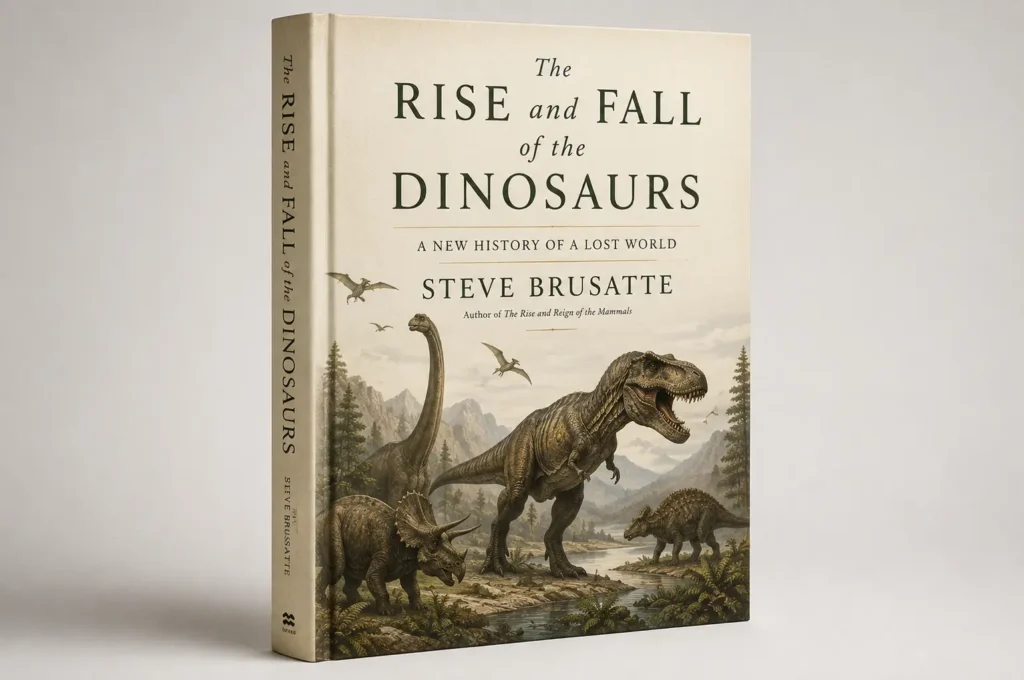
The Rise and Fall of the Dinosaurs
A compelling history of dinosaurs, tracing their origins, diversification, 200-million-year reign, extinction, and enduring legacy.
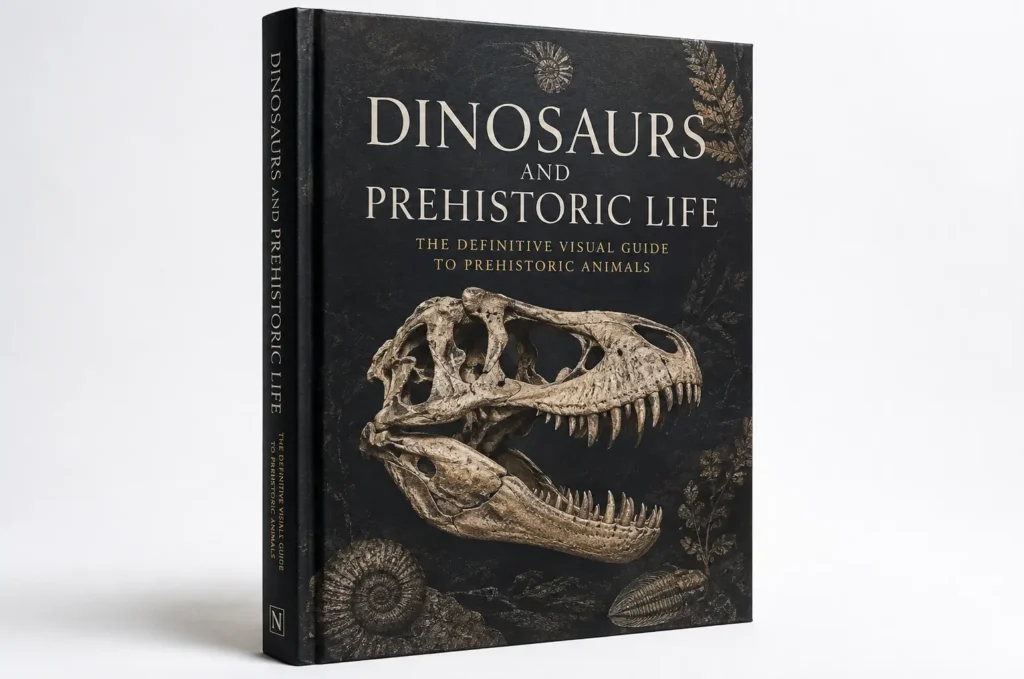
Dinosaurs and Prehistoric Life
A richly illustrated visual reference exploring dinosaurs, fossils, evolution, and prehistoric life across geological time.
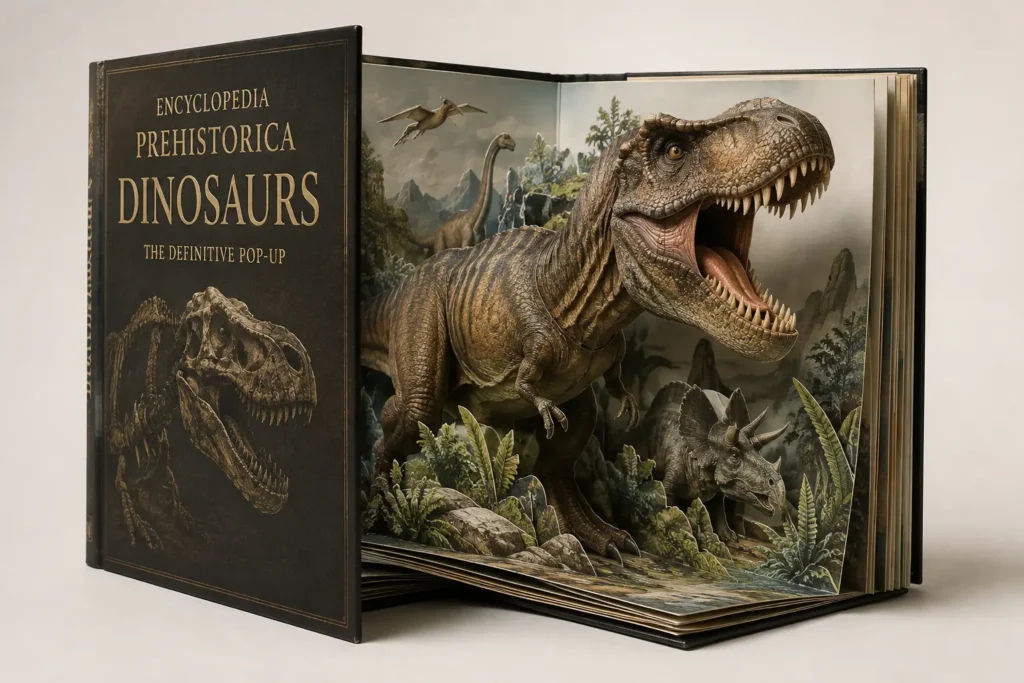
Encyclopedia Prehistorica: Dinosaurs
An interactive dinosaur book featuring spectacular three-dimensional pop-ups, particularly suited to young readers and families.
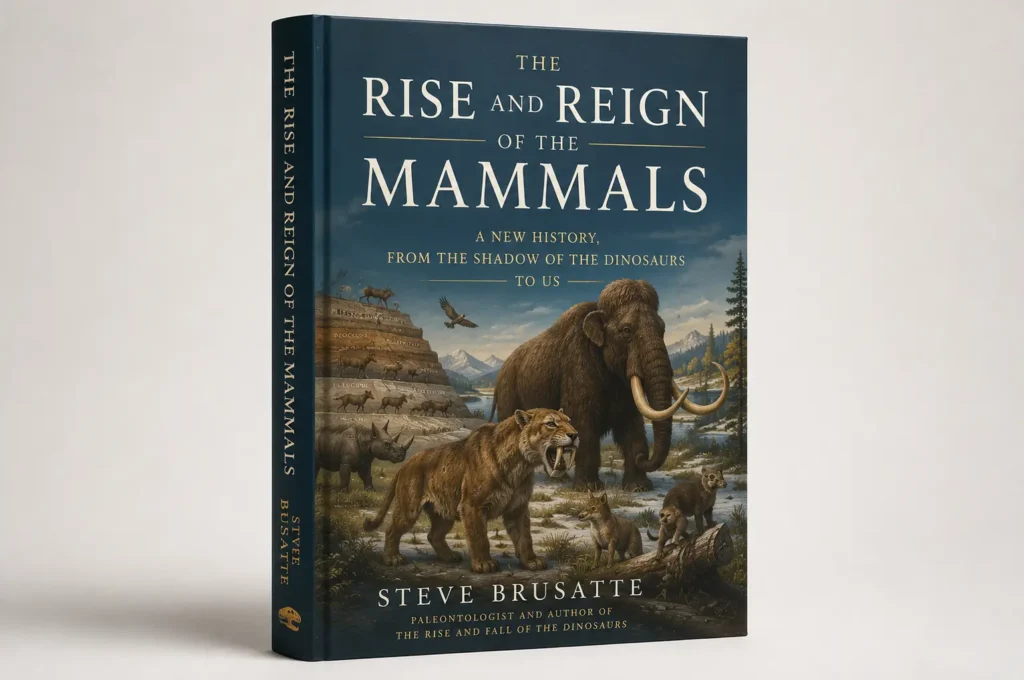
The Rise and Reign of the Mammals
A sweeping history of mammalian evolution, from their origins alongside dinosaurs through the Cenozoic and the emergence of humans.