At a Glance
| Field | Information |
|---|---|
| Species | Archaeopteryx lithographica |
| Period | Late Jurassic (approx. 150–148 Ma) |
| Hand claws | Three functional, curved claws on each wing |
| Foot claws | Curved, raptorial; hallux position contested |
| Primary function debate | Tree-climbing vs ground locomotion vs prey restraint |
| Consensus | No consensus — multiple functional interpretations remain active |
Quick Answer:Archaeopteryx had curved, raptorial claws on both its hands and feet. Fossil evidence confirms their presence, but what they were primarily used for — climbing trees, moving on the ground, or restraining prey — remains actively debated. Different biomechanical analyses of claw curvature have produced conflicting conclusions.
Most animals evolve claws for one dominant purpose. Archaeopteryx appears to have kept its options open. Three hooked claws on each hand protruded from the leading edge of its wings, while curved foot claws completed an anatomy that looks, depending on which analysis you read, like a tree-climber, a ground hunter, or something that was still working out what it wanted to be.
Archaeopteryx Claws: What the Fossil Evidence Shows
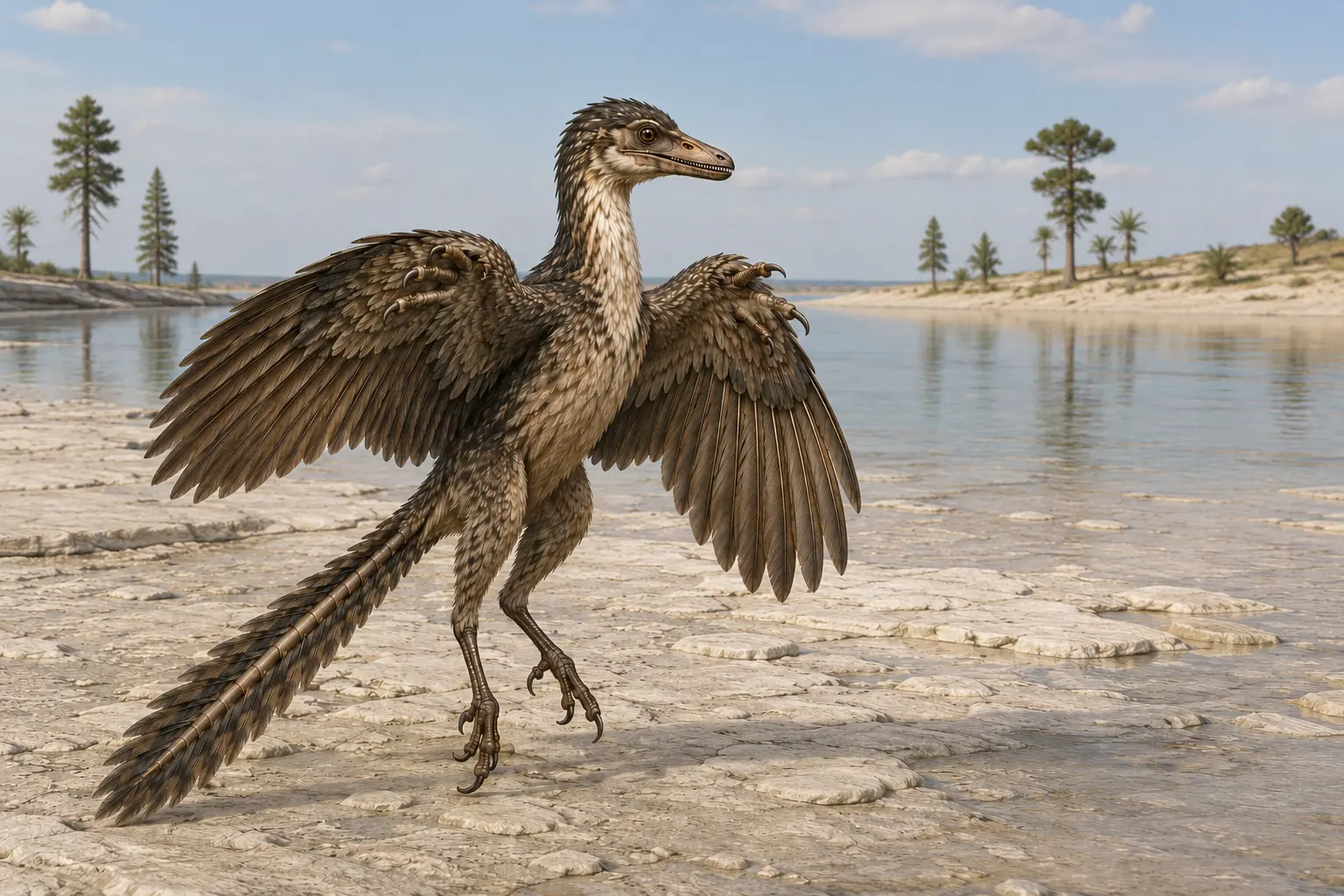
Fossil evidence confirms three functional, curved claws on the hand of Archaeopteryx, retained on the leading edge of the wing — a feature absent in modern birds but present in some living species such as the juvenile hoatzin. Foot claws were also curved and raptorial in profile.
Hand Claws
The three manual claws of Archaeopteryx are well-evidenced in multiple specimens. Their curvature is comparable to that of some climbing and predatory birds. Research suggests they were capable of gripping — whether branches, prey, or substrate — but the primary grip target is inferred, not directly evidenced.
Foot Claws and the Hallux Question
The hallux — the first toe, which points backward in perching birds and provides the grip for branch-sitting — is present in Archaeopteryx, but its degree of reversal is contested. Some researchers argue it was sufficiently reversed for arboreal perching; others interpret the angle as more consistent with a ground-dwelling animal. No consensus has been reached.
Arboreal or Terrestrial? The Locomotion Debate
Whether Archaeopteryx primarily lived in trees or on the ground is one of the most persistent unresolved questions in its biology. Claw curvature analysis has been applied repeatedly and produced conflicting results.
The Arboreal Case
Studies comparing Archaeopteryx claw curvature to modern birds found values overlapping with tree-climbing species. Proponents argue that the hand claws, foot claw curvature, and partially reversed hallux collectively support an animal capable of ascending and perching in vegetation. The trees-down flight hypothesis depends partly on this interpretation.
The Terrestrial Case
Counter-analyses note that claw curvature alone is an unreliable indicator of lifestyle — several ground-dwelling birds have curved claws, and the overlap between ecological groups is wide. Some researchers argue that the hindlimb proportions and overall body plan of Archaeopteryx are more consistent with a ground-dwelling animal that could climb opportunistically.
Current Position
Current evidence indicates Archaeopteryx may have been a facultative climber — capable of ascending into vegetation but not exclusively arboreal. This interpretation accommodates both the claw anatomy and the lack of a fully reversed hallux. The question connects directly to the flight origin debate covered fully in the post, Did Archaeopteryx Fly?
Claws and Prey Restraint
The curved manual claws of Archaeopteryx are consistent with a prey-gripping function. In the context of its inferred diet of insects and small lizards, the hand claws may have served to pin prey before jaw engagement. This is inferred from morphological comparison with small predatory birds and theropods; no direct evidence of prey-gripping behaviour exists for Archaeopteryx.
Related and Contemporary Species
- Microraptor gui — A four-winged dromaeosaurid with strongly curved foot claws interpreted as arboreal; provides a comparative baseline for claw curvature analysis in small paravians.
- Anchiornis huxleyi — A small feathered paravian with clawed wings; relevant to the discussion of manual claw retention across the dinosaur-bird transition.
- Deinonychus antirrhopus — Possessed a hyperextensible sickle claw on the second toe used in prey restraint; contrasts with the Archaeopteryx foot claw in both anatomy and inferred function.
- Hoatzin (Opisthocomus hoazin) — A living bird whose juveniles retain functional wing claws used for climbing; provides a modern analogue for manual claw function in Archaeopteryx.
- Juravenator starki — A small Solnhofen theropod; contemporary ecological comparison for locomotion and hunting behaviour reconstruction.
Frequently Asked Questions
Did Archaeopteryx use its claws to climb trees?
Possibly. Studies of claw curvature show values overlapping with modern climbing birds, and some researchers argue that the hand and foot claws support an arboreal lifestyle. However, other analyses find the evidence inconclusive, and the degree of hallux reversal required for secure perching is contested in Archaeopteryx specimens.
Why did Archaeopteryx still have claws on its wings?
The wing claws of Archaeopteryx are a retained dinosaurian feature — its ancestors had fully functional clawed hands, and Archaeopteryx had not yet lost them during the evolutionary transition to birds. Most modern birds have lost manual claws entirely; a few, like juvenile hoatzins, retain vestigial versions used for climbing.
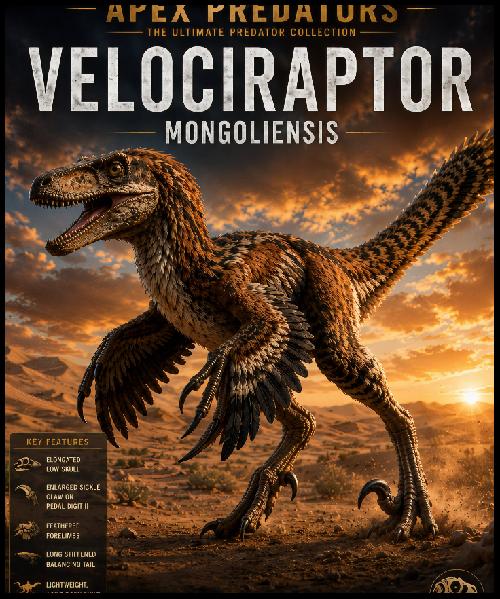
How did Archaeopteryx’s claws compare to Velociraptor’s?
Velociraptor possessed a specialised hyperextensible sickle claw on its second toe, interpreted as a prey-restraint weapon. The claws of Archaeopteryx were curved but not hyperextensible sickle claws, and were present on both the hands and feet without the same degree of specialisation. The two animals were also separated in time and geography.
Conclusion
The claws of Archaeopteryx are a record of transition — raptorial enough to grip, curved enough to climb, and ambiguous enough to keep researchers arguing. Whether they were primarily for prey, trees, or ground movement, they are one of the clearest anatomical signals that Archaeopteryx sat at the boundary between two very different ways of being a vertebrate.
Featured Museum Collections
Museum-quality paleoart and educational poster
collections based on evidence-informed prehistoric
Life reconstructions.