

Protoceratops andrewsi and Velociraptor mongoliensis were two distinct dinosaurs known from Late Cretaceous deposits of the Gobi region. Protoceratops was a herbivorous neoceratopsian with a broad, beaked skull, a short bony frill, and a predominantly quadrupedal adult body plan. Velociraptor was a carnivorous dromaeosaurid theropod with grasping forelimbs, recurved teeth, and an enlarged sickle-shaped claw on the second toe of each hind foot.

Their fossil record is particularly significant because it includes the famous “Fighting Dinosaurs” specimen, which preserves an individual of each taxon in close association. The arrangement is widely interpreted as evidence of a physical confrontation, potentially involving predation, although alternative interpretations of the specimen’s final positioning have also been proposed.
Separate fossil evidence from Bayan Mandahu, Inner Mongolia, indicates feeding by a velociraptorine theropod on the remains of a basal neoceratopsian, probably Protoceratops. This evidence supports a trophic relationship but does not establish that every encounter involved active hunting.
The comparison therefore involves more than two contrasting body plans. It provides an opportunity to examine how anatomy, feeding ecology, and exceptional fossil preservation contribute to the reconstruction of dinosaur behaviour.
Protoceratops vs Velociraptor: At a Glance
| Feature | Protoceratops andrewsi | Velociraptor mongoliensis |
|---|---|---|
| Dinosaur group | Neoceratopsian | Dromaeosaurid theropod |
| Family | Protoceratopsidae | Dromaeosauridae |
| Geological age | Late Cretaceous | Late Cretaceous |
| Principal fossil region | Mongolia | Mongolia |
| Important formation | Djadokhta Formation | Djadokhta Formation |
| Diet | Herbivorous | Carnivorous |
| Adult locomotion | Predominantly quadrupedal | Bipedal |
| Skull | Broad, deep, and beaked | Elongated and comparatively narrow |
| Head ornamentation | Short bony frill; no large horns | No ceratopsian frill or horns |
| Forelimbs | Part of the adult weight-bearing system | Grasping, clawed forelimbs |
| Distinctive hind-limb feature | Robust weight-bearing limbs | Enlarged second-toe claw |
| General body length | Approximately 1.8–2.0 m in common reconstructions | Approximately 2 m in common reconstructions |
| Ecological role | Plant consumer | Predator with opportunistic feeding behaviour |
| Notable fossil evidence | Multiple growth stages and associated assemblages | Fighting Dinosaurs specimen and feeding traces on ceratopsian remains |
The table summarizes the two best-known species rather than every anatomical or taxonomic variation within their respective genera. Protoceratops was a relatively early-diverging ceratopsian, not a large-horned ceratopsid like Triceratops. The real Velociraptor was also considerably smaller than the large animals commonly depicted in popular films.
Taxonomy and Evolutionary Relationships
Protoceratops
Protoceratops belonged to Protoceratopsidae, a family within Neoceratopsia, the ceratopsian lineage that includes later horned dinosaurs.
The species Protoceratops andrewsi is represented by abundant fossil material from Mongolia, including individuals at different growth stages. Its anatomy includes a prominent beak, a broad skull, a short bony frill, and a relatively stocky body.
Unlike later ceratopsids, Protoceratops lacked the large nasal and brow horns characteristic of animals such as Triceratops.
Velociraptor
Velociraptor belonged to Dromaeosauridae, a family of maniraptoran theropods. Dromaeosaurids generally possessed recurved teeth, clawed grasping forelimbs, and an enlarged claw on the second toe.
The species Velociraptor mongoliensis is known from Late Cretaceous deposits in Mongolia. Its skeletal anatomy indicates a bipedal carnivore adapted for terrestrial movement and the capture and consumption of animal food.
Although the two dinosaurs occurred in broadly overlapping regional environments, they belonged to separate evolutionary lineages and occupied different trophic roles.
Geological Age and Fossil Distribution
Both species are associated with Late Cretaceous deposits of the Gobi region. The Djadokhta Formation of Mongolia is particularly important for understanding their anatomy and palaeoecology.
| Geological or geographic feature | Protoceratops andrewsi | Velociraptor mongoliensis |
|---|---|---|
| Geological period | Cretaceous | Cretaceous |
| Epoch | Late Cretaceous | Late Cretaceous |
| Commonly assigned stage | Campanian | Campanian |
| Principal fossil region | Mongolia | Mongolia |
| Important formation | Djadokhta Formation | Djadokhta Formation |
| Relevant additional locality | Bayan Mandahu, Inner Mongolia, for probable neoceratopsian feeding evidence | Bayan Mandahu, Inner Mongolia, for associated velociraptorine teeth and feeding evidence |
The Bayan Mandahu material is important to the ecological comparison, but it should not be treated as equivalent to the more securely documented Mongolian species occurrences. The original study discussed uncertainty in assigning the associated remains to the genera Protoceratops and Velociraptor.
Shared regional or formation-level occurrence also does not prove that every population lived at precisely the same time or that encounters were frequent.
Size and Body Proportions
Both dinosaurs were relatively small compared with many large-bodied dinosaurs, but their body configurations differed substantially.
Protoceratops andrewsi is commonly reconstructed at approximately 1.8–2.0 m in total body length. It had a relatively deep body, a broad skull, and a low, stocky appearance.
Velociraptor mongoliensis is also commonly reconstructed at approximately 2 m in total body length. Its long tail contributed substantially to this measurement, while its body and hind limbs formed a more elongated bipedal configuration.
| Measurement or feature | Protoceratops andrewsi | Velociraptor mongoliensis |
|---|---|---|
| General body length | Approximately 1.8–2.0 m | Approximately 2 m |
| Body configuration | Deep-bodied and relatively low | More elongated and bipedal |
| Principal weight support | Four limbs in mature individuals | Hind limbs |
| Tail | Relatively short compared with many theropods | Long and stiffened |
| Skull proportions | Broad and deep | Elongated and comparatively narrow |
| General body appearance | Stocky | Slenderer, with a long balancing tail |
These figures are approximate reconstructions, not exact species-wide limits. Specimen completeness, ontogenetic stage, and reconstruction methods can affect estimated dimensions.
Although their total lengths were broadly comparable, length alone does not establish equivalent body mass, strength, or locomotor performance.
Anatomical Differences
Skull and jaws
Protoceratops possessed a broad skull with a strong beak and dental structures suited to processing plant material. Its short frill extended behind the skull and formed part of its characteristic neoceratopsian anatomy.
The frill was considerably less elaborate than the large frills of later ceratopsids. It should not be interpreted as evidence that Protoceratops possessed the same cranial weaponry as Triceratops.
Velociraptor had a comparatively narrow, elongated skull with recurved teeth. These structures were suited to gripping and processing animal tissue rather than cropping vegetation.
Forelimbs
The forelimbs of mature Protoceratops formed part of its quadrupedal support system. Its limbs and body proportions were adapted to supporting its weight on four limbs.
In contrast, Velociraptor had clawed forelimbs used for grasping and interacting with objects or prey. They were not the primary weight-bearing limbs during ordinary bipedal locomotion.
Hind limbs and locomotion
Mature Protoceratops was predominantly quadrupedal. Research on its appendicular skeleton indicates that limb proportions changed during growth, with younger individuals showing a combination of features intermediate between more bipedal early-diverging ceratopsians and fully quadrupedal adults.
Velociraptor was bipedal, with hind limbs adapted for terrestrial movement. Its enlarged second-toe claw is one of its most distinctive anatomical features.
The claw is often portrayed as a simple slashing weapon. However, its precise functional role should not be reduced to one specific action. Interpretations must consider claw curvature, foot anatomy, limb mechanics, and the broader functional context.
Diet and Ecological Roles
What did Protoceratops eat?
Protoceratops was herbivorous. Its beak and dental anatomy support the interpretation that it consumed and processed plant material.
The available evidence does not establish a complete list of plant species in its diet. It is therefore more scientifically appropriate to describe its feeding category as herbivory rather than assign a highly specific menu.
What did Velociraptor eat?
Velociraptor was carnivorous. Its teeth, skull, and grasping anatomy are consistent with feeding on animal tissue.
Evidence from tooth-marked bones and other fossil associations indicates that its feeding ecology was not necessarily restricted to animals it had killed itself. Scavenging was also a component of its trophic ecology, although its relative importance cannot be quantified from the available evidence.
Ecological comparison
| Ecological feature | Protoceratops | Velociraptor |
|---|---|---|
| Trophic category | Herbivore | Carnivore |
| Principal food category | Plant material | Animal tissue |
| Feeding structures | Beak and teeth | Recurved teeth and grasping anatomy |
| General ecological role | Plant consumer | Predator and opportunistic feeder |
| Relevant interaction evidence | Associated with Velociraptor in the Fighting Dinosaurs specimen | Associated confrontation specimen and feeding traces on ceratopsian remains |
The evidence supports an ecological relationship between the two dinosaur groups, but it does not establish that every feeding event involved active predation.
Protoceratops vs Velociraptor: The Fighting Dinosaurs Fossil

The most famous fossil involving these dinosaurs is the specimen commonly called the “Fighting Dinosaurs.”
It preserves an individual of Velociraptor mongoliensis and an individual of Protoceratops andrewsi in close association. Their preserved positions have traditionally been interpreted as evidence of a physical confrontation.
The theropod’s enlarged hind-foot claw is positioned against the ceratopsian, while the jaws of Protoceratops are associated with the forelimb of Velociraptor. This arrangement has been interpreted as a possible predation attempt in which both animals were actively engaged.
However, the preserved positions are observations, while the exact behavioural sequence is a reconstruction. Alternative interpretations have considered the possibility that postmortem displacement contributed to the final arrangement of the skeletons.
The fossil therefore provides exceptional evidence of close association and a plausible confrontation, but the precise sequence of events and cause of death cannot be established with complete certainty.
Its scientific importance lies in the rarity of such direct evidence involving two identifiable dinosaur taxa.
Did Velociraptor Hunt Protoceratops?
The fossil record supports a trophic relationship between Velociraptor and Protoceratops, but the principal specimens provide different kinds of behavioural evidence.
Evidence from the Fighting Dinosaurs specimen
The associated skeletons have traditionally been interpreted as evidence of an active confrontation, potentially involving a predation attempt.
This interpretation is plausible, but the specimen does not establish that Velociraptor always hunted Protoceratops or that every encounter between the two species ended in a similar way.
Evidence from tooth-marked ceratopsian remains
Hone and colleagues described tooth-marked bones of a basal neoceratopsian from Bayan Mandahu, Inner Mongolia, associated with teeth attributed to a small dromaeosaur.
The material includes bone fragments and parts of the neoceratopsian jaw bearing feeding traces. The associated theropod teeth were referred to Velociraptor in the original study, although the authors discussed limitations in the taxonomic identification.
The study interpreted the evidence as indicating feeding on a neoceratopsian carcass. The authors considered late-stage scavenging or feeding following a group kill as possible explanations.
The distinction is important: evidence that a carnivore consumed an animal does not, by itself, establish that it killed that animal.
Evidence Assessment
| Fossil evidence | Direct observation | Supported interpretation | Principal limitation |
|---|---|---|---|
| Fighting Dinosaurs specimen | Associated Protoceratops and Velociraptor skeletons in close contact | Physical confrontation, potentially involving predation | Exact sequence and cause of death remain unresolved |
| Bayan Mandahu material | Tooth-marked basal neoceratopsian remains associated with dromaeosaur teeth | Feeding by a velociraptorine theropod on a ceratopsian carcass | Generic identification and killing-versus-scavenging distinction require qualification |
| Velociraptor feeding evidence considered in later research | Fossil evidence of animal consumption, including scavenging-related interpretations | Flexible carnivorous feeding ecology | Relative contribution of hunting and scavenging cannot be quantified |
Qualitative Strength of Inference
The following assessment distinguishes documented fossil observations from behavioural interpretations. These are qualitative editorial judgments, not formal statistical confidence estimates.
| Conclusion | Qualitative evidence assessment |
|---|---|
| The two focal taxa are preserved together in a notable fossil association | Strong direct documentation |
| The Fighting Dinosaurs specimen represents a physical confrontation | Strongly supported interpretation, with alternative taphonomic interpretation |
| A velociraptorine fed on basal neoceratopsian remains at Bayan Mandahu | Supported |
| Velociraptor sometimes consumed Protoceratops or closely related ceratopsian material | Supported, with taxonomic qualification |
| Every feeding event involved active killing | Not established |
| Scavenging formed part of Velociraptor feeding ecology | Supported |
| The exact proportion of hunting versus scavenging | Unresolved |
What can be concluded?
The available evidence supports three principal conclusions:
- Protoceratops and Velociraptor were ecologically connected.
- Velociraptorine theropods fed on basal neoceratopsian remains.
- The fossil record does not justify treating every such feeding event as active predation.
The most defensible interpretation is therefore a predator–consumer relationship that included both hunting and opportunistic feeding, rather than a universal predator–prey outcome.
Which Dinosaur Was Stronger?
There is no scientifically defensible single answer to which dinosaur was stronger in every possible encounter.
The two animals possessed different anatomical adaptations and occupied different ecological roles.
Protoceratops had a robust skull, a strong beak, and a body supported by four limbs in mature individuals. These features could have made close physical contact hazardous for a predator.
Velociraptor possessed recurved teeth, grasping forelimbs, and an enlarged second-toe claw. These features were consistent with a carnivorous lifestyle and interaction with prey.
However, fossils do not provide a standardized measurement of overall fighting strength for these species. Body size, age, posture, leverage, injury, and the circumstances of an encounter would all influence its outcome.
The Fighting Dinosaurs specimen should not be used to declare either animal a universal winner.
Did Protoceratops and Velociraptor Live in the Same Habitat?
Both taxa are associated with Late Cretaceous environments of the Gobi region, and their fossil records indicate broad regional ecological overlap.
The Djadokhta Formation is commonly interpreted as preserving arid to semi-arid environments with substantial wind-blown sedimentation. Its deposits include aeolian sandstone and other sedimentary settings.
Environmental conditions varied across localities and through geological time. Consequently, occurrence within the same broad formation or region does not prove that all individuals encountered one another frequently.
The Bayan Mandahu feeding evidence provides an additional locality-based indication of trophic interaction between a velociraptorine theropod and a basal neoceratopsian.
Current Scientific Understanding
Protoceratops andrewsi and Velociraptor mongoliensis differed substantially in taxonomy, anatomy, locomotion, and diet. Their fossil record is particularly informative because it includes an exceptional associated specimen and separate evidence of feeding on ceratopsian remains.
The Fighting Dinosaurs specimen is widely interpreted as preserving a physical confrontation, potentially involving predation, although its exact taphonomic history remains open to interpretation.
The Bayan Mandahu material provides independent evidence of feeding on a basal neoceratopsian carcass. It also demonstrates why feeding traces should not automatically be equated with active killing.
The strongest conclusion is that the two dinosaur groups were ecologically connected and that velociraptorine theropods consumed ceratopsian animals. The precise balance between predation and scavenging, as well as the outcome of individual encounters, remains dependent on the evidence preserved in each specimen.
Frequently Asked Questions
Was Velociraptor bigger than Protoceratops?
Common reconstructions place both species at approximately 2 m in total body length. Their body proportions differed substantially, so similar length does not imply equivalent mass or physical capability.
Did Velociraptor eat Protoceratops?
Fossil evidence supports feeding by velociraptorine theropods on basal neoceratopsian remains, probably including Protoceratops. The Bayan Mandahu material provides evidence of feeding, but whether the animal was killed or scavenged cannot be established conclusively.
Who won the Fighting Dinosaurs battle?
The fossil does not establish a definitive winner. It preserves an exceptional association interpreted as a physical confrontation, but the precise sequence of events and cause of death remain uncertain.
Was Protoceratops a horned dinosaur?
Protoceratops was a neoceratopsian with a beak and a short bony frill. It lacked the large nasal and brow horns characteristic of later ceratopsids such as Triceratops.
Was Velociraptor a fast-running dinosaur?
Its hind-limb anatomy supports bipedal terrestrial locomotion, and anatomical studies suggest adaptations relevant to agility and balance. However, a precise maximum running speed is not established by the fossil evidence discussed here.
Did Protoceratops and Velociraptor live at the same time?
Both are known from Late Cretaceous deposits of the Gobi region, including Campanian-aged contexts. Their broad geological and regional overlap is supported, although this does not prove frequent encounters between all populations.
References
- Barsbold, R. (2016). “The Fighting Dinosaurs”: The position of their bodies before and after death. Paleontological Journal, 50(12), 1412–1417. https://doi.org/10.1134/S0031030116120042
- Hone, D. W. E., Choiniere, J., Sullivan, C., Xu, X., Pittman, M., & Tan, Q. (2010). New evidence for a trophic relationship between the dinosaurs Velociraptor and Protoceratops. Palaeogeography, Palaeoclimatology, Palaeoecology, 291(3–4), 488–492. https://doi.org/10.1016/j.palaeo.2010.03.028
- King, J. L., Sipla, J. S., Georgi, J. A., Balanoff, A. M., & Neenan, J. M. (2020). The endocranium and trophic ecology of Velociraptor mongoliensis. Journal of Anatomy, 237(5), 861–869. https://doi.org/10.1111/joa.13253
- Kielan-Jaworowska, Z., & Barsbold, R. (1972). Narrative of the Polish-Mongolian paleontological expeditions, 1967–1971. Palaeontologia Polonica, 27. Historical account relevant to the discovery and early interpretation of the associated dinosaur specimen.
- Słowiak, J., Tereshchenko, V. S., & Fostowicz-Frelik, Ł. (2019). Appendicular skeleton of Protoceratops andrewsi (Dinosauria, Ornithischia): Comparative morphology, ontogenetic changes, and the implications for non-ceratopsid ceratopsian locomotion. PeerJ, 7, e7324. https://doi.org/10.7717/peerj.7324
- Turner, A. H., Makovicky, P. J., & Norell, M. A. (2012). A review of dromaeosaurid systematics and paravian phylogeny. Bulletin of the American Museum of Natural History, 371, 1–206. https://doi.org/10.1206/748.1
Recommended Paleontology & Natural History Books
As an Amazon Associate, Extinct Atlas may earn from qualifying purchases.
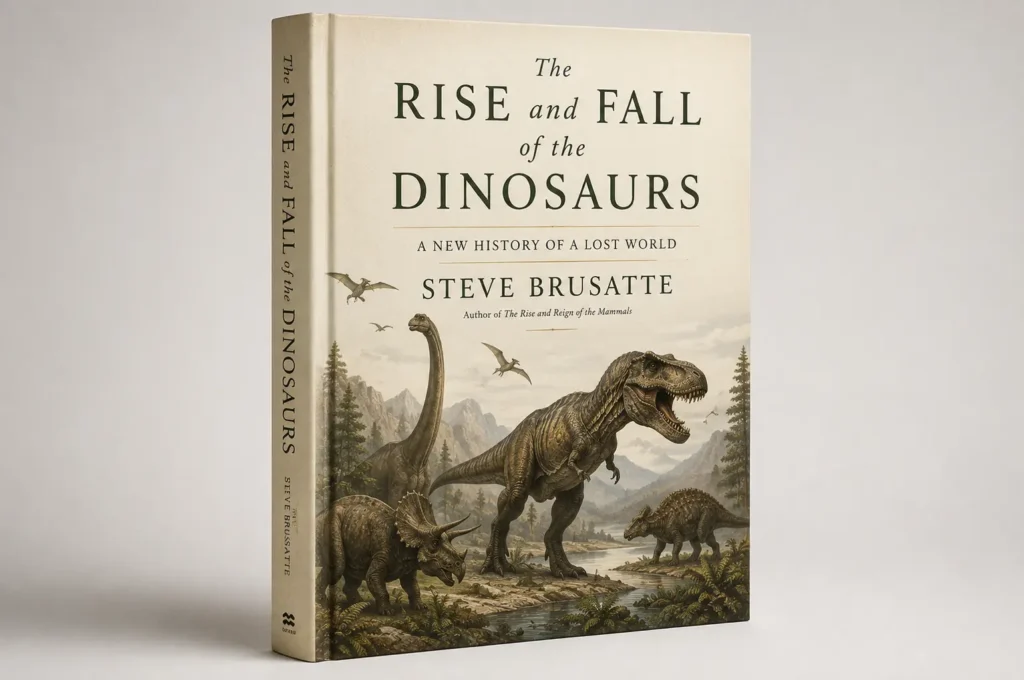
The Rise and Fall of the Dinosaurs
A compelling history of dinosaurs, tracing their origins, diversification, 200-million-year reign, extinction, and enduring legacy.
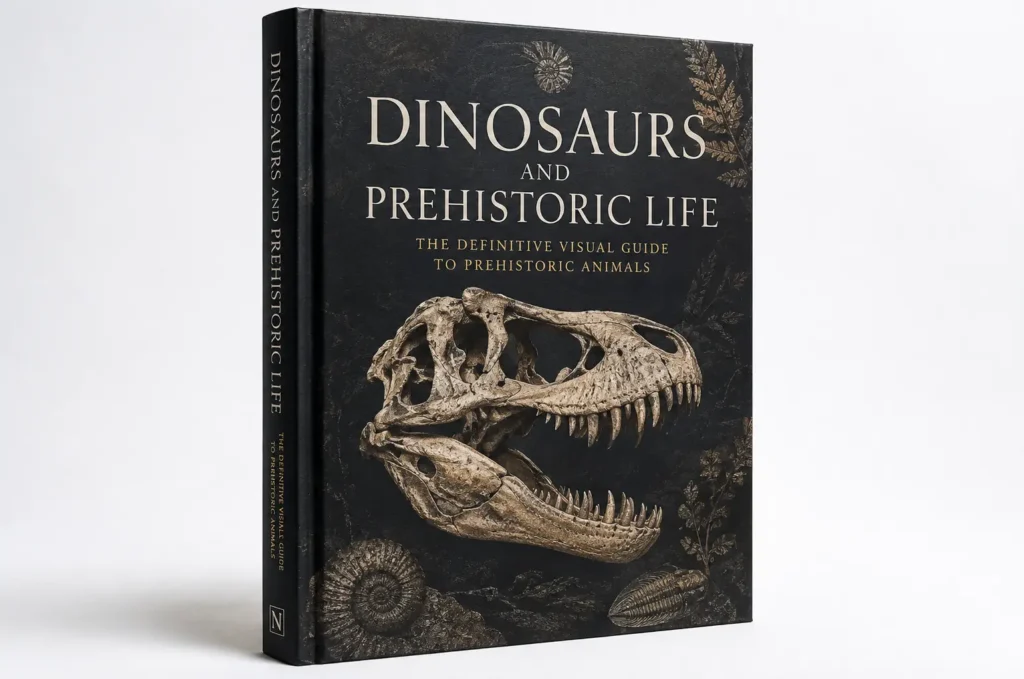
Dinosaurs and Prehistoric Life
A richly illustrated visual reference exploring dinosaurs, fossils, evolution, and prehistoric life across geological time.
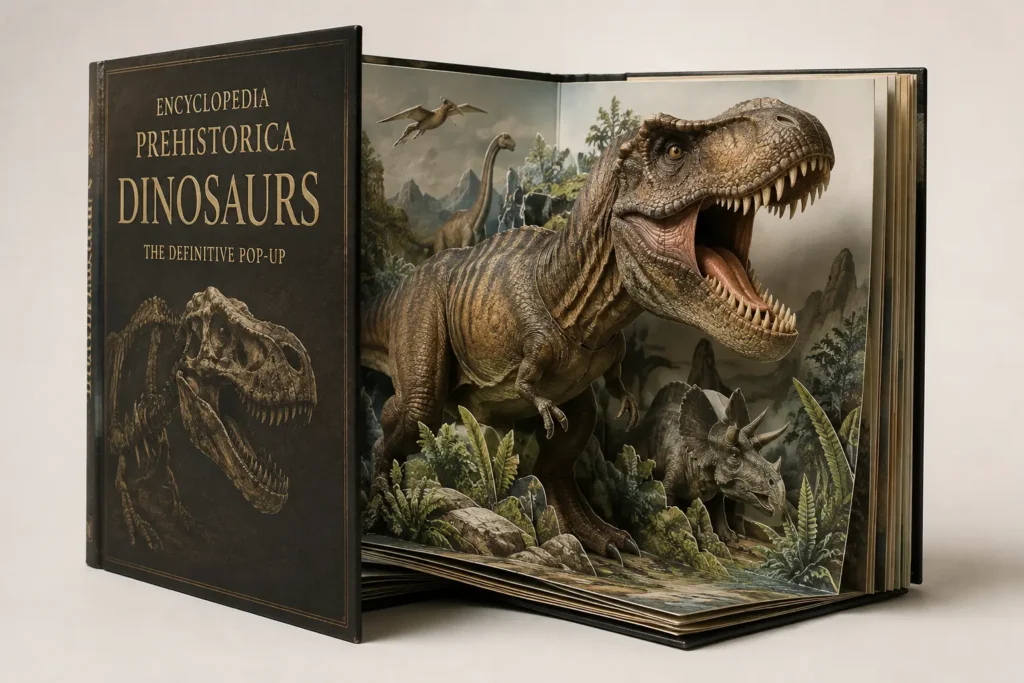
Encyclopedia Prehistorica: Dinosaurs
An interactive dinosaur book featuring spectacular three-dimensional pop-ups, particularly suited to young readers and families.
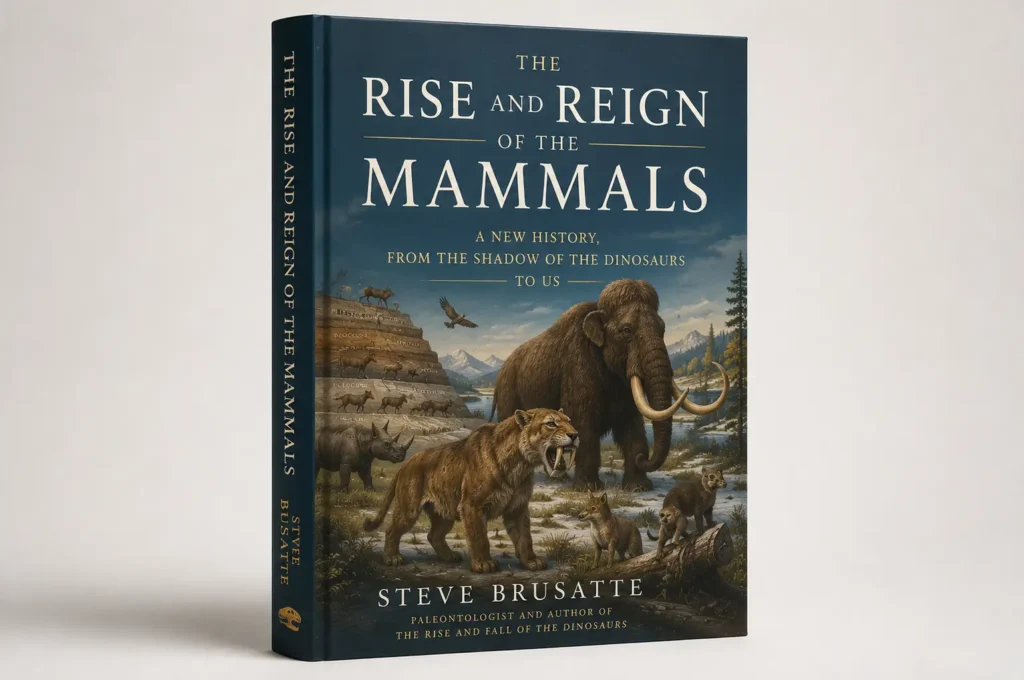
The Rise and Reign of the Mammals
A sweeping history of mammalian evolution, from their origins alongside dinosaurs through the Cenozoic and the emergence of humans.