

Quick Info
| Feature | Mammuthus primigenius (Woolly Mammoth) | Mammut americanum (American Mastodon) |
|---|---|---|
| Order / Family | Proboscidea, Elephantidae | Proboscidea, Mammutidae |
| Period | Pleistocene–Holocene, approximately 400,000–4,000 years ago | Pliocene–Late Pleistocene, approximately 3.5 million–10,000 years ago |
| Shoulder height (males) | 2.7–3.4 m (8.9–11.2 ft) | 2.3–2.8 m (7.5–9.2 ft) |
| Body mass (males) | 5,500–8,000 kg (12,100–17,600 lb) | 3,600–5,400 kg (7,900–11,900 lb) |
| Tooth type | High-crowned ridged molars (hypsodont) | Low-crowned cusped molars (bunodont) |
| Primary diet | Grasses and sedges (grazer) | Woody browse including leaves, twigs, and bark (browser) |
| Did they meet? | Yes — geographic overlap documented in North America | Yes — geographic overlap documented in North America |
Quick Answer
Woolly mammoths and American mastodons were distinct animals belonging to separate evolutionary families within the order Proboscidea. Woolly mammoths were generally larger, inhabited open grassland environments, and possessed ridged molars adapted for grazing on abrasive vegetation. American mastodons were typically smaller, preferred woodland and forest habitats, and possessed cusped molars specialised for browsing leaves, twigs, and other woody plant material. Both species coexisted in parts of North America during the Late Pleistocene and disappeared near the end of the last Ice Age.

Two Ice Age giants are frequently confused, and the resemblance is understandable. Both were large, tusked, trunk-bearing relatives of modern elephants that lived during the Pleistocene. Closer examination, however, reveals two animals that occupied very different ecological roles. Their teeth, diets, habitats, and evolutionary histories demonstrate that mammoths and mastodons were distinct lineages adapted to different environments.
Woolly Mammoth vs Mastodon: What Are the Key Differences?
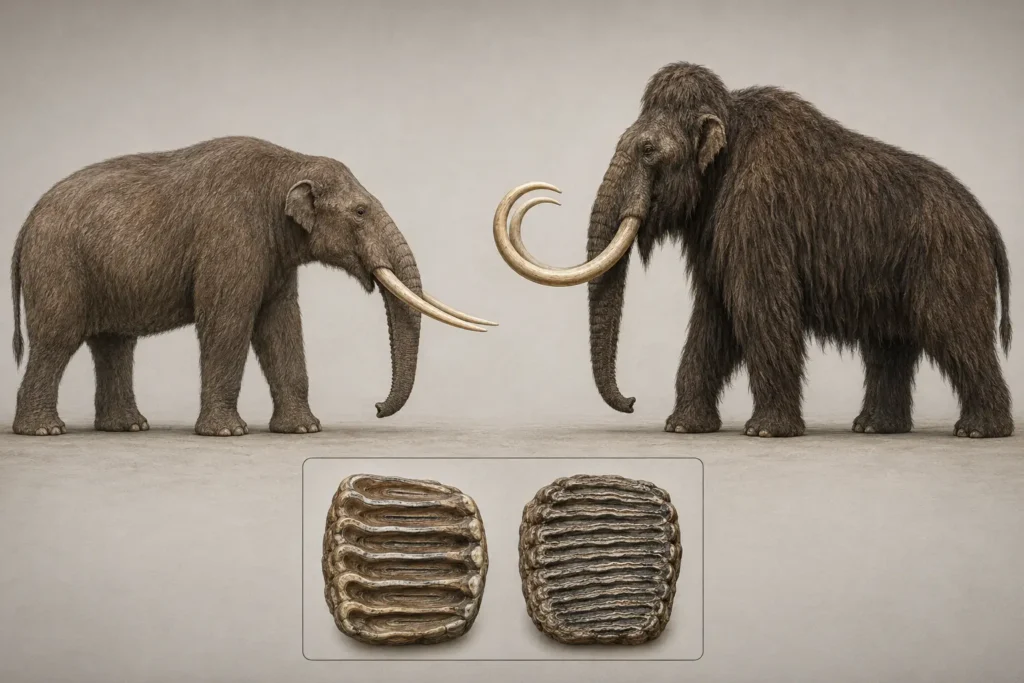
Woolly mammoths and mastodons belonged to separate families within Proboscidea, and last shared a common ancestor tens of millions of years ago. Over that evolutionary interval, the two lineages developed markedly different adaptations affecting their anatomy, diet, habitat preferences, and ecology.
The most reliable way to distinguish the two animals is through their teeth. Fossil evidence shows that woolly mammoths possessed high-crowned molars composed of numerous tightly packed enamel ridges. These teeth formed an efficient grinding surface adapted for processing abrasive grasses and sedges.
American mastodons, by contrast, possessed low-crowned molars bearing rounded cusps. This bunodont tooth structure was adapted for crushing and shredding woody browse, including leaves, twigs, bark, and other forest vegetation. The differences in dental anatomy reflect fundamentally different feeding strategies and represent one of the clearest examples of ecological divergence among large Pleistocene herbivores.
Evolutionary Relationship: How Closely Were They Related?
Woolly mammoths and American mastodons were far less closely related than their outward appearance suggests. The family Elephantidae—which includes mammoths and modern elephants—diverged from the family Mammutidae, which includes mastodons, approximately 24–30 million years ago according to current evolutionary estimates. By the time woolly mammoths and American mastodons coexisted in Pleistocene North America, their lineages had been evolving independently for tens of millions of years.
American mastodons were not ancestral to mammoths. Both groups descended from earlier proboscideans, but each followed a separate evolutionary trajectory. Their shared characteristics—large bodies, tusks, and trunks—reflect inheritance from distant common ancestors combined with adaptation to broadly similar ecological challenges rather than a close evolutionary relationship.
Size Comparison: Woolly Mammoth vs Mastodon
Woolly mammoths were generally larger than American mastodons across most body measurements. Fossil skeletal evidence indicates that adult male mastodons typically stood approximately 2.3–2.8 m (7.5–9.2 ft) at the shoulder, compared with approximately 2.7–3.4 m (8.9–11.2 ft) for male woolly mammoths. Body mass estimates place large male mastodons at approximately 3,600–5,400 kg (7,900–11,900 lb), making them substantially lighter than large woolly mammoths.
The two animals also differed in body proportions. Mastodons possessed a lower, flatter skull lacking the pronounced cranial dome characteristic of woolly mammoths. Their tusks were typically shorter and less strongly curved, and they lacked the prominent shoulder hump associated with mammoths. Mastodon limb bones were proportionally more robust, producing a stockier overall appearance.
Habitat and Geographic Range: Where Did Each Species Live?
Woolly Mammoth Habitat
Woolly mammoths were characteristic inhabitants of the mammoth steppe, a vast cold grassland ecosystem that extended across northern Eurasia and into North America during the Pleistocene. Although especially associated with Siberia and Beringia, woolly mammoths ranged across large areas of northern and central Eurasia and parts of North America.
Mastodon Habitat
American mastodons occupied a markedly different ecological niche. Fossil pollen, preserved plant remains, and stable isotope evidence indicate a strong association with forested and woodland environments, including spruce forests, mixed woodlands, wetland margins, and transitional habitats. Fossil remains have been recovered across much of North America, from Alaska to central Mexico, with particularly abundant records in eastern and midwestern regions of the continent.
Their distribution is closely associated with woodland and forest ecosystems rather than the open grassland habitats favoured by mammoths.
Did They Share the Same Territory?
Yes. Fossil evidence documents geographic overlap between woolly mammoths and American mastodons in parts of North America, particularly in regions where grasslands, parklands, and woodland habitats occurred in proximity during the Late Pleistocene.
Despite sharing portions of their range, the two species likely experienced limited direct competition because their diets and habitat preferences differed substantially. Woolly mammoths primarily grazed on grasses and sedges in open environments, whereas mastodons browsed on leaves, twigs, bark, and other woody vegetation in more heavily vegetated habitats. As a result, they occupied different ecological niches within the same broader landscapes.
Teeth: The Most Reliable Way to Tell Them Apart
Dental anatomy is the most reliable feature palaeontologists use to distinguish mammoth and mastodon remains, particularly when only isolated teeth or fragmentary skeletal material are available.
| Feature | Woolly Mammoth | American Mastodon |
|---|---|---|
| Tooth type | Hypsodont (high-crowned), ridged molars | Bunodont (low-crowned), cusped molars |
| Surface pattern | Parallel enamel ridges (lophodont) | Rounded conical cusps |
| Molar replacement | Sequential forward replacement; typically one functional molar per jaw quadrant | More primitive replacement pattern, with multiple functional molars often present simultaneously |
| Dietary indicator | Grinding abrasive grasses and sedges | Crushing leaves, twigs, bark, and other woody browse |
| Enamel wear pattern | Flat, heavily worn grinding surfaces | Rounded cusps progressively worn with age |
Woolly mammoths replaced their molars sequentially throughout life. As each tooth became worn, a new molar erupted from behind and gradually moved forward into position. This conveyor-belt replacement system is shared with modern elephants.
American mastodons retained a more primitive dental arrangement. Multiple functional molars can be present simultaneously within a jaw quadrant, producing a distinct pattern of tooth eruption and wear. As a result, age estimation methods based on dental wear must be tailored specifically to each species.
Tusks: Similar Function, Different Form
Both woolly mammoths and American mastodons possessed tusks derived from elongated upper incisors, and tusks were present in both sexes, although males generally developed larger specimens.
Woolly mammoth tusks exhibited a pronounced spiral curvature, with the largest individuals producing tusks exceeding 4 m (13 ft) in length. American mastodon tusks were typically straighter, less tightly curved, and generally shorter, although large males could still develop impressive tusk lengths.
Lower tusks were common in some ancestral proboscideans, but they were not a typical feature of adult American mastodons. Their absence reflects the evolutionary trend toward reduction and eventual loss of lower incisors seen across many later proboscidean lineages.
Extinction: The Same Fate, Different Trajectories
Both woolly mammoths and American mastodons disappeared from mainland North America near the end of the Pleistocene, approximately 10,000 years ago. The causes of their extinction remain the subject of ongoing research.
Climate-driven environmental change and human hunting pressure are the two leading explanations, and many researchers consider a combination of both factors the most likely scenario. Although both species experienced the same broad extinction event, the ecological pressures they faced differed. Woolly mammoths were adapted to open grassland ecosystems that contracted as climates warmed. In contrast, mastodons depended heavily on woodland and forest habitats that underwent substantial environmental reorganisation during the same period.
The relative importance of climate change, human activity, and other contributing factors remains an active area of palaeontological research.
Related and Contemporary Species
- Mammuthus columbi (Columbian mammoth) — a larger North American mammoth that coexisted with American mastodons across much of the continent. It was closely related to the woolly mammoth and formed part of a complex evolutionary history that included hybridisation among mammoth lineages.
- Mammuthus trogontherii (steppe mammoth) — a large Eurasian mammoth widely regarded as the ancestral species from which the woolly mammoth evolved.
- Elephas maximus (Asian elephant) — the closest living relative of mammoths and a fellow member of the family Elephantidae.
- Gomphotherium — an earlier proboscidean illustrating the deep evolutionary diversification of trunked herbivores before the appearance of mammoths and mastodons.
- Coelodonta antiquitatis (woolly rhinoceros) — a characteristic member of the Eurasian mammoth-steppe fauna that shared habitat with woolly mammoths but did not overlap geographically with American mastodons.
Frequently Asked Questions
Which was bigger—the woolly mammoth or the mastodon?
The woolly mammoth was generally larger than the American mastodon in both height and body mass. Adult male woolly mammoths typically stood approximately 2.7–3.4 m (8.9–11.2 ft) at the shoulder and weighed between 5,500 and 8,000 kg (12,100–17,600 lb). Adult male mastodons generally stood approximately 2.3–2.8 m (7.5–9.2 ft) at the shoulder and weighed between 3,600 and 5,400 kg (7,900–11,900 lb), although exceptionally large individuals may have exceeded these estimates.
Are mastodons and mammoths the same animal?
Mastodons and mammoths were distinct animals belonging to separate families within the order Proboscidea. Mammoths belonged to Elephantidae, the same family as modern elephants, whereas mastodons belonged to Mammutidae. Current evidence suggests that the two lineages diverged approximately 24–30 million years ago and subsequently evolved along separate paths. Their similar appearance reflects shared proboscidean ancestry and adaptation to large-bodied herbivory rather than a close relationship.
Note: Body mass estimates for American mastodons, the precise timing of the Mammutidae–Elephantidae divergence, and aspects of proboscidean evolutionary history remain active areas of research. Values presented here reflect current scientific consensus and may be refined as new evidence becomes available.
Conclusion
Woolly mammoths and American mastodons shared a continent and disappeared during the same broad extinction interval, but they represented very different evolutionary lineages. Their contrasting teeth, diets, habitats, and ecological roles illustrate how large herbivorous mammals can evolve distinct solutions to similar environmental challenges. Understanding those differences provides a clearer picture of Pleistocene ecosystems and the diversity of the proboscideans that once inhabited them.
References
Peer-Reviewed Literature
Lister, A.M., 2014. Evolutionary radiation of Elephantidae. Quaternary International, 379, pp.122–132.
Mothé, D., Avilla, L.S., and Cozzuol, M.A., 2017. The nomenclature of the American mastodon. Historical Biology, 29(2), pp.204–213.
Rivals, F., Semprebon, G.M., and Lister, A.M., 2012. Dietary traits and habitat preferences of the American mastodon inferred from stable isotopes and dental evidence. Quaternary International, 255, pp.42–52.
Books
Haynes, G., 1991. Mammoths, Mastodons, and Elephants: Biology, Behavior, and the Fossil Record. Cambridge University Press.
Lister, A.M. and Bahn, P., 2007. Mammoths: Giants of the Ice Age. University of California Press.
Recommended Paleontology & Natural History Books
As an Amazon Associate, Extinct Atlas may earn from qualifying purchases.
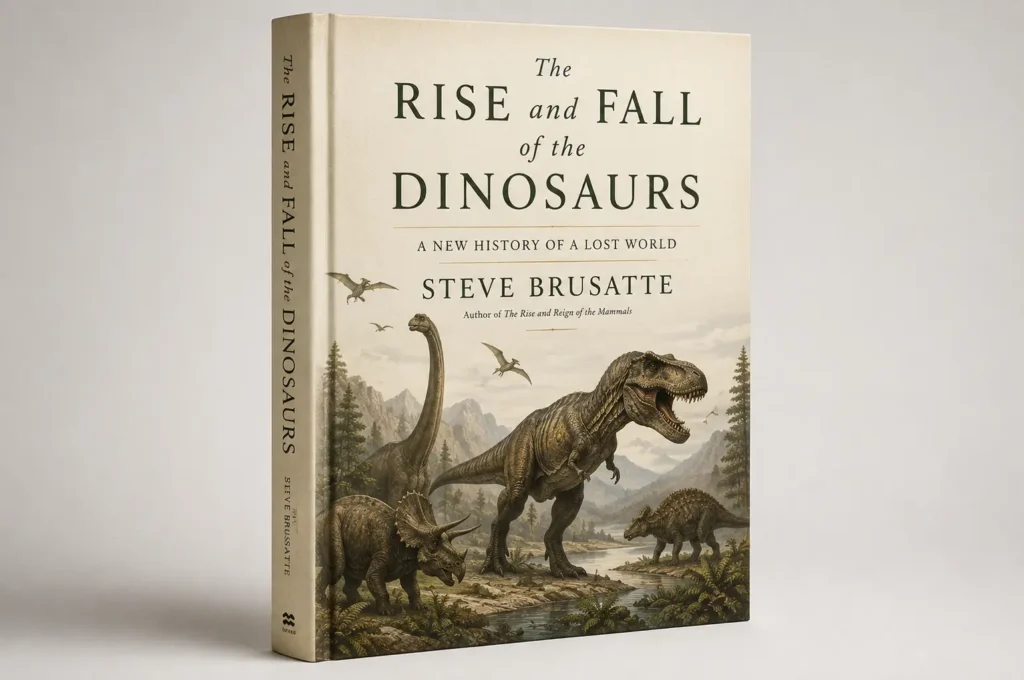
The Rise and Fall of the Dinosaurs
A compelling history of dinosaurs, tracing their origins, diversification, 200-million-year reign, extinction, and enduring legacy.
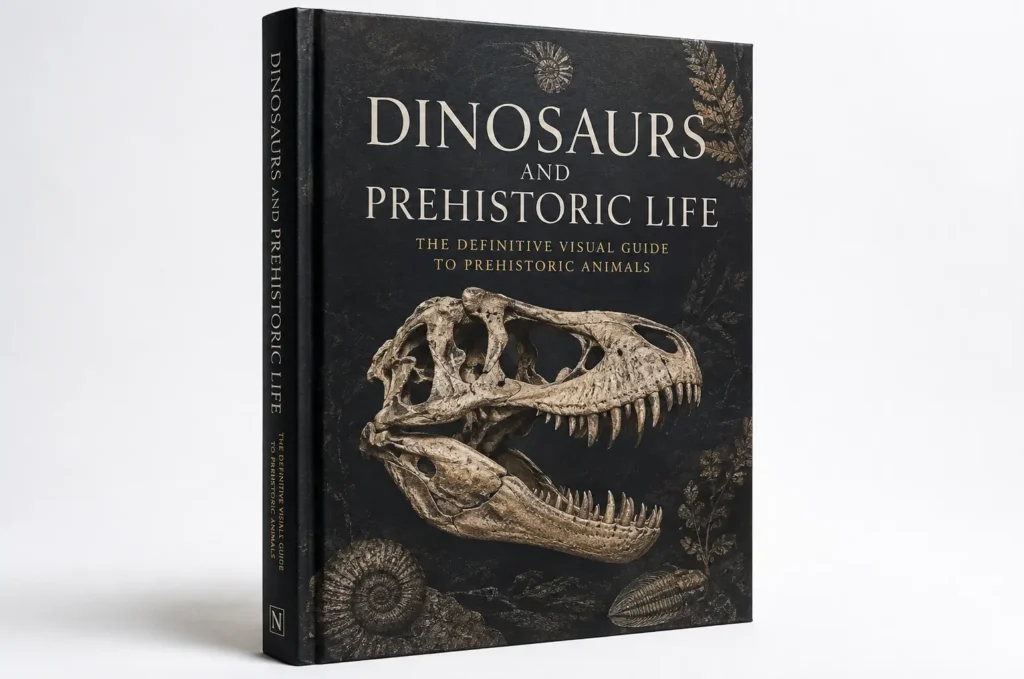
Dinosaurs and Prehistoric Life
A richly illustrated visual reference exploring dinosaurs, fossils, evolution, and prehistoric life across geological time.
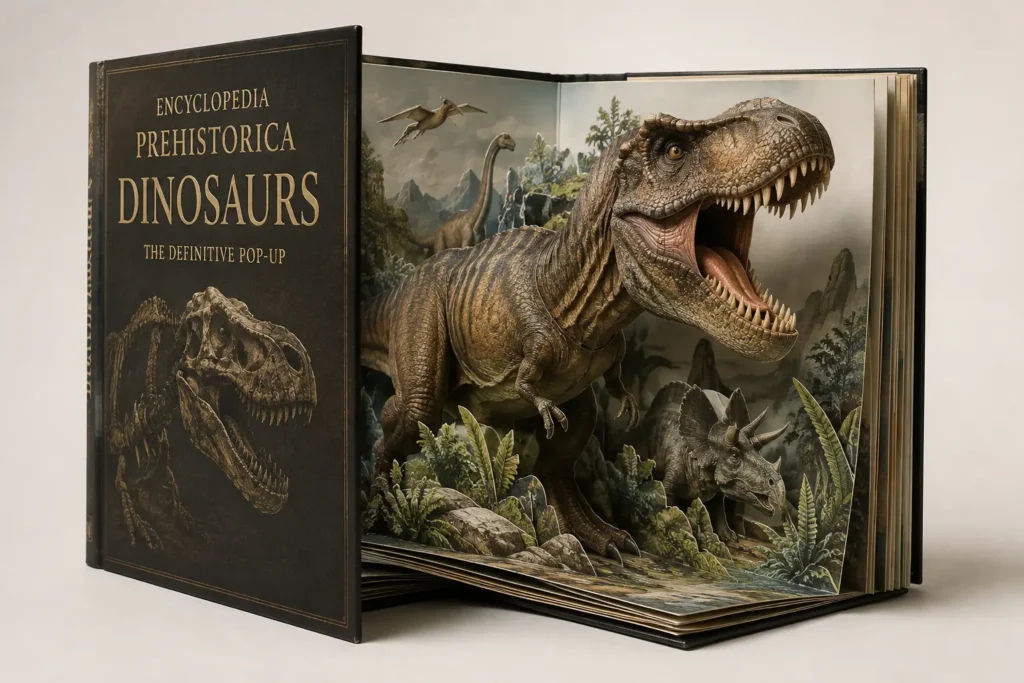
Encyclopedia Prehistorica: Dinosaurs
An interactive dinosaur book featuring spectacular three-dimensional pop-ups, particularly suited to young readers and families.
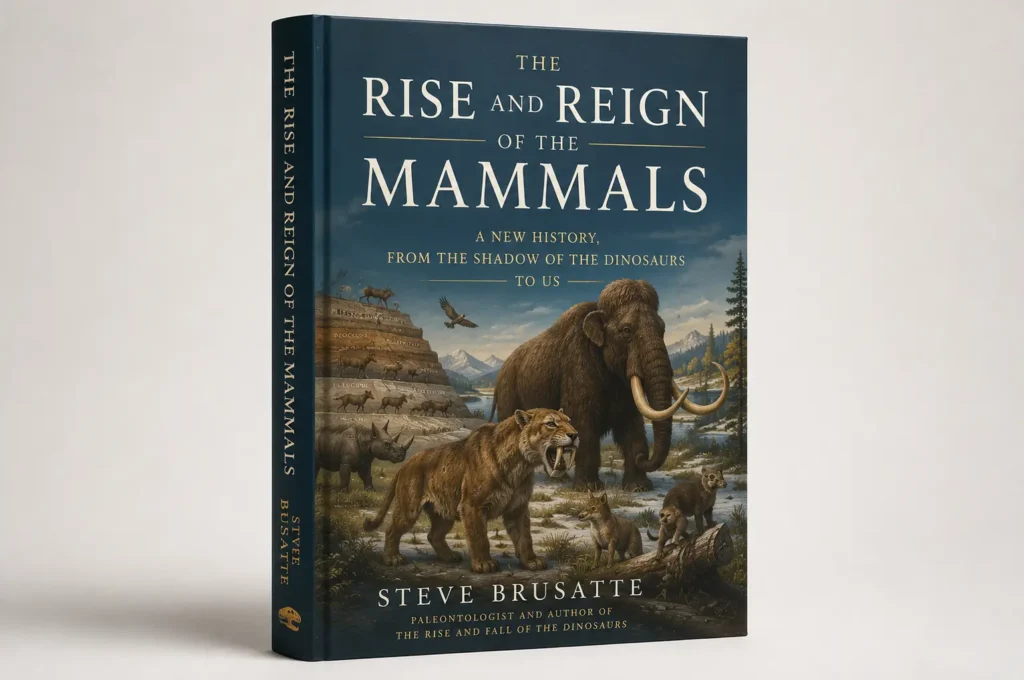
The Rise and Reign of the Mammals
A sweeping history of mammalian evolution, from their origins alongside dinosaurs through the Cenozoic and the emergence of humans.