Quick Info
| Category | Information |
|---|---|
| Scientific Name | Deinonychus antirrhopus |
| Discovery Region | Western North America |
| Primary Formation | Cloverly Formation |
| Geological Age | Early Cretaceous (115–108 Ma) |
| Formal Description | 1969 |
| Naming Authority | John H. Ostrom |
| Holotype | YPM 5205 |
| Repository | Yale Peabody Museum |
| Fossil Completeness | Good |
| Scientific Significance | Key species of the Dinosaur Renaissance |
Quick Answer
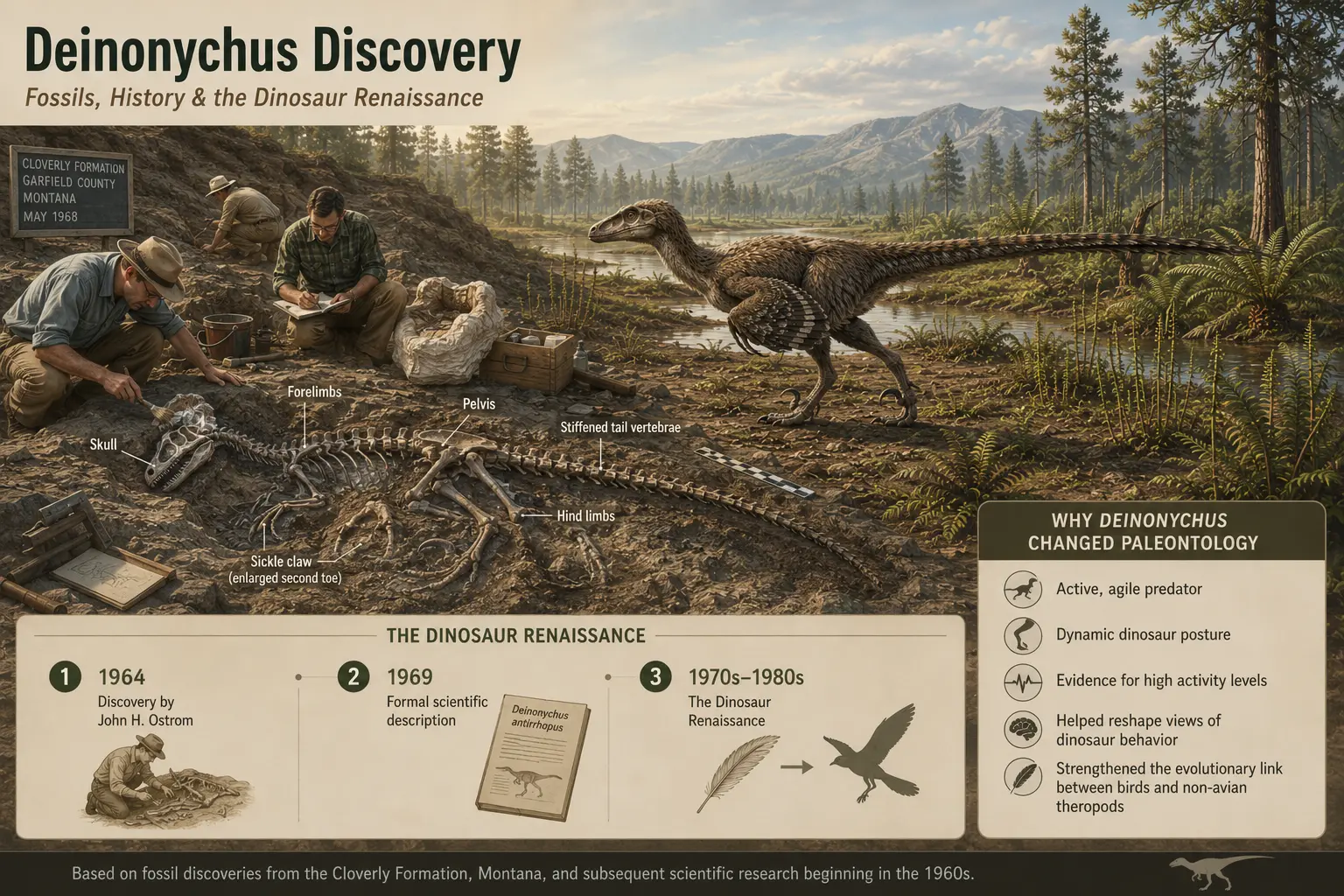
Deinonychus antirrhopus was formally described by John H. Ostrom in 1969 based on fossils discovered in the Cloverly Formation of Montana. Its discovery became one of the most influential events in modern paleontology because the animal’s anatomy challenged traditional views of dinosaurs as slow and sluggish creatures. The fossil record of Deinonychus includes multiple individuals and substantial skeletal material, providing a strong foundation for understanding its anatomy, ecology, and evolutionary significance.

Introduction
The discovery history of Deinonychus extends far beyond the identification of a new dinosaur species. The taxon played a central role in transforming scientific understanding of dinosaur biology during the second half of the twentieth century.
Before the description of Deinonychus, many dinosaurs were commonly portrayed as slow-moving reptiles with limited metabolic activity. Detailed study of the new fossil material revealed an animal with anatomical features suggesting agility, active predation, and close evolutionary relationships with birds. As a result, Deinonychus became one of the most important species in the history of vertebrate paleontology.
What Is Known From Evidence
Discovery Overview
| Category | Information |
|---|---|
| Discovery Area | Montana and Wyoming, USA |
| Geological Unit | Cloverly Formation |
| First Major Scientific Study | 1960s |
| Formal Description | 1969 |
| Describing Scientist | John H. Ostrom |
| Confidence Level | High |
The fossils that would eventually be assigned to Deinonychus antirrhopus were collected from Lower Cretaceous deposits of the Cloverly Formation. Detailed examination of the material revealed a previously unknown predatory dinosaur possessing a combination of features unlike those of most dinosaurs recognized at the time.
Naming of Deinonychus
| Category | Information |
|---|---|
| Genus Name | Deinonychus |
| Meaning | “Terrible claw” |
| Species Name | antirrhopus |
| Species Meaning | “Counterbalancing” |
| Name Reference | Enlarged toe claw and balancing tail |
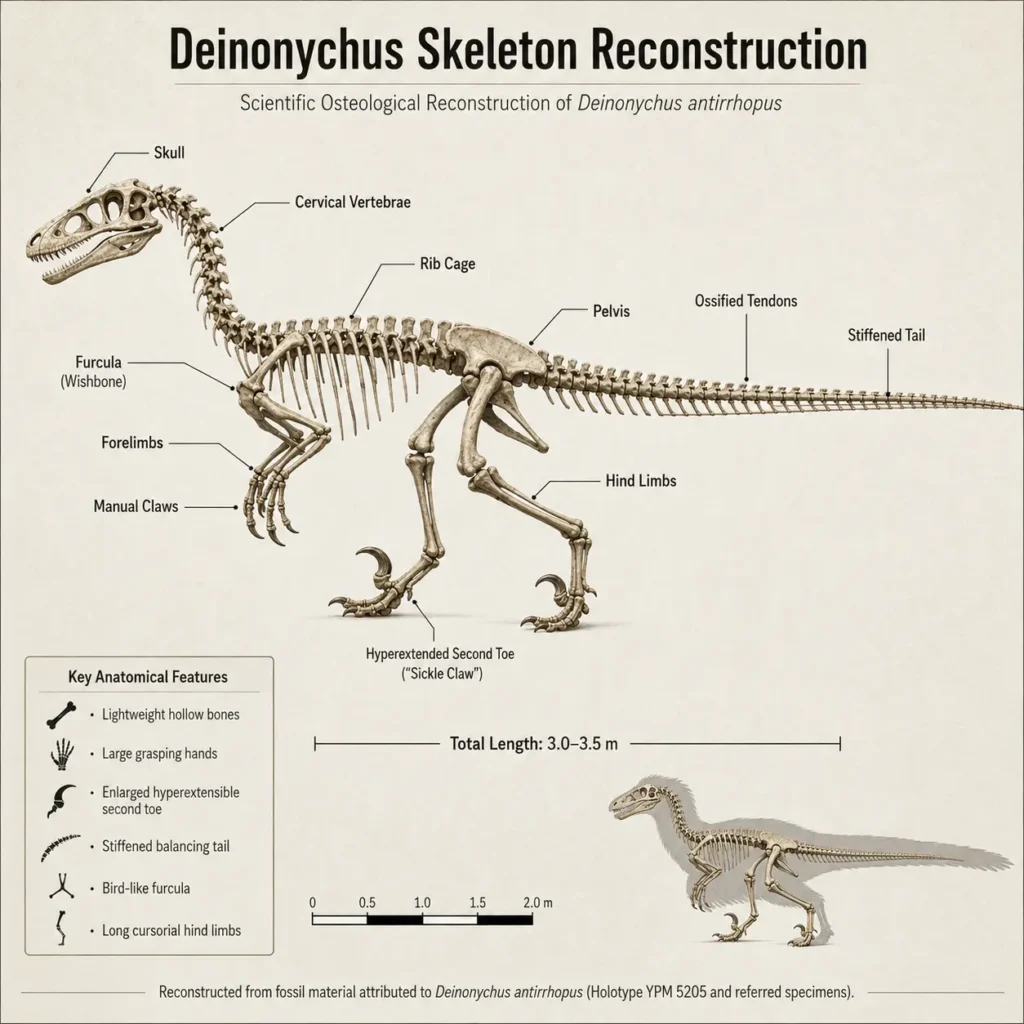
The genus name refers to the enlarged sickle-shaped claw carried on the second toe of each foot. The species name, antirrhopus, refers to the balancing role of the stiffened tail, which Ostrom interpreted as an important adaptation for agility.
Fossil Discovery History
Early Field Discoveries
| Event | Significance |
|---|---|
| Cloverly Formation excavations | Recovery of key fossil material |
| Collection of multiple individuals | Improved anatomical understanding |
| Identification of unusual anatomy | Recognition of a new taxon |
Fieldwork in Montana and Wyoming during the 1960s recovered numerous bones belonging to what would later be recognized as Deinonychus. The material included portions of the skull, vertebrae, limbs, pelvis, and the distinctive enlarged toe claw.
The quality and quantity of the material allowed researchers to reconstruct much of the skeleton with a relatively high degree of confidence.
Formal Description in 1969
The publication of Ostrom’s monograph in 1969 marked a turning point in dinosaur paleontology.
Key Anatomical Features Recognized
| Feature | Scientific Importance |
|---|---|
| Enlarged Toe Claw | Specialized predatory adaptation |
| Stiffened Tail | Balance and maneuverability |
| Long Hind Limbs | Active locomotion |
| Large Grasping Hands | Prey handling |
| Bird-Like Features | Evolutionary significance |
Ostrom emphasized the highly specialized anatomy of the animal, arguing that it represented a much more active predator than dinosaurs were traditionally believed to be.
The Dinosaur Renaissance
Scientific Impact
| Area of Research | Influence of Deinonychus |
|---|---|
| Dinosaur Physiology | Major |
| Dinosaur Behavior | Major |
| Bird Origins | Major |
| Theropod Evolution | Major |
| Public Perception of Dinosaurs | Major |
The study of Deinonychus became one of the most influential developments associated with the Dinosaur Renaissance. Although the broader movement involved contributions from numerous researchers, discoveries, and theoretical advances, Deinonychus played a particularly important role by challenging long-standing interpretations of dinosaur biology and behavior.
Connection to Bird Evolution
One of the most significant outcomes of Ostrom’s work was renewed interest in the hypothesis that birds evolved from theropod dinosaurs.
Many anatomical features of Deinonychus closely resemble those found in birds, including aspects of the wrist, forelimb, shoulder region, and hind limb. Although bird origins remain a broader topic beyond the scope of this page, Deinonychus played a pivotal role in strengthening the dinosaur-bird connection.
Fossil Record
Known Fossil Material
| Material Type | Representation |
|---|---|
| Skull Elements | Present |
| Vertebrae | Present |
| Forelimb Bones | Present |
| Hind Limb Bones | Present |
| Pelvic Elements | Present |
| Teeth | Present |
| Multiple Individuals | Present |
The fossil record of Deinonychus is substantially better than that of many predatory dinosaurs known from isolated remains.
Multiple specimens have provided researchers with a detailed understanding of overall anatomy and body proportions.
Important Specimens
| Specimen | Significance |
|---|---|
| YPM 5205 | Holotype specimen |
| Cloverly Bonebed Material | Additional anatomical information |
| Associated Skeletons | Improved reconstruction accuracy |
Although no single specimen preserves an entirely complete skeleton, the collective fossil record provides extensive anatomical coverage.
Fossil Preservation and Completeness
Completeness Assessment
| Category | Assessment |
|---|---|
| Specimen Quantity | High |
| Skeletal Representation | Good |
| Anatomical Confidence | High |
| Soft Tissue Preservation | Absent |
| Feather Preservation | Absent |
The available material allows researchers to reconstruct most major aspects of the skeleton. However, direct evidence for feathers, coloration, and many soft tissues remains unavailable.
Scientific Interpretation
Why the Fossil Record Matters
The quality of the Deinonychus fossil record explains why the species has remained scientifically important for more than half a century.
Strong anatomical evidence supports research into:
- Body size
- Locomotion
- Predatory adaptations
- Evolutionary relationships
- Functional morphology
The fossil record also provides the basis for evaluating debates surrounding claw function, feeding ecology, and social behavior.
Current Scientific Understanding
Deinonychus antirrhopus is among the most scientifically influential theropod dinosaurs ever discovered. The species is represented by multiple specimens preserving substantial portions of the skeleton, resulting in high confidence regarding its anatomy and classification.
The formal description published by John Ostrom in 1969 helped initiate a major transformation in dinosaur paleontology and contributed significantly to modern understanding of dinosaur evolution. Today, Deinonychus remains a key reference taxon for studies of dromaeosaurids, theropod functional anatomy, and the evolutionary relationship between dinosaurs and birds.
Evidence Assessment
| Evidence Category | Assessment |
|---|---|
| Discovery History | Strong Direct Evidence |
| Taxonomic History | Strong Direct Evidence |
| Holotype Information | Strong Direct Evidence |
| Fossil Record Quality | Strong Direct Evidence |
| Skeletal Reconstruction | High Confidence |
| Soft Tissue Evidence | Limited |
| Feather Evidence | Indirect Only |
The strongest evidence concerns the discovery history, taxonomic description, and skeletal anatomy of Deinonychus. The fossil record is sufficiently extensive to support detailed anatomical and evolutionary research, although soft-tissue interpretations remain largely inferential.
Why Was the Discovery of Deinonychus So Important?
The discovery of Deinonychus fundamentally changed scientific understanding of dinosaurs and is widely regarded as one of the most influential events in modern paleontology. Before John H. Ostrom formally described the species in 1969, dinosaurs were often portrayed as slow-moving, sluggish reptiles with limited activity. The anatomy of Deinonychus—including its long hind limbs, grasping forelimbs, stiffened tail, and enlarged sickle-shaped claw—revealed an agile, active predator adapted for dynamic movement and prey capture.
These findings helped drive the Dinosaur Renaissance, a period during which scientists reassessed dinosaur physiology, behavior, and evolution. Ostrom’s work also renewed interest in the hypothesis that birds evolved from theropod dinosaurs by highlighting numerous shared anatomical features between Deinonychus and early birds. Today, Deinonychus remains a cornerstone of vertebrate paleontology, influencing research on dinosaur locomotion, functional anatomy, behavior, and the evolutionary
Frequently Asked Questions
Who discovered Deinonychus?
The species was formally described by paleontologist John H. Ostrom in 1969 based on fossil material collected from the Cloverly Formation of Montana.
What does the name Deinonychus mean?
The name means “terrible claw,” referring to the enlarged sickle-shaped claw on the second toe.
Why is Deinonychus important?
Its discovery helped trigger the Dinosaur Renaissance and strengthened scientific support for the evolutionary relationship between dinosaurs and birds.
How complete is the fossil record of Deinonychus?
The fossil record is considered good, with multiple specimens preserving substantial portions of the skeleton and providing high confidence in anatomical reconstructions.
References
Primary Taxonomic Sources
Ostrom, J.H. (1969). Osteology of Deinonychus antirrhopus, an unusual theropod from the Lower Cretaceous of Montana. Bulletin of the Peabody Museum of Natural History, 30, 1–165.
Peer-Reviewed Scientific Literature
Ostrom, J.H. (1970). The discovery of dinosaurian characteristics in Archaeopteryx and the origin of birds. Quarterly Review of Biology, 45(1), 27–47.
Ostrom, J.H. (1976). Archaeopteryx and the origin of birds. Biological Journal of the Linnean Society, 8, 91–182.
Maxwell, W.D., & Ostrom, J.H. (1995). Taphonomy and paleoecology of Deinonychus bonebeds from the Cloverly Formation (Lower Cretaceous) of Montana and Wyoming. Palaios, 10(3), 285–298.
Turner, A.H., Makovicky, P.J., & Norell, M.A. (2012). A review of dromaeosaurid systematics and paravian phylogeny. Bulletin of the American Museum of Natural History, 371, 1–206.
Brusatte, S.L., O’Connor, J.K., & Jarvis, E.D. (2015). The origin and diversification of birds. Current Biology, 25(19), R888–R898.
Norell, M.A., & Makovicky, P.J. (2004). Dromaeosauridae. In D.B. Weishampel, P. Dodson, & H. Osmólska (Eds.), The Dinosauria (2nd ed.). University of California Press.
Monographs and Academic Books
Paul, G.S. (2016). The Princeton Field Guide to Dinosaurs (2nd ed.). Princeton University Press.
Weishampel, D.B., Dodson, P., & Osmólska, H. (Eds.). (2004). The Dinosauria (2nd ed.). University of California Press.
Brusatte, S.L. (2018). The Rise and Fall of the Dinosaurs. William Morrow.
Museum and Institutional Sources
Yale Peabody Museum. Collections and historical information relating to Deinonychus antirrhopus, including holotype YPM 5205.
Databases
Paleobiology Database. Taxonomic and occurrence records for Deinonychus antirrhopus.
The Theropod Database. Taxonomic, anatomical, and bibliographic information for Deinonychus and related dromaeosaurids.
Featured Museum Collections
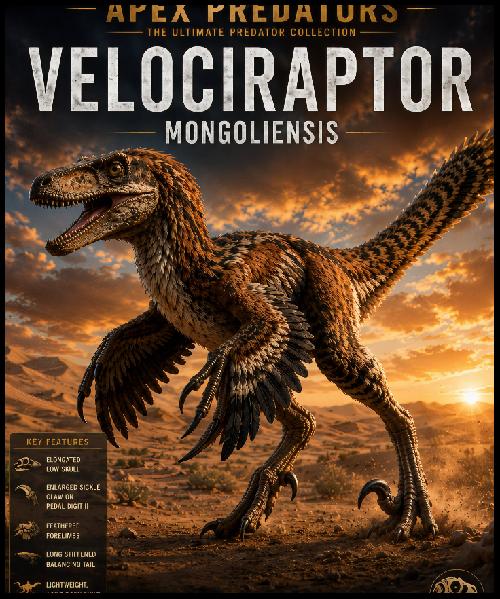
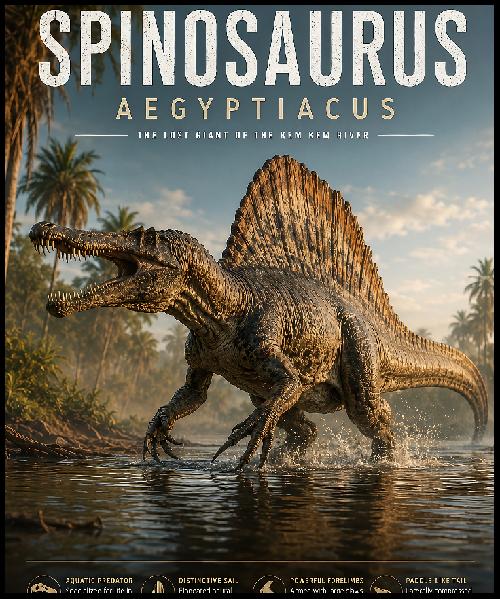
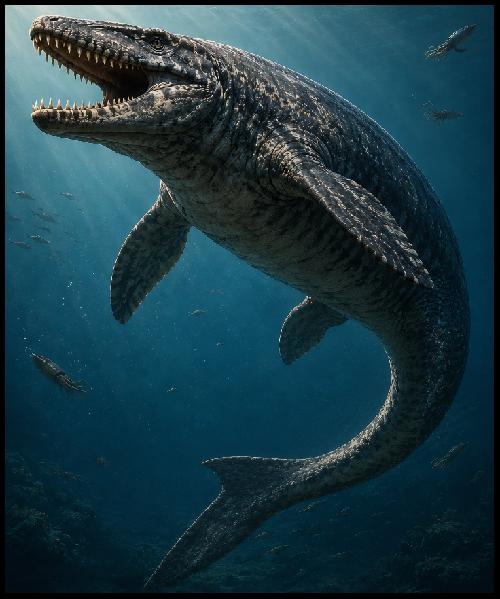
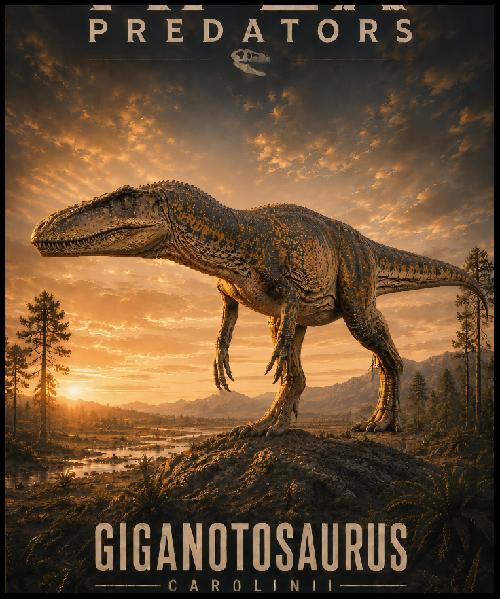
Museum-quality paleoart and educational poster
collections based on evidence-informed prehistoric
Life reconstructions.