
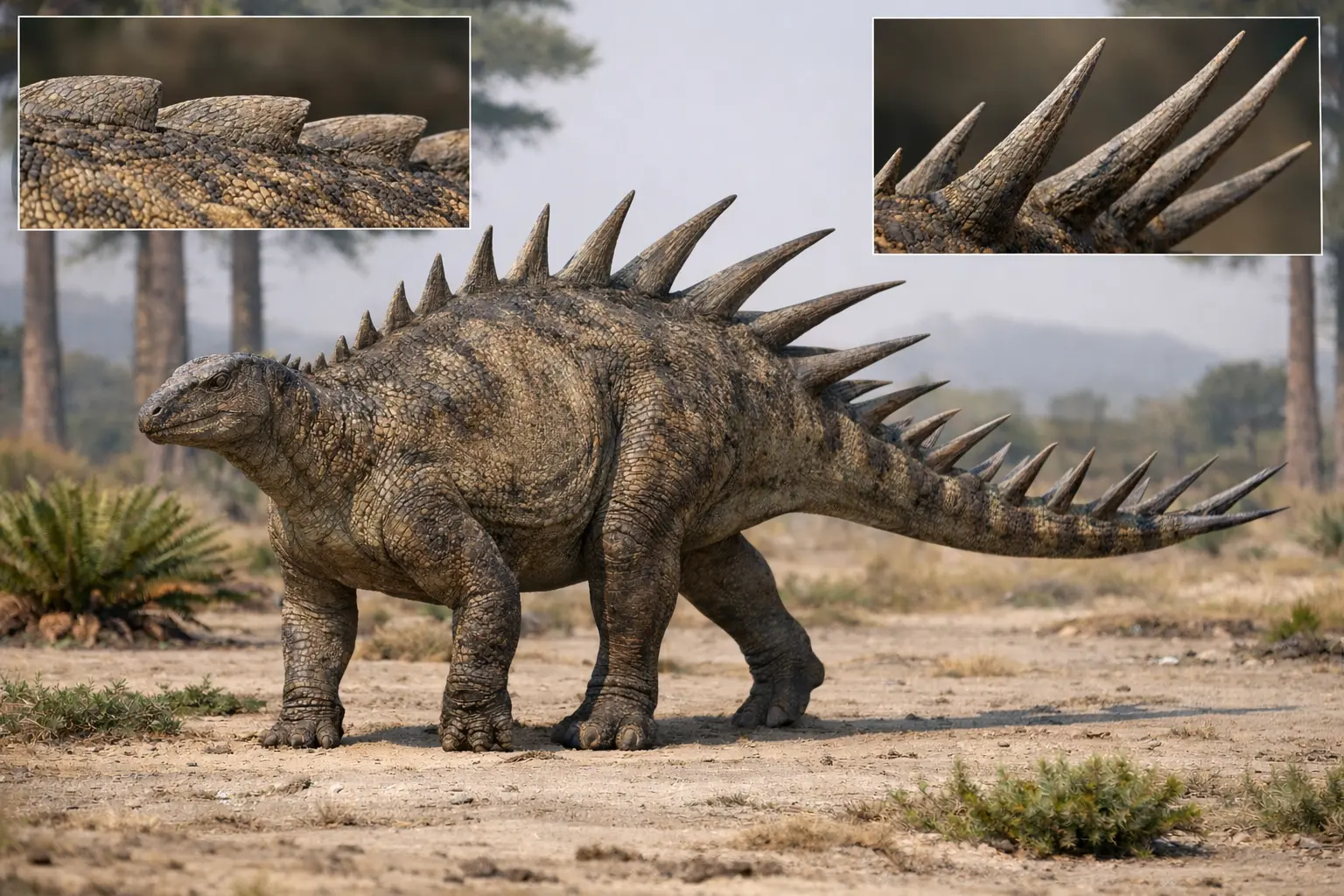
Kentrosaurus possessed small bony plates only on its neck and front shoulder region, with the rest of its body covered in paired spikes. These plates were significantly smaller than those of Stegosaurus, rarely exceeding 20 centimeters in height, and the transition from plates to spikes along the body represents a key evolutionary variation within the stegosaur family.
Introduction
While Kentrosaurus is famous for its spikes, the small plates covering its neck and shoulders reveal important evolutionary patterns within the stegosaur lineage. These plates represent the forward continuation of the dorsal armor system that transitions to spikes further along the body, creating a gradient from display-oriented structures at the front to weapon-oriented structures at the rear. Understanding why Kentrosaurus invested less in plate development compared to its relatives helps illuminate the diverse defensive and thermoregulatory strategies that evolved within this remarkable dinosaur family.
Plate Size and Structure
Kentrosaurus plates were relatively small, flat, and roughly oval or teardrop-shaped, standing upright along the neck and front shoulders. The largest plates reached approximately 15 to 20 centimeters in height and width, making them substantially smaller than the massive plates of Stegosaurus, which could exceed 60 centimeters. The plates were formed from thin bone with a porous internal structure covered by a layer of keratin in life, similar to the construction of Stegosaurus plates but on a much reduced scale.
Each plate was not directly attached to the vertebrae but instead embedded in the thick skin of the back, held in place by connective tissue. This arrangement allowed some flexibility in plate positioning and meant that when the animal died and decomposed, plates often scattered or shifted position before fossilization, contributing to uncertainty about their precise arrangement in life. Fossil specimens show plates with irregular edges and surfaces marked by grooves and channels that once carried blood vessels.
The cross-section of a Kentrosaurus plate reveals a honeycomb-like internal structure with thin bony struts separating open spaces. This porous construction minimized weight while maintaining structural integrity, though the resulting plates were more fragile than solid bone. The blood vessel channels running through the plates suggest they were well-vascularized in life, potentially supporting a thermoregulatory function or simply reflecting the metabolic needs of growing bone tissue.
Distribution Along the Body
The plates of Kentrosaurus occupied only the neck and anterior shoulder region, with estimates suggesting 5 to 7 pairs of plates total before the transition to spikes began. This restricted distribution contrasts sharply with Stegosaurus, which carried plates along the entire length of its neck, back, and forward portions of its tail. In Kentrosaurus, the plates ended at roughly the front third of the body, giving way to the paired spikes that characterized the remaining two-thirds.
The transition from plates to spikes was gradual rather than abrupt. The rearmost plates began to elongate and narrow, becoming intermediate in form between the broad, flat anterior plates and the sharp, cylindrical spikes that followed. This transitional zone occurred approximately at the shoulder region, where the animal’s armor system shifted from structures that may have served display or recognition functions to those clearly optimized for defense.
The arrangement pattern—whether the plates were paired in two parallel rows or staggered in alternating positions—remains debated due to the disarticulated nature of most fossil finds. The Berlin mount displays them in alternating fashion, similar to Stegosaurus plates, but some researchers argue that a paired arrangement matching the spike configuration would be more anatomically consistent. Without perfectly articulated specimen preserving plates in their exact life positions, both interpretations remain plausible.
The Plate-to-Spike Transition
The gradient from plates to spikes along Kentrosaurus’s body represents one of the most distinctive features separating it from other stegosaurs. This transition reflects an evolutionary shift in defensive priorities, with plates potentially serving recognition or minor thermoregulatory roles at the front while the rear armor became increasingly weaponized. The progressive change suggests the developmental program that built these armor elements responded to positional signals along the body axis, producing different shapes from the same basic bony outgrowth mechanism.
Comparative anatomy across stegosaur species reveals that this transition occurred differently in each lineage. Stegosaurus maintained large plates throughout most of the body before transitioning to tail spikes only at the very rear. Tuojiangosaurus from China showed a pattern intermediate between Kentrosaurus and Stegosaurus, with moderate-sized plates and moderate spike development. Dacentrurus from Europe possessed both plates and spikes in roughly equal proportions, suggesting this mixed arrangement may represent an ancestral condition from which both plate-heavy and spike-heavy forms diverged.
The evolutionary advantage of emphasizing spikes over plates in Kentrosaurus likely relates to the specific predator pressures and ecological conditions in the Tendaguru Formation. If predators were particularly persistent or numerous, investing in actual weaponry across a greater body area may have provided better survival odds than investing in larger display structures with questionable defensive value. Alternatively, vegetation density or habitat structure might have reduced the effectiveness of visual display, making large plates less advantageous for species recognition or mate selection.
Thermoregulation Debate
One of the most persistent questions about stegosaur plates concerns whether they functioned in temperature regulation. The blood vessel channels running through Kentrosaurus plates have been cited as evidence for thermoregulatory function, with the argument that the animal could have flushed blood through the plates to release excess body heat or absorbed solar warmth through them when cool. However, the small size of Kentrosaurus plates compared to those of Stegosaurus raises questions about whether they provided sufficient surface area to meaningfully impact body temperature.
Computer modeling of thermoregulation in stegosaurs has focused primarily on Stegosaurus due to its large, well-studied plates, with results suggesting the plates could have provided modest cooling benefits in specific orientations to wind and sun. Applying a similar analysis to Kentrosaurus’s much smaller plates indicates their thermoregulatory contribution would have been minimal, potentially insufficient to justify their existence on that basis alone. The animal’s relatively small body size compared to Stegosaurus also meant less difficulty managing heat load, reducing the selective pressure for specialized cooling structures.
An alternative explanation suggests the plates served primarily in visual display for species recognition or sexual selection, with any thermoregulatory benefits being incidental. The concentration of plates at the neck, where they would be visible from the front, supports this display hypothesis. Keratin covering could have been brightly colored in life, making even small plates effective visual signals. However, distinguishing between these hypotheses requires evidence difficult to extract from fossils alone, leaving the function of Kentrosaurus plates incompletely resolved.
Comparison with Stegosaurus Plates
The differences between Kentrosaurus and Stegosaurus plates extend beyond mere size. Stegosaurus plates were proportionally much thinner relative to their height and width, creating a more dramatic sail-like profile. Kentrosaurus plates were thicker in proportion, resulting in a sturdier but less visually impressive structure. The largest Stegosaurus plates positioned over the hips created a dramatic peak in the animal’s silhouette, while Kentrosaurus’s small neck plates produced minimal visual impact from a distance.
The vascularization patterns also differed between the two species. Stegosaurus plates show extensive, well-organized blood vessel grooves suggesting significant blood flow, while Kentrosaurus plate fossils preserve fewer and less pronounced vessel traces, though this could partly reflect preservation differences rather than biological reality. The keratin covering, which does not fossilize, may have differed in thickness or structure between the species, but such details remain unknown.
Functionally, the massive plates of Stegosaurus likely served as more effective visual displays for intimidating rivals or attracting mates, while also potentially providing greater thermoregulatory benefits despite ongoing debate about the significance of that function. Kentrosaurus’s reduced investment in plates freed developmental resources for producing more spikes, suggesting different selective pressures favored weapons over display in the African species.
Related and Contemporary Species
- Hesperosaurus from North America showed plate development intermediate between Kentrosaurus and Stegosaurus, with moderately sized plates along the neck and back.
- Tuojiangosaurus from China possessed a similar plate distribution to Hesperosaurus, suggesting this intermediate condition may have been widespread among mid-sized stegosaurs.
- Dacentrurus from Europe combined plates and spikes in roughly equal proportions along the entire body, possibly representing a more basal condition within the stegosaur family.
- Lexovisaurus, another European form, showed plate-spike combinations similar to Dacentrurus, supporting the hypothesis that European stegosaurs retained more balanced armor configurations while North American and African forms specialized toward either plates or spikes.
Frequently Asked Questions
Why did Kentrosaurus have smaller plates than Stegosaurus?
The smaller plates likely reflect different ecological pressures in the Tendaguru Formation compared to the Morrison Formation, where Stegosaurus lived. Kentrosaurus may have faced predators or environmental conditions that favored investing in spike weaponry over plate display, or the vegetation structure in Africa may have reduced the effectiveness of large plates for visual signaling. Additionally, the smaller body size of Kentrosaurus meant less metabolic heat to dissipate, reducing any selective advantage for large thermoregulatory plates.
Could Kentrosaurus plates have been brightly colored?
Yes, the keratin covering that would have encased the bony plates in life could have been pigmented, though soft tissues, including keratin, rarely fossilize, leaving color as speculation. If the plates served a display or recognition function, bright colors would have enhanced their effectiveness despite their small size. Modern animals frequently use keratin structures like horns, beaks, and scales for colorful displays, suggesting dinosaur armor could have functioned similarly.
How many plates did Kentrosaurus have?
Based on fossil evidence, Kentrosaurus possessed approximately 5 to 7 pairs of plates, all concentrated on the neck and front shoulder region. The exact count varies between individual specimens and is complicated by the disarticulated nature of most finds. Beyond the front third of the body, spikes replaced plates entirely, giving Kentrosaurus far fewer total plates than the 17 plates carried by Stegosaurus.
Conclusion
The small plates of Kentrosaurus represent an evolutionary experiment in reducing display structures while emphasizing defensive weapons. Their restricted distribution to the neck and the smooth transition to spikes along the body illuminate how developmental programs can be modified to produce different armor strategies within a single dinosaur family.
Recommended Paleontology & Natural History Books
As an Amazon Associate, Extinct Atlas may earn from qualifying purchases.
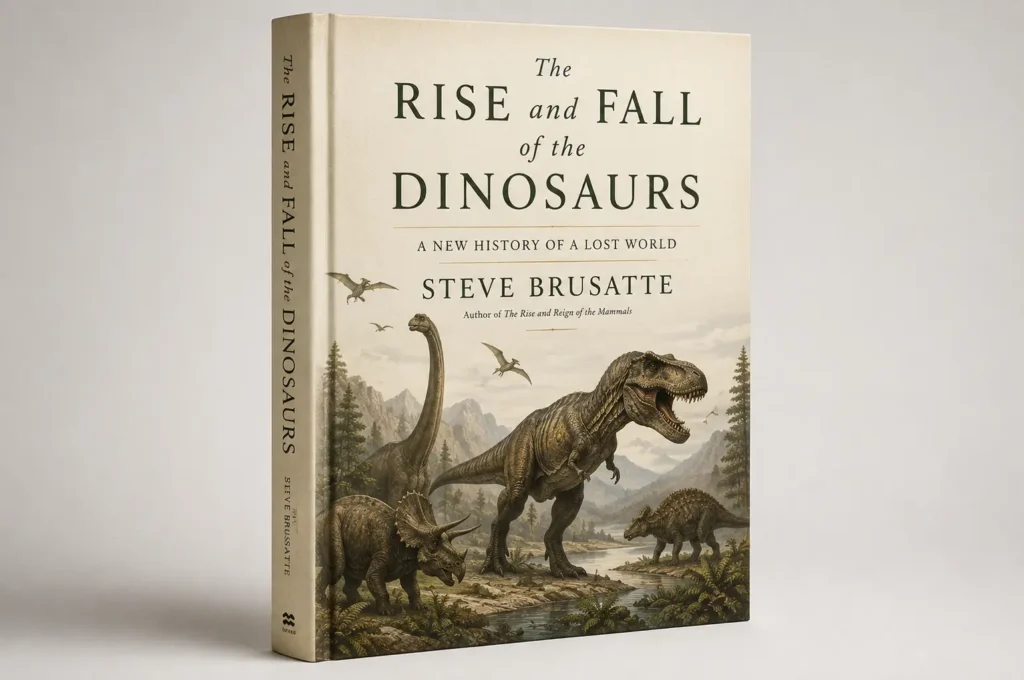
The Rise and Fall of the Dinosaurs
A compelling history of dinosaurs, tracing their origins, diversification, 200-million-year reign, extinction, and enduring legacy.
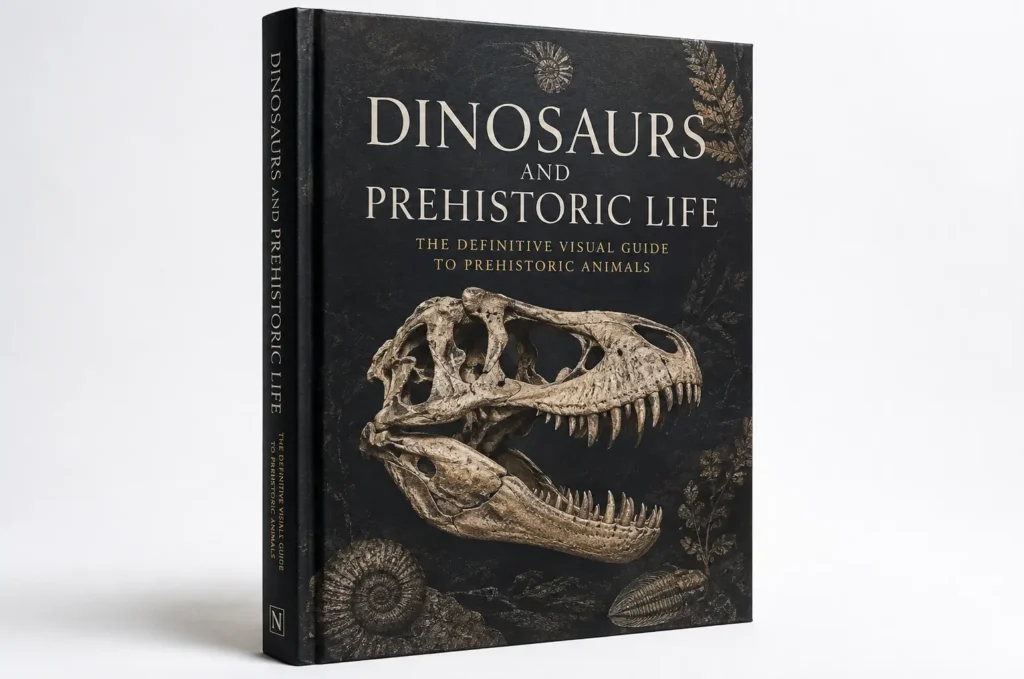
Dinosaurs and Prehistoric Life
A richly illustrated visual reference exploring dinosaurs, fossils, evolution, and prehistoric life across geological time.
Encyclopedia Prehistorica: Dinosaurs
An interactive dinosaur book featuring spectacular three-dimensional pop-ups, particularly suited to young readers and families.
The Rise and Reign of the Mammals
A sweeping history of mammalian evolution, from their origins alongside dinosaurs through the Cenozoic and the emergence of humans.