
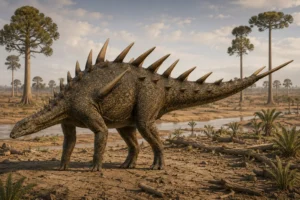
Kentrosaurus was discovered during the German Tendaguru Expedition in Tanzania between 1909 and 1913, led by paleontologist Edwin Hennig. The excavation in the Tendaguru Formation yielded multiple individuals, with specimens shipped to Berlin, where the first mount was assembled in 1925, making Kentrosaurus one of the best-represented African dinosaurs in museum collections.
Introduction
The discovery of Kentrosaurus ranks among the most significant paleontological achievements of the early 20th century, emerging from one of the largest dinosaur excavations ever undertaken. The German Tendaguru Expedition transported hundreds of tons of fossils from East Africa to Europe, but among the giant sauropods and predatory theropods, the spiky remains of this small stegosaur captured scientific attention for representing a lineage previously known only from North America and Europe. The colonial context of the expedition and the fate of its specimens continue to shape discussions about fossil ownership and repatriation today.
The Tendaguru Formation and First Finds
The Tendaguru Formation, located in southeastern Tanzania near the town of Lindi, was first brought to scientific attention in 1906 when German mining engineer Bernhard Wilhelm Sattler noticed enormous fossil bones weathering out of the hillsides. Word of the discovery reached paleontologists at the Museum für Naturkunde in Berlin, who recognized the potential significance of the site. By 1909, the museum had organized a formal expedition under the direction of Werner Janensch, with Edwin Hennig joining as the primary field paleontologist responsible for excavation and initial specimen identification.
The formation itself dates to the Kimmeridgian stage of the Late Jurassic, approximately 152 to 151 million years ago. It preserves a coastal floodplain environment with seasonal river channels, creating ideal conditions for fossilizing dinosaur remains. The sediments alternate between marine and terrestrial deposits, indicating the area underwent repeated flooding from the nearby Tethys Sea, which helped bury and preserve complete or near-complete skeletons.
Kentrosaurus fossils were recognized during the 1909 field season, but systematic excavation of the stegosaur quarry occurred primarily in 1910 and 1911. Unlike the massive sauropod bones that dominated other areas of the site, the Kentrosaurus specimens consisted of more manageable individual bones from multiple individuals, some found partially articulated in small clusters.
The Expedition: Scale and Methods
The Tendaguru Expedition operated on an unprecedented scale for African paleontology. At its peak, the excavation employed over 500 local workers who quarried fossils, constructed protective plaster jackets, and transported the specimens on foot to the coastal port of Lindi, a distance of approximately 60 kilometers through difficult terrain. The fossil-bearing jackets weighed anywhere from a few kilograms for small bones to several hundred kilograms for large sauropod elements.
Workers were organized into teams, with experienced foremen supervising the delicate work of exposing and removing fossils from the surrounding rock matrix. The scale of the operation required a semi-permanent camp infrastructure with food supplies, tool repair facilities, and medical support. Payment for workers came in the form of trade goods and currency, though documentation of labor conditions and wages remains incomplete in the expedition records.
Edwin Hennig directed the excavation of the stegosaur quarry specifically, recognizing early on that the bones represented a species new to science. Unlike the sauropod excavations that focused on recovering massive individual bones, the stegosaur quarry required meticulous documentation of small bone clusters and armor element positions to reconstruct the animal’s anatomy. Hennig’s field notes included sketches of bone positions and preliminary measurements, though the disarticulated nature of most specimens meant definitive anatomical placement of some elements would require later laboratory analysis.
Fossil shipments from Tendaguru continued until 1913, when World War I disrupted operations. A brief resumption occurred in 1925-1926, but the main excavation period from 1909-1913 recovered the majority of specimens. The total fossil material shipped to Berlin exceeded 230 tons, representing one of the largest single paleontological hauls ever transported from a field site.
Edwin Hennig and the Description of Kentrosaurus
Edwin Hennig formally described and named Kentrosaurus aethiopicus in 1915, two years after the main expedition concluded. The genus name translates to “sharp point lizard,” directly referencing the animal’s prominent spikes, while the species name aethiopicus refers to Ethiopia, which at the time served as a general term for East Africa in German scientific literature rather than the modern nation of Ethiopia.
Hennig’s description was based on material from at least two individuals, including numerous vertebrae, limb bones, and the distinctive armor elements. The disarticulated nature of the fossils created challenges for reconstruction, particularly regarding the placement of the shoulder spikes, which Hennig positioned based on comparative anatomy with North American stegosaurs and his judgment of optimal defensive placement. This decision would spark debates that continue today about whether these large spikes truly belonged on the shoulders or further back on the hips.
The scientific description established Kentrosaurus as a member of the Stegosauridae family, closely related to Stegosaurus but distinct in its higher spike-to-plate ratio and smaller size. Hennig noted the transition from small plates on the neck to progressively larger spikes along the back and tail, recognizing this as a significant variation within stegosaur anatomy. His work provided crucial comparative data showing that stegosaurs had successfully colonized southern continents, expanding the known geographic range of the family beyond North America and Europe.
The Berlin Mount: 1925 and 2007
The first mounted Kentrosaurus skeleton went on display at the Museum für Naturkunde in Berlin in 1925, becoming one of the museum’s signature exhibits. The mount combined bones from multiple individuals to create a complete-looking skeleton, a common practice in early 20th-century museum mounting. The animal was posed in a relatively upright stance with a somewhat arched back, reflecting the understanding of dinosaur posture at that time.
This original mount remained on display for over 80 years, becoming an iconic image of the species in textbooks and popular dinosaur literature. However, advances in understanding of dinosaur biomechanics and anatomy eventually made the mount outdated. In particular, the tail dragged on the ground in the original pose, contradicting evidence that stegosaurs held their tails aloft for use as weapons.
In 2007, the museum undertook a complete remounting of the Kentrosaurus skeleton using modern preparation techniques and updated anatomical understanding. The new mount positioned the tail horizontally and adjusted the limb angles to reflect current knowledge of stegosaur locomotion. The controversial shoulder spikes remained in their traditional position despite ongoing scientific debate, as the museum decided the evidence didn’t yet warrant relocating them. The remounting process also allowed for modern photography and 3D scanning of individual bones, creating digital archives that continue to support ongoing research.
Colonial Context and Repatriation Debates
The Tendaguru Expedition occurred during the colonial period when Tanzania was part of German East Africa, a colony from 1885 to 1919. The expedition was authorized by German colonial authorities, and local workers were employed under colonial labor systems that modern perspectives recognize as exploitative, though specific details of working conditions at Tendaguru remain incompletely documented.
The question of fossil ownership and potential repatriation has gained prominence in recent decades. Tanzania, which gained independence in 1961, has raised concerns about colonial-era fossil exports, though Tendaguru specimens present complex cases, given that Germany lost colonial control after World War I and the specimens have resided in Berlin for over a century. Unlike artifacts that can be physically repatriated, fossils raise additional questions about scientific access, conservation resources, and the practical challenges of moving extremely fragile specimens.
The Museum für Naturkunde has engaged in partnerships with Tanzanian institutions, including training programs for Tanzanian paleontologists and support for fossil site conservation in Tanzania. Some argue these collaborations represent appropriate stewardship, while others advocate for the physical repatriation of at least some specimens. The debate continues without a clear resolution, reflecting broader international discussions about colonial-era museum collections.
Related and Contemporary Species
- Giraffatitan (originally described as Brachiosaurus brancai) was the most numerous large sauropod excavated at Tendaguru alongside Kentrosaurus, with both species sharing the same coastal floodplain habitat.
- Dicraeosaurus, a smaller sauropod, also lived in the Tendaguru ecosystem and appears frequently in the same fossil-bearing layers as Kentrosaurus.
- Allosaurus, or a closely related theropod, represented the primary large predator that Kentrosaurus would have defended against with its tail spikes.
- Elaphrosaurus, a slender theropod from Tendaguru, was too small to threaten adult Kentrosaurus but may have preyed on juveniles.
- Dysalotosaurus, a small ornithopod, shared the low-browsing herbivore niche with Kentrosaurus, though it lacked defensive armor and relied on speed to evade predators.
Frequently Asked Questions
How complete was the original Kentrosaurus discovery?
The Tendaguru excavations recovered material from multiple Kentrosaurus individuals, including nearly all major bone types, though no single perfectly complete skeleton was found. The mounted skeleton in Berlin combines bones from at least two individuals to create a composite display. This level of completeness makes Kentrosaurus one of the better-known stegosaurs despite being represented by disarticulated rather than fully articulated remains.
Why were the Tendaguru fossils sent to Germany instead of staying in Tanzania?
Tanzania was the German colony of German East Africa during the expedition period, and colonial authorities granted permission for fossils to be exported to Berlin’s Museum für Naturkunde for study and display. Colonial-era fossil collecting typically sent specimens to European or American institutions, a practice now viewed critically but which was standard at the time. Modern fossil export regulations in Tanzania and elsewhere restrict such removals.
Can the public see Kentrosaurus fossils today?
The primary mounted Kentrosaurus skeleton remains on permanent display at the Museum für Naturkunde in Berlin, where it can be viewed alongside other Tendaguru fauna, including Giraffatitan. Some additional Kentrosaurus specimens and individual bones are stored in the museum’s research collections, accessible to scientists. Casts of Kentrosaurus skeletal elements appear in museums worldwide, though the original fossils remain in Berlin.
Conclusion
The discovery of Kentrosaurus through the German Tendaguru Expedition represents both a triumph of early 20th-century paleontology and a reminder of the complex colonial context in which much of that science occurred. The specimens continue to advance scientific understanding while prompting important conversations about fossil stewardship, international collaboration, and historical accountability.
Featured Museum Collections
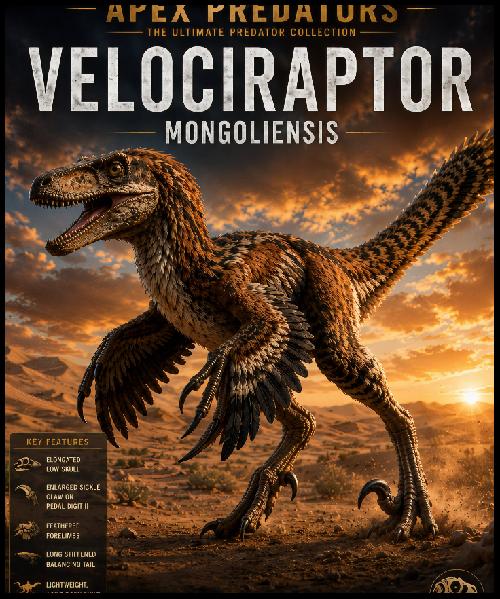
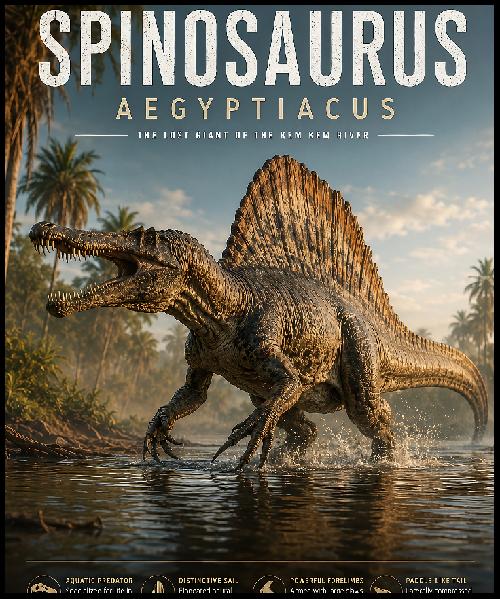
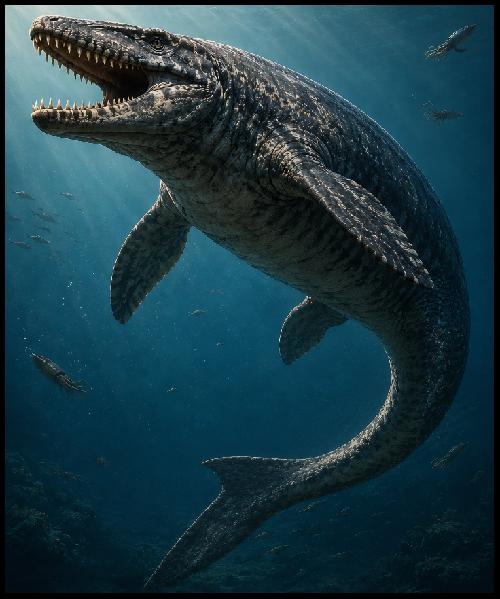
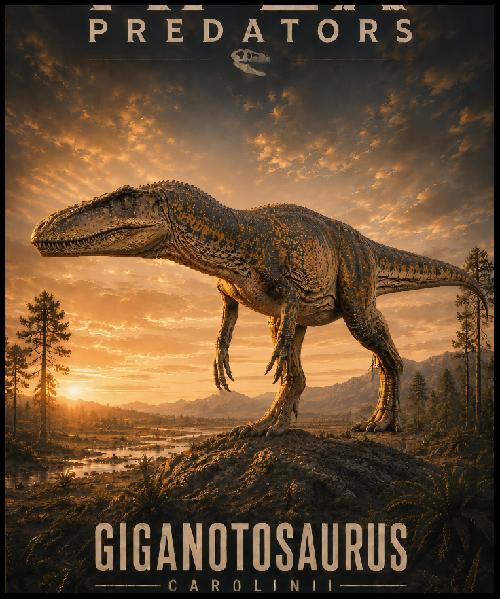
Museum-quality paleoart and educational poster
collections based on evidence-informed prehistoric
Life reconstructions.