Mosasaurus Habitat: Where Did Mosasaurus Live?
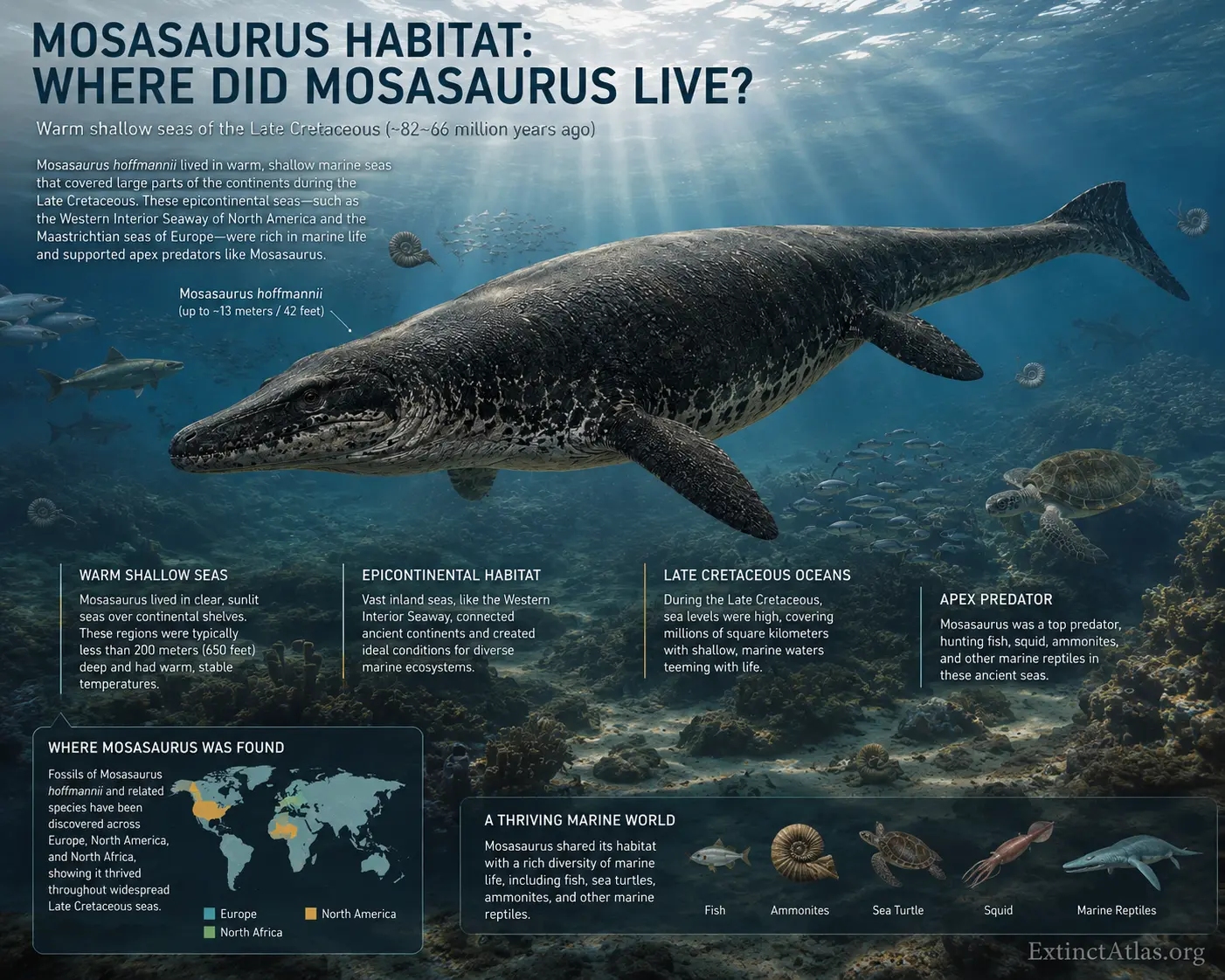
Educational paleoart infographic showing Mosasaurus hoffmannii swimming in warm shallow Late Cretaceous seas, explaining its marine habitat, geographic distribution, and ecosystem.

At a Glance Field Information Species Mosasaurus hoffmannii — Squamata, Mosasauridae Period Late Cretaceous, 82–66 Ma Primary habitat Warm epicontinental seas — open marine Known fossil locations Netherlands, Belgium, Morocco, Russia, North America Water type Marine (saltwater) — freshwater capability debated Terrestrial capability None — fully aquatic Quick Answer: Mosasaurus habitat was the warm, shallow … Read more
Is Mosasaurus a Dinosaur?

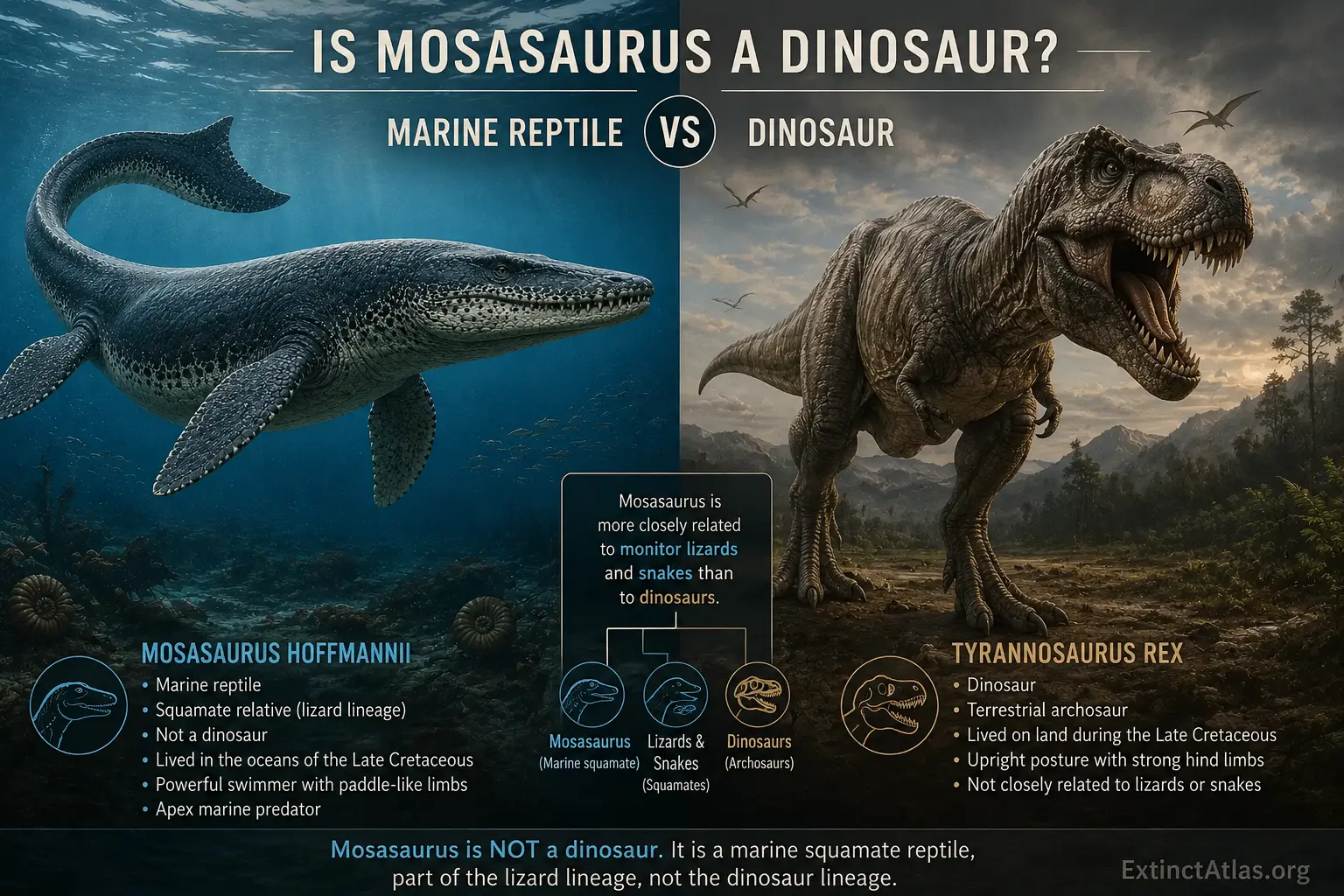
Scientifically accurate comparison showing Mosasaurus hoffmannii as a marine reptile, not a dinosaur, beside Tyrannosaurus rex

At a Glance Field Information Species Mosasaurus hoffmannii — Squamata, Mosasauridae Period Late Cretaceous, 82–66 Ma Class Reptilia Order Squamata — lizards and snakes Closest living relatives Monitor lizards (Varanidae) — Tier 3 comparative inference Dinosaur? No — different reptile lineage entirely Quick Answer: Mosasaurus is not a dinosaur. It was a mosasaurid — a … Read more

Mosasaurus Discovery: The Fossil That Rewrote Natural History

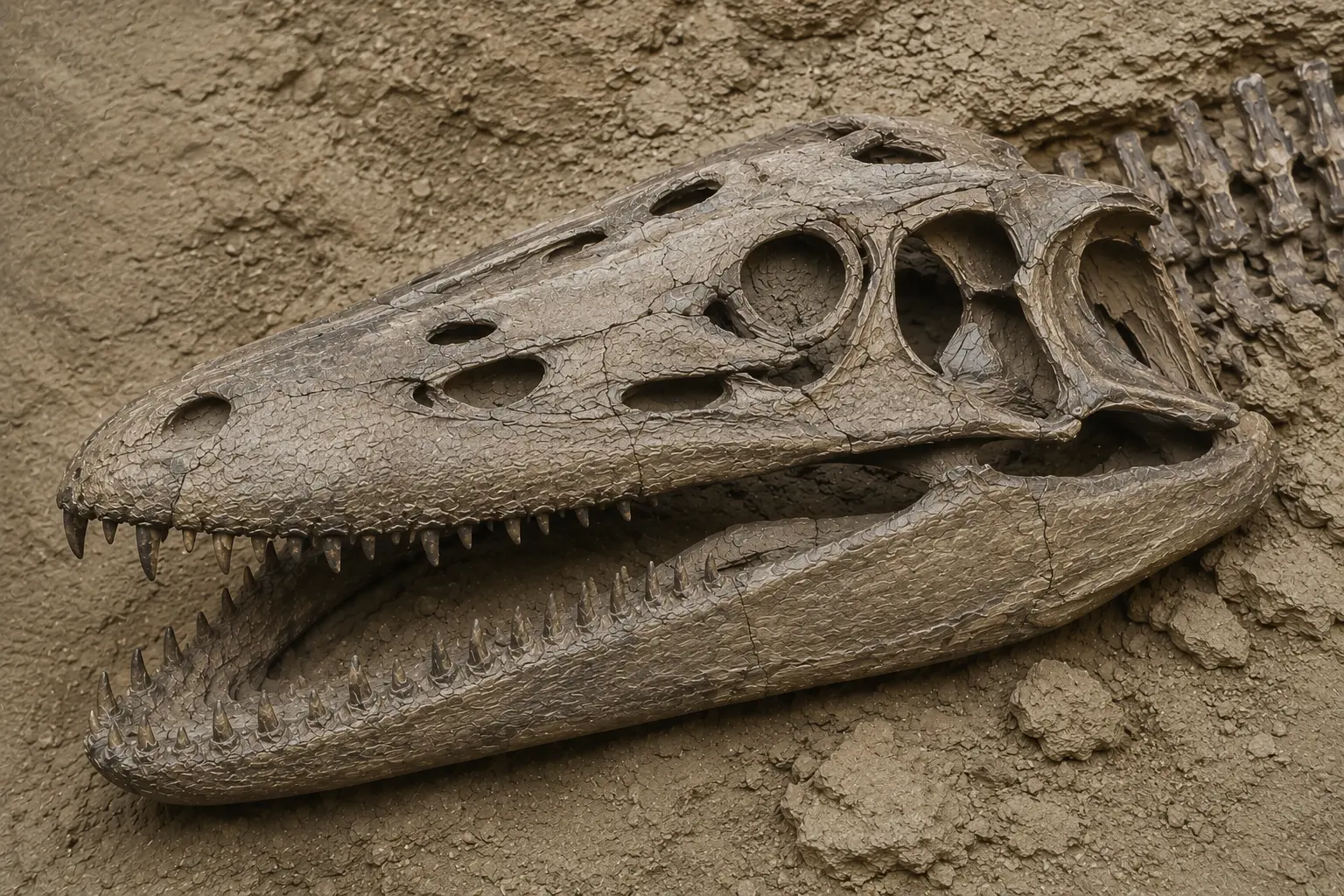
Museum-style paleoart skeletal reconstruction of a Mosasaurus hoffmannii skull fossil showing detailed marine squamate anatomy, recurved conical teeth, and realistic osteological features embedded in sediment.

At a Glance Field Information Species Mosasaurus hoffmannii — Squamata, Mosasauridae Period Late Cretaceous, 82–66 Ma Discovery location St Pietersberg chalk quarry, Maastricht, Netherlands Initial discovery date c.1770s — exact year disputed; skull described formally by 1786 Named by William Daniel Conybeare, 1822 — genus name established Specimen status Holotype skull held at Muséum National … Read more

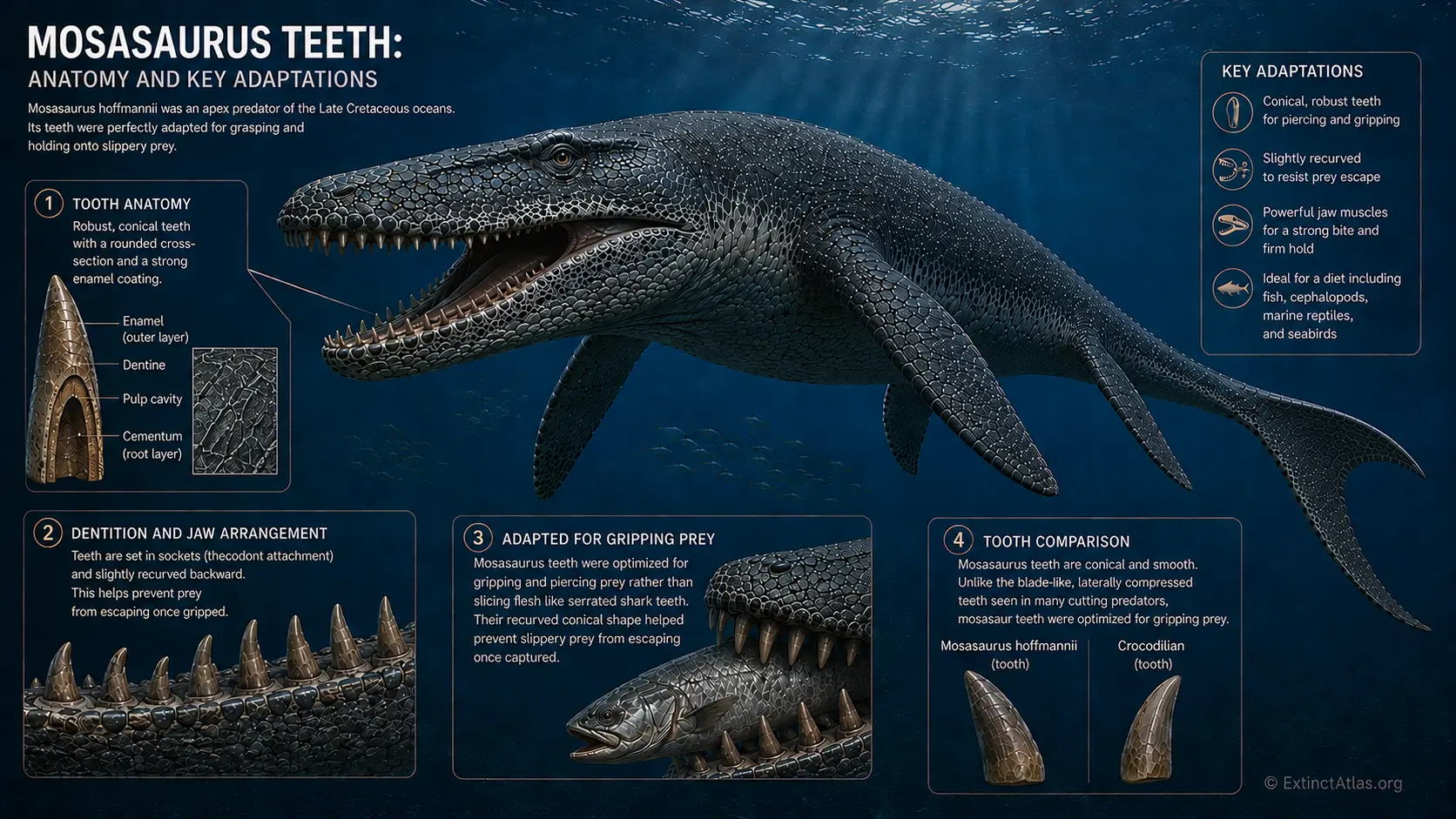
Mosasaurus Teeth: Anatomy and Key Adaptations

Scientific infographic showing Mosasaurus hoffmannii teeth anatomy and key feeding adaptations, including conical grasping teeth, jaw arrangement, prey-gripping function, and comparison with crocodilian teeth.

At a Glance Field Information Species Mosasaurus hoffmannii — Squamata, Mosasauridae Period Late Cretaceous, 82–66 Ma Tooth type Conical, recurved, pleurodont attachment Jaw feature Double-hinged lower jaw — intramandibular joint directly evidenced Tail structure Hypocercal tail fluke — directly evidenced by fossil skin impressions Quick Answer: Mosasaurus teeth were conical and slightly recurved, anchored in … Read more

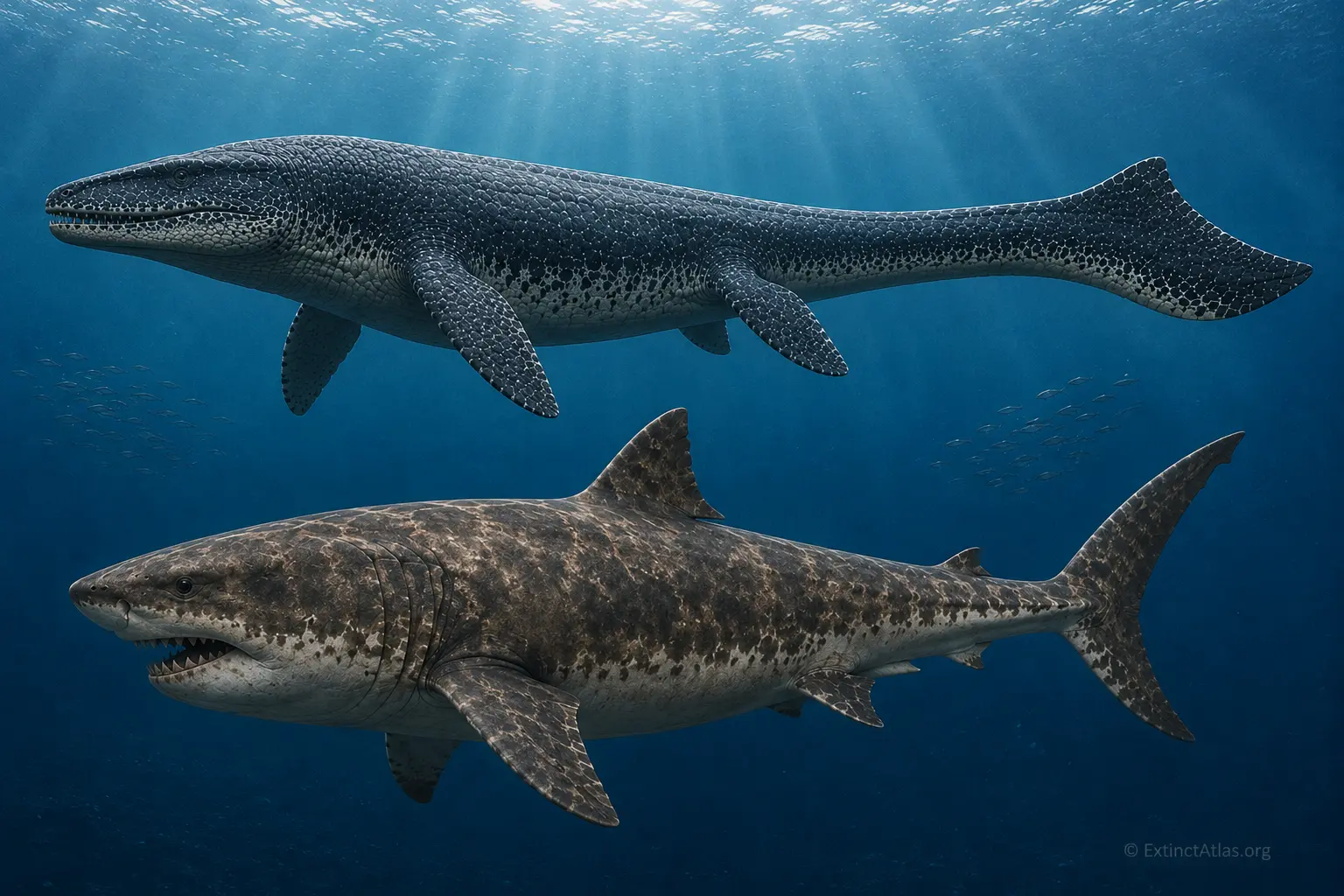
Mosasaurus vs Megalodon: Size, Strength, and the Facts

Size comparison between Mosasaurus hoffmannii and Otodus megalodon in an underwater prehistoric marine reconstruction.

At a Glance Feature Mosasaurus hoffmannii Otodus megalodon Classification Squamata, Mosasauridae Chondrichthyes, Otodontidae Period Late Cretaceous, 82–66 Ma Miocene–Pliocene, 23–3.6 Ma Estimated length 13–14 m (43–46 ft) 15–20 m (49–66 ft) — range disputed Estimated mass likely in the range of 14,000–15,000 kg (30,900–33,100 lb) 30,000–65,000 kg (66,000–143,000 lb) — estimates vary widely Bite force … Read more

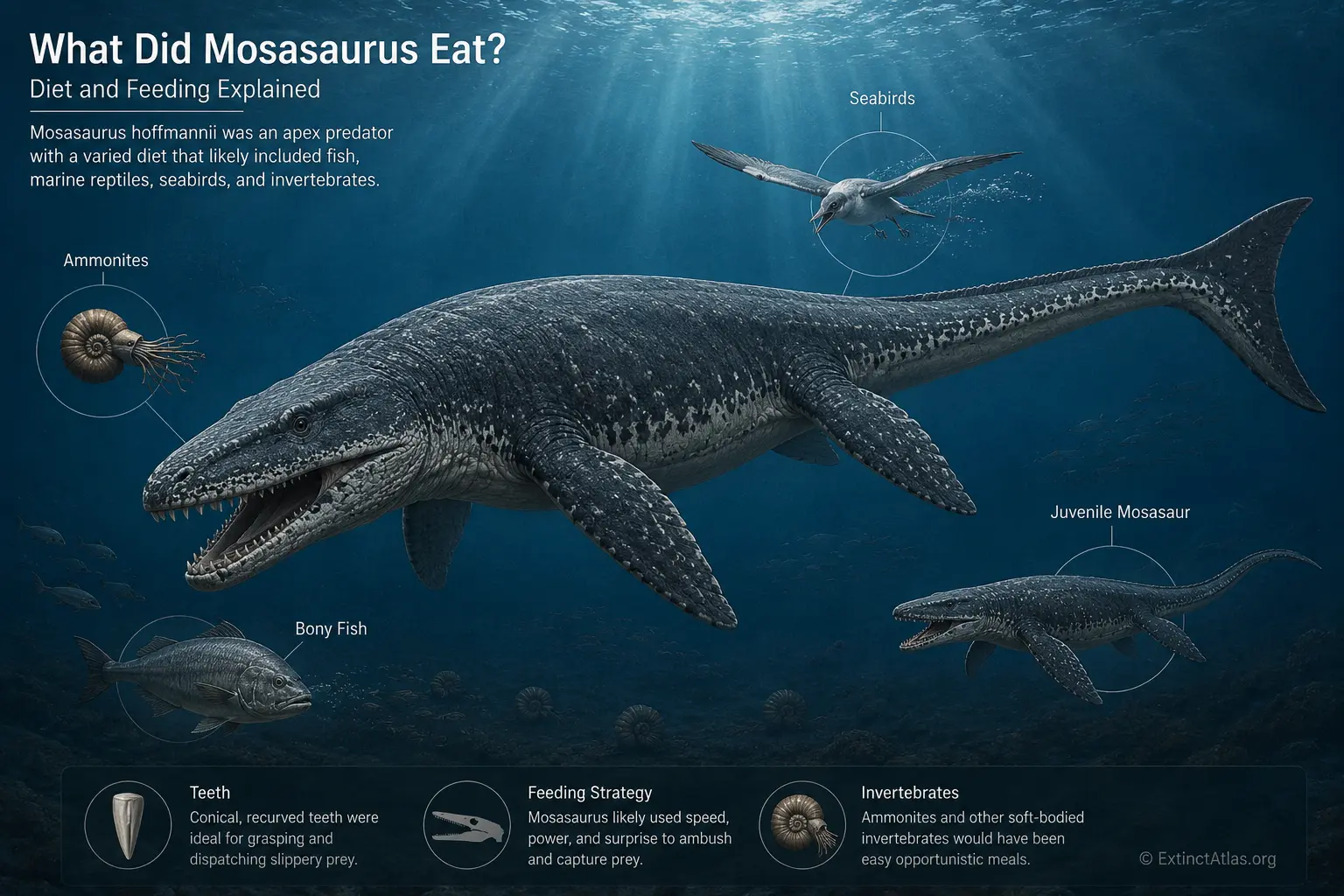
What Did Mosasaurus Eat? Diet and Feeding Explained

Scientific infographic showing Mosasaurus hoffmannii and its likely prey, including fish, ammonites, seabirds, and juvenile marine reptiles, with an anatomically accurate crescent-shaped tail fluke.

At a Glance Field Information Species Mosasaurus hoffmannii — Squamata, Mosasauridae Period Late Cretaceous, 82–66 Ma Diet type Carnivore — apex marine predator Direct evidence from mosasaurids (including closely related taxa) shows Fish, cephalopods, marine reptiles — documented via tooth marks and mosasaurid fossils Trophic position Top predator in Late Cretaceous marine ecosystems Quick Answer: … Read more

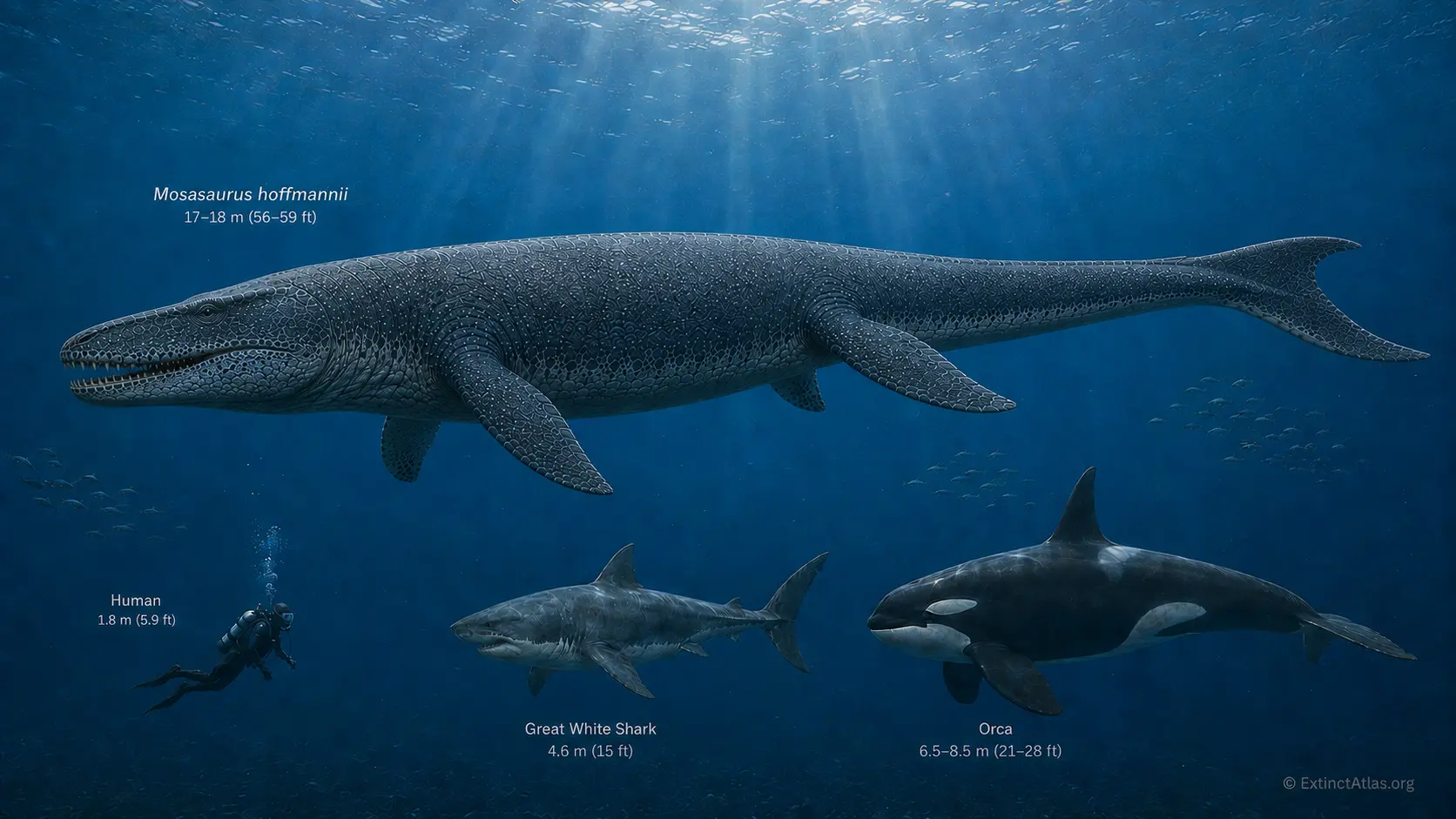
Mosasaurus Size: How Big Was the Mosasaurus?

Scientific size comparison infographic showing Mosasaurus hoffmannii alongside a human diver, great white shark, and orca, illustrating the immense scale of this giant Late Cretaceous marine reptile with an anatomically accurate hypocercal tail.

At a Glance Field Information Species Mosasaurus hoffmannii — Squamata, Mosasauridae Period Late Cretaceous, 82–66 Ma Maximum recorded length ~13–14 m (43–46 ft) — based on largest known specimens Mass estimate likely in the range of 14,000–15,000 kg (30,900–33,100 lb) — biomechanical estimate Jurassic World depiction ~22 m (72 ft) — significantly larger than fossil … Read more

How to Pronounce Otodus Megalodon

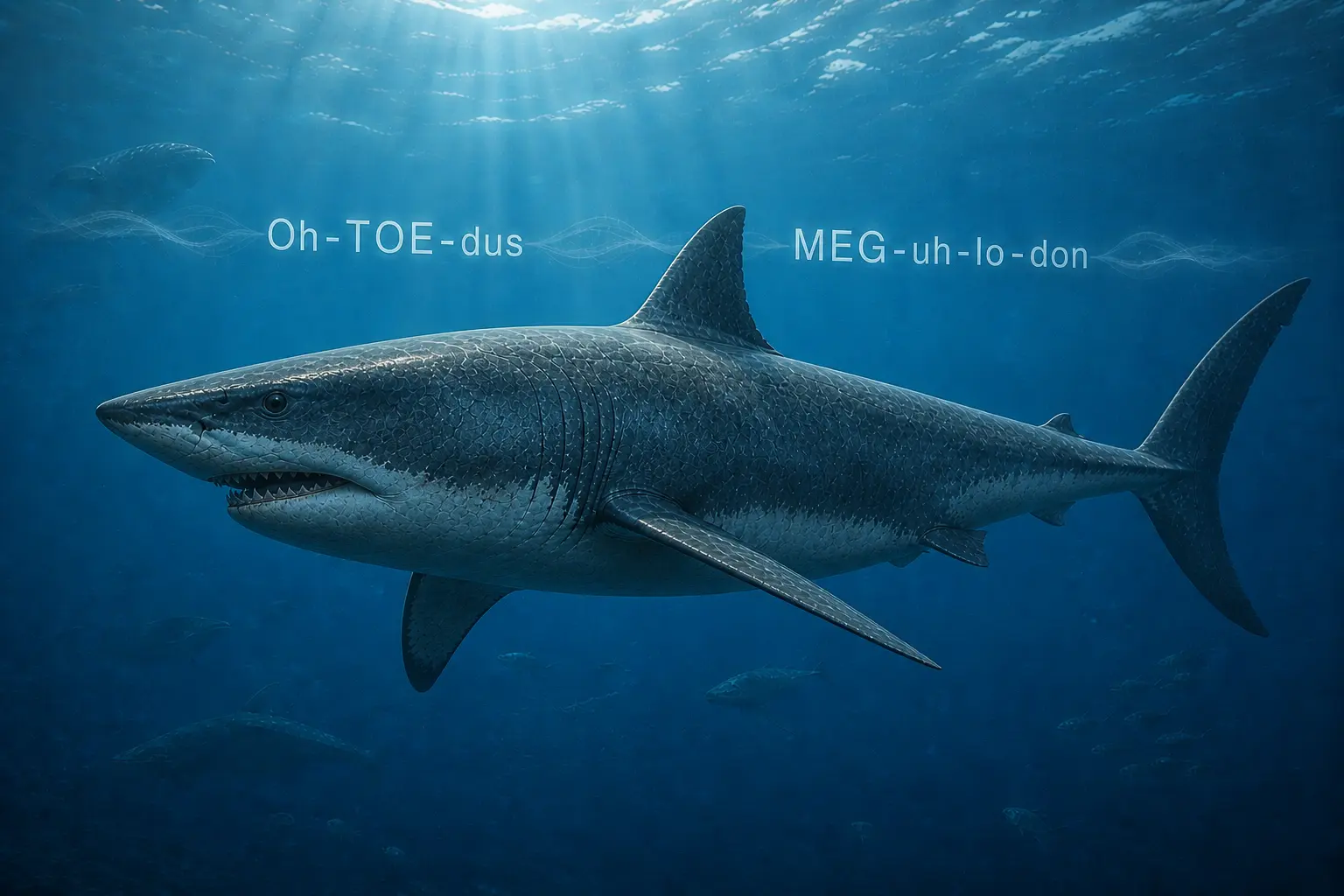
Otodus megalodon swimming in open ocean with pronunciation guide showing “Oh-TOE-dus” and “MEG-uh-lo-don” overlaid in soft underwater light

Field Information Species Otodus megalodon — Otodontidae Pronunciation oh-TOH-dus MEG-uh-loh-don Syllable count Otodus: 3 syllables / megalodon: 4 syllables Name origin Greek: ous (ear) + odous (tooth) / megas (large) + odous (tooth) Common mispronunciation meh-GAL-oh-don (stress error); ott-OH-dus (vowel error) Quick Answer:Otodus megalodon is pronounced oh-TOH-dus MEG-uh-loh-don. The stress in Otodus falls on the … Read more

When Did Megalodon Live?

Otodus megalodon swimming in Neogene ocean with layered geological timeline inset showing its Miocene to Pliocene existence

Field Information Species Otodus megalodon — Otodontidae First appearance Early Miocene, ~23 Ma Last appearance Early Pliocene, ~3.6 Ma Total temporal range ~19.4 million years Contemporary world Warm Miocene seas; early whales; no non-avian dinosaurs Quick Answer: Megalodon lived from approximately 23 million years ago to 3.6 million years ago — spanning the Early Miocene … Read more

Is Megalodon a Dinosaur?

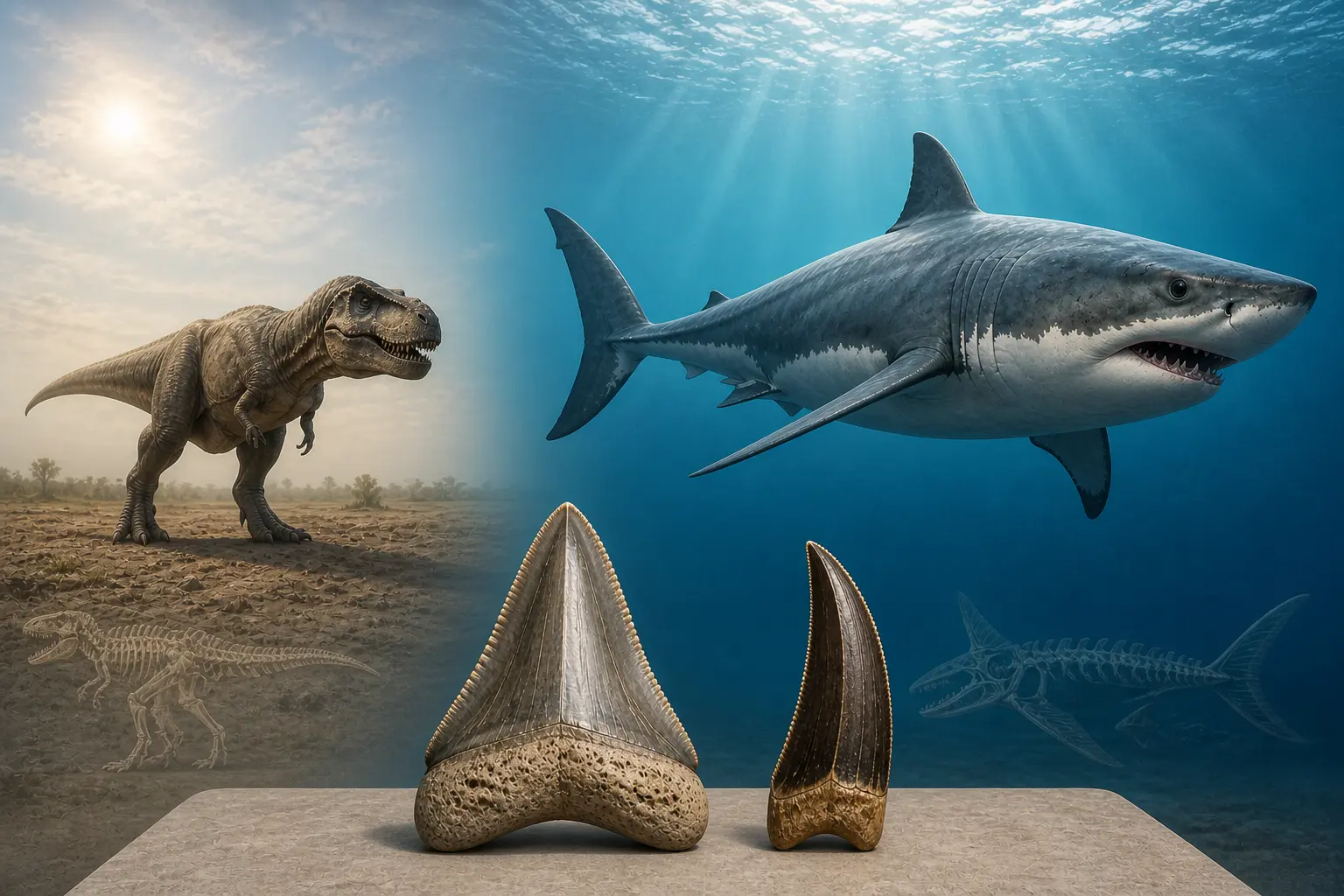
Comparison showing Otodus megalodon as a shark and not a dinosaur with side by side environments and tooth differences including a bourlette in megalodon teeth

Field Information Species Otodus megalodon — Otodontidae Classification Chondrichthyes (cartilaginous fish) — not a reptile, not a dinosaur Period Miocene to Early Pliocene, ~23–3.6 Ma Dinosaur extinction ~66 Ma — megalodon appeared ~43 million years later Common confusion source Both are large extinct prehistoric animals Quick Answer: Megalodon is not a dinosaur. It was a … Read more