At a Glance
| Field | Information |
|---|---|
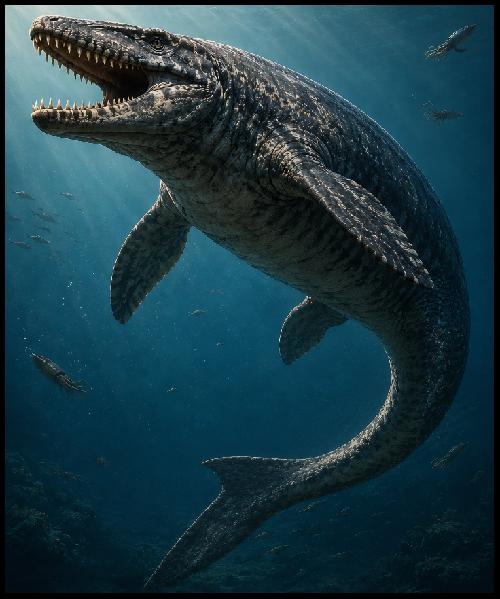
| Species | Mosasaurus hoffmannii — Squamata, Mosasauridae |
| Period | Late Cretaceous, 82–66 Ma |
| Discovery location | St Pietersberg chalk quarry, Maastricht, Netherlands |
| Initial discovery date | c.1770s — exact year disputed; skull described formally by 1786 |
| Named by | William Daniel Conybeare, 1822 — genus name established |
| Specimen status | Holotype skull held at Muséum National d’Histoire Naturelle, Paris |
Quick Answer: The Mosasaurus discovery took place in the chalk quarries near Maastricht, Netherlands, in the 1770s, when a large fossilised skull was recovered from the St Pietersberg formation. It became one of the most consequential fossil finds in history — helping establish that species could go extinct, a concept not yet scientifically accepted at the time of its discovery.
When soldiers under Napoleon Bonaparte seized Maastricht in 1795, one of their specific objectives was a fossil skull — already famous enough across Europe that it was considered a prize worth taking in wartime. That skull was the holotype of Mosasaurus hoffmannii, and its story is as dramatic as the animal itself.
Mosasaurus Discovery: Where and When Was It Found?
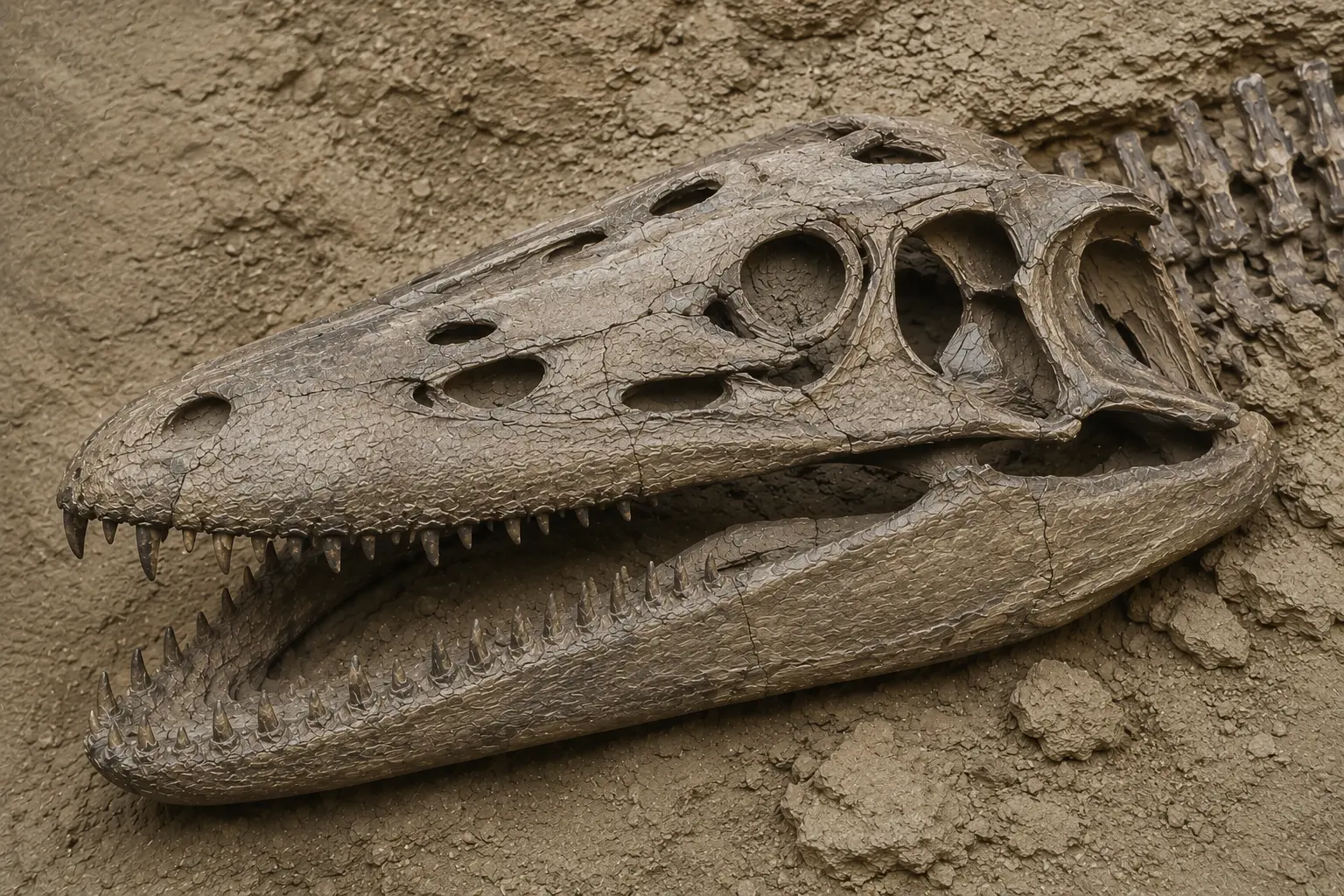
The Mosasaurus discovery occurred in the chalk quarries of St Pietersberg, near Maastricht in what is now the Netherlands, during the 1770s. The exact date of the initial find is disputed in the historical record, with some accounts placing it as early as 1770 and others in the mid-1770s. The specimen — a large, well-preserved skull — was recovered by workers quarrying the soft Cretaceous chalk, and quickly attracted attention from local naturalists.
The skull was initially studied by Johann Leonard Hoffmann, a surgeon and fossil collector working in Maastricht, whose name was later incorporated into the species epithet hoffmannii. The specimen changed hands dramatically: local canon Theodorus Joannes van Rooijen acquired it legally, but French revolutionary forces, under specific orders, seized it upon capturing the city in 1795. It was transported to Paris, where it remains today in the collections of the Muséum National d’Histoire Naturelle.
Naming and Formal Description
The genus name Mosasaurus was established by William Daniel Conybeare in 1822, derived from Mosa — the Latin name for the Meuse river near which the specimen was found — and the Greek sauros, meaning lizard. The species epithet hoffmannii honours Johann Leonard Hoffmann. The formal recognition of the specimen as a distinct ancient reptile was a collaborative process involving several European naturalists across the late eighteenth and early nineteenth centuries, including Adriaan Gilles Camper, who described it as a monitor-like reptile, and Georges Cuvier, who used it as evidence for his developing theory of extinction.
Why Was the Mosasaurus Discovery So Significant?
The significance of the Mosasaurus discovery extends well beyond palaeontology. In the late eighteenth century, the dominant view in natural philosophy held that species did not go extinct — a position associated with the Great Chain of Being. The Maastricht skull was large, clearly reptilian, and clearly unlike any living animal. Georges Cuvier, examining the specimen in Paris, used it as a central exhibit in his argument that extinction was a real phenomenon — that the natural world had been populated by creatures that no longer existed.
This was a foundational moment in the history of science. Cuvier’s 1808 paper on the Maastricht animal directly contributed to the development of the concept of extinction as a legitimate scientific conclusion. The Mosasaurus fossil thus has a significance in the history of scientific thought that exceeds even its considerable palaeontological value.
The Maastricht Formation and Fossil Context
The St Pietersberg quarries are part of the Maastrichtian geological stage — a subdivision of the Late Cretaceous named directly after Maastricht because of the quality of the fossil record preserved there. The chalk deposits represent a warm, shallow sea floor, and have yielded not only mosasaurid material but also ammonites, fish, marine birds, and other Late Cretaceous fauna. Mosasaurus hoffmannii material has subsequently been described from deposits across Europe, North America, and Africa, expanding the known geographic range of the species considerably beyond its discovery site.
Fossil evidence shows that the Maastrichtian deposits preserve the final few million years before the end-Cretaceous mass extinction at 66 Ma. The specimens recovered from these formations are therefore among the last representatives of the mosasaurid lineage before its total extinction.
Subsequent Discoveries and Current Knowledge
Since the original Maastricht skull, Mosasaurus hoffmannii material has been recovered from multiple countries. Significant specimens have been described from Russia, Morocco, and North America, in addition to further European material. Each new specimen contributes to refining size estimates, geographic range, and anatomical understanding — though complete, articulated skeletons of M. hoffmannii remain scarce, meaning many aspects of its biology continue to rely on extrapolation from related taxa.
The species remains the type genus of the family Mosasauridae — the family name is derived from Mosasaurus, meaning all mosasaurids are classified in relation to this founding specimen. Its discovery, therefore, shaped not just public understanding of prehistoric life but the entire taxonomic framework within which mosasaurid diversity is organised.
Related and Contemporary Species
Plioplatecarpus and Platecarpus are mosasaurids described from the same Cretaceous formations as M. hoffmannii, recovered from North American and European deposits. Prognathodon material has also been recovered from Maastrichtian deposits in Europe and North Africa, demonstrating the diversity of large mosasaurids in the final stage of the Cretaceous. Hainosaurus bernardi was described from Belgian Maastrichtian chalk, geographically and temporally close to the original Mosasaurus type specimen. Clidastes and Tylosaurus are well-known from the Western Interior Seaway, representing the North American mosasaurid fauna of the same period.
Frequently Asked Questions
When was Mosasaurus discovered?
Mosasaurus was discovered in the chalk quarries near Maastricht, Netherlands, during the 1770s, though the precise year is disputed between sources. The skull was formally studied and described by European naturalists through the 1780s and 1790s, and the genus name Mosasaurus was established by William Daniel Conybeare in 1822. It remains one of the earliest and most scientifically significant fossil vertebrate discoveries on record.
Where is the original Mosasaurus skull today?
The original Mosasaurus skull — the holotype specimen of M. hoffmannii — is held in the collections of the Muséum National d’Histoire Naturelle in Paris, France. It was transported there after French revolutionary forces seized it from Maastricht in 1795, following specific orders to acquire the specimen. It has remained in Paris ever since.
Why was the Mosasaurus discovery important to science?
The Mosasaurus discovery was important to science because it provided Georges Cuvier with a central piece of evidence for his argument that extinction was a real phenomenon. Before its analysis, the dominant view held that species did not go extinct. The Maastricht skull was clearly unlike any living animal, and Cuvier’s 1808 paper used it to help establish extinction as a scientifically accepted concept.
Conclusion
The discovery of Mosasaurus hoffmannii near Maastricht in the 1770s did more than reveal a new prehistoric animal — it helped overturn a foundational assumption about the permanence of species. From a contested quarry skull to a wartime prize to a cornerstone of extinction theory, its history is inseparable from the history of palaeontology itself.
References
- Cuvier 1808 Maastricht fossil description
Cuvier, G. (1808). Sur le grand animal fossile des carrières de Maastricht. Annales du Muséum national d’Histoire naturelle, 12, 145–176. Lingham-Soliar 1995 Mosasaurus anatomy studyAnatomy and functional morphology of the largest marine reptile known, Mosasaurus hoffmannii (Mosasauridae, Reptilia) from the Upper Cretaceous, Upper Maastrichtian of the Netherlands
Lingham-Soliar, T. (1995)..Philosophical Transactions of the Royal Society B, 347(1320), 155–180. https://doi.org/10.1098/rstb.1995.0019
Featured Museum Collections
Museum-quality paleoart and educational poster
collections based on evidence-informed prehistoric
Life reconstructions.