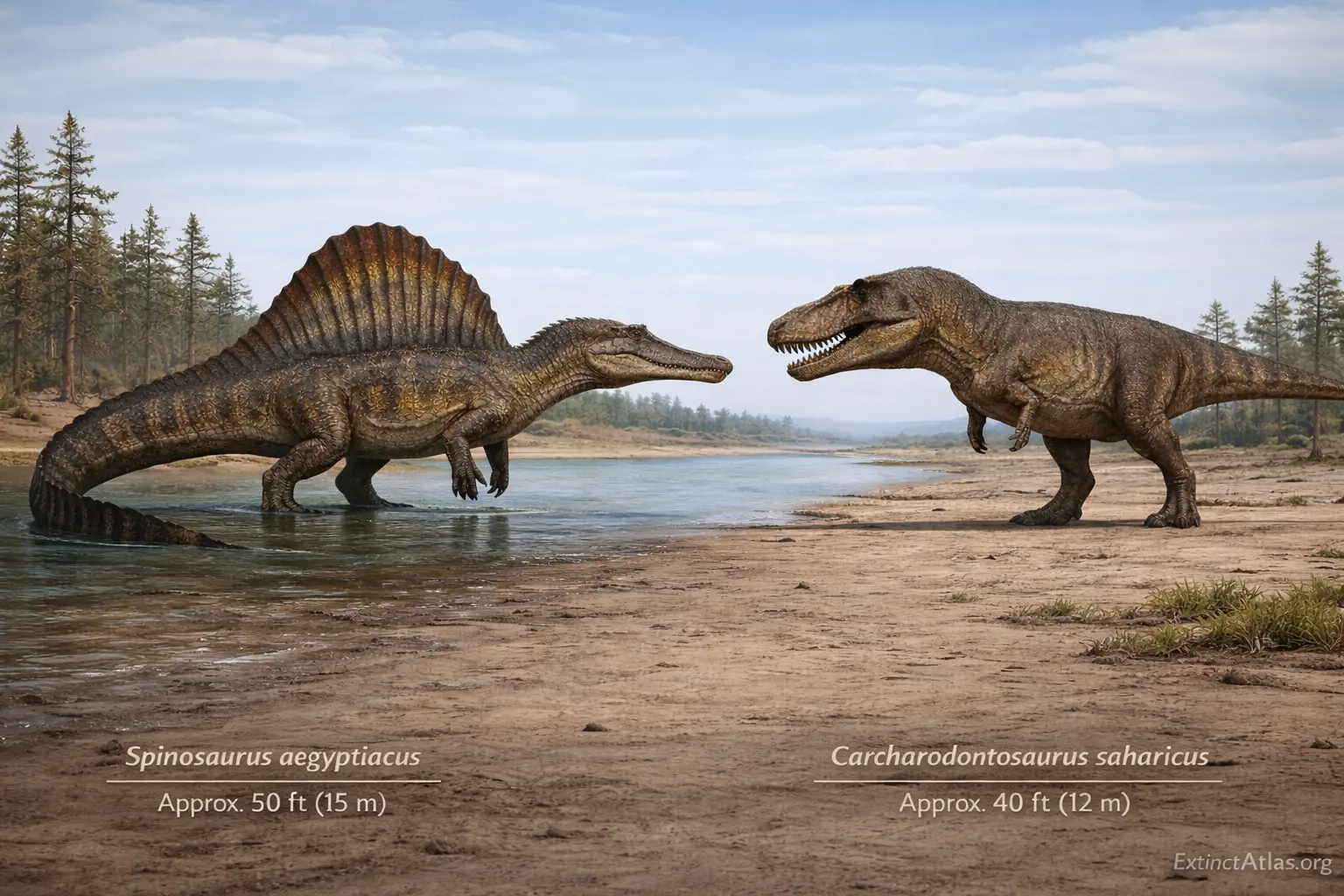
At a Glance
| Feature | Spinosaurus | Carcharodontosaurus |
|---|---|---|
| Period | Late Cretaceous (Cenomanian, ~100–94 Ma) | Late Cretaceous (Cenomanian, ~100–94 Ma) |
| Location | North Africa (Kem Kem Group, Morocco/Algeria) | North Africa (Kem Kem Group, Morocco/Algeria) |
| Estimated length | ~14–16 m (estimates vary) | ~12–13 m (better constrained) |
| Estimated weight | ~6–9 tonnes (estimates vary significantly) | ~6–8 tonnes (approximate) |
| Diet | Primarily fish; opportunistic terrestrial feeding | Large terrestrial herbivores |
| Skull type | Long, narrow; conical teeth | Deep, large; serrated blade teeth |
| Habitat preference | Riverine / semi-aquatic | Terrestrial |
| Temporal overlap | Yes — approximate | Yes — approximate |
Quick Answer: Spinosaurus and Carcharodontosaurus both lived in North Africa during the Late Cretaceous and almost certainly shared the same river delta ecosystem, known today as the Kem Kem Beds. Unlike the Spinosaurus vs T. rex matchup, this comparison is grounded in genuine geographic and temporal overlap. The two animals appear to have occupied different ecological niches — Spinosaurus as an aquatic specialist, Carcharodontosaurus as a terrestrial apex predator — which may be precisely why they could coexist.
Most people searching for Spinosaurus matchups reach for T. rex. But the more scientifically interesting comparison has always been the one hiding in the same rock formation: Carcharodontosaurus, a massive shark-toothed theropod that shared Spinosaurus’s continent, its river system, and possibly its prey base — just from the land side of the bank.
They Actually Shared the Same Ecosystem
This is the detail that separates this comparison from the Spinosaurus vs T. rex matchup, which is covered in full in our dedicated guide. Spinosaurus and Carcharodontosaurus were not separated by millions of years or by an ocean. Both are known from the Kem Kem Beds — a fossil-bearing formation in what is now southeastern Morocco and southwestern Algeria — dated to approximately 95–100 million years ago.
The Kem Kem in the Cretaceous was not the desert it is today. It was an enormous, braided river system draining northward into the Tethys Sea, dense with vegetation, and ecologically rich. The fossil fauna recovered from it is extraordinary — and notably top-heavy with large predators. Spinosaurus and Carcharodontosaurus were probably the two largest carnivores in the ecosystem, but they were not alone: Bahariasaurus, a large and poorly understood theropod, also appears in the record, along with large crocodilians and massive flying pterosaurs.
The straightforward question this raises is: how did two giant carnivores coexist in the same ecosystem? Ecology has an answer.
Niche Partitioning: How Two Giants Shared a Habitat
Modern ecosystems regularly support multiple large predators because they do not compete directly for the same resources. Lions and leopards, crocodilians and hyenas, and great white sharks and orcas coexist by targeting different prey, operating in different zones, or using different hunting strategies.
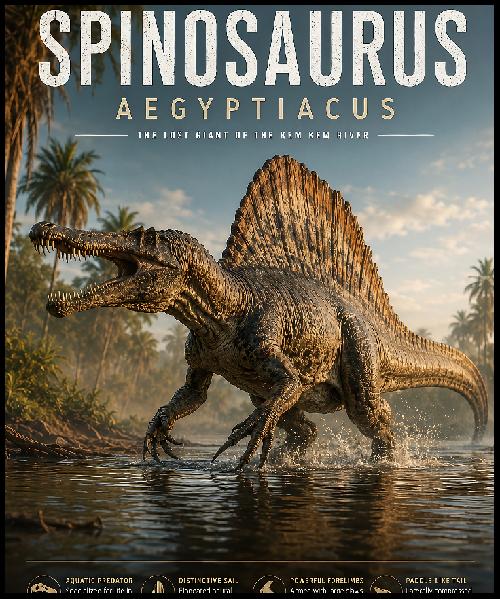
Current evidence suggests Spinosaurus and Carcharodontosaurus may have followed a similar ecological pattern. Spinosaurus, as detailed in our aquatic lifestyle guide, shows strong anatomical and isotopic evidence for semi-aquatic behaviour and fish-dominated feeding. Carcharodontosaurus, by contrast, had a skull and dentition adapted for processing large terrestrial prey, with deep, laterally compressed, serrated teeth comparable in function to those of Allosaurus.
Ecologically, this suggests Spinosaurus operated primarily in and around river channels, targeting fish, sawfish, and other aquatic prey, while Carcharodontosaurus focused on large terrestrial herbivores such as sauropods and ornithopods along floodplain margins. Some overlap at the edges of these niches is probable, but it was likely not the primary mode of competition.
The Kem Kem Predator Guild
The phrase “predator guild” refers to the full community of predatory species within an ecosystem and how their feeding roles relate to each other. The Kem Kem predator guild is unusual by any standard — the density of large predators preserved in the formation has prompted genuine debate about whether the fauna represents a single ecosystem snapshot or a time-averaged accumulation of specimens from different periods within the formation’s depositional history.
If it does represent a genuine contemporaneous community, the niche partitioning model above offers the most parsimonious explanation: Spinosaurus owned the water, Carcharodontosaurus owned the land, and the ecosystem was productive enough to support both.
Size and Anatomy Compared
Both animals were among the largest carnivorous theropods in the fossil record, though direct size comparison is complicated by differences in fossil completeness. Spinosaurus length estimates vary depending on reconstruction models, but are commonly placed around 14–16 metres, with mass estimates remaining highly uncertain. Estimates vary depending on the model, but are commonly placed around 14–16 metres.
The anatomical differences are as significant as the size similarities. Carcharodontosaurus had a skull optimised for high-force, slicing bites against large prey — broad, deep, with serrated teeth that functioned like steak knives. Spinosaurus had a narrow, elongated skull with conical teeth built for grip, not cutting. Their forelimb proportions also differed, with Spinosaurus showing larger manual claws that may have functioned in prey restraint or foraging at the water’s edge.
On land, Carcharodontosaurus’s anatomy suggests a clear advantage in confrontation — its bite mechanics were built for the kind of prey-subduing violence that large terrestrial predation requires. Spinosaurus on land is increasingly understood as less capable as an active terrestrial predator than its sheer size might suggest.
What a Hypothetical Encounter Would Look Like
This section is explicitly speculative. The following is an extrapolation from anatomy and ecology, not direct evidence.
A land-based encounter would likely favour Carcharodontosaurus. Its skull, bite mechanics, and overall body plan were adapted for subduing large, struggling prey on land in a way that Spinosaurus’s anatomy was not. Spinosaurus’s size and manual claws would make it a dangerous opponent under any circumstances, but Carcharodontosaurus held the functional advantage in a terrestrial context.
In a riverine or shallow-water context, Spinosaurus’s adaptations give it a more plausible advantage — and Carcharodontosaurus would have had little reason to enter the water, where the large prey it targeted did not live.
The more interesting ecological question is not which would win a fight, but how two animals of this size and capability managed to share a habitat across geological time. The fossil record suggests the answer is that they largely did not compete — they divided the ecosystem along an aquatic/terrestrial axis, and both thrived.
Related and Contemporary Species
Bahariasaurus ingens — a large theropod also from the Kem Kem, known only from fragmentary material; its size and classification remain uncertain, but it may represent a third large predator in the same ecosystem.
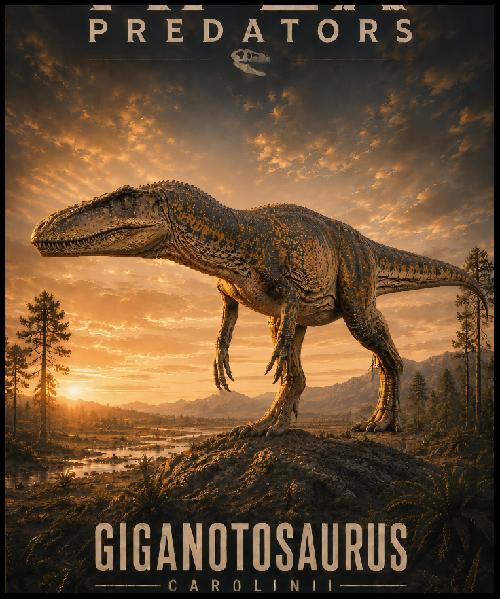
Giganotosaurus carolinii — a close relative of Carcharodontosaurus from South America; one of the few theropods that rivals Carcharodontosaurus in skull size and is frequently included in largest-carnivore comparisons.
Suchomimus tenerensis — a spinosaurid from Niger, ecologically similar to Spinosaurus and from broadly the same African Cretaceous context- provides comparative data on spinosaurid niche use in African ecosystems.
Sarcosuchus imperator — a massive crocodilian from roughly the same region and period, known informally as “SuperCroc”; shared the riverine habitat with Spinosaurus and may have competed for some of the same aquatic prey.
Frequently Asked Questions
Did Spinosaurus and Carcharodontosaurus live at the same time?
Current evidence suggests they were approximately contemporaneous, both known from the Kem Kem Beds of North Africa, dated to roughly 95–100 million years ago. The temporal overlap is approximate — the formation spans several million years — but they are the best-attested case of two giant theropods from the same regional ecosystem in the fossil record.
Which was bigger, Spinosaurus or Carcharodontosaurus?
Spinosaurus was probably longer than Carcharodontosaurus, though estimates vary depending on reconstruction models. Current estimates suggest Spinosaurus reached roughly 14–16 metres in length, compared to about 12–13 metres for Carcharodontosaurus. Mass comparisons are more uncertain—particularly for Spinosaurus, whose body proportions remain debated due to its fragmentary fossil record.
Could Carcharodontosaurus beat Spinosaurus?
Any answer is speculative — there is no fossil evidence of direct encounters between the two species. On land, Carcharodontosaurus’s anatomy suggests a functional advantage in confrontation. In or near water, the comparison is likely inverted. The more ecologically meaningful question is how they partitioned the same habitat, which the fossil evidence does address.
Conclusion
Spinosaurus versus Carcharodontosaurus is the predator comparison that the fossil record actually supports. They shared a continent, a river system, and an era — and the evidence suggests they coexisted by dividing the ecosystem between them. That ecological reality is more compelling than any hypothetical fight, and it places both animals in the context where their adaptations make the most sense.
Featured Museum Collections
Museum-quality paleoart and educational poster
collections based on evidence-informed prehistoric
Life reconstructions.