

Tylosaurus was a carnivorous marine reptile that consumed a variety of marine animals. Preserved stomach contents from a specimen identified as Tylosaurus proriger include fish, sharks, diving birds and another mosasaur, while a separate specimen preserves associated, partially digested plesiosaur remains. These fossils provide direct evidence of consumption, although they do not establish the complete diet of every species or the relative importance of each prey group.

Tylosaurus Diet at a Glance
| Dietary feature | Evidence-based interpretation |
|---|---|
| Feeding type | Carnivorous |
| Fish | Supported by reported stomach contents |
| Sharks | Supported by reported stomach contents |
| Marine birds | Hesperornis remains reported |
| Other mosasaurs | Platecarpus remains reported |
| Plesiosaurs | Partially digested polycotylid remains associated with a T. proriger specimen |
| Sea turtles | Not established by the specific Tylosaurus stomach-content records discussed here |
| Feeding strategy | Consumption is documented; active predation versus scavenging cannot always be distinguished |
| Dietary breadth | Multiple prey groups are documented, but the evidence is not a complete dietary census |
| Species-level uncertainty | Evidence from T. proriger should not automatically be attributed to T. rex |
What Fossils Reveal About the Diet of Tylosaurus
The strongest evidence for the diet of Tylosaurus comes from preserved stomach contents. Such material can identify animals that were consumed, although preservation is uncommon and the available specimens represent only a small sample of feeding events.
The reported evidence includes several distinct prey categories:
- Fish: Fish remains have been reported in association with Tylosaurus specimens, including remains identified as Bananogmius.
- Sharks: Shark teeth or other remains have been documented among reported stomach contents.
- Marine birds: Remains of the diving bird Hesperornis occur in a reported stomach-content assemblage.
- Other mosasaurs: The remains of smaller marine reptiles have been reported in the stomach region of Tylosaurus specimens.
- Plesiosaurs: A historical specimen preserves partially digested plesiosaur bones within the rib cage.
These findings demonstrate that the documented diet was not restricted to a single prey group. However, individual stomach-content records should not be interpreted as evidence that all Tylosaurus species regularly consumed every listed animal.
The Specimen Containing Multiple Types of Prey
A particularly informative specimen, SDSM 10439, was recovered from the Pierre Shale of South Dakota and identified as Tylosaurus proriger. Its preserved stomach contents include remains of the mosasaur Platecarpus, the diving bird Hesperornis, a shark and fish.
This assemblage is important because it documents several distinct prey groups in one fossil specimen. It provides direct evidence that the individual consumed other marine reptiles, birds, fish and sharks. However, a single stomach-content record cannot establish how frequently these animals were eaten or their relative importance throughout the animal’s lifetime.
The specimen was historically identified as T. proriger. Its dietary evidence should not be reassigned to T. rex without specimen-specific taxonomic justification.
Did Tylosaurus Eat Other Marine Reptiles?
Yes. Fossil evidence supports the consumption of other marine reptiles by at least some individuals identified as Tylosaurus.
A notable historical discovery involved an adult Tylosaurus proriger skeleton recovered by Charles H. Sternberg and his sons in 1918 near Twin Butte Creek, Logan County, Kansas. The skeleton, now catalogued as USNM 8898, was associated with partially digested polycotylid plesiosaur bones, catalogued separately as USNM 9468. Sternberg reported the discovery in 1919, and his account was published in 1922.
The associated remains provide evidence that this individual consumed a plesiosaur. They do not independently establish whether the animal was actively hunted or scavenged, so the circumstances of the feeding event remain uncertain.
Was Tylosaurus a Cannibal?
Consumption of other mosasaurs is documented in the reported stomach-content evidence, but cannibalism requires more specific identification.
To establish cannibalism, researchers must demonstrate that the consumed animal belonged to the same species as the consumer. The presence of smaller mosasaur remains in a Tylosaurus specimen does not, by itself, establish that the prey was conspecific.
The distinction is particularly important following the 2026 description of Tylosaurus rex. Older specimens assigned to T. proriger have been reassessed, and dietary records need to be evaluated against current specimen identifications before being attributed to one species or the other.
The available evidence supports consumption of other mosasaurs, but a definitive claim of cannibalism should be tied to a source that establishes the identities of both animals involved.
How Did Tylosaurus Capture Its Prey?
The jaws, teeth and aquatic body plan of Tylosaurus are consistent with predatory feeding. Its teeth were suited to capturing and retaining animal prey, while its body and tail supported swimming in marine environments.
However, a fossil stomach containing prey establishes consumption, not the complete sequence of capture. It does not necessarily reveal whether the prey was ambushed, pursued, attacked at the surface or encountered under other circumstances.
Likewise, the presence of large prey does not prove a single universal hunting technique. Feeding behaviour may have varied with prey size, prey type, individual size and environmental circumstances. Specific claims about attack speed, pursuit duration or a stereotyped killing sequence require evidence beyond the dietary remains summarized here.
What Do Bite Marks Reveal About Feeding?
Bite marks on fossil bones can provide evidence of interactions between predators and other animals. Their interpretation depends on the shape, spacing and distribution of the marks, the anatomy of the potential biter, and the geological and anatomical context of the damaged fossil.
A bite-marked bone does not automatically identify the animal responsible. Nor does it always distinguish predation from scavenging or aggression between members of the same species.
For this reason, bite marks are most informative when combined with other evidence, such as diagnostic tooth morphology, preserved stomach contents, healed injuries or a well-documented specimen association. The evidence should be described at the level supported by the particular fossil rather than used to reconstruct an entire feeding event without adequate support.
Did Tylosaurus rex Eat the Same Prey as Tylosaurus proriger?
The 2026 description of Tylosaurus rex substantially revised the taxonomy of the genus by distinguishing it from specimens previously assigned to T. proriger. This creates an important distinction between prey records documented in historical specimens and hypotheses about the diet of the newly recognized species.
The available dietary evidence for T. proriger demonstrates consumption of several marine vertebrate groups. Those records may provide comparative context for understanding T. rex, but they do not directly establish the diet of T. rex.
Similarities in body size, teeth and general anatomy may support hypotheses of overlapping feeding ecology. They cannot substitute for species-specific stomach contents or other direct evidence. Until such evidence is established, dietary similarities between the two species should be treated as plausible rather than demonstrated.
Limitations of the Fossil Diet Record
The known diet of Tylosaurus is reconstructed from a limited and uneven fossil record. Several limitations affect interpretation.
Preservation bias: Stomach contents are uncommon, and not all consumed remains survive fossilization.
Identification uncertainty: Digested or fragmented remains may be difficult to identify to genus or species.
Taxonomic revision: Historical specimen identifications may change, affecting which species can be associated with a particular dietary record.
Predation versus scavenging: Preserved remains can establish consumption without always revealing how the prey was acquired.
Absence of evidence: A prey category not documented in the available stomach contents cannot automatically be considered absent from the animal’s diet.
Species-level differences: Evidence from one species should not be generalized to every member of the genus without supporting evidence.
These limitations mean that the fossil record can establish particular feeding events more confidently than it can establish a complete, quantitative diet.
Evidence Strength and Assessment
| Evidence category | Assessment |
|---|---|
| Fish consumption | Strong — documented in preserved stomach contents |
| Shark consumption | Strong — reported in stomach-content records |
| Diving bird consumption | Strong — Hesperornis remains reported |
| Other mosasaur consumption | Strong — Platecarpus remains reported |
| Plesiosaur consumption | Strong — associated, partially digested polycotylid remains |
| Active predation | Qualified — consumption does not always distinguish hunting from scavenging |
| Cannibalism | Unconfirmed — the available records do not establish conspecific consumption |
| Diet of T. rex | Limited — the cited historical dietary records concern specimens identified as T. proriger |
| Complete dietary composition | Limited — available stomach contents represent isolated feeding records rather than a quantitative dietary sample |
Current Scientific Understanding
The available fossil evidence establishes that Tylosaurus consumed a range of marine vertebrates, including fish, sharks, birds and other mosasaurs. A reported specimen of T. proriger also preserves partially digested plesiosaur remains, providing evidence of consumption of another major group of marine reptiles.
The evidence does not establish the percentage of each prey group in the diet, the frequency of particular feeding behaviours, or a complete prey list for every species. The 2026 recognition of T. rex further emphasizes the need to reassess older records before attributing them to a particular species.
References
1. Martin, J. E., & Bjork, P. R. (1987). Gastric residues associated with a mosasaur from the Late Cretaceous (Campanian) Pierre Shale in South Dakota. Dakoterra, 3, 68–72.
2. Everhart, M. J. (2004). Plesiosaurs as the food of mosasaurs; new data on the stomach contents of a Tylosaurus proriger (Squamata; Mosasauridae) from the Niobrara Formation of western Kansas. The Mosasaur, 7, 41–46.
3. Sternberg, C. H. (1922). Explorations of the Permian of Texas and the chalk of Kansas, 1918. Transactions of the Kansas Academy of Science, 30, 119–120.
4. Zietlow, A. R., Polcyn, M. J., & Tykoski, R. S. (2026). A gigantic new species of Tylosaurus (Squamata: Mosasauridae) from Texas, and a revised character list for phylogenetic analyses of Mosasauridae. Bulletin of the American Museum of Natural History, 482, 1–77. https://doi.org/10.1206/0003-0090.482.1.1
Recommended Paleontology & Natural History Books
As an Amazon Associate, Extinct Atlas may earn from qualifying purchases.
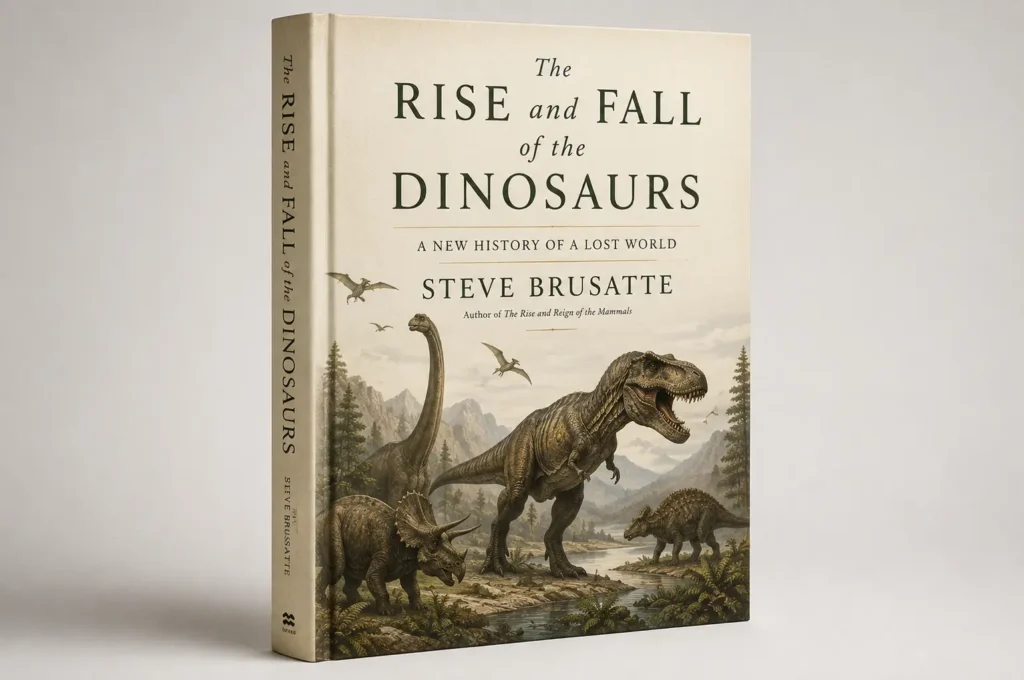
The Rise and Fall of the Dinosaurs
A compelling history of dinosaurs, tracing their origins, diversification, 200-million-year reign, extinction, and enduring legacy.
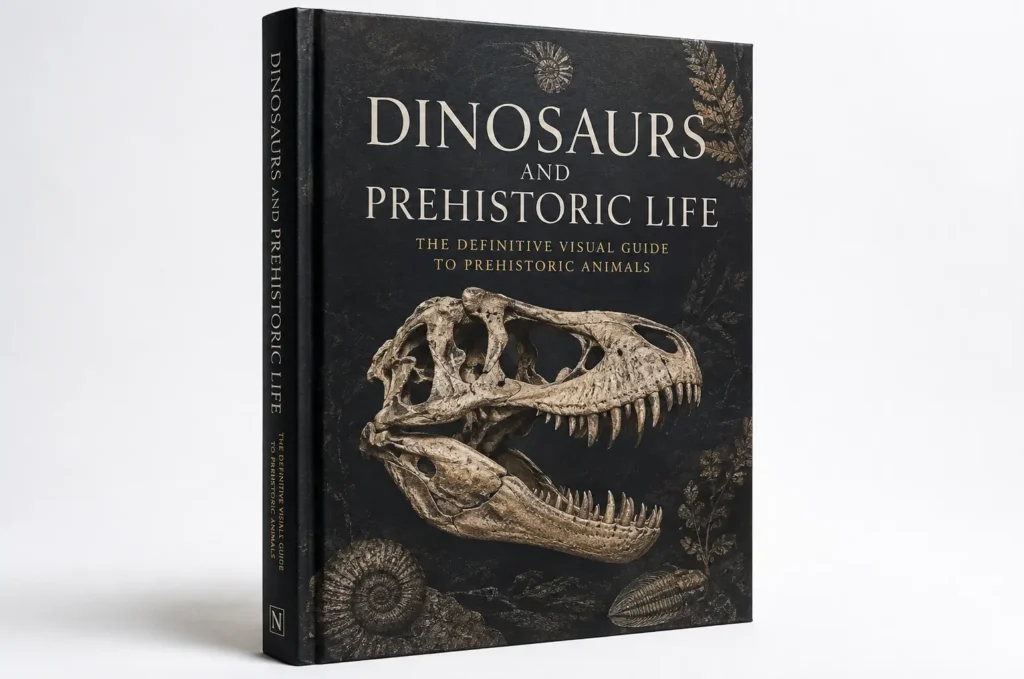
Dinosaurs and Prehistoric Life
A richly illustrated visual reference exploring dinosaurs, fossils, evolution, and prehistoric life across geological time.
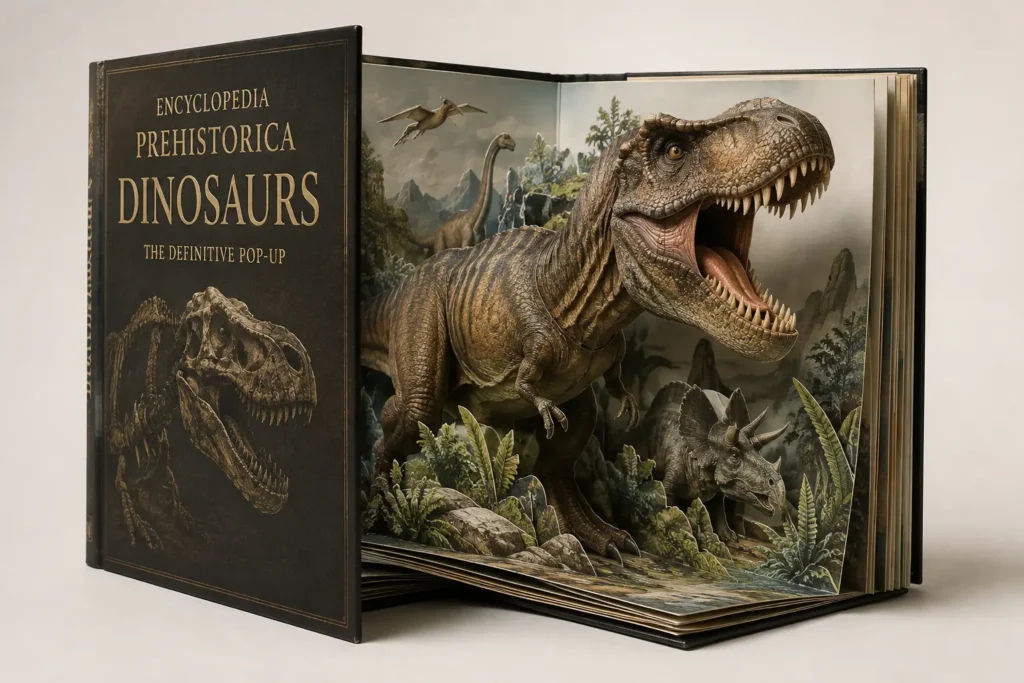
Encyclopedia Prehistorica: Dinosaurs
An interactive dinosaur book featuring spectacular three-dimensional pop-ups, particularly suited to young readers and families.
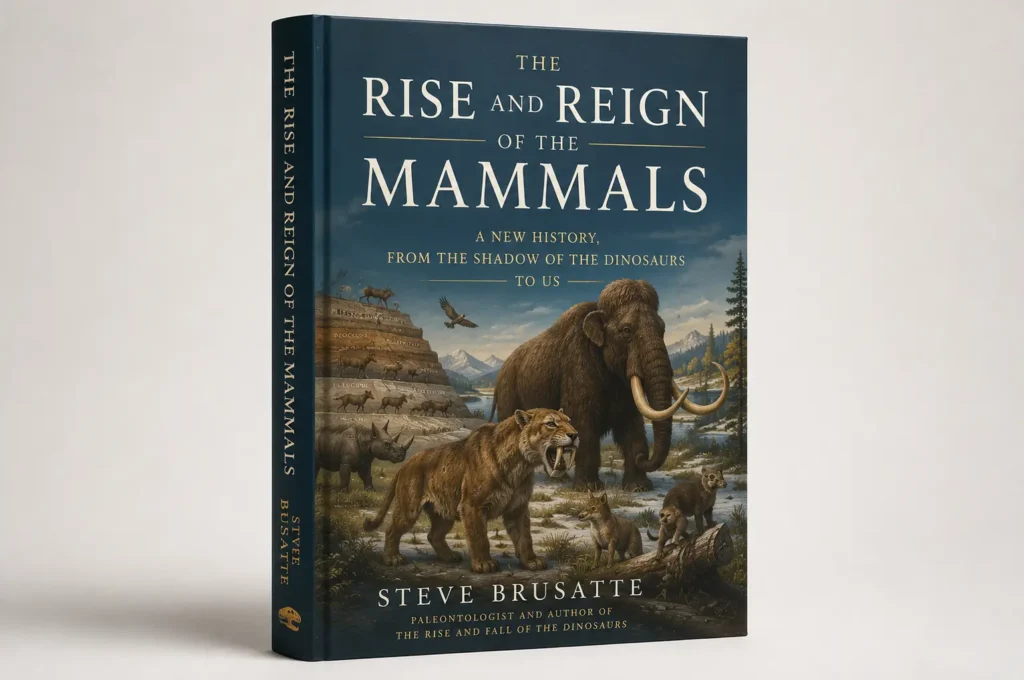
The Rise and Reign of the Mammals
A sweeping history of mammalian evolution, from their origins alongside dinosaurs through the Cenozoic and the emergence of humans.