

The fossil record of Tylosaurus includes partial skulls, associated vertebrae, more complete skeletons, and specimens that preserve evidence of the animal’s anatomy and biology. These fossils have helped palaeontologists identify species, investigate evolutionary relationships and reconstruct marine ecosystems of the Late Cretaceous.

Some specimens are particularly important because they serve as name-bearing types. Others have scientific value because they preserve diagnostic anatomical features, provide evidence of feeding behaviour or illustrate how fossil identifications can change when new research becomes available.
The description of Tylosaurus rex in 2026 is a recent example. Fossils previously identified as Tylosaurus proriger were reassessed and, in some cases, assigned to the newly recognised species. This revision demonstrates why museum collection records and published research are essential when interpreting the identity of historical specimens.
Important Tylosaurus Fossils at a Glance
| Specimen or fossil record | Repository or location | Scientific significance |
|---|---|---|
| MCZ VPRA-4374 | Museum of Comparative Zoology, Harvard University | Holotype of Tylosaurus proriger, originally described as Macrosaurus proriger |
| Tylosaurus rex holotype | Perot Museum of Nature and Science, Dallas, Texas | Name-bearing specimen of the species described in 2026 |
| FHSM VP-2295 | Sternberg Museum of Natural History, Kansas | Holotype of Tylosaurus kansasensis, described in 2005 |
| Bunker mosasaur | University of Kansas Natural History Museum | Large specimen discovered in Kansas in 1911; reassigned to Tylosaurus rex in the 2026 revision |
| USNM V8898 | Smithsonian National Museum of Natural History | Catalogued specimen identified as Tylosaurus proriger, collected by Charles H. Sternberg in 1917 |
| Other fossils from northern Texas | Multiple museum collections | Material contributing to the recognition and diagnosis of Tylosaurus rex |
A specimen’s scientific importance does not depend exclusively on its size or completeness. A partial fossil may be particularly important if it establishes the identity of a species or preserves anatomical features that distinguish one taxon from another.
How Was Tylosaurus First Discovered?
The scientific history of Tylosaurus began in the nineteenth century, when fossils from the Upper Cretaceous marine deposits of Kansas attracted the attention of American palaeontologists.
Edward Drinker Cope described the species in 1869 under the name Macrosaurus proriger. The Museum of Comparative Zoology identifies the specimen now catalogued as MCZ VPRA-4374 as the holotype of that original name. Cope transferred the species to Liodon proriger in 1870. In 1872, Othniel Charles Marsh proposed the genus name Tylosaurus as a replacement for his preoccupied name Rhinosaurus. Joseph Leidy subsequently placed Cope’s species in the genus Tylosaurus in 1873, establishing the combination used today.
The early history of mosasaur research developed during a period of intense competition between Cope and Marsh, commonly known as the Bone Wars. Their rivalry formed part of the wider history of American vertebrate palaeontology, although the scientific naming sequence of Tylosaurus is established by the original publications and subsequent taxonomic work.
The original name-bearing material was much less complete than many later skeletons. It included an anterior portion of the skull and an associated group of vertebrae. The specimen nevertheless remains important because it anchors the scientific name Tylosaurus proriger.
The Holotype of Tylosaurus proriger
The holotype of Tylosaurus proriger is catalogued as MCZ VPRA-4374 in the vertebrate palaeontology collection of the Museum of Comparative Zoology at Harvard University.
| Field | Record |
|---|---|
| Specimen number | MCZ VPRA-4374 |
| Taxon | Tylosaurus proriger |
| Type status | Holotype |
| Original published name | Macrosaurus proriger |
| Original description | Cope, 1869 |
| Collection | Museum of Comparative Zoology, Harvard University |
| Geographic provenance | Gove County, Kansas, United States |
| Geological context | Niobrara Formation, Smoky Hill Member |
| Scientific importance | Name-bearing specimen of the species |
The museum catalogue records the specimen as the holotype of Macrosaurus proriger, the name under which Cope originally described it. Later taxonomic work placed the species in the genus Tylosaurus.
The collection record also provides an important qualification about the specimen’s preservation. The original material was recorded as an anterior portion of the skull associated with 13 vertebrae. The catalogue currently documents three vertebrae as present and approximately ten as missing. The original associated material should therefore not be described as though all 13 vertebrae remain available in the collection.
The specimen’s importance is nomenclatural rather than a reflection of its completeness. A holotype anchors a scientific name to a particular fossil; it does not necessarily represent the average appearance, full anatomy, or maximum size of the species.
The Tylosaurus rex Holotype
In 2026, researchers described Tylosaurus rex as a distinct species based primarily on fossil material from northern Texas. The holotype belongs to the collection of the Perot Museum of Nature and Science in Dallas, Texas, and is displayed in the museum’s Life Then and Now exhibit hall.
The holotype was discovered in 1979 at Lake Ray Hubbard near Dallas. The 2026 study recognised a combination of anatomical characteristics that distinguishes the species from Tylosaurus proriger. These include its large body size and finely serrated teeth.
The study estimated body lengths of approximately 7.7–13.2 metres for specimens assigned to T. rex. These figures represent research estimates for the species rather than the direct measurement of a single complete skeleton.
The recognition of T. rex also changed the interpretation of fossils that had previously been identified as T. proriger. Researchers reassigned several specimens to the newly described species, including fossils that had been known to palaeontologists for decades.
The University of Kansas’s well-known Bunker mosasaur is one example. Discovered in 1911 by Charles Bunker and his team, it had been presented as T. proriger in earlier museum descriptions. The 2026 research included it among the specimens reassigned to T. rex.
The taxonomic revision also introduced a revised character dataset for mosasaur phylogenetic analyses. Its significance therefore extends beyond the recognition of a new species to the interpretation of evolutionary relationships among mosasaurs.
Other Important Tylosaurus Specimens
FHSM VP-2295
FHSM VP-2295 is the holotype of Tylosaurus kansasensis, described by Michael J. Everhart in 2005.
The specimen preserves an articulated skull and seven cervical vertebrae. It comes from the Smoky Hill Chalk Member of the Niobrara Formation in western Kansas. Everhart’s description established the species using this and additional fossil material.
The diagnosis of T. kansasensis included features of the premaxilla, quadrate, and parietal region. These anatomical characteristics were used to distinguish it from other tylosaurines.
The species has also been discussed in the wider context of variation among named Tylosaurus species. Comparisons between specimens are important because differences in anatomy may reflect taxonomic distinctions, growth-related changes, or variation within a species. Such interpretations require assessment of diagnostic characters across multiple specimens.
The Bunker Mosasaur at the University of Kansas
The Bunker mosasaur is one of the best-known large mosasaur specimens associated with the University of Kansas Natural History Museum.
Charles Bunker and his team discovered the specimen in Kansas in 1911 while collecting fossils for the university. The museum describes the animal as a roughly 45-foot-long Tylosaurus specimen and presents it as one of the largest mosasaur fossils in its collections.
Its historical identification has changed. Earlier museum descriptions identified the specimen as Tylosaurus proriger. Following the 2026 taxonomic revision, it is included among the specimens assigned to Tylosaurus rex.
This change illustrates why older museum labels and published identifications should be interpreted in their historical context. A specimen’s catalogue and research history may preserve earlier identifications even after subsequent studies revise its taxonomic placement.
The displayed skeleton also needs to be distinguished from the original fossil material. Mounted displays can incorporate casts, restorations and reconstructed elements. The length of a museum mount should not automatically be treated as a direct measurement of preserved fossil bone.
USNM V8898
USNM V8898 is a catalogued specimen identified as Tylosaurus proriger in the Smithsonian National Museum of Natural History’s vertebrate palaeontology collection.
The Smithsonian catalogue records Charles H. Sternberg as the collector and Logan County, Kansas, as the locality. The collection date is recorded as 1917.
The specimen is therefore distinct from the Bunker mosasaur discovered in 1911. The two records should not be combined or treated as different names for the same fossil.
A museum catalogue number provides a traceable link to a specimen’s collection record, identification history, and associated documentation. When comparing fossils across publications, catalogue numbers are generally more reliable than informal names or display labels alone.
What Can Tylosaurus Fossils Tell Us?
Different types of fossil material support different scientific conclusions. The completeness and preservation of a specimen determine which questions palaeontologists can investigate.
| Fossil evidence | What it can help establish | Main limitation |
|---|---|---|
| Partial skull | Diagnostic cranial anatomy and taxonomic comparisons | Missing bones may prevent a complete assessment of diagnostic characters |
| Associated vertebrae | Vertebral anatomy and aspects of the axial skeleton | A short vertebral series cannot establish total body length on its own |
| More complete skeleton | Relationships among body regions and anatomical reconstruction | Original fossil elements must be distinguished from casts and restored portions |
| Teeth and jaw bones | Tooth form, tooth-row anatomy and some feeding-related interpretations | Tooth shape alone cannot establish the complete diet or exact feeding behaviour |
| Stomach contents | Direct evidence that particular organisms were consumed | They do not necessarily establish prey frequency or distinguish hunting from scavenging |
| Surface impressions or associated soft-tissue evidence | Potential information about integument and preservation | Such evidence is uncommon and must be assessed specimen by specimen |
| Museum catalogue and field records | Collection number, collector, locality and repository history | Historical documentation may be incomplete or require reconciliation |
Fossils can provide direct evidence of particular anatomical features or biological events. However, broader conclusions about behaviour, ecology and evolutionary relationships generally require comparisons among multiple specimens and independent lines of evidence.
How Have Museum Identifications Changed?
Fossil identification is a continuing scientific process. A specimen may receive an initial identification when it is collected, a more specific name after preparation, or a revised identification when researchers compare it with newly described material.
The recognition of Tylosaurus rex in 2026 provides a clear example. Fossils previously grouped with T. proriger were re-examined using differences in anatomy, tooth structure, body size, and geological context. Some were reassigned to the new species.
The Bunker mosasaur at the University of Kansas illustrates the practical consequences of this revision. Although earlier museum descriptions identified it as T. proriger, the 2026 study reassigned it to T. rex.
This does not mean that every historical identification of Tylosaurus is incorrect. It means that older specimen identifications should be checked against current taxonomic research when the distinction is relevant.
The same principle applies to online fossil photographs and museum displays. A photograph may show an anatomical feature, but reliable identification can also depend on details not visible in the image, the specimen’s catalogue record and the research publication in which it was described.
Evidence Strength and Assessment
The following assessment separates specimen records, taxonomic interpretations and limitations of museum displays.
| Claim | Evidence strength | Assessment |
|---|---|---|
| MCZ VPRA-4374 is the holotype of Tylosaurus proriger | Strong | Recorded in the Museum of Comparative Zoology catalogue and historical taxonomic literature |
| MCZ VPRA-4374 was originally described as Macrosaurus proriger | Strong | Supported by Cope’s 1869 description and the museum’s identification history |
| FHSM VP-2295 is the holotype of Tylosaurus kansasensis | Strong | Established in Everhart’s 2005 species description |
| The Tylosaurus rex holotype belongs to the Perot Museum | Strong | Confirmed by the institution’s research announcement and the 2026 study |
| The Bunker mosasaur was reassigned from T. proriger to T. rex | Strong | Included among the specimens reassigned in the 2026 research |
| USNM V8898 was collected by Charles H. Sternberg in 1917 | Strong | Recorded in the Smithsonian collection catalogue |
| Every historical Tylosaurus identification remains valid | Unsupported | The 2026 revision reassigned some specimens previously identified as T. proriger |
| A mounted skeleton’s displayed length always equals the length of preserved fossil bone | Unsupported | Mounts may incorporate casts, restorations or reconstructed elements |
| A specimen’s scientific importance can be ranked by size alone | Unsupported | Type status, diagnostic anatomy, completeness and research history are different measures of importance |
Frequently Asked Questions
Where was Tylosaurus first discovered?
The genus was established from fossils collected in Kansas, United States, during the nineteenth century. Edward Drinker Cope originally described the species Macrosaurus proriger in 1869. The name-bearing material is now catalogued as MCZ VPRA-4374 at Harvard University’s Museum of Comparative Zoology.
Where is the Tylosaurus proriger holotype?
The holotype is catalogued as MCZ VPRA-4374 in the Museum of Comparative Zoology at Harvard University. It was originally described as Macrosaurus proriger by Edward Drinker Cope in 1869.
Where can I see the Tylosaurus rex holotype?
The Tylosaurus rex holotype belongs to the Perot Museum of Nature and Science in Dallas, Texas. The specimen is displayed in the museum’s Life Then and Now exhibit hall. Visitors should confirm current exhibit access with the museum before planning a visit.
Why do Tylosaurus fossils have different species names in older sources?
Taxonomic interpretations can change as fossils are re-examined and new diagnostic evidence becomes available. The 2026 description of Tylosaurus rex reassigned some specimens that had previously been identified as T. proriger. Older museum labels and publications may therefore reflect earlier scientific interpretations.
Is the biggest Tylosaurus fossil the most scientifically important?
Not necessarily. A smaller specimen may be more important for naming a species, identifying a diagnostic anatomical feature, or clarifying evolutionary relationships. Size is only one measure of scientific significance.
What is the difference between a holotype and a referred specimen?
A holotype is the name-bearing specimen designated when a species is formally described. A referred specimen is assigned to that species because researchers consider its anatomical features consistent with the taxon. Referred specimens can provide important additional information, but they do not replace the holotype as the name-bearing reference.
References
Primary Taxonomic Sources
- Cope, E. D. (1869). [On some specimens of extinct reptiles of interest]. Proceedings of the Academy of Natural Sciences of Philadelphia, 21, 123. Original description of Macrosaurus proriger.
https://mczbase.mcz.harvard.edu/publications/showPublication.cfm?publication_id=26577 - Everhart, M. J. (2005). Tylosaurus kansasensis, a new species of tylosaurine (Squamata, Mosasauridae) from the Niobrara Chalk of western Kansas, USA. Netherlands Journal of Geosciences, 84(3), 231–240.
https://doi.org/10.1017/S0016774600021016 - Zietlow, A. R., Polcyn, M. J., & Tykoski, R. S. (2026). A gigantic new species of Tylosaurus (Squamata: Mosasauridae) from Texas, and a revised character list for phylogenetic analyses of Mosasauridae. Bulletin of the American Museum of Natural History, 482, 1–77.
https://doi.org/10.1206/0003-0090.482.1.1
Museum Collections and Institutional Records
- Harvard University, Museum of Comparative Zoology. MCZ VPRA-4374: Tylosaurus proriger holotype specimen record.
https://mczbase.mcz.harvard.edu/guid/MCZ%3AVP%3AVPRA-4374 - Smithsonian National Museum of Natural History. USNM V8898: Tylosaurus proriger specimen record.
https://collections.si.edu/search/results.htm?q=USNM%20V8898 - University of Kansas, Biodiversity Institute and Natural History Museum. The Bunker Mosasaur.
https://biodiversity.ku.edu/exhibits/mosasaur - Southern Methodist University. (2026, May 21). New species of massive mosasaur with serrated teeth is named T. rex.
https://www.smu.edu/news/research/t-rex-in-the-ocean
Recommended Paleontology & Natural History Books
As an Amazon Associate, Extinct Atlas may earn from qualifying purchases.
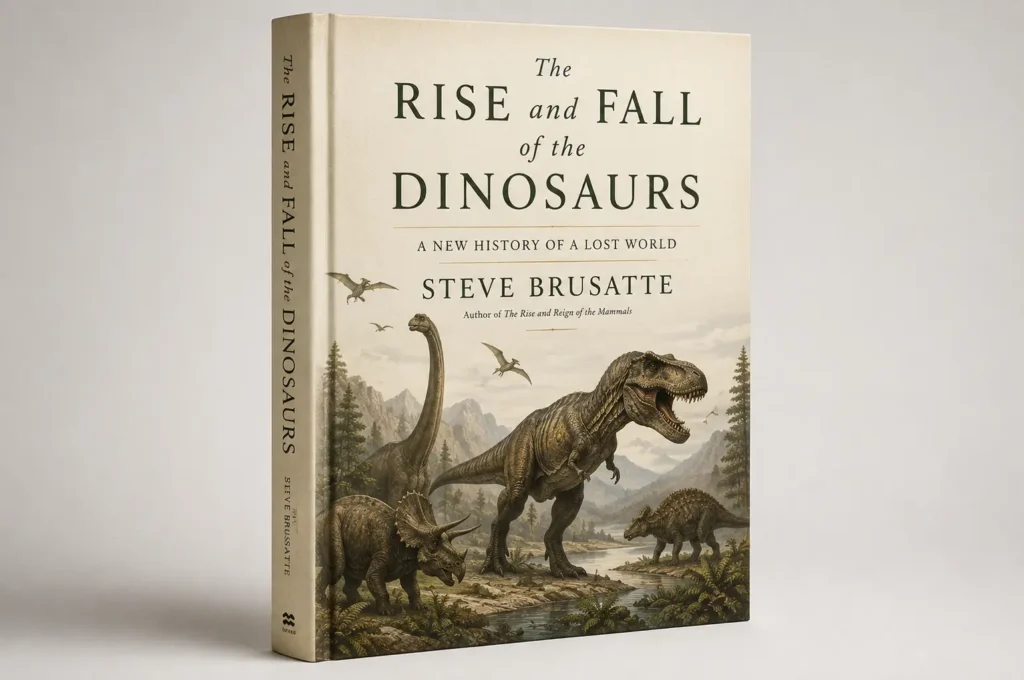
The Rise and Fall of the Dinosaurs
A compelling history of dinosaurs, tracing their origins, diversification, 200-million-year reign, extinction, and enduring legacy.
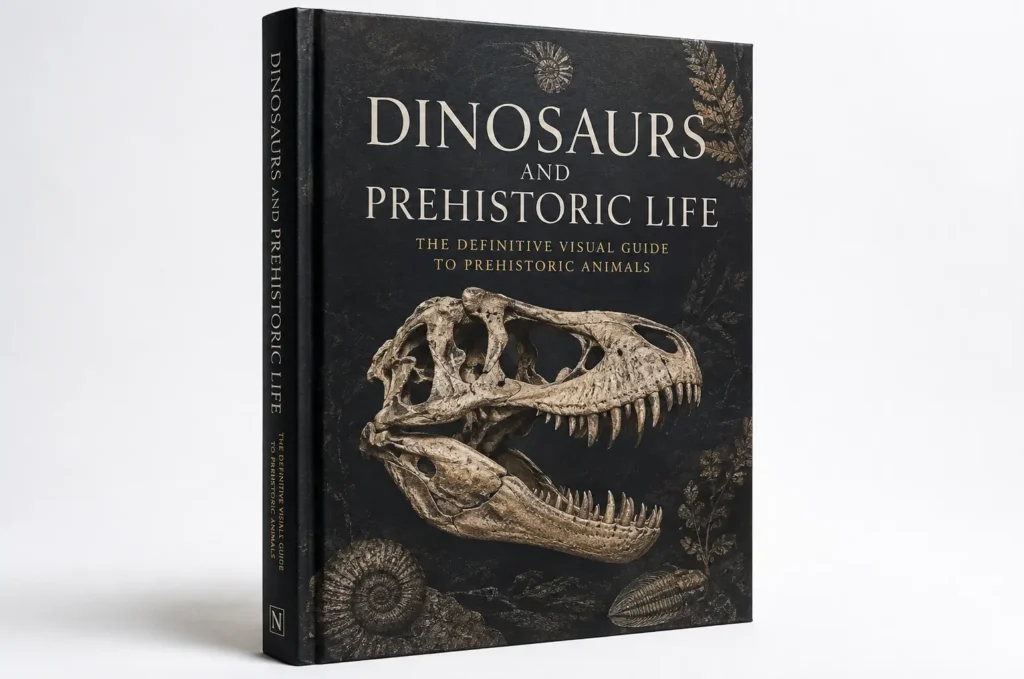
Dinosaurs and Prehistoric Life
A richly illustrated visual reference exploring dinosaurs, fossils, evolution, and prehistoric life across geological time.
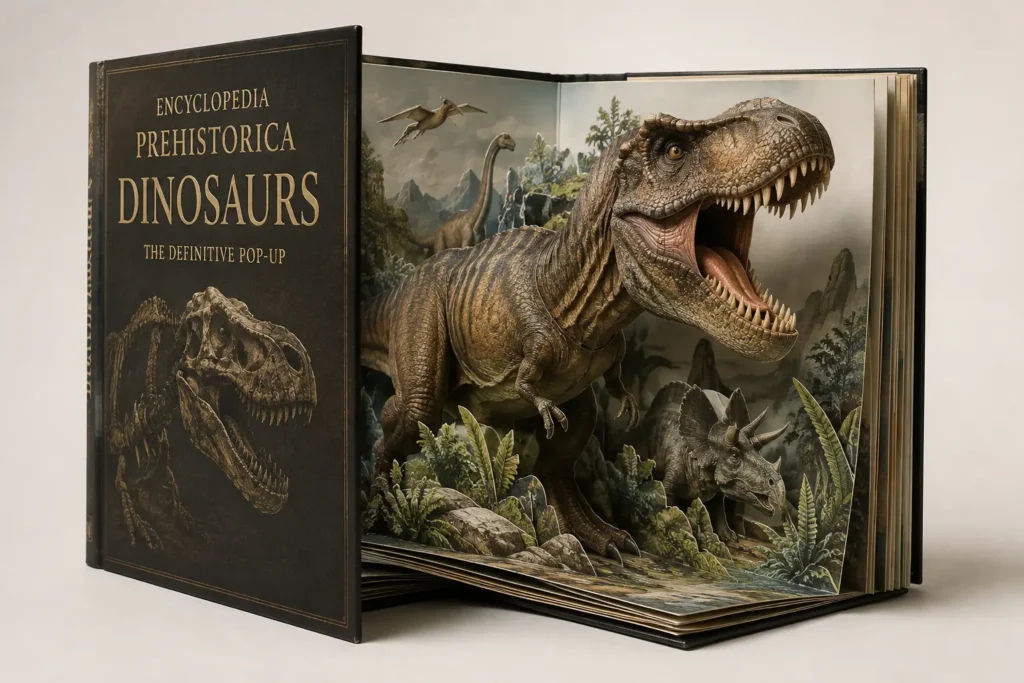
Encyclopedia Prehistorica: Dinosaurs
An interactive dinosaur book featuring spectacular three-dimensional pop-ups, particularly suited to young readers and families.
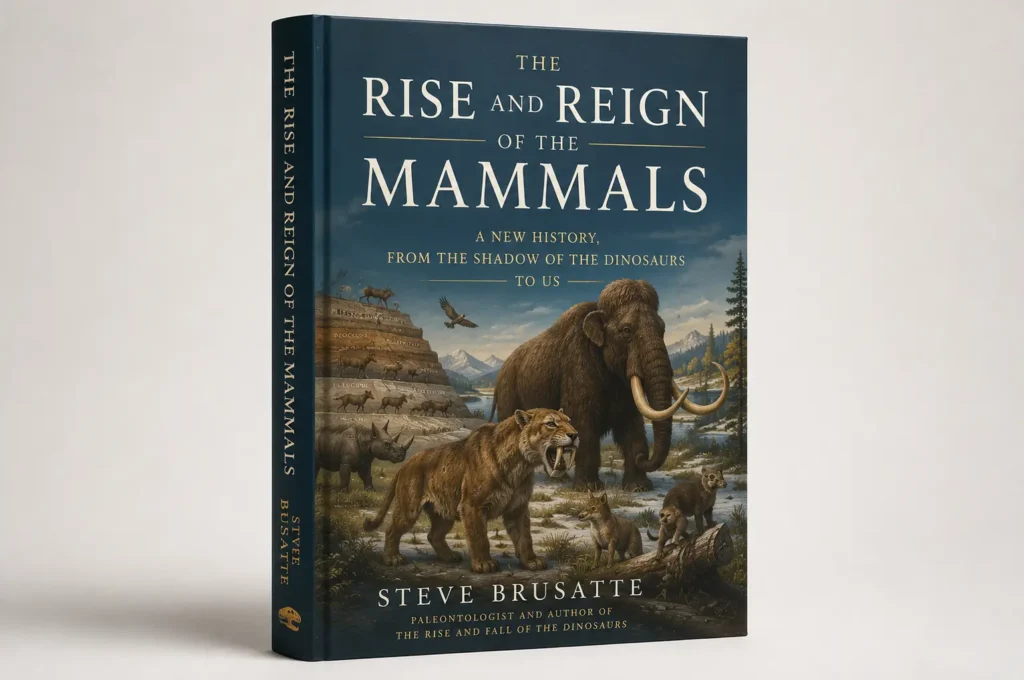
The Rise and Reign of the Mammals
A sweeping history of mammalian evolution, from their origins alongside dinosaurs through the Cenozoic and the emergence of humans.