

Quick Info
| Field | Information |
|---|---|
| Species | Ankylosaurus magniventris — Ornithischia, Ankylosauridae |
| Period | Late Cretaceous (Maastrichtian), approximately 68–66 million years ago |
| Diet | Herbivorous; interpreted as a specialised low-browsing plant eater |
| Dentition | Small, leaf-shaped teeth with limited occlusal surfaces |
| Feeding height | Primarily ground level to approximately 1 m (3.3 ft), depending on posture and reconstruction |
Quick Answer
Ankylosaurus magniventris is interpreted as an herbivorous dinosaur based on its dentition, jaw morphology, and overall skull anatomy. Fossil evidence indicates that it fed primarily on low-growing vegetation available within Late Cretaceous ecosystems, likely including ferns, shrubs, cycads, low-growing flowering plants, and other ground-level plant material. Its teeth and jaws show no adaptations associated with carnivory, and feeding appears to have relied primarily on cropping vegetation and simple oral processing rather than extensive chewing.

The anatomy of Ankylosaurus suggests a specialised low-browsing feeding strategy. Its broad muzzle, low head carriage, and small leaf-shaped teeth were well suited to gathering vegetation close to the ground, while its heavily built body and short limbs would have limited access to higher plant resources. These adaptations indicate that Ankylosaurus occupied a distinct feeding niche within the diverse herbivorous communities of late Cretaceous North America.
What Did Ankylosaurus Eat?
Fossil evidence strongly supports Ankylosaurus as a herbivorous dinosaur. Its teeth were small, leaf-shaped, and serrated, a morphology consistent with cropping and slicing plant material rather than processing flesh. No anatomical adaptations associated with carnivory are known in Ankylosaurus, and its feeding apparatus closely resembles that of other herbivorous ornithischian dinosaurs.
Because direct evidence, such as preserved gut contents or species-specific coprolites, has not been definitively attributed to Ankylosaurus, its exact dietary composition cannot be determined with certainty. However, based on palaeobotanical evidence from Late Maastrichtian ecosystems and comparisons with related herbivorous dinosaurs, plausible food sources include ferns, low-growing angiosperms, shrubs, cycads, and other vegetation accessible within its browsing range.
Potential food resources likely varied geographically and seasonally across western North America. As a low-browsing herbivore inhabiting floodplain and lowland environments, Ankylosaurus would have exploited the vegetation most abundant and accessible within its immediate surroundings.
The jaw mechanics of Ankylosaurus suggest relatively simple oral food processing compared with highly specialised chewing herbivores such as hadrosaurs. Its teeth were adapted primarily for cropping and coarse breakdown rather than prolonged grinding. As in many large herbivorous vertebrates, further digestion likely depended substantially on microbial fermentation within the digestive tract, although this remains a functional biological inference rather than direct fossil evidence.
Despite uncertainties regarding specific plant preferences, herbivory is among the most strongly supported aspects of Ankylosaurus biology and is consistent with all currently available anatomical and ecological evidence.
Did Ankylosaurus Eat Meat?
Current fossil evidence strongly supports Ankylosaurus magniventris as an herbivorous dinosaur, with no known anatomical adaptations indicating a carnivorous lifestyle. Its small, leaf-shaped, serrated teeth closely resemble those of other herbivorous ornithischian dinosaurs and are well-suited to cropping vegetation rather than capturing prey or processing flesh.
No direct fossil evidence—including preserved gut contents, tooth wear patterns associated with carnivorous feeding, or biomechanical analyses of the skull—supports regular meat consumption in Ankylosaurus. Furthermore, its feeding anatomy, jaw mechanics, and overall body plan are consistent with a specialised plant-eating lifestyle.
Although it is impossible to completely exclude occasional opportunistic ingestion in extinct animals, Ankylosaurus is scientifically interpreted as an obligate herbivore based on the available anatomical and ecological evidence. Its extensive armour and powerful tail club are best understood as defensive adaptations rather than structures associated with predatory behaviour.
What Plants Did Ankylosaurus Eat?
The exact diet of Ankylosaurus is reconstructed from Late Cretaceous ecosystem evidence rather than direct species-specific feeding traces. No preserved gut contents or definitively attributable coprolites currently provide a complete dietary inventory for the genus.
Based on palaeobotanical evidence from formations such as the Hell Creek and Lance formations, plausible food sources include ferns, low-growing angiosperms (flowering plants), shrubs, cycads, and other vegetation growing within easy reach of its low body profile. These ecosystems supported diverse plant communities that would have provided abundant feeding opportunities for large herbivorous dinosaurs.
Plant availability likely varied seasonally and geographically across western North America. Consequently, the precise composition of the diet probably differed among local populations depending on habitat conditions and vegetation abundance.
Browsing Height and Feeding Strategy
The anatomy of Ankylosaurus strongly indicates a specialised low-browsing feeding strategy. Its short limbs, broad body, and low head carriage would have restricted most feeding activity to vegetation growing close to the ground. Although exact feeding height depends on reconstruction assumptions, most estimates place the majority of browsing activity from ground level to approximately 1 metre (3.3 feet) above the surface.
A broad keratinous beak at the front of the jaws was likely adapted for efficient cropping of vegetation rather than selective fine-scale feeding. This morphology is consistent with gathering relatively large quantities of accessible plant material from low-growing vegetation.
Compared with highly specialised chewing herbivores, oral food processing in Ankylosaurus appears to have been relatively simple. The teeth were effective for cropping and coarse breakdown but lacked the complex grinding surfaces seen in hadrosaurs. Consequently, much of the digestive processing likely occurred within the digestive tract through microbial fermentation, although this interpretation is based on comparative herbivore biology rather than direct fossil evidence.
How Does Ankylosaurus Compare to Other Herbivorous Dinosaurs of Its Time?
Ankylosaurus appears to have occupied a distinct feeding niche within the Late Maastrichtian ecosystems of western North America. Compared with large contemporaneous herbivores such as hadrosaurs and ceratopsids, its anatomy suggests a more specialised low-browsing strategy combined with relatively limited oral processing.
Comparison of Major Herbivores
| Dinosaur Group | Feeding Adaptation | Likely Feeding Strategy |
|---|---|---|
| Ankylosaurus | Broad beak, simple dentition, low body profile | Low browsing and bulk cropping of ground-level vegetation |
| Hadrosaurs (e.g., Edmontosaurus annectens) | Complex dental batteries capable of extensive grinding | Broad dietary range with substantial oral processing |
| Ceratopsids (e.g., Triceratops horridus) | Powerful jaws and shearing dentition | Processing tougher and more fibrous vegetation |
Hadrosaurs such as Edmontosaurus annectens possessed highly specialised dental batteries capable of extensive grinding and likely exploited a broader range of plant resources across multiple browsing heights. Ceratopsids such as Triceratops horridus evolved powerful jaws and shearing dentition adapted for processing tougher vegetation.
In contrast, Ankylosaurus combined relatively simple teeth with a broad cropping beak and a body plan optimised for feeding close to the ground. These differences suggest ecological dietary partitioning among large herbivores sharing the same ecosystems, reducing direct competition for food resources. Although the precise boundaries of these ecological niches cannot be observed directly, comparative anatomy strongly supports some degree of feeding specialisation among the major herbivorous dinosaur groups of Late Cretaceous North America.
Related and Contemporary Species
Edmontosaurus annectens
A large hadrosaurid from Late Cretaceous North America, Edmontosaurus possessed highly specialised dental batteries capable of extensive grinding and oral processing. Its feeding anatomy suggests a broader dietary range and a more flexible browsing strategy than that of Ankylosaurus.
Triceratops horridus
One of the most abundant large herbivores of the latest Cretaceous, Triceratops evolved powerful jaws and shearing dentition adapted for processing tougher vegetation. Its feeding strategy differed substantially from the simpler cropping-based feeding system of Ankylosaurus.
Edmontonia rugosidens
A heavily armoured nodosaurid with broadly similar herbivorous adaptations. Although its overall lifestyle likely resembled that of Ankylosaurus, differences in skull morphology and feeding anatomy may indicate some degree of ecological separation between the two taxa.
Euoplocephalus tutus
A closely related ankylosaurid from the earlier Campanian of North America. Because its skull and feeding anatomy are more completely preserved, Euoplocephalus plays an important role in reconstructing and interpreting the dietary biology of ankylosaurids, including Ankylosaurus.
Frequently Asked Questions
Did Ankylosaurus eat meat?
Current fossil evidence strongly supports Ankylosaurus as a herbivorous dinosaur. Its dentition, jaw anatomy, and skull structure are all consistent with plant feeding, and no direct fossil evidence supports regular carnivorous or omnivorous behaviour.
Although it is impossible to completely exclude occasional opportunistic ingestion in extinct animals, Ankylosaurus magniventris is scientifically interpreted as an obligate herbivore based on the available anatomical and ecological evidence.
How much did Ankylosaurus eat per day?
The precise daily food intake of Ankylosaurus cannot be determined directly from fossil evidence. Estimates based on body-mass comparisons with large modern herbivores suggest that substantial quantities of plant material would have been required to sustain an animal weighing several tonnes.
However, exact intake values remain highly model-dependent because dinosaur metabolism, digestive efficiency, growth rates, and activity levels cannot be measured directly. Consequently, any numerical estimates should be regarded as provisional rather than definitive.
What plants were available for Ankylosaurus to eat?
Late Maastrichtian ecosystems of western North America supported diverse plant communities that included ferns, low-growing angiosperms, shrubs, cycads, and conifers. These environments provided abundant vegetation suitable for large herbivorous dinosaurs.
Given its low browsing height and feeding anatomy, Ankylosaurus most likely exploited the subset of plant resources growing close to the ground. Although direct species-specific dietary evidence remains unavailable, these plant groups represent the most plausible food sources based on current palaeobotanical evidence.
Why were Ankylosaurus’s teeth so small?
The teeth of Ankylosaurus were adapted primarily for cropping and slicing vegetation rather than intensive chewing. Unlike hadrosaurs, which evolved complex dental batteries for grinding plant material, ankylosaurids retained relatively simple leaf-shaped teeth.
This suggests that much of the digestive processing occurred within the digestive tract rather than in the mouth. Small teeth were therefore sufficient for gathering and initially processing vegetation before further breakdown through microbial fermentation.
Research Note
Scientific understanding of Ankylosaurus’s feeding ecology continues to evolve as discoveries and analytical techniques become available. Feeding height, dietary partitioning, digestive physiology, food intake estimates, and ecological interactions remain active areas of palaeontological research. Future discoveries may refine current interpretations while preserving the broader picture of Ankylosaurus as a specialised low-browsing herbivore.
Conclusion
Ankylosaurus magniventris is strongly interpreted as a specialised herbivorous dinosaur adapted for low browsing. Its dentition, broad keratinous beak, jaw anatomy, and body plan collectively support a feeding strategy focused on accessible ground-level vegetation rather than extensive oral processing of tougher plant material.
Compared with contemporaneous herbivores such as hadrosaurs and ceratopsids, Ankylosaurus appears to have occupied a distinct ecological niche centred on low-growing plant resources. Its feeding adaptations illustrate how multiple large herbivorous dinosaur groups were able to coexist within the same ecosystems through differing dietary strategies and browsing behaviours.
Although many details of its ecology remain inferential, herbivory is among the most firmly supported aspects of Ankylosaurus biology. Current anatomical, palaeobotanical, and comparative evidence consistently identifies it as a specialised low-browsing plant eater and an important component of the latest Cretaceous ecosystems of western North America.
References
Peer-Reviewed Literature
Mallon JC, Anderson JS. 2013. Skull ecomorphology of megaherbivorous dinosaurs from the Dinosaur Park Formation (uppermost Campanian) of Alberta, Canada. PLOS ONE. 8(7): e67182. DOI: 10.1371/journal.pone.0067182
Button DJ, Rayfield EJ, Barrett PM. 2014. Cranial biomechanics underpins high sauropod diversity in resource-partitioned Jurassic ecosystems. Proceedings of the Royal Society B: Biological Sciences. 281(1795): 20142114. DOI: 10.1098/rspb. 2014.2114
Arbour VM, Currie PJ. 2013. Euoplocephalus tutus and the diversity of ankylosaurid dinosaurs in the Late Cretaceous of Alberta, Canada, and Montana, USA. PLOS ONE. 8(5): e62421. DOI: 10.1371/journal.pone.0062421
This provides a stronger anatomical context for ankylosaur feeding reconstructions.
Books and Technical Works
Fastovsky DE, Weishampel DB. 2012. Dinosaurs: A Concise Natural History. 2nd Edition. Cambridge: Cambridge University Press.
Weishampel DB, Dodson P, Osmólska H (eds.). 2004. The Dinosauria. 2nd Edition. Berkeley: University of California Press.
Optional addition:
Carpenter K (ed.). 2001. The Armored Dinosaurs. Bloomington: Indiana University Press.
Because the article discusses ankylosaur feeding anatomy, this volume is highly relevant.
Databases and Online Resources
Paleobiology Database. 2026. Ankylosaurus magniventris occurrence data. Accessed 20 May 2026.
Recommended Paleontology & Natural History Books
As an Amazon Associate, Extinct Atlas may earn from qualifying purchases.
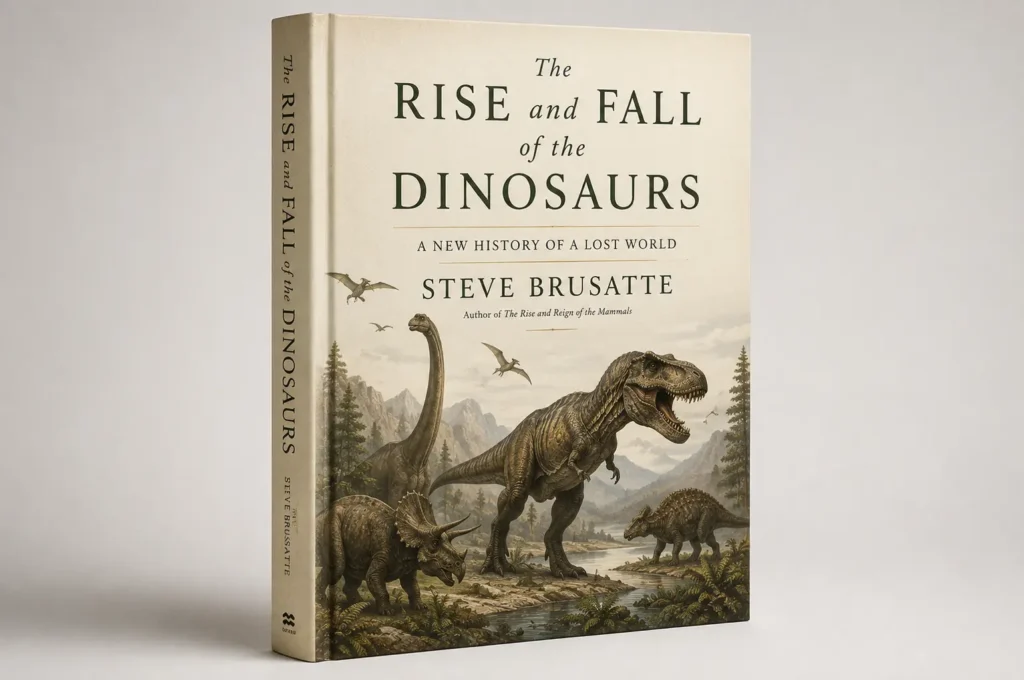
The Rise and Fall of the Dinosaurs
A compelling history of dinosaurs, tracing their origins, diversification, 200-million-year reign, extinction, and enduring legacy.
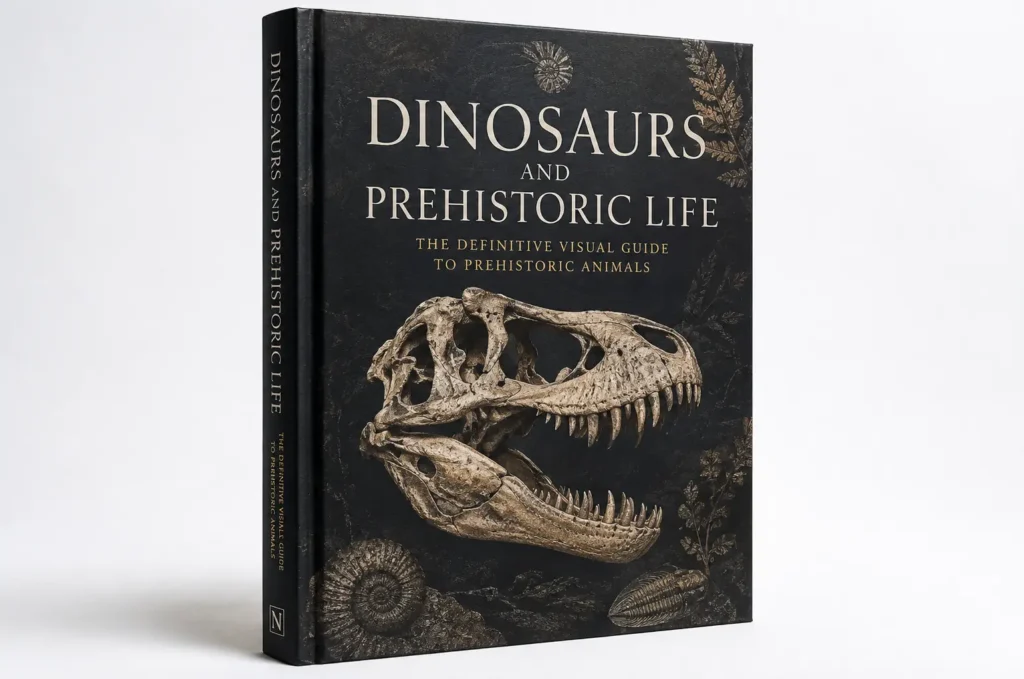
Dinosaurs and Prehistoric Life
A richly illustrated visual reference exploring dinosaurs, fossils, evolution, and prehistoric life across geological time.
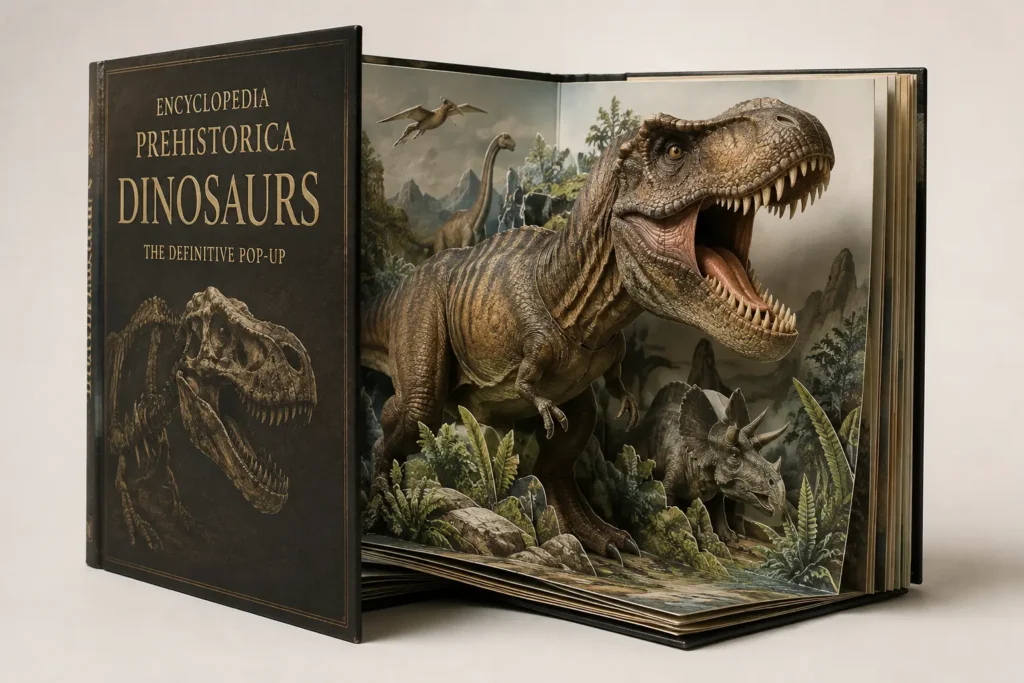
Encyclopedia Prehistorica: Dinosaurs
An interactive dinosaur book featuring spectacular three-dimensional pop-ups, particularly suited to young readers and families.
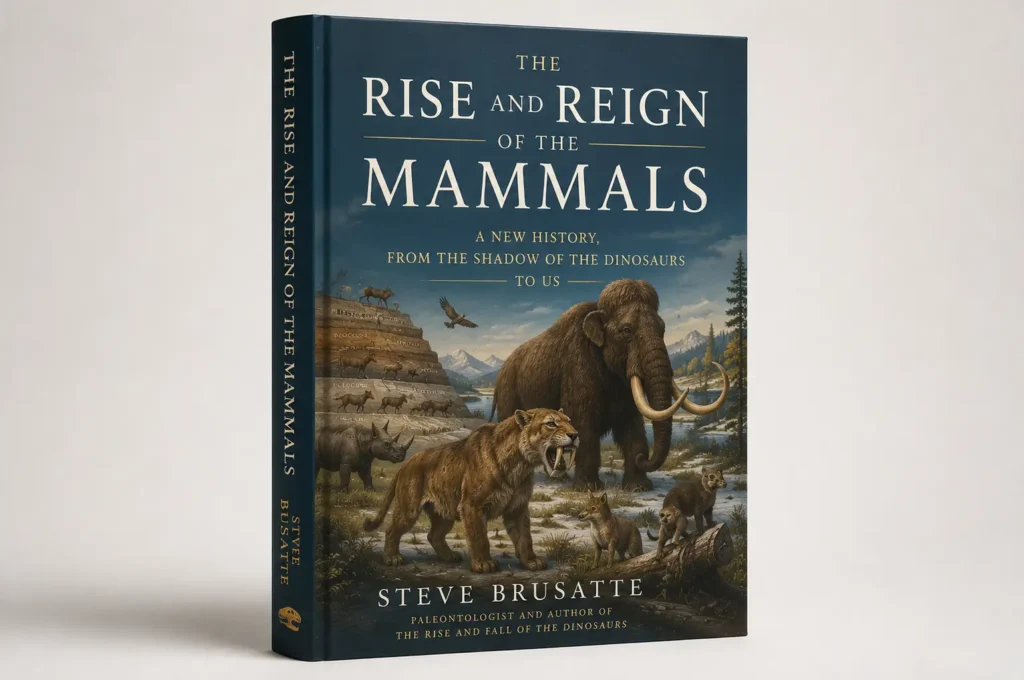
The Rise and Reign of the Mammals
A sweeping history of mammalian evolution, from their origins alongside dinosaurs through the Cenozoic and the emergence of humans.