

Quick Info
| Field | Information |
|---|---|
| Species | Ankylosaurus magniventris — Ornithischia, Ankylosauridae |
| Time Period | Late Cretaceous (late Maastrichtian), approximately 68–66 million years ago |
| Locomotion Type | Obligate quadrupedal |
| Gait Type | Heavy-bodied, graviportal locomotion |
| Estimated Walking Speed | Likely within the low single-digit km/h range, potentially approaching 6–8 km/h under favorable biomechanical assumptions. |
| Estimated Maximum Speed | Likely below approximately 10–12 km/h (6–7.5 mph), although any maximum-speed estimate remains highly model dependent. |
| Direct Trackway Evidence | No confirmed Ankylosaurus trackways |
Quick Answer: Ankylosaurus magniventris was a slow-moving, heavily built quadrupedal dinosaur adapted for stability rather than speed. Biomechanical inference suggests a walking pace comparable to a slow human walking speed, with only modest acceleration capacity. Precise speed estimates remain uncertain because no confirmed Ankylosaurus trackways exist, and the skeleton is incomplete.

How Fast Could Ankylosaurus Move?
Precise speed estimates for Ankylosaurus cannot be measured directly. Unlike some dinosaurs known from trackways, Ankylosaurus has no confidently attributable fossil footprints that allow stride-based speed calculations. As a result, locomotor reconstructions depend on biomechanical modelling using skeletal proportions, estimated muscle mechanics, and body mass assumptions.
These reconstructions consistently indicate a slow-moving animal. Ankylosaurus possessed a broad torso, short robust limbs, heavy dermal armour, and a substantial tail club—all anatomical traits associated with stability, weight support, and defensive function rather than cursorial locomotion.
A reasonable evidence-based estimate places ordinary walking speed in the low single-digit kilometres per hour to perhaps around 6–8 km/h under favourable assumptions. Claims of precise maximum speeds should be treated cautiously, because they depend heavily on uncertain mass reconstructions and soft-tissue assumptions that cannot be directly preserved.
Why Speed Estimates Are Uncertain
Speed modelling for extinct animals becomes increasingly uncertain when based on incomplete material, and Ankylosaurus presents exactly this problem. The genus is known from incomplete skeletal remains, meaning body mass estimates vary substantially across reconstructions.
Because locomotor output scales strongly with body mass:
- Heavier reconstructions predict lower speed
- Lighter reconstructions allow somewhat faster movement
- Assumptions about muscle mass and limb posture significantly affect outcomes
For this reason, speed values should be treated as biomechanical approximations rather than definitive measurements.
Locomotor Design and Gait
Ankylosaurus was an obligate quadruped with a body plan optimized for support and stability. Its limb proportions indicate a low-slung stance with relatively short, robust limbs compared with more mobile herbivorous dinosaurs.
The locomotor profile is best described as graviportal-like, meaning adapted for carrying substantial body mass efficiently rather than rapid running. This does not imply complete immobility; large terrestrial herbivores can move effectively when necessary, but the anatomical evidence strongly indicates that Ankylosaurus was not a pursuit-capable animal.
Its gait was likely characterized by:
- short stride length
- relatively low limb excursion
- stable center of mass
- limited acceleration
- high resistance to destabilization
The heavy tail club may also have influenced maneuverability and turning dynamics, though this remains biomechanically inferential.
Defensive Strategy vs Speed
Unlike fast escape-oriented herbivores, Ankylosaurus appears to have relied primarily on passive and active defense rather than flight. Extensive osteoderm armour protected against attack, while the tail club likely functioned as a defensive weapon.
This evolutionary strategy reduces selective pressure for high-speed locomotion. In ecological terms, Ankylosaurus was built less like a runner and more like a heavily armored quadrupedal herbivore.
What Limited Ankylosaurus’s Speed?
Several anatomical features strongly constrained the locomotor performance of Ankylosaurus.
Its limbs were relatively short and robust compared with overall body size, reducing effective stride length and limiting acceleration potential. Unlike cursorial dinosaurs adapted for speed, Ankylosaurus lacked elongate distal limb elements associated with efficient, rapid locomotion.
Its broad, heavily built torso also imposed mechanical constraints. A wide body increases rotational inertia, making rapid turning and agile directional changes more energetically demanding. This body architecture favors stability over maneuverability.
Extensive dermal armour further increased total body mass. The osteoderm covering across the back, neck, and skull added substantial structural load that the limbs had to support and move. Combined with the heavy tail club, this produced a body plan optimized for defense rather than speed.
Ankylosaur limb bones are exceptionally robust and clearly adapted for weight-bearing. While comparisons with modern graviportal mammals such as elephants and rhinoceroses can be biomechanically informative, they should be treated as analogies rather than direct equivalencies, since ankylosaurs had very different limb postures, musculoskeletal arrangements, and evolutionary histories.
Taken together, the anatomical evidence strongly indicates that energy-efficient slow locomotion was the normal movement mode for Ankylosaurus.
Could Ankylosaurus Run?
Whether Ankylosaurus was capable of a true running gait remains unresolved.
In strict biomechanical terms, “running” typically involves either an aerial phase (all limbs off the ground simultaneously) or dynamically distinct gait mechanics differing from walking. No direct fossil evidence currently demonstrates such locomotion in Ankylosaurus.
Biomechanical inference suggests that a fast, dynamically demanding running gait would have placed substantial stress on the skeleton, particularly given the animal’s mass, limb proportions, and armored body design. This makes sustained rapid locomotion unlikely.
However, it would be too strong to state categorically that Ankylosaurus could never move faster than a walk. Large-bodied animals can employ faster gait transitions without becoming highly cursorial, and extinct dinosaur gait mechanics do not map perfectly onto modern mammalian models.
The most defensible conclusion is that Ankylosaurus was capable of only limited speed increases above normal walking pace, with sustained high-speed locomotion highly improbable. Its evolutionary strategy emphasized protection and mechanical resilience rather than escape through speed.
Speed in the Context of Defence
The slow locomotion of Ankylosaurus was likely not a major evolutionary disadvantage because its defensive strategy did not depend primarily on escape.
Unlike lightly built herbivores that rely on acceleration and sustained speed to evade predators, Ankylosaurus possessed an extensive passive and active defensive system: heavy dorsal armour, reinforced cranial protection, and a powerful tail club. These adaptations suggest selection favored survivability during confrontation rather than rapid flight.
A heavily armored herbivore presents a fundamentally different predatory challenge than a fast but vulnerable prey animal. For a predator such as Tyrannosaurus rex, attacking Ankylosaurus would likely have involved substantial risk of injury.
Claims that reduced locomotor investment directly enabled greater investment in armour remain speculative. While evolutionary trade-offs between locomotor performance and defensive morphology are biologically plausible, the energetic costs of osteoderm production and maintenance in ankylosaurs have not been quantified well enough to support strong causal claims.
The strongest evidence-based interpretation is that Ankylosaurus evolved a body plan in which defense reduced selective pressure for high-speed locomotion.
Ankylosaur Trackways and Trace Fossil Evidence
No trackways have been confidently assigned to Ankylosaurus magniventris.
This absence limits direct reconstruction of its exact stride length, gait transitions, and movement speeds. As a result, locomotor interpretations rely primarily on skeletal biomechanics rather than direct ichnological evidence.
Trackways attributed to ankylosaurian dinosaurs from other formations provide useful comparative evidence. These generally indicate broad-gauge quadrupedal locomotion consistent with a stable, heavy-bodied gait rather than agile cursorial movement.
However, caution is required when extrapolating from other ankylosaurs. Ankylosauria includes taxa with differing body proportions, armor distribution, and mass profiles, so not all trace fossil evidence transfers directly to Ankylosaurus.
The absence of confirmed Ankylosaurus tracks should not be interpreted as biologically meaningful evidence that the animal rarely moved or inhabited unsuitable terrain. Track preservation is highly dependent on depositional conditions, substrate consistency, burial timing, and subsequent preservation.
Because the Hell Creek and Lance formations are dominated by fluvial depositional systems with complex sediment reworking, preservation opportunities for attributable trackways may have been limited relative to dedicated track-bearing formations.
Future discoveries could refine locomotor interpretations substantially, but at present, Ankylosaurus speed remains a biomechanical inference rather than a directly measured parameter.
Related and Comparative Species
- Euoplocephalus tutus — a closely related ankylosaurid often used as a comparative anatomical reference for locomotor reconstruction, though it should not be treated as a direct proxy for Ankylosaurus due to differences in body proportions, armor distribution, and taxonomic distinction.
- Triceratops — a late Maastrichtian contemporary of broadly comparable large body mass, useful as a contrast in heavy herbivore locomotion, although its biomechanics differed substantially because of its distinct limb architecture and body design.
- Tyrannosaurus rex — the dominant apex predator of the Hell Creek ecosystem and a useful predator–prey comparison for relative locomotor capability. Although faster than Ankylosaurus, exact top-speed estimates for T. rex remain debated.
- Edmontosaurus annectens — a contemporaneous hadrosaurid likely capable of substantially greater locomotor performance due to a lighter build and more cursorially favorable body plan.
Frequently Asked Questions
How fast was Ankylosaurus compared with Tyrannosaurus rex?
Tyrannosaurus rex was almost certainly faster than Ankylosaurus, but exact speed comparisons remain model-dependent.
Most biomechanical reconstructions place Ankylosaurus in the slow-moving large herbivore category, whereas T. rex consistently reconstructs as the faster animal despite disagreement over precise maximum speeds.
The ecological conclusion is stronger than the numerical estimates: Ankylosaurus was not built to outrun large theropod predators. Its survival strategy relied on defensive morphology rather than speed-based escape.
Are any Ankylosaurus footprints known?
No fossil trackways have been confidently attributed to Ankylosaurus magniventris.
Track evidence exists for other ankylosaurian dinosaurs, providing useful comparative locomotor information, but none can currently be assigned specifically to Ankylosaurus. This remains a genuine evidentiary gap rather than a biologically meaningful absence.
Was Ankylosaurus slow because of its armour?
Armour contributed to locomotor constraints, but it was only one part of the broader biomechanical picture.
Short robust limbs, a wide heavy torso, large total body mass, and defensive body architecture all limited speed potential. Even without extensive armour, Ankylosaurus would still not resemble a cursorial dinosaur.
Its anatomy was fundamentally optimized for stability, load-bearing, and defense rather than rapid locomotion.
Scientific Note
Locomotor reconstruction in Ankylosaurus remains an active area of biomechanical research. Speed estimates depend heavily on body mass assumptions, soft-tissue reconstruction, gait modelling, and comparative frameworks. Published figures should therefore be interpreted as informed approximations rather than exact measurements.
Conclusion
Ankylosaurus magniventris was a slow-moving, heavily armored quadruped whose locomotor anatomy prioritized stability and defense over speed. Its short limbs, massive body, and protective skeletal adaptations strongly constrained acceleration and top speed.
Although exact numerical estimates remain uncertain, the broader biological conclusion is robust: speed was not a primary survival adaptation in Ankylosaurus. Its evolutionary strategy was to withstand predation risk rather than outrun it.
References
Peer-Reviewed Literature
Hutchinson, J.R. & Garcia, M. (2002). Tyrannosaurus was not a fast runner. Nature, 415, 1018–1021. https://doi.org/10.1038/4151018a
Campione, N.E. & Evans, D.C. (2012). A universal scaling relationship between body mass and proximal limb bone dimensions in quadrupedal terrestrial tetrapods. BMC Biology, 10, 60. https://doi.org/10.1186/1741-7007-10-60
Thompson, S. & Holmes, R. (2007). Forelimb stance and step cycle in Chasmosaurus irvinensis (Dinosauria, Neoceratopsia). Palaeontologia Electronica, 10(1), 17A.
Arbour, V.M. & Snively, E. (2009). Finite element analyses of ankylosaur dinosaur tail club impacts. The Anatomical Record, 292(9), 1412–1426. https://doi.org/10.1002/ar.20987
Maidment, S.C.R., Bates, K.T., Falkingham, P.L. & VanBuren, C.S. (2019). Locomotion in ornithischian dinosaurs: An assessment using three-dimensional computational modelling. Biological Reviews, 94(3), 847–879.
Reference Works / Comparative Literature
Sellers, W.I., Margetts, L., Coria, R.A. & Manning, P.L. (2013). March of the Titans: The locomotor capabilities of Sauropod Dinosaurs. PLOS ONE, 8(10), e78733. https://doi.org/10.1371/journal.pone.0078733
Monographs and Books
Paul, G.S. (2010). The Princeton Field Guide to Dinosaurs. Princeton University Press.
Weishampel, D.B., Dodson, P. & Osmólska, H. (Eds.). (2004). The Dinosauria (2nd ed.). University of California Press.
Recommended Paleontology & Natural History Books
As an Amazon Associate, Extinct Atlas may earn from qualifying purchases.
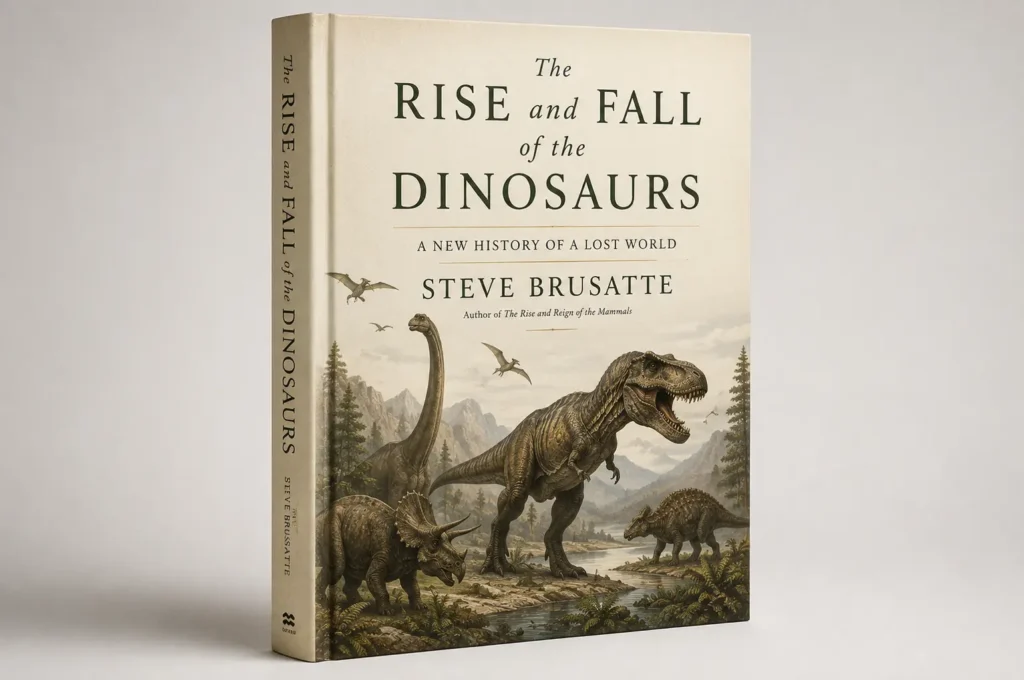
The Rise and Fall of the Dinosaurs
A compelling history of dinosaurs, tracing their origins, diversification, 200-million-year reign, extinction, and enduring legacy.
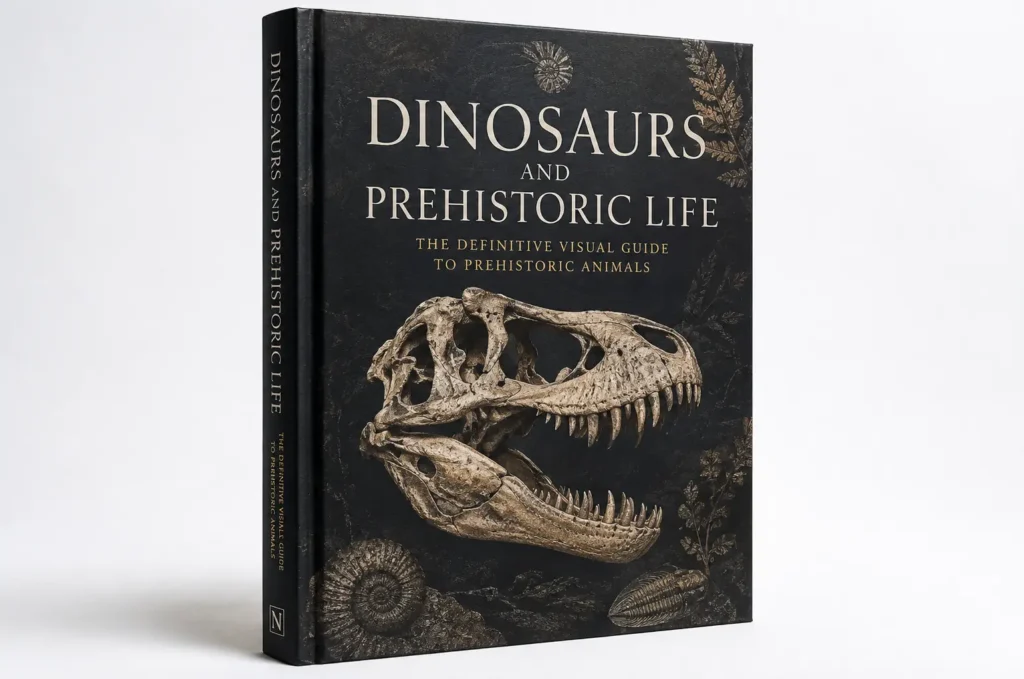
Dinosaurs and Prehistoric Life
A richly illustrated visual reference exploring dinosaurs, fossils, evolution, and prehistoric life across geological time.
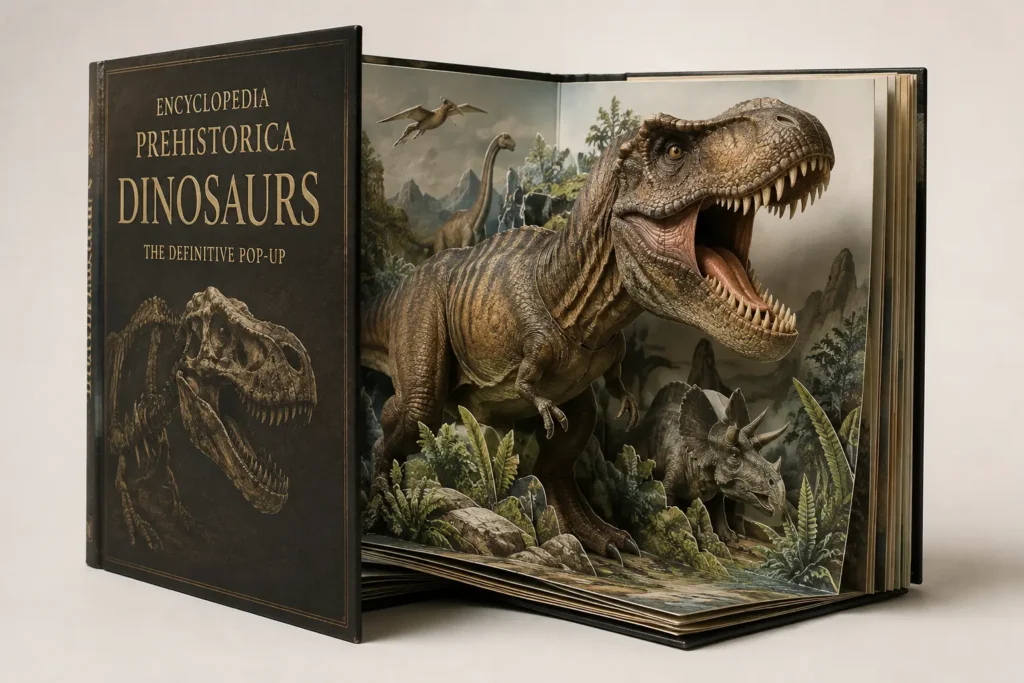
Encyclopedia Prehistorica: Dinosaurs
An interactive dinosaur book featuring spectacular three-dimensional pop-ups, particularly suited to young readers and families.
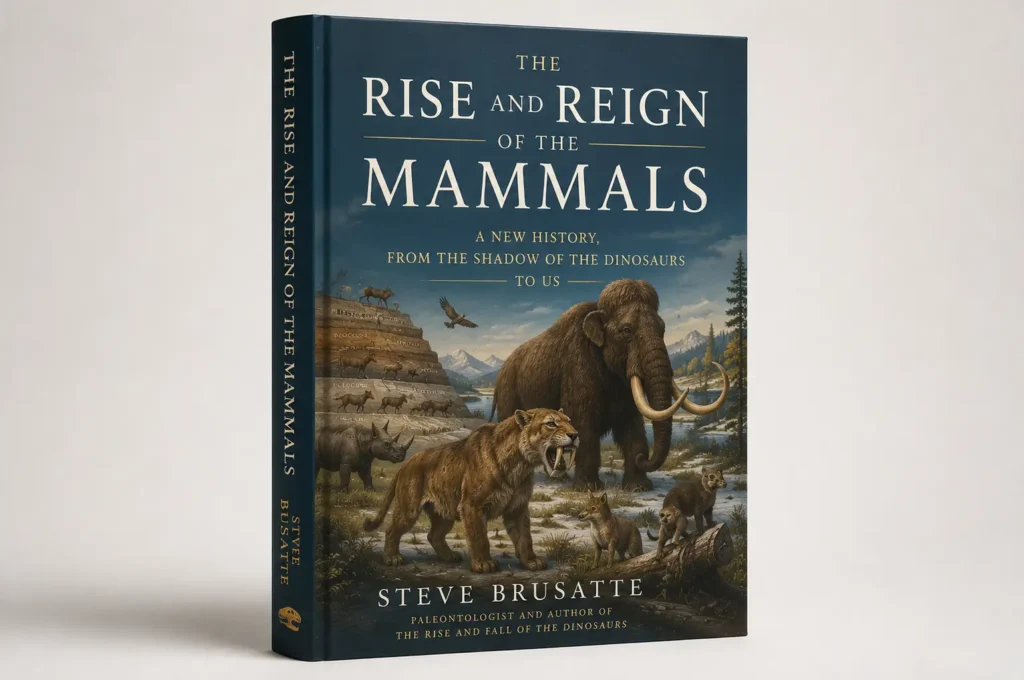
The Rise and Reign of the Mammals
A sweeping history of mammalian evolution, from their origins alongside dinosaurs through the Cenozoic and the emergence of humans.