

| Field | Information |
|---|---|
| Species | Ankylosaurus magniventris — Ornithischia, Ankylosauridae |
| Time Period | Late Cretaceous (late Maastrichtian), approximately 68–66 million years ago |
| Geological Formation | Hell Creek Formation |
| Geographic Range | Present-day Montana, Wyoming, North Dakota, South Dakota, and adjacent regions represented by equivalent latest Maastrichtian deposits. |
| Environment Type | Fluvial coastal plain with floodplains, channels, wetlands, and forested lowlands |
| Climate | Warm temperate to subtropical, seasonally variable, humid, without permanent polar ice sheets |
Quick Answer: Ankylosaurus magniventris inhabited the low-lying coastal plain ecosystems of the Hell Creek Formation in western North America during the final two million years of the Cretaceous, approximately 68–66 million years ago. Its environment consisted of river channels, floodplains, wetlands, and forested lowlands near the retreating Western Interior Seaway.

Where Did Ankylosaurus Live?
Ankylosaurus magniventris is known from the Hell Creek Formation of western North America, a well-studied late Maastrichtian geological unit exposed across present-day Montana, Wyoming, North Dakota, and South Dakota. This formation preserves ecosystems from the final phase of the Cretaceous, immediately before the end-Cretaceous mass extinction.
During this interval, the Hell Creek region formed part of a broad coastal plain bordering the western margin of the retreating Western Interior Seaway, the shallow inland sea that had previously divided North America into separate eastern and western landmasses. The environment was a dynamic lowland landscape shaped by river systems, floodplain deposition, channel migration, wetlands, and forested habitats.
Sedimentological evidence indicates that Ankylosaurus inhabited a fluvial environment dominated by meandering river channels, overbank floodplains, oxbow lakes, marshes, and poorly drained lowlands. The Hell Creek ecosystem was not an open grassland biome; grasses existed in the Late Cretaceous but had not become dominant landscape-forming vegetation. Instead, vegetation likely consisted of angiosperm trees and shrubs, conifers, ferns, and other understory plants suitable for a low-browsing herbivore.
Hell Creek Climate and Seasonal Conditions
The Hell Creek paleoenvironment was substantially warmer than the modern northern Great Plains, though not uniformly tropical. Paleoclimate evidence suggests a warm temperate to subtropical climate with pronounced seasonal precipitation patterns.
Rather than extreme cold winters, environmental seasonality was likely driven primarily by rainfall variability, flooding cycles, and changes in water availability. River migration and periodic flooding would have continuously reshaped habitat structure and plant distribution.
There were no permanent polar ice sheets during the Late Cretaceous greenhouse world, and global sea levels remained elevated relative to the present, although the Western Interior Seaway was in regression by the time Ankylosaurus lived.
These conditions supported a productive terrestrial ecosystem containing diverse herbivorous and carnivorous dinosaurs, including ceratopsians, hadrosaurids, tyrannosaurids, smaller theropods, crocodilians, turtles, mammals, and abundant plant life.
Habitat Suitability for Ankylosaurus
As a large, heavily built quadrupedal herbivore with a low browsing posture, Ankylosaurus was well-suited to exploiting ground-level vegetation in dense floodplain and woodland habitats. Wetland margins, fern-rich understories, and shrub-dominated lowlands likely represented important feeding habitats, although direct dietary evidence remains limited.
Its heavily armoured body and tail club evolved within this predator-rich ecosystem, where large theropods such as Tyrannosaurus rex were present.
Hell Creek Flora: Available Plant Life
The Hell Creek Formation preserves a diverse late Maastrichtian flora documented through fossil pollen (palynology), leaf impressions, permineralised wood, and other plant macrofossils. This evidence indicates a vegetation mosaic dominated by flowering plants (angiosperms), alongside conifers, ferns, and other seed plants.
Angiosperms had become major components of terrestrial ecosystems by the Late Cretaceous, and Hell Creek plant assemblages reflect this transition. Fossil evidence indicates the presence of broadleaf flowering plants, shrubs, understory vegetation, and riparian woodland communities. Ferns were abundant in disturbed and moist habitats, particularly floodplain environments where periodic flooding created suitable colonisation zones.
Conifers remained ecologically important, especially in better-drained habitats, while wetter lowland areas supported dense mixed vegetation. Evidence for palm-like plants in some contemporaneous Late Cretaceous North American assemblages supports warm climatic conditions, though Hell Creek vegetation was regionally heterogeneous rather than uniformly subtropical.
For a large low-browsing herbivore such as Ankylosaurus, the most accessible food resources would likely have included low-growing angiosperms, ferns, shrubs, and juvenile woody vegetation rather than high canopy foliage.
Coexisting Fauna in the Hell Creek Ecosystem
Ankylosaurus lived within one of the best-documented late Cretaceous terrestrial ecosystems in the world. The Hell Creek Formation preserves a diverse vertebrate fauna representing a complex floodplain food web.
Large dinosaurian contemporaries included the apex predator Tyrannosaurus rex, the ceratopsian Triceratops, and the hadrosaurid Edmontosaurus. Smaller theropods, including dromaeosaurids and troodontid-grade maniraptorans, were also present, alongside birds, mammals, lizards, amphibians, turtles, and crocodilians.
This fauna indicates a structurally complex ecosystem with multiple herbivorous feeding guilds. Ankylosaurus, as a heavily built low-browsing herbivore, likely occupied a distinct ecological niche focused on near-ground vegetation. Triceratops may have overlapped partially in feeding height and plant selection, whereas Edmontosaurus likely exploited a broader browsing range due to differences in cranial mechanics, feeding reach, and body plan.
Direct dietary partitioning cannot be measured with certainty for all taxa, so ecological niche separation remains an evidence-based inference rather than a directly observed fact. However, the coexistence of multiple megaherbivores strongly supports some degree of resource partitioning within the Hell Creek ecosystem.
Ongoing discoveries continue to refine reconstructions of this latest Cretaceous community, making Hell Creek one of the most intensively studied dinosaur-bearing ecosystems in vertebrate paleontology.
Related and Contemporary Species
- Tyrannosaurus rex — the apex predator of the Hell Creek ecosystem and the most plausible source of large-theropod predation pressure on adult Ankylosaurus. Direct predator–prey interaction remains inferential, but coexistence makes ecological interaction highly plausible.
- Triceratops — one of the most abundant large herbivores of the Hell Creek Formation, occupying a partially overlapping low- to mid-browsing herbivore niche but relying on a very different defensive anatomy.
- Edmontosaurus annectens — a large hadrosaurid contemporary that likely occupied a broader browsing niche than Ankylosaurus, reflecting differences in feeding mechanics, body posture, and dietary flexibility.
- Dakotaraptor steini — a controversial theropod taxon reported from Hell Creek deposits, often cited as part of the predator assemblage, though aspects of its taxonomic interpretation remain debated.
- Ankylosaurid contemporaries — fragmentary ankylosaurid remains from the latest Cretaceous North America suggest other armored dinosaurs may have coexisted regionally, though direct comparisons at the species level remain limited.
Frequently Asked Questions
What country did Ankylosaurus live in?
Ankylosaurus lived in what is now western North America, with confirmed fossil material from the United States, particularly Montana, Wyoming, and adjacent regions represented by the Hell Creek and Lance formations. During the Late Cretaceous, this area was part of the western landmass of Laramidia rather than the modern United States.
What was the climate like where Ankylosaurus lived?
The Hell Creek environment was warm and seasonally variable, with significantly milder global conditions than today’s climate. Seasonal ecological change was likely driven more by rainfall, flooding, and hydrological cycles than by extreme cold winters. Although Earth lacked permanent polar ice sheets during this greenhouse interval, regional climates still experienced seasonal variation.
Did Ankylosaurus live in forests or open plains?
Ankylosaurus inhabited a heterogeneous coastal plain ecosystem rather than a modern-style open grassland. Its habitat included river corridors, floodplains, wetlands, woodland patches, and vegetated lowlands. Dense closed-canopy forests may have occurred locally, but the broader Hell Creek landscape was a mosaic of interconnected habitats rather than a single biome type.
Scientific Note
Hell Creek paleoecology, climate reconstruction, and late Maastrichtian community structure remain active research areas. While the broad environmental interpretation is well supported, finer ecological details continue to be refined as new fossil, sedimentological, and geochemical evidence emerges.
Conclusion
Ankylosaurus magniventris inhabited the dynamic coastal floodplains of the latest Cretaceous western North America, a biologically rich ecosystem preserved in the Hell Creek and equivalent formations. This environment supported abundant plant life, diverse vertebrate communities, and some of the most iconic dinosaurs known from the fossil record. Understanding this habitat provides critical ecological context for interpreting the anatomy, behaviour, and evolutionary role of one of the largest armored dinosaurs ever discovered.
References
Peer-Reviewed Literature
Fastovsky, D.E. & Sheehan, P.M. (2005). The extinction of the dinosaurs in North America. GSA Today, 15(3), 4–10. https://doi.org/10.1130/1052-5173(2005)015<4:TEOTDI>2.0.CO;2
Wilf, P. & Johnson, K.R. (2004). Land plant extinction at the end of the Cretaceous: A quantitative analysis of the North Dakota megafloral record. Paleobiology, 30(3), 347–368. https://doi.org/10.1666/0094-8373(2004)030<0347:LPEATE>2.0.CO;2
Longrich, N.R., Bhullar, B.-A.S. & Gauthier, J.A. (2012). Mass extinction of lizards and snakes at the Cretaceous–Paleogene boundary. Proceedings of the National Academy of Sciences, 109(52), 21396–21401. https://doi.org/10.1073/pnas.1211526110
Lyson, T.R., Miller, I.M., Bercovici, A., Weissenburger, K., Fuentes, A.J., Clyde, W.C., Hagadorn, J.W., Butrim, M.J., Johnson, K.R., Fleming, R.F., & Barclay, R.S. (2019). Exceptional continental record of biotic recovery after the Cretaceous–Paleogene mass extinction. Science, 366(6468), 977–983. https://doi.org/10.1126/science.aay2268
Geological Reference Works
Hartman, J.H., Johnson, K.R. & Nichols, D.J. (Eds.). (2002). The Hell Creek Formation and the Cretaceous–Tertiary Boundary in the Northern Great Plains. Geological Society of America Special Paper 361. https://doi.org/10.1130/0-8137-2361-2
Foundational Reference Works
Weishampel, D.B., Dodson, P. & Osmólska, H. (Eds.). (2004). The Dinosauria (2nd ed.). University of California Press.
Recommended Paleontology & Natural History Books
As an Amazon Associate, Extinct Atlas may earn from qualifying purchases.
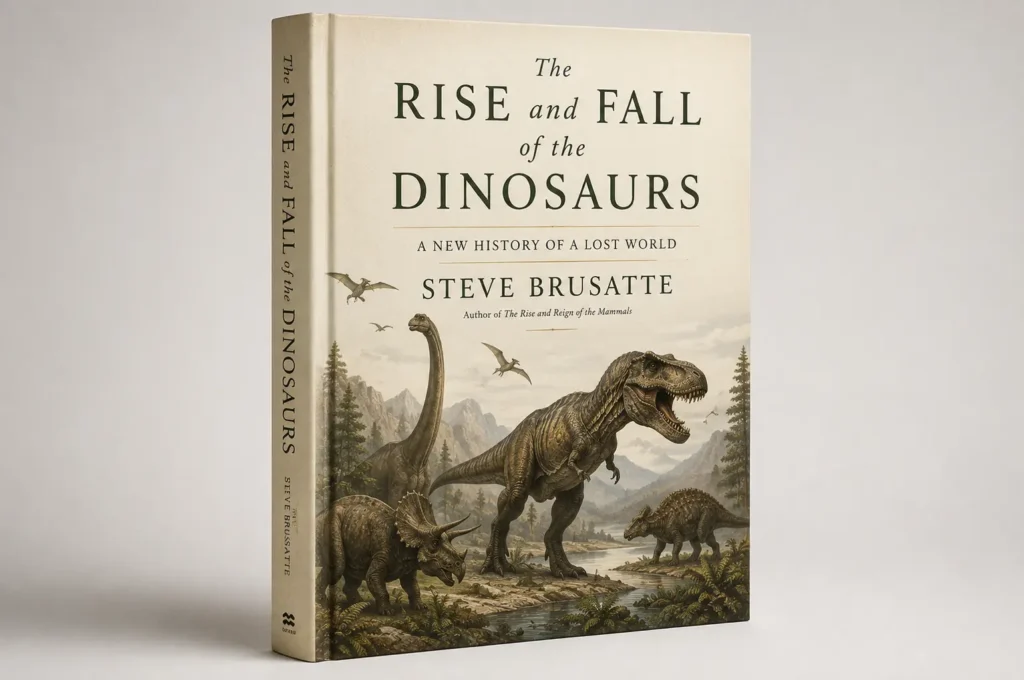
The Rise and Fall of the Dinosaurs
A compelling history of dinosaurs, tracing their origins, diversification, 200-million-year reign, extinction, and enduring legacy.
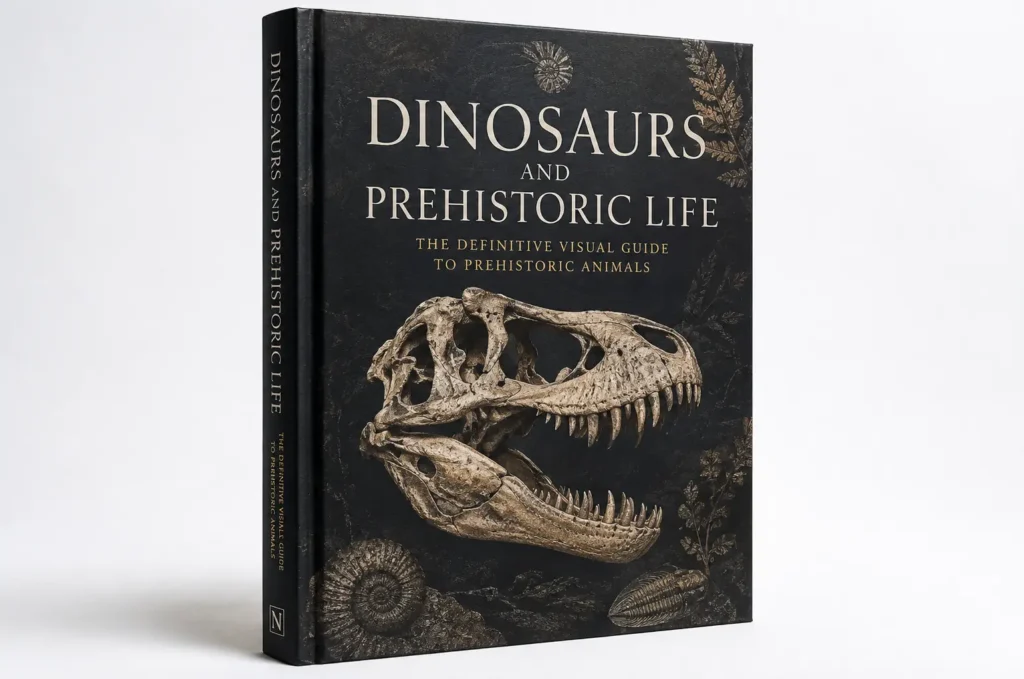
Dinosaurs and Prehistoric Life
A richly illustrated visual reference exploring dinosaurs, fossils, evolution, and prehistoric life across geological time.

Encyclopedia Prehistorica: Dinosaurs
An interactive dinosaur book featuring spectacular three-dimensional pop-ups, particularly suited to young readers and families.
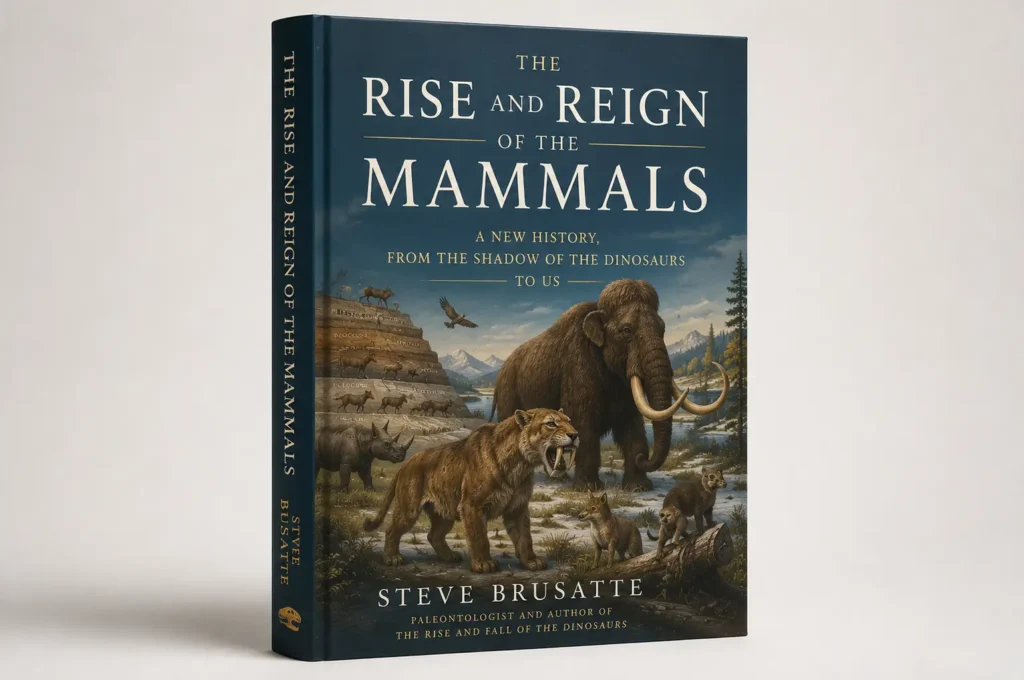
The Rise and Reign of the Mammals
A sweeping history of mammalian evolution, from their origins alongside dinosaurs through the Cenozoic and the emergence of humans.