
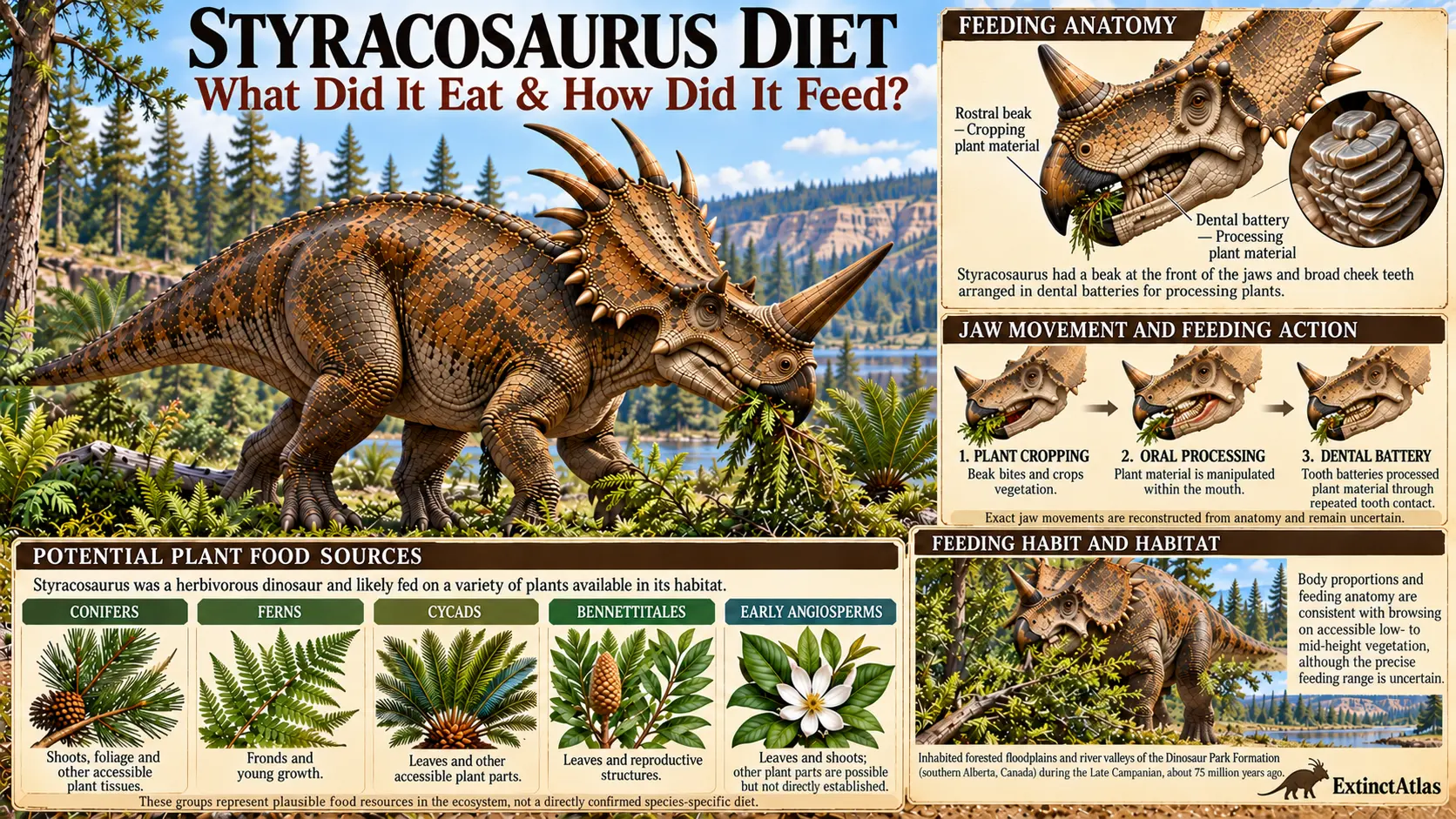
Styracosaurus albertensis was a herbivorous centrosaurine ceratopsid with a specialized feeding apparatus. Its jaws combined a toothless rostral beak with dense dental batteries composed of continuously replacing teeth.
The available evidence supports a feeding system adapted for cropping and shearing plant material. The teeth did not function primarily as individual crushing or grinding units. Instead, opposing dental batteries formed complementary occlusal surfaces that processed plant material as the jaws closed.
The exact composition of the diet is less certain. Plants known from the Dinosaur Park Formation include conifers, ferns, tree ferns, lycopods, angiosperms and other vegetation, but the fossil evidence does not establish that Styracosaurus specialized exclusively on any one of these groups.
At a Glance
| Feature | Evidence |
|---|---|
| Diet | Herbivorous |
| Primary feeding structures | Keratinous rostral beak and dental batteries |
| Beak function | Cropping, grasping and plucking plant material |
| Teeth | Continuously replacing ceratopsid dental batteries |
| Tooth function | Primarily shearing |
| Jaw movement | Predominantly vertical or near-vertical occlusal movement |
| Feeding height | Probably concentrated on relatively low vegetation |
| High browsing | Not strongly supported |
| Plant selectivity | Not securely established |
| Tough or fibrous vegetation | Mechanically compatible with the shearing dentition |
| Grinding | Not the principal documented dental function |
| Exact plant taxa consumed | Uncertain |
| Principal evidence | Skull and jaw anatomy; comparative ceratopsid feeding biomechanics |
What Did Styracosaurus Eat?
The secure conclusion is simple: Styracosaurus was a plant-eating dinosaur.
Its skull and dentition provide strong evidence for herbivory. The jaws terminated in a robust beak, while the cheek regions contained extensive tooth batteries.
The available evidence does not, however, permit a definitive menu such as ferns, cycads or conifers alone.
The Dinosaur Park Formation contained a diverse plant community. Palynological and macrofloral evidence indicates forests dominated by taxodiaceous, cupressaceous and podocarpaceous conifers, with ferns, tree ferns, lycopods, angiosperm herbs and gymnosperm saplings occurring at lower levels.
These plants establish the potential food environment, not the precise diet of Styracosaurus.
The Beak
The front of the jaws formed a toothless rostral region covered in life by a keratinous beak.
The beak provided the first stage of food acquisition. Its margins could have been used to grasp, crop and remove plant material rather than processing vegetation with individual anterior teeth.
Comparative functional studies of ceratopsian skulls describe the edentulous beak as suited to grasping and plucking vegetation.
The beak therefore formed part of an integrated feeding apparatus rather than functioning as an isolated cutting structure.
Dental Batteries
Behind the beak, Styracosaurus possessed the characteristic ceratopsid dental battery.
A dental battery consists of tightly packed tooth families in which functional teeth are supplemented by replacement teeth. Ceratopsids developed complex batteries, with multiple replacement teeth integrated into the tooth row.
This arrangement contributed to maintaining an effective occlusal surface as individual teeth became worn.
| Dental feature | Feeding significance |
|---|---|
| Dense tooth rows | Produced closely packed occlusal surfaces |
| Multiple replacement teeth | Replaced worn functional teeth |
| Two-rooted ceratopsid teeth | Contributed to integration of teeth within the battery |
| Vertical tooth integration | Supported a functional shearing surface |
| Complementary upper and lower batteries | Supported repeated shearing of plant material |
The significance of the battery was therefore not simply the number of teeth present at one time. Its functional significance included maintaining an effective processing surface as individual teeth were worn and replaced.
How Did the Teeth Work?
Ceratopsid teeth did not function like the broad grinding molars of modern herbivorous mammals.
The opposing dental batteries formed complementary shearing surfaces. When the jaws closed, the tooth rows moved into close occlusion and processed plant material between their opposing surfaces.
Analysis of Dinosaur Park Formation megaherbivores supports a predominantly shearing interpretation of ceratopsid dental function rather than a model based primarily on crushing or grinding.
The “scissors” analogy can be useful as a basic visualization, but it should not be interpreted literally. Actual jaw geometry is more complex than a simple pair of scissors because the jaw joint, tooth rows, and associated structures constrain the precise movement of the teeth.
Jaw Movement
The ceratopsid jaw was specialized for relatively constrained occlusal movement.
Functional analyses generally reconstruct the principal movement as vertical or near-vertical shearing rather than the extensive side-to-side grinding motion characteristic of many mammalian herbivores.
This distinction is important. Styracosaurus possessed a feeding system based on a beak combined with continuously renewed dental batteries and predominantly shearing tooth-to-tooth contact, rather than a mammal-like grinding system.
Bite Mechanics
The jaw architecture of ceratopsids provided substantial mechanical advantage.
The tall coronoid region of the lower jaw provided attachment and leverage for the jaw adductor muscles. The relationship between the jaw joint, tooth row, and muscle forces produced a mechanically advantageous configuration.
Comparative biomechanical analyses identify the caudal portion of the ceratopsid tooth row as a region capable of particularly high mechanical advantage.
This does not mean that every bite was necessarily maximal or that a single bite-force value can be confidently assigned to Styracosaurus. Mechanical advantage and actual bite force are different quantities.
Actual bite force would additionally depend on muscle size, physiological activation, posture, and other soft-tissue variables that cannot be directly measured in the fossil.
Cropping Versus Processing
The feeding system can be divided conceptually into two stages.
| Stage | Feeding process |
|---|---|
| Stage 1 — acquisition | The beak grasped and cropped plant material |
| Stage 2 — processing | Plant material passed posteriorly into the dental battery, where opposing tooth surfaces sheared plant tissues |
This arrangement explains why the rostral beak and posterior tooth batteries should be considered together when reconstructing Styracosaurus feeding.
Was Styracosaurus Capable of Processing Tough Vegetation?
Its dental anatomy is mechanically compatible with processing relatively resistant plant tissues.
Ceratopsid teeth were well suited to producing shearing surfaces, and analysis of Dinosaur Park Formation megaherbivores interpreted this morphology as mechanically consistent with processing relatively resistant plant material.
Some museum and comparative sources therefore describe Styracosaurus as capable of feeding on tough or woody vegetation.
However, the ability to process resistant vegetation is not equivalent to demonstrating a specialized or exclusive diet of woody plants.
The fossil evidence supports the former more securely than the latter.
What Plants Did Styracosaurus Eat?
The precise plant composition of the diet remains uncertain.
| Plant group | Present in the Dinosaur Park Formation? | Established Styracosaurus food? |
|---|---|---|
| Conifers | Yes | Not specifically established |
| Ferns | Yes | Not specifically established |
| Tree ferns | Yes | Not specifically established |
| Lycopods | Yes | Not specifically established |
| Angiosperms | Yes | Not specifically established |
| Gymnosperm saplings | Yes | Not specifically established |
| Mosses and lichens | Present in ground cover | Not specifically established |
The distinction is important because environmental availability is not dietary proof.
A plant growing alongside Styracosaurus does not necessarily mean that it was regularly consumed.
Low-Level Feeding
The position of the skull and overall body construction have been used to infer that Styracosaurus concentrated much of its feeding activity relatively close to the ground.
Feeding-height analysis of herbivorous dinosaurs from the Dinosaur Park Formation found that most species were restricted to feeding at relatively low heights, with ceratopsids generally associated with feeding close to the ground.
This supports an interpretation in which relatively low vegetation was an important component of the available feeding zone, but it should not be converted into an absolute statement that Styracosaurus could never feed above ground level.
Could Styracosaurus Reach Taller Vegetation?
The available anatomy does not support treating Styracosaurus as a high browser comparable to a sauropod.
Its feeding apparatus was positioned at the front of a relatively low-slung ceratopsid body, and the normal head position is compatible with substantial ground-level feeding.
However, large herbivores could alter head position, and the presence of a beak capable of grasping vegetation means that feeding height is better described as a probable feeding range or emphasis rather than as a rigid anatomical limit.
Could It Pull Down Plants?
One proposed behavior is that a large ceratopsid could use its body, beak, or cranial structures to bring taller vegetation within reach before cropping it.
This is mechanically conceivable, and similar ideas have been discussed in the ceratopsian literature.
However, there is no direct fossil evidence demonstrating that Styracosaurus repeatedly pulled down particular plants.
This behavior should therefore remain an inference rather than part of the established diet.
Dental Wear and Food Processing
Tooth wear provides an additional source of information about feeding mechanics.
Wear surfaces on ceratopsid teeth are consistent with repeated occlusion between opposing dental batteries. The resulting wear pattern reflects the mechanical interaction of the teeth rather than simply indicating that the animals possessed “sharp teeth.”
For Dinosaur Park Formation megaherbivores, tooth morphology and wear have been used to investigate differences in feeding mechanics and possible ecological partitioning.
However, direct species-level dietary reconstruction for Styracosaurus remains more limited than the general evidence for ceratopsid shearing mechanics.
Feeding Ecology in the Dinosaur Park Formation
Styracosaurus lived in a diverse Late Cretaceous herbivore community.
The Dinosaur Park Formation contained multiple large herbivorous dinosaur groups, including ceratopsids and hadrosaurids. Plant communities included both forest-canopy and understory vegetation.
This ecological setting raises the possibility of feeding-height and dietary partitioning among herbivores.
However, ecological partitioning should not be confused with a demonstrated species-specific food list. The presence of several herbivore species does not by itself establish exactly which plants each species consumed.
Beak and Teeth Worked Together
The feeding apparatus is best understood as an integrated system.
| Structure | Primary feeding role |
|---|---|
| Rostral beak | Grasping and cropping vegetation |
| Maxilla | Supports the upper dental battery |
| Dentary | Supports the lower dental battery |
| Dental battery | Repeated shearing of plant material |
| Replacement teeth | Helped maintain the functional processing surface |
| Coronoid region | Contributed to jaw-muscle leverage |
| Jaw joint | Constrained and guided mandibular movement |
Together, these structures formed an integrated feeding system in which vegetation could be acquired with the beak and subsequently processed through repeated tooth-to-tooth shearing.
What the Feeding Anatomy Does Not Show
The skull provides strong evidence for the mechanics of feeding but much less direct evidence for the identity of individual food plants.
| Claim | Evidence assessment |
|---|---|
| Styracosaurus was herbivorous | Strong |
| It used a beak to crop vegetation | Strong |
| It possessed continuously replacing dental batteries | Strong |
| Teeth functioned primarily as shearing surfaces | Strong |
| It could process relatively resistant plant material | Moderate–strong |
| It mainly fed on low vegetation | Moderate |
| It specialized on cycads | Limited |
| It specialized on palms | Limited |
| It specialized on ferns | Limited |
| It specialized on conifers | Limited |
| It regularly stripped bark | Not established |
| It deliberately pulled down trees | Not established |
| It ate a specific named plant species | Not established |
Evidence Assessment
| Feeding question | Evidence strength | Assessment |
|---|---|---|
| Herbivory | High | Strongly supported by cranial and dental anatomy |
| Beak-based cropping | High | Consistent with rostral anatomy and comparative ceratopsian feeding studies |
| Dental-battery shearing | High | Strong comparative and biomechanical support |
| Continuous tooth replacement | High | Characteristic ceratopsid condition |
| Mechanical advantage in the jaws | High | Supported by mandibular architecture and comparative biomechanics |
| Processing resistant vegetation | Moderate–high | Mechanically consistent with the shearing dentition |
| Predominantly low-level feeding | Moderate | Supported by skull orientation and feeding-height analysis |
| Exact plant composition | Low–moderate | Environmental evidence does not identify consumed plants |
| Specialized cycad or palm diet | Low | Not demonstrated for Styracosaurus |
| Specialized fern diet | Low | Possible food source, but not specifically demonstrated |
| Specific feeding behavior such as tree pulling | Low | Mechanically conceivable but not directly evidenced |
| Mammal-like grinding | Low | Inconsistent with the primary interpretation of ceratopsid dental mechanics |
Scientific Uncertainty
The strongest evidence concerns feeding mechanics, not dietary plant identity.
The morphology of the beak and dental batteries provides a coherent functional system: vegetation could be grasped or cropped with the beak and then processed through repeated tooth-to-tooth shearing.
By contrast, reconstructing the exact plants consumed is much more difficult. The Dinosaur Park Formation preserves a diverse flora, but environmental occurrence cannot establish diet without direct evidence.
Similarly, the ability to process relatively resistant vegetation should not be converted into a claim that Styracosaurus exclusively ate woody or highly fibrous plants.
Feeding height is also an inference rather than a direct observation. Available evidence supports substantial use of relatively low vegetation, but does not establish an absolute feeding-height limit.
Current Scientific Understanding
Styracosaurus albertensis was a herbivore with a specialized ceratopsid feeding apparatus.
Its toothless rostral beak was suited to grasping and cropping vegetation, while the dense dental batteries behind the beak formed continuously renewed processing surfaces. Comparative biomechanical research indicates that the ceratopsid mandible provided substantial mechanical advantage and was associated primarily with vertical or near-vertical shearing rather than mammal-like grinding.
The available evidence is consistent with processing relatively resistant plant material and with substantial feeding on relatively low vegetation. However, the fossil record does not securely establish a narrow plant menu for Styracosaurus. Conifers, ferns, tree ferns, lycopods and angiosperms were components of the Dinosaur Park Formation vegetation, but their presence in the ecosystem is not direct evidence that Styracosaurus consumed each of them.
The most defensible reconstruction is therefore a herbivore equipped for cropping and shearing plant tissues, with probable emphasis on relatively low vegetation, without assigning it an unsupported preference for a particular plant group.
References
Lambe, L. M. (1913). A new genus and species of horned dinosaur from the Belly River Formation of Alberta. Ottawa Naturalist, 27, 109–116.
Ostrom, J. H. (1964). A functional analysis of jaw mechanics in the dinosaur Triceratops. Postilla, 88, 1–35.
Ostrom, J. H. (1966). Functional morphology and evolution of the ceratopsian dinosaurs. Evolution, 20(3), 290–308.
Tanoue, K., Grandstaff, B. S., You, H.-L., & Dodson, P. (2009). Jaw mechanics in basal Ceratopsia (Ornithischia, Dinosauria). The Anatomical Record, 292, 1352–1369.
Mallon, J. C., & Anderson, J. S. (2014). The functional and palaeoecological implications of tooth morphology and wear for the megaherbivorous dinosaurs from the Dinosaur Park Formation (Upper Campanian) of Alberta, Canada. PLoS ONE, 9(6), e98605. https://doi.org/10.1371/journal.pone.0098605
Mallon, J. C., Evans, D. C., Ryan, M. J., & Anderson, J. S. (2013). Feeding height stratification among the herbivorous dinosaurs from the Dinosaur Park Formation (Upper Campanian) of Alberta, Canada. BMC Ecology, 13, 14. https://doi.org/10.1186/1472-6785-13-14
Nabavizadeh, A. (2023). How Triceratops got its face: An update on the functional evolution of the ceratopsian head. The Anatomical Record, 306(7), 1951–1968. https://doi.org/10.1002/ar.25196
Recommended Paleontology & Natural History Books
As an Amazon Associate, Extinct Atlas may earn from qualifying purchases.
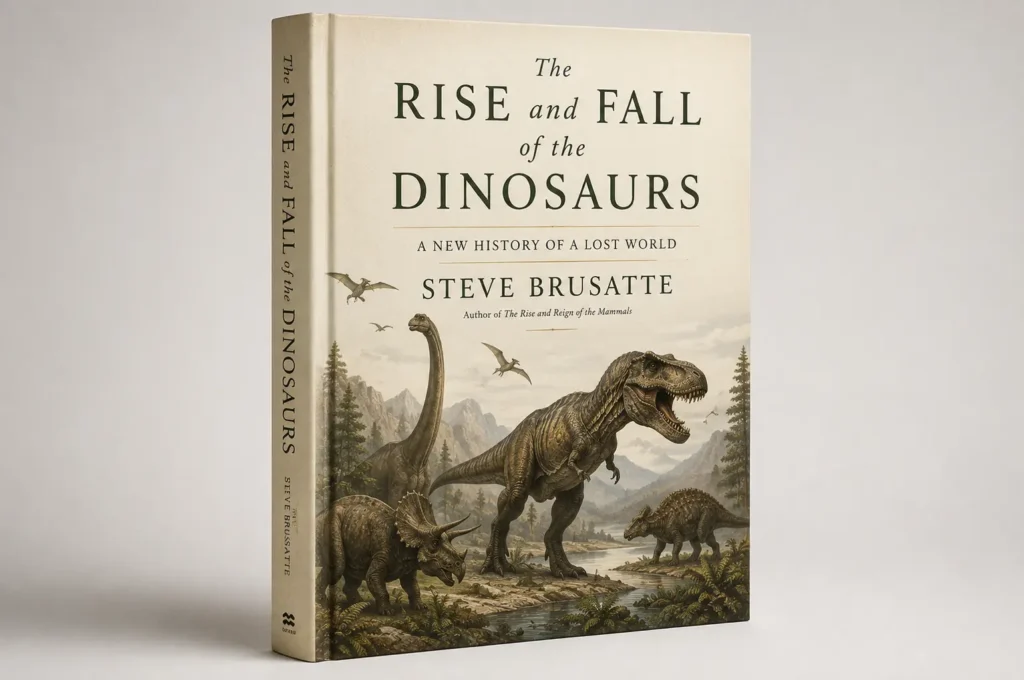
The Rise and Fall of the Dinosaurs
A compelling history of dinosaurs, tracing their origins, diversification, 200-million-year reign, extinction, and enduring legacy.
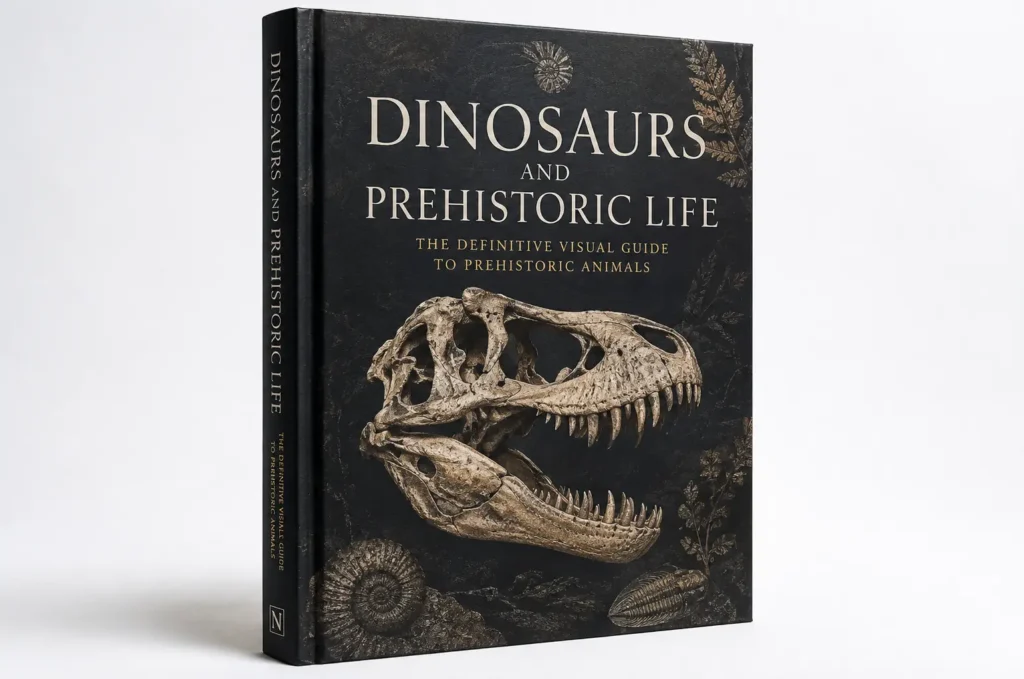
Dinosaurs and Prehistoric Life
A richly illustrated visual reference exploring dinosaurs, fossils, evolution, and prehistoric life across geological time.
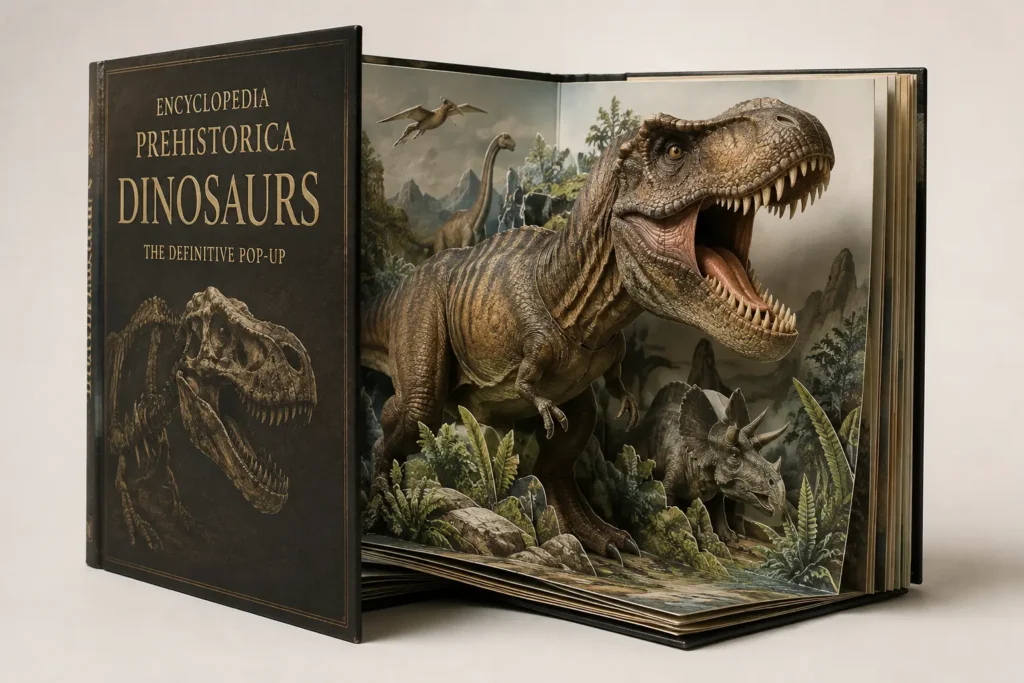
Encyclopedia Prehistorica: Dinosaurs
An interactive dinosaur book featuring spectacular three-dimensional pop-ups, particularly suited to young readers and families.
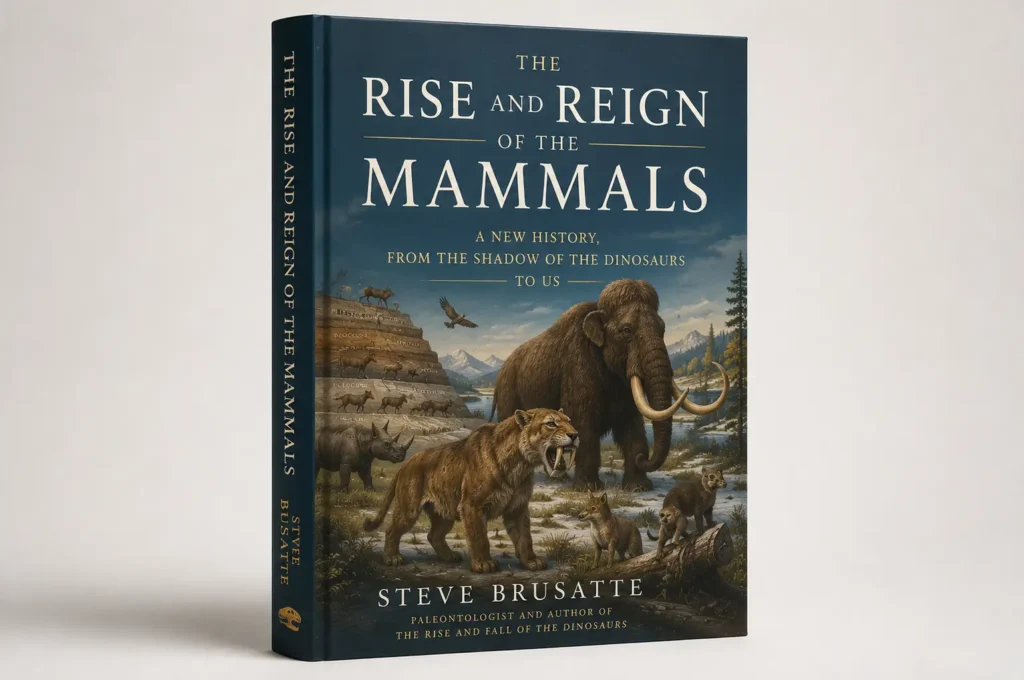
The Rise and Reign of the Mammals
A sweeping history of mammalian evolution, from their origins alongside dinosaurs through the Cenozoic and the emergence of humans.