
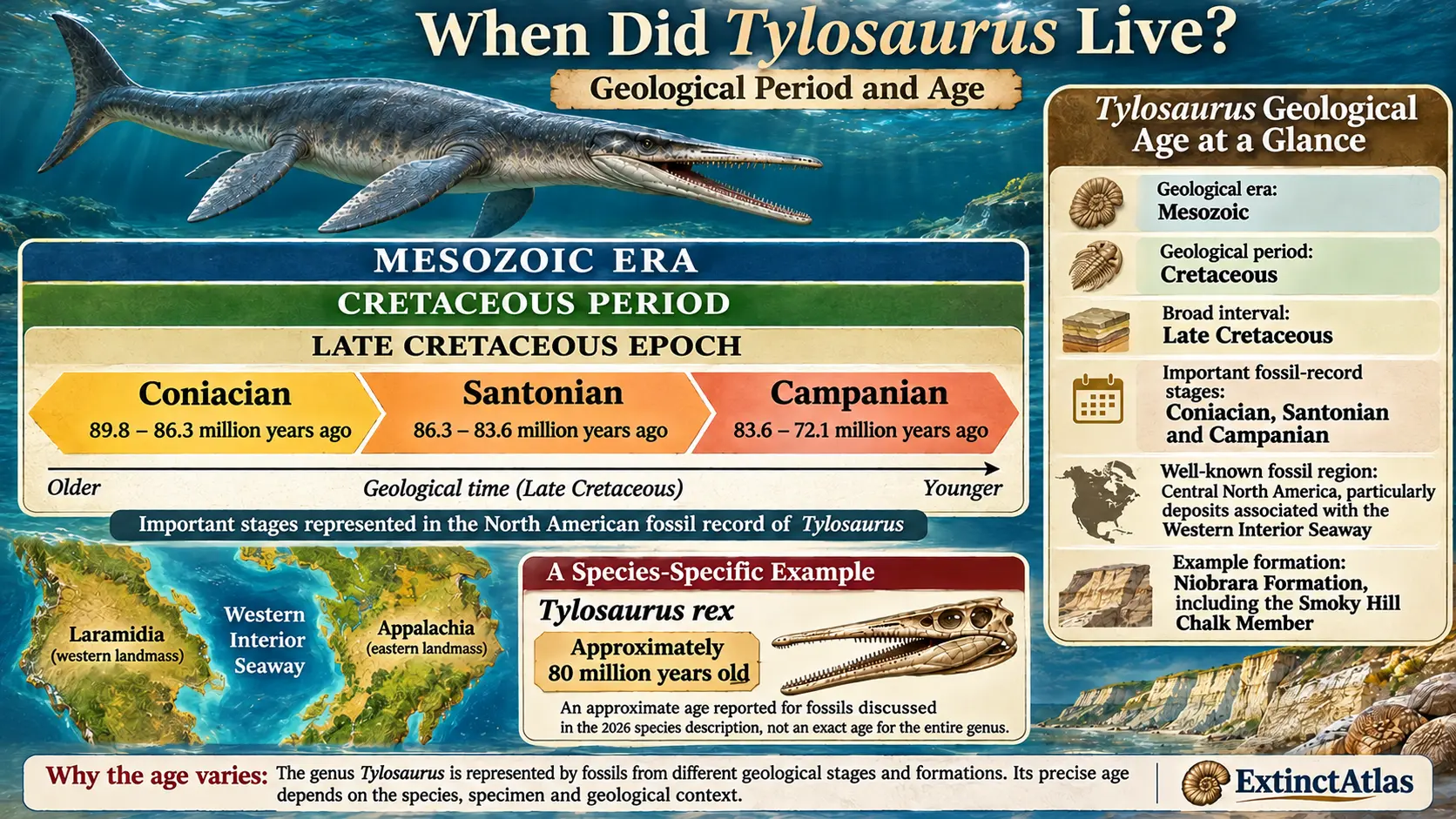
When did Tylosaurus live? Tylosaurus lived during the Late Cretaceous, a period of geological time when mosasaurs were major predators in the oceans and inland seas. Fossils assigned to the genus come from different geological stages and formations, so its precise age depends on the species and specimen being considered. The documented North American record includes the Coniacian, Santonian and Campanian stages.

Tylosaurus Geological Age at a Glance
| Feature | Geological context |
|---|---|
| Geological era | Mesozoic |
| Geological period | Cretaceous |
| Broad interval | Late Cretaceous |
| Important stages in the fossil record | Coniacian, Santonian and Campanian |
| Well-known fossil region | Central North America, especially deposits associated with the Western Interior Seaway |
| Example formation | Niobrara Formation, including the Smoky Hill Chalk Member |
| Approximate age of Tylosaurus rex fossils | About 80 million years old, as reported in the 2026 species description |
| Important qualification | The genus should not be assigned one exact age without specifying the fossil record and taxonomic identification |
Which Geological Period Did Tylosaurus Live In?
Tylosaurus lived in the Cretaceous Period, specifically during the Late Cretaceous. This was the final major interval of the Mesozoic Era, which ended approximately 66 million years ago.
During the Late Cretaceous, much of central North America was affected by the Western Interior Seaway, a broad marine system that extended through the continent. Its sediments preserve fossils of mosasaurs and many other marine organisms.
Tylosaurus was a marine reptile, not a dinosaur. It belonged to Mosasauridae, a group of extinct squamates adapted to aquatic life. Its geological age overlaps with that of non-avian dinosaurs, but it occupied marine environments rather than terrestrial habitats.
Geological Timeline: Tylosaurus and Its Fossils
| Geological interval | Relevance to Tylosaurus |
|---|---|
| Coniacian | T. nepaeolicus is documented from the upper Coniacian, making this an important early part of the known North American record of the genus. |
| Santonian | Fossils assigned to T. nepaeolicus and T. proriger occur in Santonian deposits. The documented range of T. nepaeolicus extends into the lower Santonian. |
| Campanian | T. proriger is recorded into the Campanian, while T. rex was described in 2026 from Campanian fossils in Texas reported to be approximately 80 million years old. |
| End of the Cretaceous, approximately 66 million years ago | The Cretaceous ended in a mass extinction. This date is not, by itself, evidence that Tylosaurus survived until the final day of the period. |
These intervals provide chronological context rather than a complete species-by-species history. Published studies may differ in the precise stratigraphic limits assigned to a species as fossil identifications and geological interpretations are revised. A geological stage is a formal unit of the timescale, while a formation or member is a geological rock unit. They are related, but they are not interchangeable.
How Old Was Tylosaurus in Millions of Years?
There is no single age that applies to every fossil assigned to Tylosaurus. The age of a specimen is established through its geological context, including the stratigraphic unit in which it was found and the dating evidence available for that unit.
For example, T. nepaeolicus is documented from the upper Coniacian to the lower Santonian. T. proriger is recorded from the Santonian into the Campanian, although the precise limits differ between published treatments. The 2026 description of T. rex concerns Campanian fossils from Texas.
These records demonstrate why it is more accurate to state the geological stage and fossil context than to give a single numerical age for the entire genus. Numerical estimates can differ according to the dating framework and the precision of the available stratigraphic information.
Did Tylosaurus Live at the Same Time as Dinosaurs?
Yes. Tylosaurus lived during the Late Cretaceous, when non-avian dinosaurs inhabited terrestrial environments. The two groups shared the same broad geological period, but they occupied different ecological settings.
Tylosaurus was a marine reptile that swam in the seas, while dinosaurs were primarily terrestrial animals, although some dinosaurs were closely associated with aquatic environments. Plesiosaurs, sharks, bony fish, and other marine organisms also inhabited the seas in which Tylosaurus lived.
The phrase “age of the dinosaurs” describes a broad geological context. It does not mean that Tylosaurus was itself a dinosaur.
Why Is the Exact Age Sometimes Uncertain?
Fossils do not always come with precise dates. Paleontologists estimate their ages using geological mapping, stratigraphic relationships, index fossils, and, where available, radiometric dating of suitable associated rocks.
Several factors can affect the precision of a reported age:
- Stratigraphic provenance: The exact location and rock unit from which a specimen was collected may be uncertain, especially for historical museum material.
- Dating resolution: A formation may span a substantial interval of geological time rather than one precisely dated moment.
- Taxonomic reassessment: A fossil previously assigned to one species may later be referred to another, changing the apparent age range of that species.
- Different kinds of age estimates: A numerical age for a fossil-bearing deposit is not necessarily an exact date for the death of an individual animal.
These limitations do not undermine the broad conclusion that Tylosaurus lived during the Late Cretaceous. They explain why more specific dates should be tied to particular specimens and geological evidence.
Evidence Strength and Evidence Assessment
| Claim | Evidence strength | Assessment |
|---|---|---|
| Tylosaurus lived during the Late Cretaceous. | Strong | Supported by the established geological context of the genus’s fossil record. |
| Important specimens occur in Coniacian, Santonian and Campanian deposits. | Strong for documented specimens | Published species descriptions and museum records document occurrences in these intervals; this does not mean every species has the same range. |
| T. nepaeolicus is recorded from the upper Coniacian to the lower Santonian. | Strong | This range is reported in published stratigraphic and taxonomic studies. |
| T. rex is based on fossils reported to be approximately 80 million years old. | Strong for the published description | The numerical age is a reported approximation for the fossil material, not an exact date for the species’ origin or extinction. |
| Every Tylosaurus species lived throughout the entire Late Cretaceous. | Not established | Species-level ranges must be assessed individually using diagnostic fossils and reliable stratigraphic context. |
| Tylosaurus survived until the end-Cretaceous extinction at approximately 66 million years ago. | Not established by the evidence summarised here | The end of the Cretaceous is a boundary date, not proof of a final occurrence for the genus. |
References
- American Museum of Natural History. (2026, May 21). Giant Mosasaur Species from Texas Named T. rex.
- Zietlow, A. R., Polcyn, M. J., & Tykoski, R. S. (2026). A gigantic new species of Tylosaurus (Squamata: Mosasauridae) from Texas, and a revised character list for phylogenetic analyses of Mosasauridae. Bulletin of the American Museum of Natural History, 482, 1–77. https://doi.org/10.1206/0003-0090.482.1.1
- Jiménez-Huidobro, P., & Caldwell, M. W. (2019). A new hypothesis of the phylogenetic relationships of the Tylosaurinae (Squamata: Mosasauroidea). Frontiers in Earth Science, 7, 47. https://doi.org/10.3389/feart.2019.00047
- Smithsonian National Museum of Natural History. Tylosaurus nepaeolicus specimen record. Paleobiology Department, specimen record NMNH Paleobiology 3429290.
- Smithsonian National Museum of Natural History. Tylosaurus proriger specimen record. Paleobiology Department, specimen record NMNH Paleobiology 3429339.
Recommended Paleontology & Natural History Books
As an Amazon Associate, Extinct Atlas may earn from qualifying purchases.
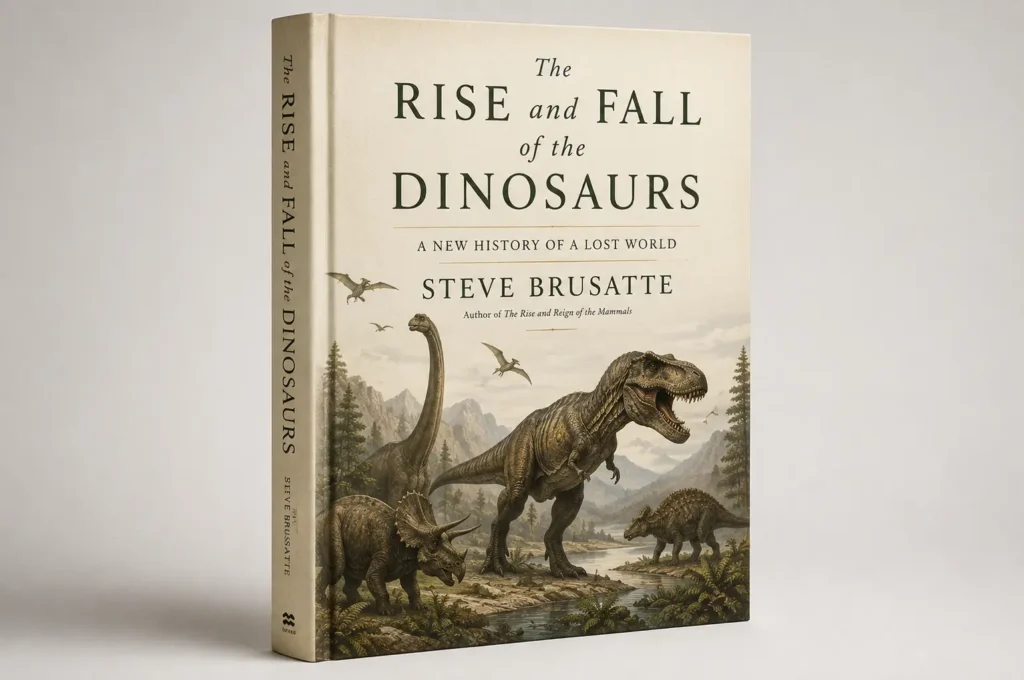
The Rise and Fall of the Dinosaurs
A compelling history of dinosaurs, tracing their origins, diversification, 200-million-year reign, extinction, and enduring legacy.
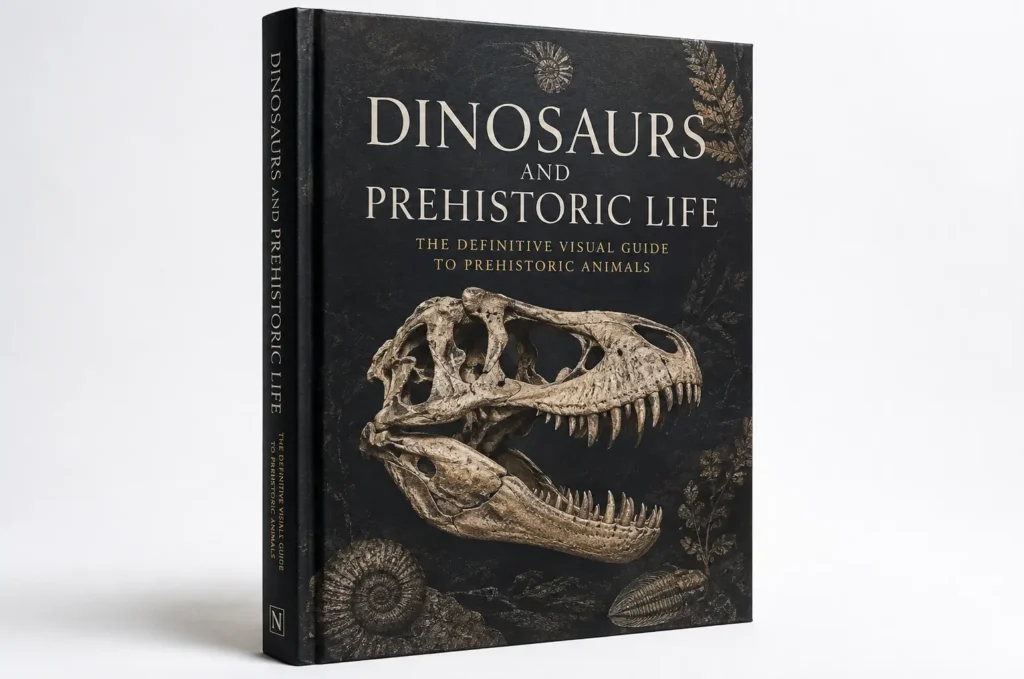
Dinosaurs and Prehistoric Life
A richly illustrated visual reference exploring dinosaurs, fossils, evolution, and prehistoric life across geological time.
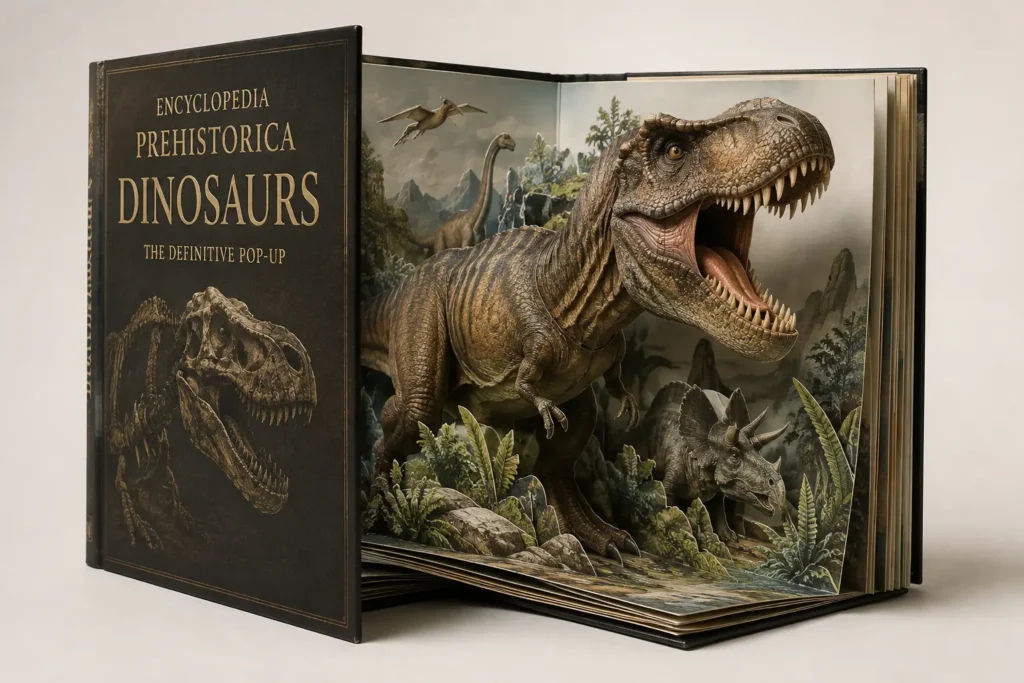
Encyclopedia Prehistorica: Dinosaurs
An interactive dinosaur book featuring spectacular three-dimensional pop-ups, particularly suited to young readers and families.
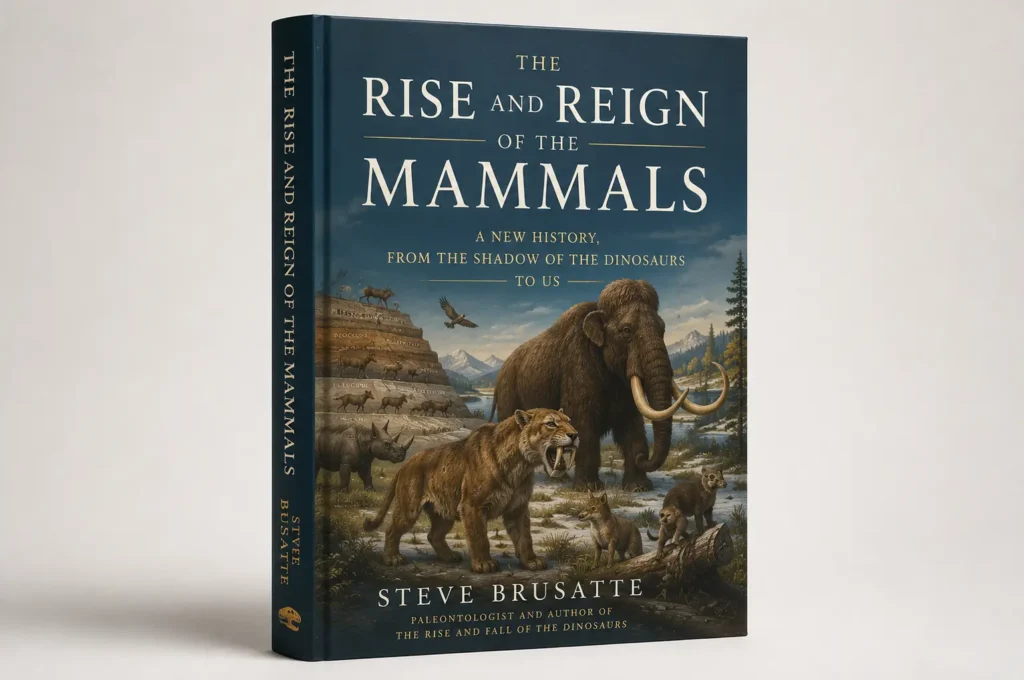
The Rise and Reign of the Mammals
A sweeping history of mammalian evolution, from their origins alongside dinosaurs through the Cenozoic and the emergence of humans.