
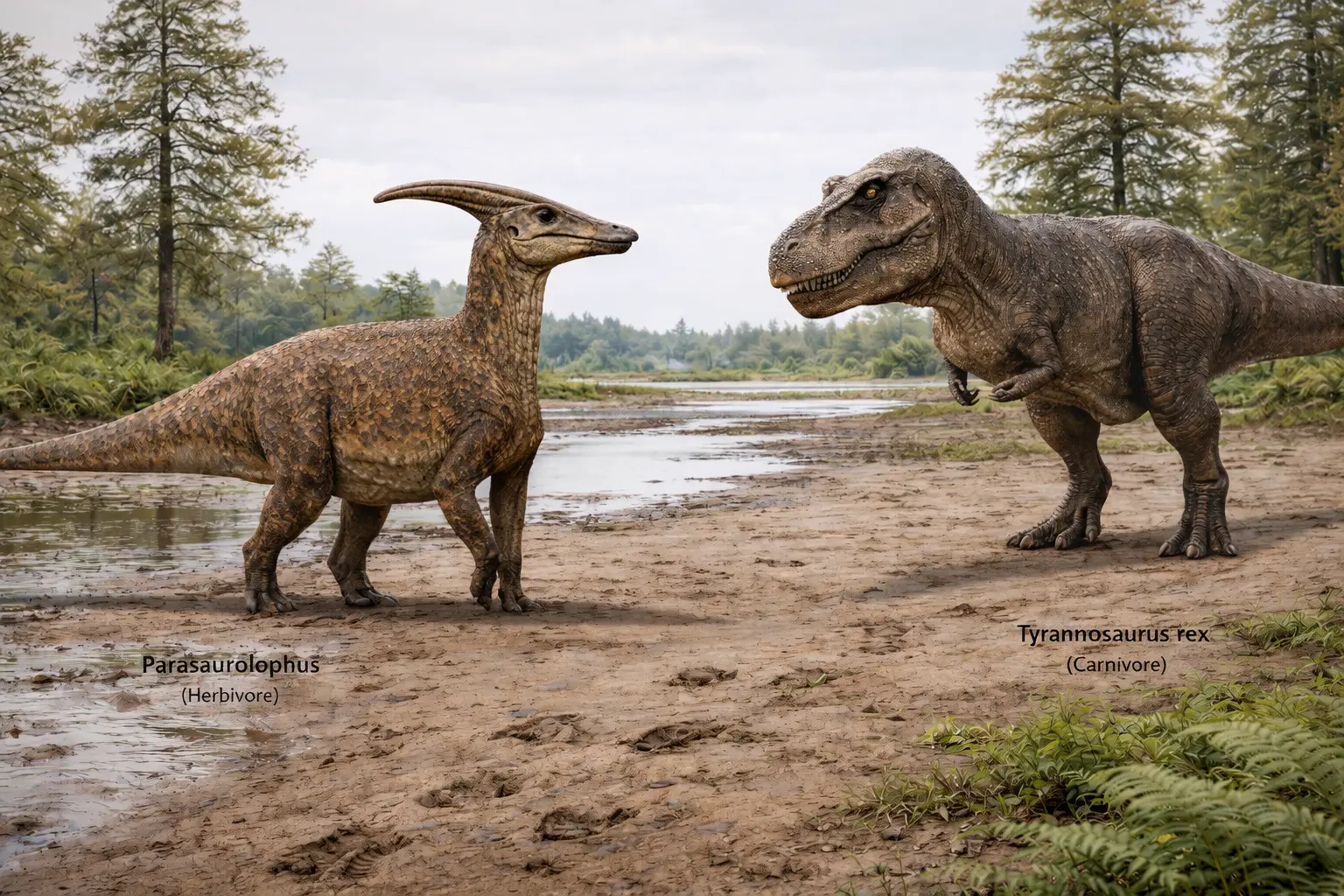
At a Glance
| Feature | Parasaurolophus | Tyrannosaurus rex |
|---|---|---|
| Period | 76.5–73 Ma (Campanian) | 68–66 Ma (Maastrichtian) |
| Formation | Dinosaur Park Fm. (Alberta); Kirtland/Fruitland Fms. (New Mexico) | Hell Creek Fm. (Montana, S. Dakota); Lance Fm. (Wyoming) |
| Length | 9.5–11 m (31–36 ft) | 12–13 m (39–43 ft) |
| Weight | 2,500–4,000 kg (5,500–8,800 lb) | 8,000–14,000 kg (17,600–30,900 lb) |
| Diet | Herbivore | Carnivore |
| Did they meet? | No — separated by approximately 7 million years |
Quick Answer: Parasaurolophus and Tyrannosaurus rex never met. Parasaurolophus disappeared from the fossil record at approximately 73 Ma, while T. rex did not appear until around 68 Ma — a gap of roughly 5–7 million years. Any encounter between them is entirely hypothetical. The actual large predators in Parasaurolophus’s ecosystem were Gorgosaurus and Daspletosaurus.
This matchup is one of the most searched dinosaur comparisons online. It is also one of the most scientifically misleading, because these two animals never shared the same time or place. What follows is the evidence-based version of the story.
Did Parasaurolophus and T. rex Ever Meet?
No. The fossil record is clear on this point.
Parasaurolophus is known from approximately 76.5–73 Ma, during the Campanian stage of the Late Cretaceous. Tyrannosaurus rex is known from approximately 68–66 Ma, during the Maastrichtian stage. The minimum temporal gap between the last known Parasaurolophus and the first known T. rex is approximately 5 million years — likely more.
They also lived in different geographic areas. Parasaurolophus fossils are concentrated in Alberta and New Mexico. T. rex fossils come primarily from Montana, South Dakota, Wyoming, and neighbouring states — the Hell Creek and Lance Formations, which post-date the formations that yielded Parasaurolophus by several million years.
Any encounter between Parasaurolophus and T. rex is entirely hypothetical. The remainder of this article treats the comparison as the thought experiment it is — not as a representation of ecological reality.
The Actual Predators of Parasaurolophus
The large theropods that actually shared Parasaurolophus’s time and place were Gorgosaurus libratus and Daspletosaurus torosus — both tyrannosaurids, but distinctly different animals from T. rex.
Gorgosaurus libratus
Gorgosaurus is well-documented from the Dinosaur Park Formation — the same formation as P. walkeri. It was smaller than T. rex, estimated at approximately 8–9 m (26–30 ft) in length and 1,500–2,500 kg (3,300–5,500 lb). Fossil evidence from the Dinosaur Park Formation documents Gorgosaurus as the dominant large predator in P. walkeri‘s ecosystem.
Daspletosaurus torosus
Daspletosaurus torosus co-occurred with Gorgosaurus libratus in the Dinosaur Park Formation of Alberta and formed part of the same predator guild as large hadrosaurs, including Parasaurolophus.
Compared to Gorgosaurus, Daspletosaurus was more robustly built, with a deeper skull, stronger jaw musculature, and proportionally heavier dentition—features consistent with a powerful bite adapted for handling large prey.
Body size estimates suggest a length of approximately 8–9 m (26–30 ft) and a mass likely in the range of ~2,000–2,500 kg (4,400–5,500 lb), though these figures are model-dependent and vary across studies.
As a tyrannosaurid, Daspletosaurus represents one of the primary large predators in the ecosystems inhabited by Parasaurolophus, contributing to the predation pressures that likely shaped its behaviour and defensive strategies.
Both Gorgosaurus and Daspletosaurus represent the genuine predation pressure on P. walkeri, not T. rex.
Size and Capability Comparison
This comparison is presented as a thought experiment only. These animals never met.
Body Size
T. rex was substantially larger than Parasaurolophus in every dimension that matters for a predator-prey interaction. At 12–13 m (39–43 ft) and an estimated 8,000–14,000 kg (17,600–30,900 lb), T. rex outweighed Parasaurolophus by a factor of roughly 2–4, depending on the individual estimates used.
Offensive Capability — T. rex
T. rex possessed one of the most powerful bite forces of any terrestrial predator yet modelled. Biomechanical estimates suggest a bite force in the range of 35,000–57,000 N — sufficient to crush bone, as directly evidenced by bite-marked hadrosaur bones in the fossil record. Its binocular vision, robust hindlimbs, and bone-crushing dentition made it an apex predator with no meaningful competition in its ecosystem.
Defensive Options — Parasaurolophus
In a purely hypothetical encounter, Parasaurolophus lacked structural defences against a predator with the capabilities attributed to Tyrannosaurus rex. It had no armour, no horns, and no specialised weaponised tail. Its primary defensive strategies were likely speed, vigilance, and group behaviour.
Biomechanical modelling suggests Parasaurolophus could reach approximately 20–35 km/h (12–22 mph) in short bipedal bursts, though these estimates are model-dependent and should be treated as approximate ranges rather than precise values.
Estimates for T. rex locomotion are similarly uncertain, with most biomechanical studies placing its top speed broadly in the range of ~17–25 km/h (11–16 mph), constrained by body mass and skeletal loading limits. These values remain debated and vary depending on modelling assumptions.
Any apparent speed advantage for Parasaurolophus would therefore have been marginal and context-dependent, and cannot be established with confidence. As such, any direct comparison between the two species is speculative, particularly given that they did not coexist.
This matchup is entirely hypothetical. These animals never coexisted. No outcome can be predicted from fossil evidence.
What Hadrosaur Bones Tell Us About Tyrannosaurid Predation
While T. rex never hunted Parasaurolophus, the fossil record does document tyrannosaurid predation on hadrosaurs in general. Bite marks consistent with tyrannosaurid dentition have been found on hadrosaur bones from multiple formations, providing direct Tier 1 evidence that tyrannosaurids actively preyed on hadrosaurs.
Some of these bite-marked specimens show evidence of healing — meaning the hadrosaur survived the initial attack. This is direct fossil evidence that hadrosaurs were capable of escaping tyrannosaurid predation attempts, at least on some occasions.
The relevance to Parasaurolophus is indirect: its actual predators — Gorgosaurus and Daspletosaurus — were tyrannosaurids of smaller but comparable design, and similar predation dynamics almost certainly applied.
Jurassic Park and the T. rex Association
The Jurassic Park franchise is largely responsible for the cultural pairing of Parasaurolophus and T. rex. In the 1993 film, both species appear together, creating an enduring popular association that has no basis in the fossil record. The film’s Parasaurolophus is depicted fleeing T. rex — a scenario that could never have occurred in nature.
The franchise deserves credit for introducing millions of people to Parasaurolophus. It does not deserve credit for the ecological accuracy of the pairing.
Related and Contemporary Species
- Gorgosaurus libratus: The primary large predator in P. walkeri‘s actual ecosystem; its fossil co-occurrence with Parasaurolophus in the Dinosaur Park Formation makes it the ecologically accurate rival.
- Daspletosaurus torosus: A second tyrannosaurid co-occurring with Parasaurolophus in the Dinosaur Park Formation; more robustly built than Gorgosaurus.
- Albertosaurus sarcophagus: Another tyrannosaurid from the broader Alberta ecosystem; slightly earlier in the record but relevant for understanding the tyrannosaurid predator guild that shaped hadrosaur behaviour.
- Edmontosaurus: A large hadrosaur that co-existed with T. rex in the Hell Creek Formation; the closest ecological analogue to Parasaurolophus in T. rex‘s actual ecosystem.
Frequently Asked Questions
Did Parasaurolophus and T. rex live at the same time?
No. Parasaurolophus disappears from the fossil record at approximately 73 Ma. T. rex does not appear until approximately 68 Ma. The two species are separated by a minimum of approximately 5 million years and lived in different geographic areas. Any encounter between them is entirely hypothetical.
What actually hunted Parasaurolophus?
The large predators documented in the same formations as Parasaurolophus were Gorgosaurus libratus and Daspletosaurus torosus — both tyrannosaurids, but smaller and earlier than T. rex. Bite-marked hadrosaur bones from the same period provide direct evidence that tyrannosaurids actively preyed on hadrosaurs.
Could Parasaurolophus outrun T. Rex?
In a hypothetical scenario only — these animals never coexisted. Biomechanical estimates suggest Parasaurolophus could reach approximately 20–35 km/h (12–22 mph) at burst speed, while T. rex estimates range from approximately 17–25 km/h (11–16 mph). Any speed advantage would have been marginal and is entirely speculative. Speed estimates for both species carry significant uncertainty.
Conclusion
Parasaurolophus and T. rex are one of palaeontology’s most popular pairings and one of its most ecologically inaccurate ones. The fossil record places them millions of years and hundreds of kilometres apart. The real story — of Parasaurolophus navigating a world of Gorgosaurus and Daspletosaurus — is less familiar but better supported by evidence, and considerably more interesting for it.
Recommended Paleontology & Natural History Books
As an Amazon Associate, Extinct Atlas may earn from qualifying purchases.
The Rise and Fall of the Dinosaurs
A compelling history of dinosaurs, tracing their origins, diversification, 200-million-year reign, extinction, and enduring legacy.
Dinosaurs and Prehistoric Life
A richly illustrated visual reference exploring dinosaurs, fossils, evolution, and prehistoric life across geological time.
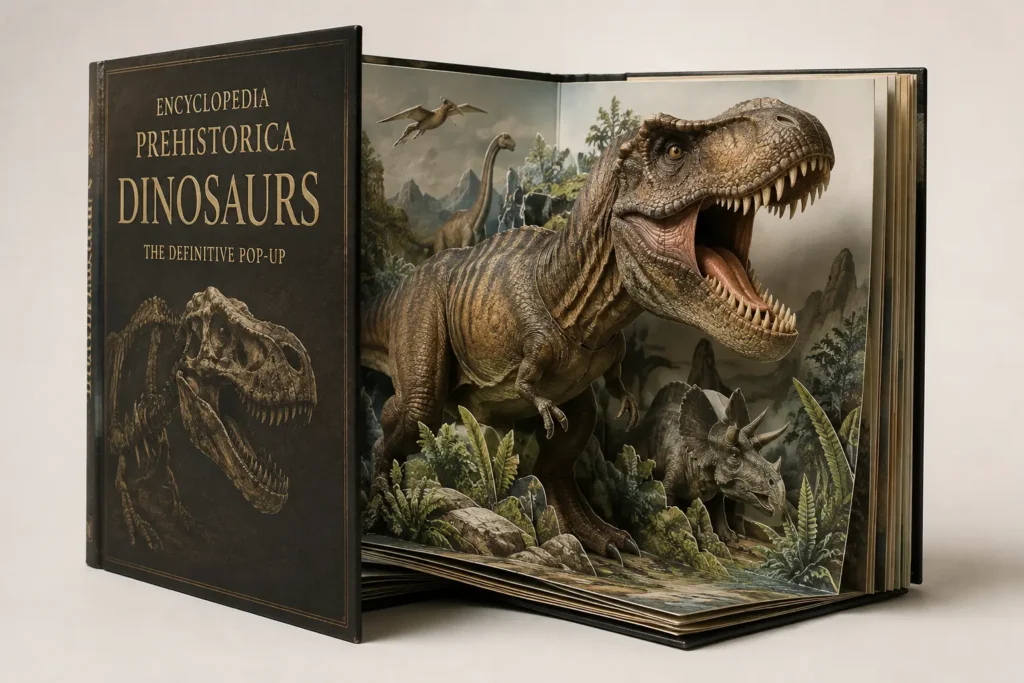
Encyclopedia Prehistorica: Dinosaurs
An interactive dinosaur book featuring spectacular three-dimensional pop-ups, particularly suited to young readers and families.
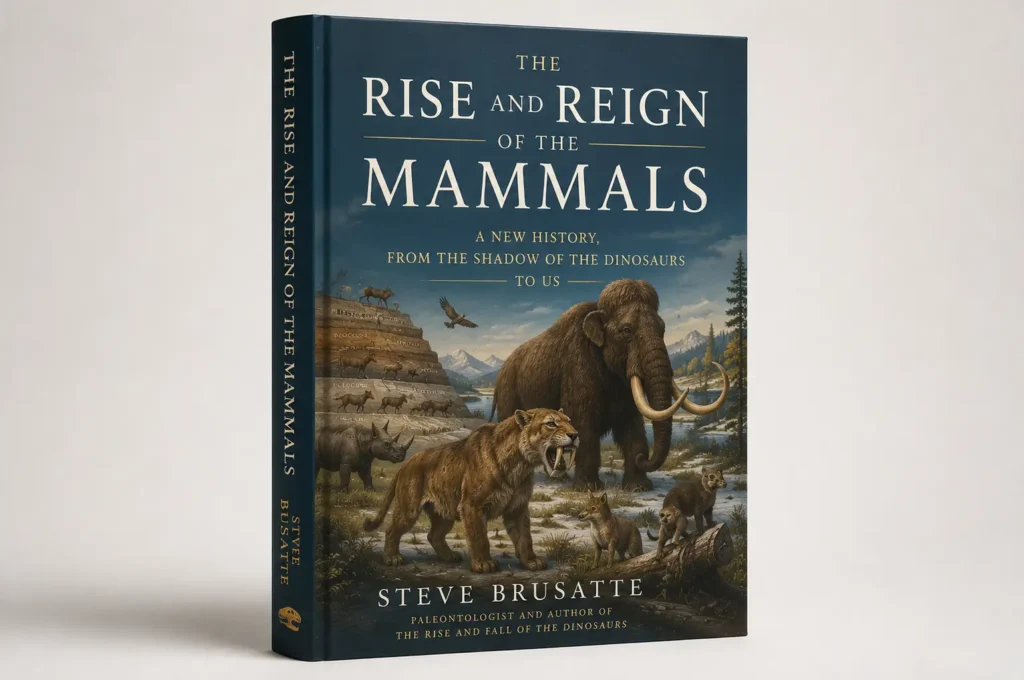
The Rise and Reign of the Mammals
A sweeping history of mammalian evolution, from their origins alongside dinosaurs through the Cenozoic and the emergence of humans.