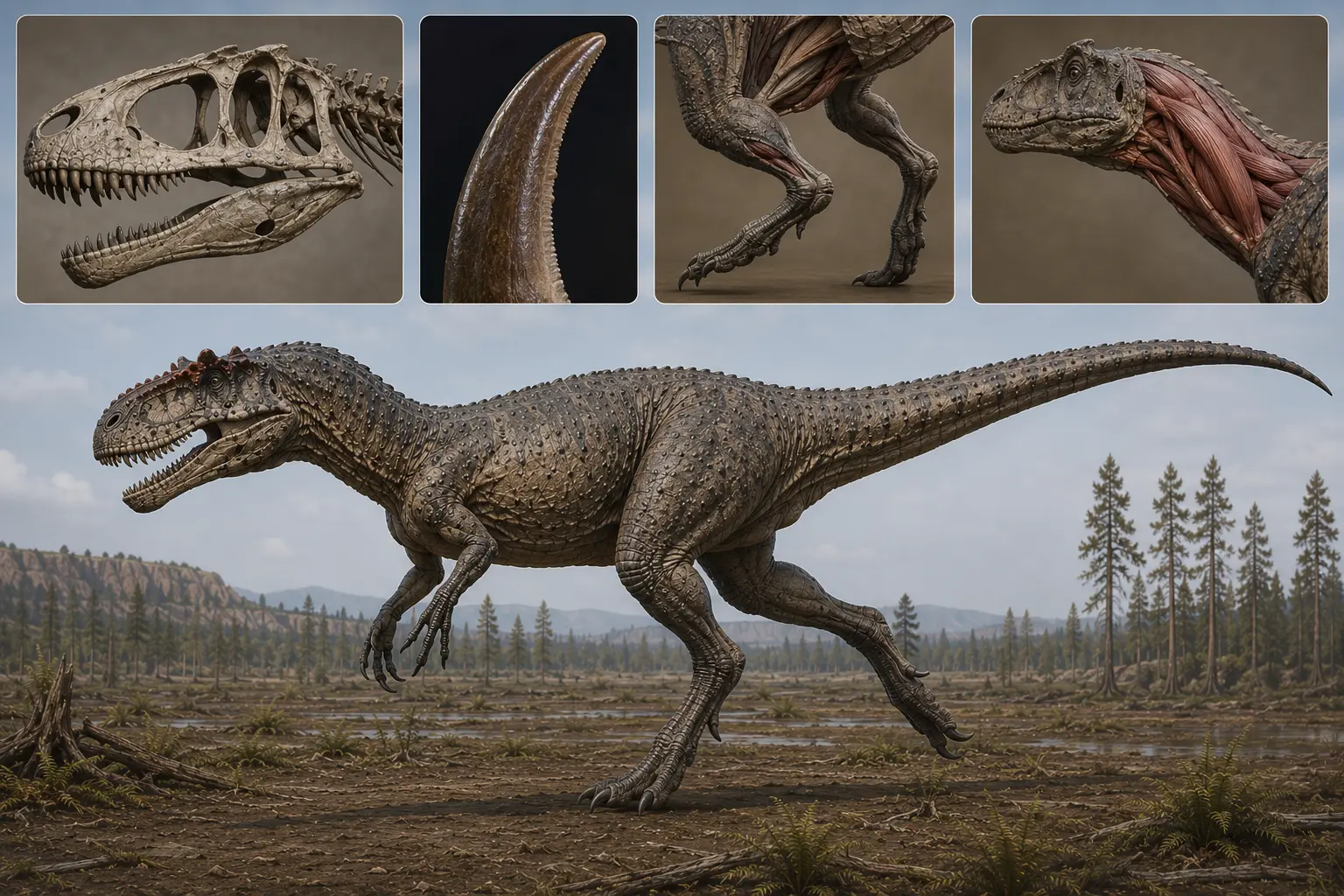
| Field | Information |
|---|---|
| Species | Allosaurus fragilis — Saurischia, Allosauridae |
| Period | Late Jurassic, 155–145 Ma |
| Estimated bite force | 1,500–8,000 N (337–1,799 lbf) — model dependent |
| Estimated top speed | 19–34 km/h (12–21 mph) |
Quick Answer:Allosaurus bite force estimates vary significantly depending on the biomechanical model applied, with published figures ranging from approximately 1,500 to 8,000 newtons (337–1,799 lbf). Compared with later large theropods, this suggests a relatively less forceful bite in crushing terms, leading some biomechanical interpretations to propose that Allosaurus relied more on slashing jaw mechanics and neck-driven force than bone-crushing bite pressure.

The skull of Allosaurus fragilis is one of the most studied theropod skulls in the fossil record — and one of the most debated. Its relatively lightly built construction has puzzled researchers for decades, raising the question of how an animal of this size brought down prey far larger than itself.
Allosaurus Bite Force: What the Evidence Shows
Allosaurus bite force, based on biomechanical modelling of jaw musculature reconstructed from known skulls, is estimated at between approximately 1,500 and 8,000 newtons (337–1,799 lbf) depending on the study. This range reflects genuine uncertainty across different modelling assumptions rather than a single agreed figure. For comparison, biomechanical estimates suggest T. rex bite force reached 35,000–57,000 newtons (7,900–12,800 lbf) — making the Allosaurus jaw markedly less powerful in crushing terms.
The Hatchet-Strike Hypothesis
One influential biomechanical interpretation proposes that the Allosaurus skull was better suited to slashing or impact-based feeding behaviour than sustained bone-crushing bite pressure. Computer modelling by Rayfield et al. (2001) found stress distribution patterns in the skull consistent with particular loading regimes that have been interpreted as supporting rapid downward strikes rather than prolonged compressive biting. This remains a functional hypothesis rather than a directly observed behaviour, but it has significantly shaped the discussion of Allosaurus feeding mechanics.
Neck Musculature and the Attack Stroke
Fossil evidence shows Allosaurus possessed well-developed neck musculature attachment sites, indicating strong dorsoventral head and neck movement. Biomechanical interpretations suggest the neck may have contributed meaningfully to feeding force generation, particularly in models favouring impact-based jaw use. The forelimbs, with three functional fingers and large recurved claws, are commonly interpreted as potentially useful in prey restraint, though the exact behavioural role remains inferential.
How Fast Could an Allosaurus Run?
Biomechanical estimates for Allosaurus top speed generally fall in the range of approximately 19–34 km/h (12–21 mph), though exact values vary considerably depending on modelling assumptions. Upper estimates represent optimistic scenarios, and locomotor performance in large theropods remains an active area of study. Current evidence suggests Allosaurus was a capable terrestrial predator, but not a specialised high-speed runner.
Limb Proportions and Locomotion
Fossil evidence shows Allosaurus had proportionally substantial hindlimbs consistent with active terrestrial locomotion. Its limb proportions are less specialised for extreme cursorial performance than those of smaller theropods, which aligns with biomechanical expectations for an animal of its size. As with other large-bodied theropods, locomotor efficiency likely depended more on stride mechanics and body mass constraints than on outright speed alone.
Predatory Strategy: What the Evidence Supports
Inferred from jaw morphology, limb anatomy, and feeding traces on prey bones, Allosaurus was a large active predator capable of exploiting substantial prey within the Morrison Formation ecosystem. Biomechanical interpretations suggest a feeding strategy distinct from the bone-crushing mechanics seen in later theropods, potentially involving a combination of jaw impact, neck-driven force, and forelimb-assisted prey handling. Fossil evidence confirms feeding interactions with large herbivorous dinosaurs, including sauropods and ornithopods, though the exact methods of prey capture and dispatch remain unresolved.
Some researchers have proposed that if impact-based feeding interpretations are correct, Allosaurus may have employed repeated wounding attacks against large prey rather than sustained grappling or crushing bites. This remains speculative, as no direct fossil evidence confirms a specific attack sequence, and the hypothesis has not been independently validated against a comprehensive injury or trace-fossil dataset.
Related and Contemporary Species
- Allosaurus jimmadseni — a second recognised Morrison Formation species whose anatomical differences may have implications for biomechanical interpretation
- Ceratosaurus nasicornis — a smaller contemporary theropod with a differently proportioned skull, suggesting potentially distinct feeding mechanics
- Torvosaurus tanneri — a large contemporary Morrison theropod with a more robust cranial build, likely reflecting different predatory adaptations.
- Saurophaganax maximus — a large Morrison theropod of debated taxonomic status, often discussed in comparison with Allosaurus because of broadly similar ecological role and anatomy.
Frequently Asked Questions
How fast could an Allosaurus run?
The top speed of Allosaurus is estimated at 19–34 km/h (12–21 mph) based on biomechanical modelling of limb proportions and body mass. Speed estimates vary across studies; figures at the upper end reflect optimistic modelling conditions. Allosaurus was not among the fastest theropods, but biomechanical evidence suggests it was capable of sustained locomotion adequate for pursuing large, relatively slow herbivores.
Was the Allosaurus bite stronger than T. rex?
The Allosaurus bite force was substantially weaker than that of T. rex by all published biomechanical estimates. Allosaurus’ bite force is modelled at approximately 1,500–8,000 newtons (337–1,799 lbf), while T. rex estimates reach 35,000–57,000 newtons (7,900–12,800 lbf). Allosaurus compensated with a jaw architecture suited to high-speed slashing strikes rather than the bone-crushing bite of later large theropods.
Did Allosaurus use its arms to catch prey?
The forelimbs of Allosaurus are widely interpreted as having played a functional role in prey handling, based on their robust construction, three functional fingers, and large recurved manual claws. Fossil morphology and muscle attachment evidence suggest the arms were mechanically capable of grasping or stabilising struggling prey, though the exact behavioural role cannot be directly observed. Their anatomy indicates a more active function than simple balance or display, but specific hunting use remains an informed biomechanical interpretation rather than direct fossil proof.
Note: Bite force estimates for Allosaurus and the hatchet-strike hypothesis are active areas of research. Speed estimates for large theropods are subject to ongoing revision as new locomotor modelling methods are applied. Details reflect current scientific consensus but may be revised as new evidence emerges.
Conclusion
Allosaurus was not the bone-crushing predator that later theropods became — its power lay in a specialised slashing jaw strike, robust grappling forelimbs, and sustained pursuit capability. Biomechanical evidence supports a predatory toolkit adapted to large prey, even where brute bite force was limited. The mechanics of this system remain one of the most actively studied aspects of Jurassic predator biology.
References
B. Peer-Reviewed Literature
Rayfield, E.J., Norman, D.B., Horner, C.C., Horner, J.R., Smith, P.M., Thomason, J.J. and Upchurch, P., 2001. Cranial design and function in a large theropod dinosaur. Nature, 409, pp.1033–1037. https://doi.org/10.1038/35059070
Sellers, W.I. and Manning, P.L., 2007. Estimating dinosaur maximum running speeds using evolutionary robotics. Proceedings of the Royal Society B, 274, pp.2711–2716. https://doi.org/10.1098/rspb.2007.0846
Bates, K.T. and Falkingham, P.L., 2012. Estimating maximum bite performance in Tyrannosaurus rex using multi-body dynamics. Biology Letters, 8(4), pp.660–664. [cited for comparative bite force context] https://doi.org/10.1098/rsbl.2012.0056a
C. Monographs, Books, and Technical Reports
Madsen, J.H., 1976. Allosaurus fragilis: A revised osteology. Utah Geological Survey Bulletin 109. Salt Lake City.
Paul, G.S., 2016. The Princeton Field Guide to Dinosaurs, 2nd edition. Princeton University Press, Princeton.
D. Databases and Online Resources
Paleobiology Database — Allosaurus fragilis specimen data. https://paleobiodb.org
Featured Museum Collections
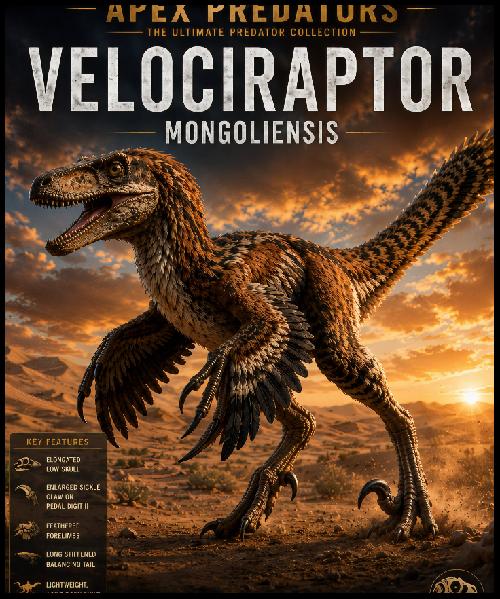
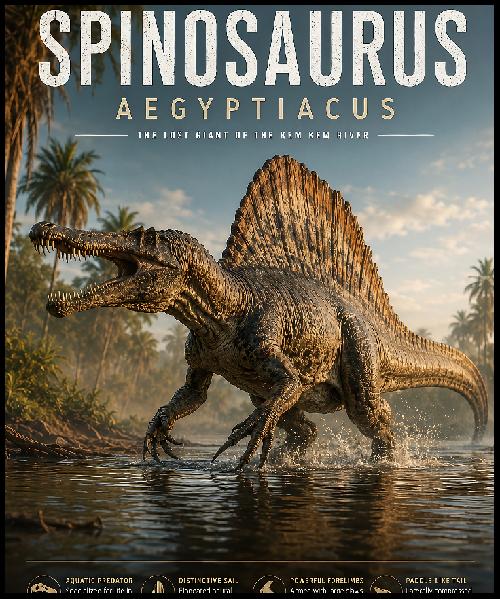
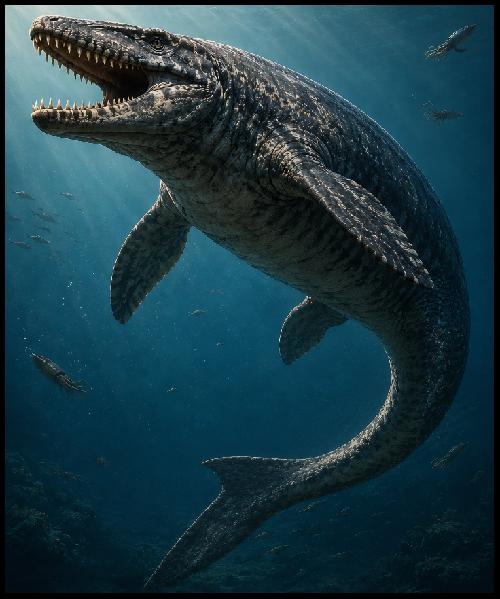
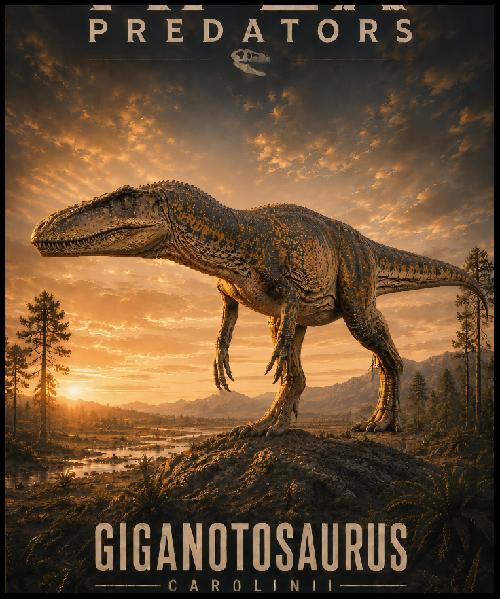
Museum-quality paleoart and educational poster
collections based on evidence-informed prehistoric
Life reconstructions.