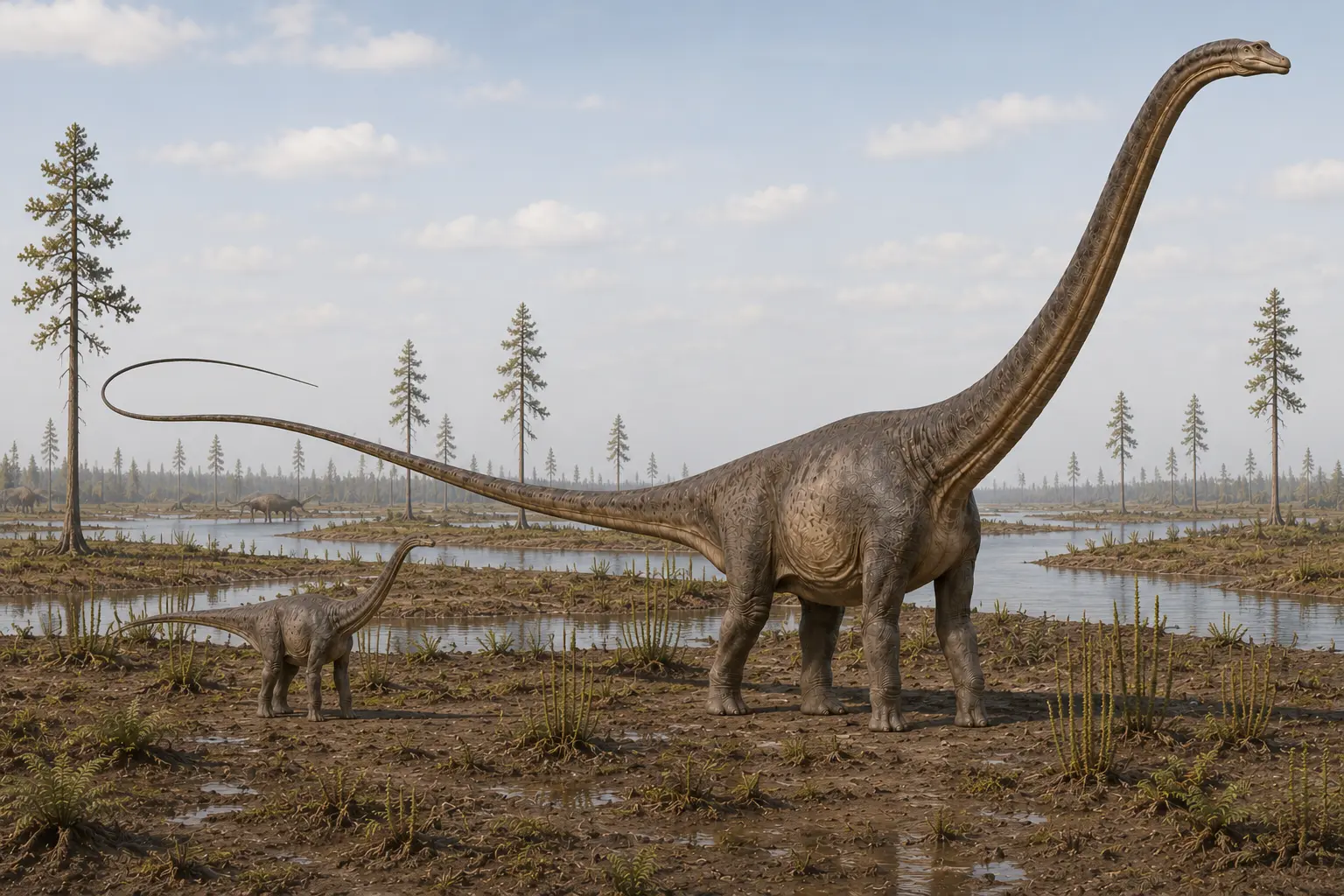
| Field | Information |
|---|---|
| Species | Diplodocus longus — Sauropoda, Diplodocidae |
| Period | Late Jurassic (Kimmeridgian–early Tithonian), approximately 154–149 million years ago |
| Formation | Morrison Formation, western North America |
| Climate | Semi-arid with pronounced seasonal variation in rainfall |
| Ecosystem type | Floodplain and river corridor |
Quick Answer:Diplodocus lived in the floodplains and river corridors of what is now the western United States during the Late Jurassic. Its habitat was part of the Morrison Formation — a vast depositional unit stretching across modern-day Colorado, Utah, Wyoming, and neighbouring states — characterised by seasonal rainfall, open vegetation, and a diverse community of large dinosaurs.

The Morrison Formation preserves one of the richest snapshots of a single dinosaur ecosystem ever discovered. Diplodocus was not an isolated giant in an empty landscape — it was one participant in a densely populated community of large herbivores, predators, and smaller animals, all occupying a world that looked and functioned very differently from any modern environment.
Diplodocus Habitat
Diplodocus lived in the Morrison Formation, a geological unit deposited across a broad area of western North America during the Late Jurassic. Fossil evidence places Diplodocus at multiple sites across Colorado, Utah, Wyoming, and other regions within the Morrison Formation of western North America. The formation represents a large floodplain environment — a landscape of river channels, floodplains, and seasonal lakes set against a backdrop of distant upland areas.
The Morrison Formation climate is generally interpreted as semi-arid with pronounced seasonal variation in rainfall, based on sedimentological, geochemical, and palaeobotanical evidence. Extended dry periods alternated with wetter intervals that replenished river systems and promoted vegetation growth across floodplain environments. These seasonal fluctuations would have influenced the distribution of food and water resources available to large herbivores throughout the year.
The Morrison Formation extends across a vast area of western North America and represents one of the most extensive dinosaur-bearing geological units on the continent. The geographic range of Diplodocus within this formation was correspondingly broad, although fossil discoveries are concentrated in a number of particularly productive localities in Colorado, Utah, and Wyoming.
The Morrison Formation Ecosystem
The Morrison Formation ecosystem supported an exceptionally diverse community of large dinosaurs living alongside Diplodocus. This diversity is unusual even by Mesozoic standards and has prompted ongoing research into how so many large-bodied herbivores coexisted in what appears to have been a relatively resource-limited environment.
Large Herbivores
The Morrison sauropod fauna included multiple genera with different body plans and probable feeding heights. Brachiosaurus was tall-shouldered and is often interpreted as feeding at greater heights than Diplodocus. Diplodocus and its relative Apatosaurus are generally interpreted as low- to moderate-height browsers. Camarasaurus was the most numerically abundant sauropod in the formation and may have occupied an intermediate feeding zone. How these animals divided available vegetation without direct competition is a central question in Morrison palaeoecology.
Ornithischian herbivores were also present, including Stegosaurus and various smaller ornithopods. These animals occupied different body size classes and feeding niches from the giant sauropods, adding further complexity to the herbivore guild.
Predators
Large theropods — principally Allosaurus and Torvosaurus — dominated the predator guild. Allosaurus is the most frequently recovered large theropod from Morrison deposits and is the predator most likely to have interacted with Diplodocus. Smaller theropods, including Ceratosaurus and Marshosaurus, were also present. The full predator–prey dynamics of the Morrison ecosystem are covered in the predators and defence post.
Smaller Fauna
Morrison Formation deposits preserve a diverse assemblage of smaller vertebrates, including early mammals, lizards, crocodylomorphs, turtles, amphibians, and pterosaurs. These animals occupied ecological niches far removed from those of giant sauropods such as Diplodocus, but their presence demonstrates that the Morrison Formation supported a complex and fully developed ecosystem spanning a wide range of body sizes and ecological roles.
Where Were Diplodocus Fossils Found?
Diplodocus fossils have been recovered from numerous localities within the Morrison Formation of western North America. Some of the most significant discoveries have come from Dinosaur National Monument on the Colorado–Utah border, including the famous Carnegie Quarry, as well as multiple fossil sites across Colorado, Utah, and Wyoming. These localities have produced some of the best-preserved Diplodocus material known and have been central to scientific understanding of the genus.
The abundance and quality of Diplodocus fossils at these sites reflect both the original distribution of the animal within the Morrison ecosystem and favourable preservation conditions. Many specimens were buried within river-channel and floodplain deposits, where sediment rapidly covered skeletal remains and increased the likelihood of long-term fossil preservation.
The geographic distribution of Diplodocus within the Morrison is extensive but not uniform. Some sites yield abundant material; others in the same formation have produced few or no Diplodocus remains. This uneven distribution may reflect habitat preference, local population density, or variation in preservation potential across the formation.
Morrison Formation Climate and Vegetation
The vegetation available in the Morrison Formation environment included conifers, cycads, tree ferns, ground ferns, and horsetails, based on plant fossil evidence recovered from formation deposits. Angiosperms were present but ecologically minor in the Late Jurassic. Riparian corridors — the strips of denser vegetation along river channels — likely supported the highest plant biomass and would have been focal areas for large herbivore activity.
During dry seasons, large herbivores in the Morrison may have concentrated around remaining water sources, a pattern inferred from comparison with modern semi-arid large-herbivore systems such as those found in parts of sub-Saharan Africa today. Speculatively, this seasonal concentration could have increased encounter rates between Diplodocus individuals and their predators — but this is ecological extrapolation, not direct fossil evidence.
Related and Contemporary Species
- Allosaurus — the dominant large predator of the Morrison Formation ecosystem; directly relevant to Diplodocus predation pressure.
- Camarasaurus — the most common Morrison sauropod; its high numerical abundance makes it a key reference species for understanding Morrison herbivore ecology.
- Apatosaurus — a fellow diplodocid and the closest large-bodied relative of Diplodocus within the Morrison ecosystem.
- Stegosaurus — a prominent Morrison herbivore with a very different body plan; its co-occurrence with Diplodocus confirms the high diversity of the formation’s herbivore fauna.
- Brachiosaurus — a tall-shouldered Morrison sauropod whose anatomy suggests feeding at greater heights than Diplodocus, potentially reducing direct competition for vegetation resources.
Frequently Asked Questions
What country did Diplodocus live in?
Diplodocus lived in what is now the western United States. Its fossil remains have been recovered from modern-day Colorado, Utah, Wyoming, and Montana — all within the extent of the Morrison Formation. At the time Diplodocus was alive, approximately 149–154 million years ago, these landmasses formed part of the supercontinent Laurasia rather than the political boundaries that exist today.
Did Diplodocus live in water?
Diplodocus did not live in water. Early reconstructions depicted sauropods as semi-aquatic animals sheltering in lakes and swamps, but this interpretation has been rejected by modern palaeontology. Fossil evidence, trackway analysis, and biomechanical modelling all support Diplodocus as a fully terrestrial animal. The Morrison Formation depositional environment was a floodplain, not a deep-water setting.
Note: Morrison Formation palaeoclimate reconstruction and the mechanisms by which multiple large sauropod species partitioned resources are active areas of research. Details reflect current scientific consensus but may be revised as new evidence emerges.
Conclusion
Diplodocus lived across the floodplains of Late Jurassic western North America in a semi-arid, seasonally variable environment shared with an unusually diverse community of large dinosaurs. The Morrison Formation preserves this ecosystem in exceptional detail, making it one of the best-understood dinosaur communities in the fossil record — and the essential context for understanding Diplodocus as a living animal rather than an isolated specimen.
References
Peer-Reviewed Literature
Turner, C.E. and Peterson, F., 2004. Reconstruction of the Upper Jurassic Morrison Formation extinct ecosystem: a synthesis. Sedimentary Geology, 167(3–4), pp.309–355. https://doi.org/10.1016/j.sedgeo.2004.01.009
Foster, J.R., 2003. Paleoecological Analysis of the Vertebrate Fauna of the Morrison Formation (Upper Jurassic), Rocky Mountain Region, U.S.A. New Mexico Museum of Natural History and Science Bulletin 23.
Tschopp, E., Mateus, O. and Benson, R.B.J., 2015. A specimen-level phylogenetic analysis and taxonomic revision of Diplodocidae (Dinosauria, Sauropoda). PeerJ, 3:e857. https://doi.org/10.7717/peerj.857
Monographs, Books, and Technical Works
Foster, J.R., 2007. Jurassic West: The Dinosaurs of the Morrison Formation and Their World. Bloomington: Indiana University Press.
Databases and Online Resources
National Park Service, 2026. Dinosaur National Monument. Available at: https://www.nps.gov/dino/ [Accessed 19 May 2026].
Featured Museum Collections
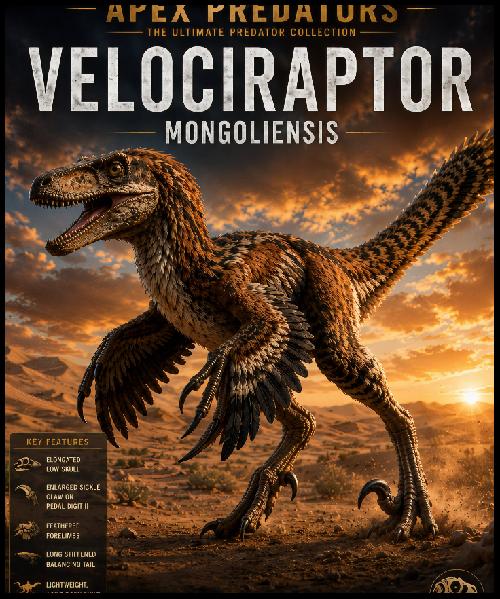
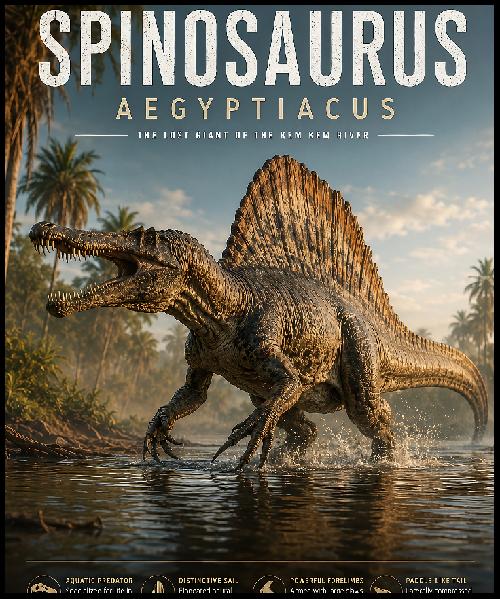
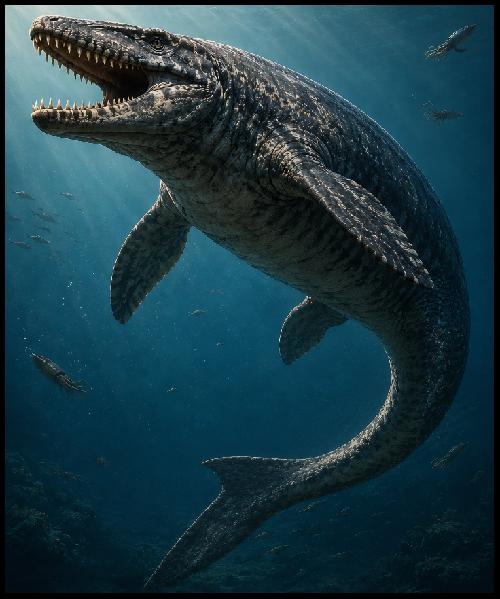
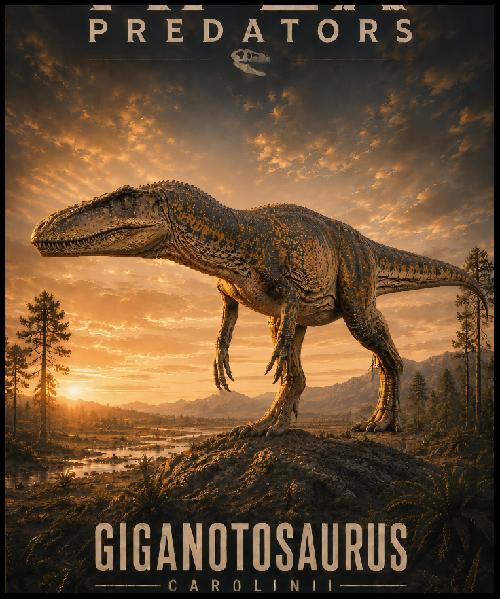
Museum-quality paleoart and educational poster
collections based on evidence-informed prehistoric
Life reconstructions.