
The image of two Pachycephalosaurus smashing their domed skulls together has dominated popular depictions for decades, but the scientific reality is far more nuanced. Modern research suggests that if these dinosaurs engaged in combat at all, they likely struck each other’s flanks rather than colliding head-on, and the dome may have served primarily as a visual display structure rather than a battering ram.
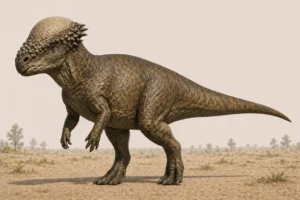
The Head-to-Head Combat Hypothesis
For much of the 20th century, paleontologists assumed Pachycephalosaurus used its thick skull dome for direct head-to-head combat, similar to modern bighorn sheep. The dome can reach up to 25 cm thick in mature adults, and its solid bone construction seems purpose-built for absorbing high-impact collisions. Early reconstructions showed males charging at each other and meeting skull-to-skull in dominance contests over mates or territory.
This interpretation felt intuitive. The dome is the most distinctive feature of the animal, and comparable structures in living species often serve combat functions. However, several biomechanical problems with this model began to emerge as researchers applied modern analytical techniques to the fossil evidence.
Biomechanical Problems with Head-Butting
CONTENT CURRENCY NOTE: The biomechanical modeling discussed in this section reflects research published through the early 2020s. Ongoing studies using updated finite element analysis may refine these estimates, and new fossil discoveries could alter current interpretations of combat behavior.
Detailed biomechanical studies revealed significant issues with the head-on collision model. The neck vertebrae of Pachycephalosaurus show limited specialization for absorbing repeated high-impact forces along a straight anterior-posterior axis. Unlike modern head-butting animals, which possess heavily reinforced cervical vertebrae and muscular adaptations to prevent neck injury, Pachycephalosaurus lacks these features.
Finite element analysis of the skull dome structure showed that while the bone is extremely thick, the dome’s rounded geometry would make precise head-to-head strikes difficult to achieve. Even slight misalignment during a collision could result in glancing blows that would destabilize both animals. Modern bighorn sheep achieve successful impacts because their horns provide a broad, flat surface for contact—the rounded dome of Pachycephalosaurus offers no such advantage.
The brain case sits relatively close to the impact zone, separated by thick bone but without the pneumatic cushioning systems seen in some modern head-butting species. Repeated concussive impacts directly above the brain would likely cause cumulative neurological damage, reducing the evolutionary advantage of ritualized combat that relies on this behavior.
Brain size estimates for Pachycephalosaurus place it within the typical range for ornithischian dinosaurs of comparable body size. There is no evidence of specialized adaptations for managing concussive impacts, and the lack of extensive cranial sinuses or shock-absorbing structures suggests the skull was not optimized for repeated high-energy collisions.
The Flank-Butting Alternative
In 2011, paleontologists proposed an alternative combat model based on comparative anatomy and pathological evidence. Rather than colliding head-on, Pachycephalosaurus may have struck rivals on the flanks, using the dome as a blunt weapon against the body rather than against another skull. This behavior appears in several modern animals, including giraffes, which swing their heads to deliver impacts to an opponent’s torso.
| Evidence Type | Finding |
|---|---|
| Neck flexibility | Vertebral articulation allows lateral head movement suitable for side-striking |
| Dome geometry | Rounded surface concentrates force effectively against soft tissue targets |
| Body positioning | Bipedal stance provides stability for absorbing lateral impacts without falling |
| Injury patterns | Pathologies on dome surfaces consistent with striking irregular surfaces (flanks) rather than flat opposing domes |
Flank-butting offers several advantages over head-to-head combat. It reduces the risk of brain injury, allows for more varied combat strategies, and works with the animal’s natural range of motion. The thick dome would still serve a protective function, guarding against retaliatory strikes, while also functioning as an offensive weapon.
This model also explains the sexual dimorphism potentially visible in dome development. If larger domes signaled dominance visually before escalating to physical combat, individuals could assess rivals and avoid unnecessary fighting—a common pattern in modern species where display and combat coexist.
Pathological Evidence from Fossil Skulls
TIER 2 EVIDENCE: The pathological lesions described in this section are documented in published specimens, but sample sizes remain limited due to the rarity of complete Pachycephalosaurus skulls. Interpretations of healing patterns and injury mechanisms represent the current scientific consensus but may be refined as additional specimens are studied.
Examination of Pachycephalosaurus skull domes has revealed several specimens with pathological lesions—areas of abnormal bone growth that indicate healed injuries. These lesions appear as pits, grooves, or irregular surfaces on otherwise smooth dome structures. The pattern and location of these injuries provide important clues about combat behavior.
Critically, the pathologies do not show the characteristic fracture patterns expected from repeated head-on collisions between equally hard surfaces. Instead, the damage patterns suggest impacts against irregular or yielding surfaces, consistent with striking body flanks covered in muscle and skin rather than another bone dome.
One well-studied specimen (held at the Museum of the Rockies) shows extensive remodeled bone on one side of the dome, indicating a significant injury that healed over time. The asymmetry of the damage argues against symmetrical head-to-head impacts and supports the flank-butting hypothesis or injuries sustained from environmental hazards.
Not all researchers agree on the interpretation of these pathologies. Some argue the lesions could result from disease, infection, or non-combat injuries. The relatively small sample size of complete, well-preserved domes (fewer than ten specimens with sufficient preservation for detailed study) limits the statistical confidence of behavioral interpretations.
The Display Hypothesis
An increasingly prominent alternative suggests the dome served primarily as a visual display structure rather than a functional weapon. In this model, dome size and shape signaled age, health, and genetic fitness to potential mates and rivals, with physical combat being rare or absent.
Sexual selection can drive the evolution of elaborate structures that serve no direct survival function. The dome’s prominence and visibility would make it an effective signal, particularly if dome development correlated with reproductive maturity and hormonal changes. Younger individuals (potentially including animals historically classified as Dracorex and Stygimoloch) possess flatter, more ornamented skulls that may represent immature stages before full dome development.
TIER 3 EVIDENCE: Direct evidence for visual display behavior cannot be preserved in fossils. This hypothesis is inferred from comparative biology, growth patterns, and the absence of definitive combat-related adaptations. It represents a reasonable interpretation but remains speculative.
Modern analogs exist in species like cassowaries, which possess prominent casques (helmet-like structures) on their heads that function primarily for display and species recognition rather than combat. However, cassowary casques are hollow and pneumatic, unlike the solid bone dome of Pachycephalosaurus, so the comparison has limits.
If display was the primary function, it does not exclude occasional combat—many display structures also serve secondary defensive or offensive roles. The dome could simultaneously advertise fitness and provide protection, with combat being ritualized and infrequent enough to leave minimal pathological evidence.
Ontogenetic Changes and Behavioral Implications
The dramatic changes in skull shape from juvenile to adult Pachycephalosaurus have significant implications for understanding behavior. Juveniles possess relatively flat skulls surrounded by prominent bony spikes and nodes, while adults develop thick, smooth domes with reduced ornamentation. This transformation suggests behavioral shifts across the animal’s lifespan.
If combat or display behavior was primarily adult male activity, the absence of dome development in juveniles makes functional sense. Young animals would not participate in dominance contests or mate competition, so investment in dome growth would be delayed until sexual maturity. The spiky ornamentation in juveniles may have served anti-predator functions or species recognition.
Some researchers propose that the ontogenetic sequence from flat-headed juveniles to dome-headed adults represents a compromise between competing selective pressures. Early in life, predator deterrence (via spikes) and camouflage take priority. In adulthood, intraspecific competition drives dome development, even at the cost of increased visibility to predators.
The hypothesis that Dracorex and Stygimoloch represent juvenile and subadult growth stages of Pachycephalosaurus complicates behavioral interpretations. If this ontogenetic model is correct, then the three “species” represent a single behavioral trajectory, with combat or display behavior emerging only in fully mature individuals.
Current Scientific Consensus
TIER 2 EVIDENCE: The current scientific consensus reflects the majority interpretation in published peer-reviewed literature through 2025, but this remains an active research area with ongoing debates and new data collection.
Most paleontologists now favor one of two models: flank-butting combat or primarily visual display with limited physical interaction. The traditional head-to-head ramming hypothesis has fallen out of favor due to biomechanical constraints and lack of supporting pathological evidence.
The flank-butting model is supported by:
- Comparative anatomy with modern head-swinging species
- Pathological evidence suggesting impacts against irregular surfaces
- Biomechanical feasibility given neck structure and range of motion
The display hypothesis is supported by:
- Ontogenetic patterns consistent with sexually selected structures
- Absence of specialized shock-absorbing adaptations
- Visual prominence of the dome
- Limited sample of combat-related injuries
Both models may contain elements of truth. Display and combat often coexist in modern species, with visual signals allowing most contests to be resolved without physical contact, and actual fighting reserved for closely matched rivals.
The rarity of complete, well-preserved Pachycephalosaurus skulls limits our ability to resolve this debate definitively. Each new specimen provides additional data, but the small sample size means individual specimens can disproportionately influence interpretations. Future discoveries, particularly of multiple individuals preserved together or showing clear interaction evidence, could significantly clarify the behavioral picture.
What We Still Don’t Know
Several key questions remain unresolved:
- Sex-based dome differences: No confirmed method exists for sexing Pachycephalosaurus specimens, so we cannot determine whether dome size or shape differs between males and females. If sexual dimorphism exists, it would strongly support combat or display models, but current evidence is insufficient to demonstrate this.
- Frequency of combat: Even if combat occurred, we cannot determine how often it happened or what percentage of individuals participated. Modern animals show enormous variation in combat frequency based on population density, sex ratios, and resource availability—factors impossible to reconstruct from the fossil record.
- Dome sensitivity and innervation: We have no direct evidence of whether the dome contained sensory structures, blood vessels, or nerve endings that might indicate its function. Some researchers speculate that the dome was highly vascularized (based on surface textures suggesting blood vessel pathways), which could support either combat or display interpretations.
- Vocal or visual displays: If Pachycephalosaurus engaged in vocal communication or visual threat displays before combat, these behaviors are invisible in the fossil record. Modern head-butting animals often combine physical combat with complex visual and acoustic signals.
Frequently Asked Questions
Did Pachycephalosaurus really bash heads like rams?
Probably not in the way popular media depicts. Modern research suggests head-to-head collisions were biomechanically risky and likely rare or absent. If combat occurred, flank-butting (striking an opponent’s body with the dome) is more consistent with the fossil evidence and the animal’s anatomy.
How thick was the Pachycephalosaurus skull dome?
The dome reached approximately 25 centimeters (10 inches) thick in the largest adult specimens. This represents solid bone rather than hollow or pneumatic structure, making it one of the thickest skull elements known in any vertebrate relative to body size.
Could the dome have been used for defense against predators?
Possibly, though no direct evidence supports this. The dome’s location on top of the head makes it poorly positioned for active defense against attacking theropods, but it may have provided some protection if the animal lowered its head during confrontations or used the same flank-striking behavior against predators that it potentially used against rivals.
References
Goodwin MB, Horner JR. 2004. Cranial histology of Pachycephalosaurus and related genera: implications for dome function and growth. Paleobiology. 30(2):253–267.
Snively E, Cox A. 2008. Structural mechanics of pachycephalosaur crania permitted head-butting behavior. PLoS ONE. 3(8):e2943.
Peterson JE, Dischler C, Longrich NR. 2013. Distributions of cranial pathologies provide evidence for head-butting in dome-headed dinosaurs (Pachycephalosauridae). PLoS ONE. 8(7):e68620.
Longrich NR, Sankey J, Tanke DH. 2010. Texacephale langstoni, a new genus of pachycephalosaurid dinosaur from the Upper Cretaceous of Texas, and implications for combat in dome-headed dinosaurs. Cretaceous Research. 31(2):274–284.
Horner JR, Goodwin MB. 2009. Extreme cranial ontogeny in the Upper Cretaceous dinosaur Pachycephalosaurus. PLoS ONE. 4(10):e7626.
Schott RK, Evans DC. 2016. Cranial ontogeny in Pachycephalosaurus and the taxonomic validity of North American pachycephalosaurid taxa. PLoS ONE. 11(3):e0149642.
Maryańska T, Chapman RE, Weishampel DB. 2004. Pachycephalosauria. In: Weishampel DB, Dodson P, Osmólska H, editors. The Dinosauria. 2nd ed. Berkeley: University of California Press. p. 464–477.
Featured Museum Collections
Museum-quality paleoart and educational poster
collections based on evidence-informed prehistoric
Life reconstructions.