Archaeopteryx Claws: What Were They Used For?
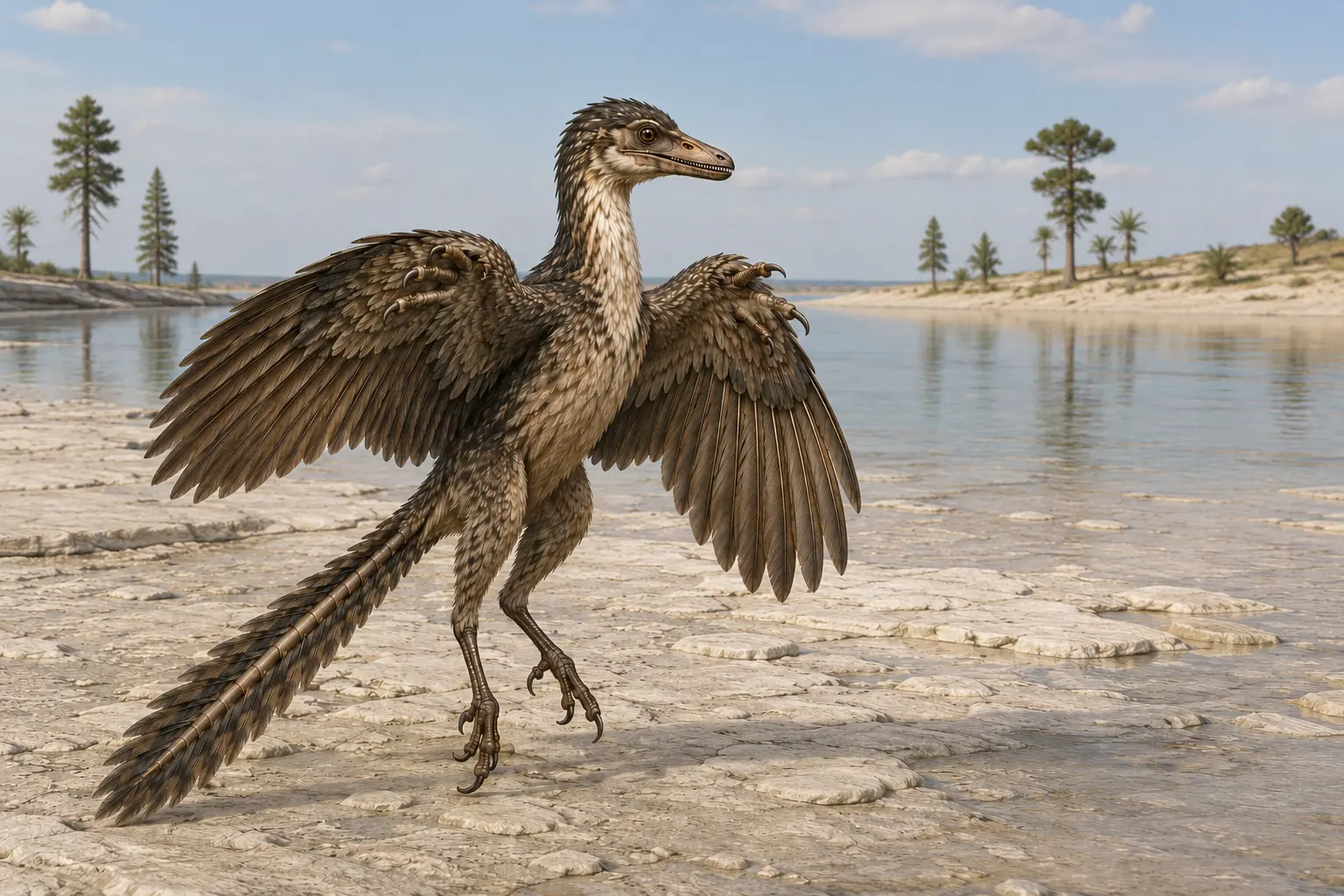
Reconstruction of Archaeopteryx showing its clawed wing digits, a primitive feature that may have aided grasping or climbing in early bird evolution.

At a Glance Field Information Species Archaeopteryx lithographica Period Late Jurassic (approx. 150–148 Ma) Hand claws Three functional, curved claws on each wing Foot claws Curved, raptorial; hallux position contested Primary function debate Tree-climbing vs ground locomotion vs prey restraint Consensus No consensus — multiple functional interpretations remain active Quick Answer:Archaeopteryx had curved, raptorial claws … Read more
Archaeopteryx Diet: What Did It Eat?

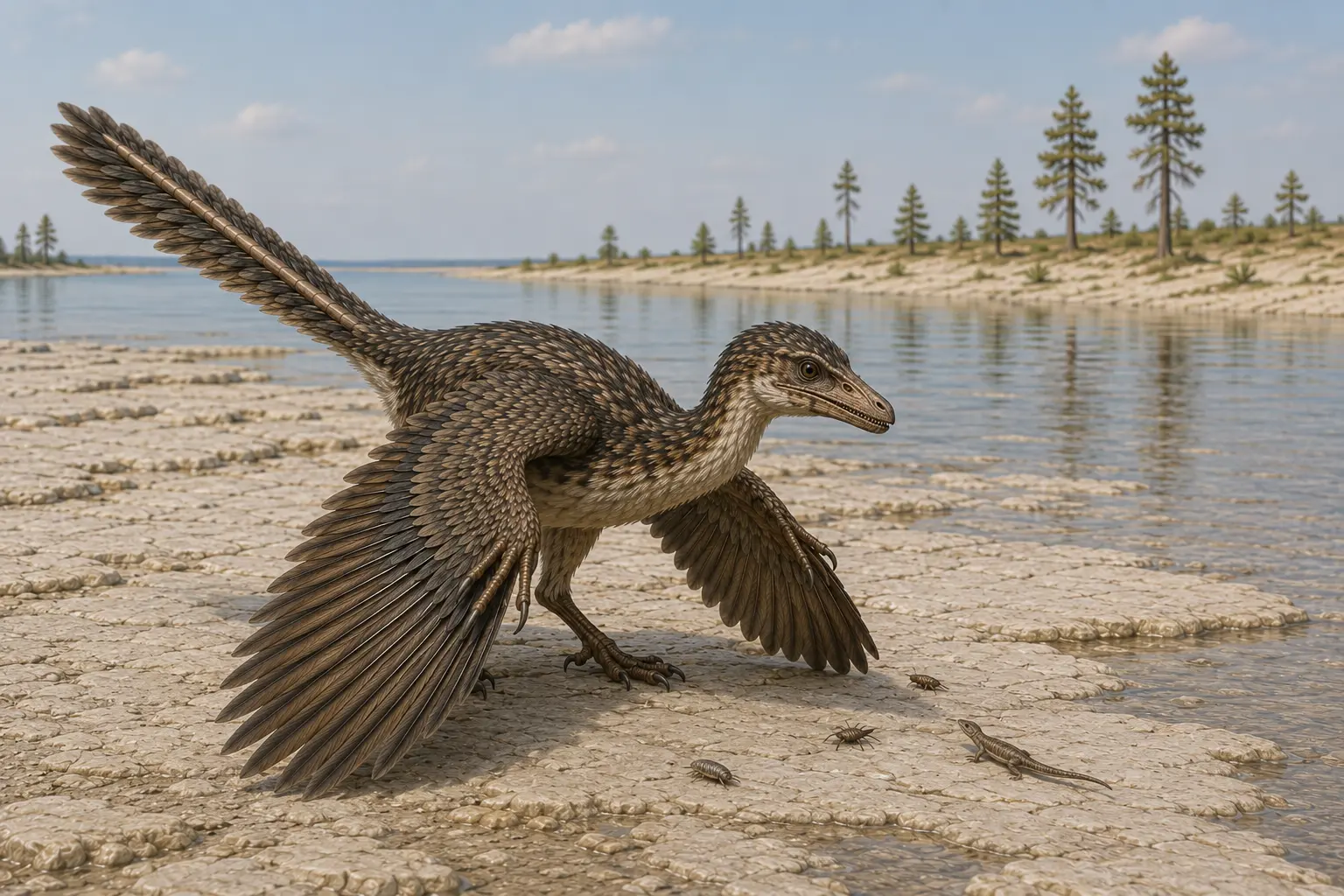
Reconstruction of Archaeopteryx foraging on a Jurassic lagoon shoreline, illustrating possible prey such as arthropods and small vertebrates.

What Did Archaeopteryx Eat? At a Glance Field Information Species Archaeopteryx lithographica Period Late Jurassic (approx. 150–148 Ma) Diet type Carnivorous Primary prey (inferred) Insects, small lizards, small vertebrates Jaw type Toothed; no beak Stomach contents confirmed None Quick Answer:Archaeopteryx was a carnivore. Its small, sharp teeth, grasping claws, and the prey available in its … Read more

Did Archaeopteryx Fly? The Evidence Examined

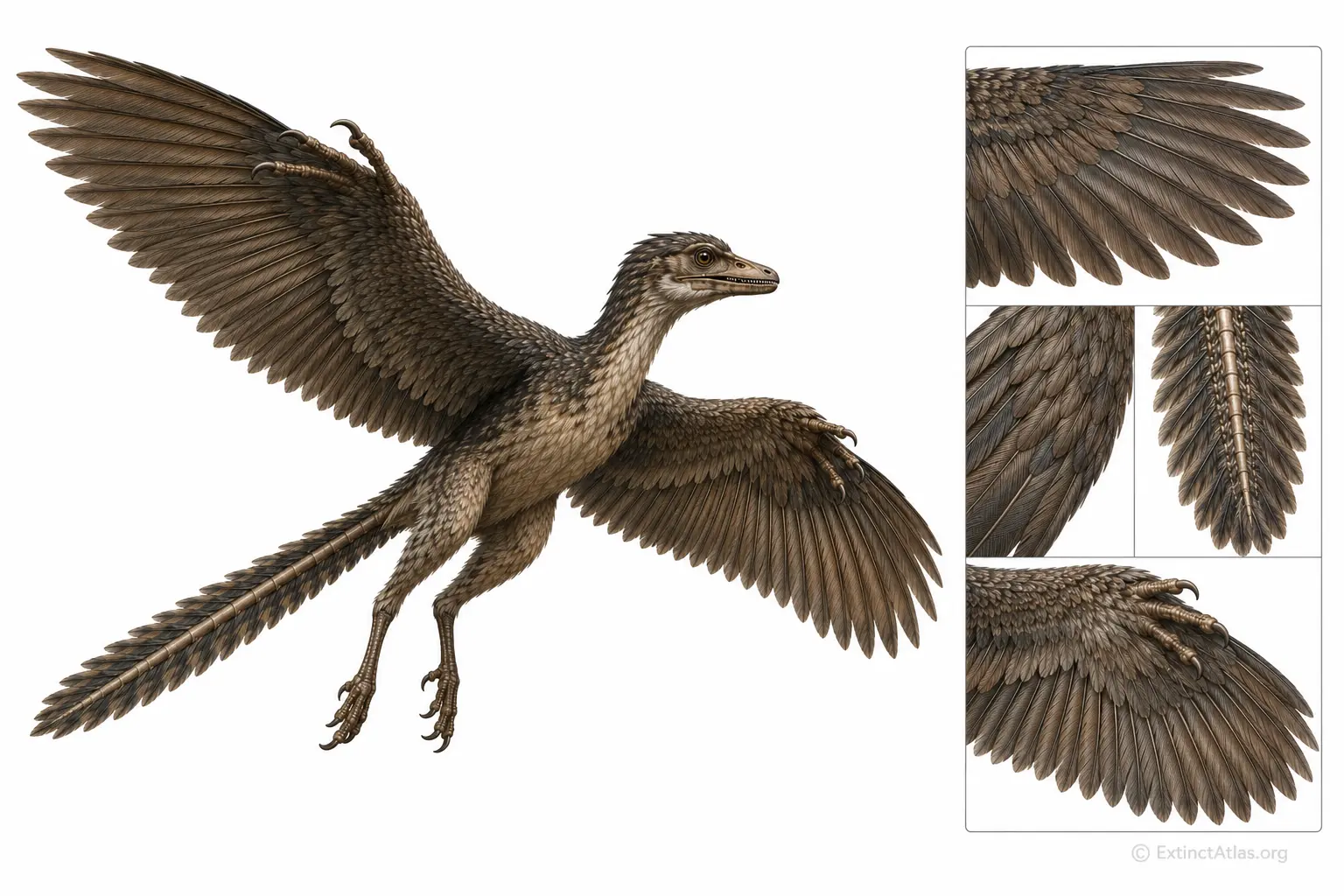
Anatomical reconstruction of Archaeopteryx highlighting wing feathers, tail structure, and clawed forelimbs as evidence in the debate over early bird flight.

At a Glance Field Information Species Archaeopteryx lithographica Period Late Jurassic (approx. 150–148 Ma) Wingspan Approx. 60–70 cm Flight feathers Asymmetric; consistent with flight capability in modern birds Flight status Contested — powered flight possible; gliding not ruled out Furcula Present and well-developed Quick Answer: Whether Archaeopteryx could fly is one of palaeontology’s most debated … Read more

Spinosaurus vs Carcharodontosaurus: Two Apex Predators in the Same Ecosystem

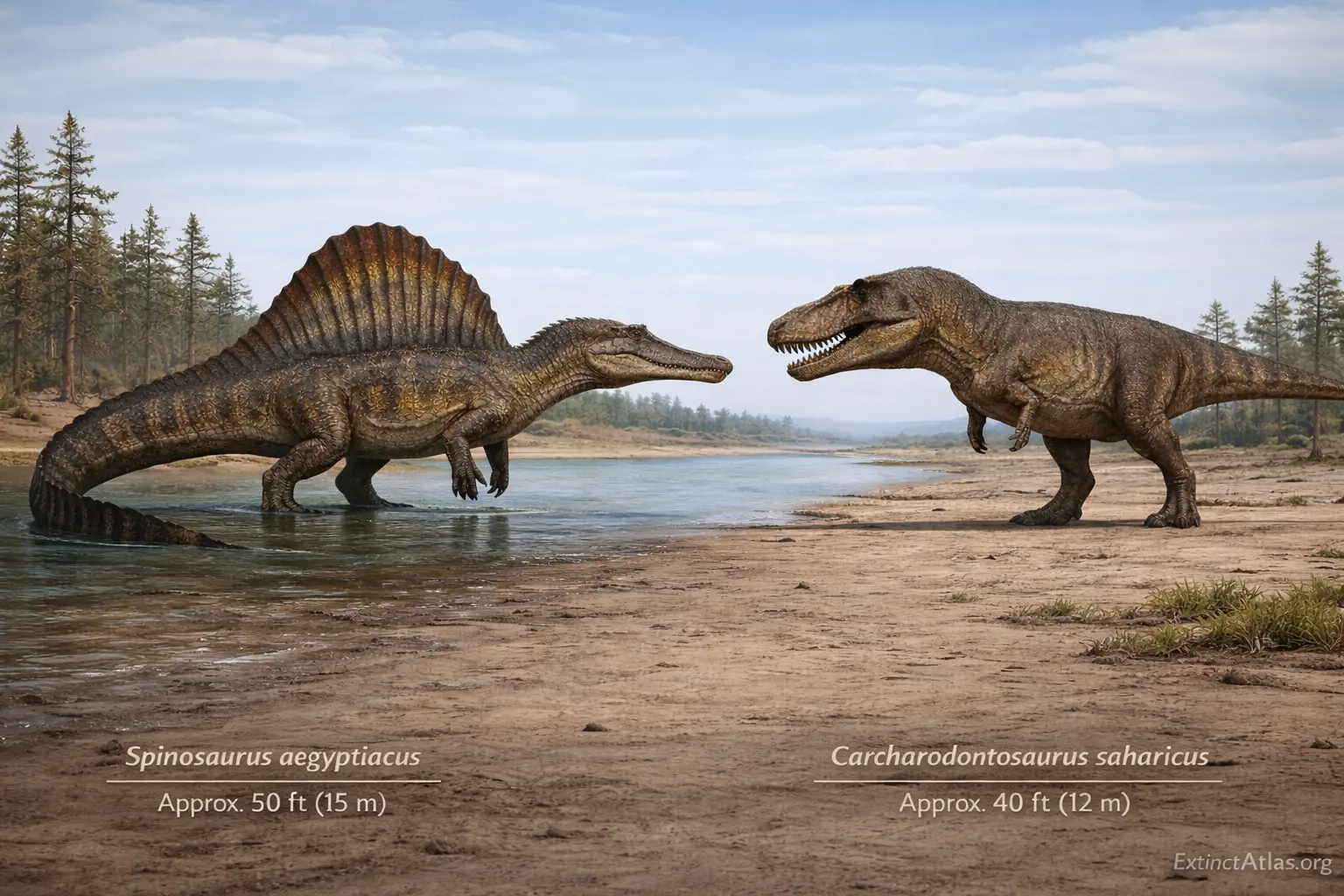
spinosaurus-carcharodontosaurus-lateral-profile-kem-kem-photorealistic

At a Glance Feature Spinosaurus Carcharodontosaurus Period Late Cretaceous (Cenomanian, ~100–94 Ma) Late Cretaceous (Cenomanian, ~100–94 Ma) Location North Africa (Kem Kem Group, Morocco/Algeria) North Africa (Kem Kem Group, Morocco/Algeria) Estimated length ~14–16 m (estimates vary) ~12–13 m (better constrained) Estimated weight ~6–9 tonnes (estimates vary significantly) ~6–8 tonnes (approximate) Diet Primarily fish; opportunistic terrestrial … Read more

Spinosaurus Discovery: Ernst Stromer, the Lost Holotype, and the Bones That Rewrote the Story

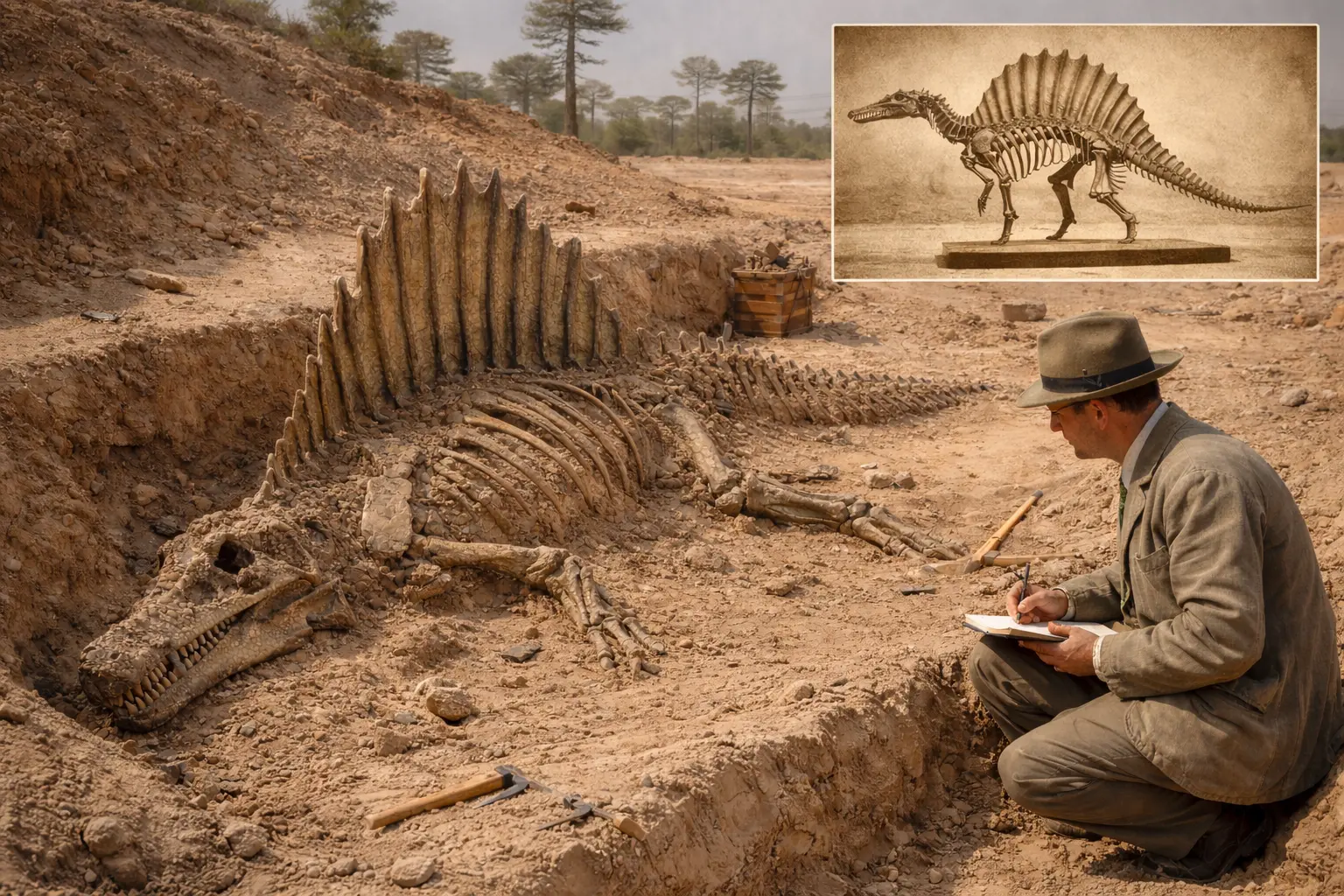
Photorealistic Spinosaurus aegyptiacus fossil excavation showing partially articulated skeleton with tall sail vertebrae in a desert trench, observed by an early 20th-century paleontologist, with inset of historical mounted skeletal reconstruction

At a Glance Field Information Species Spinosaurus aegyptiacus First described 1915, by Ernst Stromer von Reichenbach Original find location Bahariya Oasis, Egypt Holotype status Destroyed, Munich, 1944 Key modern find 2014 partial skeleton, Morocco (Ibrahim et al.) Recent development 2026 Spinosaurus mirabilis discovery, central Sahara Quick Answer: Spinosaurus was first discovered in Egypt in 1912 … Read more

What Was the Sail on Spinosaurus For? The Dorsal Spines Explained

Photorealistic composite of Spinosaurus aegyptiacus highlighting its tall dorsal sail with close-up inset of membrane and spines and a secondary inset showing warm and cool light contrast for thermoregulation in a Kem Kem mudflat environme

At a Glance Field Information Species Spinosaurus aegyptiacus Period Cretaceous (Cenomanian stage, approximately ~100–94 Ma) Structure Neural spines of dorsal vertebrae, reaching up to approximately 1.65 m in height Main hypotheses Thermoregulation; display/sexual selection; fat or muscle hump; hydrodynamic stabilisation Current consensus No consensus — all major hypotheses remain active in the literature Comparable structures … Read more

Did Spinosaurus Live in Water? Aquatic Lifestyle, Tail, and the Semi-Aquatic Debate

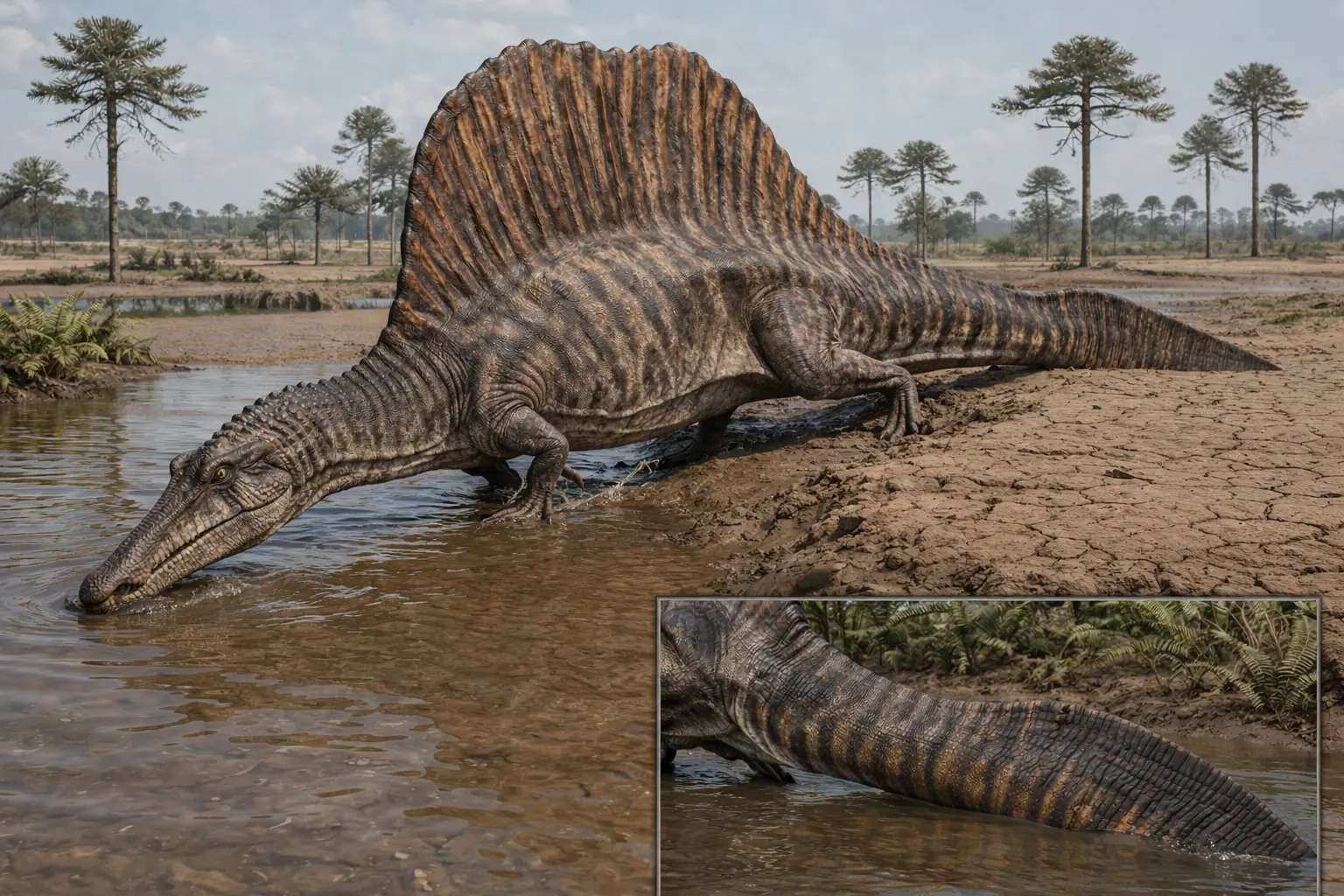
Photorealistic Spinosaurus aegyptiacus spanning a land–water boundary in the Kem Kem Beds, showing a tall sail, short hindlimbs, and a deep paddle-like tail partially submerged in a shallow river while stepping onto a cracked mudbank

At a Glance Field Information Species Spinosaurus aegyptiacus Period Cretaceous (Cenomanian stage, approximately ~100–94 Ma) Aquatic evidence Paddle-like tail (2020); dense bone tissue; isotopic signature; short hind limbs Key study Ibrahim et al. (2020), Nature — paddle tail propulsion model Habitat Kem Kem river systems and estuaries, North Africa Debate status Active — wading/heron-like model … Read more

What Did Spinosaurus Eat? Diet, Prey and Feeding Behaviour

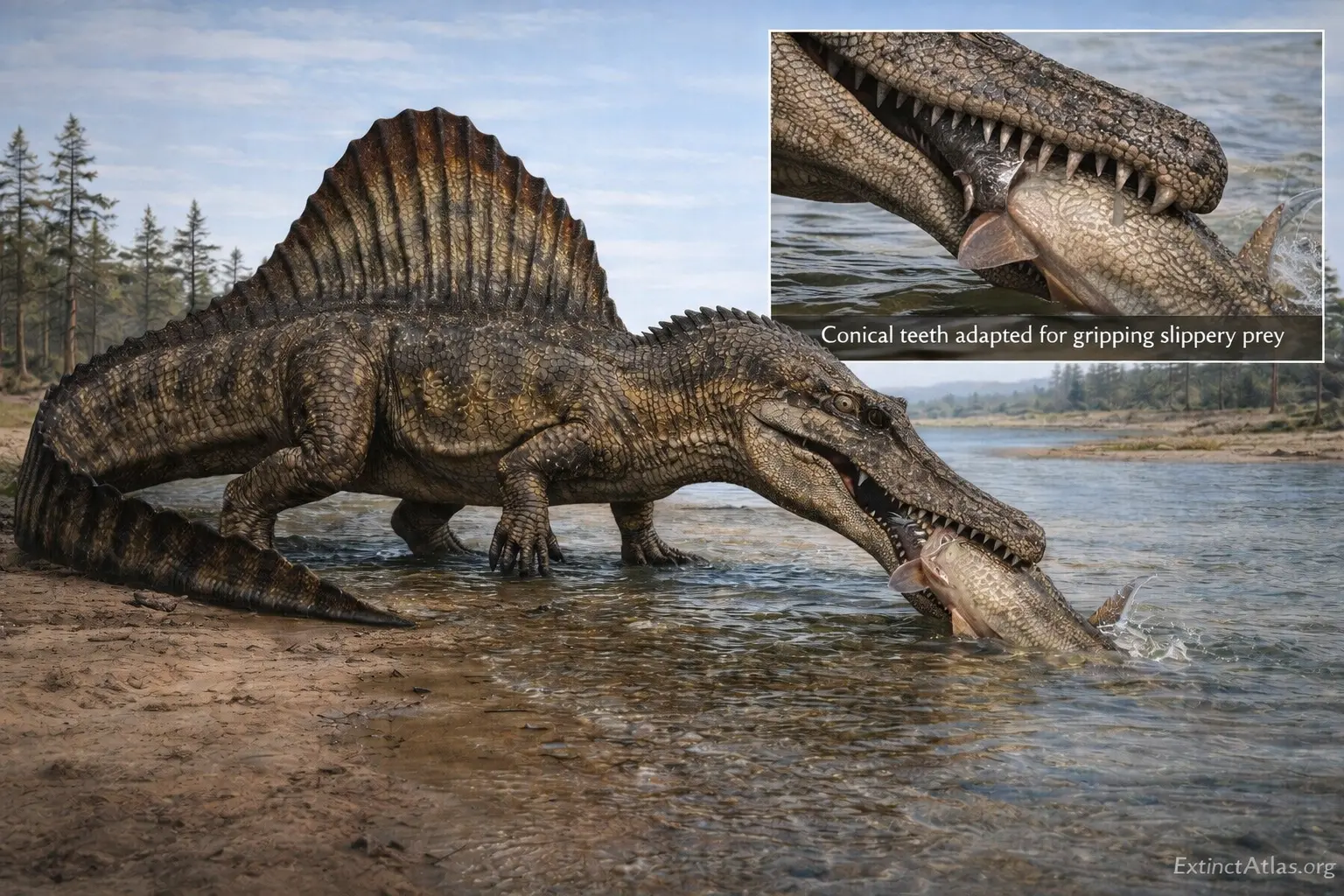
Spinosaurus aegyptiacus feeding on fish in shallow Kem Kem river with inset close-up showing conical teeth adapted for gripping slippery prey

At a Glance Field Information Species Spinosaurus aegyptiacus Period Cretaceous (Cenomanian stage, approximately ~100–94 Ma) Primary diet Piscivore (fish specialist); opportunistic broader predation likely Key prey Large lobe-finned fish, sawfish, sharks, lungfish; possibly pterosaurs and smaller dinosaurs Diet evidence type Isotopic analysis, tooth morphology, gut contents, skull anatomy Feeding habitat Riverine and estuarine margins, North … Read more

Velociraptor Discovery: When, Where, and How It Was Found

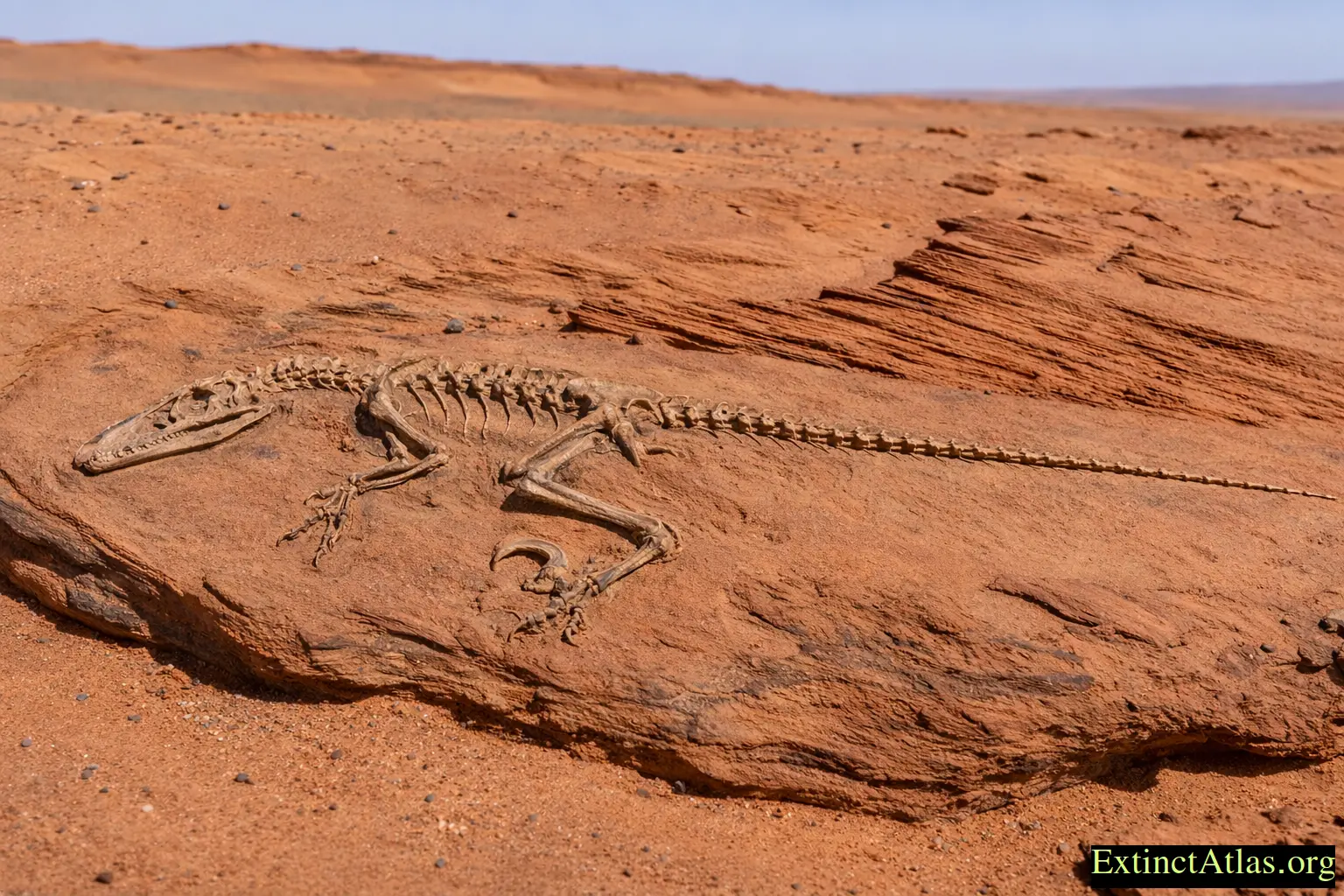
Partially exposed Velociraptor mongoliensis fossil in Djadokhta Formation sandstone showing articulated skeleton with raised enlarged sickle claw and straight stiffened tail in desert dune environment

Field Information Species Velociraptor mongoliensis First discovered 1923, Gobi Desert, Mongolia Discovered by Peter Kaisen, American Museum of Natural History expedition Named by Henry Fairfield Osborn, 1924 Most famous specimen Fighting Dinosaurs, 1971, Mongolia Primary fossil sites Djadokhta Formation, Mongolia; Bayan Mandahu, China Quick Answer: Velociraptor was first discovered in 1923 during an American Museum … Read more

Velociraptor vs Deinonychus: How Did They Actually Compare?

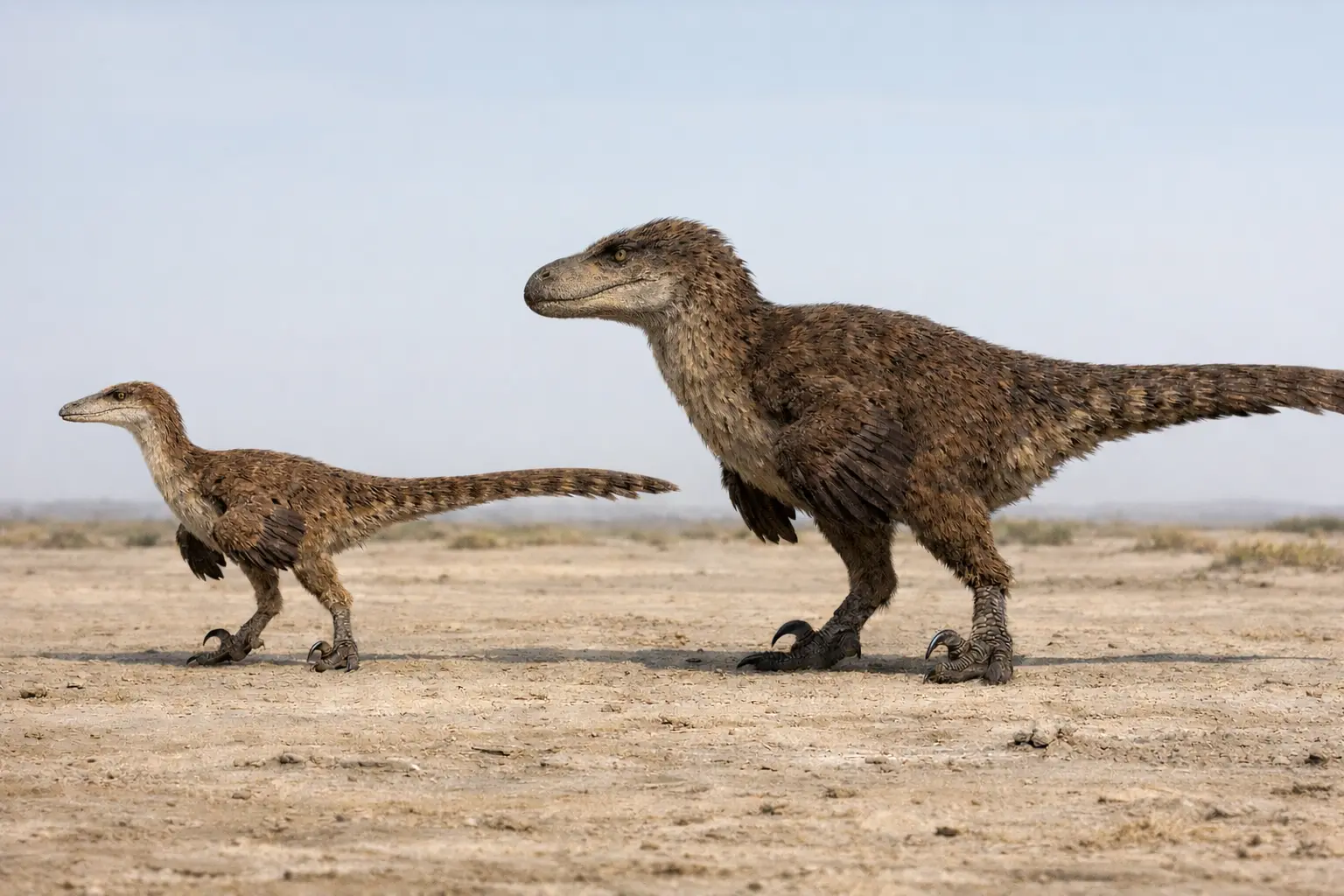
Photorealistic side-by-side comparison of Velociraptor and Deinonychus showing clear size difference, with Velociraptor smaller and gracile with a narrow skull, and Deinonychus larger with a deeper, more robust head and heavier build

Feature Velociraptor Deinonychus Length ~2 m ~3.4 m Weight ~15–20 kg ~70–80 kg Period Late Cretaceous (75–71 Ma) Early Cretaceous (115–108 Ma) Location Mongolia, China Western North America Sickle claw Yes Yes Feathers Confirmed (quill knobs) Inferred (phylogenetic) Quick Answer: Deinonychus was substantially larger than Velociraptor — roughly three to four times heavier and nearly … Read more