
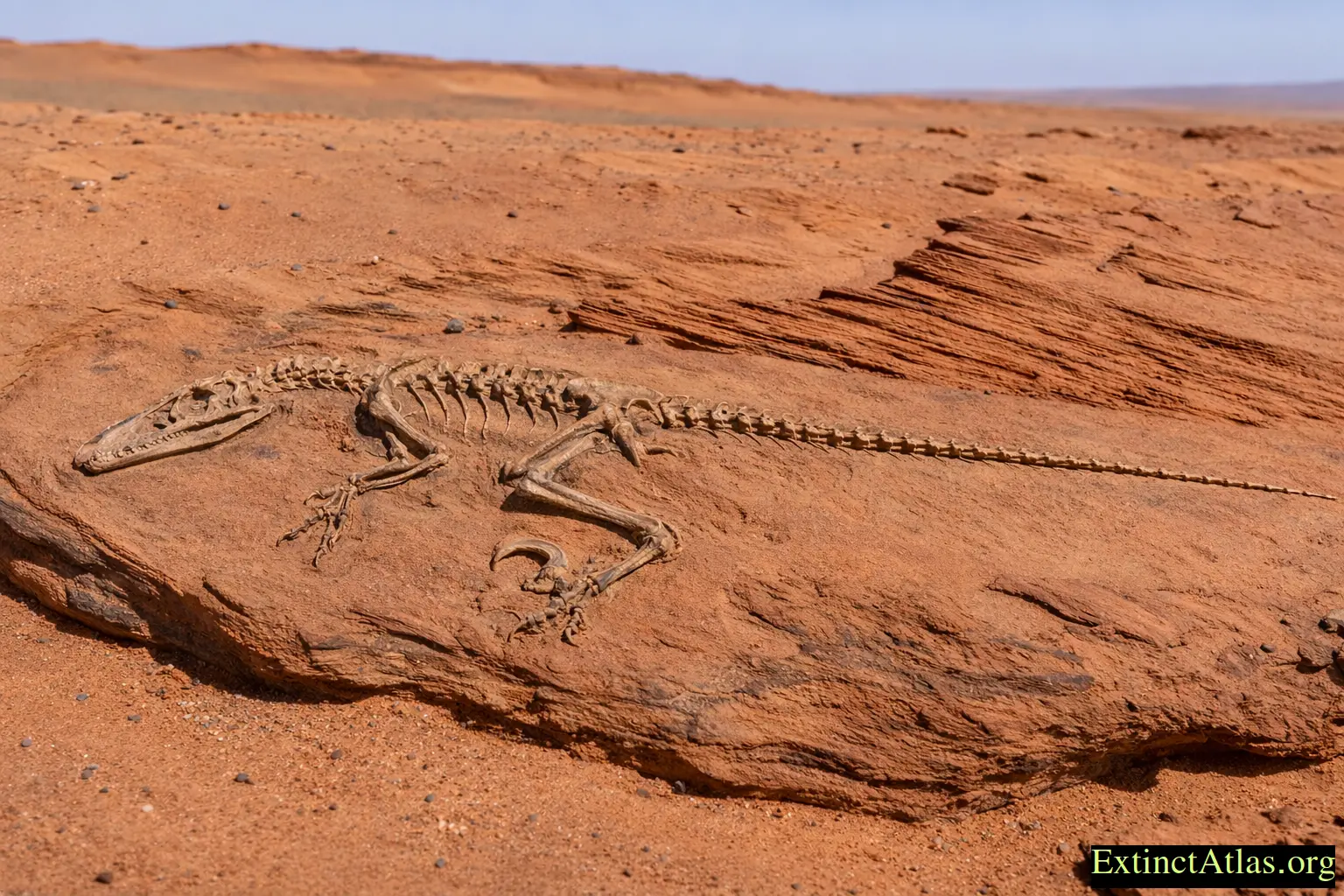
| Field | Information |
|---|---|
| Species | Velociraptor mongoliensis |
| First discovered | 1923, Gobi Desert, Mongolia |
| Discovered by | Peter Kaisen, American Museum of Natural History expedition |
| Named by | Henry Fairfield Osborn, 1924 |
| Most famous specimen | Fighting Dinosaurs, 1971, Mongolia |
| Primary fossil sites | Djadokhta Formation, Mongolia; Bayan Mandahu, China |
Quick Answer: Velociraptor was first discovered in 1923 during an American Museum of Natural History expedition to Mongolia’s Gobi Desert. The initial find was a crushed skull and a claw. The species was formally named by Henry Fairfield Osborn in 1924. The most celebrated specimen — the Fighting Dinosaurs fossil — was found in 1971 and remains one of the most remarkable dinosaur fossils ever recovered.
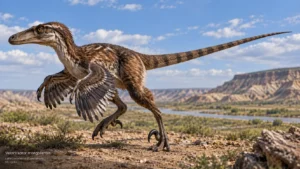
The Gobi Desert does not give up its fossils easily. Extreme temperatures, remote terrain, and shifting sands have preserved and concealed the remains of Velociraptor for over seventy million years — and the story of how those remains were found is as compelling as the animal itself.
When and Where Was Velociraptor Discovered?
Velociraptor was first discovered in 1923 in the Djadokhta Formation of the Gobi Desert, in what is now southern Mongolia. The find was made by Peter Kaisen, a fossil preparator working on the Central Asiatic Expeditions organised by the American Museum of Natural History under Roy Chapman Andrews. The recovered material included a crushed skull and a sickle-shaped claw — enough for Henry Fairfield Osborn to name and describe the species the following year.
The American Museum Expeditions
The Central Asiatic Expeditions of the 1920s were among the most ambitious palaeontological undertakings of the early twentieth century. Evidence suggests the primary goal was actually to find evidence of early human ancestors in Asia — a hypothesis that proved incorrect — but the expeditions produced extraordinary dinosaur material instead. Velociraptor was one of several significant finds from this period in the Gobi.
The Djadokhta Formation
Fossil evidence from the Djadokhta Formation places Velociraptor in a semi-arid environment of ancient dunes, dry river channels, and intermittent water sources. Many fossils from this region show exceptional preservation, likely due to rapid burial by collapsing dunes, which could entomb animals quickly and protect their remains from scavengers and decay. The famous “Fighting Dinosaurs” specimen is thought to have been preserved in this way.
The Fighting Dinosaurs Fossil
The most famous Velociraptor specimen is the Fighting Dinosaurs fossil, discovered in 1971 by a Polish-Mongolian expedition at Tugrik in Mongolia. Fossil evidence shows a Velociraptor and a Protoceratops andrewsi preserved in combat — the Velociraptor’s sickle claw embedded in the Protoceratops‘s throat region, the Protoceratops‘s beak clamped around the Velociraptor’s right arm. Both animals died, apparently buried simultaneously by a collapsing dune while the struggle was still underway.
Why the Fighting Dinosaurs Fossil Matters
Current evidence indicates this specimen is unique in the fossil record — direct, preserved evidence of predator-prey interaction between two named species at the moment of conflict. It confirms that Velociraptor did prey on or at least attack Protoceratops, and it provides the clearest direct evidence of sickle claw use in any dromaeosaurid. The specimen is held at the Mongolian Institute of Geology in Ulaanbaatar.
Later Discoveries and Second Species
Following the 1920s finds, Velociraptor material accumulated slowly through Mongolian and international expeditions across the twentieth century. A second species — Velociraptor osmolskae — was named in 2008 based on a skull from the Bayan Mandahu Formation in Inner Mongolia, China, extending the known range of the genus. The 2007 discovery of quill knobs on a forearm specimen added the feather evidence that reshaped public understanding of the animal.
Related and Contemporary Species
- Protoceratops andrewsi — ceratopsian preserved in direct combat with Velociraptor in the Fighting Dinosaurs specimen; the most intimately documented prey or competitor in Velociraptor’s fossil record
- Oviraptor philoceratops — fellow Djadokhta Formation resident; discovered on the same American Museum expeditions; long misidentified as an egg thief
- Pinacosaurus grangeri — ankylosaur from the Djadokhta Formation; contemporary with Velociraptor in the same ecosystem
- Saurornithoides mongoliensis — troodontid from the same formation; helps reconstruct the broader predator guild Velociraptor inhabited
Frequently Asked Questions
Where was Velociraptor first discovered?
Velociraptor was first discovered in the Djadokhta Formation of the Gobi Desert in southern Mongolia in 1923. The find was made during an American Museum of Natural History expedition led by Roy Chapman Andrews. The initial material consisted of a skull and a sickle claw.
What is the Fighting Dinosaurs fossil?
The Fighting Dinosaurs fossil is a 1971 specimen preserving a Velociraptor and a Protoceratops locked in combat at the moment of death, buried by a collapsing dune. It is one of the most scientifically significant dinosaur fossils ever found, providing direct evidence of predator-prey interactions and of sickle-claw function.
How many Velociraptor fossils have been found?
Multiple Velociraptor specimens have been discovered across Mongolia and northern China, providing a well-studied fossil record compared with that of many other small theropods.
Conclusion
Velociraptor’s discovery story spans a century of expeditions across one of the world’s most challenging fossil landscapes. From the first crushed skull in 1923 to the extraordinary Fighting Dinosaurs fossil, each find has added a clearer picture of an animal that continues to fascinate scientists and the public alike.
Recommended Paleontology & Natural History Books
As an Amazon Associate, Extinct Atlas may earn from qualifying purchases.
The Rise and Fall of the Dinosaurs
A compelling history of dinosaurs, tracing their origins, diversification, 200-million-year reign, extinction, and enduring legacy.
Dinosaurs and Prehistoric Life
A richly illustrated visual reference exploring dinosaurs, fossils, evolution, and prehistoric life across geological time.
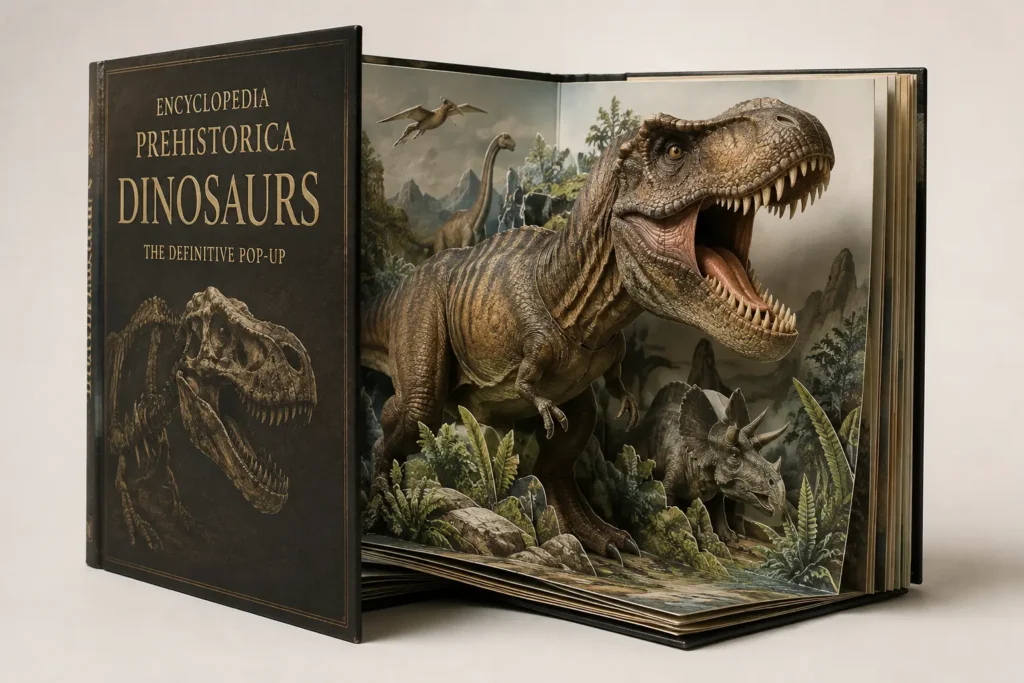
Encyclopedia Prehistorica: Dinosaurs
An interactive dinosaur book featuring spectacular three-dimensional pop-ups, particularly suited to young readers and families.
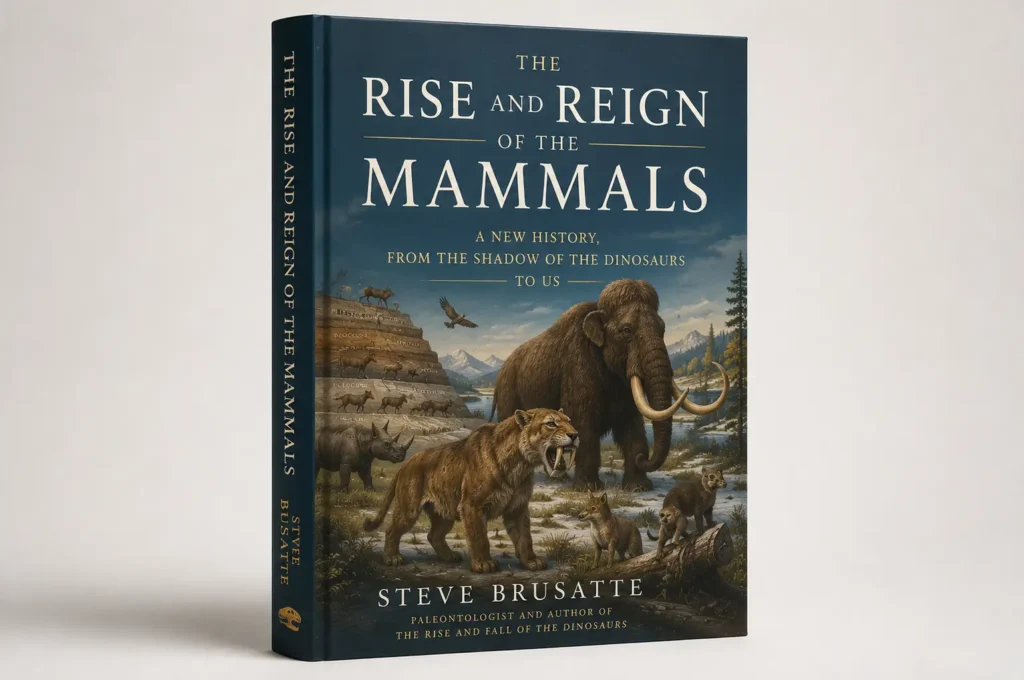
The Rise and Reign of the Mammals
A sweeping history of mammalian evolution, from their origins alongside dinosaurs through the Cenozoic and the emergence of humans.