
| Field | Information |
|---|---|
| Species | Velociraptor mongoliensis |
| Period | Late Cretaceous (75–71 Ma) |
| Feather evidence | Quill knobs on ulna confirmed, 2007 |
| Flight capability | None — too heavy, arms too short |
| Feather function | Insulation, display, possibly brooding |
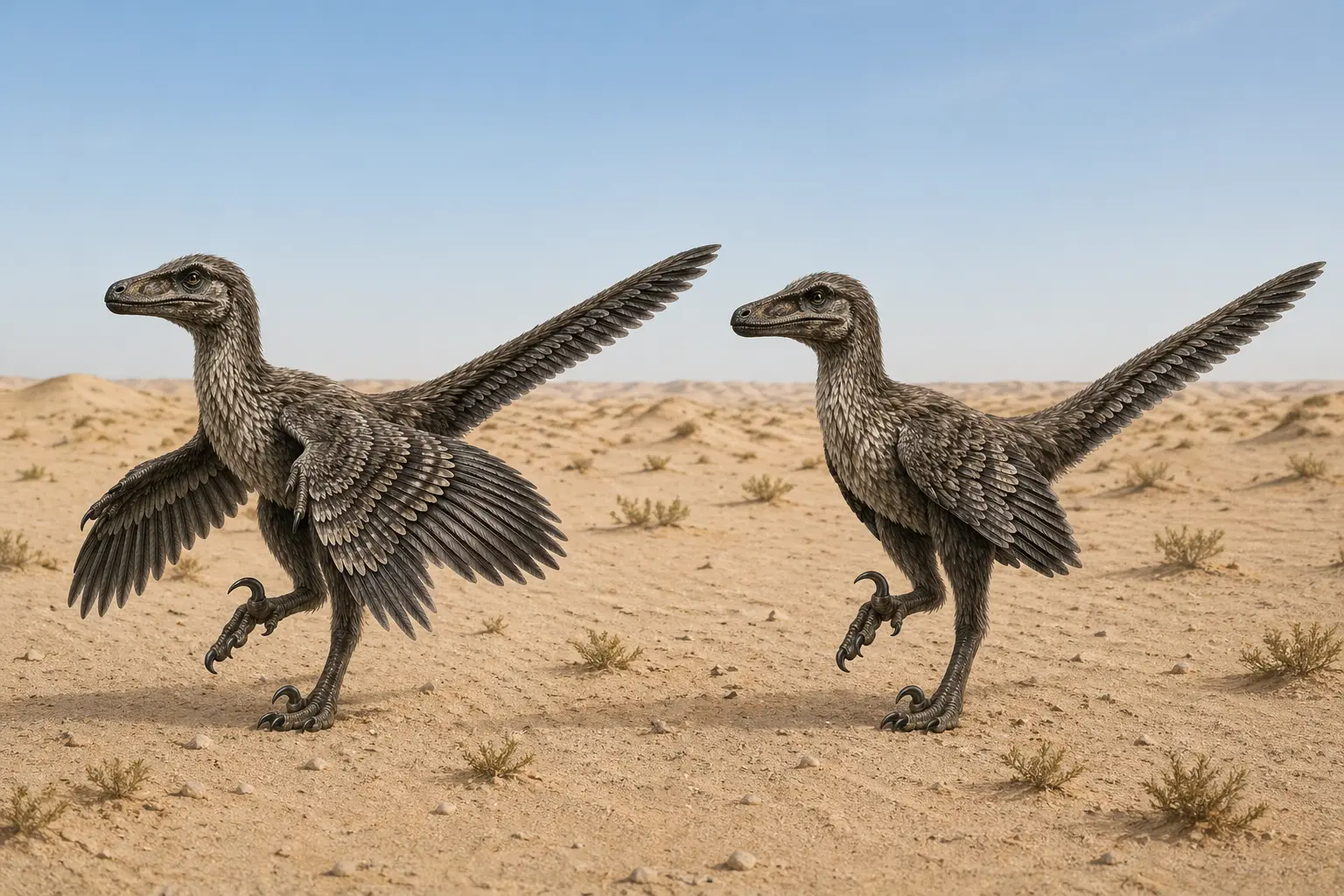
Quick Answer: Yes, Velociraptor had feathers. Fossil evidence from quill knobs preserved on its forearm bones confirms this directly. It could not fly — its arms were far too short and its body too heavy — but feathers likely served for insulation, display, or brooding eggs.
A turkey-sized predator covered in feathers stalking the arid plains of Late Cretaceous Mongolia is a very different image from the scaly, lizard-like creature Hollywood popularised. The feathered Velociraptor is not speculation — it is what the fossils show, and the implications reach well beyond one species.
Velociraptor Had Feathers — Here Is the Evidence
Fossil evidence shows quill knobs on a well-preserved Velociraptor forearm bone, described in a 2007 paper by Turner and colleagues. Quill knobs are anchor points for large, stiff feathers — the same structures seen on modern birds such as eagles and turkeys. Their presence on Velociraptor is direct physical evidence, not inference.
What Are Quill Knobs?
Quill knobs are small bumps along the rear edge of the ulna, one of the two forearm bones. In living birds, these anchor the ligaments that attach large secondary flight feathers to the bone. Finding them on Velociraptor means it carried similarly large feathers on its forearms, even though it could not use them for flight.
Why Didn’t Velociraptor Fly?
Velociraptor could not fly because its arms were too short relative to its body size to generate the lift required for powered flight. Although it had well-developed feathers on its forearms, their structure and proportions indicate they were not aerodynamically suited for flight. Instead, these feathers likely served other functions such as insulation, display, or possibly brooding behavior, similar to those seen in modern flightless birds.
What Were the Feathers Actually For?
Fossil evidence does not preserve feather colour or fine structure in Velociraptor specimens, so function must be inferred from anatomy and comparison with related species. Three functions are most supported by current evidence.
Insulation
The Late Cretaceous Gobi Desert experienced significant temperature variation. Feathers are highly effective insulation, and Current evidence indicates thermoregulation is a plausible primary function — particularly for a small-bodied animal vulnerable to heat loss at night.
Display
Many feathered dinosaurs closely related to Velociraptor show evidence of elaborate plumage used for visual signalling — mate attraction, territorial display, or species recognition. Evidence suggests Velociraptor’s forearm feathers may have served a similar role, though direct evidence for colour or display behaviour does not survive in the fossil record.
Brooding
Some dromaeosaurids show evidence of wing-spreading postures over nests, using feathered arms to shelter eggs. This is speculative for Velociraptor specifically, but the behaviour is documented in closely related species and remains a reasonable inference.
Related and Contemporary Species
- Deinonychus antirrhopus — larger North American dromaeosaurid; feathering inferred from phylogenetic bracketing rather than direct quill knob evidence
- Microraptor gui — small four-winged dromaeosaurid from China; one of the best-preserved feathered dinosaurs, demonstrating the diversity of feathering within the group
- Anchiornis huxleyi — troodontid closely related to dromaeosaurids; exceptional feather preservation including colour patterning from melanosomes
- Yuanchuavis kompsosoura — demonstrates elaborate tail feather evolution in paravians contemporary with Velociraptor’s broader lineage.
Frequently Asked Questions
Did Velociraptor have feathers or scales?
Velociraptor had feathers, confirmed by quill knob impressions preserved on its forearm bones. While direct fossil evidence of full-body skin covering is limited, comparisons with closely related feathered dinosaurs indicate that much of its body was likely covered in feathers. As in modern birds, some areas, such as the feet or snout, may have retained scaly skin, but feathers would have been the dominant body covering.
Could Velociraptor fly?
No. Fossil evidence shows its arms were too short and its body mass too high for powered flight. Current evidence indicates the feathers served for insulation, display, or brooding rather than any aerodynamic function. Velociraptor was a fully terrestrial predator.
Why did Jurassic Park show Velociraptor without feathers?
Jurassic Park was produced before the 2007 quill knob discovery and drew on the scientific understanding of the early 1990s. The filmmakers have since acknowledged the discrepancy. The franchise’s raptors are also significantly larger than the real animal, closer in size to Deinonychus or Utahraptor.
Conclusion
Velociraptor was a feathered predator — a fact now settled by direct fossil evidence. Its feathers served survival and possibly social functions rather than flight, placing it firmly within the evolutionary continuum that connects non-avian dinosaurs to modern birds.
Recommended Paleontology & Natural History Books
As an Amazon Associate, Extinct Atlas may earn from qualifying purchases.
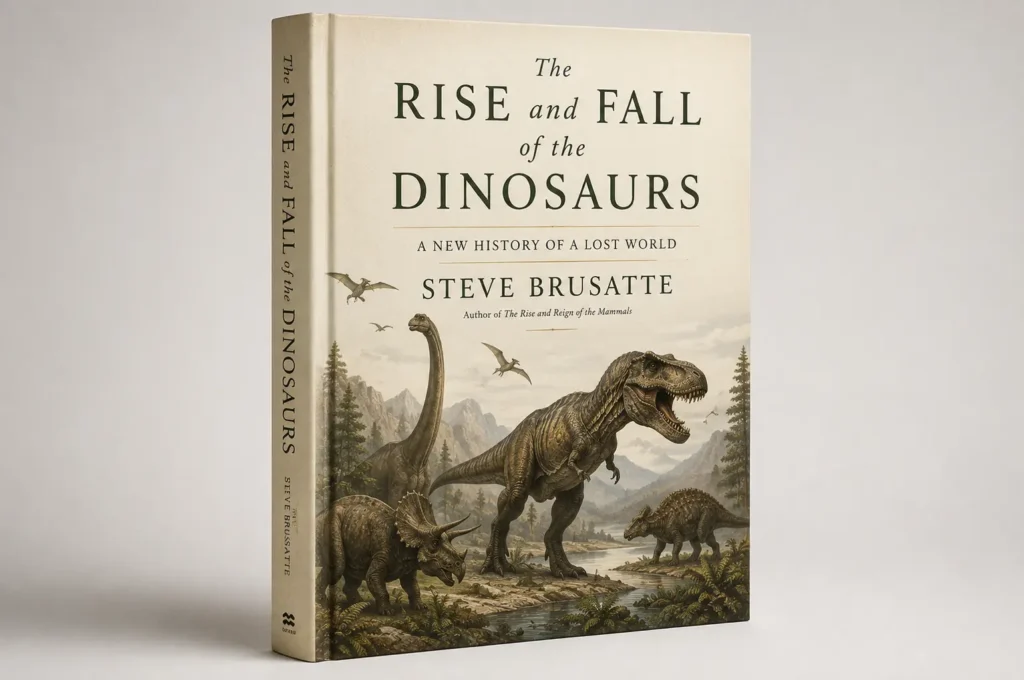
The Rise and Fall of the Dinosaurs
A compelling history of dinosaurs, tracing their origins, diversification, 200-million-year reign, extinction, and enduring legacy.
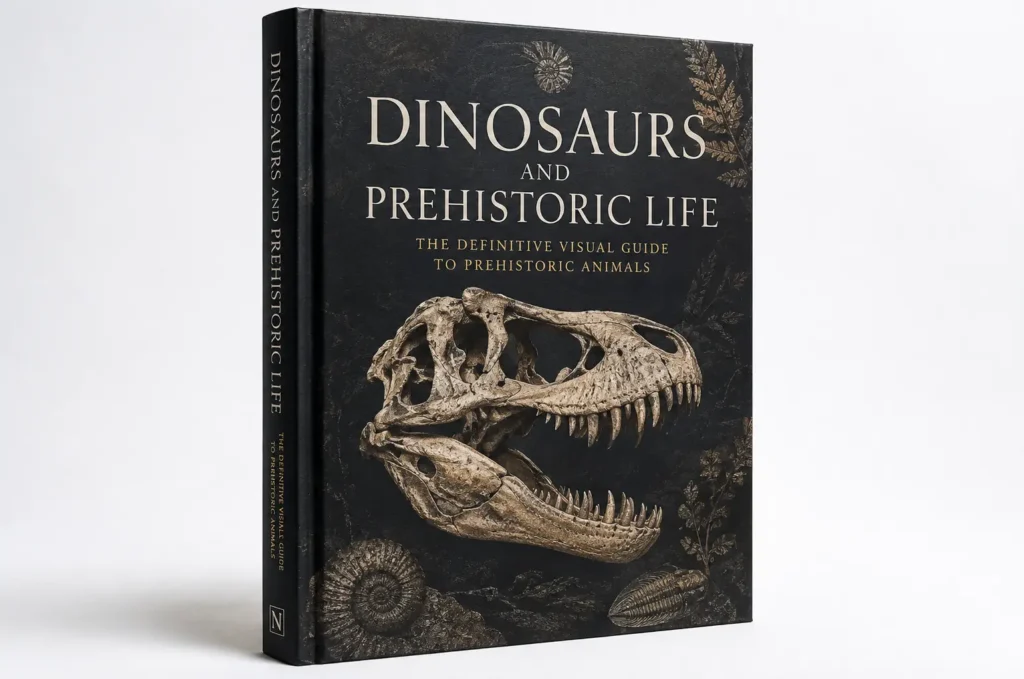
Dinosaurs and Prehistoric Life
A richly illustrated visual reference exploring dinosaurs, fossils, evolution, and prehistoric life across geological time.
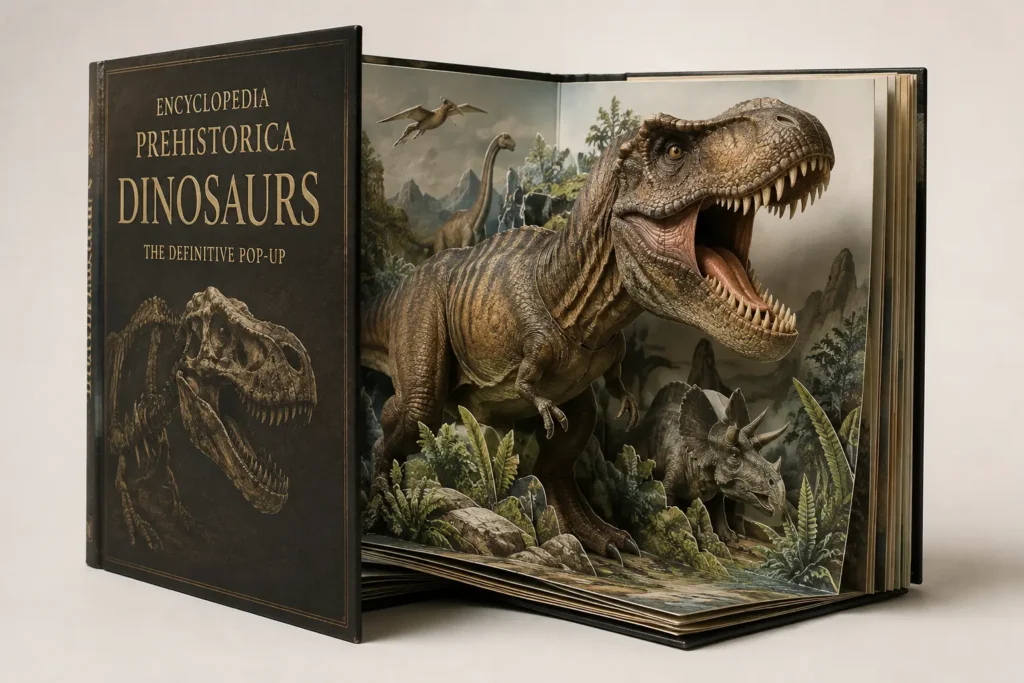
Encyclopedia Prehistorica: Dinosaurs
An interactive dinosaur book featuring spectacular three-dimensional pop-ups, particularly suited to young readers and families.
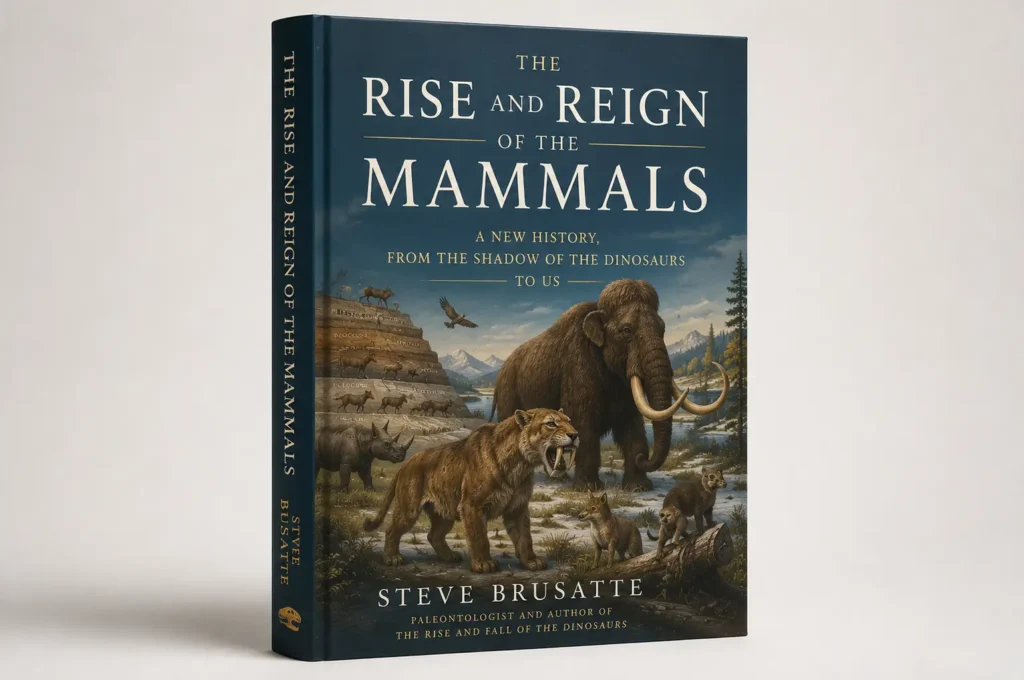
The Rise and Reign of the Mammals
A sweeping history of mammalian evolution, from their origins alongside dinosaurs through the Cenozoic and the emergence of humans.