
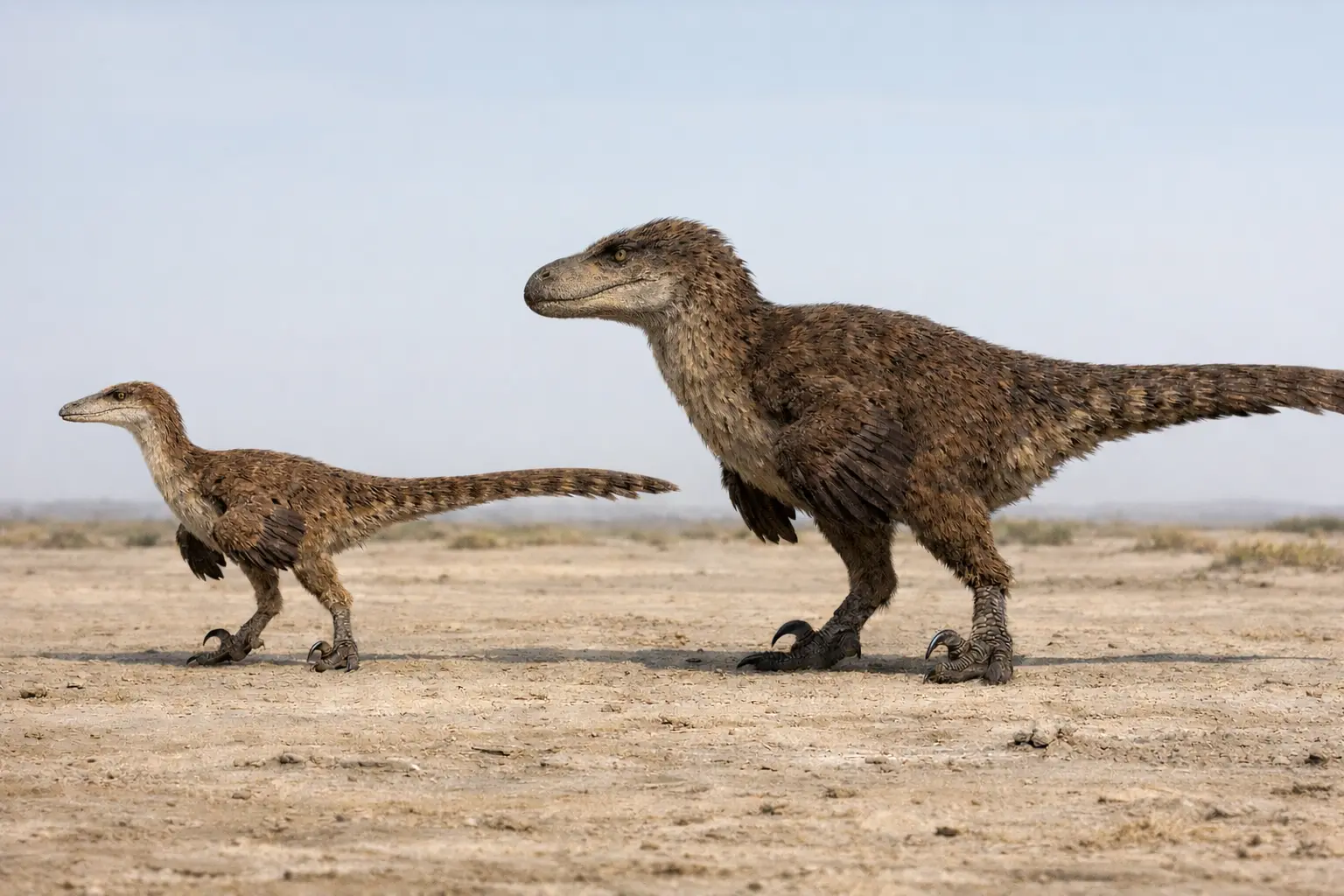
| Feature | Velociraptor | Deinonychus |
|---|---|---|
| Length | ~2 m | ~3.4 m |
| Weight | ~15–20 kg | ~70–80 kg |
| Period | Late Cretaceous (75–71 Ma) | Early Cretaceous (115–108 Ma) |
| Location | Mongolia, China | Western North America |
| Sickle claw | Yes | Yes |
| Feathers | Confirmed (quill knobs) | Inferred (phylogenetic) |
Quick Answer: Deinonychus was substantially larger than Velociraptor — roughly three to four times heavier and nearly twice as long. Both were dromaeosaurids with sickle claws, but they lived in different times and on different continents and never encountered one another. The confusion between them is largely a product of Jurassic Park.
The raptor that terrified cinema audiences in 1993 was not Velociraptor. It was, in body size at least, far closer to Deinonychus — a considerably larger North American dromaeosaurid that palaeontologist John Ostrom had described decades earlier and which had inspired much of the renewed scientific interest in dinosaur behaviour.
How Did Velociraptor and Deinonychus Compare?
Velociraptor was a small, lightly built predator roughly the size of a large turkey. Deinonychus was a much more imposing animal — longer than a human is tall, and heavy enough to tackle significantly larger prey. Both shared the defining dromaeosaurid features: binocular vision, a stiffened tail used as a counterbalance, and the enlarged sickle claw on the second toe of each foot.
Size Difference in Practice
At 15–20 kg, Velociraptor was well within the prey size range of several contemporary predators in its Mongolian ecosystem. Deinonychus at 70–80 kg occupied a different ecological position — current evidence indicates it may have hunted large ornithopods such as Tenontosaurus, either alone or in groups. Evidence suggests the two animals, despite superficial similarities, lived very different predatory lives.
The Sickle Claw: Same Feature, Different Scale
Both species possessed the enlarged second-toe claw characteristic of dromaeosaurids, but Deinonychus had a proportionally and absolutely larger version. In both animals, the claw functioned primarily as a gripping and restraining tool rather than a slashing weapon. However, the greater size of Deinonychus meant it could apply this mechanism to much larger prey..
Did They Ever Overlap in Time or Place?
Fossil evidence shows no geographic or temporal overlap between the two species. Velociraptor lived in the Late Cretaceous of Central Asia, approximately 75–71 million years ago. Deinonychus lived in Early Cretaceous North America, approximately 115–108 million years ago — roughly 35 million years earlier and on a separate landmass. A direct encounter was impossible.
Why Does Jurassic Park Cause Confusion?
Michael Crichton, in writing the original novel, drew heavily on John Ostrom’s work on Deinonychus and the renewed interest it generated in active, intelligent dinosaurs. He chose to use the name Velociraptor — which translates loosely as “swift thief” — for dramatic effect, but based many of the animal’s characteristics on Deinonychus. The film then amplified this further by scaling the animals up again, producing creatures closer in size to Utahraptor, which was being described around the same time as production. The “Jurassic Park raptor” is effectively a composite that does not accurately represent any single species.
Related and Contemporary Species
- Utahraptor ostrommaysorum — the largest known dromaeosaurid; North American; closer in size to the Jurassic Park depiction than either Velociraptor or Deinonychus
- Dromaeosaurus albertensis — a smaller North American dromaeosaurid; contemporary with later large theropods
- Tsaagan mangas — Mongolian dromaeosaurid contemporary with Velociraptor; helps contextualise the Central Asian raptor fauna.
- Achillobator giganticus — large Mongolian dromaeosaurid; demonstrates that large raptors did exist in Central Asia, though not in the same time window as Velociraptor.
Frequently Asked Questions
Who would win in a fight between Velociraptor and Deinonychus?
This is speculative — the two animals never coexisted. In a hypothetical encounter, Deinonychus’s substantial size advantage would be decisive. At three to four times the weight of Velociraptor, it occupied a completely different predatory tier. This is extrapolation, not direct evidence.
Are Velociraptor and Deinonychus the same animal?
No. They are separate species within the same family — Dromaeosauridae — but differ significantly in size, geography, and geological age. The confusion largely originates with Jurassic Park, which used Velociraptor’s name but based the animal’s size and behaviour more closely on Deinonychus.
Which was smarter — Velociraptor or Deinonychus?
Both Velociraptor and Deinonychus had relatively large brains for their body size compared to many other non-avian dinosaurs, a trait common among dromaeosaurids. Current evidence does not support ranking one as more intelligent than the other. Their brain proportions suggest broadly similar levels of sensory processing and coordination rather than a clear difference in cognitive ability.
Conclusion: Velociraptor and Deinonychus were relatives, not rivals — separated by continent and tens of millions of years. Understanding the difference between them also means understanding what Jurassic Park got wrong, and why that matters for how the public perceives these animals.
Recommended Paleontology & Natural History Books
As an Amazon Associate, Extinct Atlas may earn from qualifying purchases.
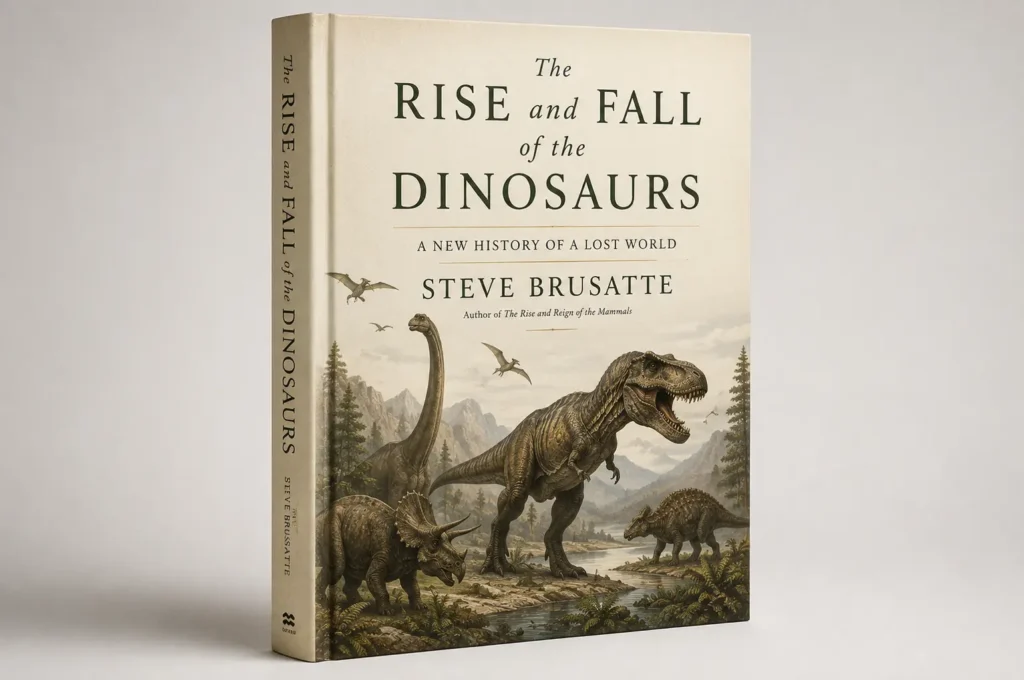
The Rise and Fall of the Dinosaurs
A compelling history of dinosaurs, tracing their origins, diversification, 200-million-year reign, extinction, and enduring legacy.
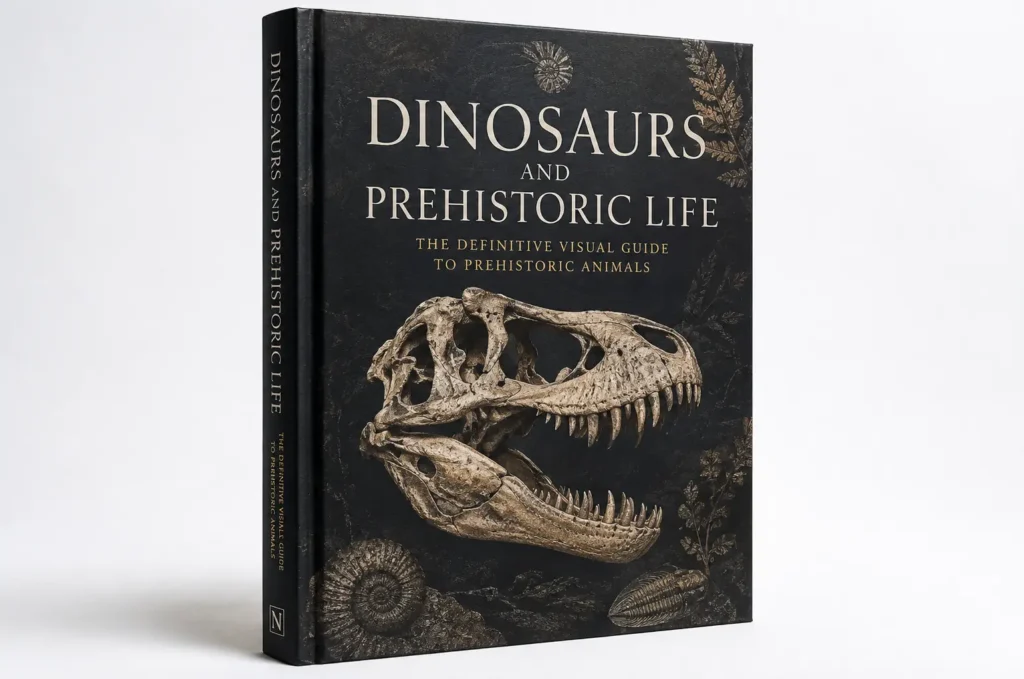
Dinosaurs and Prehistoric Life
A richly illustrated visual reference exploring dinosaurs, fossils, evolution, and prehistoric life across geological time.
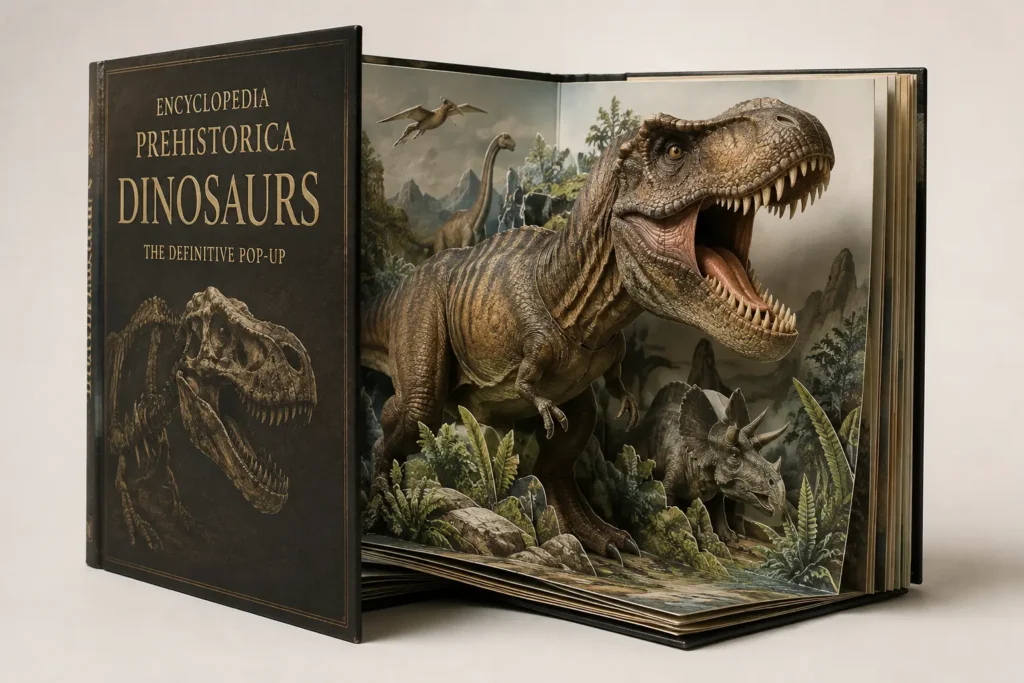
Encyclopedia Prehistorica: Dinosaurs
An interactive dinosaur book featuring spectacular three-dimensional pop-ups, particularly suited to young readers and families.
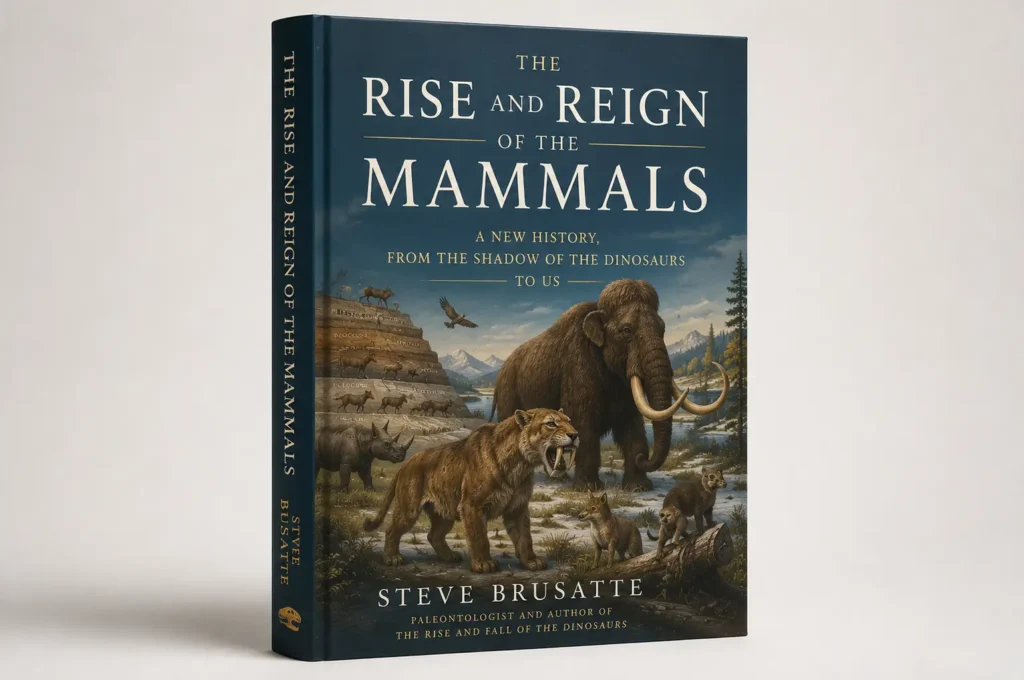
The Rise and Reign of the Mammals
A sweeping history of mammalian evolution, from their origins alongside dinosaurs through the Cenozoic and the emergence of humans.