

At a Glance
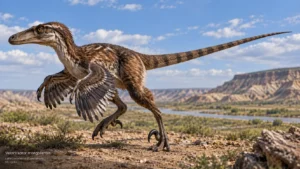
| Field | Information |
|---|---|
| Species | Velociraptor mongoliensis |
| Claw Length | 6.5+ cm (outer edge) |
| Location | Second toe, each foot |
| Walking Position | Retracted off ground |
| Primary Function | Prey restraint and pinning |
| Discovery | First specimen 1923 |
Quick Answer: Velociraptor’s sickle claw was an enlarged, curved talon on the second toe of each foot that could grow over 6.5 centimeters around its outer edge. Rather than slashing prey open, the claw functioned like an eagle’s talon—pinning struggling victims to the ground while Velociraptor used its teeth and hands to inflict fatal injuries.
When paleontologist Henry Fairfield Osborn examined the first Velociraptor fossil in 1924, he misidentified the impressive curved claw as coming from the hand. The error was understandable—no one had seen anything quite like it before. That claw, held retracted off the ground as the dinosaur walked, represented one of evolution’s most effective predatory tools. Not a blade for disembowelment, as scientists first assumed, but something more sophisticated: a living grappling hook.
What Was the Velociraptor Sickle Claw?

The sickle claw was an enlarged, strongly curved ungual (claw bone) located on the second digit of each hindfoot. Unlike the claws on the third and fourth toes, which contacted the ground during walking and running, the sickle claw was held permanently retracted—elevated above the substrate to prevent wear and maintain sharpness.
The bony core of the claw measured over 6.5 centimeters (2.6 inches) along its outer curve in adult specimens. In life, a keratinous sheath covered this bone, extending the functional length even further—similar to how modern bird talons and mammalian claws possess a horny outer covering over the internal bone. Based on comparisons with living birds and crocodiles, the complete living claw likely measured 8–10 centimeters.
The claw’s curvature was not uniform. The inner edge was relatively rounded and blunt, while the outer edge tapered to a sharp point. This asymmetry indicates the claw functioned primarily through puncturing and gripping rather than slicing. The cross-sectional shape was laterally compressed—flattened from side to side—which increased penetration capability while maintaining structural strength against bending.
The second toe itself was highly modified to support this weapon. The toe was held in a hyperextended position—bent sharply upward and backward—when not in active use. This position was maintained by specialized tendons and ligaments that required no muscular effort, similar to the perching mechanism in modern birds that allows them to sleep on branches without falling.
Anatomical Support Systems
The metatarsus (foot bones) of Velociraptor was arctometatarsalian—the third metatarsal was pinched between the second and fourth, creating a tighter, more shock-resistant structure. This configuration appears in fast-running theropods and suggests the foot was adapted to absorb impact forces from jumping and landing.
The toe bones (phalanges) of the second digit were unusually robust compared to those of the third and fourth toes. The first phalanx—the one connecting directly to the metatarsus—was particularly enlarged, providing a strong foundation for the powerful flexor muscles that controlled claw deployment.
Ossified tendons ran along the top of the tail, creating a stiff counterbalance that was essential for the claw’s use. When Velociraptor raised one leg to strike, the rigid tail prevented the body from tipping forward, maintaining balance during the attack. This tail structure appears across dromaeosaurids and represents a key adaptation for their hunting strategy.
How Did Velociraptor Use Its Sickle Claw?
For decades after Velociraptor’s discovery, scientists assumed the sickle claw functioned as a slashing weapon used to deliver slashing attacks. This interpretation seemed intuitive—the claw’s knife-like appearance suggested cutting function, and the concept of raptors as “slashers” became firmly embedded in popular culture.
A 2005 experimental study challenged this assumption. Researchers built a mechanical Velociraptor leg with an anatomically accurate sickle claw and tested it against pork belly (chosen to simulate the abdominal wall of potential prey). While the claw penetrated the tissue, it failed to produce the long, deep slashes necessary for disembowelment. The rounded inner edge couldn’t generate sufficient cutting action.
The “Fighting Dinosaurs” fossil provided critical evidence for the claw’s actual function. This spectacular specimen, discovered in Mongolia in 1971, preserves a Velociraptor and Protoceratops locked in mortal combat. The Velociraptor’s right sickle claw is embedded in the Protoceratops’ throat region—specifically, positioned to pierce vital blood vessels or the windpipe—while the left claw appears positioned in the herbivore’s belly. The prey’s beak clamps down on the predator’s forearm.
This fossil suggests Velociraptor used the claw for precision strikes to vulnerable areas rather than generalized slashing. The throat contains the jugular vein, carotid artery, and trachea—all critical targets. Piercing these structures would quickly incapacitate prey through blood loss or suffocation.
The Raptor Prey Restraint Model
A 2011 study by paleontologist Denver Fowler and colleagues proposed a more comprehensive explanation called “raptor prey restraint” (RPR). By examining the anatomy of modern birds of prey—particularly accipitrids like eagles and hawks—the researchers identified striking similarities to Velociraptor’s build.
Modern raptorial birds possess enlarged claws on their second toes (digit II), just like dromaeosaurids. Hawks and eagles use these talons not to slash, but to pin struggling prey to the ground. The bird leaps onto the victim, grips with its talons, and uses its body weight to prevent escape. The prey then dies from repeated bites, blood loss, or eventually organ failure—often while the predator has already begun feeding.
This strategy works because the talons sink deep into the prey and hold firm. The more the victim struggles, the tighter the grip becomes as the curved claws act like barbed hooks. The predator doesn’t need to kill quickly—it just needs to prevent escape.
Velociraptor’s anatomy matches this strategy precisely. The relatively short, powerful metatarsus provided grip strength rather than maximum running speed. The robust second toe and strong flexor muscles could maintain intense clamping pressure. The balance provided by the stiff tail allowed Velociraptor to maintain position on struggling prey while using its hands and jaws to inflict additional injuries.
The RPR model also explains why Velociraptor retained wing feathers despite being flightless. Modern birds of prey spread their wings over captured prey in a behavior called “mantling”—partly to hide the kill from competitors, partly to maintain balance on a thrashing victim. Velociraptor’s preserved wing feathers may have served the same stabilizing function.
Claw Deployment Mechanism
When walking or running, Velociraptor held the sickle claw elevated through a system of passive tension—ligaments maintained the retracted position without requiring constant muscular effort. Fossilized trackways from related dromaeosaurids show only two toe impressions (digits III and IV), confirming the second toe never touched the ground during normal locomotion.
To deploy the claw for attack, powerful flexor muscles pulled the toe downward and forward in a rapid striking motion. The movement would have been similar to a kick, but with the foot rotated to present the claw’s sharp outer edge toward the target. The curved shape naturally drove the point inward and upward once penetration occurred.
The leg bones show strong muscle attachment sites, indicating powerful kicking capability. However, the strike wasn’t about generating maximum force—it was about accurate placement. Once the claw penetrated flesh, the curved shape prevented withdrawal. The prey was effectively harpooned.
Comparison with Other Dromaeosaurid Claws
Velociraptor’s sickle claw, while impressive, was not the largest within its family. Deinonychus antirrhopus, the North American dromaeosaurid that inspired the “Velociraptor” design in Jurassic Park, possessed sickle claws exceeding 12 centimeters (4.7 inches) in bone length—nearly twice the size of Velociraptor’s.
Utahraptor ostrommayorum had even larger claws, with some specimens showing claws over 24 centimeters long. These enormous weapons corresponded to Utahraptor’s much greater body size—at 500 kilograms, this predator was heavy enough to tackle prey that required more substantial restraint tools.
At the smaller end of the spectrum, Microraptor zhaoianus possessed sickle claws on both the feet and hands, though they measured only 1–2 centimeters. This crow-sized dromaeosaurid likely used its claws for capturing insects and very small vertebrates.
Despite size differences, the basic morphology remained consistent across dromaeosaurids: strongly curved, laterally compressed, and held retracted during locomotion. This suggests the same functional strategy evolved early in the dromaeosaurid lineage and scaled up or down depending on prey size.
Functional Differences
A 2024 comparative study examined bite force and feeding adaptations across multiple dromaeosaurid species. Deinonychus showed adaptations for powerful bites and likely used its skull more aggressively in killing, supplementing the sickle claw with strong jaw attacks. Its larger size allowed this dual-weapon approach.
Velociraptor, by contrast, had a lighter skull with high bite-force resistance—able to withstand impacts but not generate them. This pattern correlates with scavenging behavior and restraint-based hunting rather than bite-and-tear tactics. The sickle claw bore more responsibility for the kill in Velociraptor than in its larger relatives.
Smaller dromaeosaurids like Microraptor show reduced claw robustness, suggesting they may have used the talons primarily for climbing and prey capture rather than restraint. The different applications of similar anatomy demonstrate how a single evolutionary innovation can adapt to multiple ecological roles.
The Discovery and Study of the Sickle Claw
The first Velociraptor sickle claw was discovered on August 11, 1923, during an American Museum of Natural History expedition to Mongolia’s Gobi Desert. Field collector Peter Kaisen found it alongside a crushed skull at the Flaming Cliffs locality, though the association between claw and foot was not immediately understood.
Henry Fairfield Osborn, who formally described Velociraptor in 1924, initially identified the claw as a hand claw—a reasonable assumption given its size and impressive appearance. Only after additional, more complete specimens were discovered did paleontologists realize the claw belonged to the foot, specifically the second toe.
The discovery of related dromaeosaurids provided context. John Ostrom’s 1969 description of Deinonychus, which included a detailed analysis of the enlarged toe claw, established that this feature characterized the entire dromaeosaurid family. Ostrom proposed that the “terrible claw” was used for slashing attacks, an interpretation that dominated scientific literature for decades.
The Fighting Dinosaurs specimen, discovered in 1971, offered the first in situ evidence of claw function. Seeing the claw embedded in a prey animal’s throat provided observational data that couldn’t be derived from isolated bones. This fossil remains one of paleontology’s most significant discoveries for understanding predatory behavior.
Modern Research Techniques
Recent studies have employed finite element analysis (FEA) to model stress distribution in the sickle claw during different uses. A 2009 study created digital models of Velociraptor’s hand and foot claws, applying simulated forces to test puncturing versus slashing scenarios. The results supported puncturing and gripping functions over slashing.
CT scanning of well-preserved claws has revealed internal bone structure, showing how the dense outer cortex and internal trabecular network distribute forces. The architecture resembles that of modern eagle talons more closely than the claws of mammalian predators, further supporting the raptor prey restraint interpretation.
Comparisons with modern animals provide ongoing insights. Studies of eagle hunting behavior, talon morphology, and strike mechanics continue to inform interpretations of Velociraptor function. Golden eagles in particular—which occasionally take prey several times their own weight—offer analogous hunting strategies that illuminate dromaeosaurid behavior.
Related and Contemporary Species
- Among Velociraptor’s contemporaries in Late Cretaceous Mongolia, no other predators possessed equivalent weapons. The tyrannosaurs Alioramus and Tarbosaurus relied on massive jaws and powerful bites rather than specialized toe claws. Smaller theropods like oviraptorids lacked predatory adaptations entirely, being omnivorous or herbivorous.
- Tsaagan mangas, another Mongolian dromaeosaurid, possessed similar sickle claws and likely employed identical hunting strategies. The two species may have competed directly for prey, though insufficient fossil evidence exists to confirm their temporal or geographic overlap.
- Troodontids—close relatives of dromaeosaurids—also possessed enlarged second-toe claws, though less dramatically developed than in Velociraptor. These small, intelligent theropods likely used their claws for similar restraint purposes on even smaller prey items like insects and tiny vertebrates.
- Velociraptor’s primary prey species showed various defensive adaptations. Protoceratops possessed a powerful beak capable of breaking bones, as evidenced by the Fighting Dinosaurs fossil, where it clamped onto Velociraptor’s arm. Small mammals relied on speed and burrow-dwelling behaviors. The evolutionary arms race between Velociraptor’s offensive weapons and prey defenses drove adaptations on both sides.
Frequently Asked Questions
Could the sickle claw retract like a cat’s claw?
Not exactly. Cats actively extend their claws for use and retract them into protective sheaths when not needed—a voluntary muscular action. Velociraptor’s sickle claw was held in a permanently retracted position above the ground through passive tension in ligaments, similar to how a bird’s toes automatically grip when it perches. The claw didn’t pull back into a sheath; rather, the entire second toe was held upward and backward. To use the claw, Velociraptor would extend the toe forward and downward through active muscle contraction, then the ligaments would return it to the raised position after the muscles relaxed.
How sharp was the sickle claw?
The claw was sharp at the point but not along the edges like a blade. The keratinous sheath covering the bone would have come to a needle-sharp tip optimized for penetrating hide and flesh. However, the inner edge was relatively rounded rather than knife-sharp, preventing the claw from functioning as an effective slashing weapon. This is similar to modern bird of prey talons, which have piercing points but relatively dull edges. Velociraptor kept the claw sharp by holding it off the ground during walking—trackways show no marks from the second toe, indicating it never wore down through ground contact.
Did Velociraptor have sickle claws on its hands, too?
No. While Velociraptor had three curved claws on each hand, these were not enlarged or specialized like the foot claws. The hand claws were functional for grasping and manipulating prey, but lacked the dramatic sickle shape. Some smaller dromaeosaurids like Microraptor did possess enlarged claws on both hands and feet, but this represented a different evolutionary pathway. Velociraptor’s hands were adapted for holding and pulling prey, while the foot claws provided the primary restraint mechanism. The division of labor between hands and feet was one of Velociraptor’s key adaptations.
Conclusion
The Velociraptor sickle claw represents a precision predatory tool refined over millions of years. Not the slashing weapon of popular imagination but a sophisticated restraint mechanism, it allowed a relatively small-sized predator to control prey through technique rather than overwhelming size—a strategy modern birds of prey still employ with deadly effectiveness.
Recommended Paleontology & Natural History Books
As an Amazon Associate, Extinct Atlas may earn from qualifying purchases.
The Rise and Fall of the Dinosaurs
A compelling history of dinosaurs, tracing their origins, diversification, 200-million-year reign, extinction, and enduring legacy.
Dinosaurs and Prehistoric Life
A richly illustrated visual reference exploring dinosaurs, fossils, evolution, and prehistoric life across geological time.
Encyclopedia Prehistorica: Dinosaurs
An interactive dinosaur book featuring spectacular three-dimensional pop-ups, particularly suited to young readers and families.
The Rise and Reign of the Mammals
A sweeping history of mammalian evolution, from their origins alongside dinosaurs through the Cenozoic and the emergence of humans.