Did Velociraptor Have Feathers?

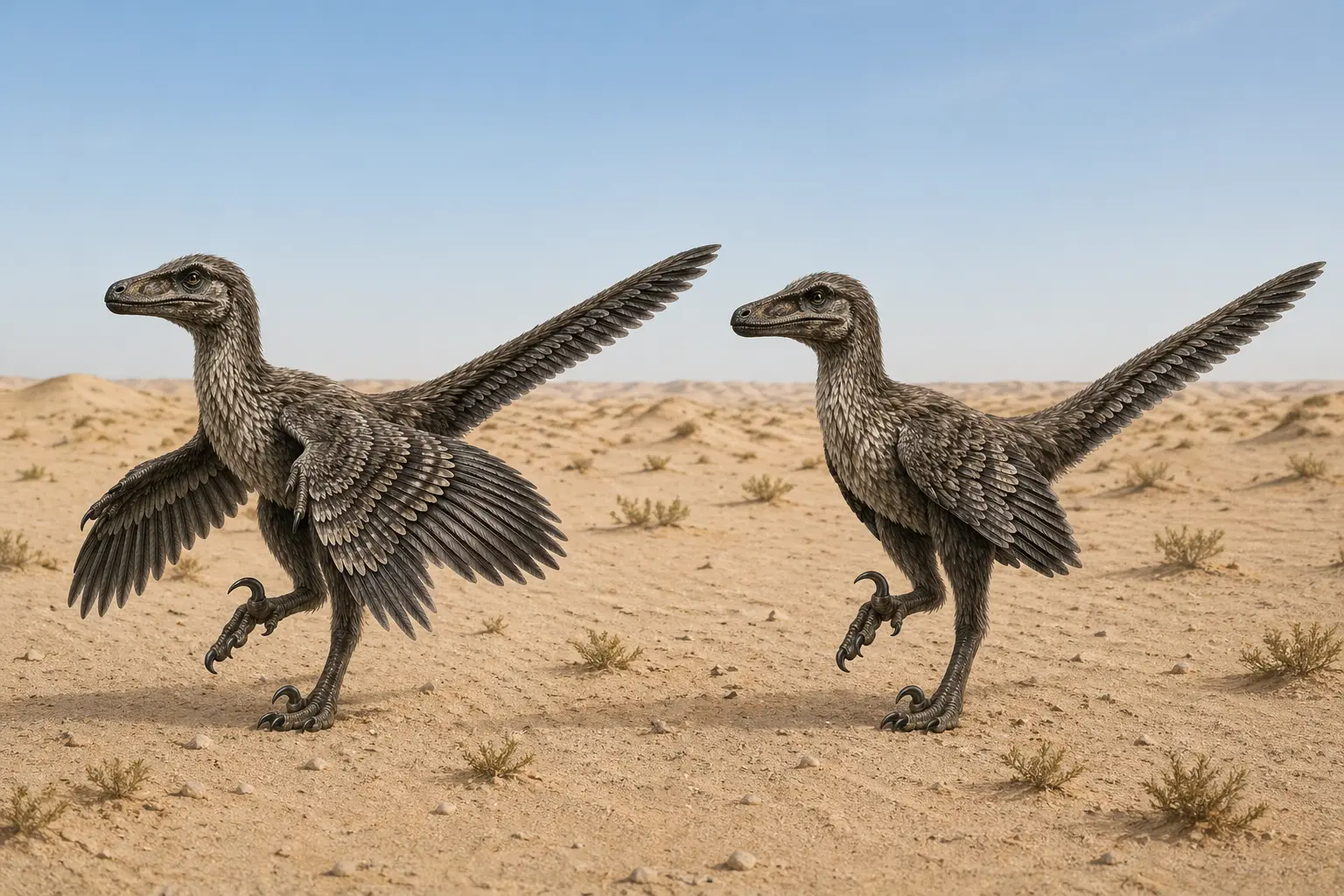
Feathered Velociraptor mongoliensis in Late Cretaceous Djadokhta desert showing pennaceous wing feathers and full-body contour feather coverage in side-by-side semi-infographic views

Field Information Species Velociraptor mongoliensis Period Late Cretaceous (75–71 Ma) Feather evidence Quill knobs on ulna confirmed, 2007 Flight capability None — too heavy, arms too short Feather function Insulation, display, possibly brooding Quick Answer: Yes, Velociraptor had feathers. Fossil evidence from quill knobs preserved on its forearm bones confirms this directly. It could not … Read more

Velociraptor Sickle Claw: Function and Purpose of the Killer Talon

Photorealistic Velociraptor mongoliensis showing raised hyperextended sickle claw on second toe with both hindlimbs visible in Late Cretaceous Djadokhta desert environment, detailed feathered anatomy and inset close-ups of the claw

At a Glance Field Information Species Velociraptor mongoliensis Claw Length 6.5+ cm (outer edge) Location Second toe, each foot Walking Position Retracted off ground Primary Function Prey restraint and pinning Discovery First specimen 1923 Quick Answer: Velociraptor’s sickle claw was an enlarged, curved talon on the second toe of each foot that could grow over … Read more

Kentrosaurus Plates: Size, Distribution, and Evolution

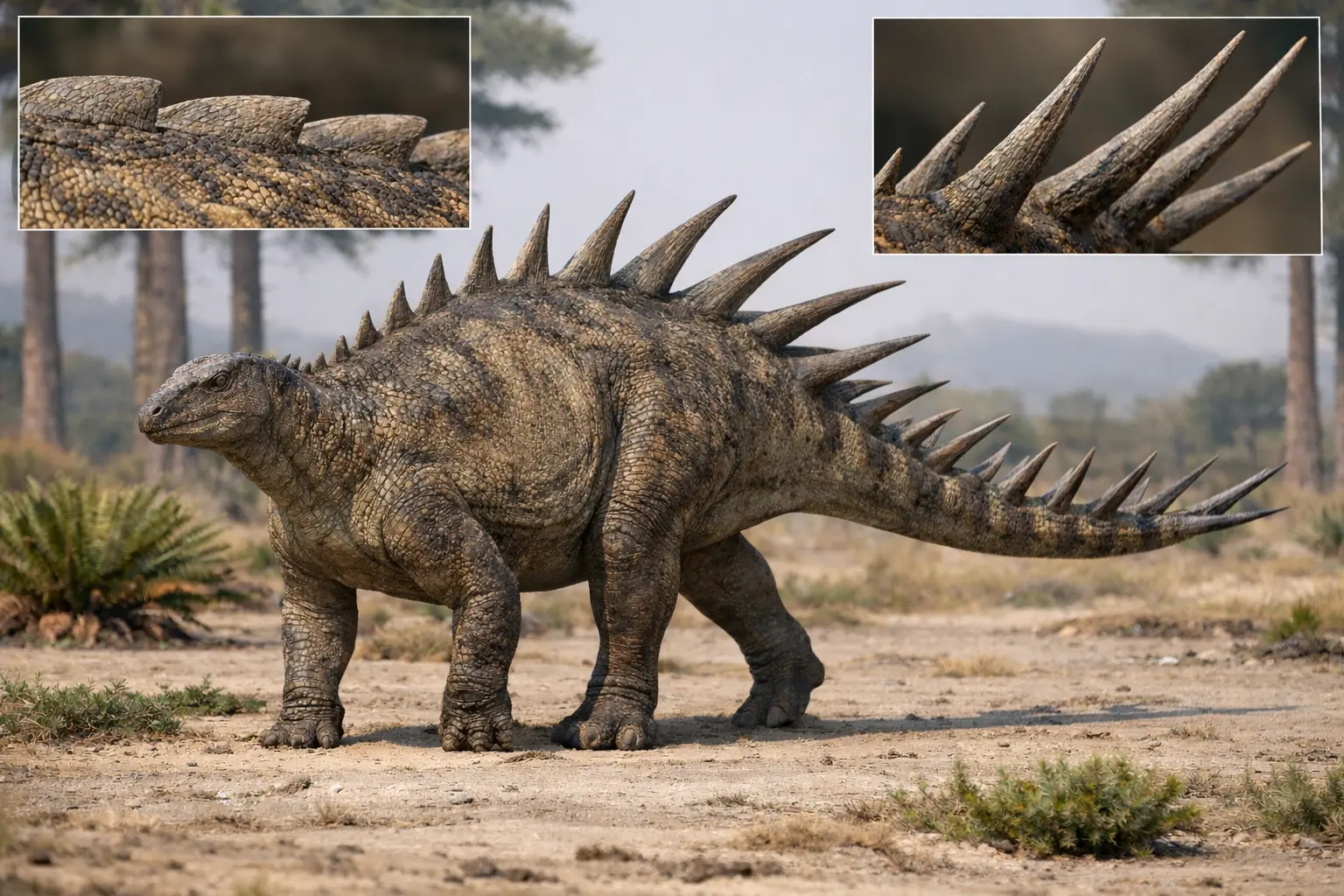
Photorealistic Kentrosaurus aethiopicus showing dorsal osteoderm transition from low flattened anterior plates to elongated posterior tail spikes in a Late Jurassic Tendaguru floodplain environment with anatomical inset close-ups

Kentrosaurus possessed small bony plates only on its neck and front shoulder region, with the rest of its body covered in paired spikes. These plates were significantly smaller than those of Stegosaurus, rarely exceeding 20 centimeters in height, and the transition from plates to spikes along the body represents a key evolutionary variation within the … Read more

Kentrosaurus Discovery: The German Tendaguru Expedition

Photorealistic reconstruction of Kentrosaurus aethiopicus fossil in situ at Tendaguru excavation site, showing articulated skeleton with visible dorsal and tail spikes and an early 1900s field camp in the background

Kentrosaurus was discovered during the German Tendaguru Expedition in Tanzania between 1909 and 1913, led by paleontologist Edwin Hennig. The excavation in the Tendaguru Formation yielded multiple individuals, with specimens shipped to Berlin, where the first mount was assembled in 1925, making Kentrosaurus one of the best-represented African dinosaurs in museum collections. Introduction The discovery … Read more

Kentrosaurus & Stegosaurus: Size, Spikes, and Key Differences

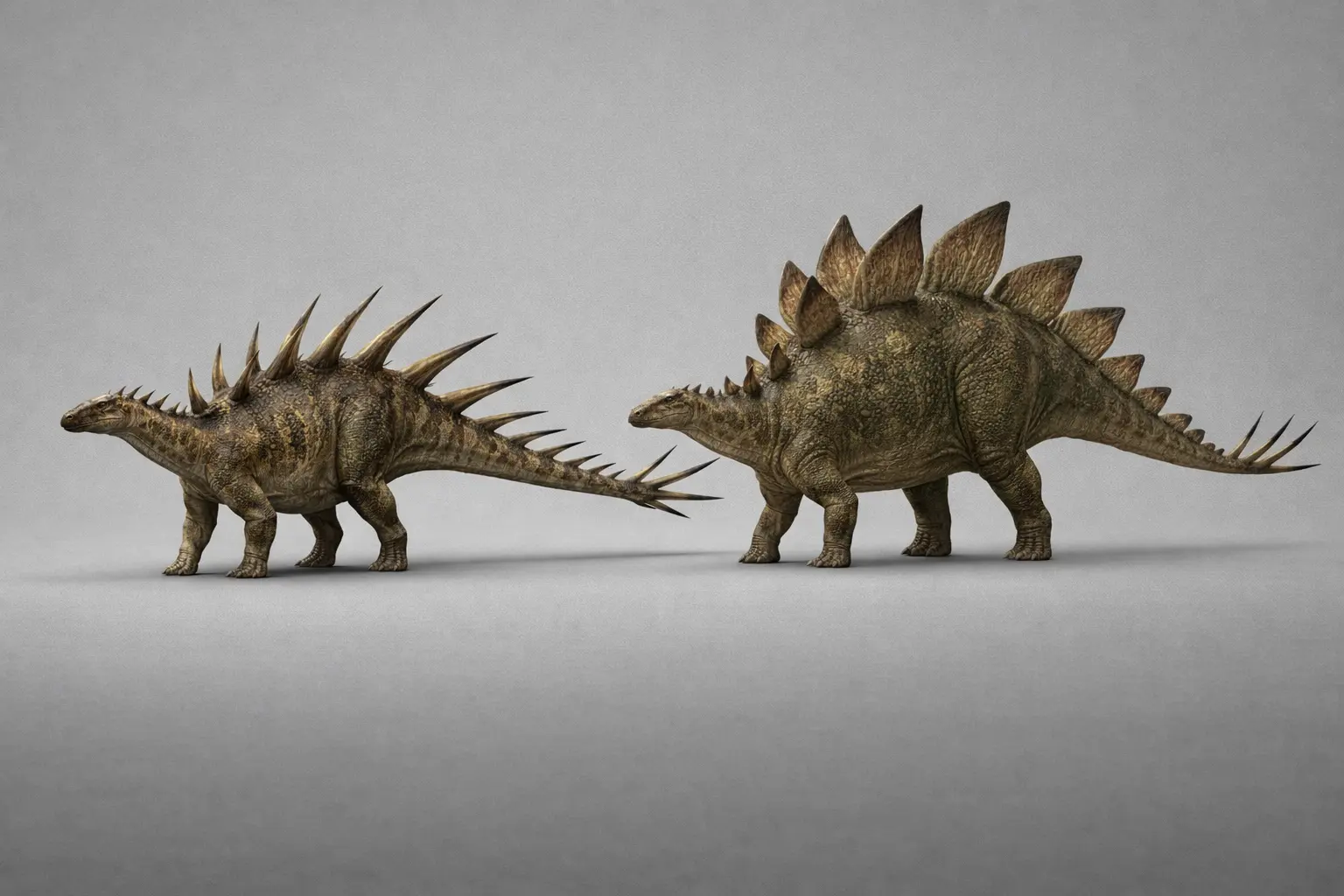
Side-by-side photorealistic comparison of Kentrosaurus aethiopicus and Stegosaurus stenops at accurate scale, highlighting Kentrosaurus’s long tail and spike-dominated armor with shoulder spikes versus Stegosaurus’s large dorsal plates and heavier body structure

Kentrosaurus was significantly smaller than Stegosaurus, measuring about 4.5 meters compared to Stegosaurus’s 9 meters, and the two species lived on different continents. Kentrosaurus carried proportionally more spikes and fewer plates, while Stegosaurus featured massive back plates and only four tail spikes, reflecting different defensive strategies in their respective ecosystems. Introduction Kentrosaurus and Stegosaurus represent … Read more

Kentrosaurus Spikes: Anatomy, Function, and Defensive Power

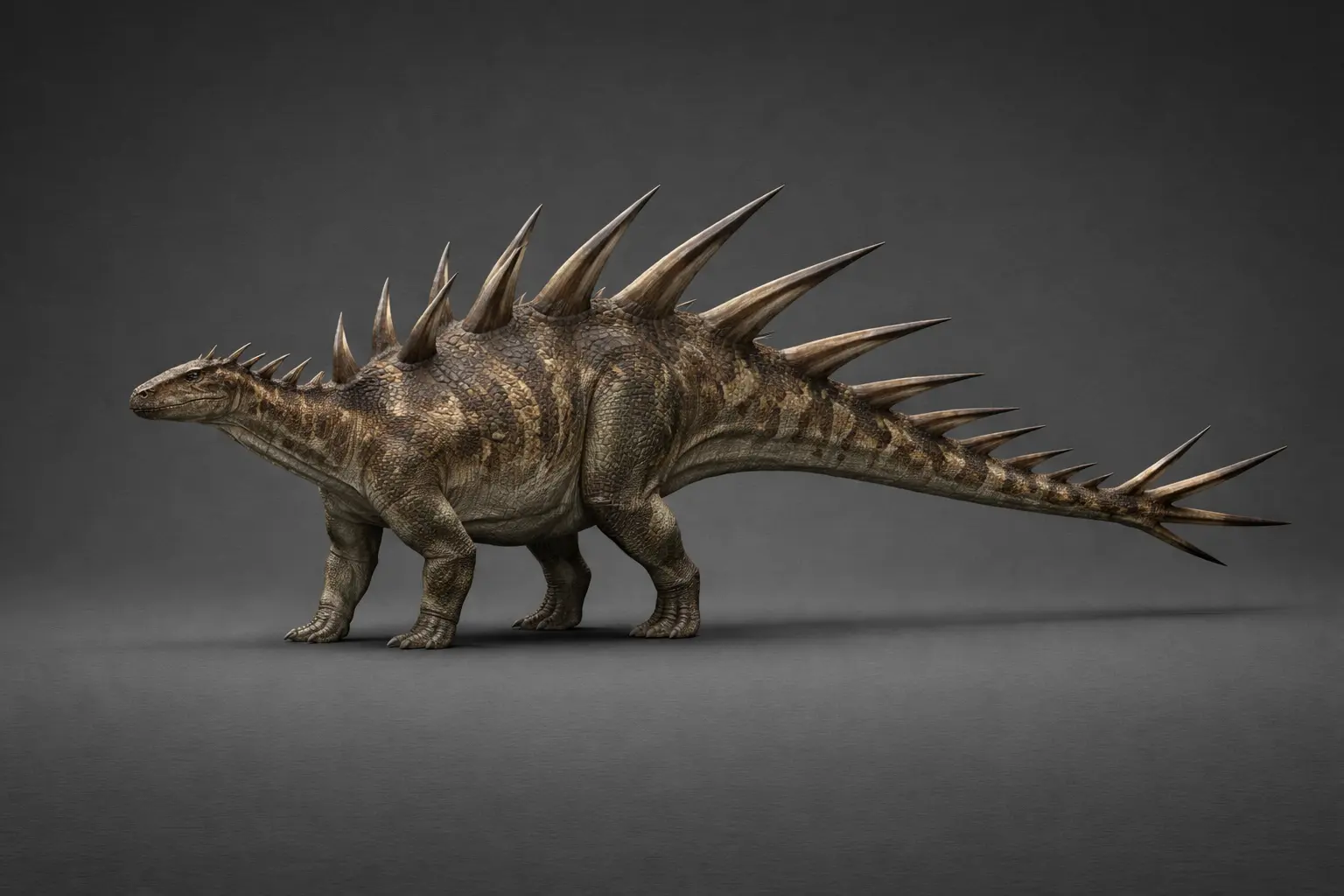
Photorealistic anatomical illustration of Kentrosaurus aethiopicus in three-quarter profile showing shoulder spikes, reduced anterior plates, progressively larger dorsal and tail spikes, and a four-spiked thagomizer on a neutral background

Kentrosaurus possessed pairs of long, sharp spikes running along its tail and potentially on its shoulders, serving as a powerful defensive weapon against predators like Allosaurus. The tail spikes, up to 60 centimeters long, could be swung with lethal force thanks to the animal’s ability to pivot rapidly on its hind legs. Introduction The spikes … Read more

Parasaurolophus vs Other Hadrosaurs: Corythosaurus, Lambeosaurus, and Edmontosaurus

Comparison of Parasaurolophus, Corythosaurus, Lambeosaurus, and Edmontosaurus highlighting differences in crest shape and head morphology.

Parasaurolophus vs Other Hadrosaurs: Corythosaurus, Lambeosaurus, and Edmontosaurus At a Glance Feature Parasaurolophus Corythosaurus Lambeosaurus Edmontosaurus Crest type Long tubular, projecting back Helmet-shaped, hollow Hatchet-shaped, hollow None Length 9.5–11 m (31–36 ft) ~9 m (30 ft) ~9–10 m (30–33 ft) ~9–13 m (30–43 ft) Period 76.5–73 Ma ~77–75 Ma ~76–75 Ma ~73–66 Ma Formation Dinosaur … Read more

Parasaurolophus vs Tyrannosaurus rex: What the Fossil Evidence Shows

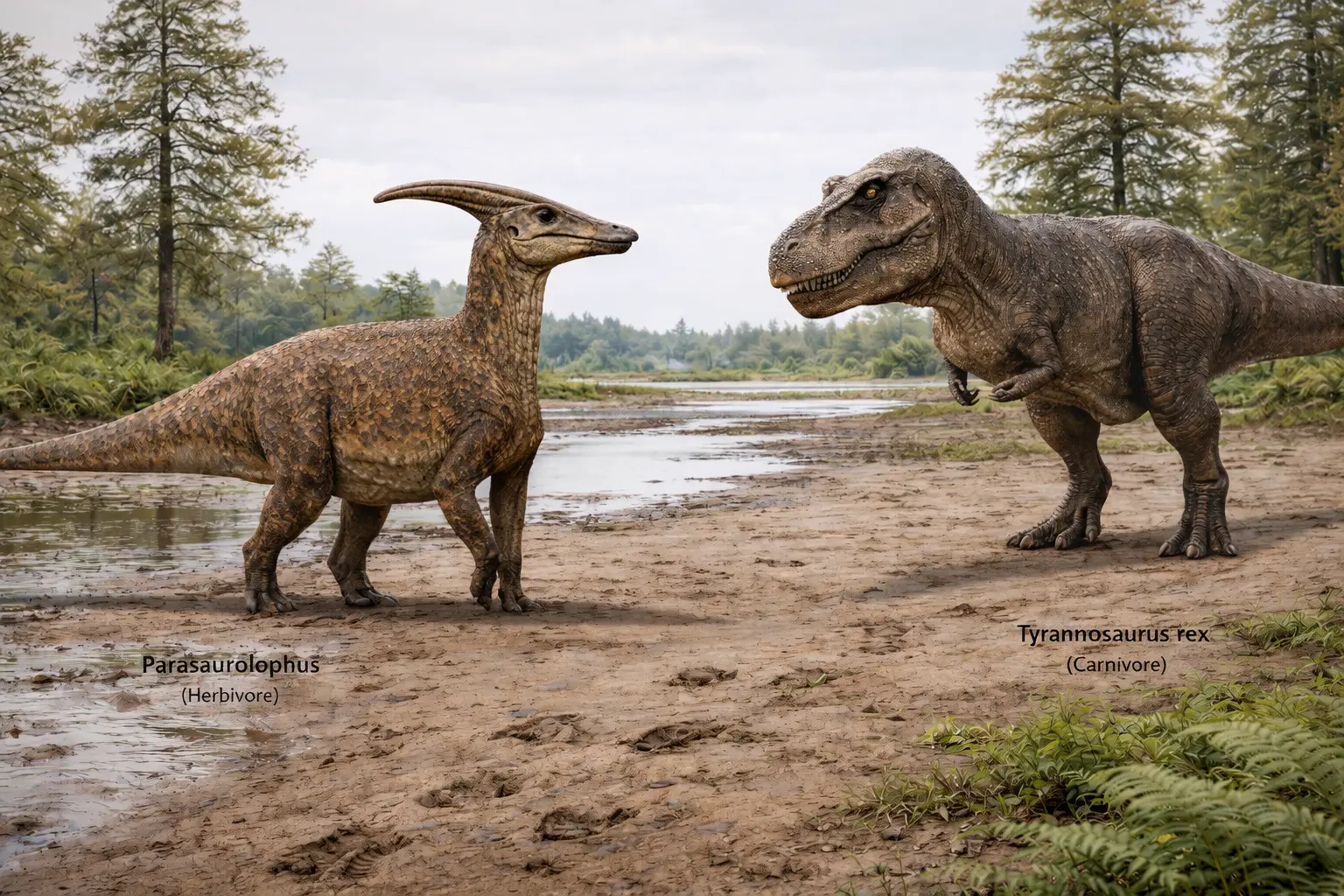
Parasaurolophus walkeri and Tyrannosaurus rex facing each other at a cautious distance in a Late Cretaceous floodplain, showing accurate posture and behavior without aggression

At a Glance Feature Parasaurolophus Tyrannosaurus rex Period 76.5–73 Ma (Campanian) 68–66 Ma (Maastrichtian) Formation Dinosaur Park Fm. (Alberta); Kirtland/Fruitland Fms. (New Mexico) Hell Creek Fm. (Montana, S. Dakota); Lance Fm. (Wyoming) Length 9.5–11 m (31–36 ft) 12–13 m (39–43 ft) Weight 2,500–4,000 kg (5,500–8,800 lb) 8,000–14,000 kg (17,600–30,900 lb) Diet Herbivore Carnivore Did they … Read more

Parasaurolophus Behaviour: What the Fossil Evidence Actually Shows

Parasaurolophus walkeri group with two adults and one juvenile on a Late Cretaceous floodplain showing natural spacing, locomotion posture, and trackway footprints in muddy sediment

At a Glance Field Information Species Parasaurolophus walkeri, P. tubicen, P. cyrtocristatus Period Late Cretaceous (76.5–73 Ma) Social structure Inferred gregarious; direct fossil evidence for herding limited but present in hadrosaurs broadly Locomotion Quadrupedal at normal pace; bipedal capable; speed estimates 20–35 km/h (12–22 mph) when bipedal Primary defence Speed, group vigilance, and possibly crest-based … Read more

Parasaurolophus Discovery: Fossil History and Key Specimens

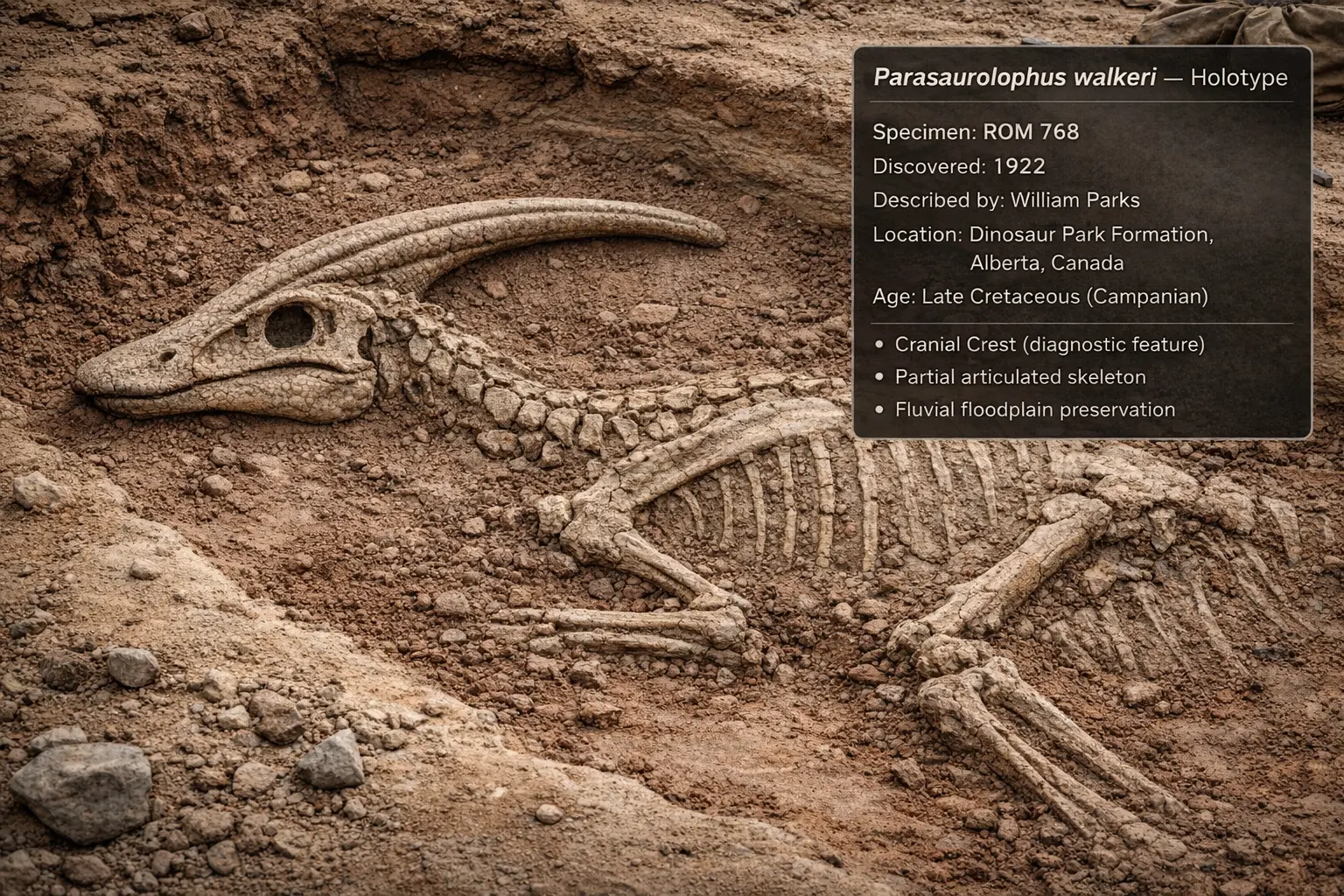
Parasaurolophus fossil discovery showing holotype specimen ROM 768 in excavation with labeled inset describing fossil details and origin.

At a Glance Field Information Species Parasaurolophus walkeri, P. tubicen, P. cyrtocristatus Period Late Cretaceous (76.5–73 Ma) First described 1922, by William Parks, University of Toronto Type specimen ROM 768, Royal Ontario Museum, Alberta Key formations Dinosaur Park Formation (Alberta); Kirtland and Fruitland Formations (New Mexico); Kaiparowits Formation (Utah) Notable recent find Juvenile skull from … Read more