Stegosaurus Habitat: The Morrison Formation Explained
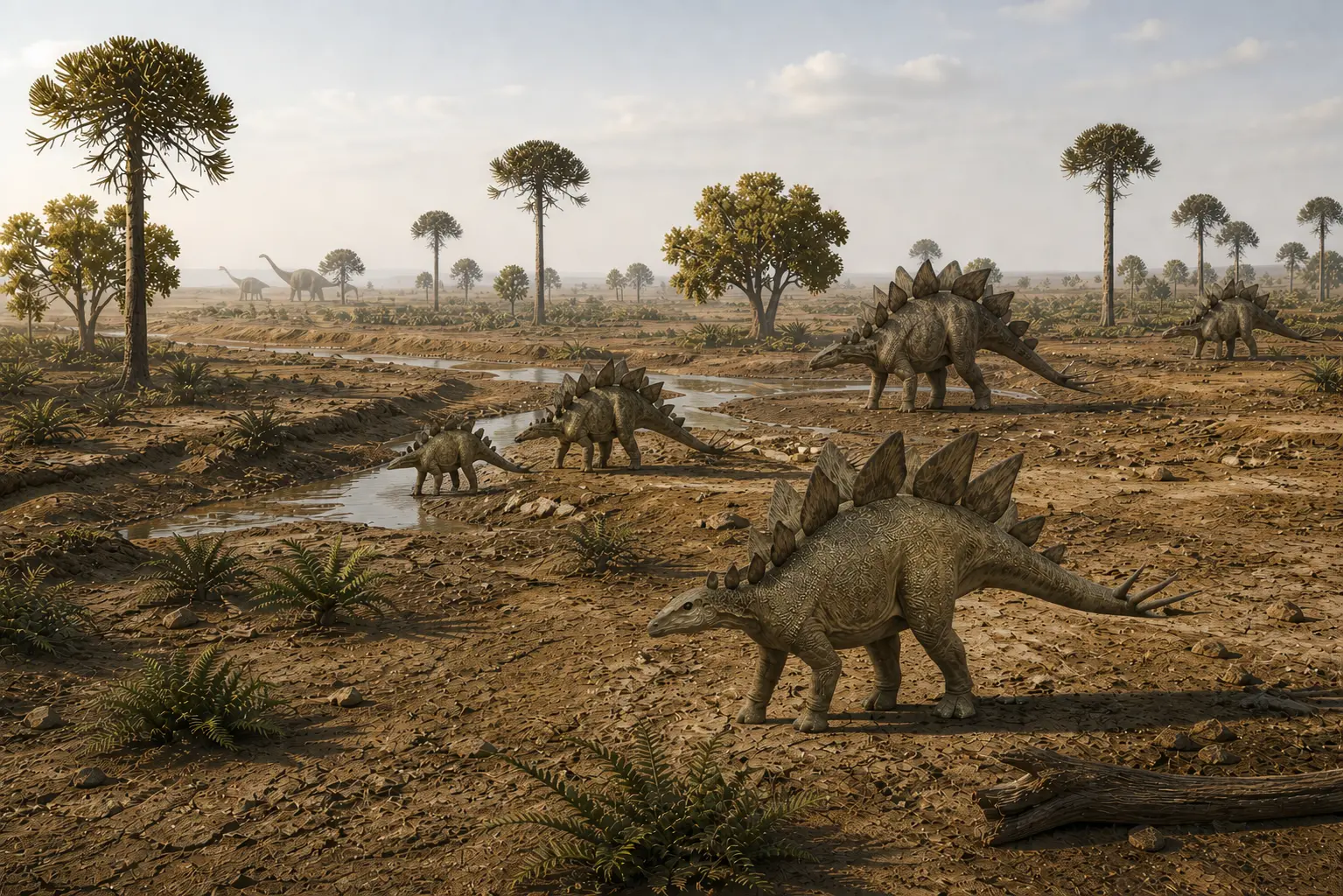
Stegosaurus stenops herd in a Late Jurassic Morrison Formation semi-arid floodplain with a midground juvenile near a shallow river, surrounded by sparse conifers, ginkgo trees, cycads, and distant adults in a dry open landscape

At a Glance Field Information Species Stegosaurus stenops — Ornithischia, Stegosauridae Period Late Jurassic, approximately 155–150 Ma Formation Morrison Formation, western North America Climate Seasonal, semi-arid with wet and dry cycles Vegetation Ferns, cycads, conifers, horsetails — no grasses or flowering plants Quick Answer: Stegosaurus lived in the floodplains and river valleys of what is … Read more

Why Did Stegosaurus Go Extinct?

Stegosaurus stenops with healthy vegetation on one side and reduced drought-like plant growth on the other showing resource decline

At a Glance Field Information Species Stegosaurus stenops — Ornithischia, Stegosauridae Period Late Jurassic, approximately 155–150 Ma Extinction timing End of the Late Jurassic, ~150 Ma — approximately 84 million years before the K-Pg event Extinction type Late Jurassic faunal turnover — not a mass extinction event Replaced by Ankylosaurs and ceratopsians as dominant herbivores … Read more

Stegosaurus Discovery: Fossil History and Key Specimens

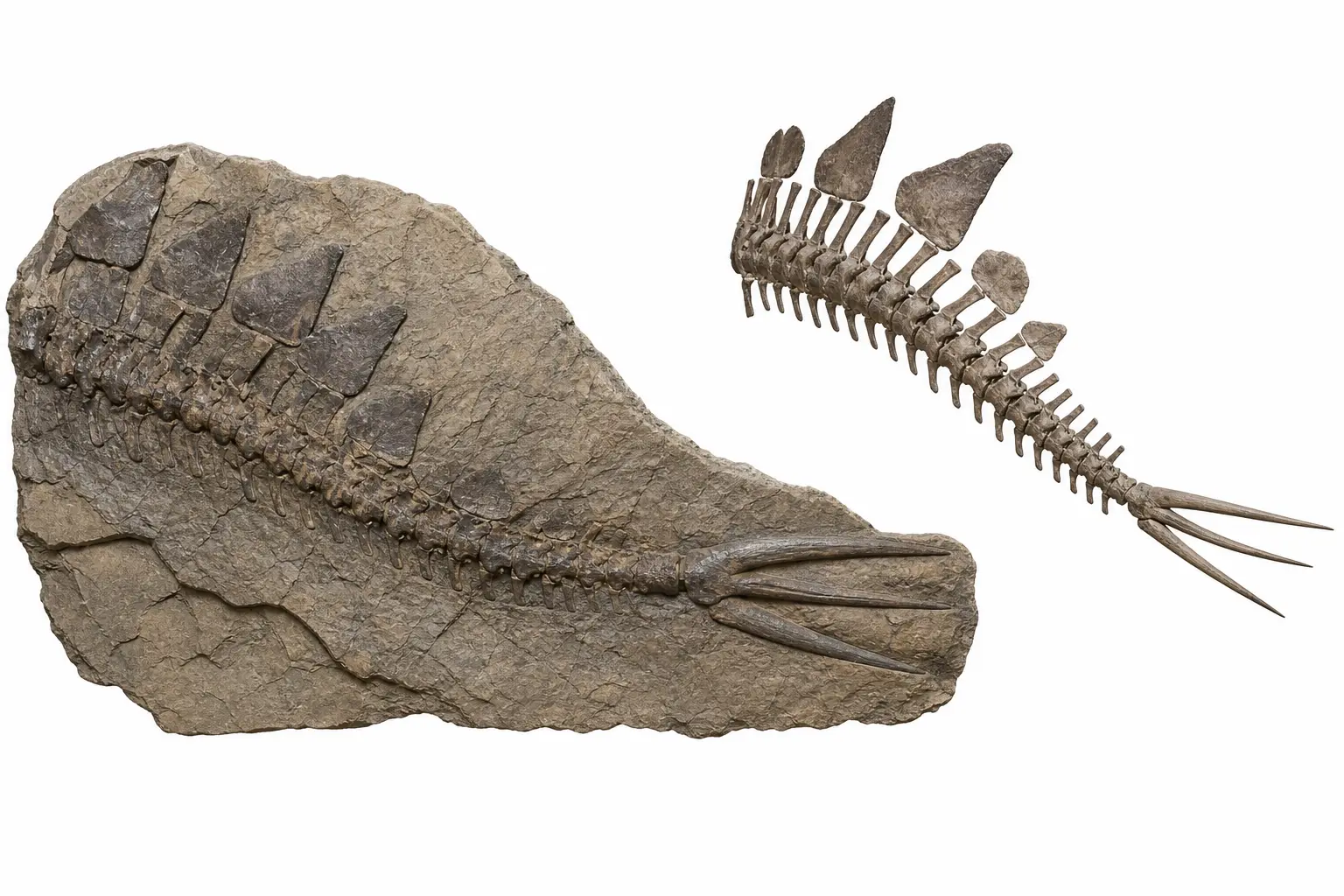
Stegosaurus stenops fossil slab showing dorsal plates and tail spikes alongside reconstructed tail skeleton with thagomizer

At a Glance Field Information Species Stegosaurus stenops — Ornithischia, Stegosauridae Period Late Jurassic (155–150 Ma) First described 1877 by Othniel Charles Marsh, Yale University Holotype YPM 1850 — fragmentary; S. armatus (later replaced by S. stenops as type species) Most complete specimen NHMUK PV R36730 (“Sophie”) — 85% complete, Natural History Museum London Formation … Read more

Stegosaurus vs Allosaurus: Evidence-Based Comparison

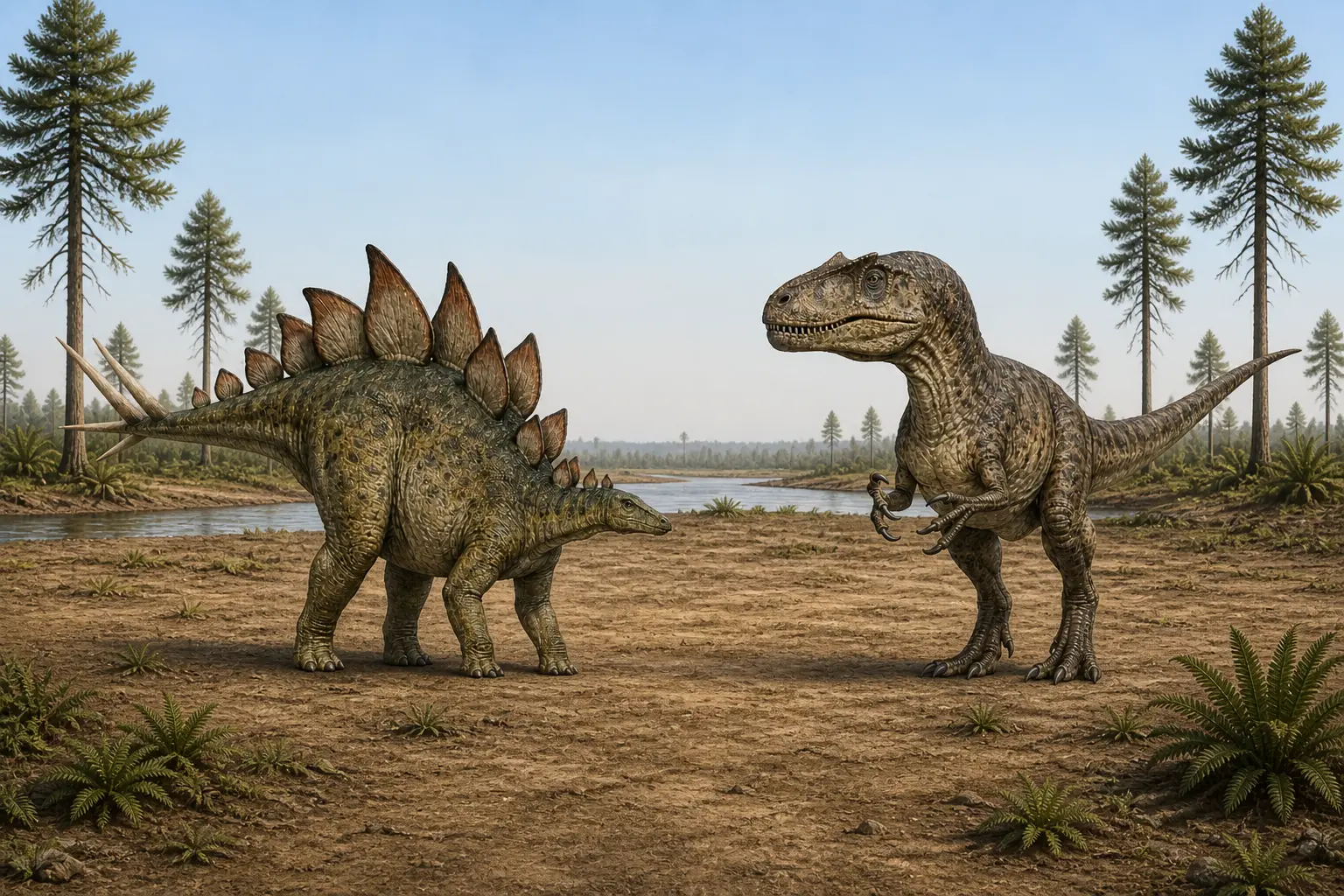
Photorealistic comparison of Stegosaurus stenops and Allosaurus fragilis facing each other on a Late Jurassic Morrison Formation floodplain, showing defensive tail spikes and upright theropod posture with clear spatial separation

Stegosaurus vs Allosaurus At a Glance Feature Stegosaurus Allosaurus Classification Ornithischia, Stegosauridae Saurischia, Allosauridae Period Late Jurassic (155–150 Ma) Late Jurassic (155–145 Ma) Length ~9 m (30 ft) ~8.5–12 m (28–39 ft) Weight Estimated 2,700–4,000 kg (5,950–8,820 lb) ~1,500–2,200 kg (3,300–4,900 lb) Primary weapon Thagomizer — 4 spikes, 60–90 cm each Serrated teeth, three-clawed forelimbs … Read more

Stegosaurus Tail Spikes: The Thagomizer

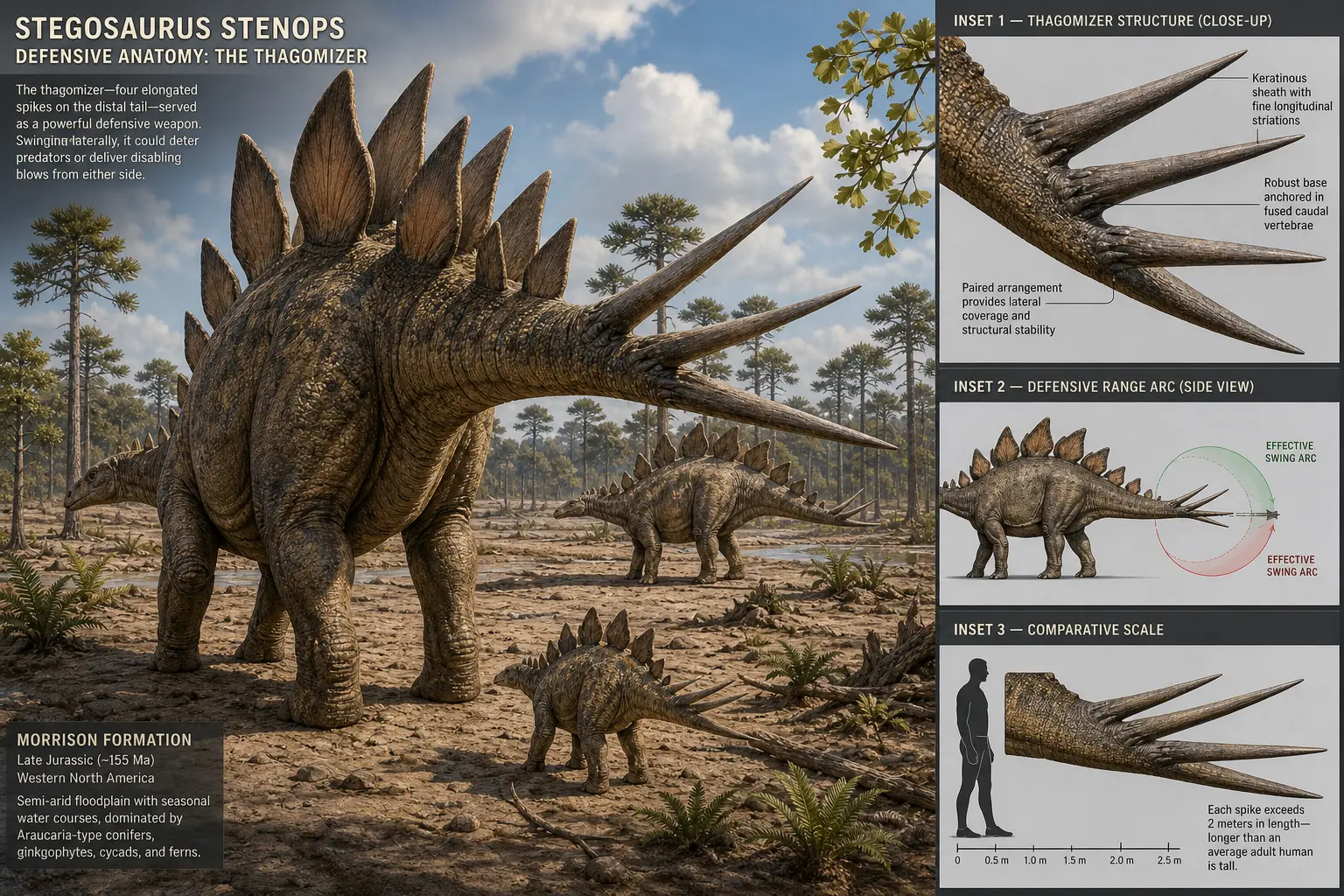
Stegosaurus stenops thagomizer showing four tail spikes in paired arrangement with defensive swing arc and comparative scale in Morrison Formation habitat

At a Glance Field Information Species Stegosaurus stenops — Ornithischia, Stegosauridae Period Late Jurassic (155–150 Ma) Spike count 4 spikes arranged in 2 pairs Spike length 60–90 cm (2–3 ft) per spike Orientation Horizontal, not vertical Key fossil evidence Allosaurus vertebra UMNH 10781 — puncture wound matching spike dimensions Quick Answer The stegosaurus thagomizer is … Read more

Why Did Stegosaurus Have Plates? The Science Behind the Plates

Scientifically accurate Stegosaurus stenops in Late Jurassic Morrison Formation floodplain, showing alternating dorsal plates with reduced translucency and vascular detail, raised tail with thagomizer, and inset panels explaining thermoregulation, display, and defensive appearance functions.

At a Glance Field Information Species Stegosaurus spp. — Ornithischia, Stegosauridae Period Late Jurassic, approximately 155–150 Ma Number of plates 17 in well-documented S. stenops specimens Plate arrangement Two alternating rows running from neck to tail base Plate composition Osteoderms — bony skin structures, not attached to the spine Current consensus No settled consensus; multiple … Read more

What Did Stegosaurus Eat?

Stegosaurus stenops feeding on low-growing ferns and cycads in a Late Jurassic Morrison Formation floodplain, showing low browsing behavior and staggered dorsal plates

At a Glance Field Information Species Stegosaurus spp. — Ornithischia, Stegosauridae Period Late Jurassic, approximately 155–150 Ma Diet type Herbivore Tooth type Small, leaf-shaped, non-occluding Feeding height Low to mid-level browse; estimated reach up to approximately 1 metre (3.3 ft) at ground level to potentially higher with bipedal rearing Feeding evidence Tooth morphology, jaw structure, … Read more

Stegosaurus Size: How Big Was Stegosaurus?

Size comparison showing Stegosaurus next to an adult human and an African elephant highlighting its long body, lower height, and overall scale relative to modern animals

At a Glance Field Information Species Stegosaurus ungulatus / S. stenops — Ornithischia, Stegosauridae Period Late Jurassic, approximately 155–150 Ma Length Up to 9 metres (30 ft) Weight Estimated 2,700–4,000 kg (5,950–8,820 lb) Height at hips Approximately 2.75 metres (9 ft) Plate height Up to 60 cm (24 in) on the largest individuals Quick Answer: … Read more

Archaeopteryx vs Confuciusornis: Two Stages of Bird Evolution

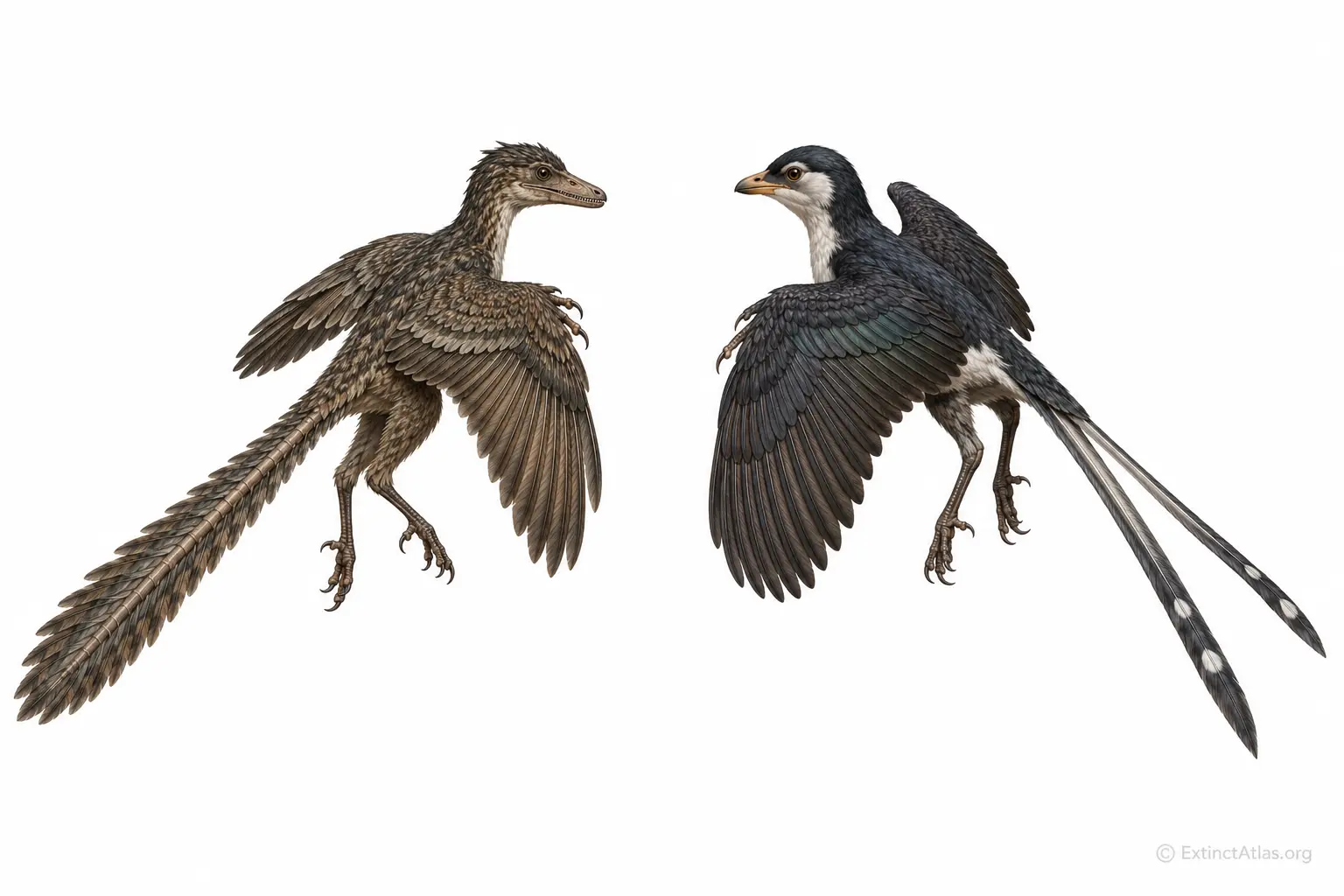
Comparison of Archaeopteryx and Confuciusornis showing two stages of early bird evolution, from toothed long-tailed avialans to beaked pygostylians.

At a Glance Feature Archaeopteryx Confuciusornis Period Late Jurassic (150–148 Ma) Early Cretaceous (125–120 Ma) Body length ~50 cm ~50–60 cm Teeth Present — small, conical Absent — toothless beak Tail Long, bony (approx. 20 vertebrae) Short — true pygostyle present Wing claws Three functional clawed fingers Reduced or absent Sternum No keeled sternum evidenced … Read more

Archaeopteryx vs Deinonychus: How Do They Compare?

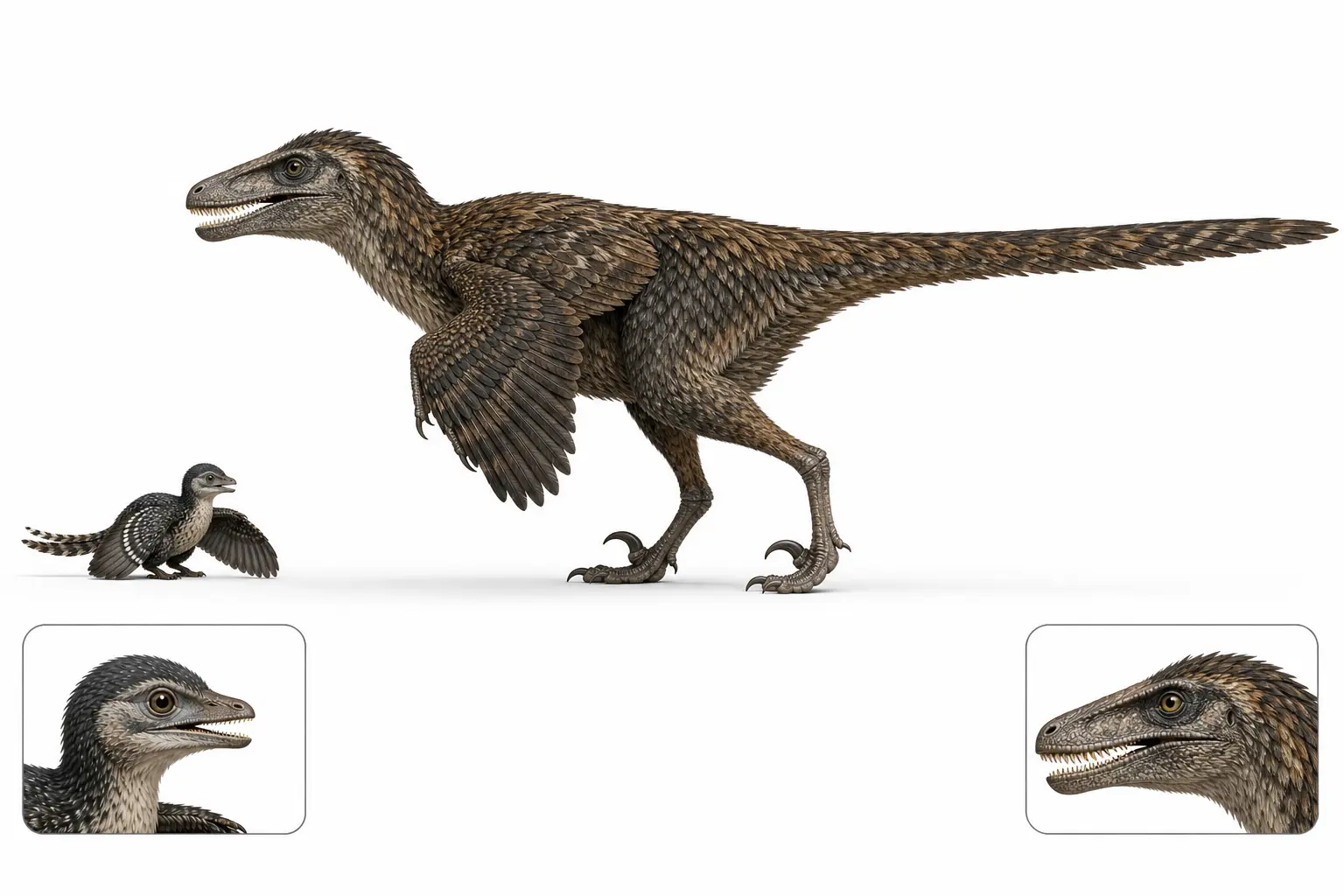
Size comparison of Archaeopteryx and Deinonychus showing small feathered Archaeopteryx next to much larger Deinonychus with visible sickle claw and longer body proportions

At a Glance Feature Archaeopteryx Deinonychus Period Late Jurassic (150–148 Ma) Early Cretaceous (115–108 Ma) Body length ~50 cm ~3.4 m Body mass ~0.8–1 kg ~70–80 kg (estimated) Feathers Fully feathered — flight and body feathers evidenced Feathers inferred from related taxa; not directly evidenced in all specimens Flight capability Contested — powered flight possible … Read more