
At a Glance
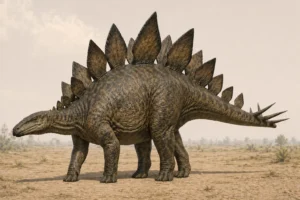
| Field | Information |
|---|---|
| Species | Stegosaurus stenops — Ornithischia, Stegosauridae |
| Period | Late Jurassic, approximately 155–150 Ma |
| Extinction timing | End of the Late Jurassic, ~150 Ma — approximately 84 million years before the K-Pg event |
| Extinction type | Late Jurassic faunal turnover — not a mass extinction event |
| Replaced by | Ankylosaurs and ceratopsians as dominant herbivores in subsequent periods |
Quick Answer: Stegosaurus went extinct approximately 150 million years ago, at the end of the Late Jurassic period — roughly 84 million years before the asteroid impact that ended the dinosaurs. Its disappearance was part of a broader faunal turnover that reshaped herbivore communities as the Jurassic gave way to the Cretaceous. No single cause has been confirmed by fossil evidence.
Stegosaurus did not die in the same catastrophe that killed Tyrannosaurus rex. By the time that asteroid struck, Stegosaurus had already been gone for 84 million years — longer than the entire span separating us from the non-avian dinosaurs. Its extinction was quieter, less sudden, and less well understood than the famous end-Cretaceous event.
Why Did Stegosaurus Go Extinct?

This is an active area of research. Details here reflect current scientific consensus but may be revised as new fossil evidence or analysis emerges.
Stegosaurus went extinct at the end of the Late Jurassic, around 150 Ma, as part of a broad reorganisation of dinosaur faunas rather than a sudden catastrophic event. Fossil evidence documents the disappearance of stegosaurids from North American and European formations at roughly this boundary, though the precise mechanisms driving that disappearance remain incompletely understood. No single confirmed cause — climatic, ecological, or competitive — has been established in the published literature.
The Late Jurassic Faunal Turnover
The transition from the Jurassic to the Cretaceous period, approximately 145 Ma, was accompanied by significant shifts in dinosaur diversity across multiple continents. Stegosaurid diversity declined markedly during this interval, with the group essentially absent from the Early Cretaceous fossil record of Laurasia. Based on comparison with patterns seen in other faunal turnovers, palaeontologists infer that changing vegetation, shifting climates, and ecological competition from emerging herbivore lineages may all have contributed. These remain inferences, not directly evidenced causes.
Was It a Mass Extinction?
No. The disappearance of Stegosaurus was not associated with a mass extinction event. The end-Jurassic boundary does show some evidence of elevated extinction rates in marine invertebrates, but the terrestrial record is less clear. Stegosaurus’s decline appears to reflect a gradual ecological replacement rather than a sudden collapse. Framing it as a mass extinction in the same category as the K-Pg event is not supported by current evidence.
The K-Pg Confusion
The most common misconception about Stegosaurus extinction is that it was killed by the Chicxulub asteroid impact approximately 66 Ma. Stegosaurus had already been extinct for roughly 84 million years by that point. The confusion likely arises from the general cultural framing of dinosaur extinction as a single event. In reality, different dinosaur lineages disappeared at different times across the Mesozoic for a range of reasons.
What Replaced Stegosaurus Ecologically?
The ecological role occupied by Stegosaurus — a large, low-browsing herbivore — did not go unfilled. Ankylosaurs, which overlapped with stegosaurids in the Late Jurassic, diversified significantly into the Cretaceous and occupied broadly similar ecological niches as armoured ground-level browsers. Ceratopsians, largely absent from the Late Jurassic of Laurasia, became the dominant large herbivores of the Late Cretaceous. Based on comparison with modern ecosystems, this kind of ecological succession following a lineage’s decline is a well-documented pattern in the fossil record.
How Long Did Stegosaurus Survive?
Fossil evidence places Stegosaurus in the Morrison Formation of North America from approximately 155 Ma to 150 Ma, giving the genus a documented fossil range of roughly 5 million years. That figure applies to the genus as currently understood — species-level temporal ranges within Stegosaurus are less precisely constrained. For comparison, the entire existence of anatomically modern humans spans less than 0.3 million years.
Related and Contemporary Species
- Allosaurus fragilis — apex predator of the Morrison Formation and the primary large theropod contemporaneous with Stegosaurus; fossil evidence documents direct predator–prey interaction between the two species.
- Brachiosaurus altithorax — a large sauropod herbivore of the Morrison Formation; shared Stegosaurus’s habitat and broadly overlapping time range.
- Ankylosauria (various) — the armoured herbivore group that diversified significantly after stegosaurids declined, taking on broadly comparable ecological roles in the Cretaceous.
- Kentrosaurus aethiopicus — African stegosaurid broadly contemporaneous with Stegosaurus; its own extinction followed a similar Late Jurassic timeline.
Frequently Asked Questions
What killed the Stegosaurus?
No single confirmed cause has been established. Stegosaurus disappeared around 150 Ma as part of a broader Late Jurassic faunal turnover. Changing vegetation, shifting climates, and competition from emerging herbivore groups have all been proposed as contributing factors, but the fossil evidence does not yet support a definitive explanation.
Did Stegosaurus die in the asteroid impact?
No. The Chicxulub asteroid impact occurred approximately 66 Ma, roughly 84 million years after Stegosaurus had already gone extinct. Stegosaurus disappeared at the end of the Late Jurassic period, long before the mass extinction event that ended the non-avian dinosaurs.
What dinosaurs outlived Stegosaurus?
Many lineages that coexisted with Stegosaurus in the Late Jurassic survived well into the Cretaceous, including sauropods, theropods, and the ankylosaurs that replaced stegosaurids as dominant armoured herbivores. Tyrannosaurus rex lived approximately 80 million years after Stegosaurus was gone.
Stegosaurus vanished quietly, 84 million years before the event most people associate with dinosaur extinction. Its disappearance reflects the less dramatic but equally real process of ecological turnover — lineages declining, niches shifting, and new groups filling the space left behind.
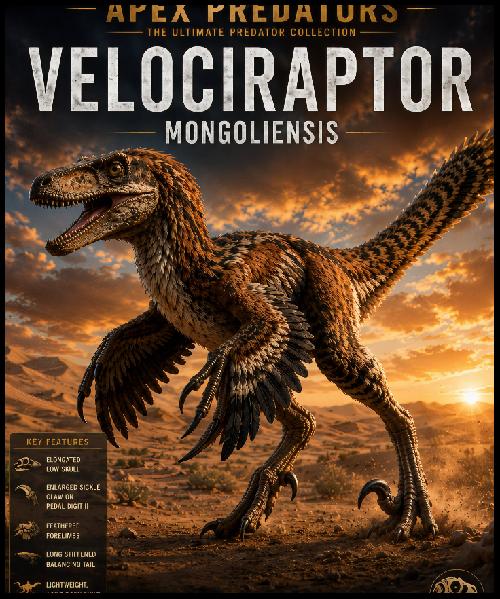
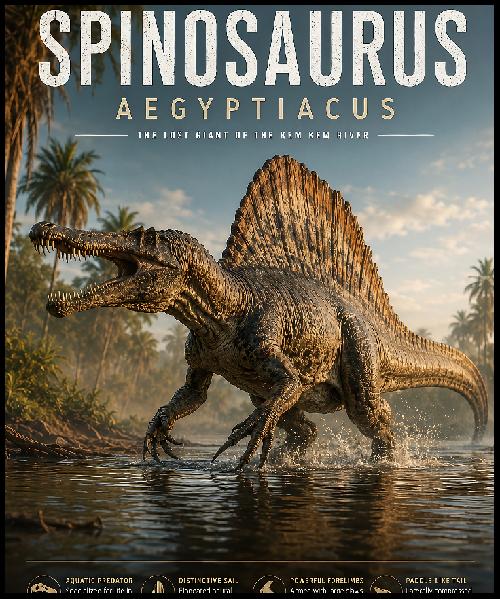
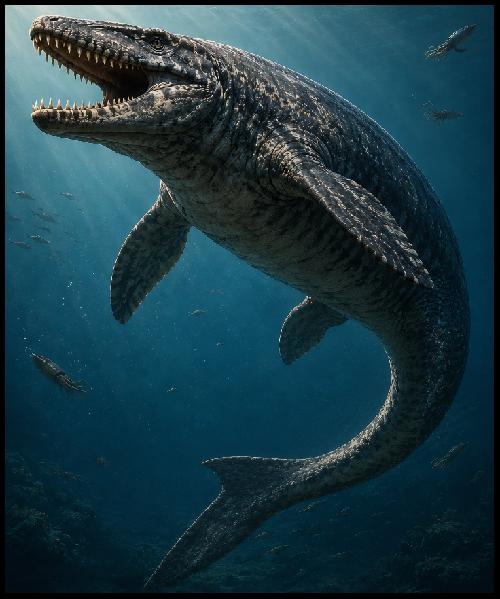
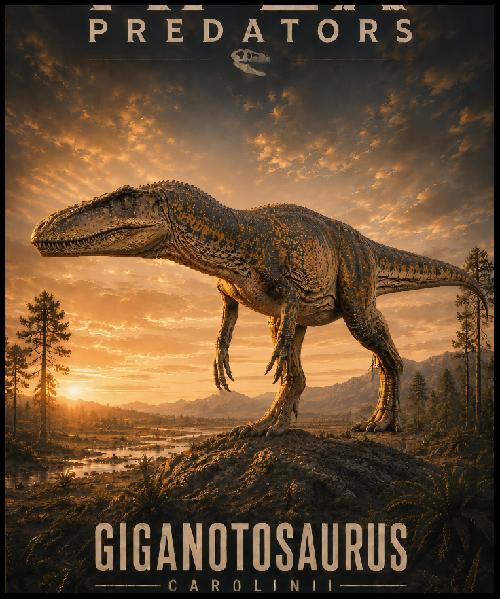
Featured Museum Collections
Museum-quality paleoart and educational poster
collections based on evidence-informed prehistoric
Life reconstructions.