
At a Glance
| Field | Information |
|---|---|
| Species | Stegosaurus stenops — Ornithischia, Stegosauridae |
| Pronunciation | STEG-oh-SORE-us |
| Syllable count | Four syllables |
| Name origin | Ancient Greek — stegos (roof) + sauros (lizard) |
| Named by | Othniel Charles Marsh, 1877 |
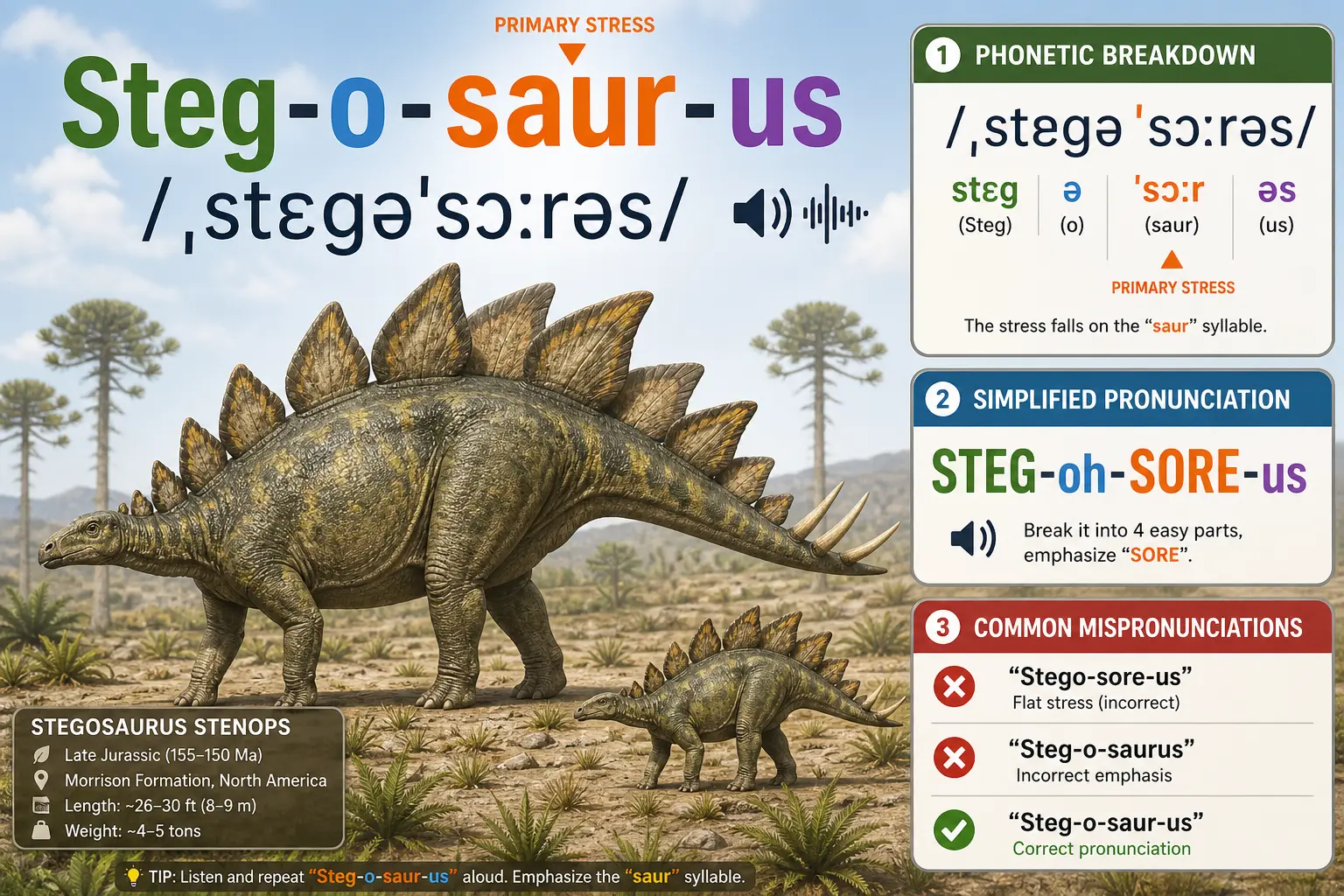
Quick Answer: Stegosaurus is pronounced STEG-oh-SORE-us, with primary stress on the first syllable and secondary stress on the third. The name comes from two Ancient Greek words meaning “roof lizard” — a reference to what Marsh initially believed were flat, overlapping plates lying along the animal’s back like roof tiles. It has four syllables: STEG — oh — SORE — us.
The name Stegosaurus has been spoken confidently and incorrectly in classrooms, documentaries, and museum halls for generations. The stress pattern trips up more people than the spelling does, and the meaning behind the name tells a small but telling story about how wrong early palaeontologists were about what those plates actually were.
How to Pronounce Stegosaurus
Stegosaurus is pronounced STEG-oh-SORE-us.
Syllable breakdown:
- STEG — rhymes with “leg”; hard G; primary stress falls here
- oh — short, unstressed connecting syllable
- SORE — rhymes with “more”; secondary stress falls here
- us — short, unstressed final syllable; rhymes with “bus.”
The full word sounds like: STEG — oh — SORE — us
Primary stress falls on the first syllable — STEG — not the third. This is the most common error: placing equal or greater emphasis on SORE rather than STEG. The correct pattern gives the word a falling-then-rising rhythm: heavy, light, medium, light.
Phonetic Transcription
For those familiar with phonetic notation:
- IPA: /ˌstɛɡ.ə.ˈsɔːr.əs/
- Respelling: STEG-uh-SORE-us
The unstressed second syllable is typically reduced to a schwa sound — the neutral “uh” vowel — in natural speech. Both STEG-oh-SORE-us and STEG-uh-SORE-us are acceptable and in common use. Neither is incorrect.
What Does Stegosaurus Mean?
The name Stegosaurus is composed of two Ancient Greek roots:
- stegos (στέγος) — meaning “roof” or “covered.”
- sauros (σαῦρος) — meaning “lizard.”
Combined, the name translates literally as “roof lizard” or “covered lizard.”
Why “Roof Lizard”?
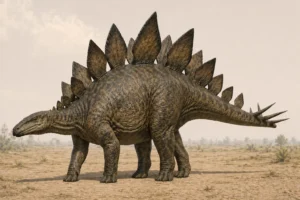
The name reflects Othniel Charles Marsh’s initial interpretation of the plates. When Marsh first described Stegosaurus in 1877, the plates had not yet been found in their correct anatomical position relative to the skeleton. Marsh initially believed they lay flat along the animal’s back in an overlapping arrangement, resembling the tiles of a roof — hence “roof lizard.” Later and more complete specimens demonstrated that the plates stood upright in a double alternating row along the spine rather than lying flat, making the original name a minor misnomer. The name nonetheless stood under the rules of zoological nomenclature, which do not require names to be anatomically accurate.
How to Pronounce Related Dinosaur Names
Understanding the Greek and Latin roots behind dinosaur names makes pronunciation considerably more predictable. Several names share components with Stegosaurus:
Names sharing -saurus (lizard):
- Allosaurus — AL-oh-SORE-us (stress on first syllable)
- Brachiosaurus — BRACK-ee-oh-SORE-us (stress on first syllable)
- Diplodocus — dih-PLOD-oh-kus (stress on second syllable — note: ends in -cus, not -saurus)
Names sharing stego- (roof/covered):
- Stegoceras — steg-OH-ser-as (stress shifts to second syllable — different suffix changes the stress pattern)
The -saurus suffix is consistently pronounced SORE-us across all dinosaur names that carry it. Once that pattern is established, the primary variable in any dinosaur name is where the stress falls in the prefix, which is determined by the length and structure of the syllables preceding the suffix.
Common Mispronunciations
STEG-oh-SORE-ee-us — inserting an extra syllable before the final -us. This is the most frequent spoken error and likely arises from analogy with other Latin-derived words ending in -ius. Stegosaurus ends in -us, not -ius — four syllables, not five.
steg-OH-sore-us — placing primary stress on the second syllable rather than the first. Incorrect. Primary stress is on STEG.
STEG-oh-SAW-rus — replacing the SORE vowel with SAW. This is a regional variant rather than a strict error, but SORE-us is the standard pronunciation in received academic usage.
steg-oh-SORE-USS — over-emphasising the final syllable. The final -us is unstressed and short in standard pronunciation.
The Species Names
Stegosaurus currently contains two widely accepted species, each with its own pronunciation:
Stegosaurus stenops
- stenops — STEN-ops
- From Greek stenos (narrow) + ops (eye/face) — “narrow face.”
- Full name: STEG-oh-SORE-us STEN-ops
Stegosaurus armatus
- armatus — ar-MAH-tus
- From Latin armatus (armed)
- Full name: STEG-oh-SORE-us ar-MAH-tus
Species names in binomial nomenclature follow Latin pronunciation conventions. The stress in armatus falls on the second syllable because the middle syllable is long — a standard Latin stress rule. The stress in stenops falls on the first syllable because the word has only two syllables with a short second vowel.
Related and Contemporary Species
- Kentrosaurus aethiopicus — ken-troh-SORE-us ee-thee-OH-pih-kus; African stegosaurid sharing the -saurus suffix; the kentro- prefix derives from Greek kentron meaning “point” or “spike.”
- Allosaurus fragilis — AL-oh-SORE-us FRAJ-ih-lis; apex predator contemporaneous with Stegosaurus; allo- from Greek allos meaning “different” or “other.”
- Huayangosaurus taibaii — hwah-YANG-oh-SORE-us tie-BY-eye; early stegosaurid from China; name derived from Huayang, an ancient name for Sichuan province.
- Diplodocus carnegii — dih-PLOD-oh-kus kar-NAY-jee-eye; Morrison Formation sauropod; diplo- from Greek diploos meaning “double,” -docus from dokos meaning “beam.”
Frequently Asked Questions
How do you pronounce Stegosaurus?
Stegosaurus is pronounced STEG-oh-SORE-us, with four syllables and primary stress on the first syllable. The second syllable is short and unstressed, the third carries secondary stress, and the final syllable is short and unstressed. A common error is placing equal stress on the third syllable — the correct pattern emphasises STEG above all other syllables.
What does the name Stegosaurus mean?
The name derives from two Ancient Greek roots: stegos, meaning “roof,” and sauros, meaning “lizard.” The combined meaning is “roof lizard,” a reference to Othniel Charles Marsh’s initial — and incorrect — belief that the plates lay flat along the animal’s back like roof tiles. Later specimens showed the plates stood upright, but the name was retained under zoological nomenclature rules.
Is it pronounced steg-OH-saurus or STEG-oh-saurus?
The correct pronunciation places primary stress on the first syllable: STEG-oh-SORE-us. Placing the stress on the second syllable — steg-OH-sore-us — is a common error. The standard academic pronunciation and the entries in both Merriam-Webster and Cambridge dictionaries confirm first-syllable stress as the accepted form.
Stegosaurus is pronounced STEG-oh-SORE-us — four syllables, stress on the first, named for a roof that wasn’t really a roof. The name has outlasted the interpretation that inspired it, which is fitting for an animal that has been misunderstood in one way or another since the day it was first described.
Recommended Paleontology & Natural History Books
As an Amazon Associate, Extinct Atlas may earn from qualifying purchases.
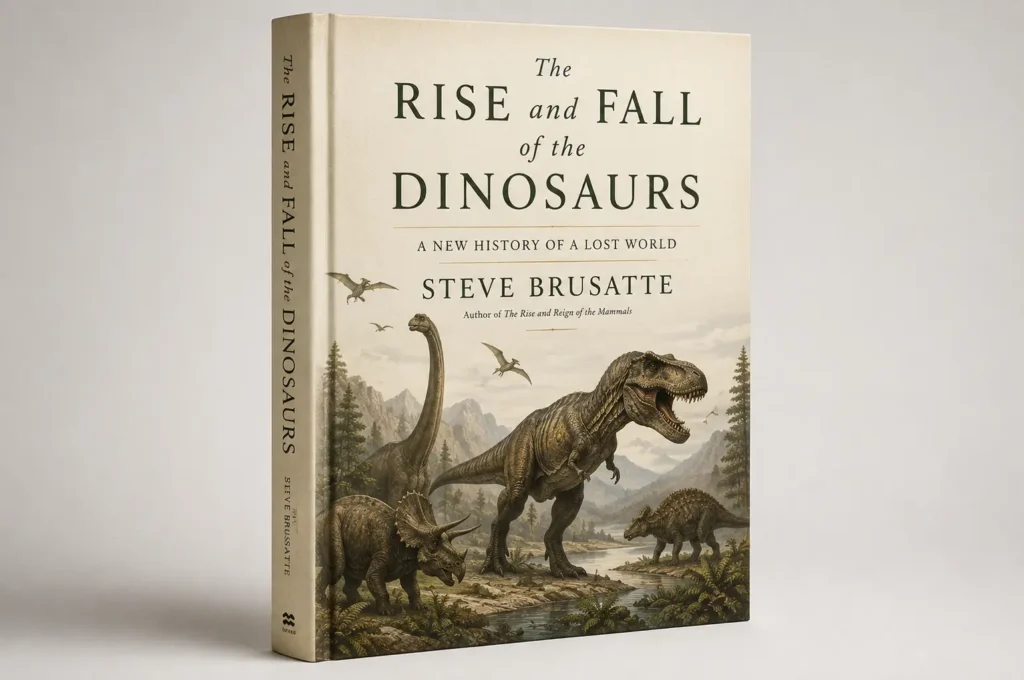
The Rise and Fall of the Dinosaurs
A compelling history of dinosaurs, tracing their origins, diversification, 200-million-year reign, extinction, and enduring legacy.
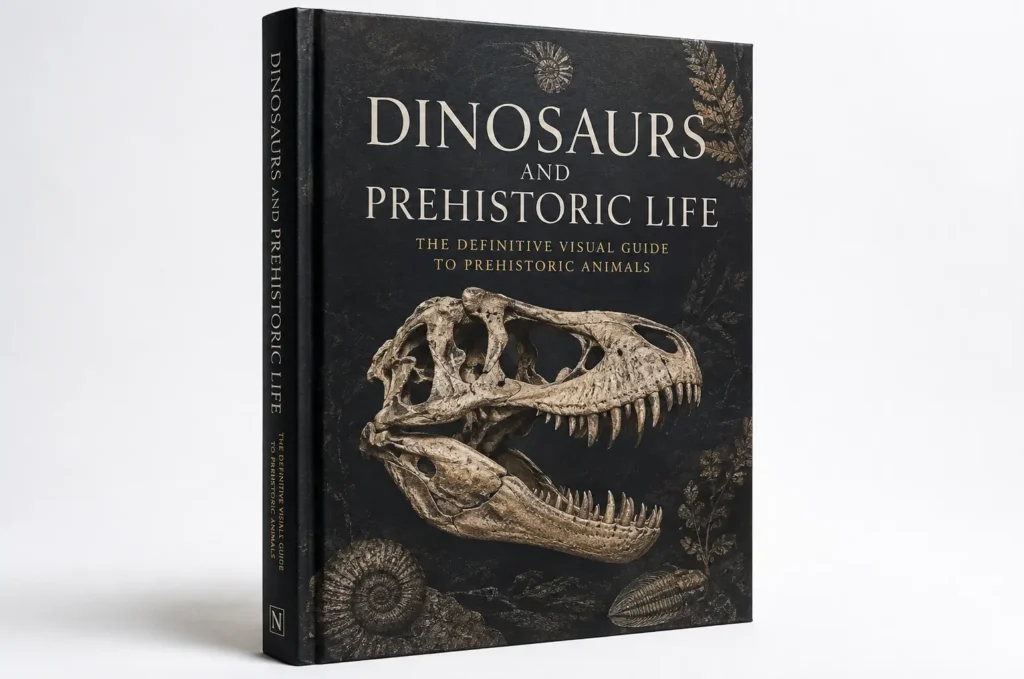
Dinosaurs and Prehistoric Life
A richly illustrated visual reference exploring dinosaurs, fossils, evolution, and prehistoric life across geological time.

Encyclopedia Prehistorica: Dinosaurs
An interactive dinosaur book featuring spectacular three-dimensional pop-ups, particularly suited to young readers and families.
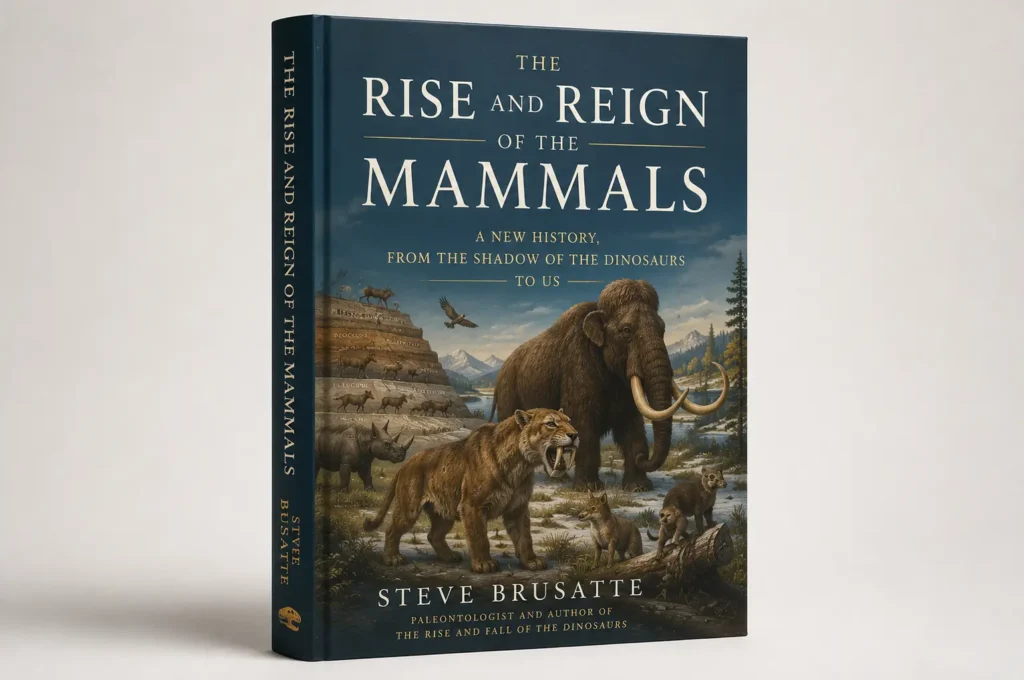
The Rise and Reign of the Mammals
A sweeping history of mammalian evolution, from their origins alongside dinosaurs through the Cenozoic and the emergence of humans.