

At a Glance
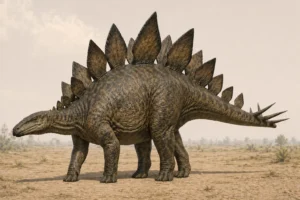
| Field | Information |
|---|---|
| Species | Stegosaurus spp. — Ornithischia, Stegosauridae |
| Period | Late Jurassic, approximately 155–150 Ma |
| Diet type | Herbivore |
| Tooth type | Small, leaf-shaped, non-occluding |
| Feeding height | Low to mid-level browse; estimated reach up to approximately 1 metre (3.3 ft) at ground level to potentially higher with bipedal rearing |
| Feeding evidence | Tooth morphology, jaw structure, co-occurring plant fossil record |
Quick Answer: Stegosaurus ate plants — it was an obligate herbivore. Its small, leaf-shaped teeth and weak jaw musculature indicate it fed on soft, low-growing vegetation such as ferns, cycads, mosses, and possibly low shrubs. It could not chew in the way mammals do; food was likely cropped and swallowed with minimal processing.
Something about Stegosaurus feeding jars against intuition. An animal the size of a large rhinoceros, with defensive hardware impressive enough to deter Allosaurus, subsisted on ferns. Its entire skull was smaller than a horse’s head — and most of that skull was not given over to chewing.
What Did Stegosaurus Eat?
Stegosaurus ate low-growing plants, with fossil evidence pointing toward ferns, cycads, mosses, horsetails, and possibly soft shrub material as likely dietary components. Its tooth morphology — small, leaf-shaped, and without the occluding surfaces needed for grinding — indicates food was cropped rather than extensively chewed. Jaw musculature reconstructions suggest relatively weak bite force by large-herbivore standards, consistent with soft vegetation rather than tough fibrous material or woody stems.
The Late Jurassic Morrison Formation, where Stegosaurus fossils are concentrated, preserves evidence of a plant community dominated by ferns, cycads, conifers, and horsetails — flowering plants had not yet diversified. Stegosaurus’ diet was shaped by what was available in this environment.
What Do the Teeth Tell Us?
Direct fossil evidence for Stegosaurus’ diet comes primarily from tooth morphology. The teeth are small, leaf-shaped, and serrated, and are proportionally modest relative to the animal’s body size. They lack the shearing or grinding surfaces seen in more derived herbivorous dinosaurs. The upper and lower tooth rows did not form precise occluding surfaces capable of sustained chewing, indicating that food processing in the mouth was limited.
This morphology is consistent with a feeding strategy based on cropping vegetation rather than chewing it extensively. Plant material was likely swallowed with minimal oral processing, with most breakdown occurring through gut fermentation. Unlike later ornithischians such as hadrosaurs and ceratopsians, Stegosaurus did not evolve complex dental batteries or advanced chewing mechanisms.
Limited studies of tooth wear in Stegosaurus suggest contact with relatively abrasive vegetation, potentially including low-growing plants carrying sediment, though the evidence base remains smaller than for many other ornithischian groups.
Feeding Posture and Reach
Stegosaurus had a body plan with the hips raised significantly higher than the shoulders, producing a characteristic downward slope from back to head. This architecture places the head naturally close to the ground, consistent with low-browse feeding. Estimated feeding height at a natural stance was approximately 1 metre (3.3 ft) or below at the mouth — in range for ground ferns, low cycads, and similar vegetation.
Whether Stegosaurus could rear up on its hindlimbs to reach higher vegetation is debated. Its hindlimbs were substantially longer and more robust than its forelimbs, which is sometimes cited as compatible with tripodal rearing. However, direct fossil evidence for this behaviour is absent, and it remains an inference based on comparative biomechanics. Any claim of high-browsing capability for Stegosaurus must be treated as speculative.
Did Stegosaurus Swallow Stones to Aid Digestion?
Gastroliths — stones swallowed to assist in grinding food — are documented in some dinosaur groups. Evidence for gastrolith use in Stegosaurus specifically is limited and not firmly established. Smooth stones have occasionally been found in association with stegosaurid material, but taphonomic processes can produce similar associations without behavioural cause. This is an area where direct evidence is insufficient to draw firm conclusions.
Related and Contemporary Species
- Camptosaurus dispar — contemporaneous Morrison ornithopod; also a low-browse herbivore, with more derived dentition capable of greater oral food processing
- Diplodocus carnegii — contemporaneous Morrison sauropod; likely fed on low and mid-level vegetation using a different cropping mechanism; offers a contrast in herbivory strategy at much greater body size
- Kentrosaurus aethiopicus — African stegosaurid relative; likely shared a broadly similar dietary strategy given comparable tooth morphology.
- Huayangosaurus taibaii — early stegosaurid from China; slightly more primitive dentition, useful comparative data point for stegosaurid feeding evolution
How Stegosaurus Feeding Compares to Other Herbivores
Stegosaurus represents a relatively unspecialised form of herbivory by ornithischian standards. It lacked the dental batteries of hadrosaurs, the complex jaw mechanics of ceratopsians, and the high-crowned teeth of later derived herbivores. Its digestive strategy likely relied heavily on gut fermentation to extract nutrients from low-quality plant material — a pattern comparable to modern hindgut fermenters such as horses and rhinos, though this is an inference from body size and diet type, not direct evidence.
Within the Morrison Formation, multiple large herbivores coexisted. Resource partitioning — different species exploiting different feeding heights or plant types — is inferred from body plan differences, though direct evidence for niche separation in this fauna remains limited.
Frequently Asked Questions
Was Stegosaurus a carnivore or herbivore?
Stegosaurus was an herbivore. Its leaf-shaped teeth, weak jaw musculature, and body plan are all consistent with plant-eating. No evidence of carnivory or omnivory has been found in Stegosaurus fossils. It fed on low-growing vegetation, including ferns, cycads, and mosses available in its Late Jurassic environment.
Could Stegosaurus chew its food?
Stegosaurus could not chew in the way mammals do. Its teeth were not occluding — they did not meet and grind against each other. Food was most likely cropped and then passed largely whole into the digestive system, where fermentation did the primary work of breaking down plant material.
Did Stegosaurus eat grass?
Stegosaurus did not eat grass. Grasses did not exist in the Late Jurassic — they are flowering plants that diversified much later in the Cretaceous and into the Cenozoic. The plant community available to Stegosaurus consisted of ferns, cycads, horsetails, mosses, and conifers.
Stegosaurus was a bulk herbivore operating in a world without grasses or flowering plants, cropping low vegetation with a small skull and relying on gut fermentation to sustain a body the mass of a rhinoceros. Its diet was modest; its digestive demands were not.
Recommended Paleontology & Natural History Books
As an Amazon Associate, Extinct Atlas may earn from qualifying purchases.
The Rise and Fall of the Dinosaurs
A compelling history of dinosaurs, tracing their origins, diversification, 200-million-year reign, extinction, and enduring legacy.
Dinosaurs and Prehistoric Life
A richly illustrated visual reference exploring dinosaurs, fossils, evolution, and prehistoric life across geological time.
Encyclopedia Prehistorica: Dinosaurs
An interactive dinosaur book featuring spectacular three-dimensional pop-ups, particularly suited to young readers and families.
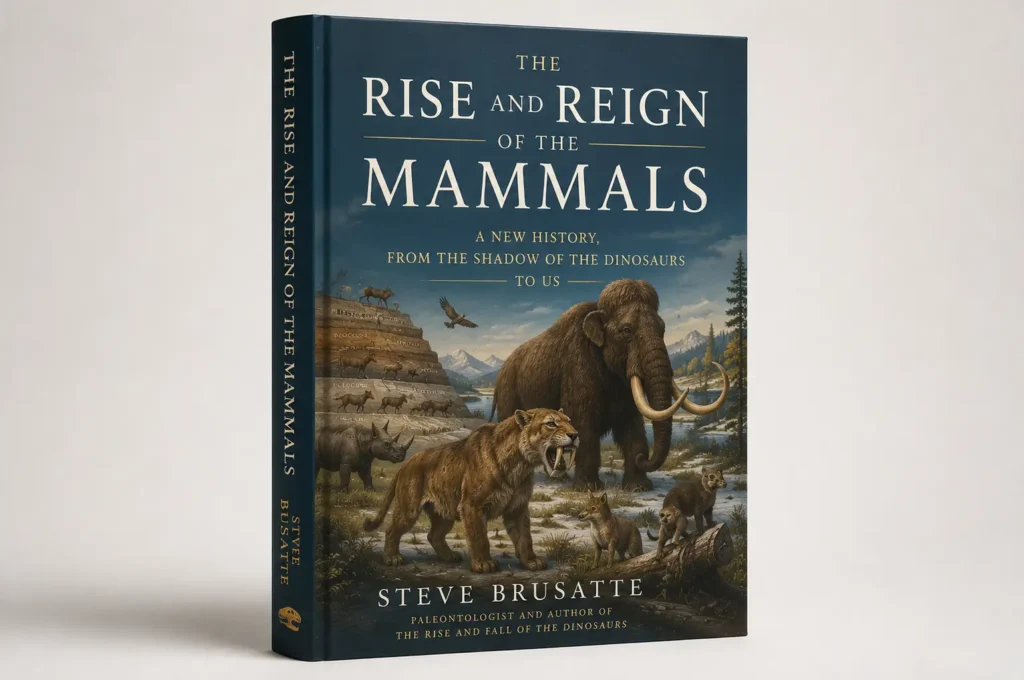
The Rise and Reign of the Mammals
A sweeping history of mammalian evolution, from their origins alongside dinosaurs through the Cenozoic and the emergence of humans.