Is Smilodon a Dinosaur?

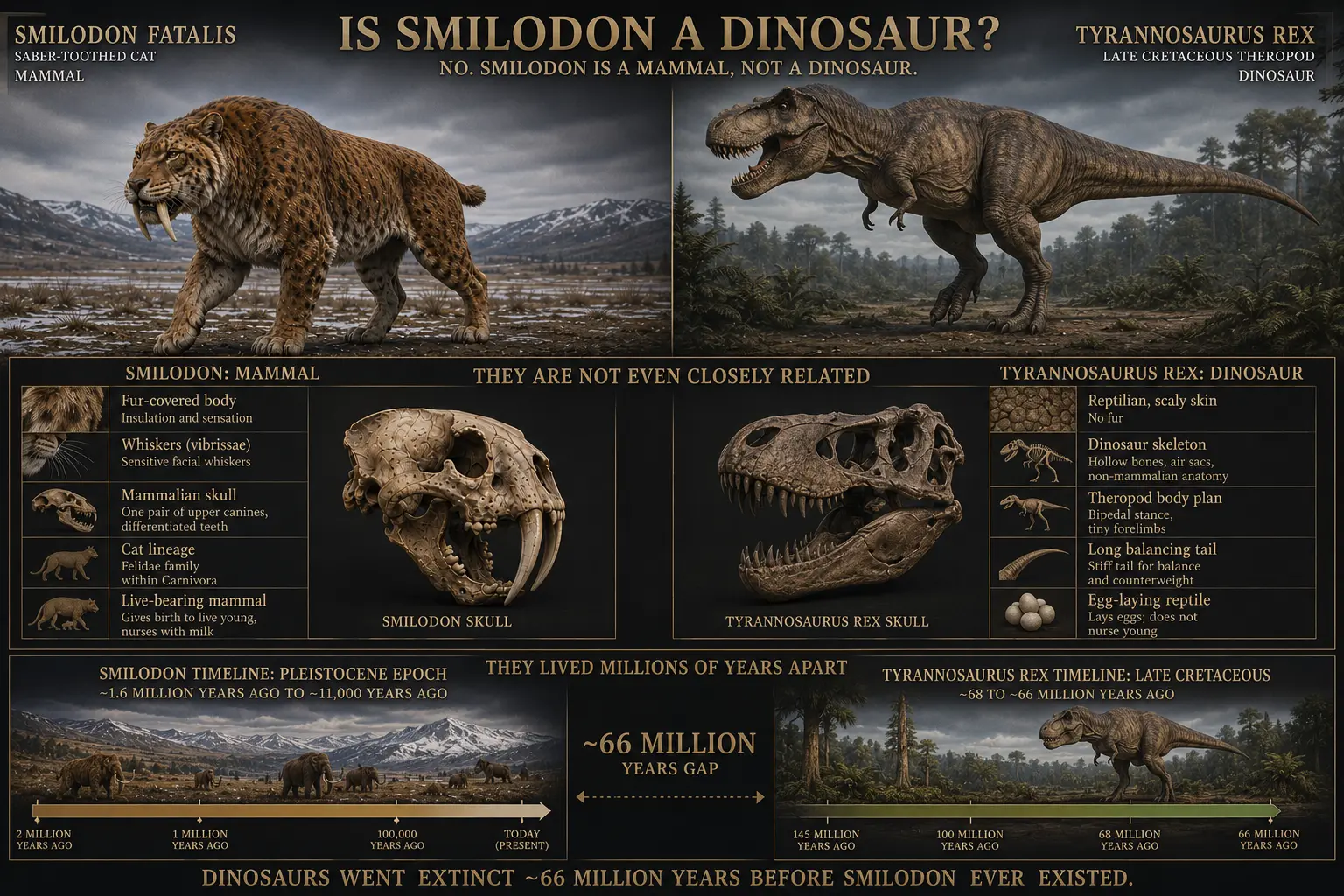
Educational comparison infographic showing why Smilodon was not a dinosaur. A life reconstruction of Smilodon fatalis is shown beside Tyrannosaurus rex. Supporting panels compare mammalian and dinosaur characteristics, fossil skulls, reproductive traits, and geological timelines. The infographic highlights that Smilodon was a fur-covered mammal that lived during the Pleistocene, while Tyrannosaurus rex was a dinosaur that lived during the Late Cretaceous roughly 66 million years earlier.

Quick Info Field Information Genus Smilodon Classification Mammalia → Carnivora → Felidae Geological Age Pleistocene Epoch First Appearance Approximately 2.5 million years ago Dinosaur? No Closest Living Relatives Modern cats (Felidae) Quick Answer Smilodon was not a dinosaur. It was a mammal—specifically a placental carnivore belonging to the cat family (Felidae). Non-avian dinosaurs became extinct … Read more
Smilodon Pronunciation: How to Say Smilodon

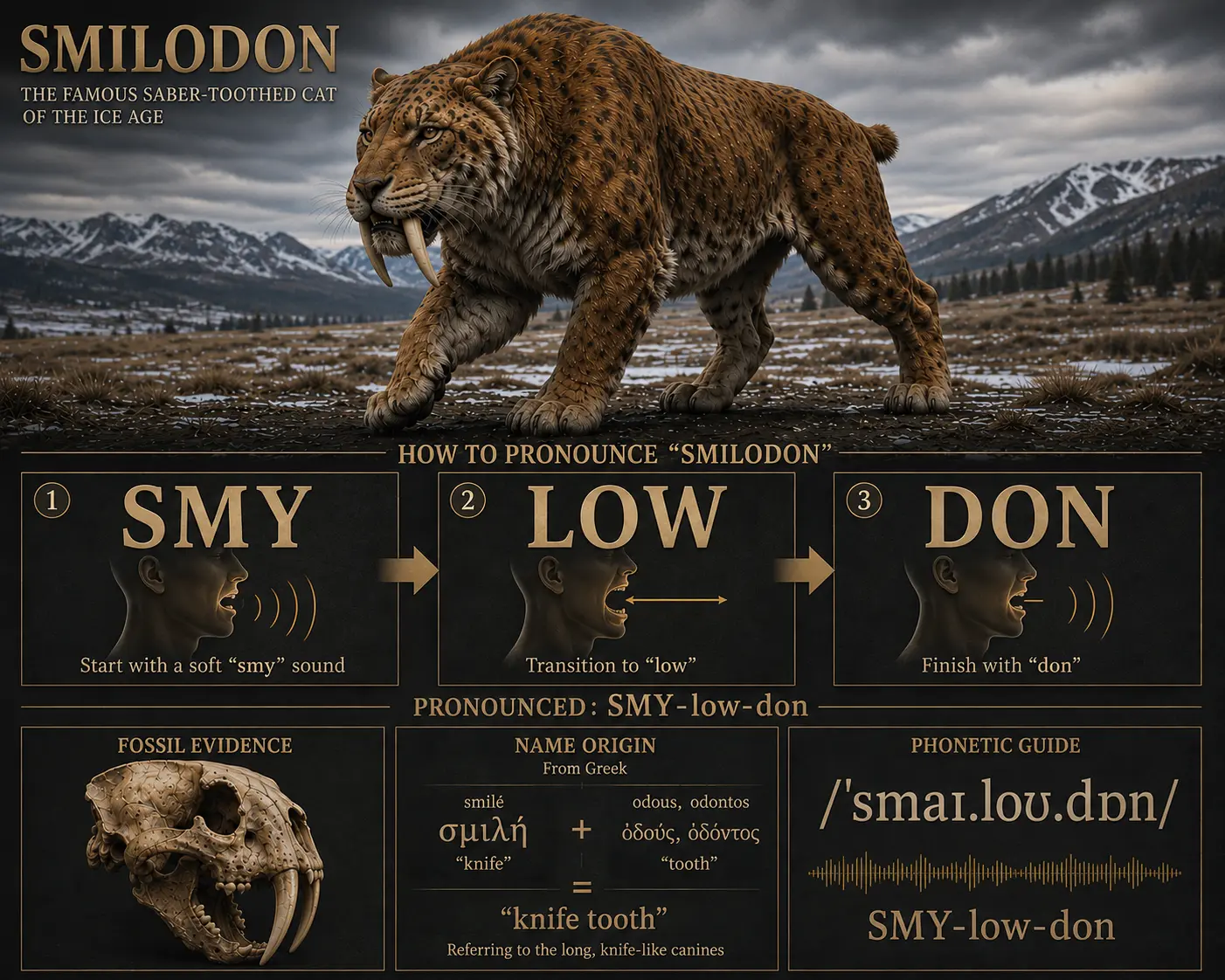
Educational infographic showing how to pronounce Smilodon, the famous saber-toothed cat of the Ice Age. A life reconstruction of Smilodon appears above a pronunciation guide breaking the word into three syllables: SMY, LOW, and DON. Additional panels show a Smilodon skull fossil and the Greek origins of the name, meaning “knife tooth.”

Quick Info Field Information Genus Smilodon Family Felidae Pronunciation SMY-loh-don IPA /ˈsmaɪ.lə.dɒn/ Name Origin Greek smilē (“knife” or “chisel”) + odōn (“tooth”) Meaning “Knife tooth” or “chisel tooth” Quick Answer Smilodon is pronounced SMY-loh-don, with the stress on the first syllable. The name derives from the ancient Greek words smilē (“knife” or “chisel”) and odōn … Read more

When Did Smilodon Live?

Educational timeline featuring Smilodon fatalis, the saber-toothed cat of the Pleistocene. A large life reconstruction dominates the upper portion of the image, accompanied by a fossil skull and Rancho La Brea fossil evidence inset. A geological timeline below shows Early, Middle, and Late Pleistocene intervals leading to terminal extinction. Supporting panels depict Ice Age landscapes, mammoths, dire wolves, human overlap evidence, and fossil discoveries, illustrating the age, environment, and ecological context of Smilodon.

Quick Info Field Information Genus Smilodon Family Felidae Geological Age Pleistocene Epoch First Appearance Approximately 2.5 million years ago Earliest Known Species Smilodon gracilis Last Appearance Approximately 10,000 years ago Human Overlap Yes, during the Late Pleistocene Extinction Event End-Pleistocene extinction event Quick Answer Smilodon lived during the Pleistocene Epoch, from approximately 2.5 million years … Read more

Smilodon vs Dire Wolf: Two Pleistocene Predators Compared

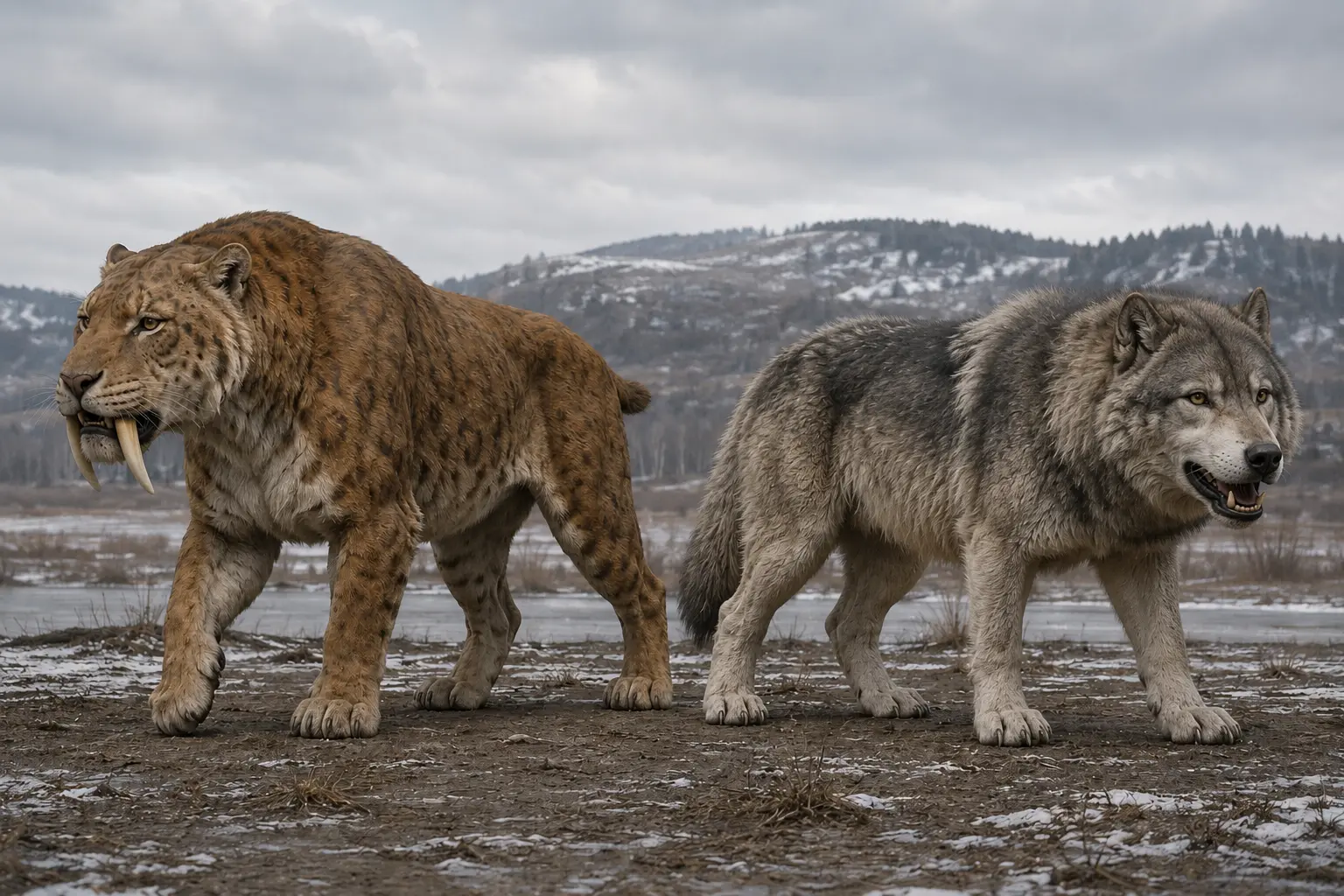
Photorealistic comparison of two Ice Age predators shown at the same scale. On the left, Smilodon fatalis, a heavily built saber-toothed cat with massive forequarters, a short tail, and long saber-like upper canines. On the right, Aenocyon dirus (Dire Wolf), a robust wolf-like predator with a broad head, thick neck, powerful shoulders, and dense gray fur. Both animals stand side-by-side in a cold Late Pleistocene landscape with patches of snow and distant hills, allowing direct comparison of feline and canid predator body plans.

Quick Info Feature Smilodon fatalis Canis dirus (Dire Wolf) Order / Family Carnivora / Felidae Carnivora / Canidae Age Late Pleistocene Late Pleistocene Body Mass (Estimated) 160–280 kg (350–620 lb) 60–80 kg (132–176 lb) Predatory Strategy Ambush predator; short-burst power Social predator; pursuit and endurance hunting likely important Primary Adaptations Elongated saber canines; exceptionally powerful … Read more

Smilodon Discovery: Fossils, History, and La Brea

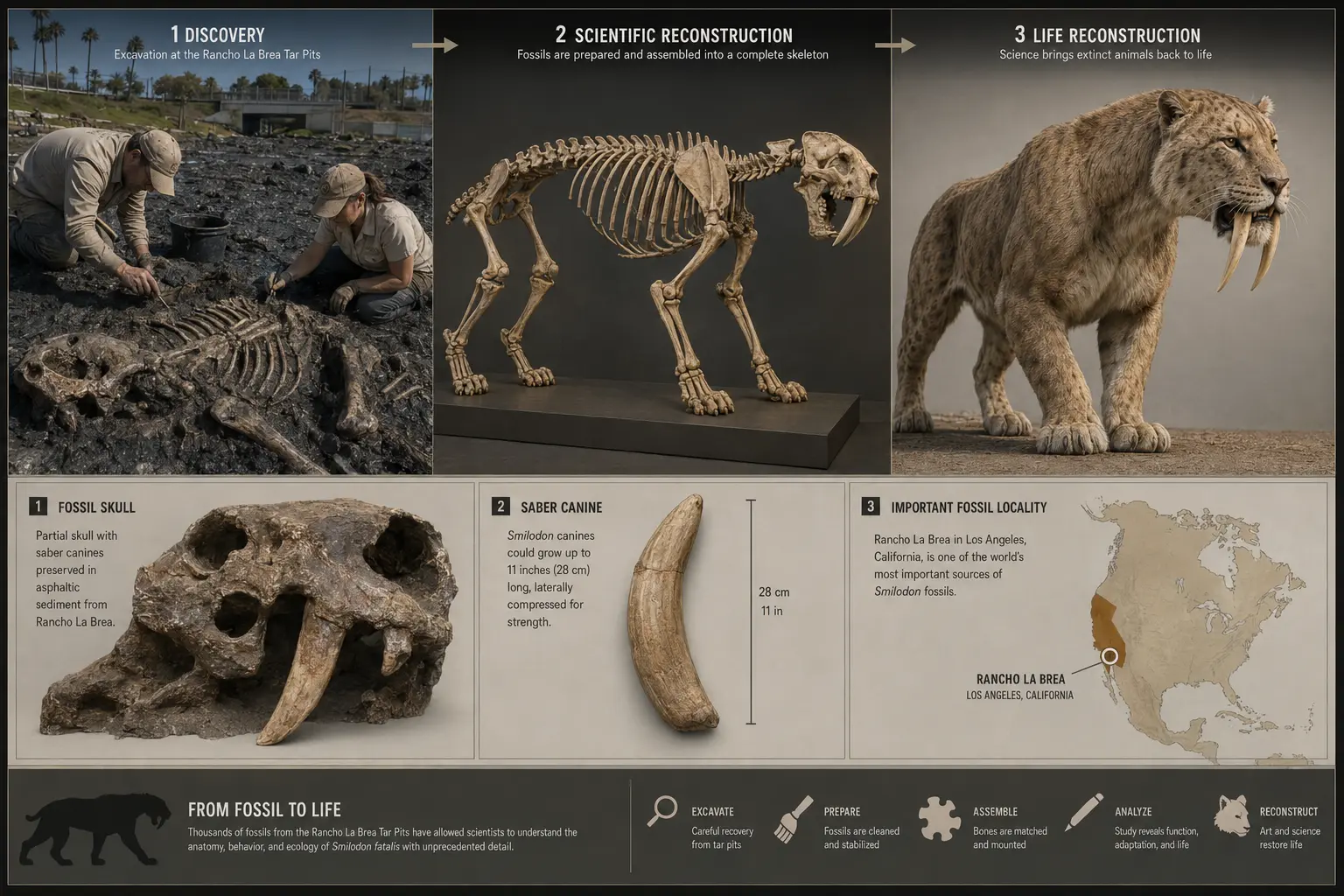
Educational infographic showing how scientists reconstruct Smilodon fatalis from fossil evidence. The top row presents a chronological sequence from fossil excavation at Rancho La Brea, to an assembled Smilodon skeleton, to a life reconstruction of the living saber-toothed cat. Supporting panels show a fossil skull with preserved saber canines, an isolated saber tooth, and a map identifying Rancho La Brea in Los Angeles, California. The image explains how fossil discoveries are transformed into scientific reconstructions of extinct animals.

Quick Info Field Information Species Smilodon fatalis — Carnivora, Felidae Period Pleistocene, approximately 2.5 million–10,000 years ago Genus named 1842, by Peter Wilhelm Lund Key fossil site Rancho La Brea, Los Angeles, California Quick Answer:Smilodon was first described scientifically in 1842 by the Danish naturalist Peter Wilhelm Lund based on fossil material recovered from cave … Read more

Smilodon Speed: How Fast Was Smilodon

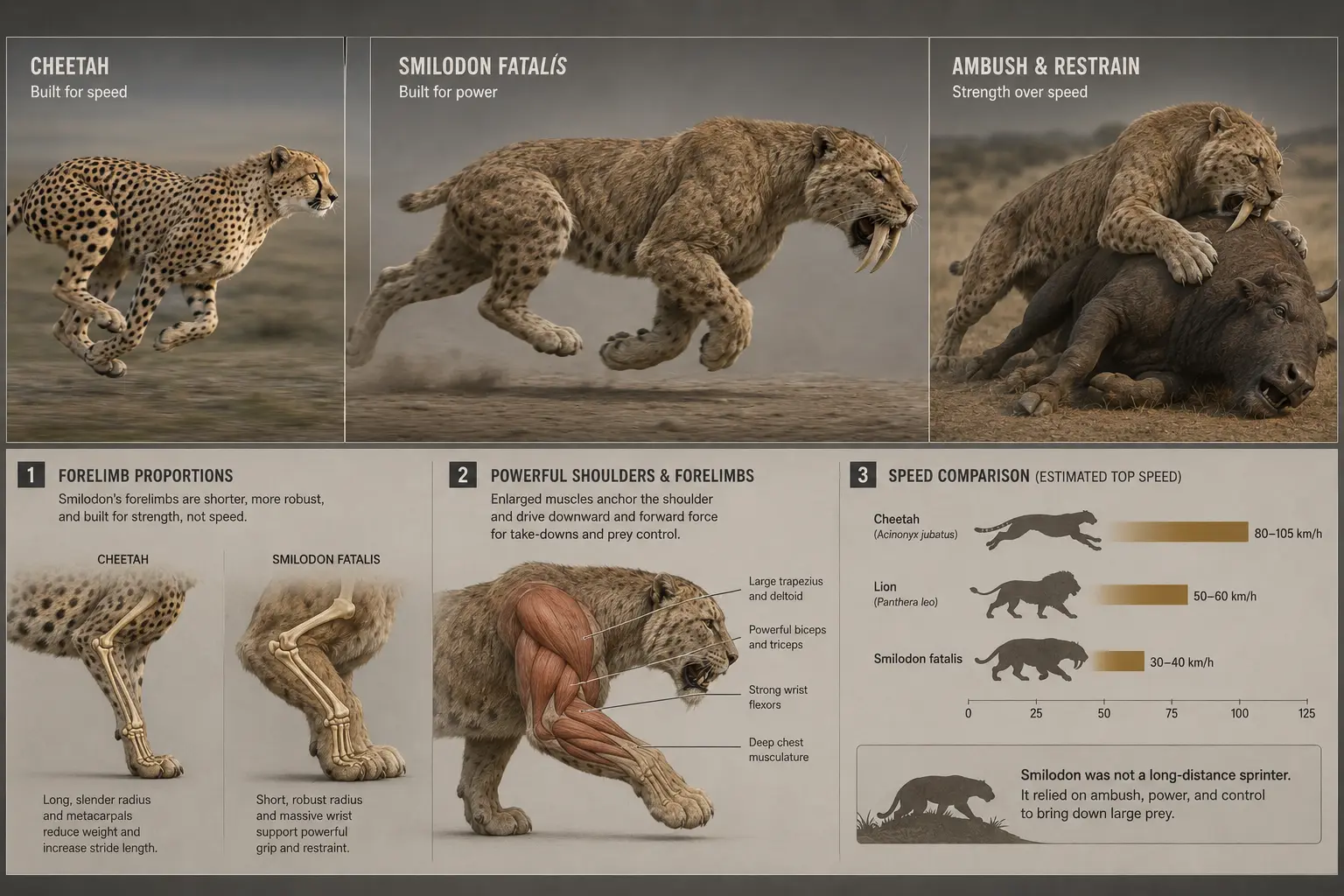
Educational infographic comparing the locomotion of a modern cheetah and Smilodon fatalis. The top row contrasts a sprinting cheetah, a running Smilodon, and a prey-restraint scene showing Smilodon overpowering a large herbivore. The lower panels compare forelimb proportions, shoulder musculature, and relative running performance. The image demonstrates that Smilodon was built for ambush hunting, strength, and prey control rather than extreme running speed.

Quick Info Field Information Species Smilodon fatalis — Carnivora, Felidae Period Pleistocene, approximately 2.5 million–10,000 years ago Locomotion type Ambush predator Running specialization Power and acceleration rather than endurance Evidence base Limb proportions, skeletal biomechanics, and comparative anatomy Quick Answer: The maximum running speed of Smilodon fatalis cannot be determined directly from the fossil record. … Read more

Smilodon Teeth: Saber Teeth and Bite Force Explained

Educational anatomy infographic of Smilodon fatalis explaining how its saber teeth functioned. A full-body reconstruction of an adult Smilodon occupies the center, showing its elongated upper canines, robust forelimbs, deep skull, and short tail. Insets illustrate a wide-gape skull with exposed saber teeth, a close-up of a canine tooth, forelimb musculature used to restrain prey, and a hunting scene showing prey restraint prior to a saber strike. Additional skeletal comparisons highlight differences between Smilodon and a modern lion. The image demonstrates that Smilodon's killing strategy relied on specialized saber teeth, a wide jaw opening, and powerful forelimbs working together rather than bite force alone.

Quick Info Field Information Species Smilodon fatalis — Carnivora, Felidae Period Pleistocene, approximately 2.5 million–10,000 years ago Upper canine length (S. fatalis) Approximately 17–18 cm (6.7–7.1 in), including the root Maximum gape Approximately 110–120° Primary function Precision killing bite targeting soft tissues of the throat and neck Quick Answer: Smilodon’s saber teeth were elongated upper … Read more

Smilodon Size: How Big Was Smilodon?

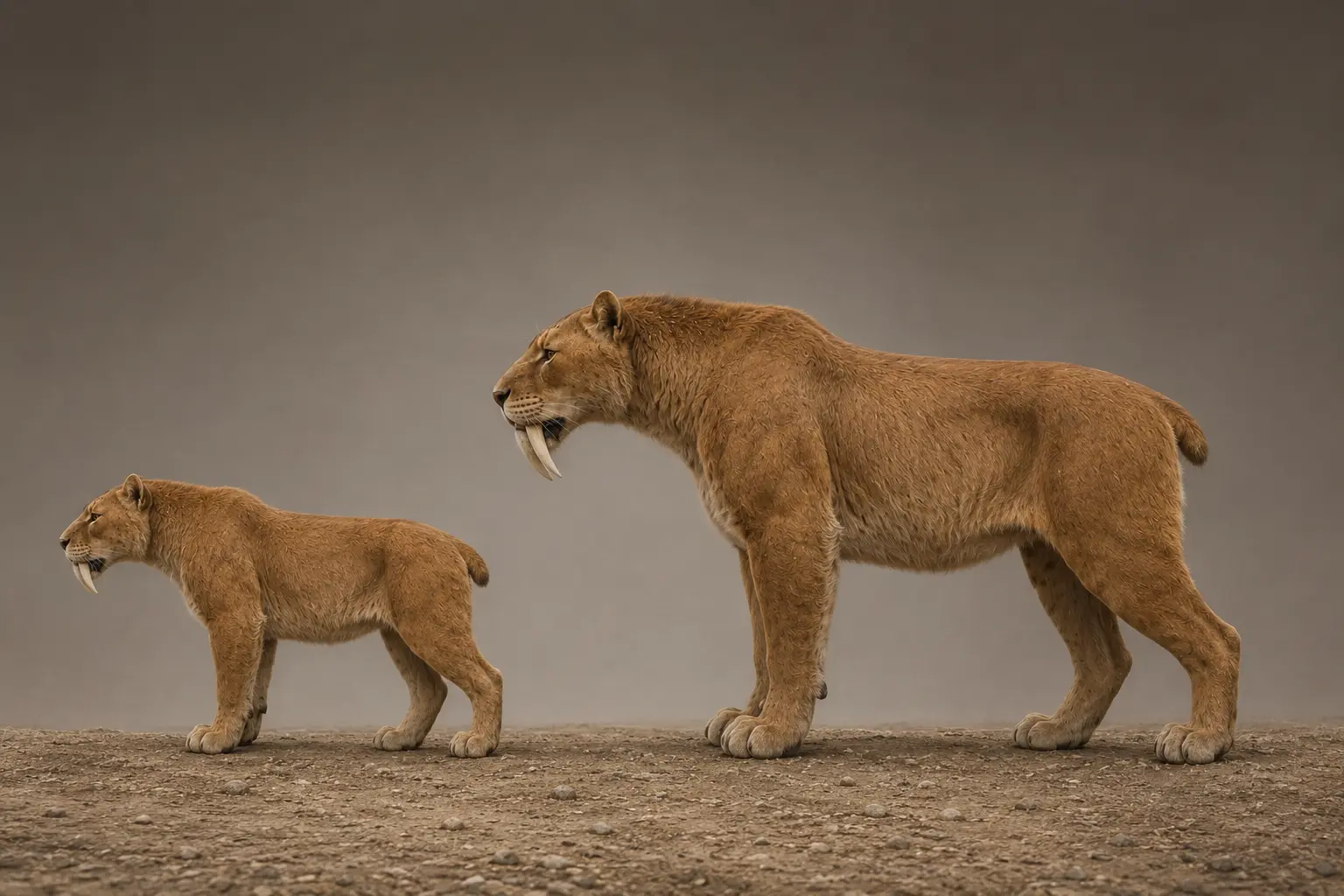
Side-by-side comparison of a juvenile and adult Smilodon fatalis shown in full lateral view on the same ground plane. The juvenile stands on the left and the much larger adult stands on the right. Both display elongated saber teeth, powerful forelimbs, deep chests, and short tails. The educational purpose of the image is to demonstrate the substantial size difference between juvenile and adult Smilodon and illustrate how the animal grew into a heavily built apex predator.

Quick Info Field Information Genus Smilodon Time Range Early Pleistocene–Late Pleistocene (approximately 2.5 million–10,000 years ago) Best-Known Species Smilodon fatalis Estimated Mass (S. fatalis) Approximately 160–280 kg (350–620 lb) Largest Species Smilodon populator Quick Answer The three recognized species of Smilodon varied considerably in size. Smilodon gracilis was the smallest species, with estimated body masses … Read more

Smilodon Habitat: Where Did Smilodon Live?

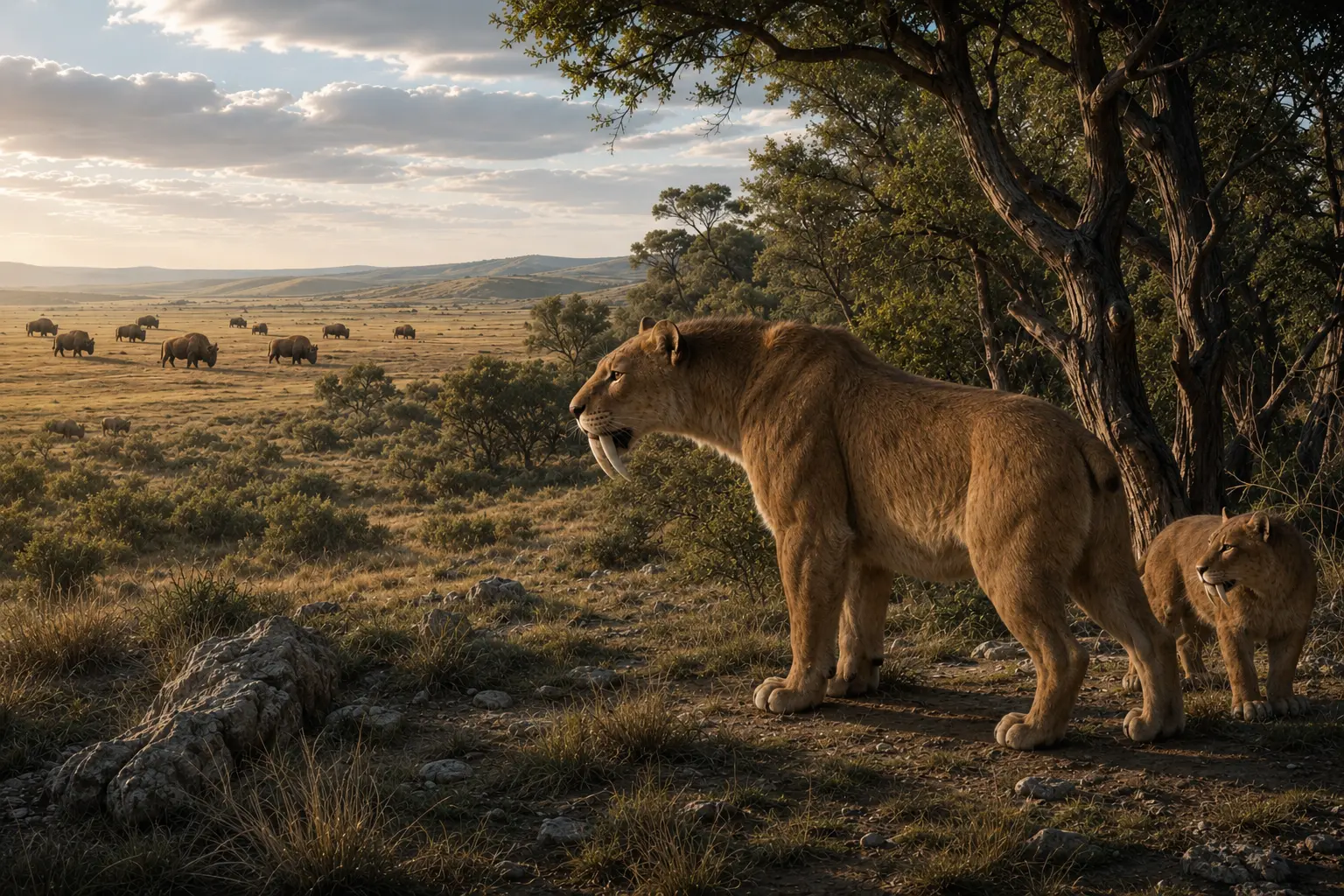
Adult and juvenile Smilodon fatalis stand at the edge of a Late Pleistocene woodland overlooking open grassland and scrubland. The adult's elongated saber teeth, powerful forequarters, and short tail are clearly visible. A distant herd of bison grazes across the plains, illustrating the mixed woodland–grassland habitat occupied by Smilodon in western North America. The image's educational purpose is to show where Smilodon lived and the ecological setting it inhabited.

Quick Info Field Information Genus Smilodon (Saber-Toothed Cat) Time Range Early Pleistocene–Late Pleistocene (approximately 2.5 million–10,000 years ago) Geographic Range North America and South America Primary Habitats Grasslands, savannas, shrublands, woodland margins, and mixed open habitats Quick Answer Smilodon inhabited much of North and South America during the Pleistocene Epoch. Fossil evidence indicates that these … Read more

Smilodon Extinction: Why Did Smilodon Go Extinct?

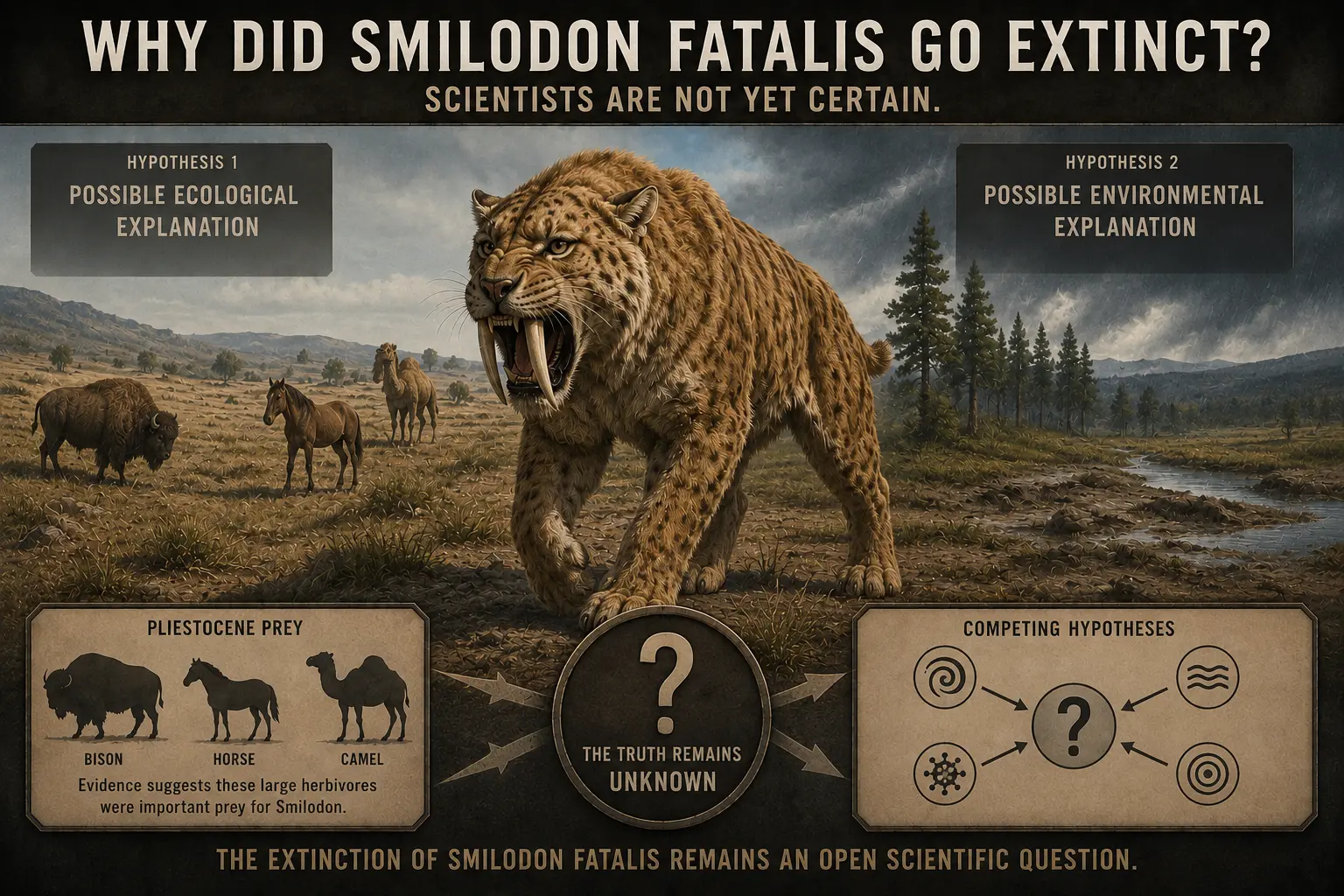
Photorealistic educational spoke image exploring the extinction of Smilodon fatalis. A saber-toothed cat stands at the center of a Late Pleistocene landscape, surrounded by panels representing possible ecological and environmental explanations for its disappearance. Additional panels show likely prey animals, including bison, horses, and camels, while abstract symbols illustrate competing scientific hypotheses converging on an unknown outcome. The composition teaches that the extinction of Smilodon fatalis remains an unresolved scientific question.

Quick Info Field Information Species Smilodon fatalis — Carnivora, Felidae Period Pleistocene, approximately 2.5 million–10,000 years ago Extinction Date Approximately 10,000 years ago (end-Pleistocene) Extinction Category Late Pleistocene megafaunal extinction event Quick Answer Smilodon fatalis disappeared approximately 10,000 years ago during the widespread extinction of many large mammals at the end of the Pleistocene. Most … Read more