Can We Bring the Woolly Mammoth Back to Life?
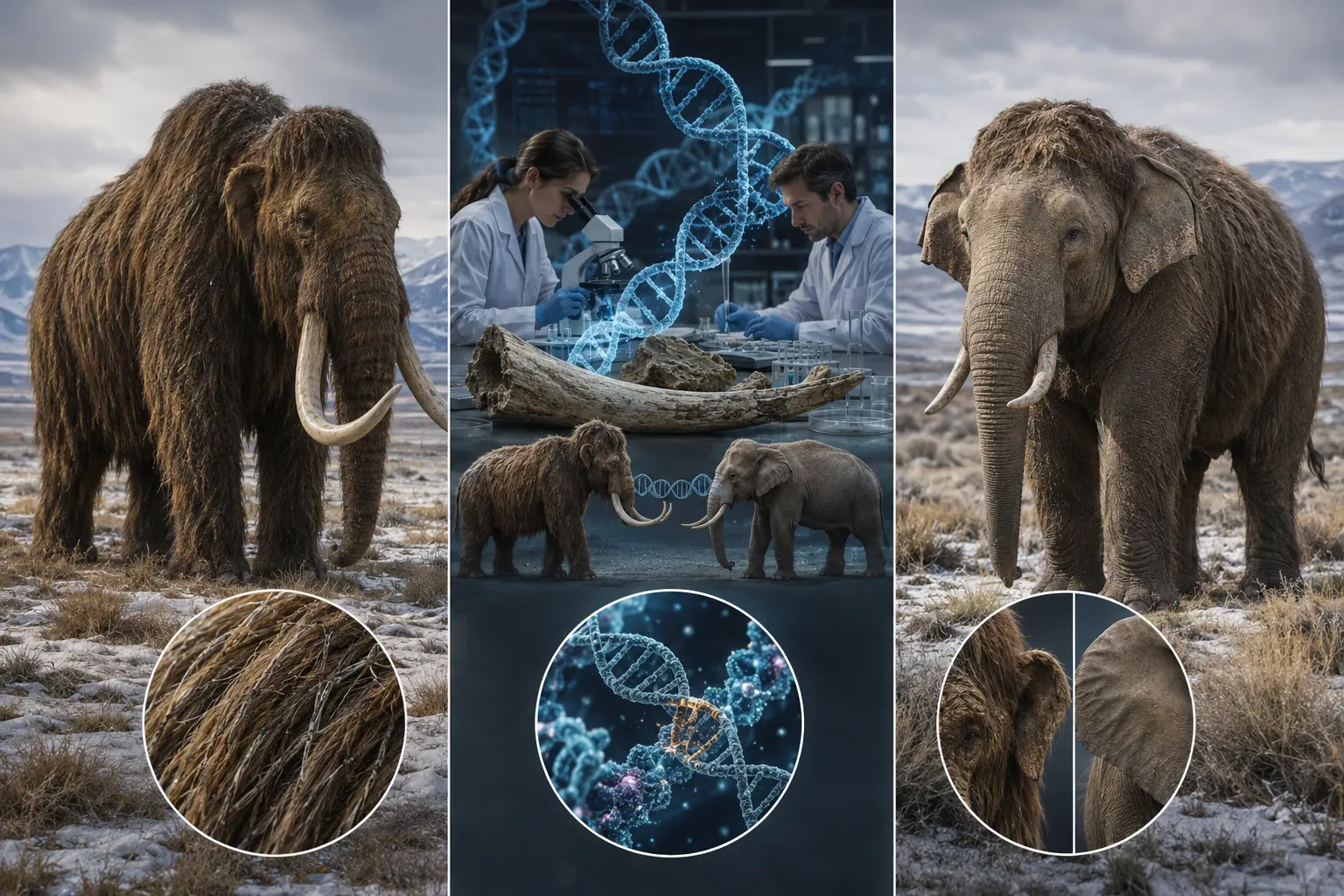
Educational composite showing a woolly mammoth, genetic research using ancient mammoth DNA, and an elephant with mammoth-like traits, illustrating how scientists propose creating mammoth-adapted elephants through genetic engineering rather than truly resurrecting extinct mammoths.

Field Information Species Mammuthus primigenius Classification Proboscidea, Elephantidae Time Range Middle Pleistocene–Late Holocene (c. 400,000–4,000 years ago) Genome Status Multiple high-quality genomes sequenced from permafrost-preserved remains Closest Living Relative Asian elephant (Elephas maximus) Principal De-extinction Programme Colossal Biosciences (established 2021) Quick Answer No. A true woolly mammoth cannot currently be brought back to life because … Read more

How Did the Diplodocus Go Extinct?

Educational infographic-style reconstruction showing Diplodocus extinction through environmental change in the Late Jurassic Morrison Formation. The image depicts a transition from lush wet floodplains to drier habitats over time, with timeline panels explaining that Diplodocus disappeared around 145 million years ago, roughly 80 million years before the end-Cretaceous asteroid impact.

Species Quick Info Field Information Species Diplodocus (genus) — Saurischia, Diplodocidae Period Late Jurassic, approximately 154–150 million years ago Extinction timing Late Jurassic disappearance; absent from confirmed Cretaceous records Extinction type Gradual regional decline associated with Jurassic–Cretaceous faunal turnover Quick Answer: Diplodocus was not wiped out by a single catastrophic event. The genus disappeared from … Read more

Diplodocus Skin: What Did Diplodocus Look Like?

Photorealistic reconstruction of Diplodocus showing evidence-based pebbly skin with large feature scales scattered among smaller scales. The Late Jurassic sauropod is displayed in full-body view with inset close-ups revealing neck, body, and tail skin texture, illustrating what Diplodocus skin likely looked like based on fossil evidence.

Species Quick Info Field Information Species Diplodocus longus — Saurischia, Diplodocidae Period Late Jurassic (Kimmeridgian–early Tithonian), approximately 154–149 million years ago Skin evidence Indirect — inferred from skin impressions of other sauropods Colouration Unknown — no direct pigment evidence has been recovered Quick Answer Diplodocus skin is not directly known from fossil impressions assigned to … Read more

Diplodocus vs Brachiosaurus

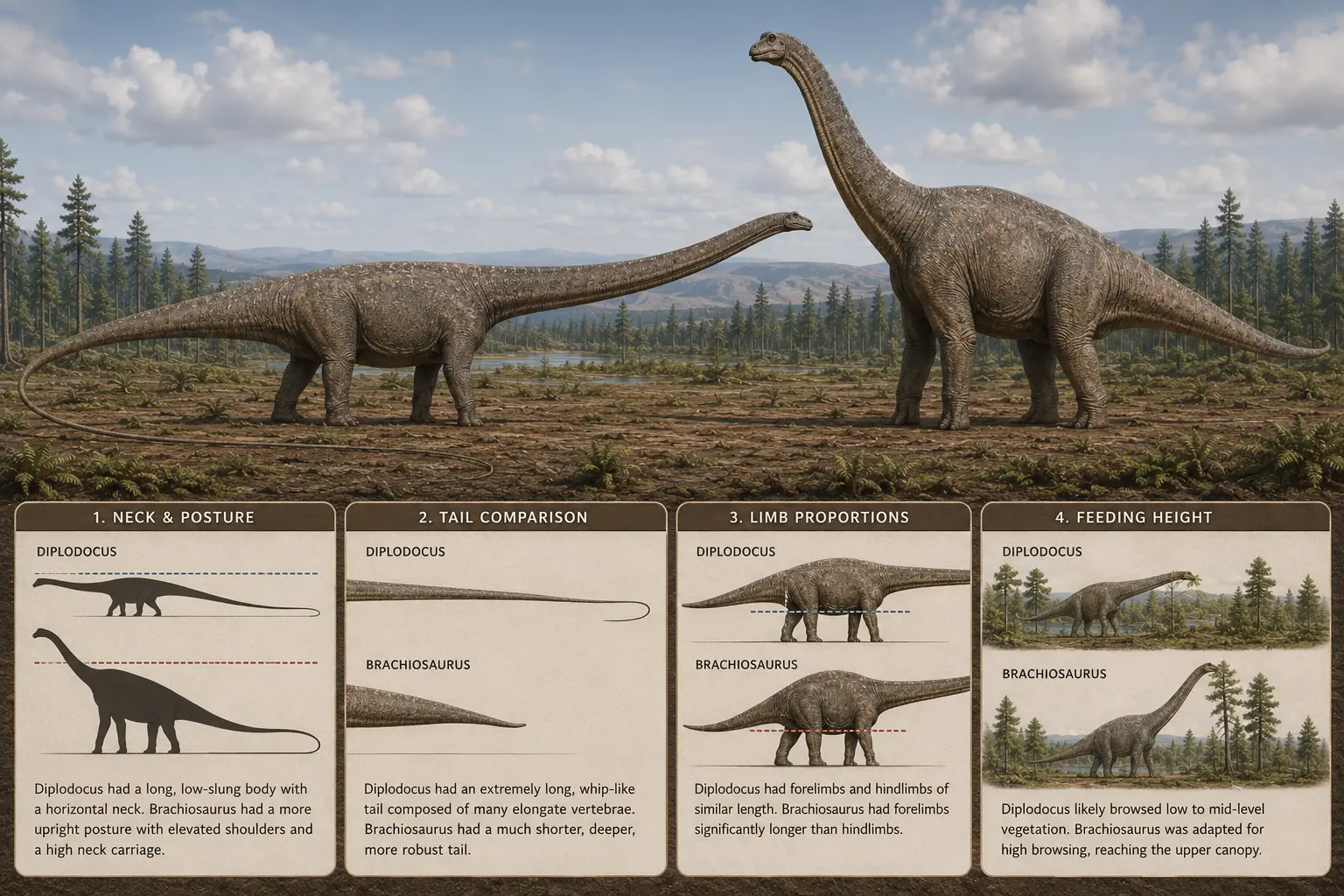
Side-by-side comparison of Diplodocus and Brachiosaurus showing their key anatomical differences. The image highlights Diplodocus’ long low body, horizontal neck, and whip-like tail versus Brachiosaurus’ taller stance, elevated shoulders, longer forelimbs, upright neck posture, and high-browsing feeding strategy.

Feature Diplodocus longus Brachiosaurus altithorax Order / Family Sauropoda, Diplodocidae Sauropoda, Brachiosauridae Period Late Jurassic, approximately 154–149 Ma Late Jurassic, approximately 154–150 Ma Estimated length 24–26 m (79–85 ft) 20–23 m (66–75 ft) Estimated mass 10,000–16,000 kg (22,000–35,300 lb) Approximately 28,000–50,000 kg (62,000–110,000 lb) Shoulder height ~3–4 m (10–13 ft) ~6 m (20 ft) Neck … Read more

How Fast Could Diplodocus Run?

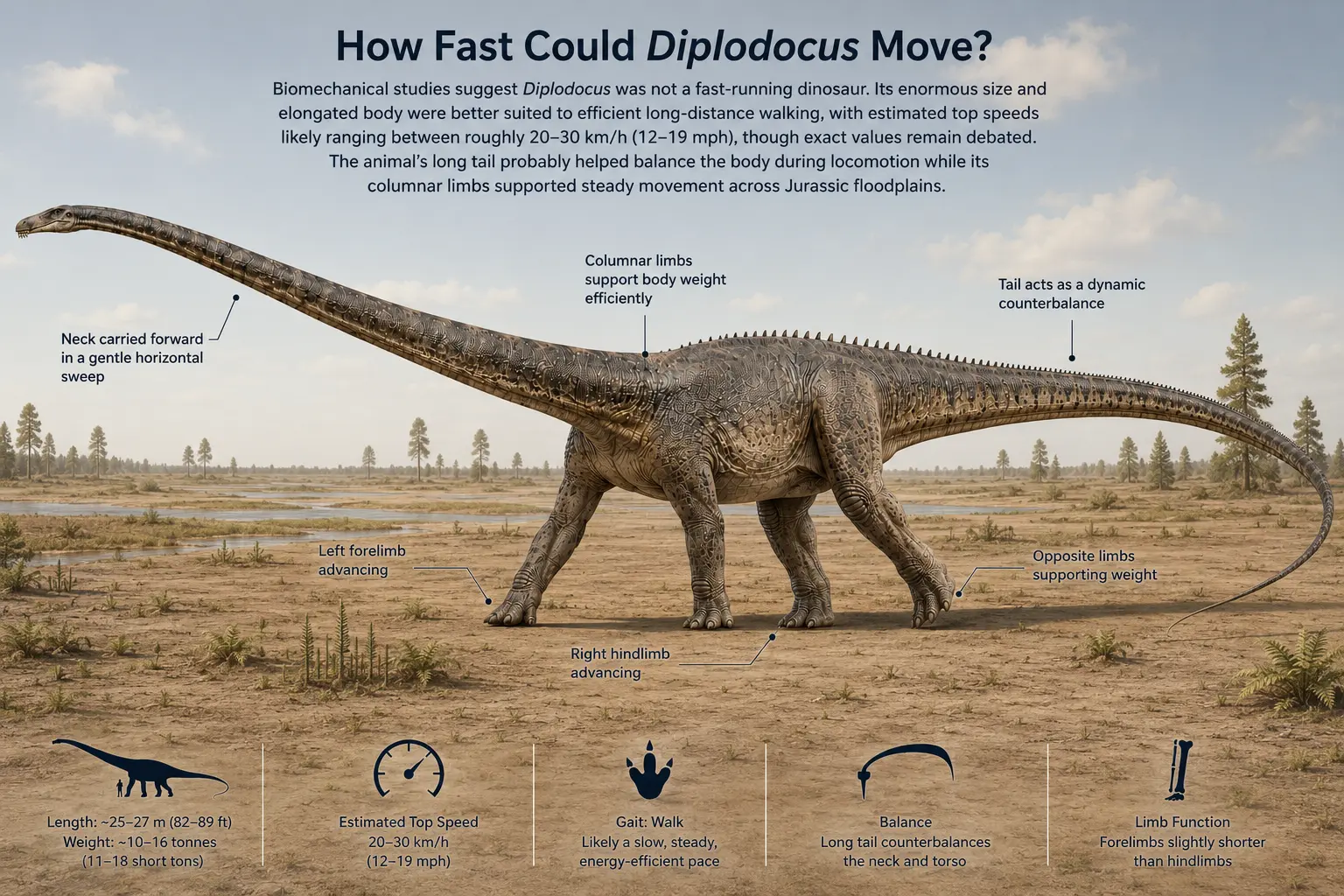
Infographic showing a walking Diplodocus on a Late Jurassic floodplain, highlighting its gait, balance, limb function, and estimated top speed of 20–30 km/h.

Species Quick Info Field Information Species Diplodocus longus — Saurischia, Diplodocidae Period Late Jurassic (Kimmeridgian–early Tithonian), approximately 154–149 million years ago Estimated top speed Approximately 6–12 km/h (4–7.5 mph) — biomechanical modelling Limb type Graviportal — columnar limbs adapted primarily for weight-bearing Quick Answer How fast: Diplodocus could move is estimated at approximately 6–12 km/h … Read more

Diplodocus Fossils and Discovery

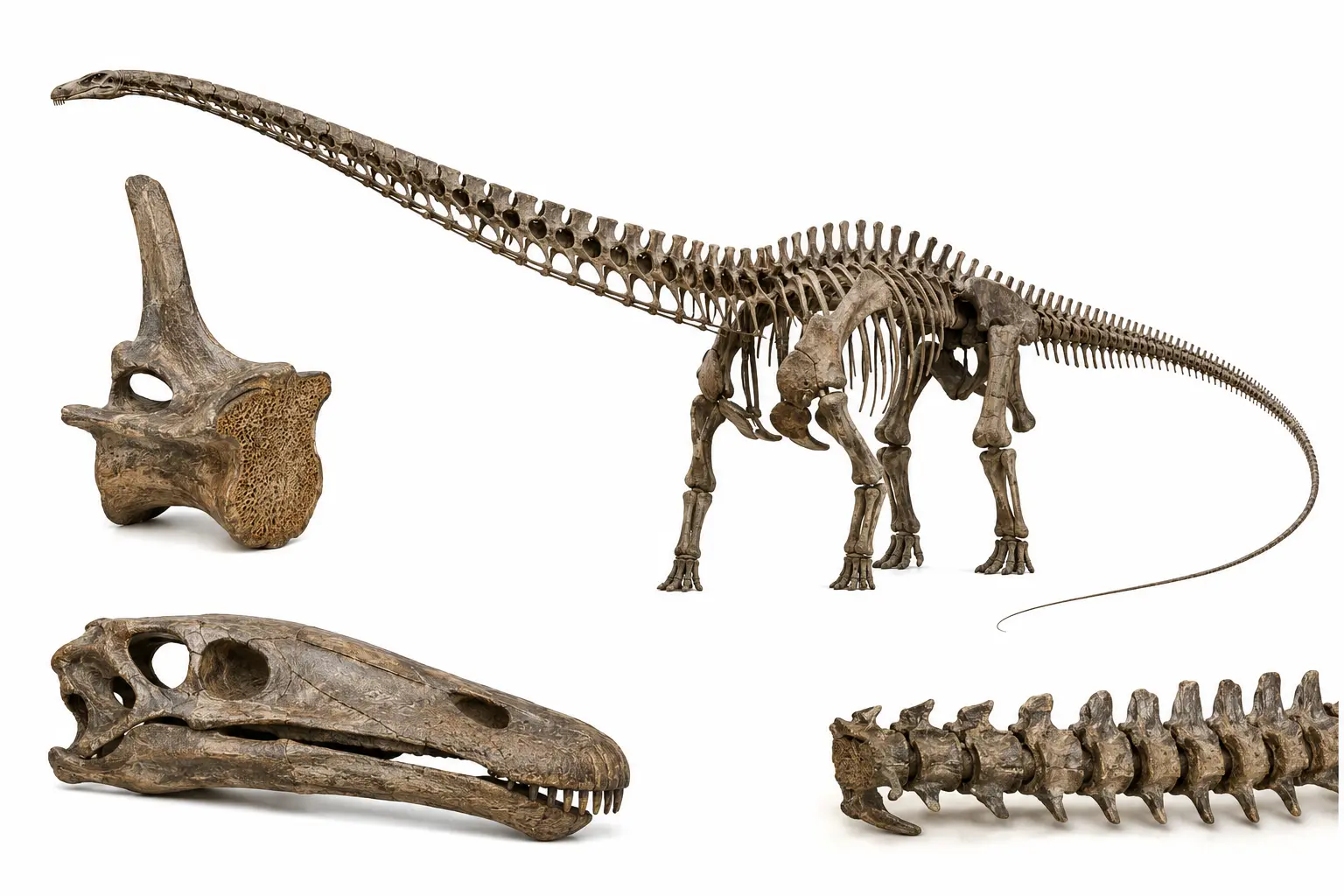
Diplodocus fossil and classification infographic showing a mounted skeleton alongside skull, neck vertebra, and tail vertebra specimens used to identify the giant Jurassic sauropod.

Specimen / Feature Detail Species Diplodocus longus — Sauropoda, Diplodocidae Named by Othniel Charles Marsh, 1878 Type material Housed at the Yale Peabody Museum Key specimen Diplodocus carnegii specimen at the Carnegie Museum of Natural History Discovery sites Morrison Formation deposits of Colorado, Utah, Wyoming, and other regions of western North America Named species Species-level … Read more

Diplodocus Habitat

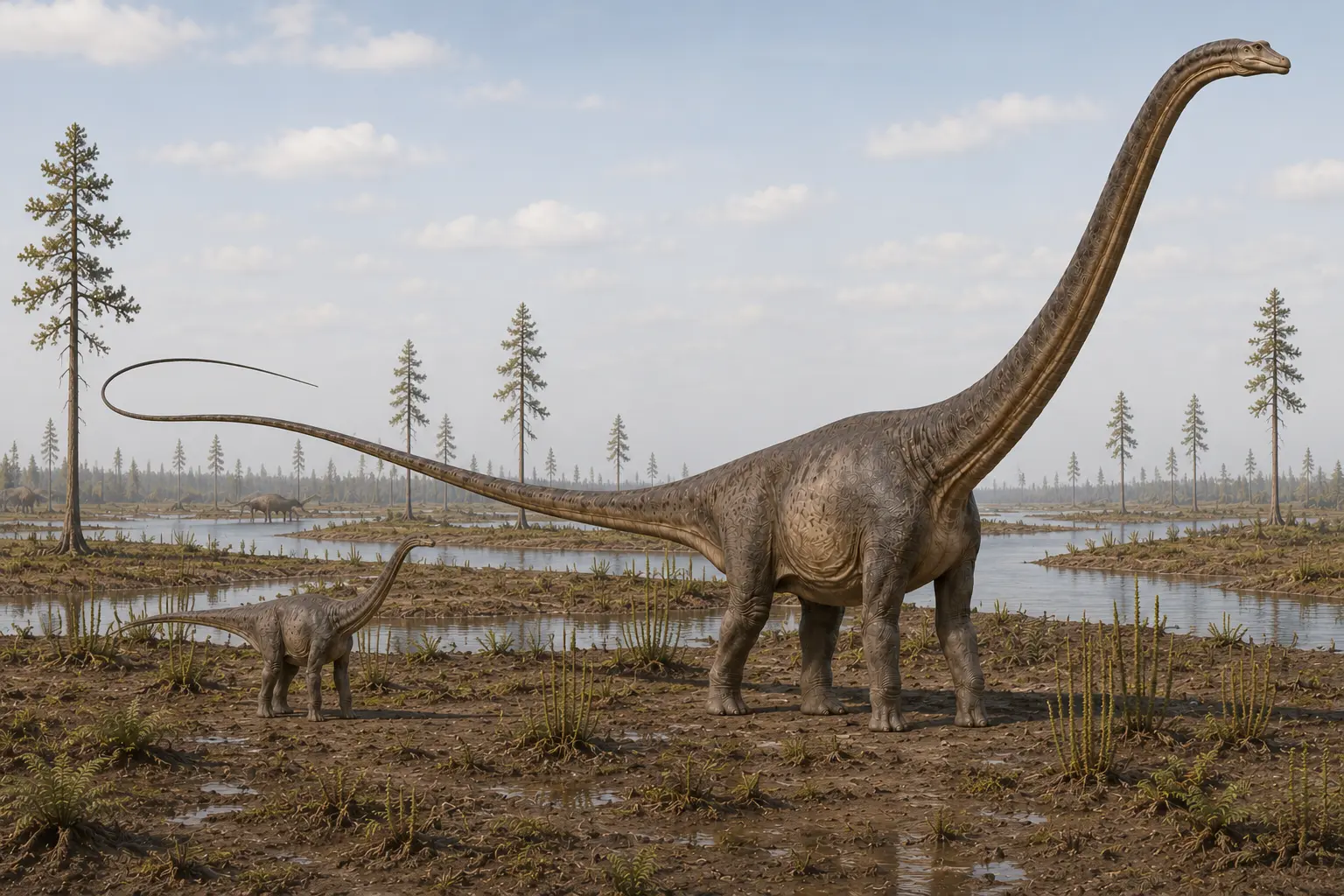
Adult and juvenile Diplodocus in a Late Jurassic Morrison Formation floodplain showing the dinosaur’s natural habitat

Field Information Species Diplodocus longus — Sauropoda, Diplodocidae Period Late Jurassic (Kimmeridgian–early Tithonian), approximately 154–149 million years ago Formation Morrison Formation, western North America Climate Semi-arid with pronounced seasonal variation in rainfall Ecosystem type Floodplain and river corridor Quick Answer:Diplodocus lived in the floodplains and river corridors of what is now the western United States … Read more

Did Diplodocus Have Any Predators?

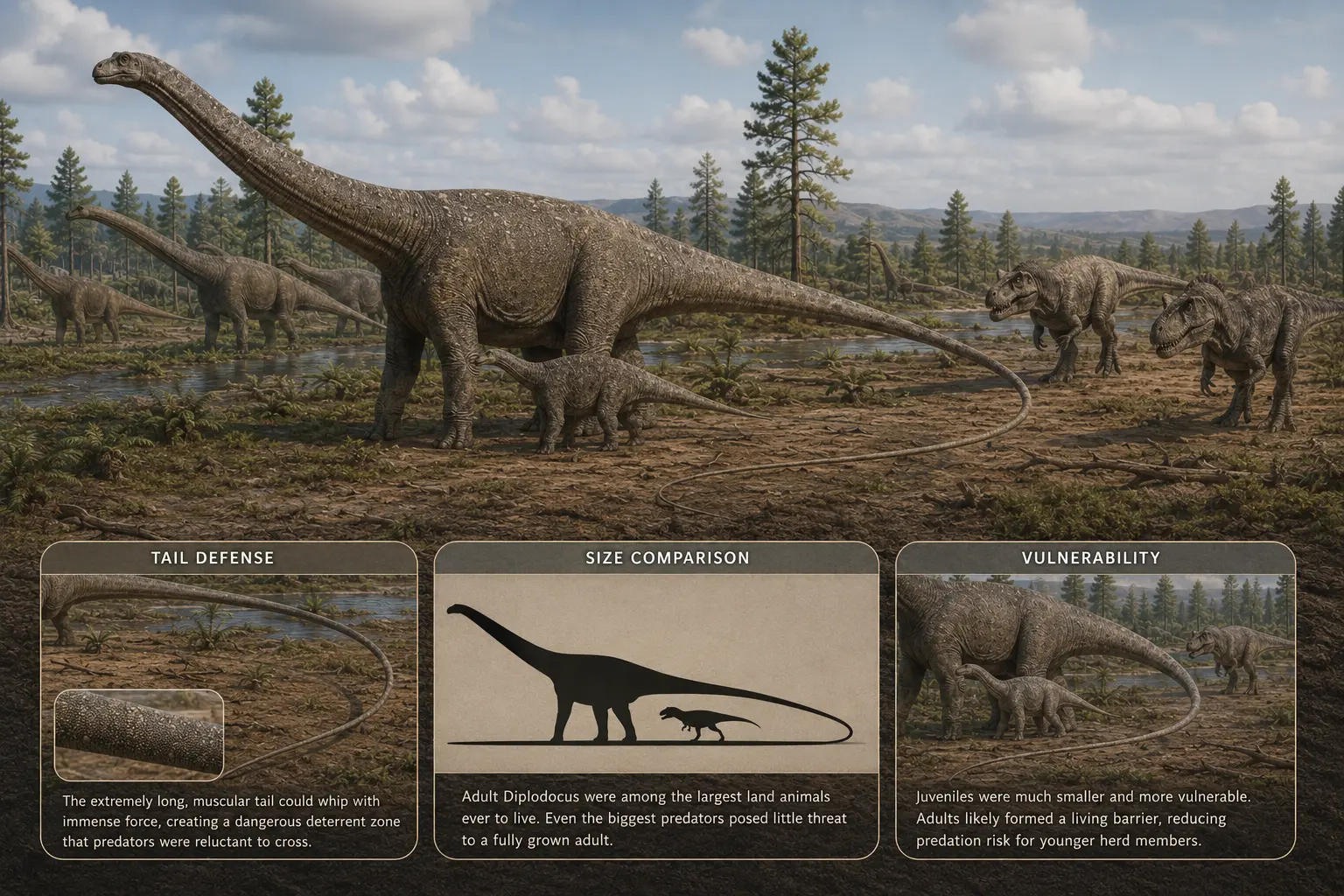
Photorealistic reconstruction of an adult Diplodocus protecting a juvenile from approaching Allosaurus predators. Educational panels highlight the sauropod’s whip-like tail, enormous size compared with predators, and the greater vulnerability of young individuals, illustrating how Diplodocus may have survived alongside large Jurassic carnivores.

Field Information Species Diplodocus longus — Sauropoda, Diplodocidae Period Late Jurassic (Kimmeridgian–early Tithonian), approximately 154–149 million years ago Known predators Allosaurus, Ceratosaurus, Torvosaurus Primary defence Large body size; tail as a potential active deterrent Social behaviour Possible gregarious behaviour — debated Quick Answer Yes. Diplodocus lived alongside several large predatory theropods in the Morrison Formation, … Read more

What Did Diplodocus Eat?

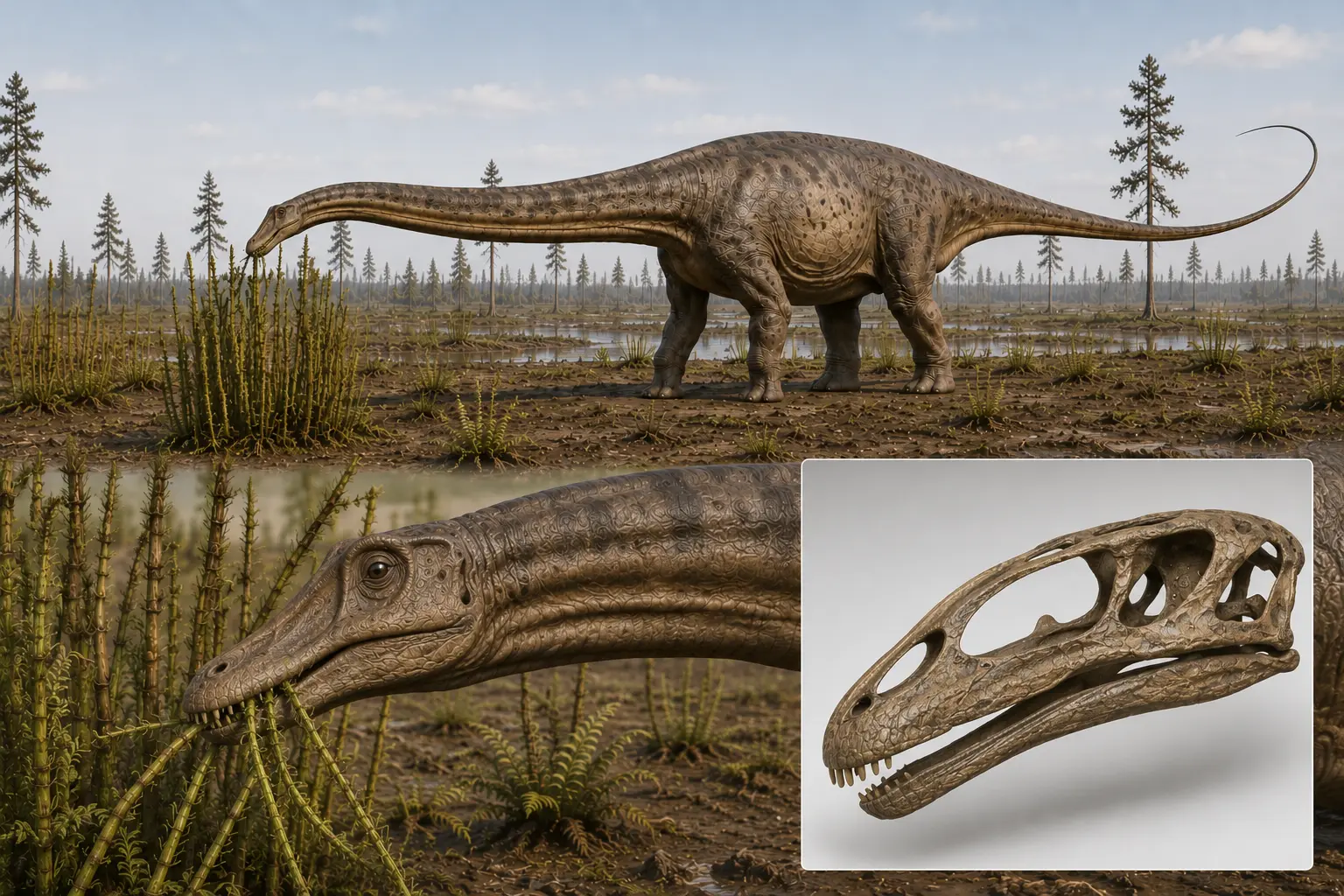
Diplodocus feeding reconstruction showing low browsing behavior, peg-toothed muzzle anatomy, and skull structure in a Late Jurassic habitat

Field Information Species Diplodocus longus — Sauropoda, Diplodocidae Period Late Jurassic (Kimmeridgian–early Tithonian), approximately 154–149 million years ago Diet Herbivorous — plants only Tooth type Pencil-like peg teeth; no grinding surface Feeding method Stripping or raking vegetation; no oral food processing Quick Answer Diplodocus ate plants exclusively. Its narrow, pencil-shaped teeth were adapted for stripping … Read more

Is Diplodocus the Biggest Dinosaur?

Diplodocus size comparison infographic showing a human, elephant, giraffe, rhinoceros, hippopotamus, and blue whale at shared scale

Field Information Species Diplodocus longus — Sauropoda, Diplodocidae Period Late Jurassic (Kimmeridgian–early Tithonian, approximately 154–149 million years ago) Estimated length 24–26 m (79–85 ft) Estimated mass Published mass estimates for Diplodocus vary substantially depending on specimen and modelling method, but many modern estimates place adult individuals broadly in the ~10–20 metric tonne range. Distinguishing feature … Read more