
At a Glance
| Field | Information |
|---|---|
| Species | Tyrannosaurus rex |
| Period | Late Cretaceous (68–66 Ma) |
| Adult length | 12–13 m (39–43 ft) |
| Hip height | ~3.7–4 m (12–13 ft) |
| Adult weight | 8,000–14,000 kg (17,600–30,900 lb), est. |
| Heaviest known specimen | Scotty (RSM P2523.8), est. ~8,870 kg (19,555 lb) |
| Skull length | Up to 1.5 m (5 ft) |
Quick Answer: Adult Tyrannosaurus rex reached 12–13 metres (39–43 ft) in length and stood approximately 3.7–4 metres (12–13 ft) at the hip. Weight estimates for well-studied adults typically range from 8,000 to 14,000 kilograms (17,600–30,900 lb), with the most robustly built known individual — Scotty, from Saskatchewan — estimated at approximately 8,870 kilograms (19,555 lb). These figures are model-dependent and carry meaningful uncertainty.

Stand next to a mounted T. rex skeleton, and the proportions resist comprehension. The skull is larger than a bathtub. The femur is taller than most people. The whole animal is roughly the length of a school bus but considerably heavier. T. rex was not merely a large predator — it was one of the largest bipedal animals ever to walk the earth, and it operated near the theoretical upper limit of what a two-legged body plan can structurally sustain.
Adult Size: Length, Height, and Weight
Most complete adult T. rex specimens measure between 12 and 13 metres (39–43 ft) from the tip of the snout to the end of the tail. The longest reliably measured individual is Sue (FMNH PR 2081), at approximately 12.3 metres (40 ft). When standing with the body held in its natural near-horizontal posture, T. rex stood roughly 3.7–4 metres (12–13 ft) tall at the hip — the head could rise considerably higher when the neck was extended.
Early weight estimates in the range of 6,000–7,000 kilograms were revised upward as biomechanical modelling improved. Modern estimates, which account for muscle mass, organ volume, and soft tissue distribution based on comparisons with living archosaurs, typically place most adults at 8,000–14,000 kilograms (17,600–30,900 lb). The actual skeleton of an adult T. rex weighs only around 1,000–1,500 kilograms — the rest was living tissue.
The heaviest known individual is Scotty (RSM P2523.8), recovered from the Frenchman Formation in Saskatchewan. A 2019 analysis estimated Scotty’s mass at approximately 8,870 kilograms (19,555 lb) when alive, making it the heaviest T. rex on record. Sue, though slightly longer, was estimated to be somewhat lighter. These individual weight differences likely reflect a combination of age, sex, and individual variation — the sample size of well-studied specimens is insufficient to separate these factors definitively. [Freshness flag: review if new mass estimates are published for major specimens]
The Skull: Engineering at Extreme Scale
The T. rex skull reached up to 1.5 metres (5 ft) in length in the largest specimens, one of the largest skulls of any terrestrial carnivore in the fossil record. Unlike the relatively lightweight skulls of other large theropods, the T. rex skull was massively constructed: the bones were thick, the braincase heavily reinforced, and the jaw muscle attachments enormous.
The eye sockets were oriented to face somewhat forward, providing binocular overlap and depth perception — an adaptation associated with active predation rather than scavenging. The olfactory region was proportionally large, indicating an exceptional sense of smell. The combination of these sensory features with the bone-crushing bite architecture suggests a predator that located prey at a distance by smell, tracked it visually at close range, and subdued it with a bite of extraordinary force. For more on skull architecture and dentition, see T. rex skull and teeth.
Growth: From Hatchling to Apex Predator
T. rex did not hatch at adult size. Based on bone histology — growth rings preserved in fossilised bone analogous to tree rings — researchers have reconstructed T. rex’s growth trajectory in considerable detail.
Hatchlings were small, possibly comparable in size to a large turkey, weighing only a few kilograms. Growth during the first decade of life was relatively slow. At approximately age 14, a dramatic growth acceleration began: T. rex could gain an estimated 600 kilograms (1,300 lb) per year during peak adolescent growth, potentially around 1.6 kilograms per day. This growth phase lasted roughly four to five years, after which growth slowed substantially. Adult size was reached around age 18–20.
The oldest confirmed T. rex specimens show ages of 28–30 years based on growth ring analysis, though individual variation was likely high, and most animals probably died younger due to injury, disease, or predation during the juvenile phase. The rapid growth spurt has important ecological implications: juvenile and adult T. rex were so different in body proportions and capabilities that they almost certainly hunted different prey, occupying distinct ecological niches within the same ecosystem. [Freshness flag: review if new growth rate studies or histological analyses have been published]
Size Comparison: T. Rex Among the Giants
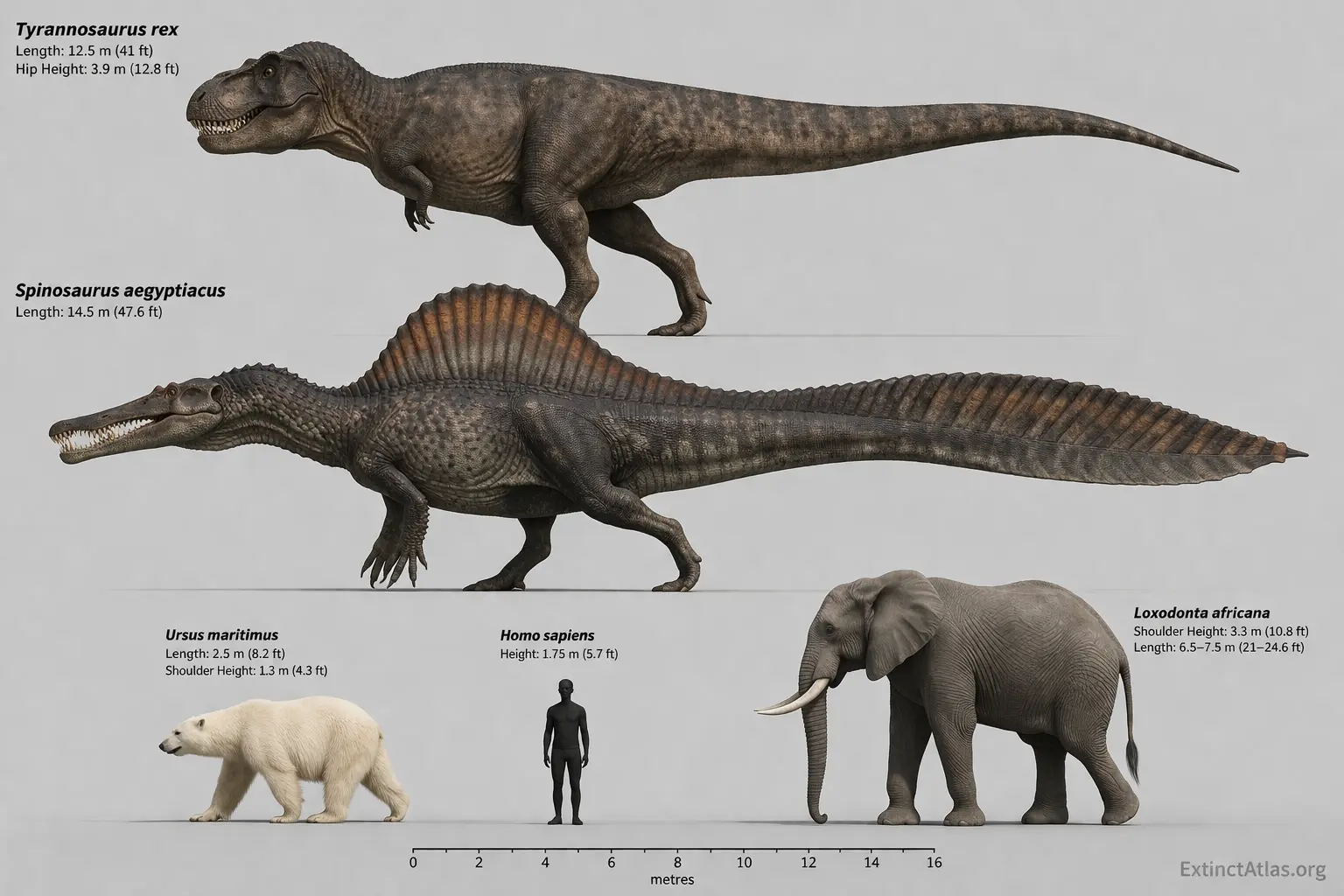
T. rex was not the longest theropod dinosaur. Spinosaurus, known from fragmentary North African material, likely reached greater total length — possibly 14–15 metres (46–49 ft) — though its body plan was fundamentally different, adapted for semi-aquatic life rather than terrestrial pursuit. Giganotosaurus from South America reached comparable lengths to T. rex, as did Carcharodontosaurus from North Africa.
Where T. rex stands apart is mass. Its robustly built body, thick leg bones, and enormous skull made it heavier than other theropods of comparable length. Among purely terrestrial large predators — animals that hunted on land rather than in water — T. rex was almost certainly the most massive known.
Against modern animals, the comparison is stark. The largest living land predator, the polar bear, reaches approximately 700 kilograms (1,540 lb) — less than one-tenth the mass of a large T. rex. Only elephants approach T. rex in body mass among land animals, and they are herbivores with entirely different body plans and metabolic demands.
The Biomechanical Ceiling: How Big Could T. Rex Get?
As body mass increases, weight scales with the cube of linear dimensions while bone cross-sectional area — and therefore strength — scales with the square. At some point, the leg bones of a large bipedal animal would need to be so thick and heavy that locomotion becomes impractical. T. rex was likely approaching this theoretical limit.
Computer modelling suggests the absolute maximum for a T. rex body plan would be in the range of 15,000–20,000 kilograms — beyond that, bone stress during locomotion would become prohibitive. The fact that the largest known specimens are clustered below this ceiling suggests either that the fossil record has not yet yielded the maximum-sized individual, or that natural selection had already brought average adult size close to the structural limit. With only around 50 partial specimens known from what must have been millions of individuals across the species’ two-million-year tenure, the largest T. rex that ever lived has almost certainly not been found.
Sexual Dimorphism: Were Males and Females of Different Sizes?
Some researchers have proposed that T. rex showed sexual dimorphism, with one sex — possibly females — being larger and more robust. The identification of medullary bone (a calcium-rich tissue associated with egg production in living birds) in at least one T. rex specimen confirms that the individual was female, providing a direct sex determination for that animal.
However, whether systematic size differences exist between sexes remains unresolved. The size variation seen across T. rex specimens could equally reflect individual differences, age variation, geographic factors, or genuine sexual dimorphism. With around 50 partial specimens — many of unknown sex — the sample size is insufficient for a statistical determination. Current evidence is genuinely inconclusive and should not be presented otherwise. [Freshness flag: review if new sexed specimens or dimorphism analyses have been published]
Related and Contemporary Species
- Tarbosaurus bataar — T. rex’s closest known relative, from Late Cretaceous Mongolia; reached comparable length at 10–12 metres (33–39 ft) but was somewhat less robust, with a proportionally narrower skull.
- Giganotosaurus carolinii — a large South American theropod of comparable length but lighter build; lived approximately 30 million years before T. rex and never coexisted with it.
- Spinosaurus aegyptiacus — likely longer than T. rex but built for semi-aquatic hunting; a very different animal ecologically despite comparisons in popular media.
- Triceratops horridus — T. rex’s primary prey; adults could reach 8,000–12,000 kilograms (17,600–26,400 lb), making the predator-prey mass ratio closer than for most modern large predator pairings.
- Albertosaurus sarcophagus — a smaller tyrannosaur at approximately 2,500–3,000 kilograms (5,500–6,600 lb); illustrates the size range within the tyrannosaur family.
Frequently Asked Questions
What was the largest T. rex ever found?
The heaviest confirmed T. rex is Scotty (RSM P2523.8) from Saskatchewan, estimated at approximately 8,870 kilograms (19,555 lb) when alive. The longest measured specimen is Sue (FMNH PR 2081) at approximately 12.3 metres (40 ft). These are the best-documented size extremes currently on record; future discoveries may revise them.
How tall was T. rex standing upright?
T. rex held its body in a near-horizontal posture with the spine roughly parallel to the ground — not the upright, tail-dragging posture of older reconstructions. At the hip, adults stood approximately 3.7–4 metres (12–13 ft) tall. The head, when raised, could reach 5–6 metres (16–20 ft) from the ground.
Was T. rex still growing when it died?
Analysis of bone growth rings in the oldest known specimens suggests growth had slowed dramatically but not completely stopped by the time those individuals died. T. rex likely never truly stopped growing — it just grew very slowly in old age, as is typical of many reptiles and birds.
References
Brochu CA. 2003. Osteology of Tyrannosaurus rex: insights from a nearly complete skeleton and high-resolution computed tomographic analysis of the skull. Society of Vertebrate Paleontology Memoir. 7:1–138.
Erickson GM, Makovicky PJ, Currie PJ, Norell MA, Yerby SA, Brochu CA. 2004. Gigantism and comparative life-history parameters of tyrannosaurid dinosaurs. Nature. 430:772–775.
Hutchinson JR, Ng-Thow-Hing V, Anderson FC. 2007. A 3D digital analysis of limb mobility in Tyrannosaurus rex. Proceedings of the Royal Society B. 274(1629):2001–2010.
Hutchinson JR, Bates KT, Molnar J, Allen V, Makovicky PJ. 2011. A computational analysis of limb and body dimensions in Tyrannosaurus rex with implications for locomotion, ontogeny, and mass estimation. PLoS ONE. 6(10):e26037.
Persons WS IV, Currie PJ, Erickson GM. 2020. An older and exceptionally large adult specimen of Tyrannosaurus rex. The Anatomical Record. 303(4):656–672.
Bates KT, Falkingham PL. 2012. Estimating mass properties of dinosaurs using laser imaging and 3D volumetric reconstruction. PLoS ONE. 7(2):e32645.
Carr TD. 2020. A high-resolution growth series of Tyrannosaurus rex obtained from multiple lines of evidence. PeerJ. 8:e9192.
Recommended Paleontology & Natural History Books
As an Amazon Associate, Extinct Atlas may earn from qualifying purchases.
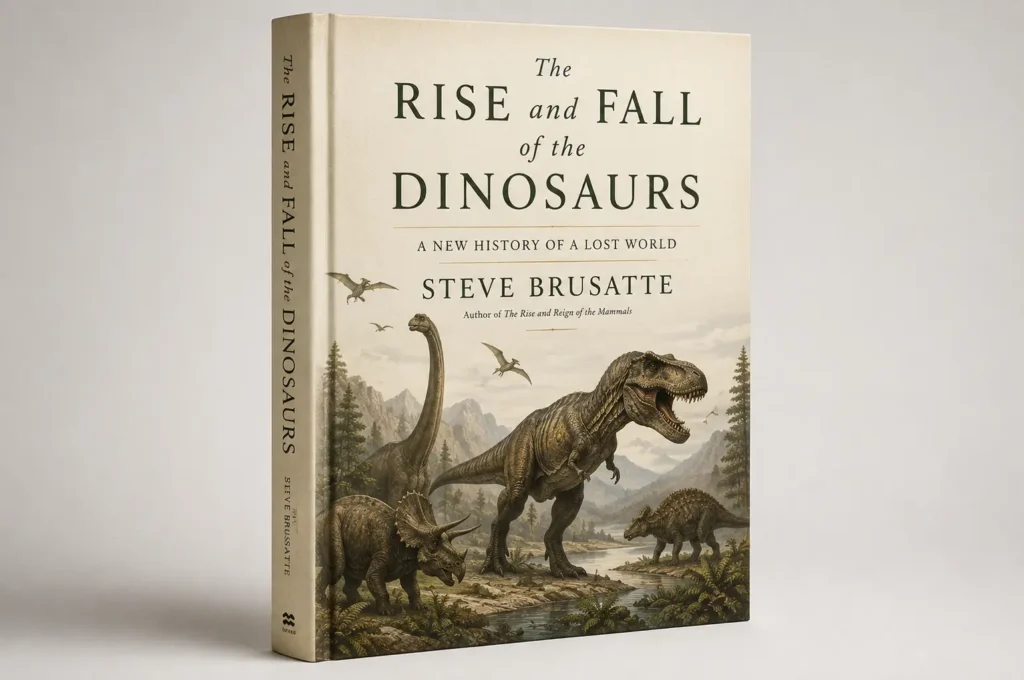
The Rise and Fall of the Dinosaurs
A compelling history of dinosaurs, tracing their origins, diversification, 200-million-year reign, extinction, and enduring legacy.
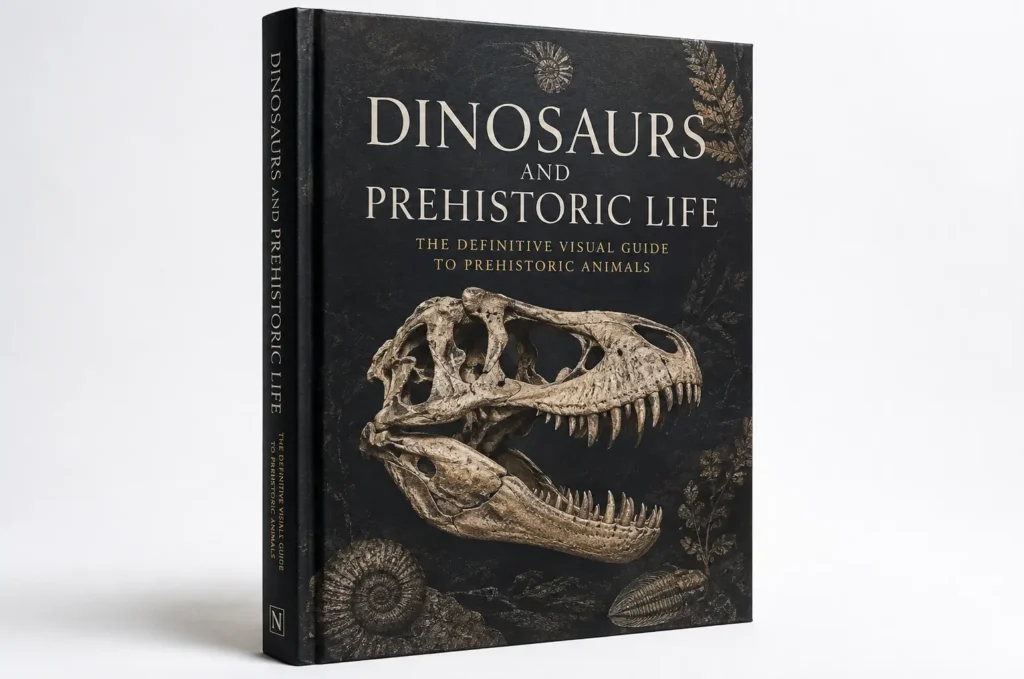
Dinosaurs and Prehistoric Life
A richly illustrated visual reference exploring dinosaurs, fossils, evolution, and prehistoric life across geological time.
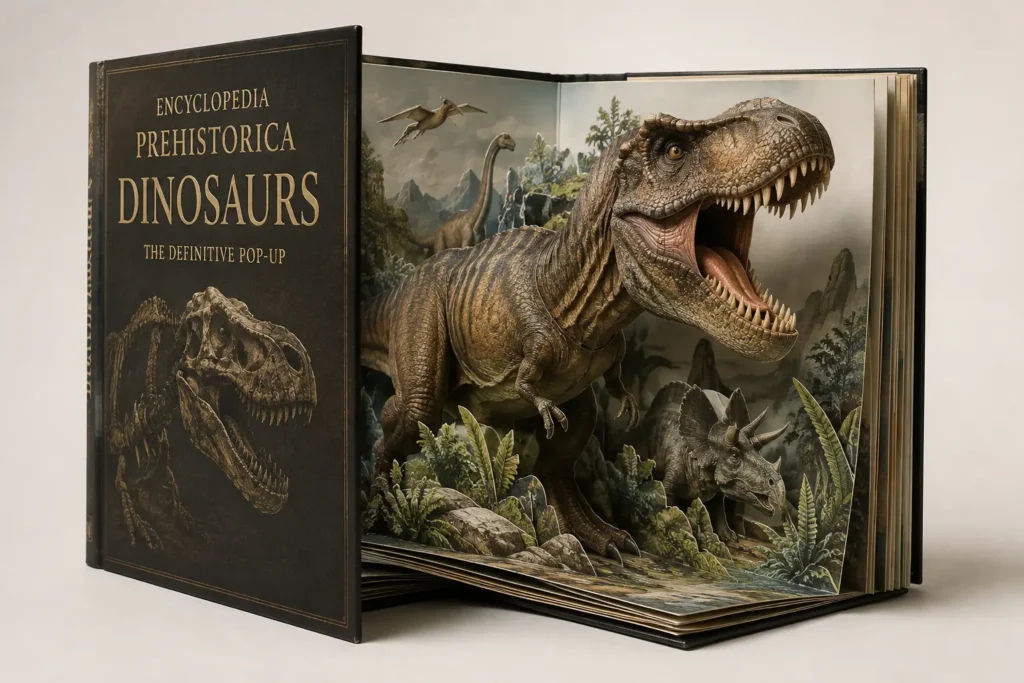
Encyclopedia Prehistorica: Dinosaurs
An interactive dinosaur book featuring spectacular three-dimensional pop-ups, particularly suited to young readers and families.
The Rise and Reign of the Mammals
A sweeping history of mammalian evolution, from their origins alongside dinosaurs through the Cenozoic and the emergence of humans.