| Field | Information |
|---|---|
| Species | Allosaurus fragilis — Saurischia, Allosauridae |
| Period | Late Jurassic, 155–145 Ma |
| Average adult length | 8.5–9 m (28–30 ft) |
| Estimated adult mass | 1,500–2,500 kg (3,300–5,500 lb) |
| Hip height | approximately 2.5 m (8.2 ft) |
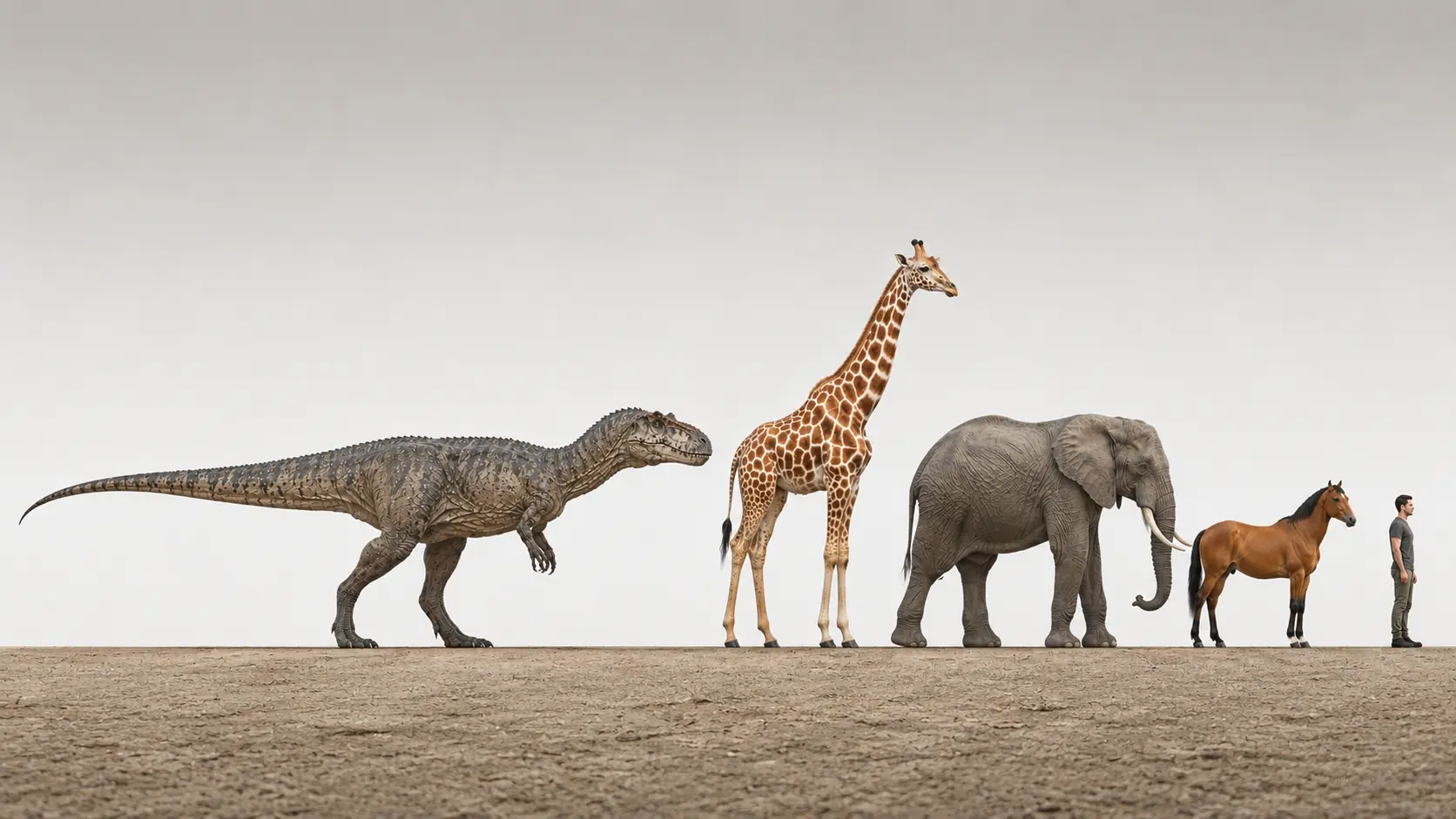
Quick Answer: Allosaurus size in typical adults reached around 8.5–9 metres (28–30 ft) in length, with a mass estimated at 1,500–2,500 kg (3,300–5,500 lb). Exceptional individuals may have approached 12 metres (39 ft), though such estimates are based on fragmentary material. It stood roughly 2.5 metres (8.2 ft) at the hip.

Few animals in the Late Jurassic could match Allosaurus fragilis for sheer physical presence. Fossil evidence from dozens of specimens across the American West gives paleontologists an unusually detailed picture of how large this predator grew — and how much variation existed within the species.
How Big Was Allosaurus?
Allosaurus size, based on well-preserved fossil material, placed most adults between 8.5 and 9 metres (28–30 ft) in length. Biomechanical estimates suggest body mass ranged from approximately 1,500 to 2,500 kg (3,300–5,500 lb) depending on the specimen and the modelling method applied. These figures represent the central tendency across known material; both smaller juveniles and larger outlier individuals are documented in the fossil record.
Specimen Variation and Size Range
Fossil evidence shows considerable size variation across known Allosaurus specimens, reflecting differences in age, growth stage, and possibly species-level variation. Juvenile and subadult individuals recovered from sites such as the Cleveland-Lloyd Dinosaur Quarry in Utah were substantially smaller than mature adults, supporting evidence for prolonged growth over multiple years. The well-known specimen “Big Al” (MOR 693), a subadult Allosaurus fragilis, is estimated at approximately 7–7.5 metres (23–25 ft) in length, illustrating that many documented individuals had not yet reached full adult size at death.
Some fragmentary material has been interpreted as representing unusually large individuals approaching 10–12 metres (33–39 ft) in length, although these estimates remain uncertain due to incomplete fossil preservation and unresolved taxonomic questions. Corresponding body mass estimates for such exceptionally large specimens could potentially exceed 4,000 kg (8,800 lb), but these figures should be treated cautiously given the limitations of the available material.
Height and Build
Fossil evidence shows Allosaurus stood approximately 2.5 metres (8.2 ft) at the hip in average adults. The skull reached up to 90 cm (35 in) in length in large individuals, though it was proportionally lighter than that of later large theropods. The forelimbs were robust relative to many theropods, bearing three-fingered hands with large, recurved claws — anatomy covered in full in the post on Allosaurus bite force and hunting mechanics.
Is an Allosaurus Bigger Than a T. rex?
Allosaurus was generally smaller than Tyrannosaurus rex in both length and mass. Fossil evidence places T. rex at up to 12–13 metres (39–43 ft) in length and mass estimates ranging from approximately 8,000 to 14,000 kg (17,600–30,900 lb) — substantially larger than even the largest credible Allosaurus specimens. The two genera did not coexist; Allosaurus was an apex predator of the Late Jurassic, while T. rex appeared roughly 80 million years later in the Late Cretaceous. A full anatomical comparison is covered in the dedicated post on Allosaurus vs T. rex.
How Does Allosaurus Size Compare to Other Jurassic Predators?
Allosaurus fragilis was among the largest confirmed terrestrial predators in the Morrison Formation ecosystem, though exact size rankings remain complicated by fragmentary material and ongoing taxonomic debates. Contemporary theropods such as Ceratosaurus, Torvosaurus, and possibly Saurophaganax overlapped with Allosaurus in time and geography, but direct size comparisons vary depending on the specimens used and the assumptions behind body mass estimates.
Current evidence suggests typical adult Allosaurus fragilis individuals were larger than Ceratosaurus nasicornis and broadly comparable to large Torvosaurus tanneri, although the latter is known from more incomplete remains. Exceptionally large Morrison theropod material attributed to Saurophaganax may represent animals exceeding typical Allosaurus size, but the taxonomic interpretation remains unresolved.
Related and Contemporary Species
- Allosaurus jimmadseni — a second formally recognised species described in 2020, generally interpreted as slightly more gracile and somewhat earlier in occurrence than A. fragilis
- Ceratosaurus nasicornis — a smaller contemporary ceratosaur from the Morrison Formation, typically estimated at approximately 5–6 metres (16–20 ft) in length
- Torvosaurus tanneri — a large megalosaurid theropod from the Morrison Formation, with some specimens potentially approaching Allosaurus in overall size
- Saurophaganax maximus — a very large Morrison theropod whose taxonomic status remains debated; some researchers treat it as a distinct genus, while others interpret it as exceptionally large Allosaurus material
Frequently Asked Questions
Is an Allosaurus Bigger Than a T. rex?
No. Allosaurus fragilis was substantially smaller than Tyrannosaurus rex in both length and mass, with typical adults reaching around 8.5–9 metres (28–30 ft) and 1,500–2,500 kg (3,300–5,500 lb), compared with 12–13 metres (39–43 ft) and roughly 7,000–10,000 kg (15,400–22,000 lb) for T. rex.
How tall was Allosaurus?
Allosaurus height at the hip is estimated at approximately 2.5 metres (8.2 ft) in typical adult specimens, based on fossil skeletal evidence. Total height to the top of the skull while standing in an upright alert posture would have been somewhat greater, though Allosaurus held its body in a roughly horizontal position as in other large theropods.
How heavy was Allosaurus?
Allosaurus’ weight, based on biomechanical estimates applied to well-preserved specimens, ranged from approximately 1,500 to 2,500 kg (3,300–5,500 lb) for typical adults. Mass estimates vary depending on the specimen measured and the modelling method applied. Figures at the upper end of published ranges should be treated with caution, as they often derive from fragmentary material.
Note: Species-level taxonomy within Allosaurus and mass estimates for large fragmentary specimens are active areas of research. Details reflect current scientific consensus but may be revised as new evidence emerges.
Conclusion
Allosaurus was a large predator by any measure — typically 8.5–9 metres (28–30 ft) long and up to 2,500 kg (5,500 lb) — but it was not the largest theropod in evolutionary history. Size varied considerably across individuals and growth stages. The fossil record from the Morrison Formation provides an unusually rich dataset for understanding how this animal grew and varied.
References
A. Peer-Reviewed Literature
Bates, K.T. and Falkingham, P.L., 2012. Estimating maximum bite performance in Tyrannosaurus rex using multi-body dynamics. Biology Letters, 8(4), pp.660–664. https://doi.org/10.1098/rsbl.2012.0056
Christiansen, P. and Fariña, R.A., 2004. Mass prediction in theropod dinosaurs. Historical Biology, 16(2–4), pp.85–92. https://doi.org/10.1080/08912960412331284313
Chure, D.J. and Loewen, M.A., 2020. Cranial anatomy of Allosaurus jimmadseni, a new species from the lower part of the Morrison Formation (Upper Jurassic) of western North America. PeerJ, 8:e7803. https://doi.org/10.7717/peerj.7803
Hutchinson, J.R. and Garcia, M., 2002. Tyrannosaurus was not a fast runner. Nature, 415, pp.1018–1021. https://doi.org/10.1038/4151018a
Rayfield, E.J., Norman, D.B., Horner, C.C., Horner, J.R., Smith, P.M., Thomason, J.J., and Upchurch, P., 2001. Cranial design and function in a large theropod dinosaur. Nature, 409, pp.1033–1037. https://doi.org/10.1038/35059070
Sellers, W.I. and Manning, P.L., 2007. Estimating dinosaur maximum running speeds using evolutionary robotics. Proceedings of the Royal Society B: Biological Sciences, 274(1626), pp.2711–2716. https://doi.org/10.1098/rspb.2007.0846
B. Monographs and Technical Works
Madsen, J.H., 1976. Allosaurus fragilis: A Revised Osteology. Utah Geological and Mineral Survey Bulletin 109. Salt Lake City, Utah.
Paul, G.S., 2016. The Princeton Field Guide to Dinosaurs. 2nd ed. Princeton University Press, Princeton.
Fastovsky, D.E. and Weishampel, D.B., 2016. Dinosaurs: A Concise Natural History. 3rd ed. Cambridge University Press.
C. Primary Taxonomic Sources
Marsh, O.C., 1877. Notice of new dinosaurian reptiles from the Jurassic formation. American Journal of Science and Arts, Series 3, 14, pp.514–516.
D. Databases and Online Resources
Paleobiology Database, 2026. Allosaurus fragilis and Tyrannosaurus rex occurrence data. Available at: https://paleobiodb.org [Accessed 19 May 2026].
Featured Museum Collections
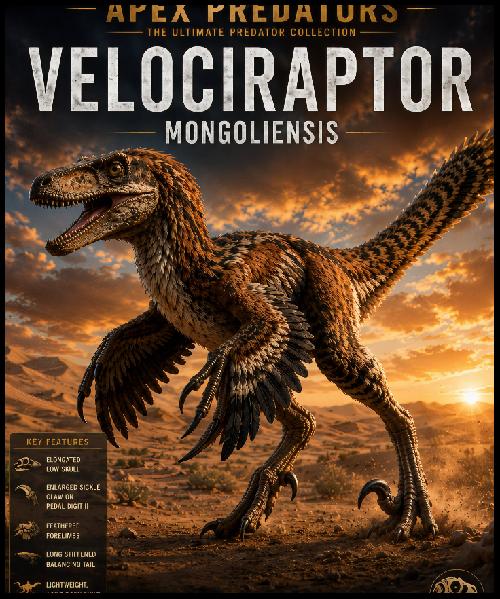
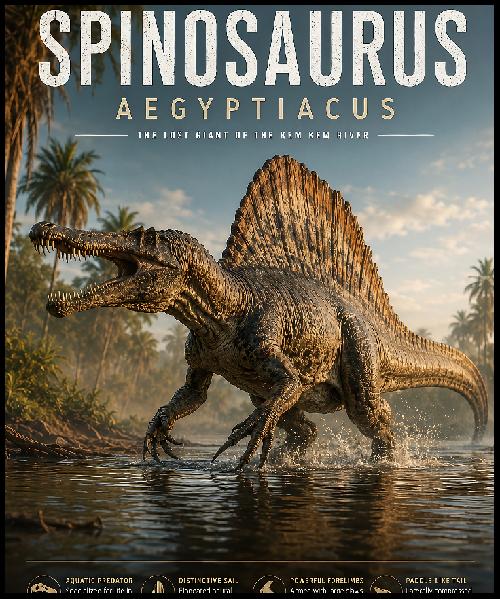
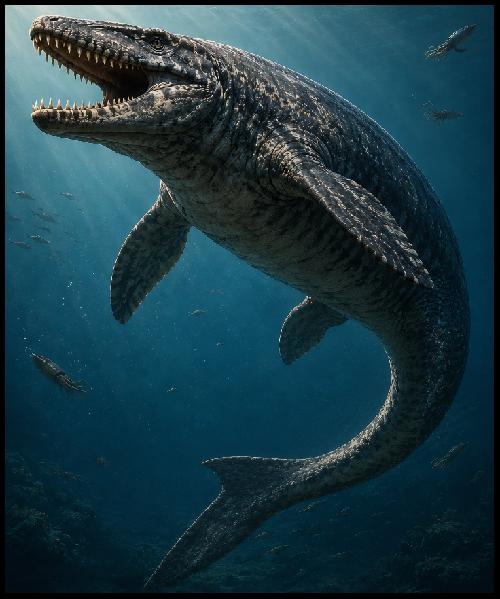
Museum-quality paleoart and educational poster
collections based on evidence-informed prehistoric
Life reconstructions.