At a Glance
| Feature | Quetzalcoatlus northropi | Hatzegopteryx thambema |
|---|---|---|
| Order / Family | Pterosauria, Azhdarchidae | Pterosauria, Azhdarchidae |
| Period | Late Cretaceous, 68–66 Ma | Late Cretaceous, ~66 Ma |
| Estimated wingspan | 10–11 m (33–36 ft) | 10–12 m (33–39 ft) |
| Estimated mass | 200–250 kg (440–550 lb) | 200–300 kg (440–660 lb) |
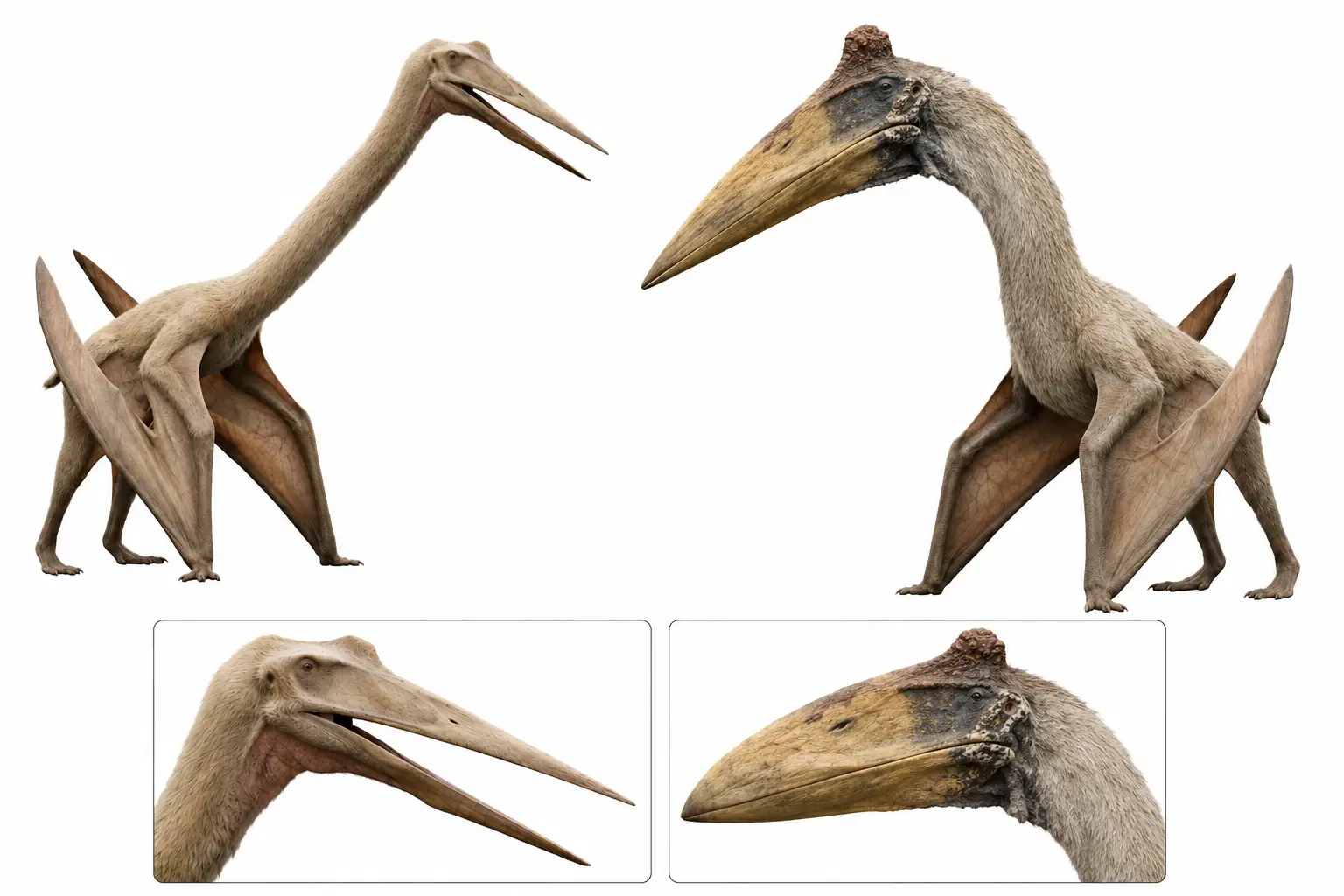
| Skull build | Long, slender, pointed | Short, broad, robust |
| Fossil location | Texas, USA | Hațeg Basin, Romania |
| Did they meet? | No — separated by ocean and geography |
Quick Answer: Quetzalcoatlus and Hatzegopteryx were both giant azhdarchid pterosaurs with similar estimated wingspans of roughly 10–12 m (33–39 ft), but they differed substantially in build: Quetzalcoatlus had a long, slender skull suited to probing for small prey, while Hatzegopteryx had a short, massively reinforced skull suggesting a very different — and possibly more powerful — predatory role.
Introduction
Two giants, separated by an ocean, evolved to fill the same aerial niche at the same moment in Earth’s history — and arrived at strikingly different solutions. Quetzalcoatlus northropi and Hatzegopteryx thambema are the largest flying animals currently known to science, yet their skulls tell opposite stories: one delicate and spear-like, the other broad and built for force.
Quetzalcoatlus vs Hatzegopteryx: Size and Build Compared
Both species are among the largest pterosaurs known, but direct size comparison is complicated by fragmentary fossil material for both. The table below reflects current biomechanical estimates; figures should be understood as ranges, not fixed values.
| Measurement | Quetzalcoatlus northropi | Hatzegopteryx thambema |
|---|---|---|
| Estimated wingspan | 10–11 m (33–36 ft) | 10–12 m (33–39 ft) |
| Estimated mass | 200–250 kg (440–550 lb) | 200–300 kg (440–660 lb) |
| Neck length | Long, slender | Shorter, more robust |
| Skull length (estimated) | ~75 cm (30 in) | ~50–60 cm (20–24 in) — shorter but wider |
| Skull build | Slender, pointed | Broad, heavily reinforced |
| Forelimb robustness | Moderate | High |
This is an active area of research. Details here reflect current scientific consensus but may be revised as new fossil evidence or analysis emerges.
Who Was Bigger?
Neither species can be definitively identified as larger — estimates overlap substantially, and both are known from incomplete fossil material. Biomechanical modelling suggests Hatzegopteryx may have had a slightly greater mass owing to its more robust build, while Quetzalcoatlus northropi wingspan estimates are more firmly grounded in better-preserved material. Treating either as definitively “the largest” overstates the resolution of current evidence.
Skull and Anatomy: A Tale of Two Strategies
The most striking difference between these two giants is cranial. Fossil evidence shows Quetzalcoatlus possessed a long, pointed, lightly built beak consistent with the probe-and-snap feeding strategy. Hatzegopteryx presents the opposite: fossil material from the Hațeg Basin documents a skull that is short, wide, and heavily reinforced with internal bony struts — a structure more consistent with applying significant bite force or gripping larger, more resistant prey.
Comparative inference suggests this difference in skull architecture reflects a genuine ecological divergence. Witton and Naish (2008) and subsequent authors have proposed that Hatzegopteryx may have targeted larger prey items than its North American relative — a hypothesis strengthened by the unusual ecology of the Hațeg Basin (see below).
Did Quetzalcoatlus and Hatzegopteryx Ever Meet?
No. Quetzalcoatlus fossils are documented from the Javelina Formation of Texas, USA. Hatzegopteryx material comes from the Hațeg Basin of present-day Romania. During the Late Cretaceous, these regions were separated by the Tethys Sea — a substantial body of water that would have posed a significant barrier to interchange between faunas. Any scenario placing both animals in the same location is a thought experiment, not a reflection of their actual shared history.
The Hațeg Island Ecosystem
The Hațeg Basin was an island ecosystem during the Late Cretaceous — a landmass isolated from the European mainland by shallow seas. Fossil evidence from the formation documents a fauna characterised by dwarf dinosaurs: Magyarosaurus dacus (a miniaturised sauropod) and Zalmoxes robustus (a small ornithopod), among others. Inferred from this context, Hatzegopteryx may have occupied the apex predator niche on an island with no large theropod competitors — a situation with no parallel in the North American ecosystem shared by Quetzalcoatlus, where Tyrannosaurus rex and other large theropods were present.
Related and Contemporary Species
- Arambourgiania philadelphiae — large Jordanian azhdarchid; estimated wingspan overlaps with both species, though known from very limited material.
- Cryodrakon boreas — Canadian azhdarchid; close relative of Quetzalcoatlus, described in 2019, important for understanding North American azhdarchid diversity.
- Magyarosaurus dacus — dwarf sauropod from the Hațeg Basin; ecological context for Hatzegopteryx as island apex predator.
- Tyrannosaurus rex — large theropod co-occurring with Quetzalcoatlus in North America; ecological context only.
- Pteranodon longiceps — a smaller contemporaneous North American pterosaur- illustrates the size range within Late Cretaceous pterosaurs.
Frequently Asked Questions
Which was bigger, Quetzalcoatlus or Hatzegopteryx?
Which was bigger — Quetzalcoatlus or Hatzegopteryx — cannot be resolved with current evidence. Biomechanical estimates for both species overlap considerably, and both are known from incomplete fossil material. Hatzegopteryx may have been more robustly built, while Quetzalcoatlus northropi’s wingspan estimates are better supported by preserved material. Neither can be definitively named the larger animal.
Did Quetzalcoatlus and Hatzegopteryx live at the same time?
Quetzalcoatlus and Hatzegopteryx were broadly contemporaneous, both living during the latest Cretaceous around 66 Ma. However, they never shared the same geographic location — Quetzalcoatlus lived in what is now Texas, while Hatzegopteryx inhabited a Cretaceous island in present-day Romania, separated by the Tethys Sea.
How were Quetzalcoatlus and Hatzegopteryx different?
How Quetzalcoatlus and Hatzegopteryx differed most clearly is in skull architecture. Quetzalcoatlus had a long, slender, pointed beak; Hatzegopteryx had a short, broad, heavily reinforced skull. Comparative inference suggests this reflects different prey preferences — small vertebrates for Quetzalcoatlus, potentially larger prey for Hatzegopteryx in its island ecosystem with no large theropod competitors.
Conclusion
Quetzalcoatlus and Hatzegopteryx were evolutionary peers — similar in wingspan, contemporaneous in time, and related in classification — yet ecologically distinct. Their skulls tell the clearest story: one built for precision, one built for power. They never met, but comparing them reveals how azhdarchid pterosaurs diversified to fill different apex roles across the Late Cretaceous world.
References
Lawson, D. A. (1975).
Pterosaur from the latest Cretaceous of West Texas: Discovery of the largest flying creature. Science, 187(4180), 947–948.
Witton, M. P., & Naish, D. (2008).
A reappraisal of azhdarchid pterosaur functional morphology and paleoecology. PLoS ONE, 3(5), e2271.
Habib, M. B. (2008).
Comparative evidence for quadrupedal launch in pterosaurs. Zitteliana, B28, 159–166.
Jacobs, M. L., Martill, D. M., Ibrahim, N., & Longrich, N. R. (2021).
(verify exact final citation before publication)
Buffetaut, E., Grigorescu, D., & Csiki, Z. (2002).
A new giant pterosaur with a robust skull from the latest Cretaceous of Romania. Naturwissenschaften, 89, 180–184.
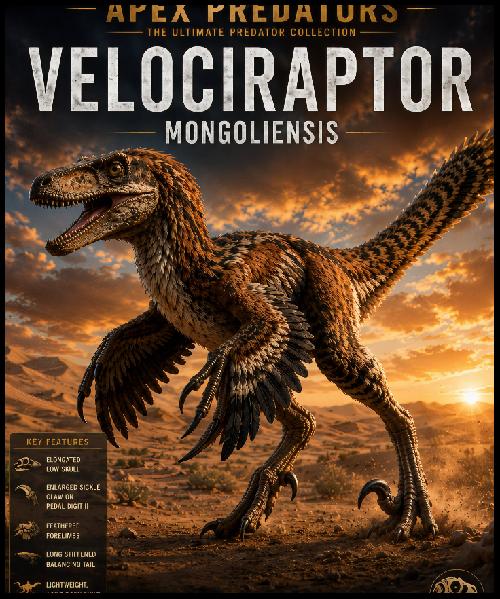
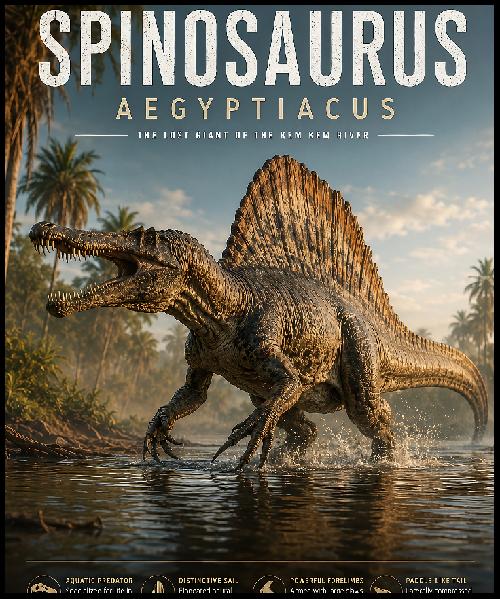
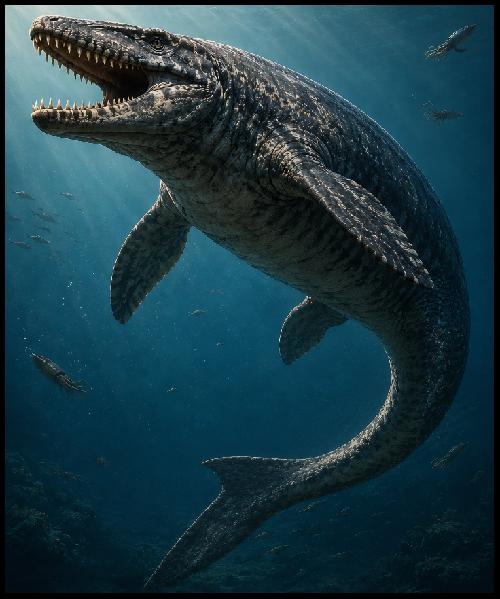
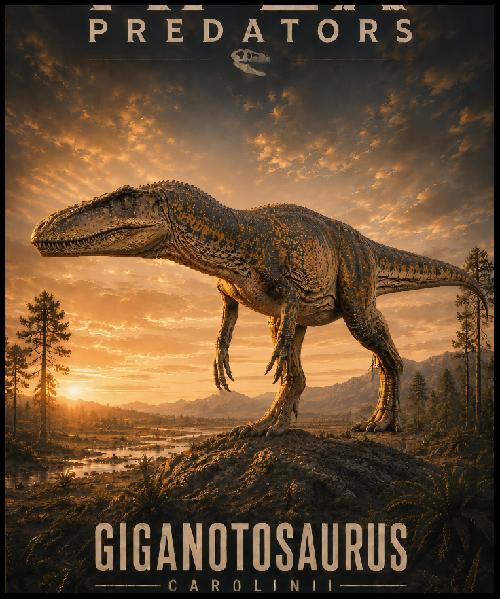
Featured Museum Collections
Museum-quality paleoart and educational poster
collections based on evidence-informed prehistoric
Life reconstructions.