
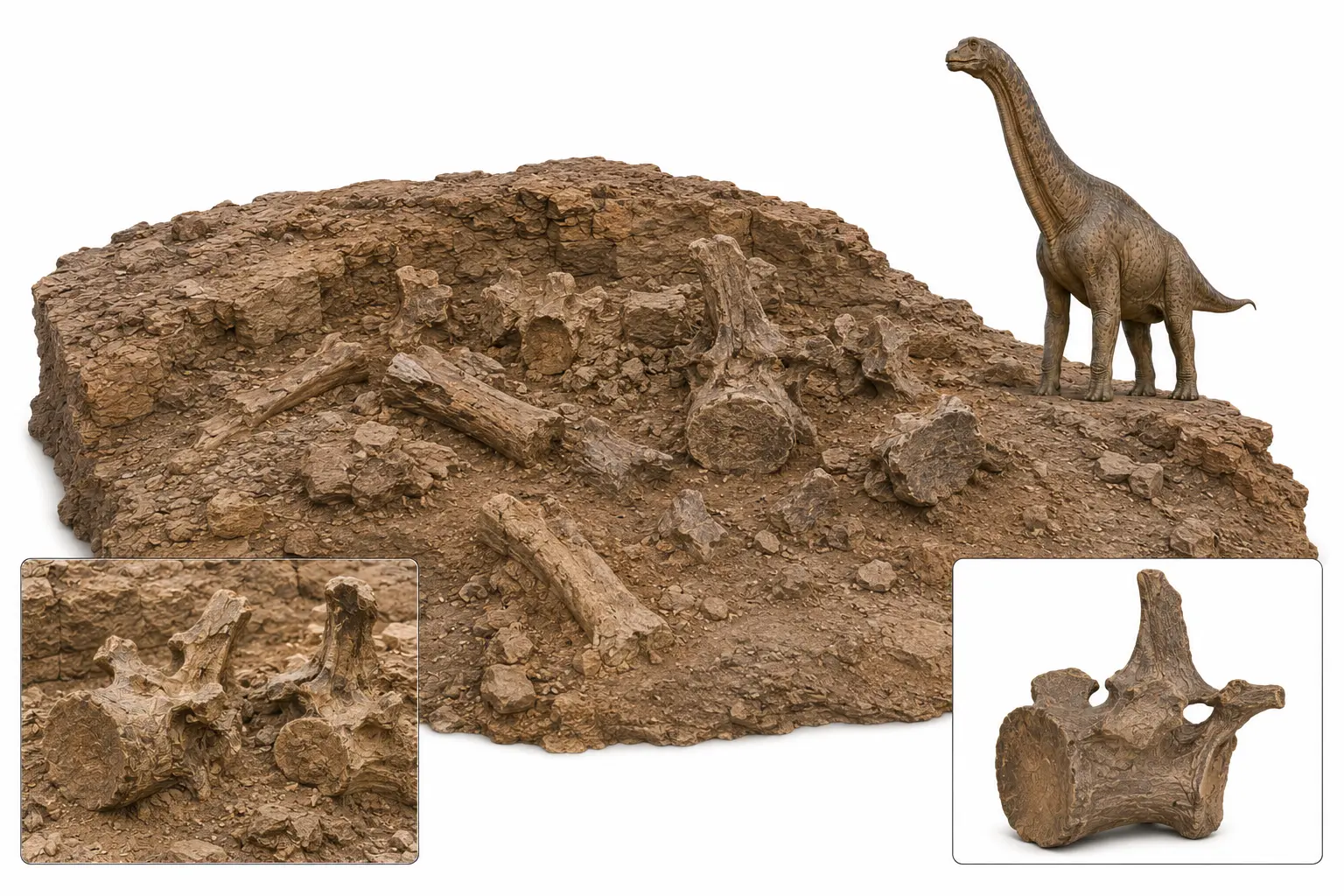
At a Glance
| Field | Information |
|---|---|
| Species | Brachiosaurus altithorax — Sauropoda, Brachiosauridae |
| Period | Late Jurassic, 154–150 Ma |
| Discovery date | 1900 — Grand River Valley, Colorado, USA |
| Discoverer | Elmer S. Riggs, Field Columbian Museum expedition |
| Holotype repository | Field Museum of Natural History, Chicago |
| Fossil completeness | Partial — forelimbs, dorsal vertebrae, pelvis, partial ribs; no skull |
Quick Answer: Brachiosaurus was discovered in 1900 by palaeontologist Elmer S. Riggs during a Field Columbian Museum expedition to the Grand River Valley near Fruita, Colorado. The find was formally described in 1903, making Brachiosaurus altithorax one of the first giant sauropods named from North American material. The holotype skeleton remains incomplete, lacking a skull and much of the hindquarters.

Introduction
When Elmer Riggs’s field crew exposed the enormous forelimb bones of an unknown sauropod in the Colorado desert in 1900, they had no immediate framework for understanding what they had found. The humerus alone was longer than a tall man. Riggs described the animal two years later, recognised its unusual front-heavy proportions, and gave it a name — Brachiosaurus altithorax — that has remained scientifically valid for over a century, though the story of what the name actually encompasses has grown considerably more complicated since.
How Was Brachiosaurus Discovered?
Brachiosaurus was discovered in the summer of 1900 by Elmer S. Riggs, a palaeontologist leading a field expedition for the Field Columbian Museum in Chicago. The expedition targeted the Morrison Formation outcrops near Fruita in Mesa County, Colorado — an area already known to yield sauropod material following earlier work in the region during the late nineteenth century. Riggs and his crew located and excavated a partial skeleton from a site now within what is managed as federal land in western Colorado. Fossil evidence recovered included forelimb elements, dorsal vertebrae, sacral and pelvic material, and partial ribs. Riggs formally described the specimen in a 1903 paper in the American Journal of Science, naming it Brachiosaurus altithorax — “arm lizard with a deep chest” — and identifying it as the largest known dinosaur at the time of publication.
The Excavation and Field Conditions
The 1900 excavation was conducted in the heat of a western Colorado summer, using the tools and field techniques standard for the period — hand tools, plaster jacketing for bone protection during transport, and horse-drawn wagons for moving material to the nearest rail connection. Field notes from the expedition record the scale of the find and the difficulty of recovering large elements from the site. The excavated material was transported to Chicago, where it was prepared and studied at the Field Columbian Museum, now the Field Museum of Natural History. The holotype specimen — catalogued as FMNH P25107 — remains housed at the Field Museum, though it has not been fully mounted for public display.
What the Holotype Includes — and What Is Missing
Fossil evidence from the B. altithorax holotype includes the right humerus, ulna, radius, and partial forelimb; a series of dorsal vertebrae; sacral vertebrae; pelvic elements including the pubis and ischium; and partial rib material. Critically, no skull, cervical vertebrae, or hindlimb bones were recovered. This incompleteness has significant consequences: all neck reconstructions, head-height calculations, and skull depictions attributed to Brachiosaurus in popular accounts are based on Giraffatitan brancai material from Tanzania, not on B. altithorax directly. The degree to which the two animals resembled each other in these unpreserved regions is inferred rather than documented.
Subsequent Finds and the Question of Additional Material
Since Riggs’s 1903 description, no further specimens have been unambiguously referred to Brachiosaurus altithorax from the North American Morrison Formation with the same level of confidence as the holotype. Various isolated sauropod elements recovered from Morrison Formation sites in Colorado, Utah, and Wyoming have been tentatively associated with brachiosaurid taxa, but assigning fragmentary material to species-level within Brachiosauridae requires caution. The fossil record for B. altithorax, specifically, therefore remains anchored to the 1900 holotype. This contrasts sharply with the situation for Giraffatitan brancai, which is known from multiple individuals, including near-complete specimens that form the basis for the famous Berlin mount.
Museum History and Public Representation
The holotype of Brachiosaurus altithorax has never been fully mounted as a freestanding exhibit. Public familiarity with the animal’s appearance derives almost entirely from the Giraffatitan brancai mount at the Museum für Naturkunde in Berlin — one of the most visited dinosaur skeletons in the world — and from reconstructions based on that material. A cast of brachiosaurid material was displayed for many years at Chicago O’Hare International Airport, associated with the Field Museum’s collections, though it too drew on composite and Giraffatitan-based reconstruction. The taxonomic split formalised by Taylor (2009) has not yet been fully reflected in many museum displays or popular media, where Brachiosaurus labels frequently accompany material or casts that represent Giraffatitan.
Related and Contemporary Species
Giraffatitan brancai — the African brachiosaurid whose far more complete specimens provide most of the anatomical detail used in Brachiosaurus reconstructions; Tendaguru Formation, Tanzania. Camarasaurus supremus — the most abundant large sauropod in the Morrison Formation; frequently recovered from the same sites that yield brachiosaurid material. Diplodocus carnegii — a Morrison Formation sauropod recovered extensively during the same late-nineteenth and early-twentieth century fieldwork campaigns that produced the first Brachiosaurus material. Apatosaurus ajax — described by Marsh in 1877 from Morrison Formation material; part of the same sauropod fauna as B. altithorax. Allosaurus fragilis — the dominant Morrison Formation predator; frequently co-occurring in the same fossil-bearing layers as Brachiosaurus material.
Frequently Asked Questions
Where was Brachiosaurus discovered?
Brachiosaurus was discovered near Fruita in Mesa County, Colorado, USA, within exposures of the Morrison Formation. The site was excavated in 1900 by Elmer S. Riggs during a Field Columbian Museum expedition. The Grand River Valley region of western Colorado had been known as a productive dinosaur locality since earlier fieldwork in the region during the 1880s and 1890s.
Who discovered Brachiosaurus?
Brachiosaurus was discovered by Elmer S. Riggs, a palaeontologist working for the Field Columbian Museum in Chicago. Riggs led the 1900 field expedition that located and excavated the holotype specimen, and formally described and named the animal in a 1903 paper. The specimen he recovered — catalogued as FMNH P25107 — remains the primary reference material for the species.
Is there a complete Brachiosaurus skeleton?
There is no complete Brachiosaurus altithorax skeleton. The holotype, discovered in 1900, is a partial specimen that includes forelimb bones, dorsal and sacral vertebrae, pelvic elements, and ribs, but lacks a skull, cervical vertebrae, and hindlimb material. Complete-looking reconstructions of Brachiosaurus on display in museums are based substantially on the more complete Giraffatitan brancai material from Tanzania.
Note: Referral of fragmentary Morrison Formation brachiosaurid material to Brachiosaurus altithorax specifically remains an active area of taxonomic review. Details reflect current scientific consensus but may be revised as new evidence emerges.
References
A. Primary Taxonomic Sources
Riggs, E.S., 1903. Brachiosaurus altithorax, the largest known dinosaur. American Journal of Science, 15, pp.299–306. [verify reference before publishing]
Riggs, E.S., 1904. Structure and relationships of opisthocoelian dinosaurs, Part II: the Brachiosauridae. Field Columbian Museum Publications, Geological Series, 2(6), pp.229–247. [verify reference before publishing]
Taylor, M.P., 2009. A re-evaluation of Brachiosaurus altithorax Riggs 1903 (Dinosauria, Sauropoda) and its generic separation from Giraffatitan brancai (Janensch, 1914). Journal of Vertebrate Paleontology, 29(3), pp.787–806. https://doi.org/10.1671/039.029.0309
B. Peer-Reviewed Literature
Carpenter, K. and Tidwell, V., 1998. Preliminary description of a Brachiosaurus ulna from the Morrison Formation. Modern Geology, 23, pp.69–84. [verify reference before publishing]
C. Monographs, Books, and Technical Reports
Foster, J., 2007. Jurassic West: The Dinosaurs of the Morrison Formation and Their World. Indiana University Press, Bloomington.
D. Databases and Online Resources
Paleobiology Database — Brachiosaurus altithorax specimen and occurrence data. https://paleobiodb.org
Conclusion
Brachiosaurus was discovered in Colorado in 1900 by Elmer Riggs, described in 1903, and has remained one of the most recognisable dinosaurs ever since, despite being known from a single partial skeleton that lacks a skull and much of the hindquarters. Most of what the public recognises as Brachiosaurus anatomy is drawn from Giraffatitan, its better-known African relative.
Recommended Paleontology & Natural History Books
As an Amazon Associate, Extinct Atlas may earn from qualifying purchases.
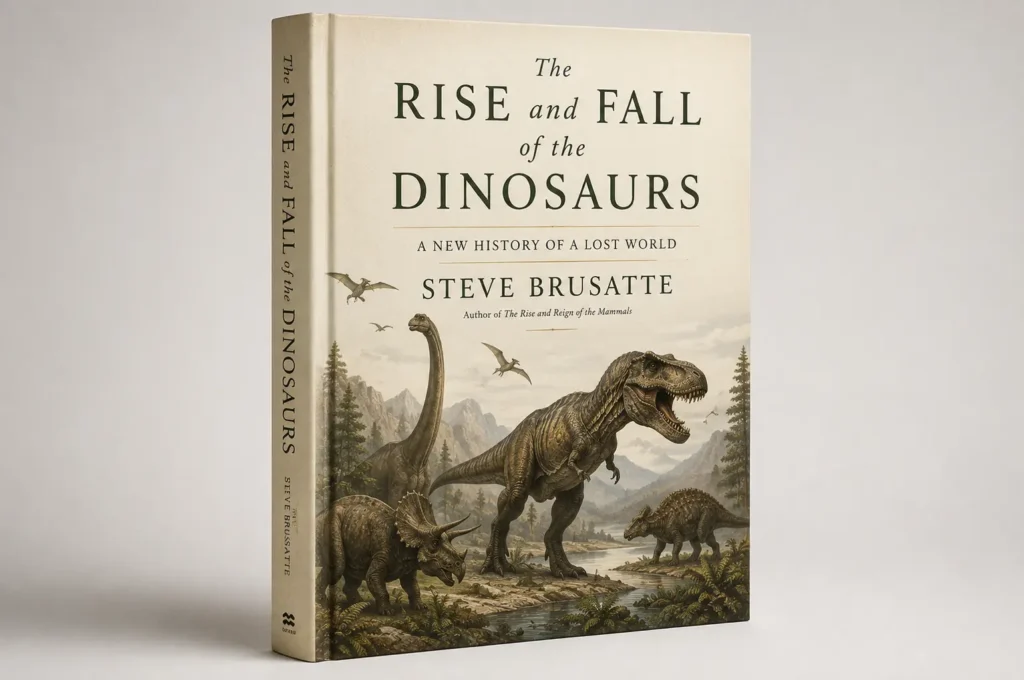
The Rise and Fall of the Dinosaurs
A compelling history of dinosaurs, tracing their origins, diversification, 200-million-year reign, extinction, and enduring legacy.
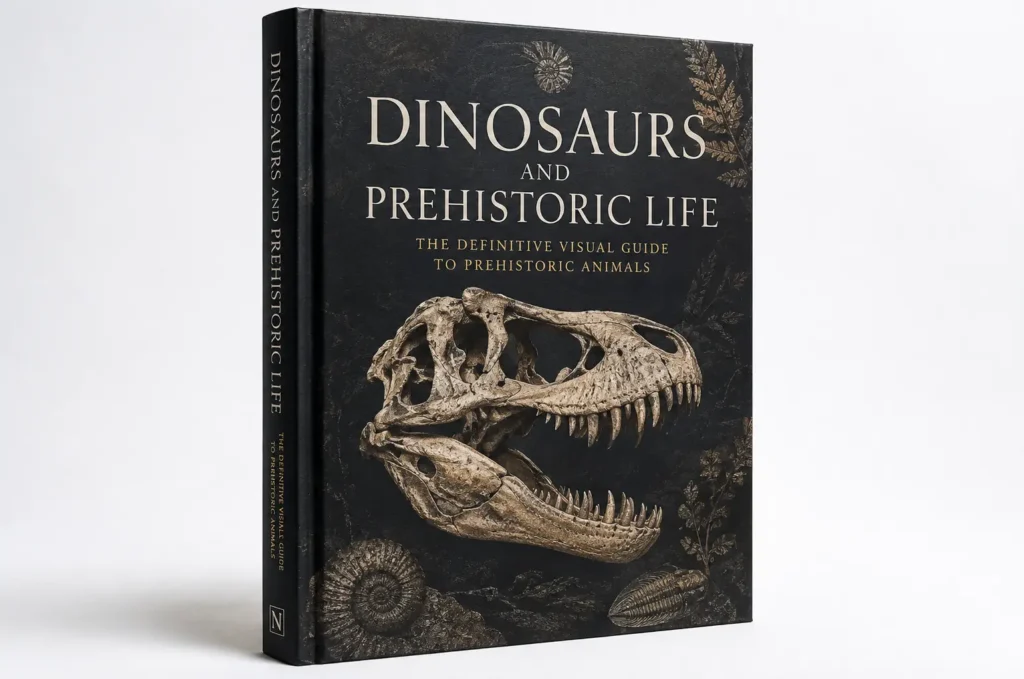
Dinosaurs and Prehistoric Life
A richly illustrated visual reference exploring dinosaurs, fossils, evolution, and prehistoric life across geological time.
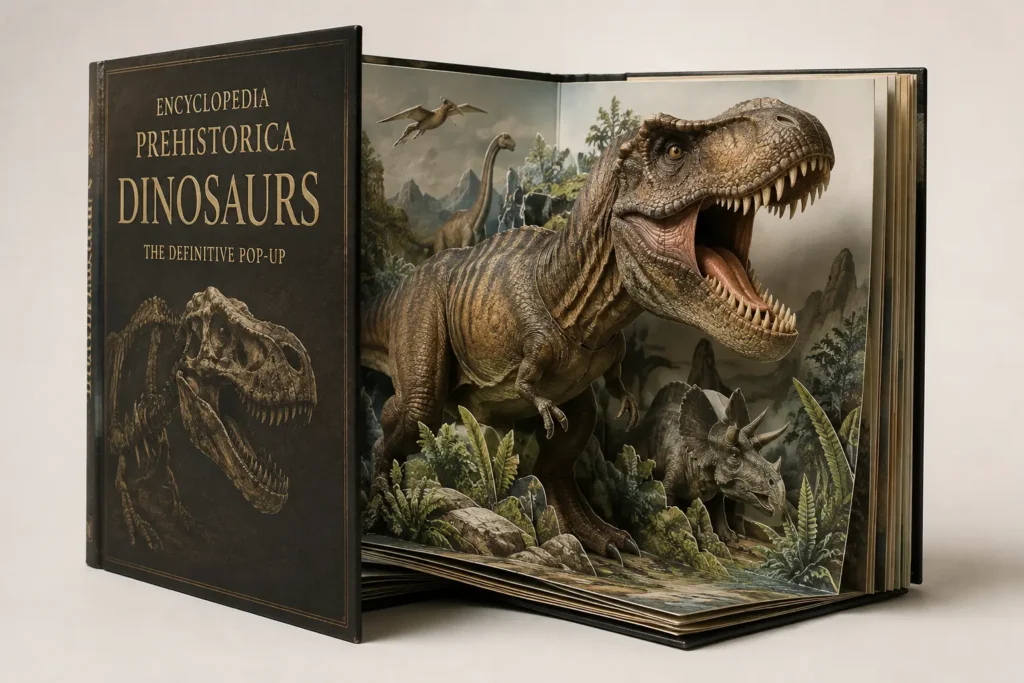
Encyclopedia Prehistorica: Dinosaurs
An interactive dinosaur book featuring spectacular three-dimensional pop-ups, particularly suited to young readers and families.
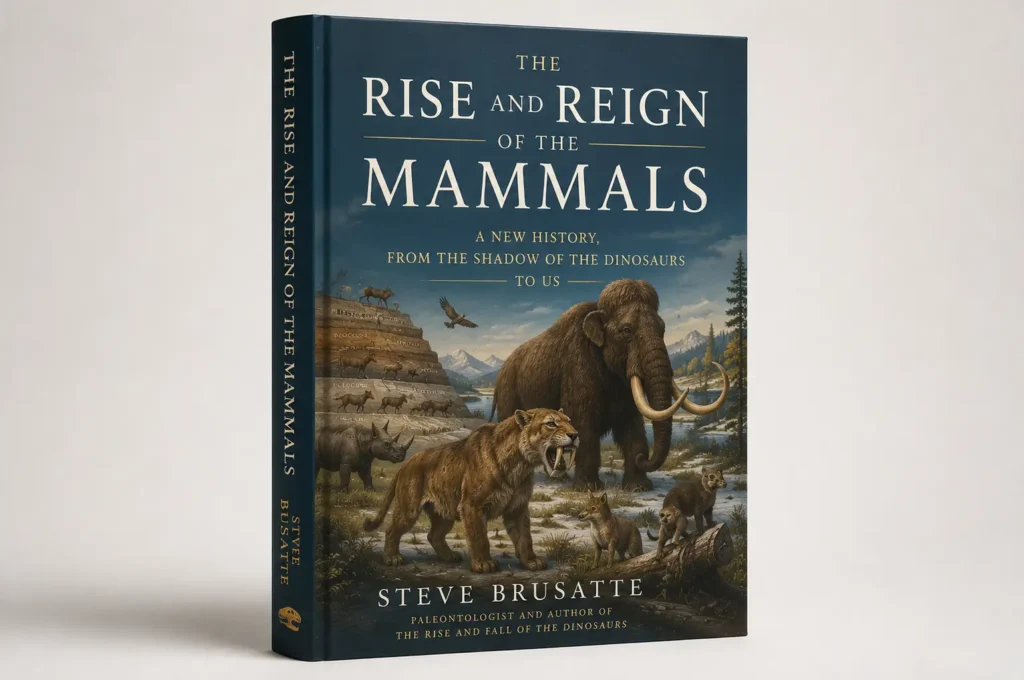
The Rise and Reign of the Mammals
A sweeping history of mammalian evolution, from their origins alongside dinosaurs through the Cenozoic and the emergence of humans.