

At a Glance
| Field | Information |
|---|---|
| Species A | Brachiosaurus altithorax — Sauropoda, Brachiosauridae |
| Species B | Giraffatitan brancai — Sauropoda, Brachiosauridae |
| Period | Late Jurassic, approximately 154–150 Ma (both taxa) |
| Fossil origin | B. altithorax: Morrison Formation, Colorado, USA; G. brancai: Tendaguru Formation, Tanzania |
| Taxonomic status | Separate genera since Taylor (2009) — previously both assigned to Brachiosaurus |
Quick Answer: Brachiosaurus and Giraffatitan are two distinct genera of brachiosaurid sauropod that were considered a single genus for most of the twentieth century. Brachiosaurus altithorax is known from North American Morrison Formation material; Giraffatitan brancai comes from the Tendaguru Formation in Tanzania. Anatomical differences in the torso, skull, and limb proportions support their separation into two genera.

Introduction
For decades, the towering skeleton in Berlin’s Museum für Naturkunde was labelled Brachiosaurus brancai — the same genus as the North American giant. A detailed anatomical reassessment published in 2009 concluded that the African material was distinct enough to warrant its own genus. That reassignment changed how palaeontologists understand both animals and left Brachiosaurus altithorax as a far less completely known animal than many popular accounts acknowledge.
What Is the Difference Between Brachiosaurus and Giraffatitan?
Brachiosaurus and Giraffatitan differ in several anatomical features that were identified through detailed comparison of the original North American and African fossil material. The most significant distinctions involve the shape of the dorsal vertebrae, proportions of the torso, and the structure of the skull. Giraffatitan brancai has a taller, more box-like torso relative to body length, while Brachiosaurus altithorax appears to have had a proportionally longer and shallower chest cavity — reflected in its species name, altithorax, meaning “deep chest,” which refers to depth front-to-back rather than height. Skull material is known only for Giraffatitan; no confirmed skull has been recovered for B. altithorax, meaning direct cranial comparisons between the two taxa cannot be made from fossil evidence alone.
A Brief History of the Taxonomic Split
Fossil evidence from the Tendaguru Formation in what is now Tanzania was excavated between 1909 and 1913 by German palaeontologists, yielding some of the most complete large sauropod material then known. The material was initially assigned to Brachiosaurus as B. brancai by Werner Janensch. Paul (1988) proposed the subgenus Giraffatitan to accommodate anatomical differences he had identified, but the proposal was not widely adopted at the time. Taylor (2009) conducted a comprehensive phylogenetic and anatomical analysis and concluded that the African material was sufficiently distinct to be recognised as a separate genus — Giraffatitan brancai — with the North American B. altithorax retained as the type species of Brachiosaurus. This reclassification is now the prevailing scientific position, though the two taxa are acknowledged to be closely related within Brachiosauridae. Taxonomy within this group is an active area of research, and further revisions remain possible as new material is described.
What the Taxonomic Split Means for Popular Reconstructions
The practical consequence of the split is significant for public understanding. The famous mounted skeleton in Berlin — one of the most visited dinosaur specimens in the world — represents Giraffatitan, not Brachiosaurus. Many size reconstructions, skeletal diagrams, and popular accounts that claim to depict Brachiosaurus are in fact based primarily or entirely on Giraffatitan material, because the African specimens are far more complete. Brachiosaurus altithorax is known from a partial skeleton that lacks a skull and much of the hindquarters, making independent reconstruction of the North American animal considerably less precise.
Anatomical Comparison
| Feature | Brachiosaurus altithorax | Giraffatitan brancai |
|---|---|---|
| Fossil origin | Morrison Formation, Colorado, USA | Tendaguru Formation, Tanzania |
| Torso shape | Longer, shallower chest (inferred) | Taller, more box-like torso |
| Skull | Unknown — no confirmed material | Known; tall, with large nasal arch |
| Completeness | Partial — lacks skull, much of hindquarters | Near-complete specimens known |
| Mass estimate | 28,000–62,000 kg (62,000–137,000 lb) | Approximately 23,000–40,000 kg (51,000–88,000 lb) — estimates vary |
| Temporal range | ~154–150 Ma | ~154–150 Ma |
| Did they meet? | Unknown — separate continents; possible faunal exchange debated |
The Tendaguru Excavations and Their Legacy
The Tendaguru Formation excavations of 1909–1913 represent one of the largest dinosaur fieldwork projects of the early twentieth century. Fossil evidence recovered during those expeditions included multiple partial to near-complete sauropod skeletons, theropod material, and a range of smaller fauna. The material was transported to Berlin, where it formed the basis of the Museum für Naturkunde’s celebrated mounted skeleton — at the time of its mounting, the tallest dinosaur skeleton on public display in the world. The scientific importance of the Tendaguru collection extends beyond Giraffatitan: the formation has yielded evidence relevant to understanding Late Jurassic faunal distribution across Gondwana and potential biogeographic connections between Africa and North America during this period.
Related and Contemporary Species
Brachiosaurus altithorax — the North American type species; partial material from the Morrison Formation. Lusotitan atalaiensis — a Portuguese brachiosaurid suggesting brachiosaurid distribution extended into Europe during the Late Jurassic. Abydosaurus mcintoshi — a North American brachiosaurid from the Early Cretaceous; one of the few brachiosaurids known from skull material. Sauroposeidon proteles — a North American titanosauriform possibly related to brachiosaurids; known from exceptionally large vertebrae. Europasaurus holgeri — a dwarf brachiosaurid from Germany, demonstrating the range of body sizes within the broader brachiosaurid lineage.
Frequently Asked Questions
What is the difference between Brachiosaurus and Giraffatitan?
The difference between Brachiosaurus and Giraffatitan lies in anatomical features identified through detailed comparison of North American and African fossil material. Key distinctions include torso proportions, dorsal vertebra shape, and skull structure. Giraffatitan is known from more complete specimens and has a taller, box-like torso; Brachiosaurus lacks confirmed skull material entirely, limiting direct comparison.
Is the Berlin dinosaur skeleton a Brachiosaurus or a Giraffatitan?
The Berlin skeleton is a Giraffatitan brancai, not a Brachiosaurus. It was reclassified from Brachiosaurus brancai following Taylor’s 2009 anatomical analysis, which concluded the African material was distinct enough to merit a separate genus. The skeleton was excavated from the Tendaguru Formation in Tanzania between 1909 and 1913 and mounted at the Museum für Naturkunde in Berlin.
Are Brachiosaurus and Giraffatitan the same dinosaur?
Brachiosaurus and Giraffatitan are not the same dinosaur, though they were classified as a single genus for most of the twentieth century. Current scientific consensus, following Taylor (2009), treats them as separate but closely related genera within Brachiosauridae. They lived at approximately the same time — around 154–150 Ma — but on separate continents, with no confirmed evidence that their populations ever interacted.
Note: Taxonomy within Brachiosauridae and the phylogenetic relationship between Brachiosaurus and Giraffatitan are active areas of research. Details reflect current scientific consensus but may be revised as new evidence emerges.
References
A. Primary Taxonomic Sources
Taylor, M.P., 2009. A re-evaluation of Brachiosaurus altithorax Riggs 1903 (Dinosauria, Sauropoda) and its generic separation from Giraffatitan brancai (Janensch, 1914). Journal of Vertebrate Paleontology, 29(3), pp.787–806. https://doi.org/10.1671/039.029.0309
Janensch, W., 1914. Übersicht über die Wirbeltierfauna der Tendaguru-Schichten nebst einer kurzen Charakterisierung der neu aufgeführten Arten von Sauropoden. Archiv für Biontologie, 3(1), pp.81–110. [verify reference before publishing]
Paul, G.S., 1988. The brachiosaur giants of the Morrison and Tendaguru with a description of a new subgenus, Giraffatitan, and a comparison of the world’s largest dinosaurs. Hunteria, 2(3), pp.1–14. [verify reference before publishing]
B. Peer-Reviewed Literature
Carballido, J.L., Pol, D., Otero, A., Cerda, I.A., Salgado, L., Garrido, A.C., Ramezani, J., Cuneo, N.R. y Krause, J.M., 2017. A new giant titanosaur sheds light on body mass evolution among sauropod dinosaurs. Proceedings of the Royal Society B, 284(1860), 20171219. https://doi.org/10.1098/rspb.2017.1219 [verify reference before publishing]
C. Monographs, Books, and Technical Reports
Mannion, P.D., Upchurch, P., Barnes, R.N. and Mateus, O., 2013. Osteology of the Late Jurassic Portuguese sauropod dinosaur Lusotitan atalaiensis (Macronaria) and the evolutionary history of basal titanosauriforms. Zoological Journal of the Linnean Society, 168(1), pp.98–206. https://doi.org/10.1111/zoj.12029
D. Databases and Online Resources
Paleobiology Database — Giraffatitan brancai and Brachiosaurus altithorax occurrence data. https://paleobiodb.org
Conclusion
Brachiosaurus and Giraffatitan were classified as one genus for most of the twentieth century, but detailed anatomical analysis has established them as separate animals from separate continents. The distinction matters practically: most popular reconstructions labelled as Brachiosaurus are based largely on Giraffatitan material. The two taxa remain closely related, and their classification continues to be refined.
Recommended Paleontology & Natural History Books
As an Amazon Associate, Extinct Atlas may earn from qualifying purchases.
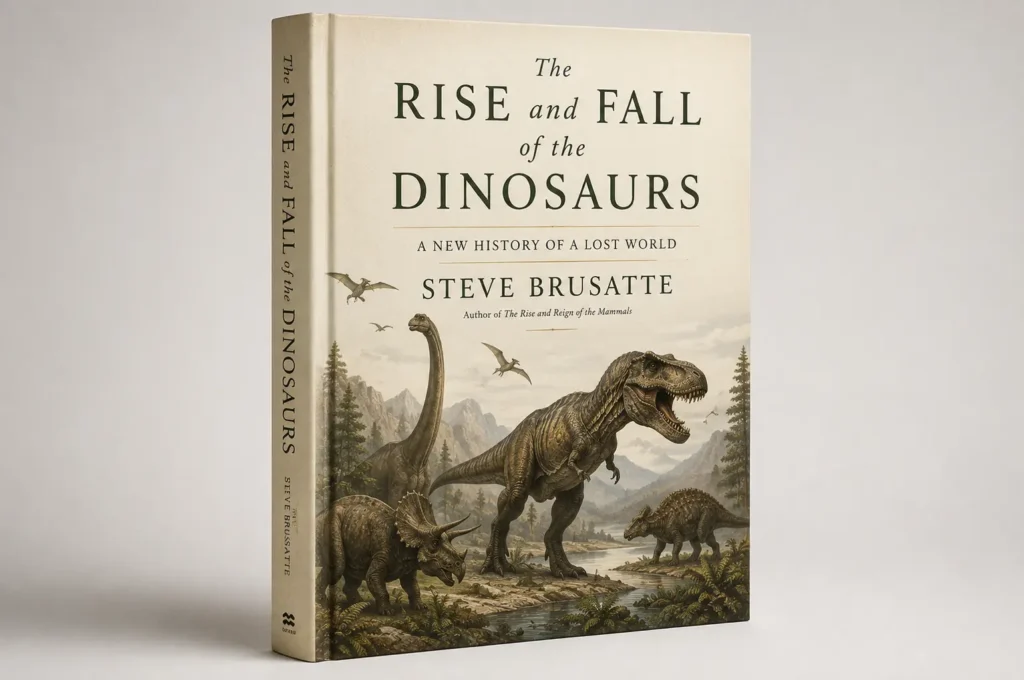
The Rise and Fall of the Dinosaurs
A compelling history of dinosaurs, tracing their origins, diversification, 200-million-year reign, extinction, and enduring legacy.
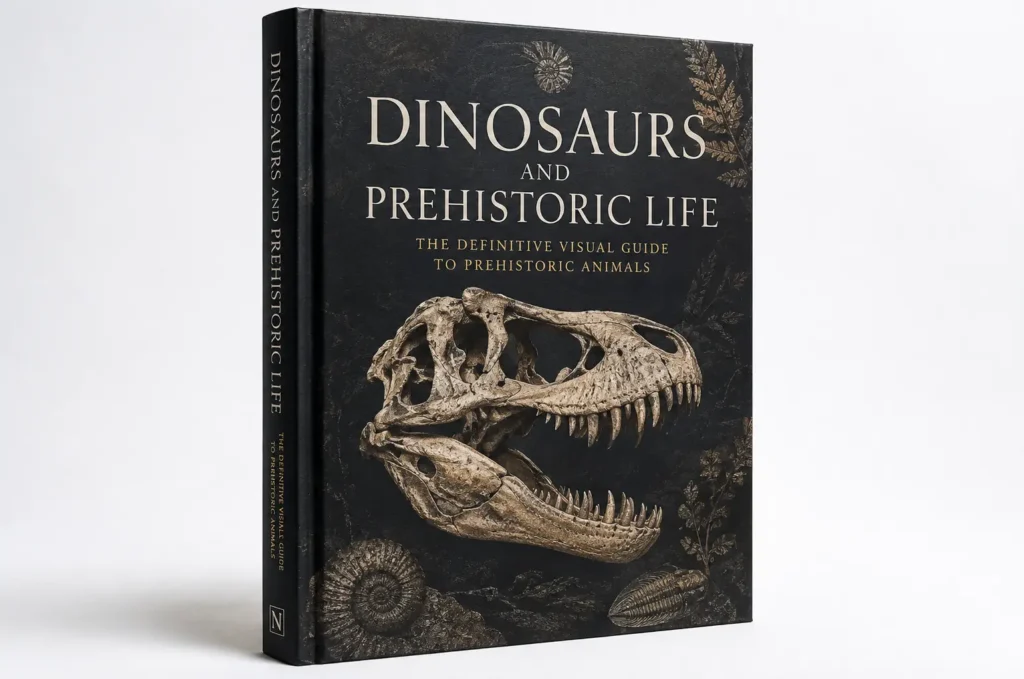
Dinosaurs and Prehistoric Life
A richly illustrated visual reference exploring dinosaurs, fossils, evolution, and prehistoric life across geological time.
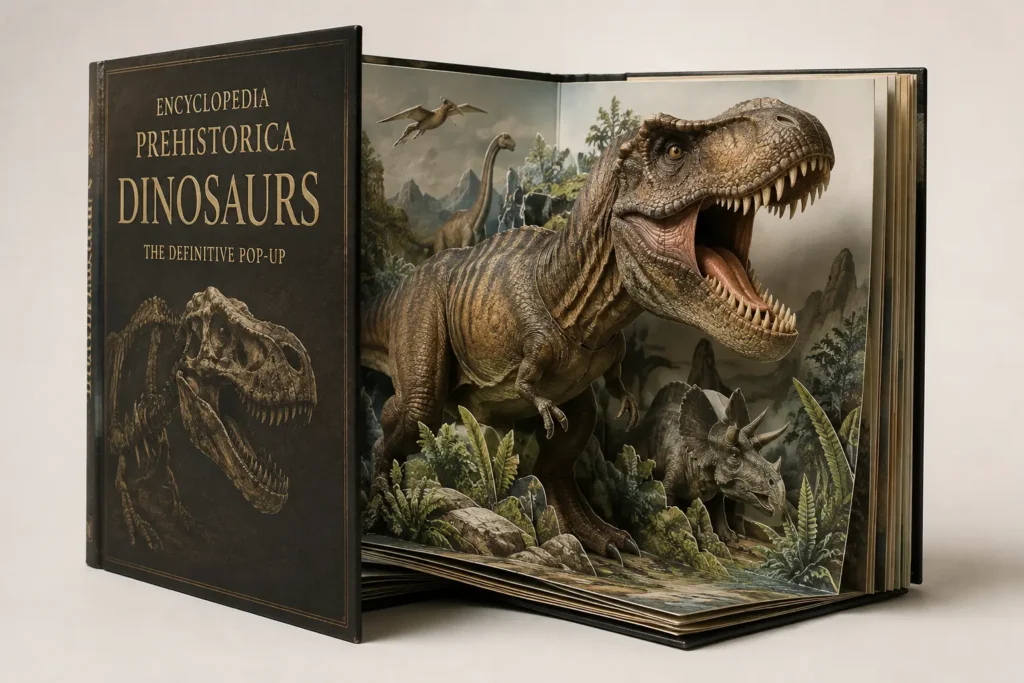
Encyclopedia Prehistorica: Dinosaurs
An interactive dinosaur book featuring spectacular three-dimensional pop-ups, particularly suited to young readers and families.
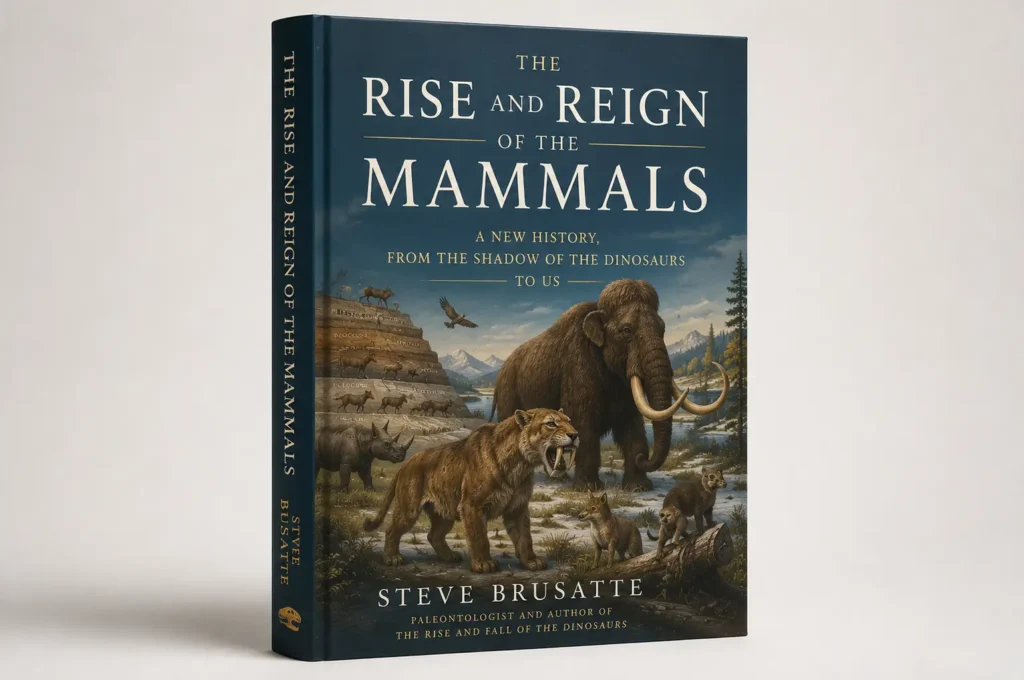
The Rise and Reign of the Mammals
A sweeping history of mammalian evolution, from their origins alongside dinosaurs through the Cenozoic and the emergence of humans.