At a Glance
| Field | Information |
|---|---|
| Species | Brachiosaurus altithorax — Sauropoda, Brachiosauridae |
| Period | Late Jurassic, 154–150 Ma |
| Formation | Morrison Formation, western North America |
| Environment type | Seasonally variable floodplains, river systems, semi-arid intervals |
| Climate | Warm, semi-arid to sub-humid; pronounced wet and dry seasonality inferred |
| Key states | Colorado, Utah, Wyoming, Montana, New Mexico, South Dakota |
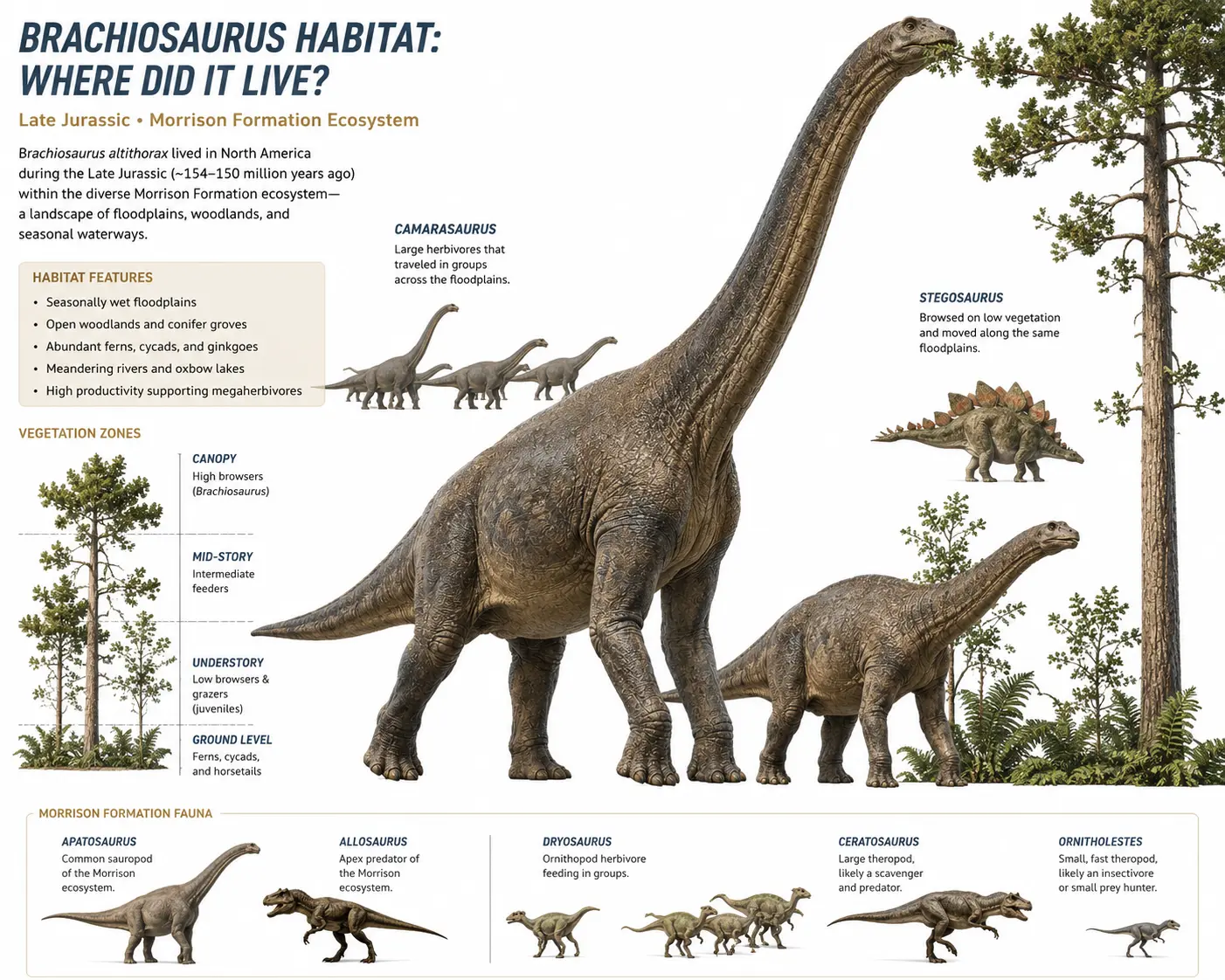
Quick Answer: Brachiosaurus habitat was the Morrison Formation of western North America — a Late Jurassic landscape of seasonal floodplains, river channels, and open woodland dominated by conifers and cycads. The climate was warm and seasonally variable, with alternating wet and dry periods. This environment supported one of the most diverse large-dinosaur faunas known from the Jurassic fossil record.

Introduction
The world inhabited by Brachiosaurus altithorax differed greatly from that of modern North America. Grasses and flowering plants had not yet evolved, and mammals remained small components of terrestrial ecosystems. Instead, the landscape was dominated by conifer woodlands, cycads, ferns, and extensive floodplain environments occupied by a diverse assemblage of dinosaurs and other vertebrates. The Morrison Formation preserves this Late Jurassic ecosystem in exceptional detail through fossil bones, plant remains, ancient soils, and sedimentary deposits, allowing palaeontologists to reconstruct the environment in which Brachiosaurus lived.
What Was the Brachiosaurus Habitat Like?
Brachiosaurus altithorax is known from the Morrison Formation of western North America, a vast Late Jurassic sedimentary system that extended across much of the present-day western United States. Fossil and geological evidence indicate that this region consisted of seasonally variable floodplains, river channels, wetlands, and areas of open woodland. Sedimentary structures, overbank flood deposits, and palaeosols (ancient soil horizons) document a landscape influenced by alternating wetter and drier climatic conditions.
The climate was generally warm, with seasonal variation in rainfall across different parts of the Morrison Basin. Vegetation was dominated by conifers, cycads, bennettitaleans, ginkgoes, ferns, and horsetails. Grasses and flowering plants were absent during the Late Jurassic. Environmental reconstructions suggest a mosaic of wooded habitats and more open floodplain settings that supported a diverse dinosaur fauna, including several species of large sauropods.
Climate and Seasonality
Fossil evidence from Morrison Formation palaeosols and sedimentary sequences indicates a strongly seasonal climate, with a pronounced wet season driving river flooding and plant growth, followed by a dry season during which water availability was reduced, and vegetation growth slowed. Comparison with modern seasonally arid tropical environments suggests mean annual precipitation across the Morrison basin was variable — wetter in the north and east, more arid toward the southwest. This seasonality likely drove periodic large-scale movements of herbivore populations in search of water and food, though direct evidence for such migrations in the Brachiosaurus fossil record specifically has not been established.
Vegetation and Plant Communities
The absence of grasses and flowering plants during the Late Jurassic meant that Morrison Formation ecosystems differed substantially from modern terrestrial environments. Fossil plant assemblages indicate that conifers formed much of the dominant canopy vegetation, including members of araucarian and podocarpaceous lineages. Cycads, bennettitaleans, ginkgoes, ferns, horsetails, and mosses were also important components of the flora. Tree ferns occurred in wetter habitats associated with rivers, lakes, and floodplain wetlands.
This vegetation provided a variety of browsing opportunities for herbivorous dinosaurs. The anatomy of Brachiosaurus altithorax, particularly its elevated shoulder height and long neck, has often been interpreted as consistent with feeding at higher browsing levels than many contemporaneous herbivores. However, the precise feeding heights and dietary preferences of Morrison Formation sauropods remain subjects of ongoing research. The full dietary ecology of Brachiosaurus is explored in our dedicated article on what Brachiosaurus ate.
Coexisting Fauna: Who Shared Brachiosaurus’s World?
The Morrison Formation preserves one of the most diverse terrestrial vertebrate faunas known from the Late Jurassic. Brachiosaurus altithorax lived alongside numerous other herbivorous and carnivorous dinosaurs, as well as smaller reptiles, mammals, amphibians, and fish.
Large Herbivores
Several large sauropods are known from the Morrison Formation, including Camarasaurus supremus, Diplodocus carnegii, Apatosaurus ajax, and Supersaurus vivianae. These taxa differed in skull morphology, tooth structure, neck proportions, and overall body form.
Some researchers have proposed that Morrison herbivores occupied different feeding niches, reducing direct competition for plant resources. Under this interpretation, diplodocids such as Diplodocus and Apatosaurus may have fed primarily at lower browsing levels, while Camarasaurus and brachiosaurids may have exploited higher vegetation. Stegosaurus stenops likely fed closer to ground level. However, these ecological reconstructions are based primarily on anatomical inference rather than direct dietary evidence, and the degree of resource partitioning remains an active area of research.
Predators
The most abundant large theropod known from the Morrison Formation is Allosaurus fragilis, which occurs throughout much of the formation and is widely regarded as one of the dominant predators of the ecosystem. Fossil evidence, including tooth marks on dinosaur bones and isolated theropod teeth associated with sauropod remains, demonstrates interactions between large carnivorous dinosaurs and sauropods.
Other large predators included Torvosaurus tanneri, while smaller theropods such as Ceratosaurus nasicornis and Ornitholestes hermanni also formed part of the Morrison predator community. Whether large predators regularly hunted adult Brachiosaurus individuals or primarily targeted juveniles, subadults, or weakened animals remains uncertain because direct evidence of predator behaviour is limited.
Principal Predators
Among the large theropods of the Morrison Formation, Allosaurus fragilis is generally considered the most likely predator to have interacted with Brachiosaurus because of its abundance and widespread distribution within the ecosystem. Fossil evidence demonstrates that large theropods fed on sauropods, although it is often difficult to distinguish active predation from scavenging in the fossil record.
Torvosaurus tanneri was another large carnivore present in the Morrison ecosystem and may also have interacted with juvenile or adult sauropods. However, current evidence does not allow researchers to determine how frequently these predators attacked living Brachiosaurus individuals or what proportion of such interactions involved scavenging rather than hunting.
Geographic Distribution
Confirmed fossil material of Brachiosaurus altithorax is currently known from the Morrison Formation of Colorado, with the holotype specimen recovered from Mesa County. Additional brachiosaurid remains have been reported from other Morrison Formation localities in western North America, including Utah and several neighbouring states, but most cannot be confidently assigned to B. altithorax.
The Morrison Formation extends across a large portion of the western United States and preserves a broadly similar Late Jurassic ecosystem throughout much of its range. While brachiosaurid dinosaurs were present within this wider environment, the precise geographic distribution of Brachiosaurus altithorax remains uncertain because of the limited and fragmentary nature of the fossil record.
Further discussion of the species’ geological age and temporal range is provided in our dedicated article on when Brachiosaurus lived.
Related and Contemporary Species
Allosaurus fragilis
The most abundant large theropod known from the Morrison Formation. Fossil evidence indicates interactions between large theropods and sauropods, making Allosaurus an important component of the ecosystem inhabited by Brachiosaurus.
Camarasaurus supremus
One of the most common sauropods of the Morrison Formation. Its abundant fossil record provides valuable insight into the ecology and environmental conditions of Late Jurassic North America.
Stegosaurus stenops
A widespread Morrison Formation herbivore characterized by its distinctive plates and tail spikes. Its feeding habits likely differed from those of large sauropods, allowing multiple herbivorous dinosaur species to coexist within the same ecosystem.
Diplodocus carnegii
A long-necked diplodocid sauropod that lived alongside Brachiosaurus in Morrison Formation environments. Differences in anatomy suggest that these sauropods may have exploited vegetation in different ways, although the extent of ecological separation remains debated.
Ceratosaurus nasicornis
A medium-sized theropod predator that formed part of the diverse carnivore community of the Morrison ecosystem and likely preyed upon smaller vertebrates while competing with larger theropods for resources.
Frequently Asked Questions
What Environment Did Brachiosaurus Live In?
Brachiosaurus altithorax lived within the Morrison Formation ecosystem of Late Jurassic western North America. This environment consisted of seasonally variable floodplains, river systems, wetlands, and woodland habitats under a generally warm climate with alternating wetter and drier periods. The ecosystem supported a diverse assemblage of dinosaurs, reptiles, mammals, fish, and plants.
Did Brachiosaurus Live in Water?
No. Earlier interpretations suggested that giant sauropods may have spent much of their time in water to help support their body weight. Modern research has rejected this hypothesis. Fossil evidence from skeletal anatomy, biomechanical studies, and sedimentary environments indicates that Brachiosaurus was a fully terrestrial animal adapted for life on land.
What Plants Did Brachiosaurus Eat in Its Habitat?
The Morrison Formation flora included conifers, cycads, bennettitaleans, ginkgoes, ferns, horsetails, and other non-flowering plants. The anatomy of Brachiosaurus, particularly its long neck and elevated shoulder region, has often been interpreted as consistent with feeding at higher browsing levels than many contemporaneous herbivores. However, the exact composition of its diet and preferred feeding heights remain subjects of ongoing research. Additional discussion is provided in our dedicated article on Brachiosaurus diet.
Conclusion
Brachiosaurus altithorax inhabited the warm, seasonally variable environments of the Late Jurassic Morrison Formation. Fossil evidence from this formation reveals a landscape of floodplains, river systems, woodlands, and diverse plant communities that supported one of the richest dinosaur faunas known from the Jurassic Period. Although many aspects of Morrison Formation ecology continue to be investigated, current evidence provides a detailed picture of the environmental conditions in which Brachiosaurus lived.
Note: Palaeoenvironmental reconstruction of the Morrison Formation, including climate patterns, vegetation communities, and ecological interactions among dinosaur species, remains an active area of research. Interpretations may be refined as new fossil discoveries and analytical methods become available.
References
B. Peer-Reviewed Literature
Parrish, J.T., Peterson, F., and Turner, C.E., 2004. Jurassic “savannah” — plant taphonomy and climate of the Morrison Formation (Upper Jurassic, Western USA). Sedimentary Geology, 167(1–2), pp.137–162. https://doi.org/10.1016/j.sedgeo.2004.01.007
Engelmann, G.F., Chure, D.J., and Fiorillo, A.R., 2004. The implications of a dry climate for the paleoecology of the fauna of the Upper Jurassic Morrison Formation. Sedimentary Geology, 167(3–4), pp.297–308. https://doi.org/10.1016/j.sedgeo.2004.01.013
Chure, D.R. and Loewen, M.A., 2020. Cranial anatomy of Allosaurus fragilis based on newly prepared material from the Lower Morrison Formation (Upper Jurassic) of western Colorado. PeerJ, 8, e7803. https://doi.org/10.7717/peerj.7803
C. Monographs, Books, and Technical Reports
Foster, J., 2007. Jurassic West: The Dinosaurs of the Morrison Formation and Their World. Indiana University Press, Bloomington.
Carpenter, K. (ed.), 2006. Horns and Beaks: Ceratopsian and Ornithopod Dinosaurs. Indiana University Press, Bloomington.
D. Databases and Online Resources
Paleobiology Database. Morrison Formation fauna and flora occurrence data. Available at: https://paleobiodb.org (accessed 31/05/2026).
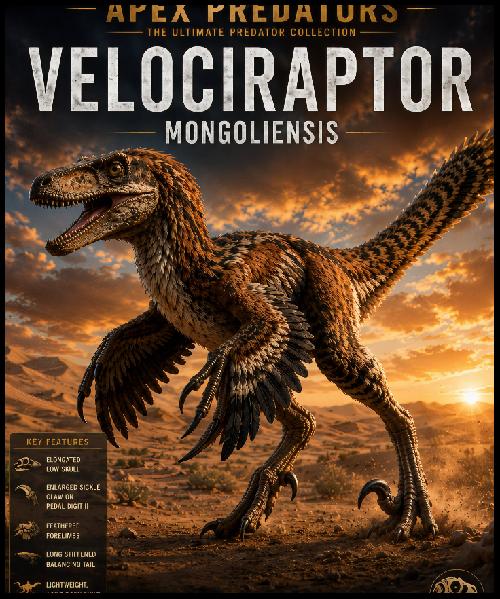
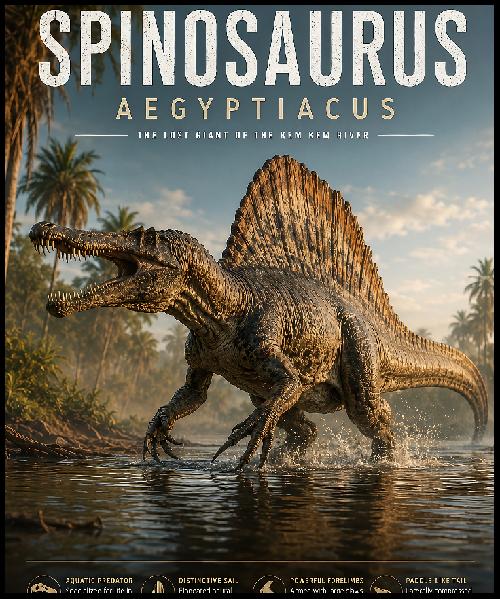
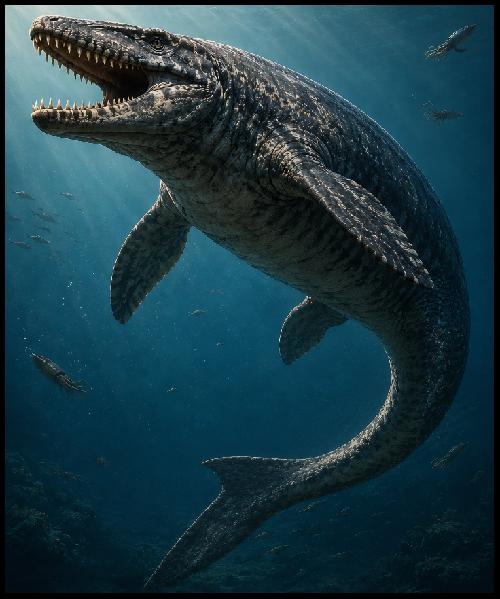
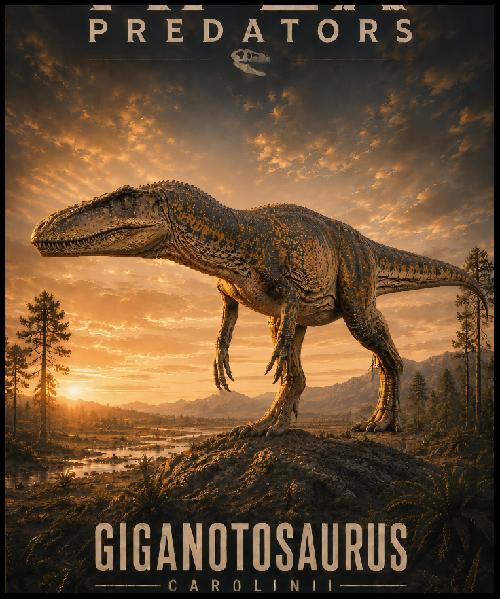
Featured Museum Collections
Museum-quality paleoart and educational poster
collections based on evidence-informed prehistoric
Life reconstructions.