

At a Glance
| Field | Information |
|---|---|
| Species | Brachiosaurus altithorax — Sauropoda, Brachiosauridae |
| Period | Late Jurassic, 154–150 Ma |
| Pronunciation | BRAK-ee-oh-SORE-us |
| Language of origin | Greek |
| Name meaning | “Arm lizard” (brachion = arm; sauros = lizard) |
| Named by | Elmer S. Riggs, 1903 |
Quick Answer: Brachiosaurus is pronounced BRAK-ee-oh-SORE-us, with four syllables and primary stress on the first and third syllables. The name combines the Greek words brachion (arm) and sauros (lizard), giving the meaning “arm lizard.” Riggs chose the name in 1903 to reflect the animal’s unusually long forelimbs, which were longer than its hindlimbs — a rare proportion among dinosaurs.

Introduction
Most dinosaur names follow a pattern: they describe something visible and distinctive about the animal. Brachiosaurus is no exception, but its defining feature is one that requires a second look. From a distance, a long neck draws the eye. Look at the limbs, and the front legs are measurably, structurally longer than the back ones — an arrangement so unusual among large dinosaurs that Riggs put it in the name. Brachiosaurus: arm lizard. The arms were the thing.
How Do You Pronounce Brachiosaurus?
Brachiosaurus is commonly pronounced BRAK-ee-oh-SORE-us. The name is divided into five syllables: BRAK – ee – oh – SORE – us, with the primary stress falling on the first syllable (BRAK). The final syllable, -us, is short and unstressed.
This pronunciation follows the standard English rendering of the Greek-derived scientific name and is widely used by museums, educational institutions, and palaeontologists. Common alternative pronunciations place greater emphasis on later syllables or use a long vowel sound in the first syllable (“brake”), but BRAK-ee-oh-SORE-us remains the most widely accepted pronunciation.
Syllable-by-Syllable Guide
| Syllable | Phonetic | Notes |
|---|---|---|
| Brachi | BRAK-ee | Primary stress on BRAK; short, clipped vowel |
| o | oh | Connecting vowel; light, unstressed |
| saur | SORE | Secondary stress; rhymes with “more” |
| us | us | Unstressed; short final syllable |
Why Is It Called Brachiosaurus?
Brachiosaurus is called “arm lizard” because its forelimbs were proportionally longer than its hindlimbs — an unusual arrangement that Elmer Riggs identified as the animal’s most anatomically distinctive feature when he named it in 1903. In most large sauropods, the hindlimbs equal or exceed the forelimbs in length, producing a roughly horizontal back. In Brachiosaurus, the reversed proportion tilts the body forward at the shoulder and gives the animal its characteristic high-fronted profile. The forelimbs were the anatomical signal that set it apart from the sauropods already known at the time of its description, and Riggs encoded that observation directly into the genus name.
The Species Name: altithorax
The species name altithorax is also Latin-derived and translates as “deep chest” or “high chest” — specifically, a chest that is deep in the front-to-back dimension. Riggs chose this epithet to describe the proportionally long and voluminous thoracic region of the holotype, which he noted as a secondary distinguishing feature alongside the forelimb length. Together, Brachiosaurus altithorax encodes two anatomical observations in the name: the long arms and the deep chest.
Greek and Latin Roots in Dinosaur Naming
The convention of naming dinosaurs using Greek and Latin roots was established during the nineteenth century and remains standard practice in palaeontological taxonomy. The Greek word brachion (βραχίων) means “arm” or “forearm” and appears in several anatomical and scientific terms, including brachial (relating to the arm) and brachialis (a muscle of the upper arm).
The Greek word sauros (σαῦρος) means “lizard” and forms part of many dinosaur names, including Allosaurus, Apatosaurus, Camarasaurus, and Stegosaurus. The suffix -saurus became particularly common during the early history of dinosaur classification and remains widely used in dinosaur nomenclature today.
The ending -us is a standard Latin masculine nominative suffix frequently applied to Latinised Greek names in scientific taxonomy. As a result, many dinosaur genera combine Greek descriptive roots with Latin grammatical endings, creating names that reflect distinctive anatomical features, behaviour, or other characteristics observed by their discoverers.
How the Name Has Been Used Over Time
The name Brachiosaurus has been applied to material beyond the original North American holotype since the early twentieth century. Most significantly, the African taxon now known as Giraffatitan brancai was classified as Brachiosaurus brancai for most of the twentieth century — a usage that persisted in popular media and some academic contexts long after the 2009 taxonomic revision that separated the two genera. The practical consequence is that the name Brachiosaurus still appears widely in museum displays, popular books, and film contexts where the animal depicted is technically Giraffatitan. The name Brachiosaurus altithorax now refers specifically to the North American animal known from the 1900 Colorado holotype. The full taxonomic history is covered in our dedicated post on Brachiosaurus vs Giraffatitan.
Related and Contemporary Species
Giraffatitan brancai — the African brachiosaurid long classified as Brachiosaurus brancai; its separation into a distinct genus directly affects the scope of the name Brachiosaurus. Camarasaurus supremus — a Morrison Formation contemporary whose name means “chambered lizard,” referring to the hollow chambers in its vertebrae. Apatosaurus ajax — a Morrison sauropod whose name means “deceptive lizard,” reflecting early taxonomic confusion with other material. Diplodocus carnegii — a Morrison contemporary; the genus name means “double beam,” referring to the double-keeled chevron bones beneath the tail vertebrae. Allosaurus fragilis — a Morrison Formation predator whose name means “different lizard,” reflecting the distinctive vertebral structure Marsh noted in his original description.
Frequently Asked Questions
Is it “Brach-ee-oh-sore-us” or “Brake-ee-oh-sore-us”?
The pronunciation most commonly used by museums, educational institutions, and palaeontologists is BRAK-ee-oh-SORE-us, with a short vowel sound in the first syllable so that BRAK rhymes with “back” rather than “brake.” This pronunciation reflects the traditional English rendering of the Greek-derived root brachion (“arm”).
Both pronunciations can be encountered in casual speech, particularly in documentaries, educational media, and regional accents. However, BRAK-ee-oh-SORE-us is the form most commonly used in scientific and museum contexts.
What does the altithorax part of the name mean?
The species name altithorax means “deep chest” or “high chest,” derived from Latin altus (high or deep) and Greek thorax (chest or breastplate). Riggs chose this epithet in 1903 to describe the proportionally large thoracic cavity of the B. altithorax holotype. Together with the genus name, it encodes two anatomical features: the long forelimbs (Brachiosaurus) and the deep chest (altithorax).
Are There Other Dinosaurs with “Brachio” in Their Name?
Names derived from the Greek root brachion (“arm” or “forearm”) are relatively uncommon in dinosaur taxonomy. Brachiosaurus is by far the best-known example, and its name directly references its unusually long forelimbs.
Although the root brachi- appears frequently in anatomical terminology—such as brachial (“relating to the arm”)—it is much less common in dinosaur names. Many dinosaur genera instead derive their names from other anatomical features, geographic locations, or the names of people associated with their discovery.
As a result, Brachiosaurus remains one of the most prominent examples of a dinosaur whose name specifically highlights the structure of its forelimbs.
Conclusion
Brachiosaurus is pronounced BRAK-ee-oh-SORE-us and means “arm lizard” — a name chosen in 1903 by Elmer Riggs to mark the animal’s most structurally unusual feature: forelimbs longer than its hindlimbs. The species name altithorax adds a second anatomical observation, noting the deep chest. Together, the full name encodes the two features that first distinguished this animal from all other known sauropods.
References
A. Primary Taxonomic Sources
Riggs, E.S., 1903. Brachiosaurus altithorax, the largest known dinosaur. American Journal of Science, Series 4, 15, pp.299–306.
Taylor, M.P., 2009. A re-evaluation of Brachiosaurus altithorax Riggs 1903 (Dinosauria, Sauropoda) and its generic separation from Giraffatitan brancai (Janensch, 1914). Journal of Vertebrate Paleontology, 29(3), pp.787–806. https://doi.org/10.1671/039.029.0309
B. Peer-Reviewed Literature
No additional peer-reviewed literature was cited directly in this article.
C. Monographs, Books, and Technical Reports
Holtz, T.R. and Brett-Surman, M.K., 1997. The taxonomy and systematics of the dinosaurs. In: Farlow, J.O. and Brett-Surman, M.K. (eds.) The Complete Dinosaur. Indiana University Press, Bloomington, pp.92–106.
Liddell, H.G. and Scott, R. A Greek-English Lexicon. Oxford University Press, Oxford. [use edition actually consulted]
Paul, G.S., 2016. The Princeton Field Guide to Dinosaurs, 2nd edition. Princeton University Press, Princeton.
Recommended Paleontology & Natural History Books
As an Amazon Associate, Extinct Atlas may earn from qualifying purchases.

The Rise and Fall of the Dinosaurs
A compelling history of dinosaurs, tracing their origins, diversification, 200-million-year reign, extinction, and enduring legacy.

Dinosaurs and Prehistoric Life
A richly illustrated visual reference exploring dinosaurs, fossils, evolution, and prehistoric life across geological time.
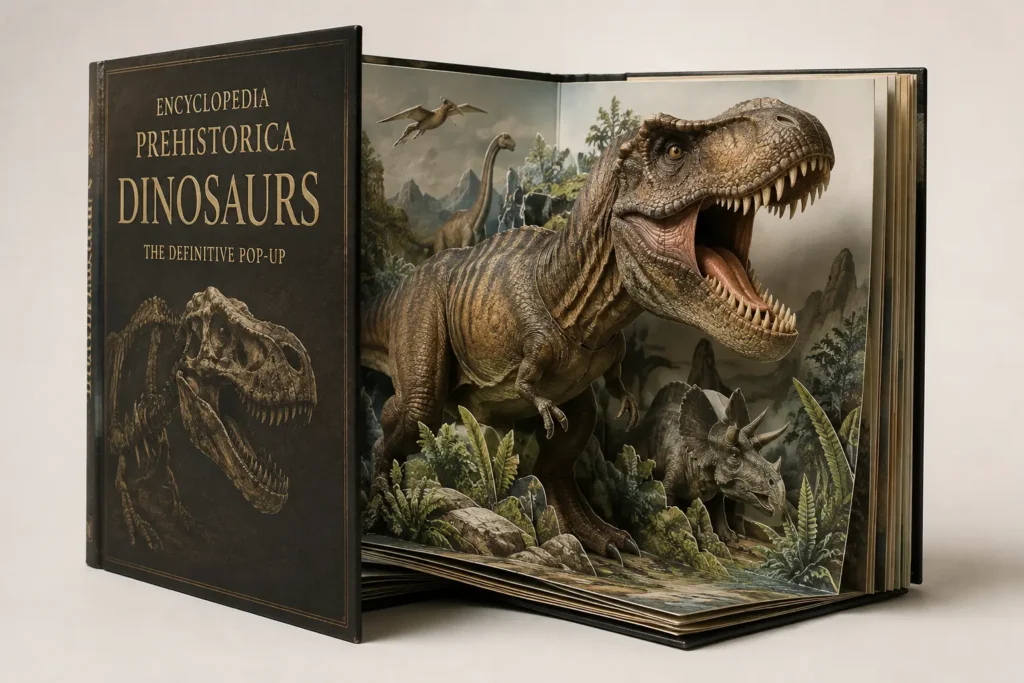
Encyclopedia Prehistorica: Dinosaurs
An interactive dinosaur book featuring spectacular three-dimensional pop-ups, particularly suited to young readers and families.
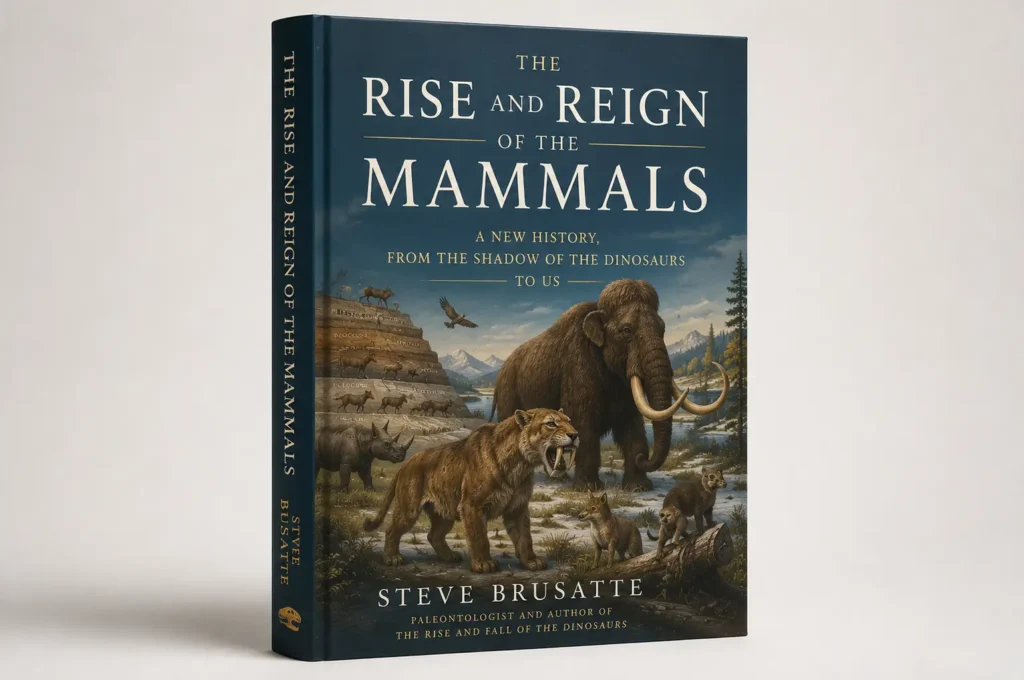
The Rise and Reign of the Mammals
A sweeping history of mammalian evolution, from their origins alongside dinosaurs through the Cenozoic and the emergence of humans.