| Field | Information |
|---|---|
| Species | Otodus megalodon — Otodontidae |
| Period | Miocene to Early Pliocene, ~23–3.6 Ma |
| Formal description | Louis Agassiz, 1843 |
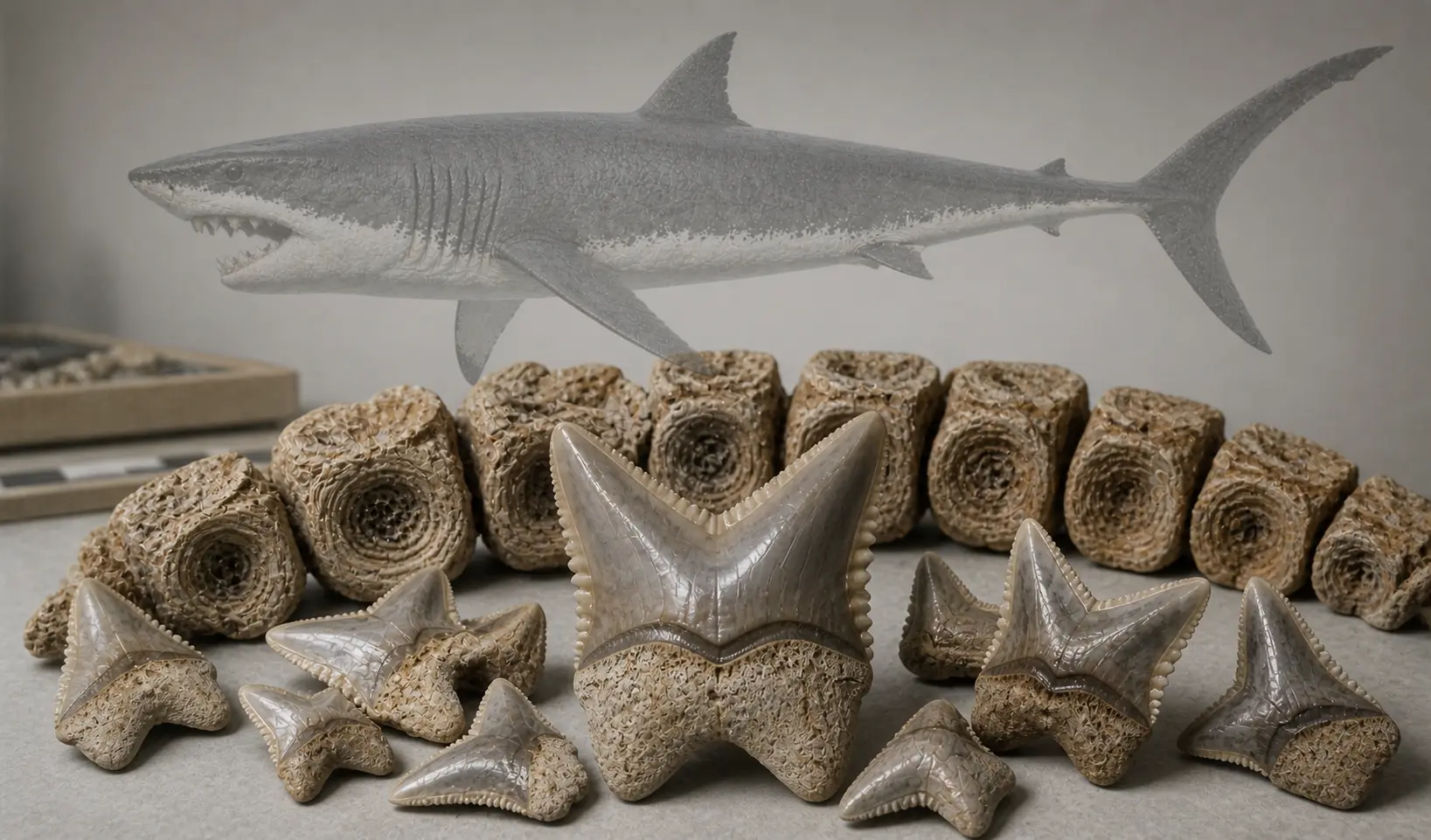
| Primary fossil material | Teeth and vertebral centra |
| Key collections | Calvert Marine Museum; Natural History Museum (London); Smithsonian |
Quick Answer:Otodus megalodon was formally described by Swiss naturalist Louis Agassiz in 1843, based on fossil teeth. Before that, the same teeth had been known for centuries as glossopetrae — “tongue stones” — believed to be petrified serpent tongues. The discovery history of megalodon is largely a history of teeth: the only hard tissue this cartilaginous shark reliably left behind.
For centuries, people found the enormous triangular stones washing out of cliffsides and ocean sediments without understanding what they were. The identification of Otodus megalodon as a shark — and eventually as the largest predatory fish that ever lived — unfolded across four hundred years of progressively more rigorous science.
Megalodon Discovery: From Glossopetrae to Giant Shark
The teeth of Otodus megalodon were known in Europe long before their biological origin was understood. Medieval and Renaissance naturalists called them glossopetrae — tongue stones — and attributed them to serpents or dragons.
In 1667, Danish naturalist Nicolas Steno published a comparative anatomical study demonstrating that glossopetrae were structurally identical to the teeth of modern sharks, establishing for the first time that these objects were biological in origin. Steno’s insight did not immediately establish the scale of the animal they came from — that required another two centuries.
In 1843, Swiss-American palaeontologist Louis Agassiz formally described the species in his landmark work Recherches sur les Poissons Fossiles, assigning it to the genus Carcharodon as Carcharodon megalodon — a classification that would persist in popular usage for over 150 years before being revised to Otodus megalodon. The taxonomic revision is covered in full on our taxonomy page.
Early Size Estimates and the 1909 Jaw Reconstruction
Early attempts to reconstruct the body size of Otodus megalodon produced significant overestimates. A 1909 jaw mount at the American Museum of Natural History, assembled from associated tooth sets without a complete skeletal framework, resulted in a reconstruction large enough for several people to sit inside and led to body length estimates of 30 m (98 ft) or more.
These figures were subsequently revised downward as more rigorous scaling relationships with living lamniform sharks were developed. Current peer-reviewed estimates place megalodon’s most probable body length in the range of approximately 10–20 m (33–66 ft), with most adult individuals likely clustering around 10–15 m (33–49 ft). Estimates toward the upper end of this range depend on scaling assumptions and remain more uncertain.
Key Fossil Material
| Category | Material Type | Significance |
|---|---|---|
| Associated vertebral specimens | Vertebral centra with teeth | Rare examples used to estimate body proportions and growth patterns |
| Museum reference collections | Large curated tooth assemblages | Provide the primary dataset for size distribution, morphology, and geographic range |
| Historical jaw reconstructions | Composite tooth sets (e.g., early 20th-century mounts) | Important for understanding the history of size estimation and early scientific interpretation |
| European Otodus lineage material | Teeth from transitional species | Document evolutionary progression leading to Otodus megalodon |
| North American coastal deposits | Abundant isolated teeth | Core evidence for distribution, ecology, and population-level variation |
Is Megalodon Still Alive?
No peer-reviewed evidence supports the survival of Otodus megalodon into the modern era. The species’ extinction is dated to approximately 3.6 Ma based on the youngest dated fossil material, and no verified specimen — tooth, bone, or tissue — younger than this date has been described in the scientific literature.
Claims of living megalodon sightings circulating in online media and certain broadcast productions are not supported by physical evidence. The deep ocean is not unexplored to a degree that could conceal a predator requiring the prey biomass megalodon’s size demands; apex predators of this scale leave detectable ecological signatures.
Maryland’s designation of megalodon as its official state fossil shark in 2022 — based on the abundance of fossil teeth in Calvert County deposits — reflects scientific consensus that this is a fossil species.
Related and Contemporary Species
- Otodus obliquus — Eocene ancestor in the direct Otodus lineage; teeth document the morphological progression toward O. megalodon
- Otodus chubutensis — intermediate Otodus-lineage species; bridges Oligocene and early Miocene forms
- Carcharocles auriculatus — another lineage intermediate; important in debates about Otodus evolutionary continuity
- Cretalamna appendiculata — Cretaceous ancestor of the broader Otodontidae family; oldest known relative
- Carcharodon carcharias (great white shark) — not a descendant of megalodon; convergent evolution produced similar tooth morphology from separate lineages
Frequently Asked Questions
Who discovered megalodon?
Otodus megalodon was formally described by Louis Agassiz in 1843, though its teeth had been known for centuries. The biological nature of these teeth as shark teeth — rather than mythological objects — was established by Nicolas Steno in 1667. No single discovery moment defines this species; identification has accumulated across centuries of natural history research.
Where are megalodon fossils found?
Megalodon teeth and vertebral centra have been recovered from every major ocean basin, reflecting the species’ near-global warm-water range. Particularly productive sites include the Calvert Cliffs of Maryland, the phosphate-rich deposits of North Carolina, Miocene formations in Belgium, and coastal sediments in South Africa, Australia, New Zealand, and Japan.
Is megalodon the official fossil of any state?
Yes. Maryland designated Otodus megalodon as its official state fossil shark, reflecting the exceptional abundance of megalodon teeth in the Miocene-age Calvert Formation deposits along the Chesapeake Bay region.
Conclusion
The discovery of Otodus megalodon is a story of accumulated inference rather than a single moment — from Renaissance tongue stones to Steno’s anatomical insight, through Agassiz’s formal description, to modern isotope analysis and body proportion modelling.
The fossil record remains tooth-dominated, and many questions about body form and behaviour depend on continued development of methods that can extract more information from that limited but abundant material.
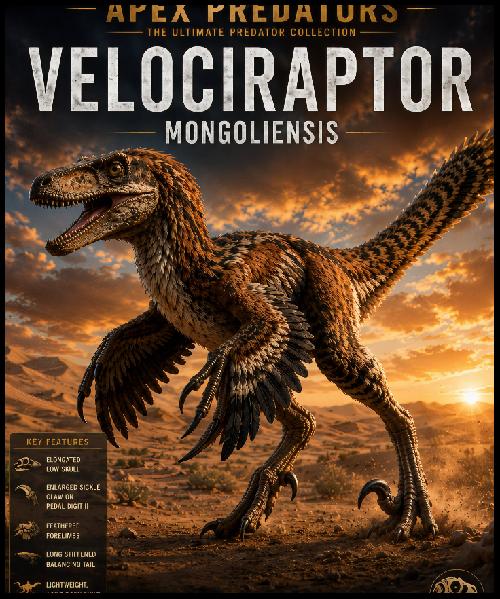
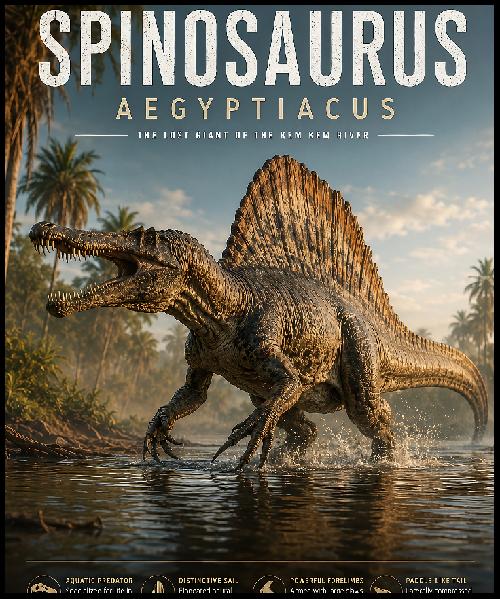
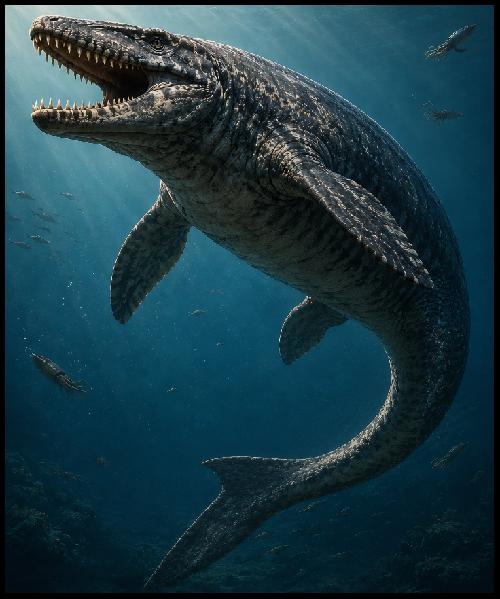
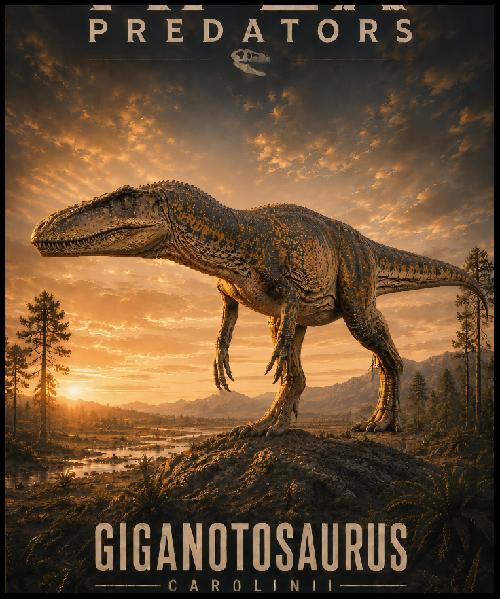
Featured Museum Collections
Museum-quality paleoart and educational poster
collections based on evidence-informed prehistoric
Life reconstructions.