
| Field | Information |
|---|---|
| Species | Otodus megalodon — Otodontidae |
| Period | Miocene to Early Pliocene, ~23–3.6 Ma |
| Habitat type | Warm, shallow coastal and epicontinental seas |
| Global range | Near-cosmopolitan — all major ocean basins |
| Nursery evidence | Warm, shallow formations with high concentrations of small teeth |
Quick Answer: Megalodon lived in warm, shallow coastal and epicontinental seas across virtually every major ocean basin — making it one of the most geographically widespread large predators in the fossil record. Fossil teeth have been recovered from every continent except Antarctica. It preferred waters where large prey was concentrated and where warm temperatures persisted year-round.
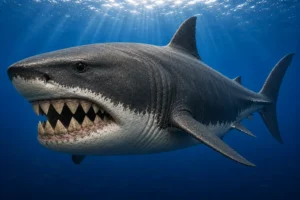
Megalodon was not a creature of the deep. Its fossils cluster in the shallow, warm-water margins of ancient seas — the same productive coastal zones where large whale populations concentrated and where the conditions for raising the next generation of giant sharks were most favourable.
Where in the Earth Did Megalodon Live?
Otodus megalodon had a near-cosmopolitan distribution during its ~20-million-year existence in the Miocene and Early Pliocene, with fossil material recovered from every major ocean basin. The following distribution pattern emerges from the fossil record:
- North America — Atlantic and Gulf coasts; particularly dense in Maryland (Calvert Formation), North Carolina, and Florida; Pacific coast representation in California and Baja California
- South America — Chile, Peru, and Brazil; the Pacific margin is well represented
- Europe — Belgium, the Netherlands, Spain, Malta; Miocene marine formations throughout
- Africa — Morocco, South Africa, Madagascar; both Atlantic and Indian Ocean margins
- Asia — Japan, India, Sri Lanka; shallow Miocene seas of the Indo-Pacific
- Oceania — Australia and New Zealand; Southern Hemisphere range limits
- Antarctica — no confirmed fossil material; consistent with an apparent preference for warmer sea surface temperatures
This global distribution pattern is consistent with a preference for warm to temperate marine environments, as indicated by its absence from colder high-latitude regions and its concentration in regions associated with productive, shallow continental shelf ecosystems.
Preferred Habitat
Megalodon’s fossil distribution is concentrated in shallow, epicontinental sea deposits rather than deep-ocean sediments. This pattern indicates a preference for:
- Coastal and shelf environments where large whale prey was accessible
- Warm, nutrient-rich waters supporting high prey biomass
- Shallow bays and estuarine margins — the probable locations of nursery areas
The absence of megalodon material from contemporaneous deep-sea deposits is consistent with a shark that hunted in the productive, light-penetrated upper water column rather than the deep ocean. This contrasts with popular culture depictions of megalodon as a deep-sea survivor.
Nursery Areas
This is an active area of research. Details here reflect current scientific consensus but may be revised as new fossil evidence or analysis emerges.
Several Miocene formations have been interpreted as nursery areas based on the concentration of smaller megalodon teeth — suggesting juveniles — alongside the remains of smaller prey species. Proposed nursery sites include the Gatún Formation in Panama and the Bone Valley Formation in Florida.
Nursery area identification relies on tooth size distribution analysis; the interpretation that small teeth indicate juveniles rather than small adults requires assumptions about ontogenetic tooth scaling that are not yet fully validated for O. megalodon specifically. This is an active area of research, and published conclusions should be treated as preliminary.
Did Megalodon Live Everywhere?
Megalodon’s near-cosmopolitan range reflects both its long temporal span and its ecological flexibility within its thermal preference. It was not present at all times in all locations — the fossil record documents regional appearances and absences that likely track prey availability and sea temperature.
Polar and subpolar regions are consistently absent from the fossil record, supporting the warm-water preference inferred from distribution modelling. Extinction-period contraction of the warm coastal sea habitat type is directly relevant to understanding why megalodon disappeared — this is covered in full on our extinction page.
Related and Contemporary Species
- Livyatan melvillei — large raptorial sperm whale with overlapping distribution in the Miocene; shared warm-water coastal and open-ocean range
- Cetotherium-group mysticetes — small baleen whales whose warm coastal sea distribution overlapped extensively with megalodon’s core range
- Isurus hastalis (broad-tooth mako) — a co-occurring large shark across multiple megalodon-bearing formations
- Hemipristis serra — a medium-sized shark frequently found in the same Miocene coastal formations as megalodon
- Odobenocetops — small coastal cetacean of the Pliocene South American range; representative of the prey fauna in megalodon’s terminal range
Frequently Asked Questions
Did megalodon live in every ocean?
Fossil evidence documents megalodon across all major ocean basins — Atlantic, Pacific, Indian, and the ancestral Tethys Sea — making it one of the most geographically widespread large predators in the fossil record. Only Antarctica lacks confirmed material, consistent with megalodon’s preference for warm-water coastal environments rather than polar or subpolar seas.
Did megalodon live in deep water?
The fossil record does not support megalodon as a deep-water animal. Its teeth are concentrated in shallow coastal and epicontinental sea deposits, and its primary prey — large coastal whales — was not a deep-sea fauna. Popular claims about megalodon surviving in the deep ocean are inconsistent with both its fossil distribution and the prey ecology of the deep sea.
Where are the best places to find megalodon teeth today?
The most productive collecting sites include the Calvert Cliffs of Maryland, the phosphate deposits of North Carolina and Florida, shallow marine sediments off South Africa and Australia, and Miocene formations in Belgium and Spain. Many teeth are found in river systems that cut through Miocene marine deposits, particularly rivers draining the US Atlantic coastal plain.
Conclusion
Megalodon was a creature of warm, productive coastal seas — and its near-global fossil distribution reflects both the extent of those seas during the Miocene and its own success as an apex predator within them. The contraction of that habitat during the Pliocene cooling did not just reduce where megalodon could live: it reduced the prey base that had sustained it for twenty million years.
Featured Museum Collections
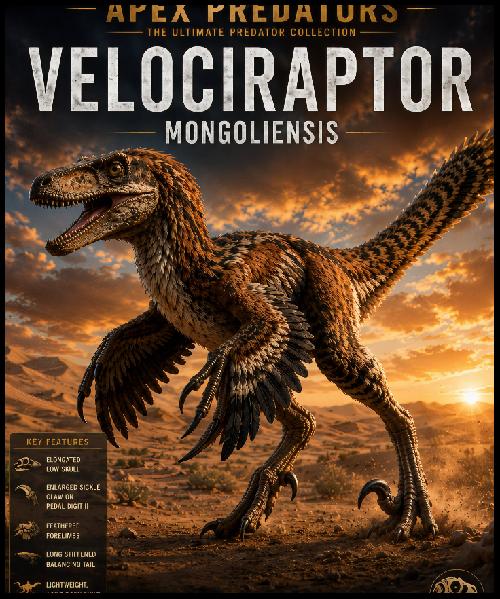
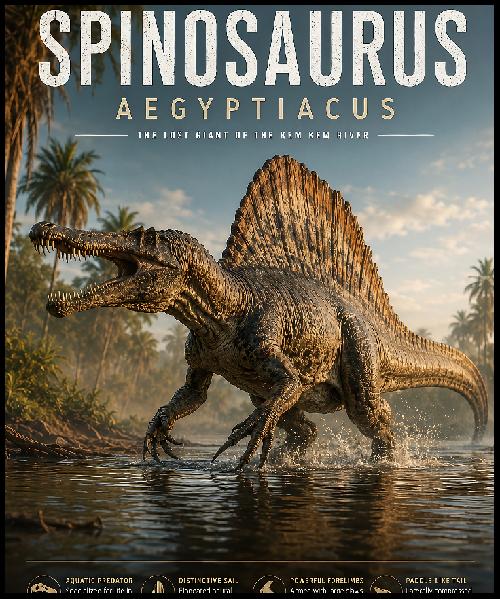
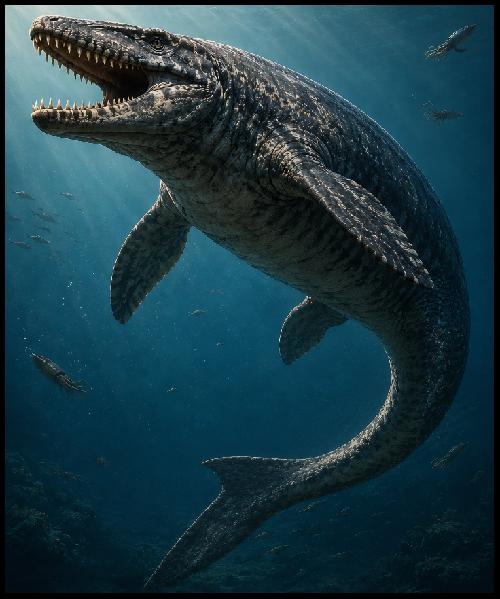
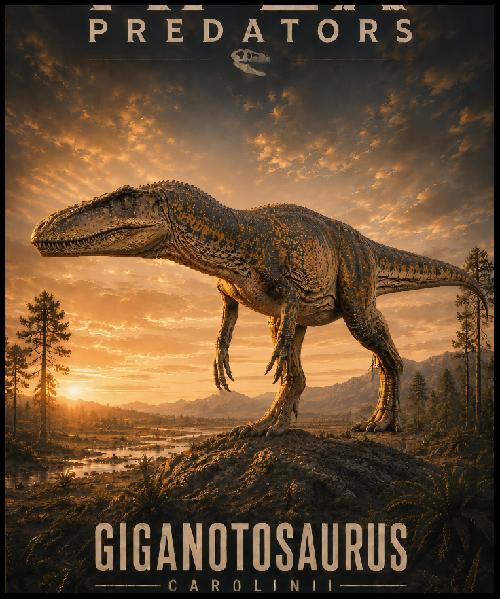
Museum-quality paleoart and educational poster
collections based on evidence-informed prehistoric
Life reconstructions.