
| Field | Information |
|---|---|
| Species | Otodus megalodon — Otodontidae |
| Extinction timing | Early Pliocene, ~3.6 Ma [review: active debate on precise date] |
| Primary evidence | Youngest dated fossil teeth; absence from post-Pliocene deposits |
| Leading causes | Oceanic cooling; prey base collapse; competitive pressure |
| Status | Extinct — no verified post-Pliocene fossil material |
Quick Answer: Megalodon went extinct approximately 3.6 million years ago during the Early Pliocene, most likely as a result of intersecting pressures: global oceanic cooling reduced the warm, shallow coastal seas it depended on; the large whale prey it targeted declined or migrated to colder water; and emerging predators including early great white sharks competed for remaining resources. No single cause is confirmed — the extinction reflects a convergence of ecological stresses.
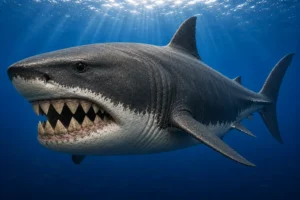
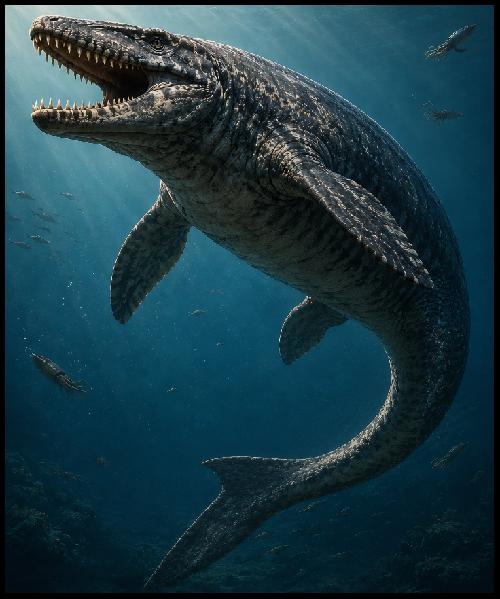
The ocean megalodon ruled for nearly twenty million years, and did not disappear overnight. It cooled, contracted, and withdrew — and at some point in the Early Pliocene, the conditions that had sustained the largest predatory shark in history were gone.
Why Did Megalodon Go Extinct?
The extinction of Otodus megalodon is dated to approximately 3.6 million years ago based on the youngest fossil teeth that have been reliably dated, though the precise timing is subject to ongoing revision as additional specimens are dated and depositional context is more carefully assessed. No verified megalodon fossil has been described from post-Pliocene deposits, and the species does not appear in any ocean basin after this horizon.
Three intersecting factors dominate current explanations:
- Oceanic cooling — global temperature decline during the Late Miocene and into the Pliocene reduced and fragmented the warm, shallow coastal seas, which megalodon used as both hunting grounds and nursery areas
- Prey base contraction — the large mysticete whales that formed megalodon’s primary prey base declined in warm coastal waters and increasingly concentrated in cooler, higher-latitude seas outside megalodon’s preferred thermal range
- Competitive pressure — the emergence and expansion of Carcharodon carcharias (great white shark) and Orcinus-lineage cetaceans during this period introduced new competitors for the remaining available prey
Ongoing research continues to refine. Details here reflect current scientific consensus but may be revised as new fossil evidence or analysis emerges.
Oceanic Cooling and Habitat Loss
The Pliocene cooling trend substantially altered ocean circulation patterns and sea surface temperatures. Warm, shallow epicontinental seas — the habitat type most strongly associated with megalodon tooth and vertebral distributions — contracted globally. Nursery areas, where isotope evidence and small tooth concentrations suggest juvenile megalodon were raised in warmer, shallower coastal environments, were particularly affected.
Biomechanical and thermoregulation comparisons with living large sharks suggest megalodon was likely regionally endothermic — capable of maintaining elevated body temperatures above ambient — but the degree to which this buffered it against environmental cooling is not directly evidenced and remains Tier 3 inference.
Prey Base Decline
Stable isotope analysis and the fossil cetacean record both indicate that large baleen whale diversity and abundance in warm coastal seas declined during the late Miocene and Pliocene. The whale fauna of the Miocene — which included numerous mid-sized mysticetes in coastal and epicontinental settings — gave way to a Pliocene assemblage increasingly dominated by larger whales in colder, open-ocean environments.
A predator of megalodon’s mass required substantial caloric intake; as the density and accessibility of its primary prey declined in the habitats it could exploit, sustained population viability would have become increasingly precarious.
Competition and Ecological Succession
The relationship between megalodon’s extinction and the concurrent rise of Carcharodon carcharias is a subject of active debate. Some researchers argue that great white sharks, which were expanding their range and prey base during the Pliocene, exerted competitive pressure on megalodon by targeting juvenile large whales and pinnipeds.
Prey categories accessible to smaller, more cold-tolerant predators. Others argue the overlap in prey and timing is correlational rather than causal, and that oceanic cooling and prey decline are sufficient explanation without invoking competitive exclusion. Both positions are represented in the current literature; neither is settled.
Livyatan melvillei and other large raptorial cetaceans had largely disappeared by the time of megalodon’s extinction, so direct competition from that direction is not considered a primary extinction driver.
Is Megalodon Still Alive?
No. The evidence against survival is not merely an absence of recent sightings — it is structural. A predator of megalodon’s mass requires enormous prey biomass. Modern ocean surveys, deep-sea sampling programmes, and the complete absence of megalodon teeth in ocean sediment cores younger than ~3.6 Ma all point to the same conclusion: Otodus megalodon is extinct. Claims otherwise are not supported by peer-reviewed evidence.
Related and Contemporary Species
- Carcharodon carcharias (great white shark) — ecologically succeeded megalodon in large marine mammal predation; timing of its range expansion overlaps with megalodon’s decline.
- Livyatan melvillei — large raptorial sperm whale that co-occurred with megalodon; extinct before megalodon’s terminal decline
- Orcinus spp. (ancestral killer whales) — emerging apex cetaceans of the Pliocene whose expansion may have intensified prey competition
- Zygophyseter varolai — extinct raptorial sperm whale; gone before the Pliocene extinction event
- Cetotherium-group mysticetes — small baleen whales of the Miocene whose decline removed a key prey category from megalodon’s accessible range
Frequently Asked Questions
What killed megalodon?
No single cause is confirmed. Current evidence points to a combination of Pliocene oceanic cooling, which contracted the warm coastal habitats megalodon depended on, and a parallel decline in the large whale prey it primarily hunted. Competitive pressure from expanding great white sharks and early killer whale lineages is proposed by some researchers as a contributing factor, though this remains debated.
When exactly did megalodon go extinct?
The youngest reliably dated megalodon fossil material points to approximately 3.6 million years ago, placing the extinction in the Early Pliocene. This date is subject to revision — some analyses have suggested younger outlier dates, but these require careful assessment of depositional context and potential reworking of fossil material before they can be accepted as evidence of later survival.
Could megalodon survive in the deep ocean?
No credible scientific evidence supports this. Megalodon’s fossil distribution is concentrated in shallow, warm coastal and epicontinental sea deposits — not deep-ocean settings. A predator of its scale requires the prey biomass that shallow productive seas provide. Deep-ocean environments lack the prey density to sustain a population of animals this size, and no physical evidence — teeth, tissue, or verified sighting — has emerged from any depth.
Conclusion
The extinction of Otodus megalodon was not a sudden event but the end point of a multi-million-year environmental transition that progressively dismantled the conditions it needed to survive. Cooling oceans, contracting coastal seas, and a shifting prey base all converged in the Early Pliocene — and no amount of size or predatory capability could compensate for the disappearance of the world that had built them.
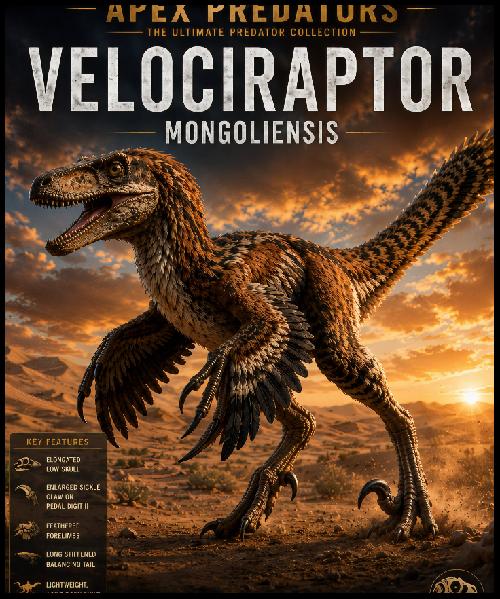
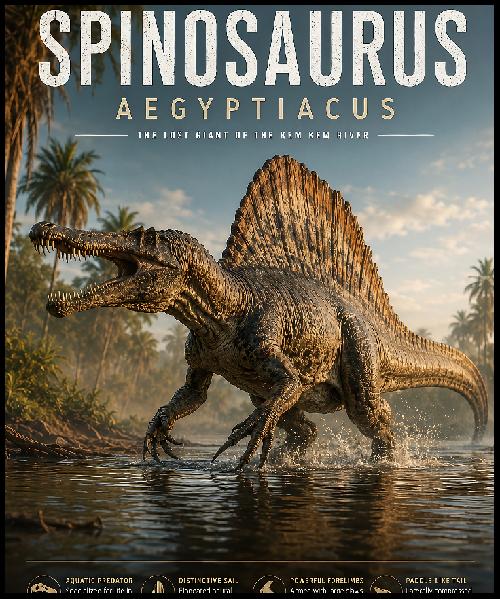
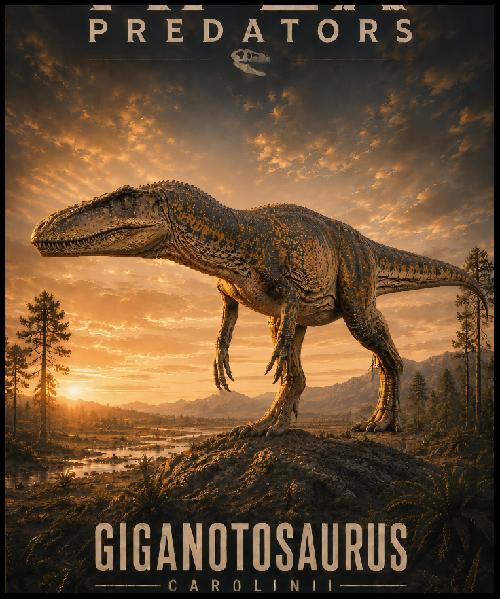
Featured Museum Collections
Museum-quality paleoart and educational poster
collections based on evidence-informed prehistoric
Life reconstructions.