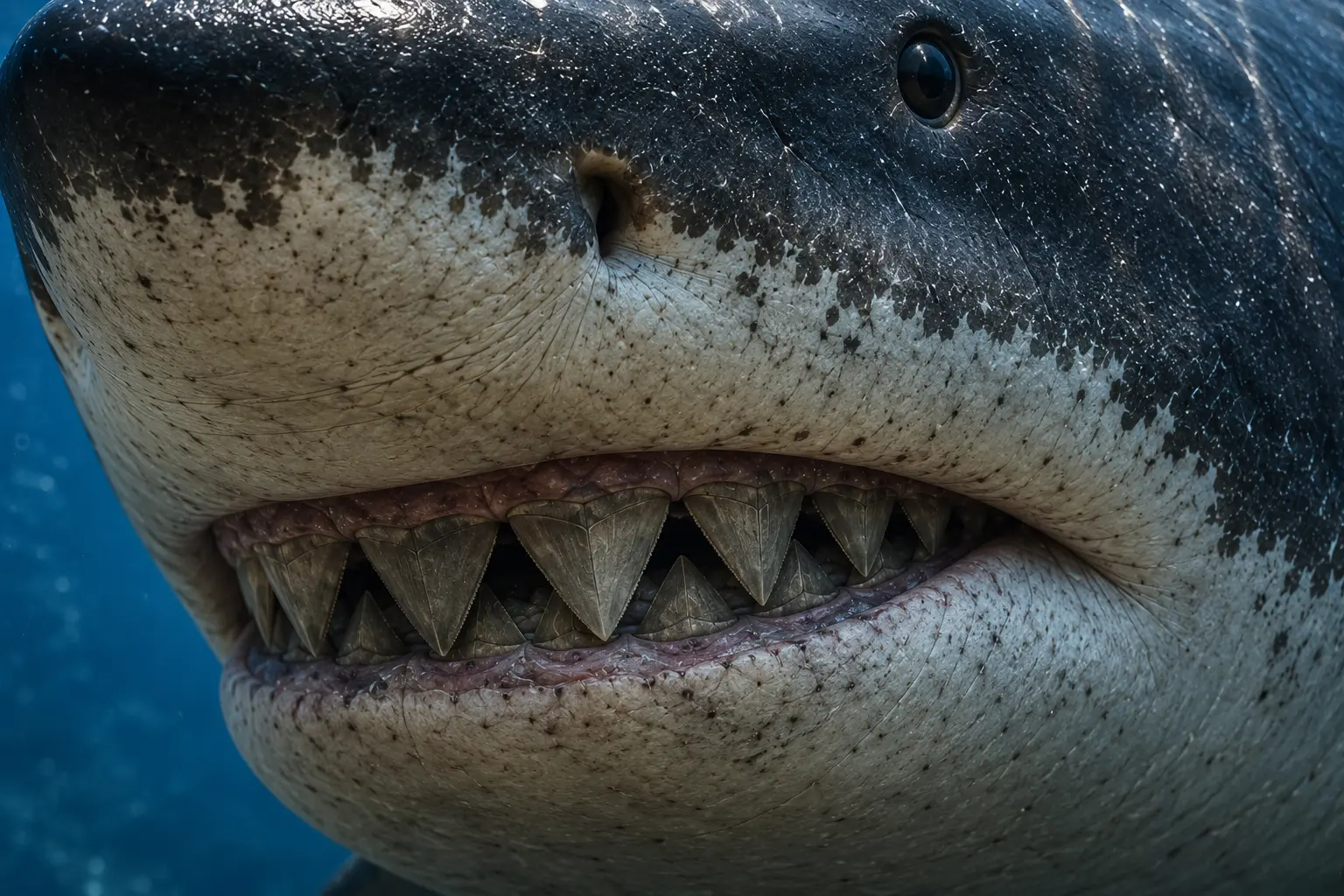
| Field | Information |
|---|---|
| Species | Otodus megalodon — Otodontidae |
| Period | Miocene to Early Pliocene, ~23–3.6 Ma |
| Maximum tooth height | Up to ~18 cm (7 in) — largest reliably measured specimens |
| Bite force estimate | Biomechanical estimates (model-dependent) suggest approximately 108,000–180,000 N |
| Why teeth fossilise | Teeth mineralise during life; skeletal cartilage does not preserve |
Quick Answer: Megalodon teeth are the primary fossil evidence for Otodus megalodon. They reached up to approximately 18 cm (7 in) in height — the largest of any shark — and were broad, triangular, and finely serrated for cutting through whale bone and blubber. Bite force estimates from biomechanical modelling suggest forces far exceeding those of any living shark.
The entire skeleton of Otodus megalodon was cartilage — and cartilage rots. What survived in the fossil record are its teeth: thousands of them, on every ocean floor, in every coastal formation where megalodon once hunted. No other element of this animal is better documented or more informative about how it was killed.
Megalodon Teeth: Size, Structure, and Function
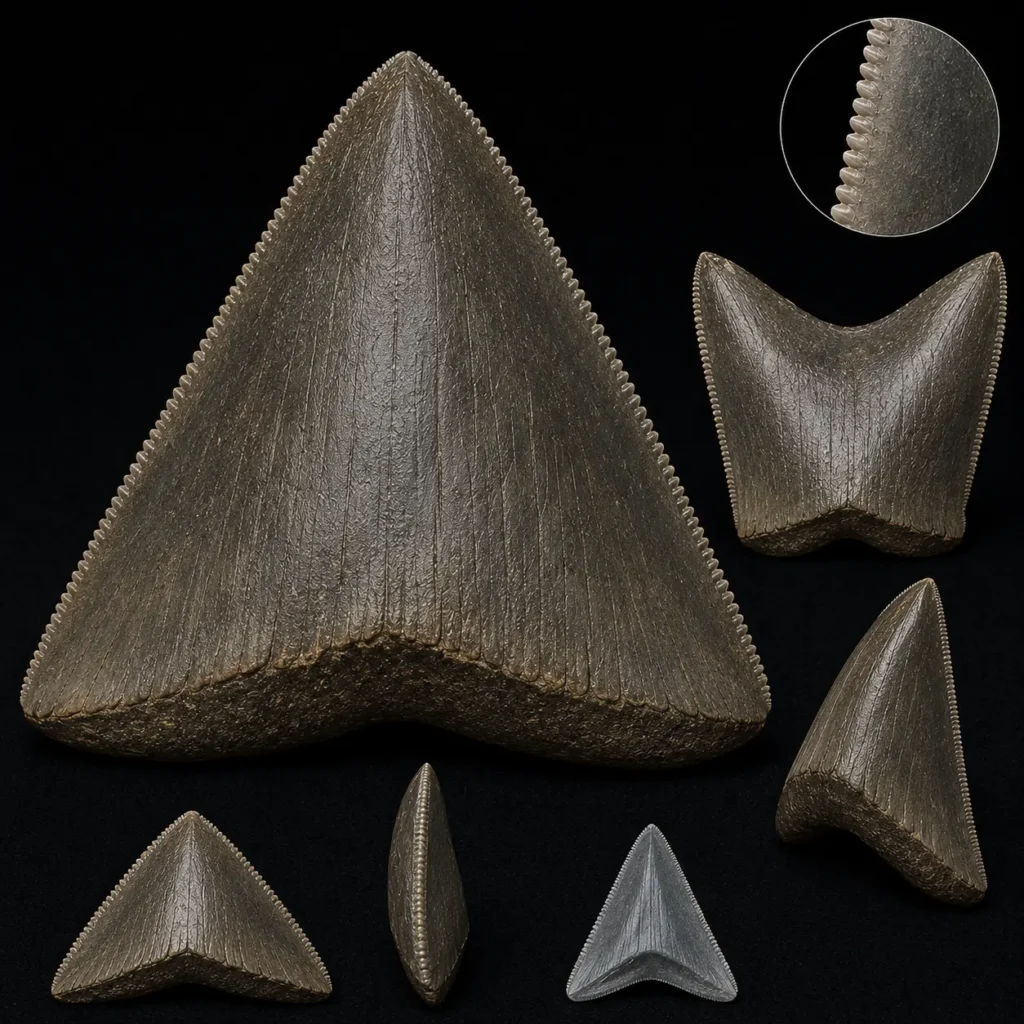
Megalodon teeth are broad, symmetrically triangular, and finely serrated along both cutting edges, increasing cutting efficiency when processing large prey. The largest reliably measured specimens reach approximately 18 cm (7 in) in diagonal height (maximum crown measurement from root to tip), making them the largest known teeth of any shark species. Reports of teeth exceeding 20 cm exist but are not consistently supported by well-documented specimens.
The teeth are substantially larger than those of any living shark — a Carcharodon carcharias typically reaches approximately 6–7 cm (2.4–2.8 in) in maximum tooth size by comparison.
Each tooth is differentiated by position in the jaw: anterior teeth are more symmetrical and upright, while lateral and posterior teeth are progressively more oblique and asymmetric. Like all sharks, Otodus megalodon possessed multiple rows of continuously replacing teeth throughout its life.
Serration Function
The fine serrations running along both mesial and distal cutting edges of megalodon teeth are consistent with a cutting-and-slicing feeding function rather than a grip-and-tear approach. Biomechanical analysis suggests these serrations concentrated stress at cutting points, allowing efficient penetration of the dense bone and thick blubber layers of large cetacean prey. This is Tier 2 inference — based on comparative biomechanical modelling — not direct behavioural evidence.
Why Megalodon Teeth Are Common Fossils
Sharks replace their teeth continuously throughout their lives, and Otodus megalodon likely shed thousands to many thousands of teeth over its lifetime as part of this process. Each shed tooth sank to the seafloor, where its highly mineralised composition (hydroxyapatite) allowed it to be preserved readily and undergo diagenetic alteration over geological timescales.
Because this process occurred repeatedly across a large population over millions of years, the result is an exceptionally abundant fossil record. Megalodon teeth are now found in marine deposits across multiple continents, reflecting the species’ wide distribution across ancient ocean basins.
Bite Force
Biomechanical estimates of Otodus megalodon bite force vary depending on the modelling approach and assumed body size. Published models produce estimates ranging from approximately 108,500 N to 182,200 N, derived from reconstructed jaw geometry and estimated muscle cross-sectional area.
These values suggest a bite force substantially higher than the highest measured bite forces of any living predator. For comparison, the Crocodylus porosus — which holds the highest confirmed bite force among living animals — produces approximately 16,400 N.
All megalodon bite force figures are Tier 2 estimates derived from biomechanical modelling; no direct measurement is possible from fossil material alone.
Jaw Reconstruction
No complete megalodon jaw has been recovered from the fossil record — the cartilaginous jaw did not preserve. All jaw reconstructions, including those displayed in museum exhibits, are estimates built from the size and curvature of associated tooth sets.
Early reconstructions, including a famous 1909 American Museum of Natural History mount, significantly overestimated jaw size by assuming proportions more like those of a great white shark.
Modern reconstructions use revised estimates of body proportions and produce somewhat smaller — though still extraordinary — jaw dimensions. Diet evidence is covered in full on our diet page; tooth function is the primary focus of this page.
Related and Contemporary Species
- Carcharodon carcharias (great white shark) — teeth are frequently compared to megalodon’s; structurally similar serrated triangle form, but roughly one-third the size
- Otodus obliquus — direct ancestor in the Otodus lineage; teeth show the evolutionary progression toward the megalodon form
- Carcharocles auriculatus — intermediate Otodus-lineage species; teeth document transitional serration development
- Livyatan melvillei — a contemporary large predator whose robust teeth represent an independent evolutionary solution to large prey exploitation
- Isurus hastalis (broad-tooth mako) — co-occurring shark with large teeth; useful size comparison for contextualising megalodon tooth scale
Frequently Asked Questions
How big were megalodon teeth?
The largest reliably documented megalodon teeth reach approximately 18 cm (7 in) in diagonal height. Most fossil specimens are considerably smaller — the average recovered tooth measures roughly 10–12 cm (4–5 in). Size varies by position in the jaw, with anterior teeth typically the largest.
Why are megalodon teeth so common?
Megalodon continuously shed and replaced teeth throughout its life, potentially producing tens of thousands of individual teeth per animal. Combined with the exceptional fossilisation potential of mineralised shark teeth and megalodon’s wide geographic range, this accounts for the high abundance of specimens in fossil collections worldwide.
Are megalodon teeth still being found?
Yes. Megalodon teeth continue to be recovered from ocean floors, river beds, and coastal formations worldwide. Significant collecting sites include the Calvert Cliffs in Maryland, the phosphate deposits of North Carolina, and shallow marine sediments off the coasts of South Africa, Australia, and the Canary Islands.
Conclusion
Megalodon teeth are the most complete record we have of this animal — and they reveal a predator built for dismantling the largest prey in Miocene seas. Their size, serration pattern, and extraordinary abundance in the fossil record all reflect a life history shaped by continuous growth, continuous replacement, and a diet that demanded tools capable of penetrating whale bone.
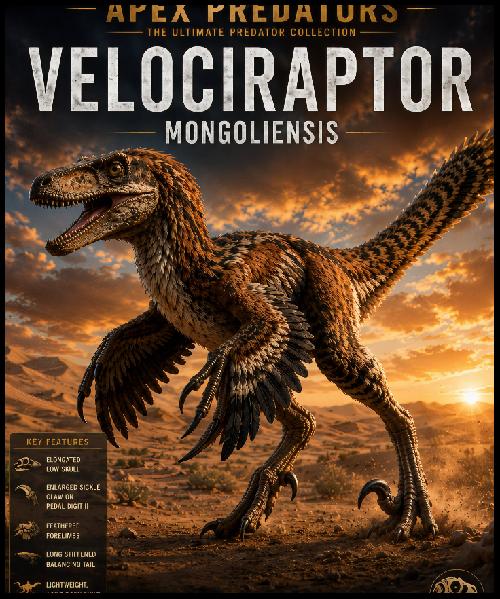
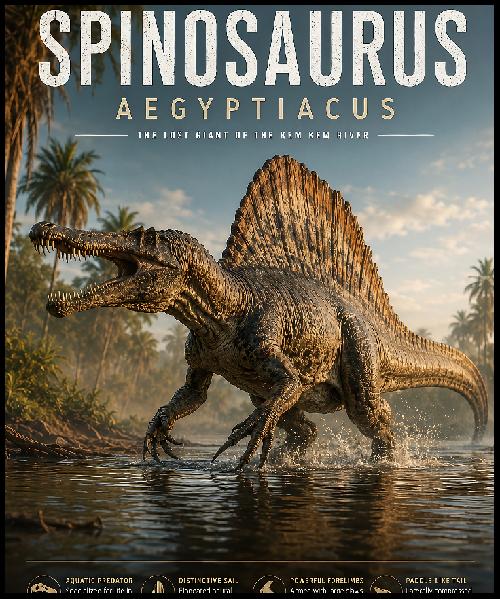
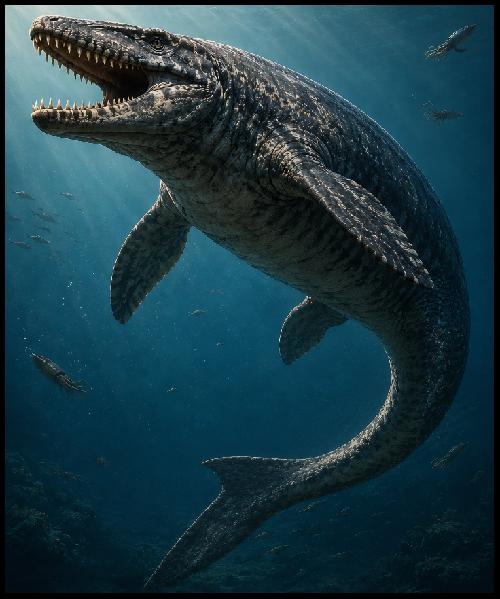
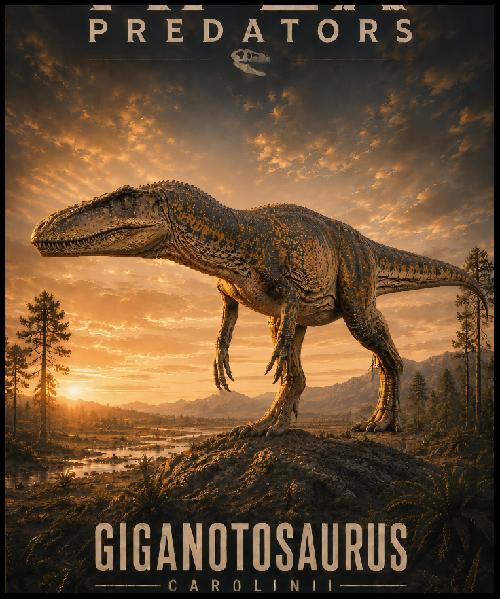
Featured Museum Collections
Museum-quality paleoart and educational poster
collections based on evidence-informed prehistoric
Life reconstructions.